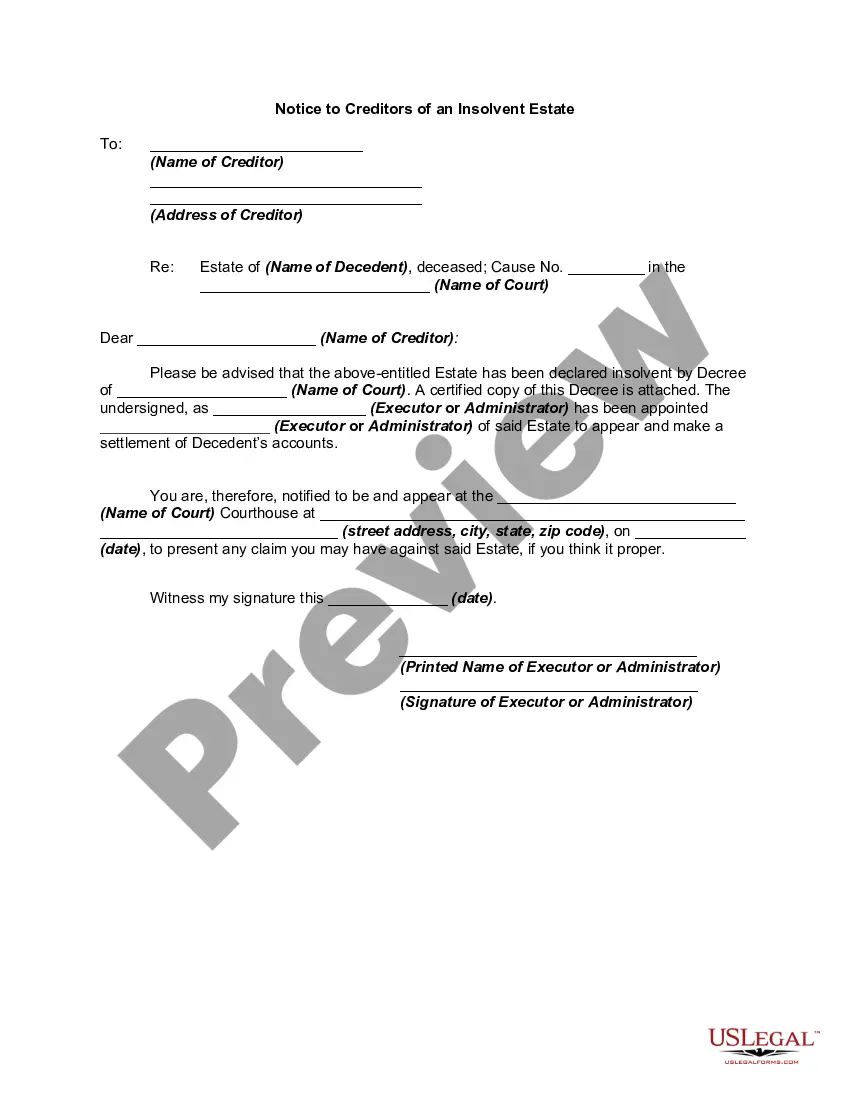
Administrator For Deceased Estate
Description
Get your form ready online
Our built-in tools help you complete, sign, share, and store your documents in one place.
Make edits, fill in missing information, and update formatting in US Legal Forms—just like you would in MS Word.
Download a copy, print it, send it by email, or mail it via USPS—whatever works best for your next step.
Sign and collect signatures with our SignNow integration. Send to multiple recipients, set reminders, and more. Go Premium to unlock E-Sign.
If this form requires notarization, complete it online through a secure video call—no need to meet a notary in person or wait for an appointment.
We protect your documents and personal data by following strict security and privacy standards.

Make edits, fill in missing information, and update formatting in US Legal Forms—just like you would in MS Word.

Download a copy, print it, send it by email, or mail it via USPS—whatever works best for your next step.

Sign and collect signatures with our SignNow integration. Send to multiple recipients, set reminders, and more. Go Premium to unlock E-Sign.

If this form requires notarization, complete it online through a secure video call—no need to meet a notary in person or wait for an appointment.

We protect your documents and personal data by following strict security and privacy standards.
Looking for another form?








How to fill out Notice To Creditors Of An Insolvent Estate?
Handling legal documents and procedures could be a time-consuming addition to the day. Administrator For Deceased Estate and forms like it typically require that you search for them and understand how you can complete them appropriately. Consequently, if you are taking care of financial, legal, or personal matters, using a extensive and convenient online catalogue of forms at your fingertips will help a lot.
US Legal Forms is the best online platform of legal templates, featuring more than 85,000 state-specific forms and a number of tools to help you complete your documents easily. Discover the catalogue of relevant documents available with just a single click.
US Legal Forms offers you state- and county-specific forms offered by any moment for downloading. Safeguard your document management procedures having a high quality service that allows you to prepare any form within minutes without having additional or hidden charges. Simply log in in your profile, locate Administrator For Deceased Estate and download it immediately in the My Forms tab. You can also access previously downloaded forms.
Is it your first time utilizing US Legal Forms? Sign up and set up up a free account in a few minutes and you’ll gain access to the form catalogue and Administrator For Deceased Estate. Then, stick to the steps below to complete your form:
- Be sure you have the correct form using the Review option and reading the form information.
- Choose Buy Now when all set, and select the subscription plan that suits you.
- Press Download then complete, eSign, and print out the form.
US Legal Forms has 25 years of expertise assisting users manage their legal documents. Discover the form you require today and enhance any operation without having to break a sweat.
Form popularity
FAQ
What is an administrator? An administrator is appointed by SAT to make financial and legal decisions of a financial or estate nature in the best interests of someone not capable of making those decisions for themselves.
If a person dies leaving a valid will, and the will names a person who is to execute the will and administer the estate, this person is called an executor. However, when the person in charge of administering the estate is not named in a will, that person is called an administrator.
An administrator is also referred to as an executor. However, legally speaking, an administrator is appointed by a court when the decedent has not named an executor in their will or if a named executor refuses or is unable to assume the responsibilities. A court cannot force a named executor to fulfill their duties.
Often, creditors will choose an administrator and then apply to the Court for permission to appoint them. The appointment immediately freezes any legal proceedings against the company, and the provisional liquidator takes complete control of the company.
The difference is the way in which they have been appointed. An Executor is nominated within the Will of a deceased person. If there is no Will, an Administrator is appointed by a Court to manage or administer a decedent's estate.