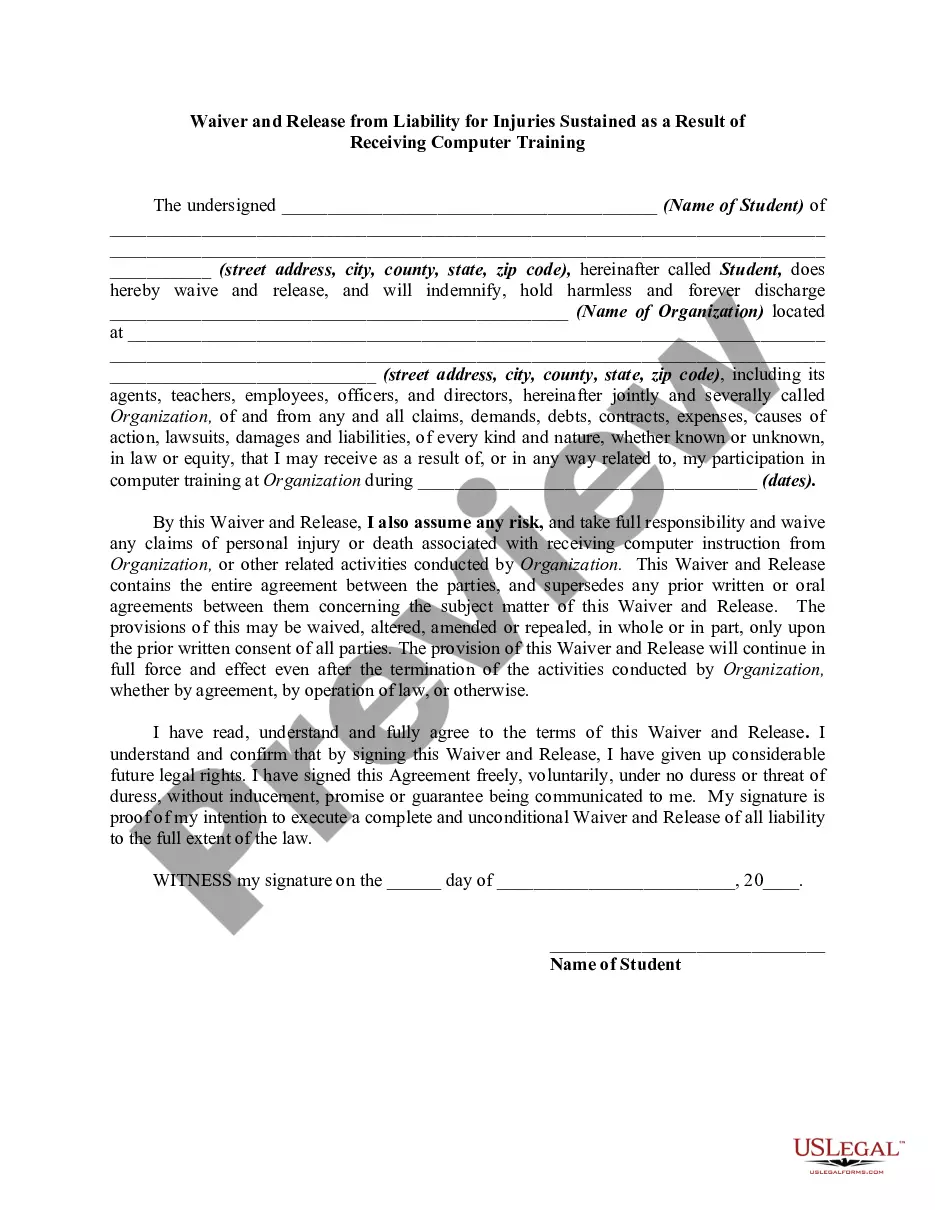
Computer Repairs Liability Waiver For Home
Description

Get your form ready online
Our built-in tools help you complete, sign, share, and store your documents in one place.
Make edits, fill in missing information, and update formatting in US Legal Forms—just like you would in MS Word.
Download a copy, print it, send it by email, or mail it via USPS—whatever works best for your next step.
Sign and collect signatures with our SignNow integration. Send to multiple recipients, set reminders, and more. Go Premium to unlock E-Sign.
If this form requires notarization, complete it online through a secure video call—no need to meet a notary in person or wait for an appointment.
We protect your documents and personal data by following strict security and privacy standards.

Make edits, fill in missing information, and update formatting in US Legal Forms—just like you would in MS Word.

Download a copy, print it, send it by email, or mail it via USPS—whatever works best for your next step.

Sign and collect signatures with our SignNow integration. Send to multiple recipients, set reminders, and more. Go Premium to unlock E-Sign.

If this form requires notarization, complete it online through a secure video call—no need to meet a notary in person or wait for an appointment.

We protect your documents and personal data by following strict security and privacy standards.
Looking for another form?





Form popularity
FAQ
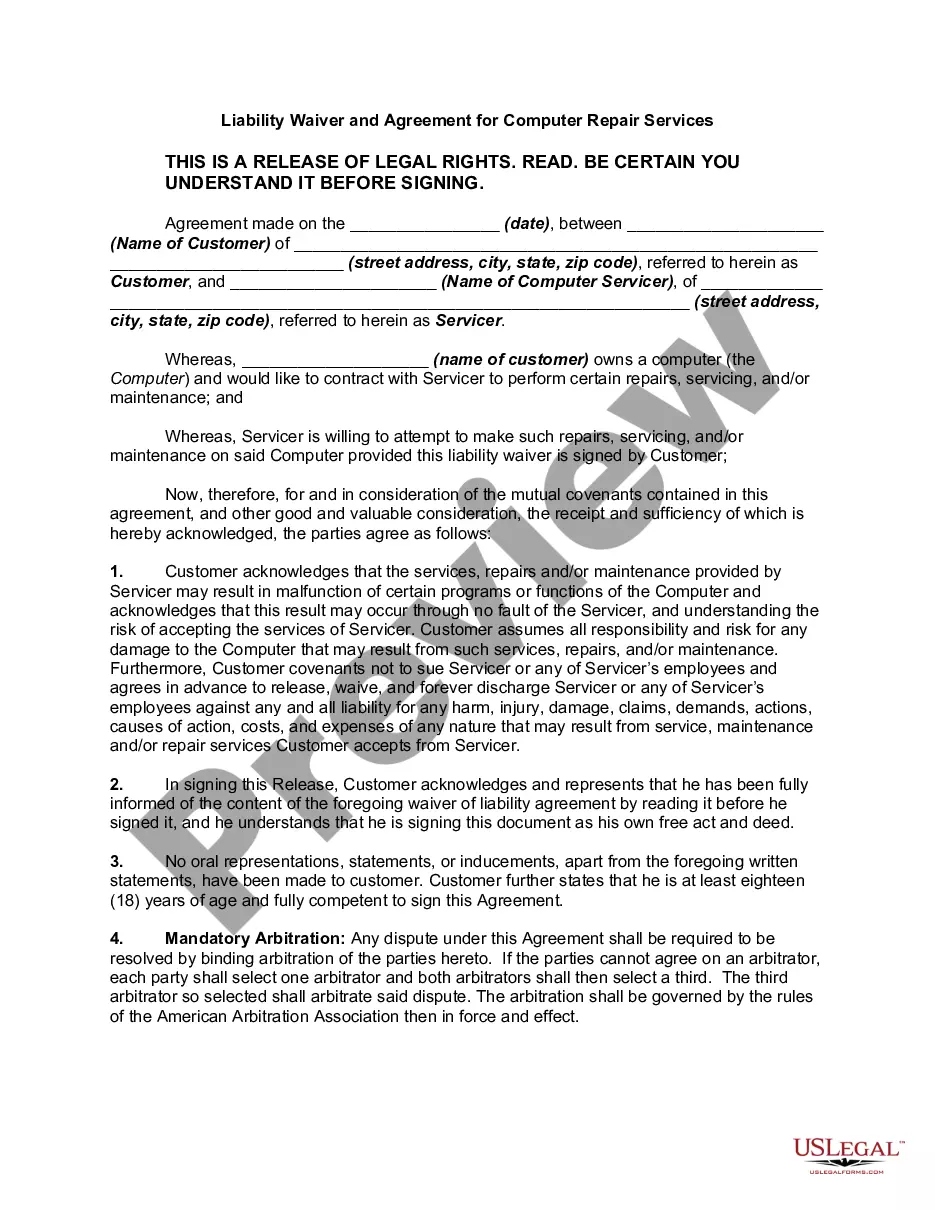
To write an application for computer repair, start by detailing your computer's issues, specifying the model and any previous problems. Include a request for a computer repairs liability waiver for home to clarify responsibilities and ensure protection for both parties. Be clear and concise in your request, and provide your contact information for follow-ups. Using templates available on USLegalForms can simplify this process significantly.
Yes, liability waivers can be effective in certain situations, including when it comes to computer repairs liability waivers for home. These waivers help protect service providers from legal claims related to potential errors or issues that may arise during repairs. However, their enforceability can depend on state laws and the language used within the waiver itself. Always ensure the waiver is clear and specific to enhance its effectiveness.
When writing a letter of release of liability, start by stating your intent clearly, such as releasing the service provider from liability. Include details about the services provided, specifically mentioning it as part of your computer repairs liability waiver for home. Clearly articulate the terms and conditions, and ensure both parties sign the document to enforce its validity. You can find helpful templates on sites like USLegalForms to guide you in drafting a solid letter.
You do not necessarily need a lawyer to write a computer repairs liability waiver for home. However, consulting a legal professional can help ensure the waiver complies with local laws and adequately protects your interests. Platforms like USLegalForms provide templates that can simplify the process, making it accessible even without legal expertise. Nevertheless, it's beneficial to review the waiver with a lawyer for added peace of mind.
A computer repairs liability waiver for home can be deemed invalid for various reasons, such as if it is ambiguous, signed under duress, or does not adequately disclose the risks involved. Additionally, if the waiver attempts to absolve someone from gross negligence, courts may invalidate it. To create a strong waiver, refer to templates that emphasize the importance of clarity and compliance with legal standards.
Liability waivers, including a computer repairs liability waiver for home, can hold up well in court if they are properly drafted and meet legal requirements. Courts typically enforce waivers that clearly outline risks and are signed voluntarily. To improve the chances of your waiver being upheld, consider using professional templates that comply with current laws.
Yes, you can apply for a computer repairs liability waiver for home yourself. However, it’s advisable to seek guidance either through legal advice or by utilizing resources like US Legal Forms to ensure your waiver aligns with the necessary legal standards. This approach will help safeguard your interests and enhance the waiver's effectiveness.
For a computer repairs liability waiver for home to be legal, it must meet all regulatory legal standards and be entered into willingly. The document should clearly state the risks involved and explicitly outline each party's rights and responsibilities. Furthermore, to avoid enforcement issues, make sure to consult templates or professionals familiar with liability waivers.
Generally, a computer repairs liability waiver for home does not need to be notarized to be valid. However, notarization can add an extra layer of protection and credibility. It’s wise to check your local laws or use resources from US Legal Forms to understand specific requirements that may apply to your situation.
A valid computer repairs liability waiver for home must satisfy three key requisites: it should be clear and unambiguous, must involve a voluntary agreement, and should be signed by all involved parties. Each requirement plays a critical role in ensuring enforceability in case of a dispute. To achieve this, consider using templates that guide you through these essential components.
