Real Property With Without A Mortgage
Description
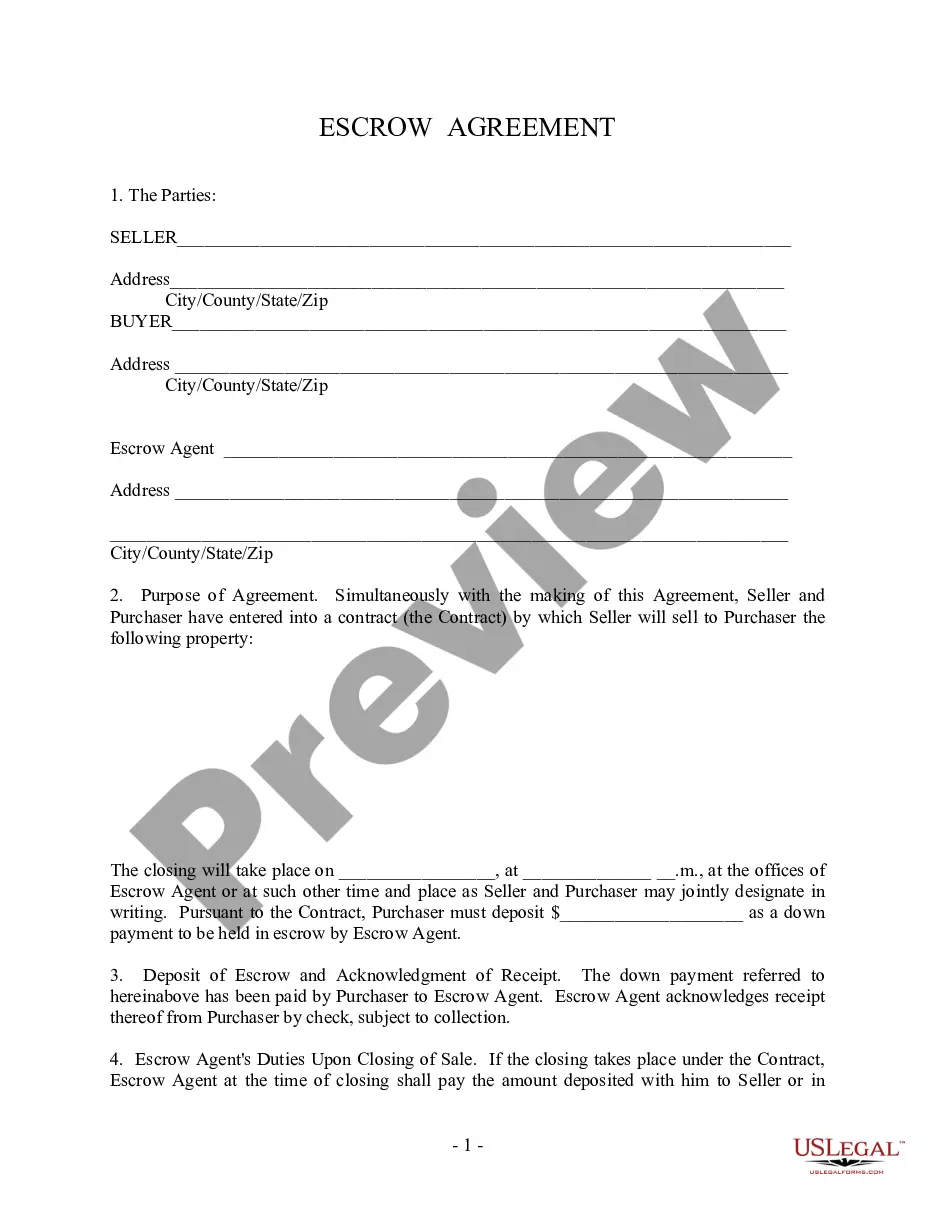
Get your form ready online
Our built-in tools help you complete, sign, share, and store your documents in one place.
Make edits, fill in missing information, and update formatting in US Legal Forms—just like you would in MS Word.
Download a copy, print it, send it by email, or mail it via USPS—whatever works best for your next step.
Sign and collect signatures with our SignNow integration. Send to multiple recipients, set reminders, and more. Go Premium to unlock E-Sign.
If this form requires notarization, complete it online through a secure video call—no need to meet a notary in person or wait for an appointment.
We protect your documents and personal data by following strict security and privacy standards.

Make edits, fill in missing information, and update formatting in US Legal Forms—just like you would in MS Word.

Download a copy, print it, send it by email, or mail it via USPS—whatever works best for your next step.

Sign and collect signatures with our SignNow integration. Send to multiple recipients, set reminders, and more. Go Premium to unlock E-Sign.

If this form requires notarization, complete it online through a secure video call—no need to meet a notary in person or wait for an appointment.

We protect your documents and personal data by following strict security and privacy standards.
Looking for another form?




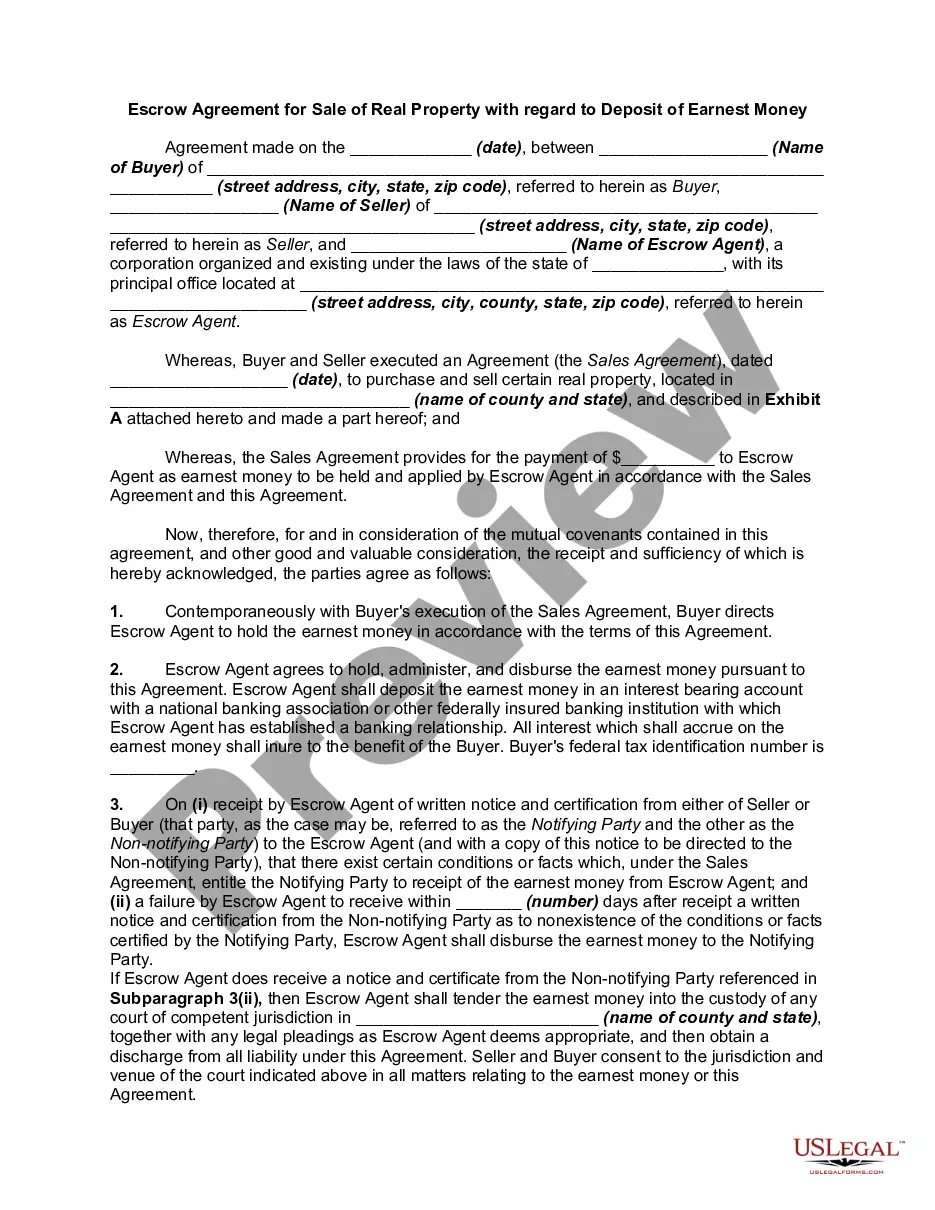
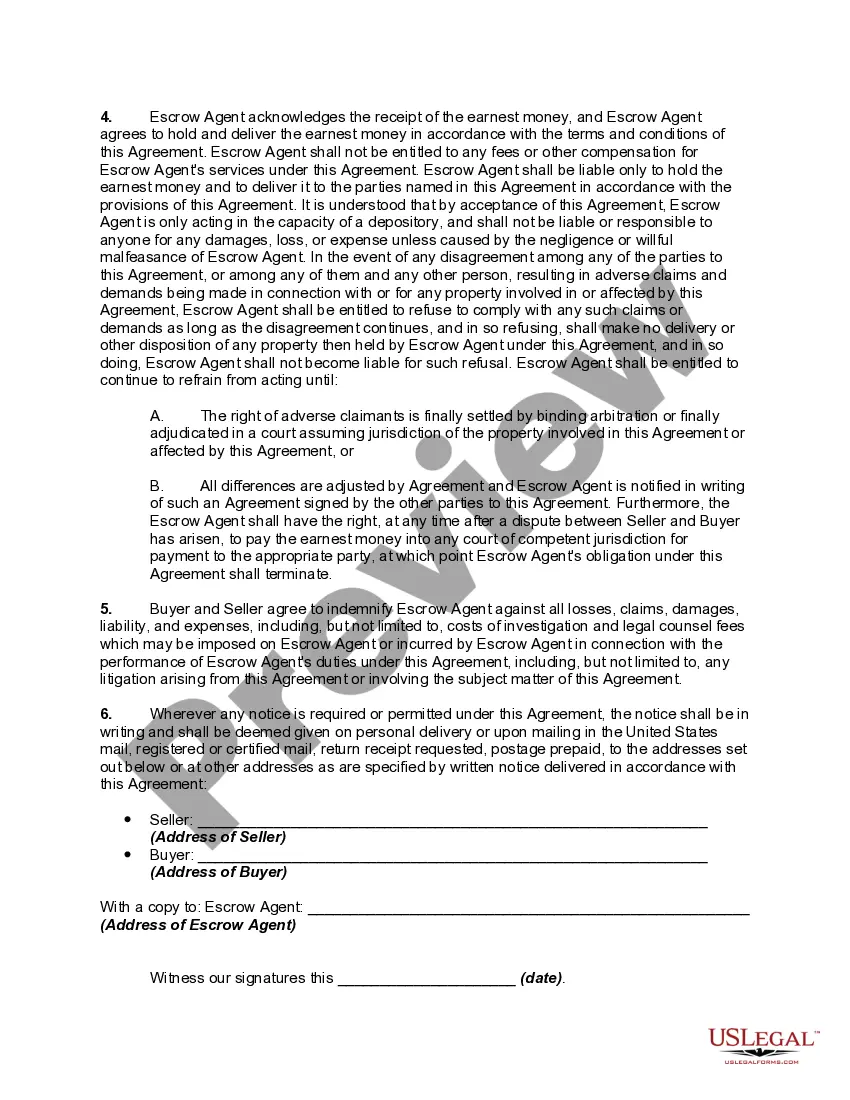
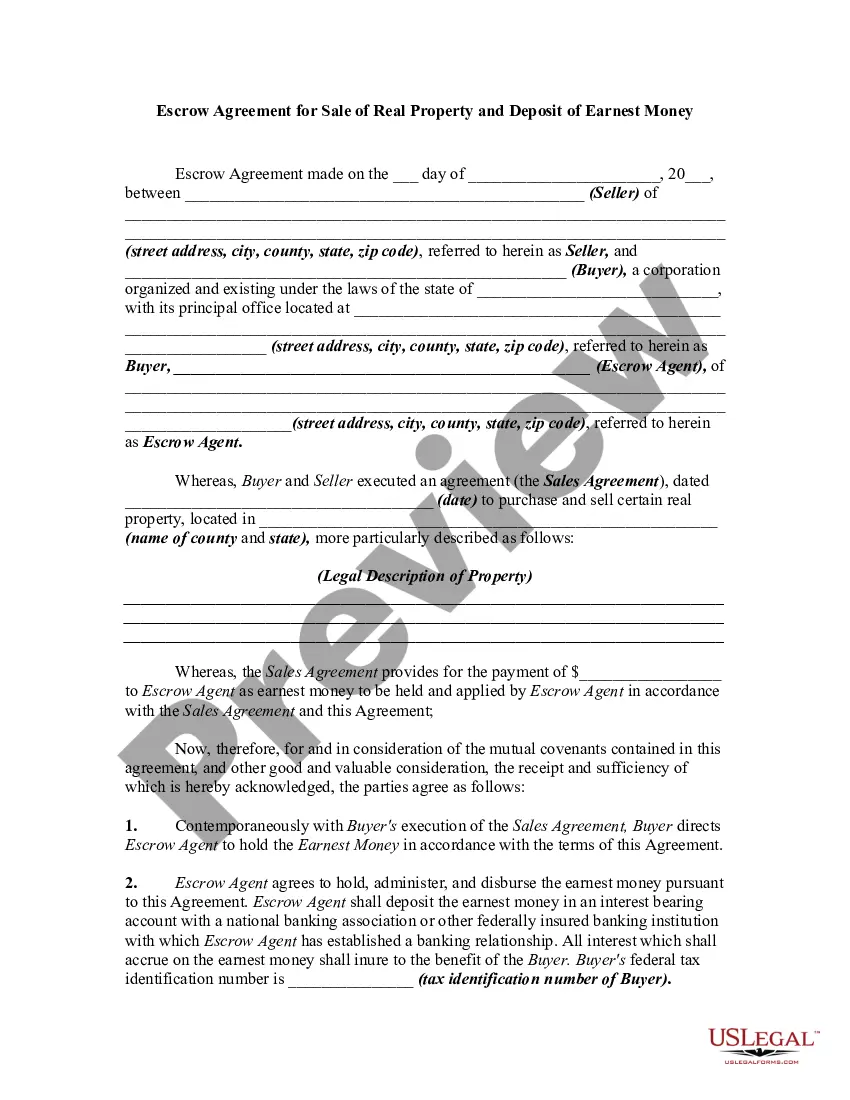
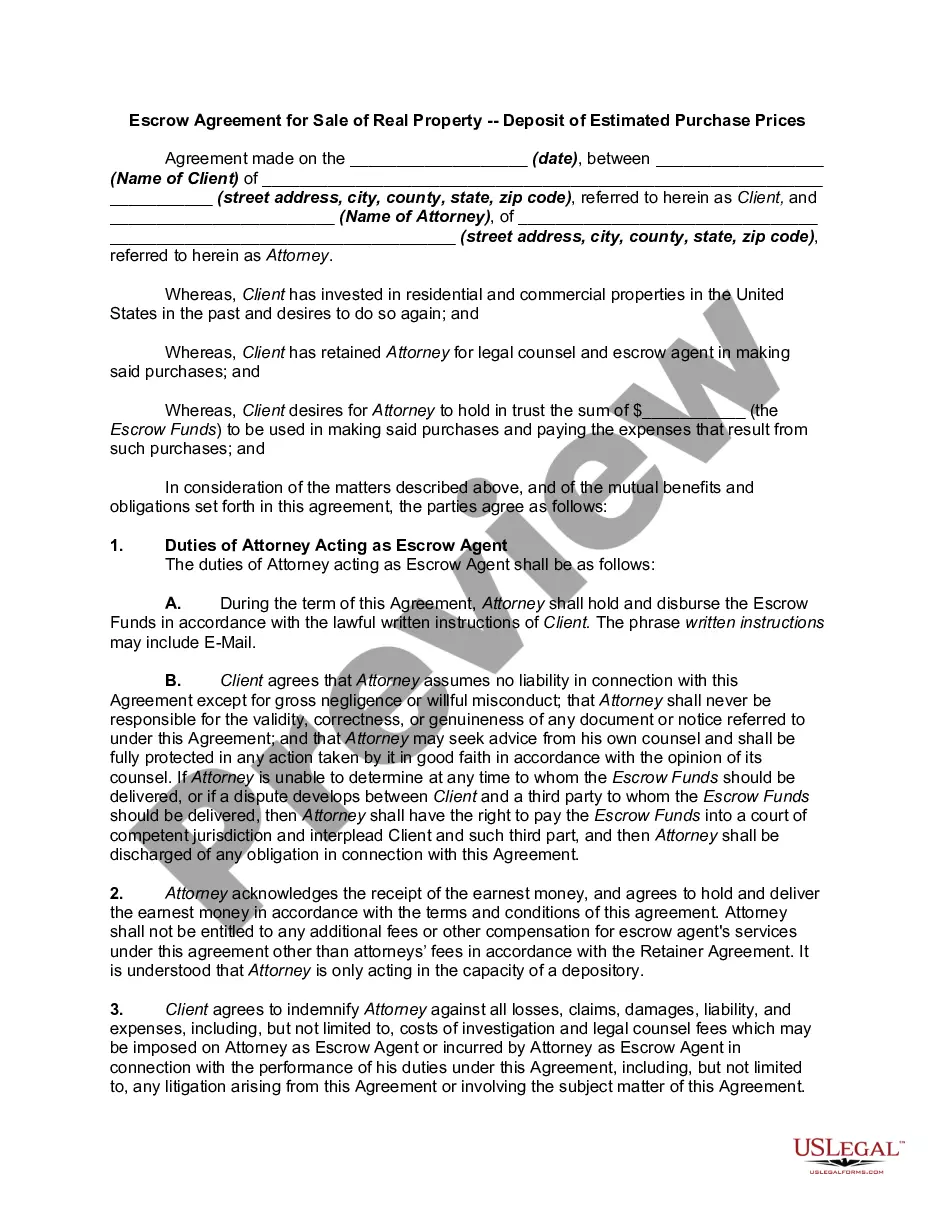
How to fill out Escrow Agreement For Sale Of Real Property With Regard To Deposit Of Earnest Money?
It’s widely acknowledged that you cannot transform into a legal authority instantly, nor can you learn how to swiftly prepare Real Property With Without A Mortgage without having a specialized education.
Developing legal documents is a labor-intensive task that necessitates certain training and expertise. So why not entrust the creation of the Real Property With Without A Mortgage to the experts.
With US Legal Forms, one of the most extensive libraries of legal templates, you can find anything from court documents to templates for internal communication.
If you require a different template, initiate your search again.
Establish a free account and select a subscription plan to purchase the form.
- We recognize how vital compliance and observance of federal and local laws and regulations is.
- That’s why, on our platform, all templates are tailored to specific locations and up to date.
- Begin with our platform and acquire the document you need in just a few minutes.
- Locate the form you require using the search bar at the top of the page.
- Examine it (if this feature is available) and review the supporting description to determine if Real Property With Without A Mortgage is what you seek.
Form popularity
FAQ
There are several alternatives to traditional mortgages for acquiring real property without a mortgage. Options such as using home equity from another property, pursuing private loans from family or friends, or utilizing a lease-to-own agreement can provide flexibility. By exploring these alternatives, you can successfully navigate the home buying process without being tied down by a mortgage.
The best proof of ownership for real property with without a mortgage is typically the property's deed. This document outlines your rights to the property and serves as legal evidence of your ownership. Other forms of proof may include title insurance policies or property tax statements that list your name. For further guidance, you can leverage services from US Legal Forms to access templates and information on property ownership proof.
When you are on the deed but not the mortgage, you own a share of the real property with without a mortgage, but you do not have a liability for the mortgage payments. This situation can lead to complications, especially if the mortgage holder defaults. Your rights to the property remain intact, but you may face challenges regarding decisions linked to the property. It's vital to understand your legal standing and consider consulting with a real estate attorney for advice.
Yes, you can add someone to the deed of your real property without including them on the mortgage. Doing so allows the person to have ownership rights to the property, while you remain responsible for the mortgage payments. Keep in mind that laws vary by state, so check local regulations or seek legal advice. US Legal Forms provides helpful resources and documents to assist you in navigating real property transactions effectively.
In an effort to curtail money laundering, there are tax laws that require large cash purchases and sales to be reported using IRS Form 8300. The reporting rules state that any cash transaction over $10,000 should be reported, but the reporting requirement applies to the recipient of a cash purchase.
The law demands that mortgage companies report large transactions to the Internal Revenue Service. If you buy a house worth over $10,000 in cash, your lenders will report the transaction on Form 8300 to the IRS.
A cash buyer is someone who is using their own funds to cover the full purchase price of the home, meaning they aren't taking out a loan. These funds could come from savings, investments or the sale of another property.
Paid Off Your Mortgage? Prove It. Pro tip 1: Check your homeowner's insurance declarations. Once your mortgage is paid off, no mortgagee clause shows up on your insurance policy. ... Pro tip 2: Another way to show an underwriter you have no mortgage is by producing a copy of Schedule E on your personal income tax returns.
Getting a mortgage from a traditional lender can be tough if you haven't saved enough or your credit score is too low. Instead of a mortgage, you can buy a home with cash, a private loan, owner financing, or by renting-to-own.