Covenant Not To Sue
Description
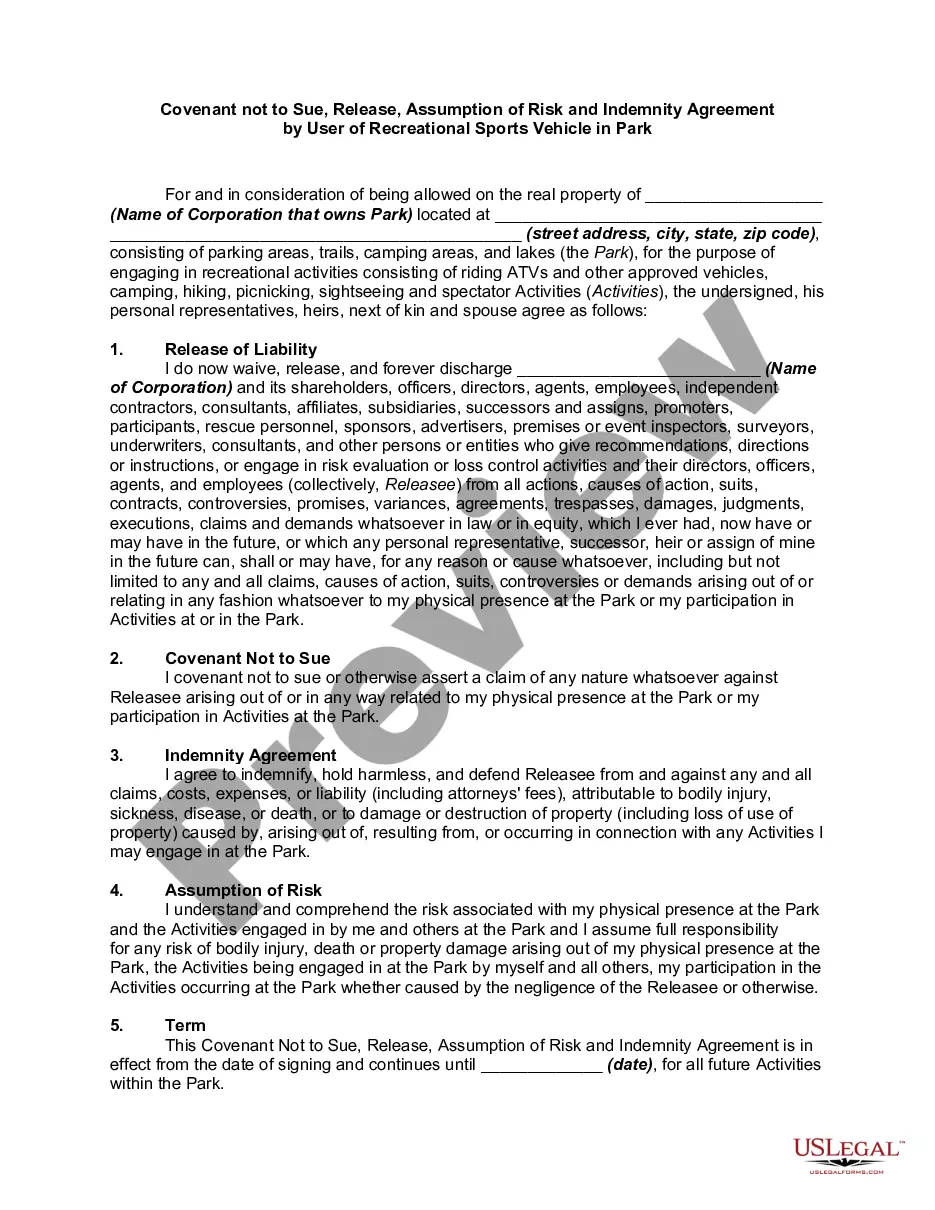
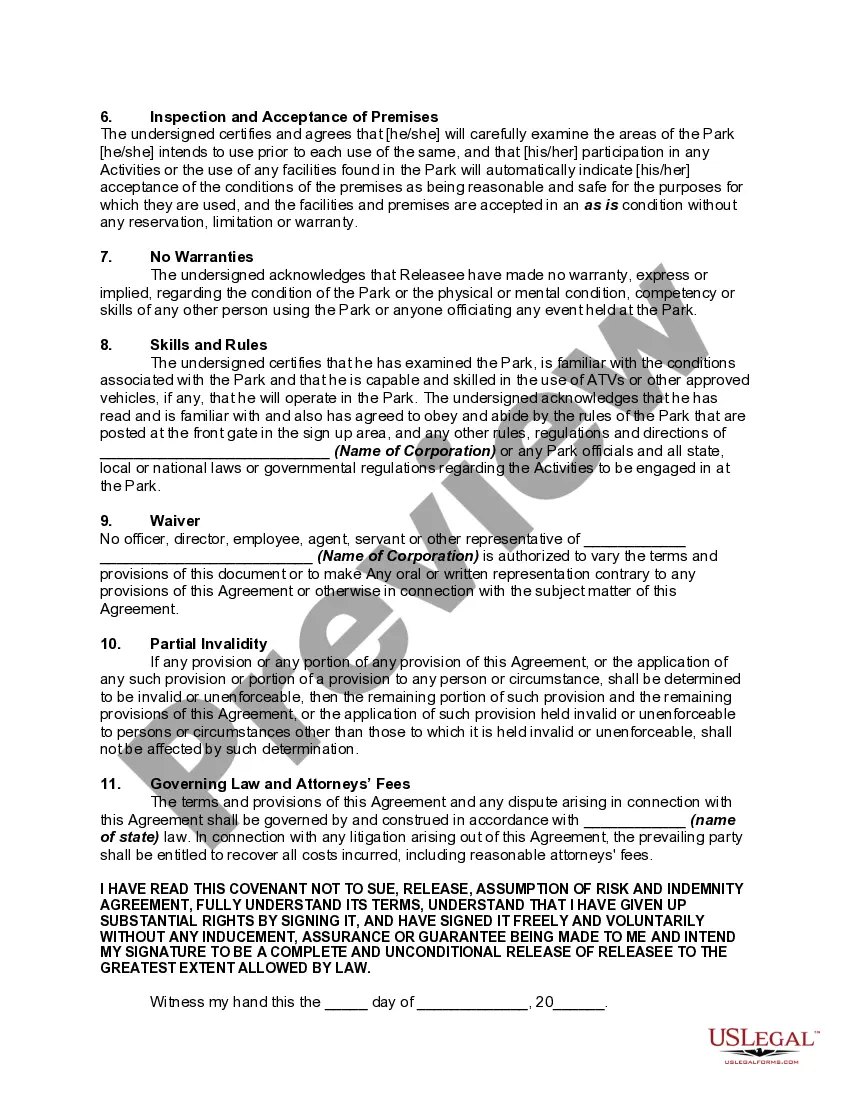

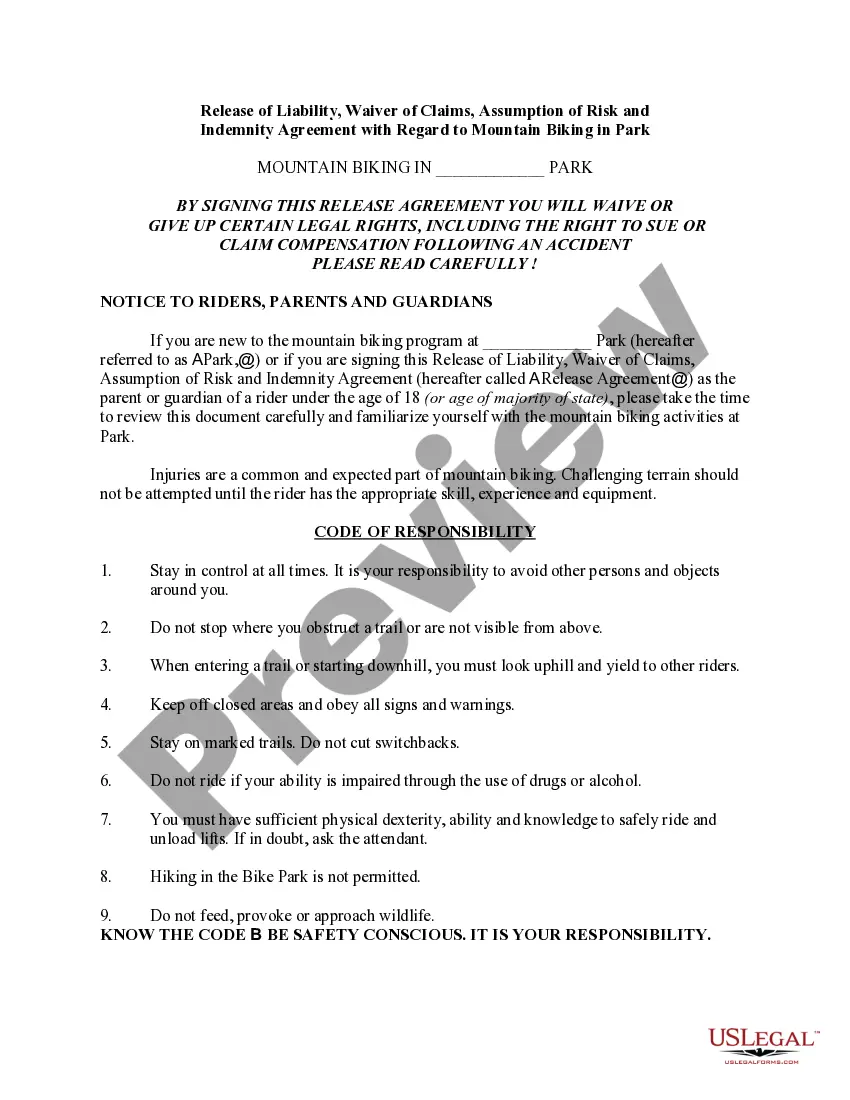
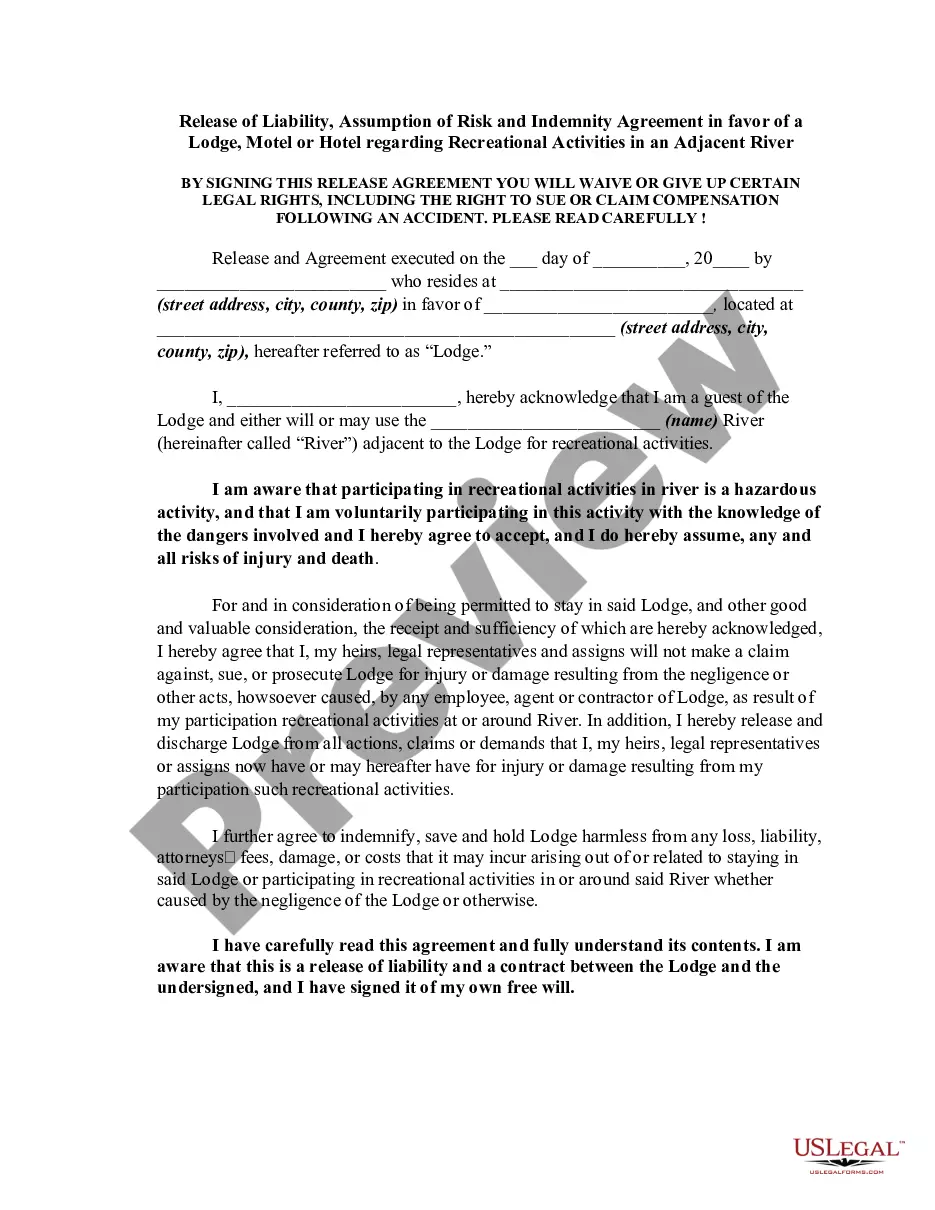
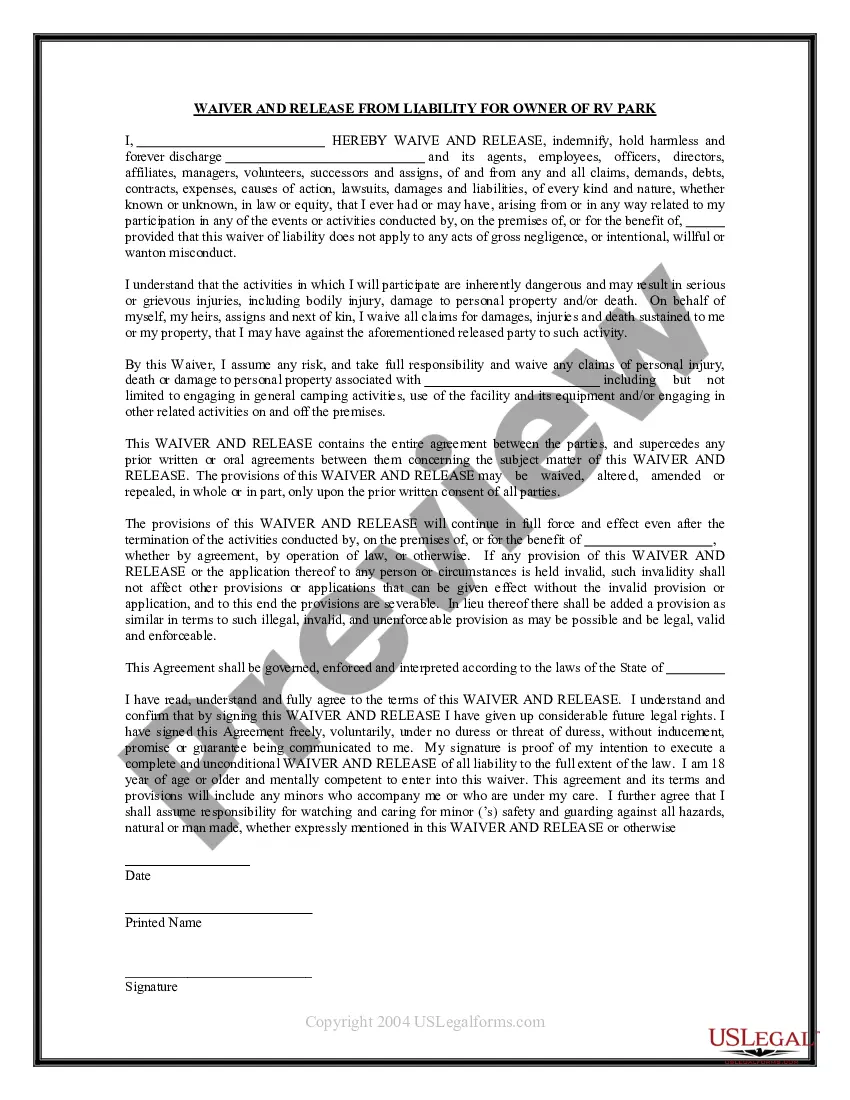
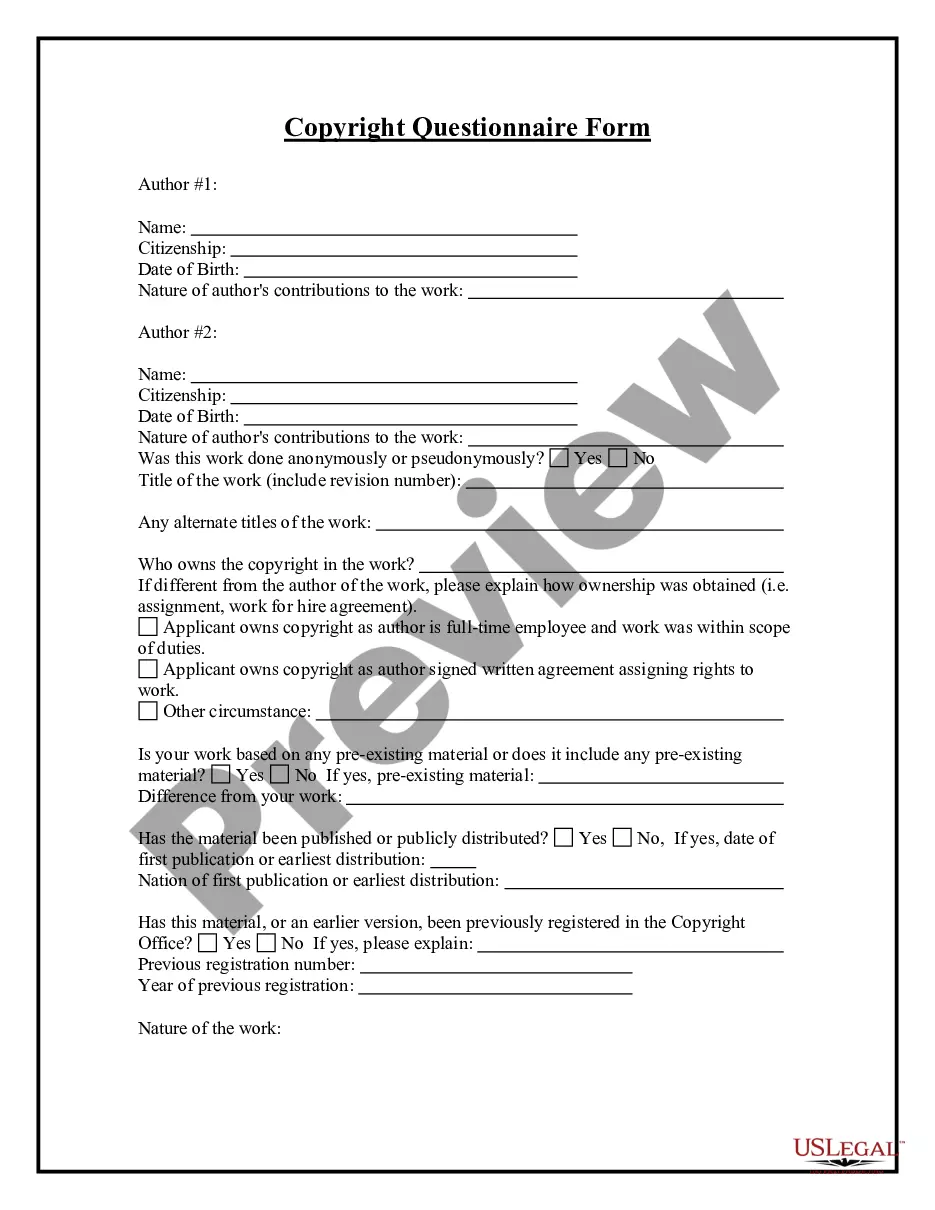
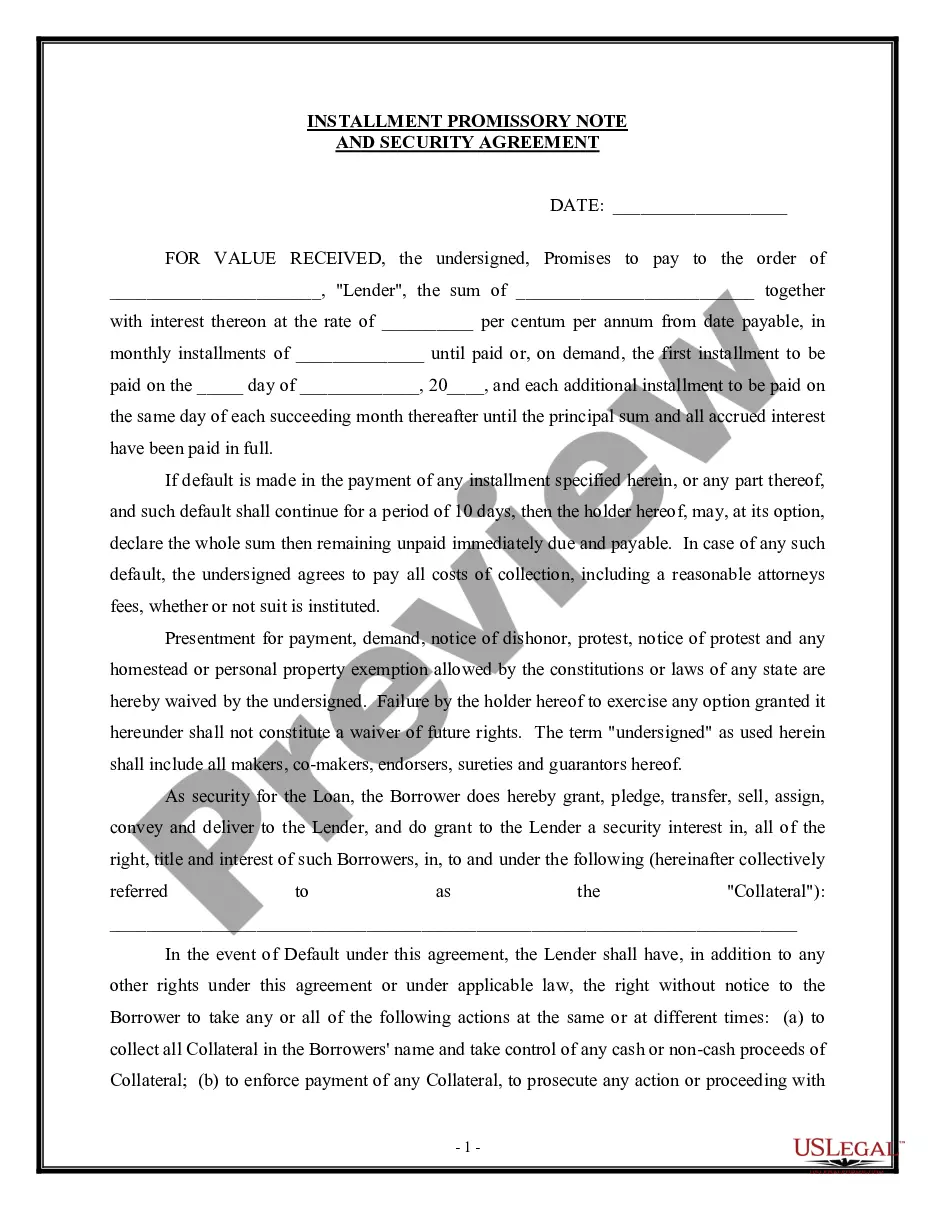
How to fill out Covenant Not To Sue, Release, Assumption Of Risk And Indemnity Agreement By User Of Recreational Sports Vehicle In Park?
Engaging with legal documents and processes can be a tedious addition to your schedule.
Non-Sue Covenant and similar documents often require you to search for them and learn how to fill them out accurately.
Thus, if you are handling financial, legal, or personal issues, utilizing an extensive and user-friendly online database of forms readily available will be quite beneficial.
US Legal Forms is the leading online platform for legal templates, featuring over 85,000 state-specific documents and various tools to assist you in completing your paperwork easily.
Simply Log In to your account, find the Non-Sue Covenant and obtain it immediately from the My documents section. You can also retrieve previously downloaded forms.
- Explore the database of applicable files available to you with just one click.
- US Legal Forms offers state and county-specific documents available anytime for download.
- Protect your document management processes with a premium service that enables you to create any form in minutes without extra or concealed fees.
Form popularity
FAQ
A covenant not to sue is a legal agreement between parties where the party seeking damages agrees not to sue the party it has cause against, whilst still preserving the existence of the cause (and conditions may have been set that must be met for the covenant to stand).
I covenant and agree never, individually or with any person or in any way, to commence, aid in any way, prosecute or cause or permit to be commenced or prosecuted against any Employer Affiliate any action or other proceeding, including, without limitation, an arbitration or other alternative dispute resolution ...
Steps to Creating a Covenant Not to Sue Search for an example of an existing covenant to base yours off of. ... Gather information for your covenant, including documents related to your interests and documents about the other party. ... Format your covenant, so it resembles a traditional contract format.
A covenant not to sue is a legal agreement in which the party seeking damages agrees not to sue the party that it has cause against. Covenants not to sue are used to settle specific legal issues outside of the court system.
Covenant Not to Sue and Indemnification: The Releasor knowingly, intentionally, and voluntarily covenants and agrees it will not now or in the future bring any action in law or equity in any court, forum, or arbitration proceeding (whether by original process, counterclaim, cross-claim, third-party process, impleader, ...