Memorandum Of Trust Vs Trust Agreement
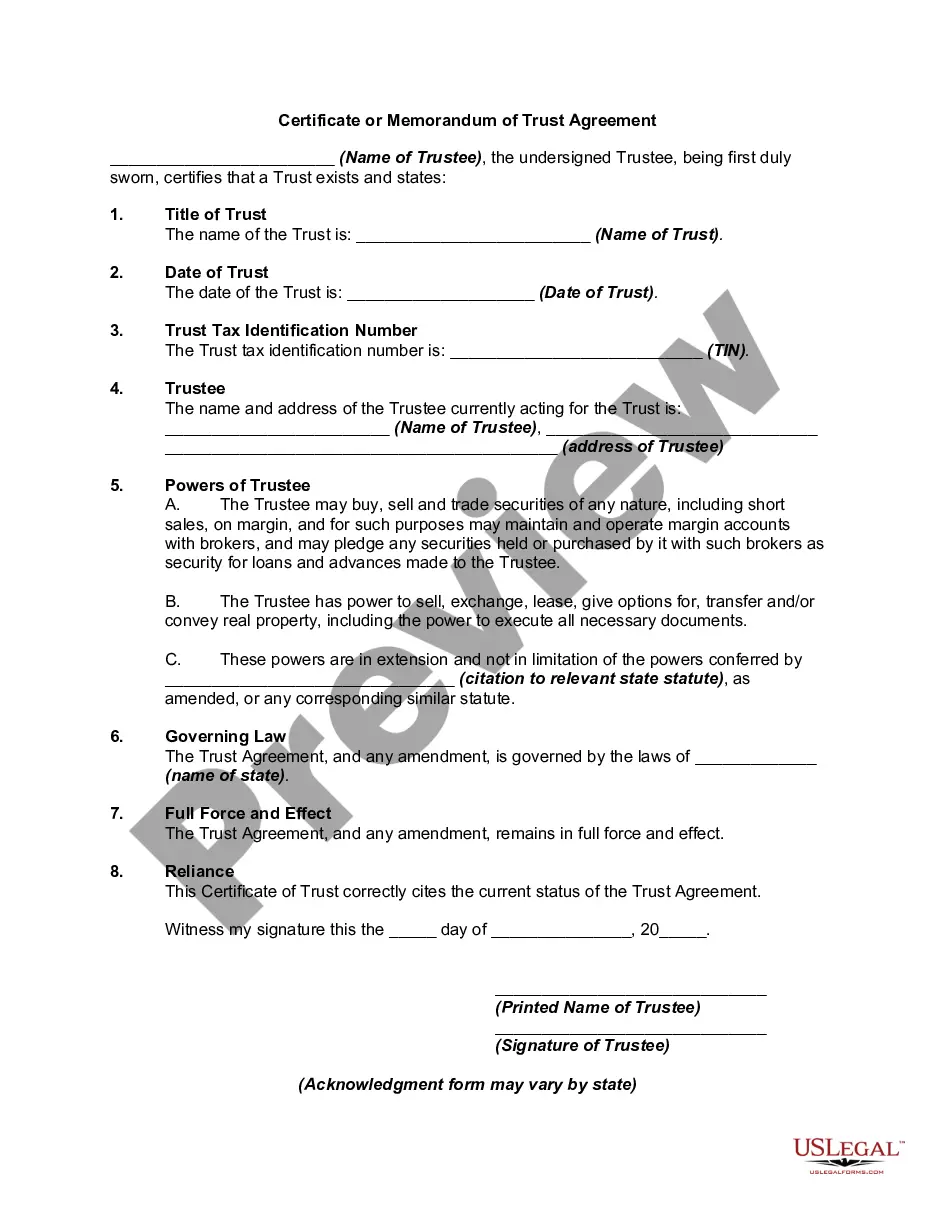
Description
Get your form ready online
Our built-in tools help you complete, sign, share, and store your documents in one place.
Make edits, fill in missing information, and update formatting in US Legal Forms—just like you would in MS Word.
Download a copy, print it, send it by email, or mail it via USPS—whatever works best for your next step.
Sign and collect signatures with our SignNow integration. Send to multiple recipients, set reminders, and more. Go Premium to unlock E-Sign.
If this form requires notarization, complete it online through a secure video call—no need to meet a notary in person or wait for an appointment.
We protect your documents and personal data by following strict security and privacy standards.

Make edits, fill in missing information, and update formatting in US Legal Forms—just like you would in MS Word.

Download a copy, print it, send it by email, or mail it via USPS—whatever works best for your next step.

Sign and collect signatures with our SignNow integration. Send to multiple recipients, set reminders, and more. Go Premium to unlock E-Sign.

If this form requires notarization, complete it online through a secure video call—no need to meet a notary in person or wait for an appointment.

We protect your documents and personal data by following strict security and privacy standards.
Looking for another form?

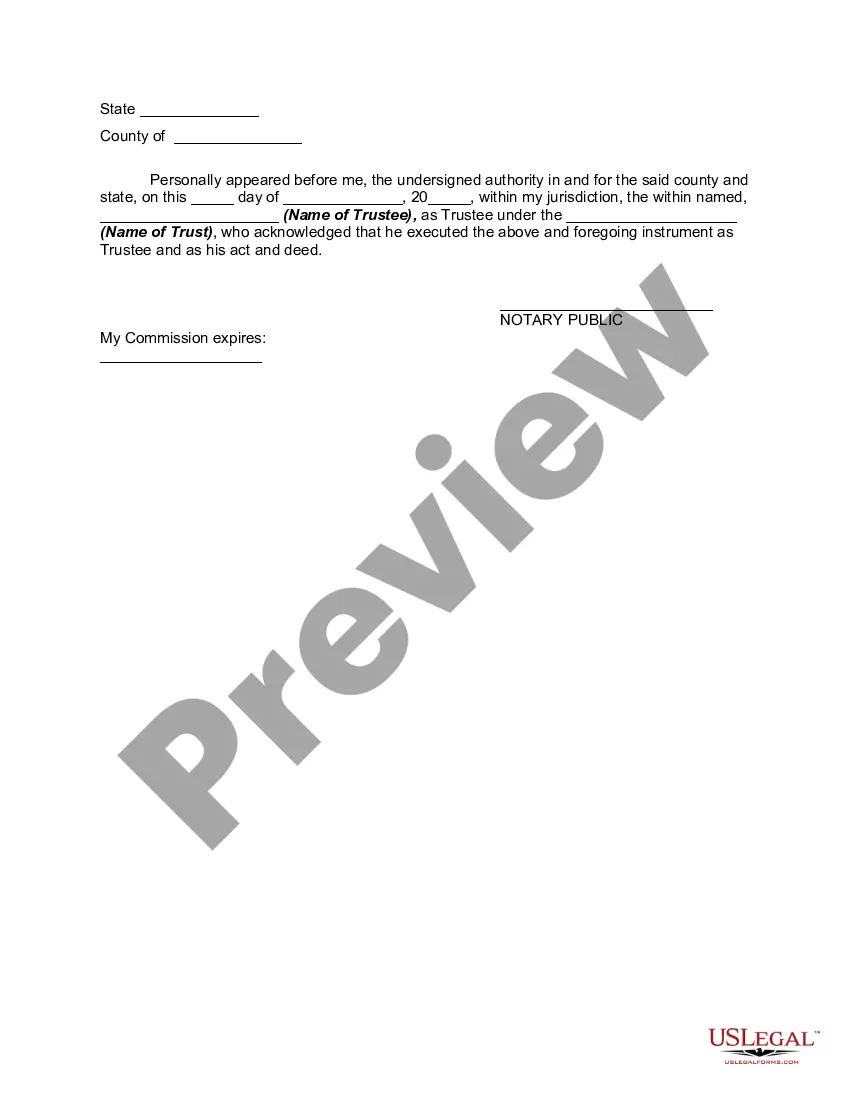
How to fill out Certificate Or Memorandum Of Trust Agreement?
Obtaining legal document examples that comply with federal and local regulations is vital, and the web provides numerous alternatives to select from.
However, what is the advantage of spending time searching for the accurately formulated Memorandum Of Trust Vs Trust Agreement template online when the US Legal Forms digital repository already consolidates such documents in one location.
US Legal Forms is the largest online legal repository featuring over 85,000 fillable templates created by lawyers for various business and personal situations. These templates are easy to navigate with all documents categorized by state and intended use.
All documents accessed through US Legal Forms are reusable. To redownload and finalize previously acquired forms, navigate to the My documents tab in your account. Take advantage of the most comprehensive and user-friendly legal paperwork service!
- Our specialists stay updated with legislative developments, ensuring your documents are current and adhere to regulations when obtaining a Memorandum Of Trust Vs Trust Agreement from our site.
- Securing a Memorandum Of Trust Vs Trust Agreement is straightforward and rapid for both existing and new users.
- If you possess an account with an active subscription, sign in and save your desired document sample in the appropriate format.
- If you’re a newcomer to our platform, follow these steps.
- Examine the template using the Preview function or via the text description to confirm it meets your requirements.
Form popularity
FAQ
The terms 'trust' and 'trust agreement' may seem similar, but they refer to different concepts. A trust is a legal entity that holds assets for the benefit of beneficiaries, while a trust agreement details the terms and conditions under which that trust operates. Understanding the difference between a memorandum of trust vs trust agreement is crucial for anyone looking to establish an effective estate plan. For further clarity, consider visiting US Legal Forms to access templates and resources that help you navigate the complexities of these legal documents.
In court, a memorandum serves to provide a concise presentation of facts or legal arguments concerning a case. It is intended to clarify issues for the judge and assist in decision-making. Understanding the role of such memorandums helps to highlight differences between the various legal documents, including the memorandum of trust vs trust agreement.
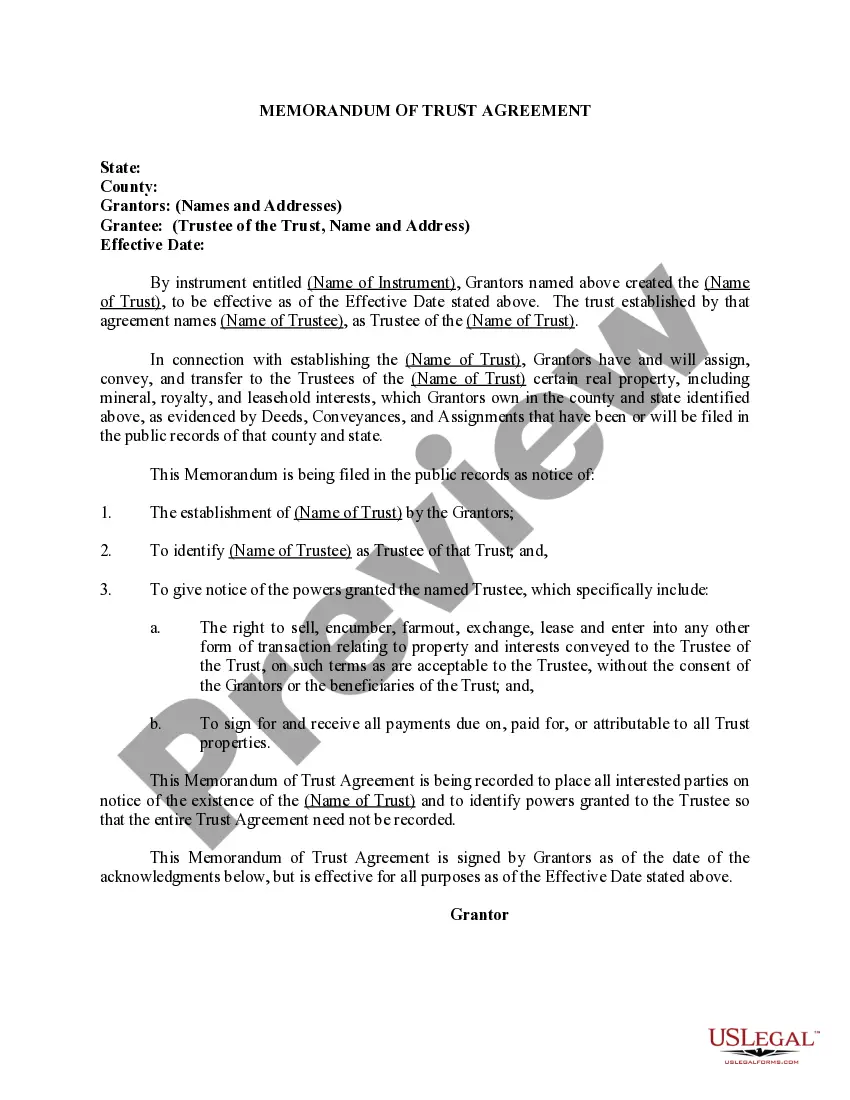
Repeating, the memorandum of trust serves to summarize the trust's key details and helps in communicating the intentions of the trust creator. While it doesn't replace the trust agreement, it facilitates the management and oversight of the trust. Recognizing its purpose is essential when delving into the topic of memorandum of trust vs trust agreement.
The memorandum of trust acts as a summary or record of a trust's existence, detailing essential elements without reprinting the entire trust agreement. It provides information about the trust's assets and beneficiaries, making it easier to reference in the future. Understanding this is key when exploring the memorandum of trust vs trust agreement.
The memorandum of agreement serves as a summary of the key points agreed upon by parties involved in a negotiation. It helps outline responsibilities and expectations without needing a full legal contract. This is crucial when considering the differences in documentation, particularly when differentiating between a memorandum of trust vs trust agreement.
A trust agreement is the written document that details the rules and provisions of the trust, whereas a trust itself is the legal arrangement that holds assets for the benefit of beneficiaries. In simpler terms, the trust agreement is like the instruction manual, while the trust represents the actual implementation. Clarifying this distinction aids in discussions around the memorandum of trust vs trust agreement.
A trust agreement is often referred to as a trust document, trust deed, or declaration of trust. These terms describe the legal instrument that outlines the terms and conditions under which a trust operates. Understanding the terminology will help you navigate discussions about the memorandum of trust vs trust agreement more effectively.
No, a trust agreement is a specific document that outlines the terms and conditions of a trust, whereas a trust broadly refers to the overall arrangement where one party holds and manages property for the benefit of others. The trust agreement details the responsibilities of the trustee and the rights of beneficiaries. Grasping the differences in the context of memorandum of trust vs trust agreement can help you navigate your estate planning options.
A memorandum in a trust summarizes critical elements of the trust without disclosing sensitive details of the trust agreement itself. This document is typically used when a simplified version of the trust's information is needed, such as when dealing with financial institutions. When comparing a memorandum of trust vs trust agreement, this distinction highlights the utility of both forms.
The three primary types of trust are revocable trusts, irrevocable trusts, and testamentary trusts. A revocable trust allows the grantor to modify the trust during their lifetime, while an irrevocable trust cannot be changed once established, providing asset protection. Understanding these types helps differentiate between the memorandum of trust vs trust agreement and how each fits into your estate planning.