Assumption Of Responsibility For Hosting
Description
Get your form ready online
Our built-in tools help you complete, sign, share, and store your documents in one place.
Make edits, fill in missing information, and update formatting in US Legal Forms—just like you would in MS Word.
Download a copy, print it, send it by email, or mail it via USPS—whatever works best for your next step.
Sign and collect signatures with our SignNow integration. Send to multiple recipients, set reminders, and more. Go Premium to unlock E-Sign.
If this form requires notarization, complete it online through a secure video call—no need to meet a notary in person or wait for an appointment.
We protect your documents and personal data by following strict security and privacy standards.

Make edits, fill in missing information, and update formatting in US Legal Forms—just like you would in MS Word.

Download a copy, print it, send it by email, or mail it via USPS—whatever works best for your next step.

Sign and collect signatures with our SignNow integration. Send to multiple recipients, set reminders, and more. Go Premium to unlock E-Sign.

If this form requires notarization, complete it online through a secure video call—no need to meet a notary in person or wait for an appointment.

We protect your documents and personal data by following strict security and privacy standards.
Looking for another form?
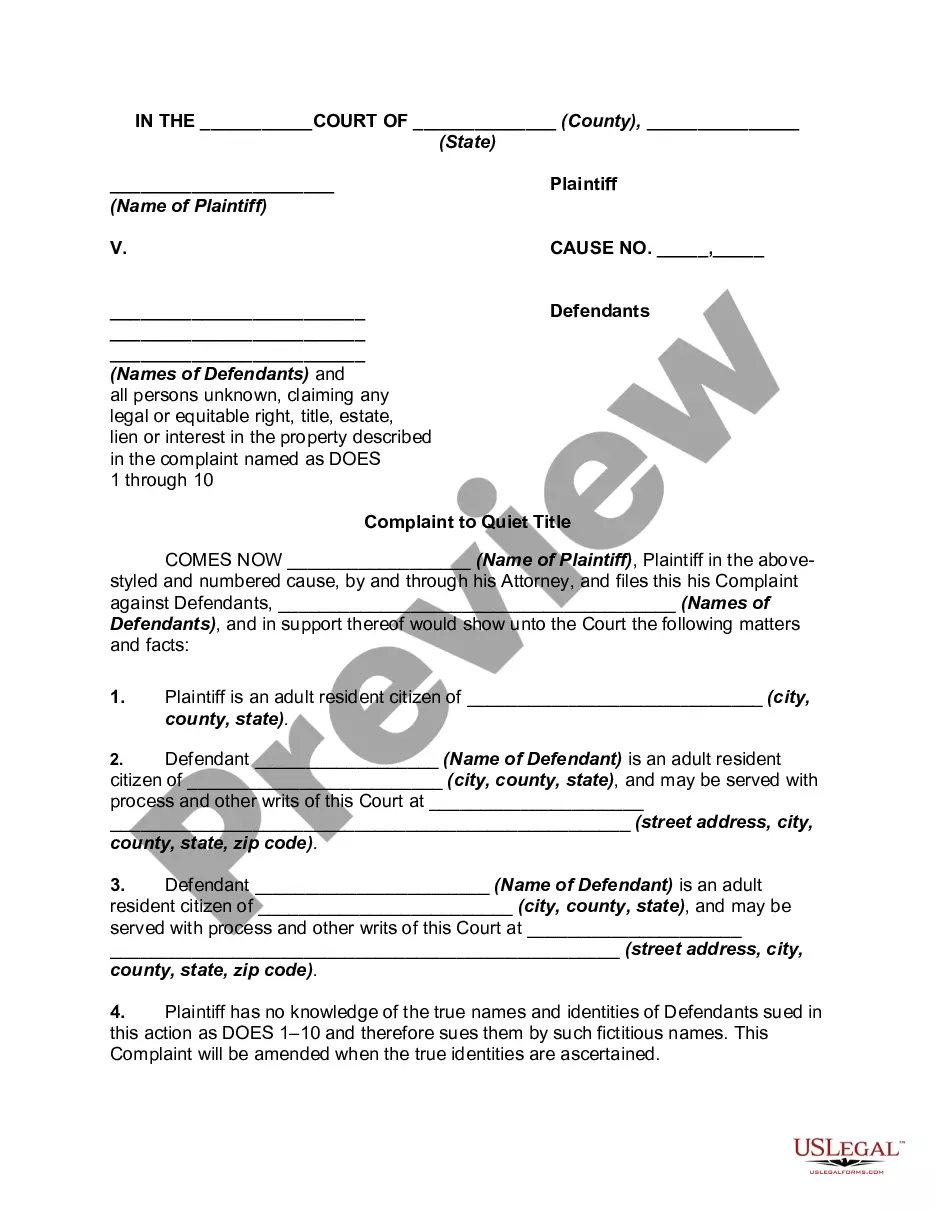


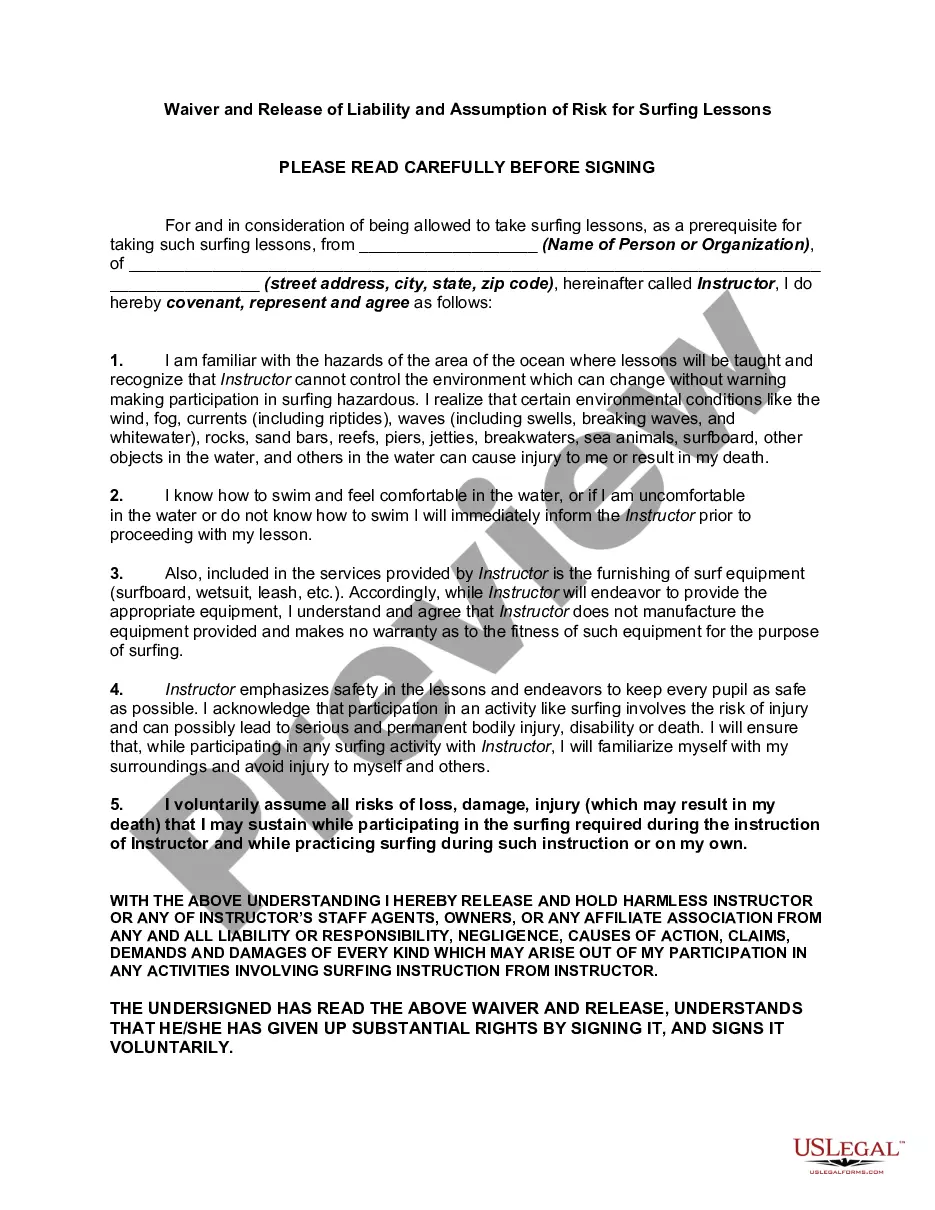
How to fill out Waiver And Release Of Liability And Assumption Of Risk For Surfing Lessons?
Whether for commercial purposes or personal matters, everyone must manage legal issues at some stage in their life.
Completing legal paperwork demands meticulous attention, starting from choosing the appropriate form template.
With an extensive US Legal Forms catalog available, you will never need to waste time searching for the correct template online. Make use of the library’s straightforward navigation to find the right form for any circumstance.
- Locate the template you require using the search bar or browse through the catalog.
- Review the form’s details to confirm it aligns with your circumstance, state, and county.
- Click on the form’s preview to evaluate it.
- If it's the wrong document, return to the search feature to find the Assumption Of Responsibility For Hosting sample you need.
- Download the file when it satisfies your requirements.
- If you possess a US Legal Forms account, simply click Log in to access previously saved documents in My documents.
- If you haven't created an account yet, you may obtain the form by clicking Buy now.
- Select the appropriate pricing option.
- Fill out the account registration form.
- Choose your payment method: use a credit card or PayPal account.
- Select the document format you desire and download the Assumption Of Responsibility For Hosting.
- Once saved, you can complete the form using editing software or print it and finish it manually.
Form popularity
FAQ
We often hear the question, ?does the power of attorney need to be notarized in Texas?? The answer is yes; the document and any changes to it should be formally notarized. Once these steps are completed, power of attorney is validly granted.
The Texas tax power of attorney (Form 01-137) designates an agent to represent a taxpayer before the Texas Comptroller of Public Accounts. In most cases, it is accountants or attorneys that are appointed, although any individual can be named as the taxpayer's agent.
? If the firm has any non-CPA owners who are residents of Texas, the non-CPA owners must register with the Board for the firm to conduct business in Texas.
A Texas Tax Power of Attorney (Form 85-113) must be filled out to designate someone to represent you in tax matters that concern you before the Texas Comptroller of Public Accounts. This power of attorney grants the person you appoint the power to see your tax information and make filings and decisions on your behalf.
You can work with an attorney, use estate planning software or download Texas' Statutory Durable Power of Attorney or Medical Power of Attorney Designation of Health Care Agent forms to print and fill out yourself. Choose your agent and detail the authority you'd like them to have.
EFileTexas.Gov. Official E-Filing System for Texas. applying technology that enables everyone access to our justice system.
In order for this power of attorney to be valid it must be notarized, but it doesn't need to be signed by any witnesses like a will does. You do not need to file a power of attorney at the courthouse unless you want your agent to be able to act on your behalf in regards to a real estate transaction.
A firm that will be practicing public accountancy in the State of Texas as a limited liability company (LLC) must register with the Board unless the firm is an out-of-state firm that meets the requirements of Section 901.461 of the Public Accountancy Act (effective September 1, 2007).