Mediation A Legal Without
Description
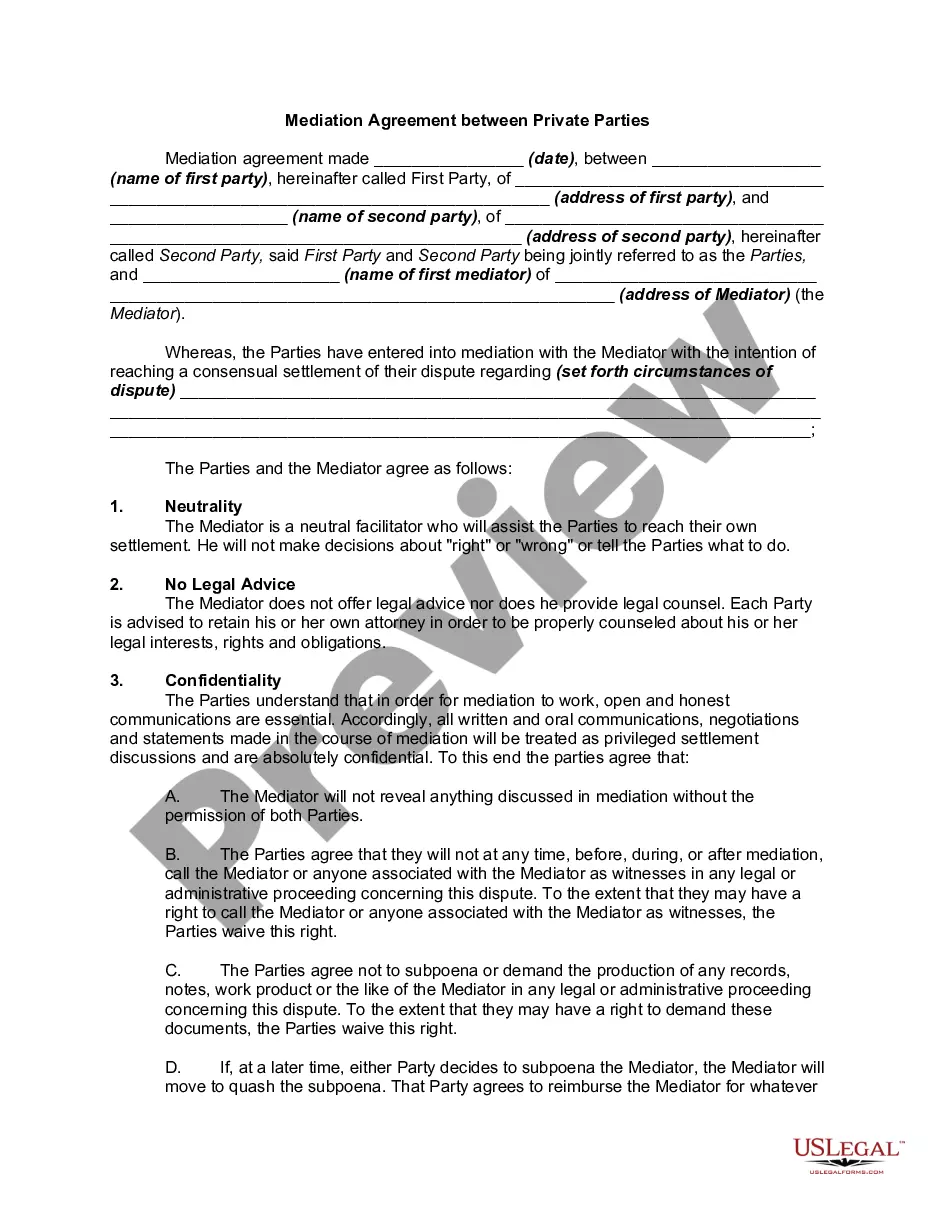
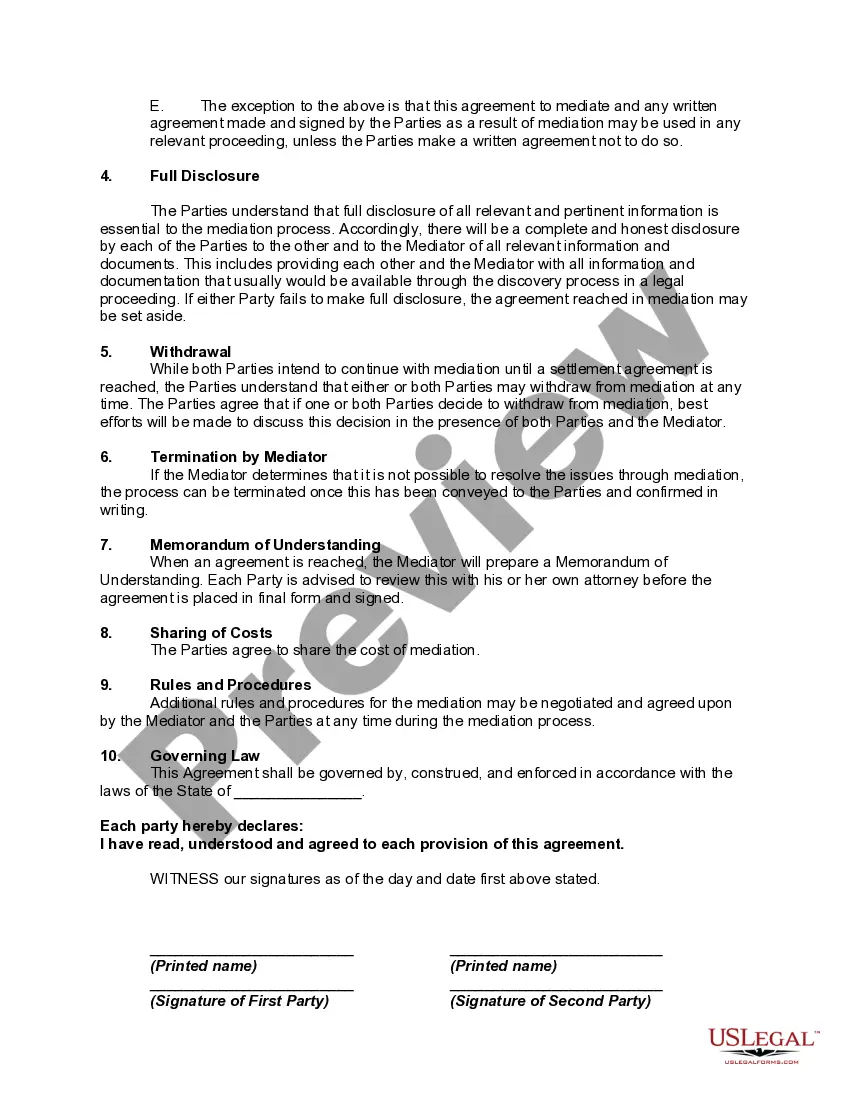


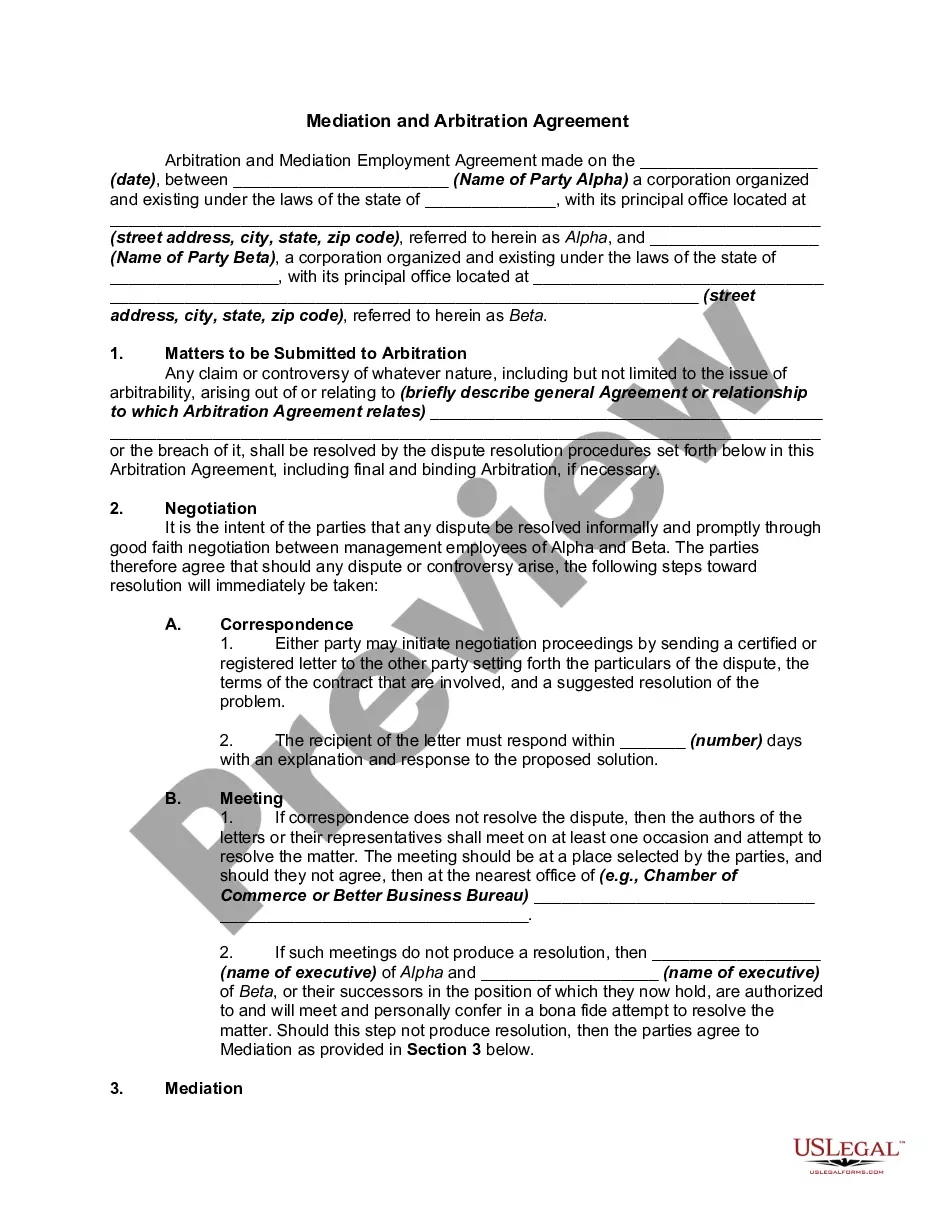

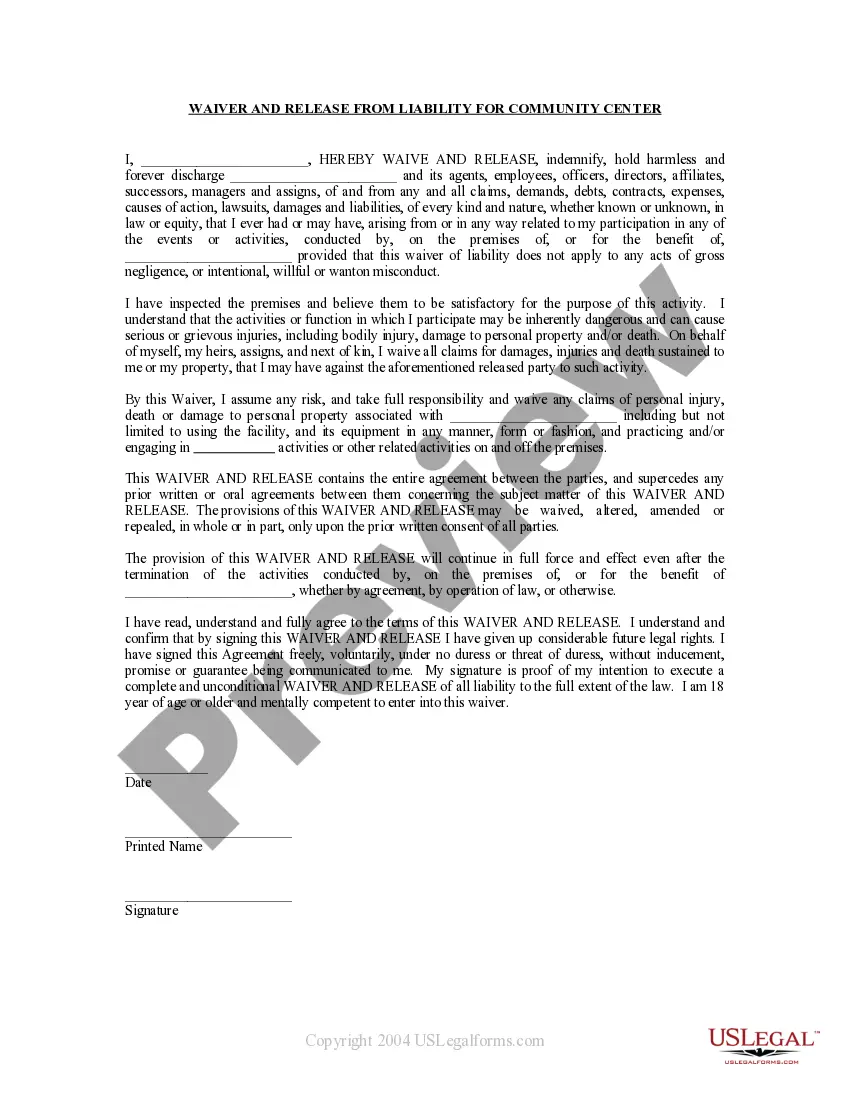
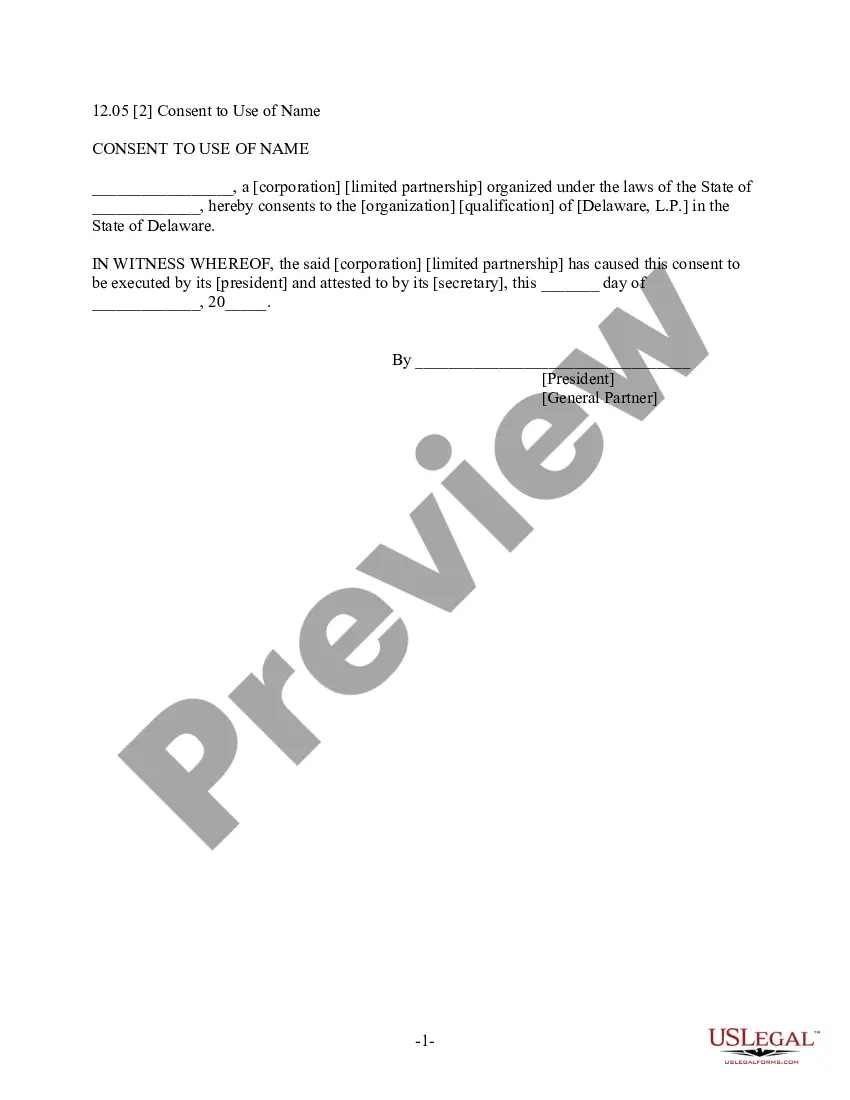
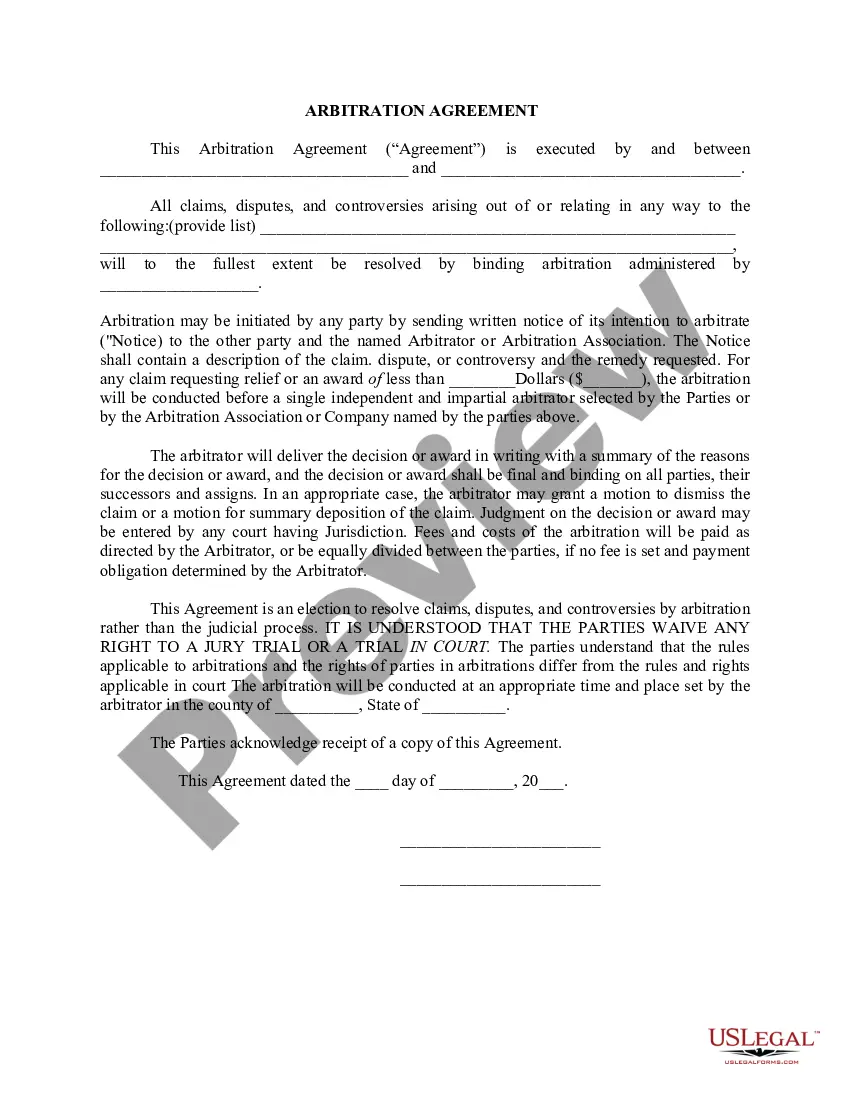
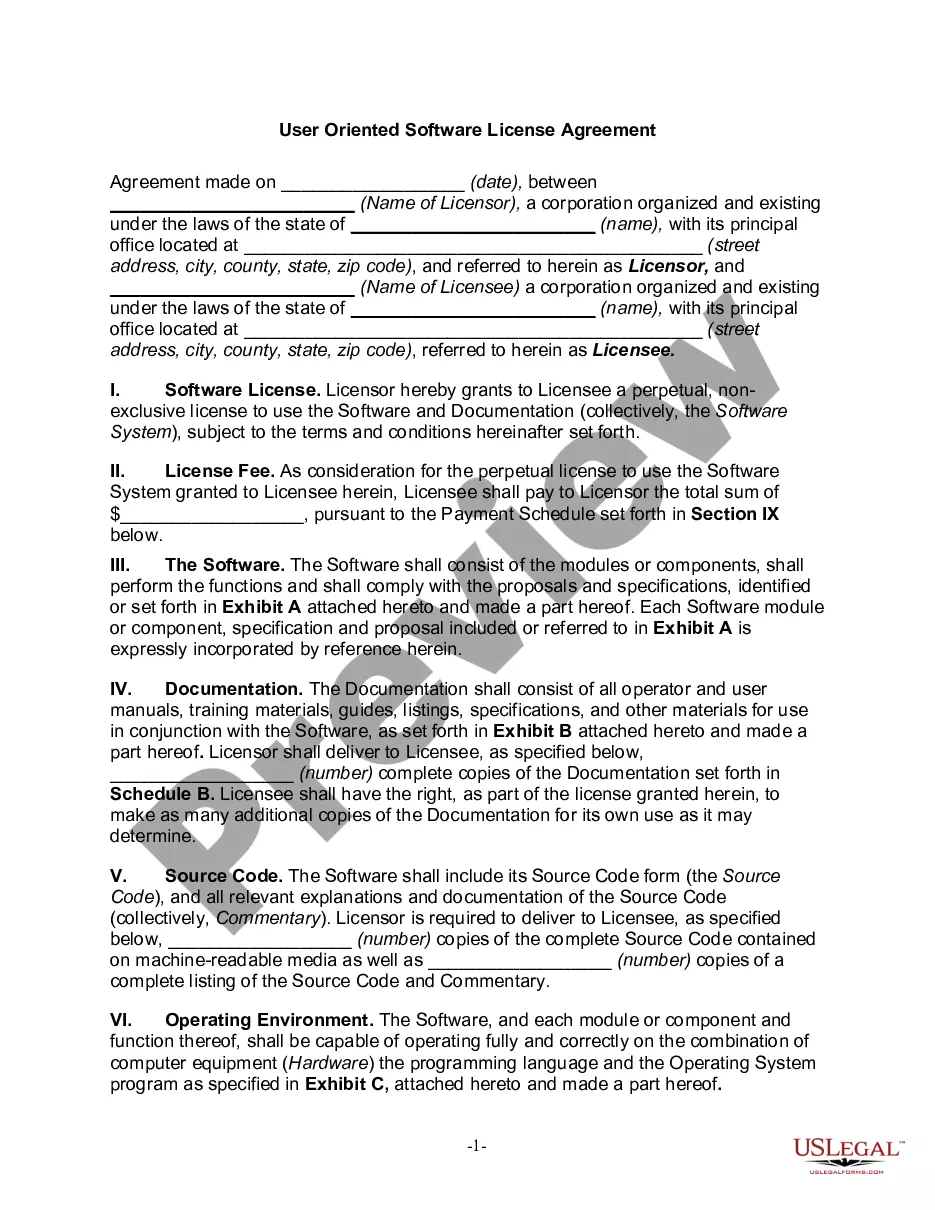
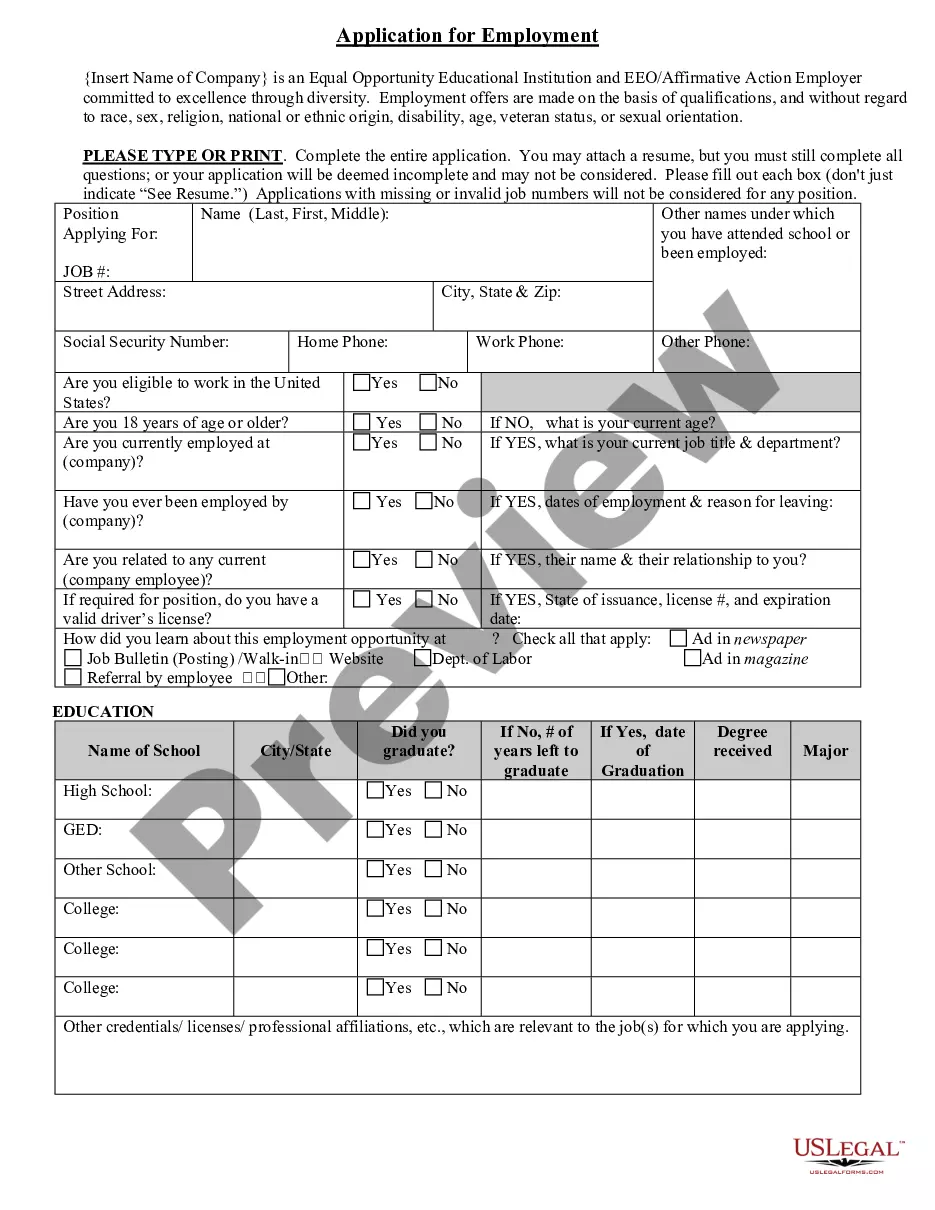
How to fill out Mediation Agreement Between Private Parties?
It’s well-known that you cannot become a legal authority instantly, nor can you understand how to swiftly prepare Mediation A Legal Without without possessing a specialized skill set.
Creating legal documents is a lengthy process that demands particular education and expertise. So why not entrust the preparation of the Mediation A Legal Without to the professionals.
With US Legal Forms, one of the most extensive legal document repositories, you can locate anything from court papers to templates for internal communication.
If you need a different template, begin your search again. Sign up for a free account and select a subscription plan to purchase the template.
Click Buy now. Once the transaction is complete, you can download the Mediation A Legal Without, fill it out, print it, and send or mail it to the appropriate individuals or organizations.
- We recognize how vital compliance and adherence to federal and state regulations are.
- That’s why, on our platform, all templates are location-specific and current.
- Here’s how to start with our platform and obtain the document you need in just minutes.
- Find the form you require using the search bar at the top of the page.
- Preview it (if this option is available) and review the accompanying description to determine if Mediation A Legal Without is what you are looking for.
Form popularity
FAQ
The golden rule of mediation is to foster open communication and maintain a respectful dialogue between parties. This principle encourages understanding and collaboration, which are essential for reaching an agreement. By focusing on interests rather than positions, you can find common ground and create solutions that work for everyone involved. Platforms like US Legal Forms provide valuable resources to support this approach in your mediation efforts.
Yes, you can certainly choose to go to mediation without involving the court. This approach allows you to resolve disputes privately and collaboratively, without the pressure of a trial. Mediation a legal without court involvement can lead to more amicable solutions. Utilizing platforms like US Legal Forms can streamline this process, offering guidance and templates for effective mediation agreements.
In many cases, courts require parties to attempt mediation before proceeding to trial. This requirement aims to encourage settlement and reduce the burden on the court system. However, there are situations where mediation is not mandated, allowing you the option to choose whether to pursue mediation a legal without court involvement. Consulting resources like US Legal Forms can provide clarity on your specific situation.
To make mediation legally binding, you and the other party must create a formal agreement that outlines the terms you have both accepted. This agreement should be clear, specific, and signed by both parties. Using a platform like US Legal Forms can help you draft a solid mediation agreement, ensuring that it meets all legal requirements. This way, your mediation becomes a legal document that you can enforce if necessary.
Mediation is not considered a legal proceeding in the same way that a court trial is. Instead, it is a voluntary process where parties come together to resolve disputes collaboratively. While it is informal, the outcomes can still carry legal weight if properly documented. By using services like US Legal Forms, you can ensure that your mediation agreements are effectively structured, confirming that mediation a legal without formal court involvement is possible.
Mediation can result in legally enforceable agreements if both parties reach a mutual understanding. Once you finalize your agreements through mediation, you can draft them into a formal document, which can then be submitted to a court for enforcement. This process ensures that your resolutions are binding, providing peace of mind for both parties. Utilizing US Legal Forms can help you create enforceable documents easily, making mediation a legal without complications.
It may be easy to establish who is at fault, but you do not want to go into mediation saying things like, ?This is all your fault? or ?If not for you, I wouldn't have been injured.? Placing blame can raise the other party's guard, which could make them less likely to compromise.
The cost of mediation varies with location, but generally court ordered mediation costs about $50 per hour to be divided by the couple. What if I can't afford to pay for mediation? Free (pro bono) mediation is available for those couples that are able to meet the indigence requirement of the Court.
The opening statements of the mediation process serve a number of purposes, and they are therefore necessary before moving on to the open session. For example, they allow the mediator to explain clearly the process to the parties.
The goal of mediation is to negotiate a deal, and overly aggressive lawyers can hinder that process. One of the biggest and most common obstacles in mediation is when litigators refuse to budge from their courtroom arguments and conduct themselves as though they are presenting their case to a judge or jury.