Towing Unauthorized Vehicles With Credit Cards
Description
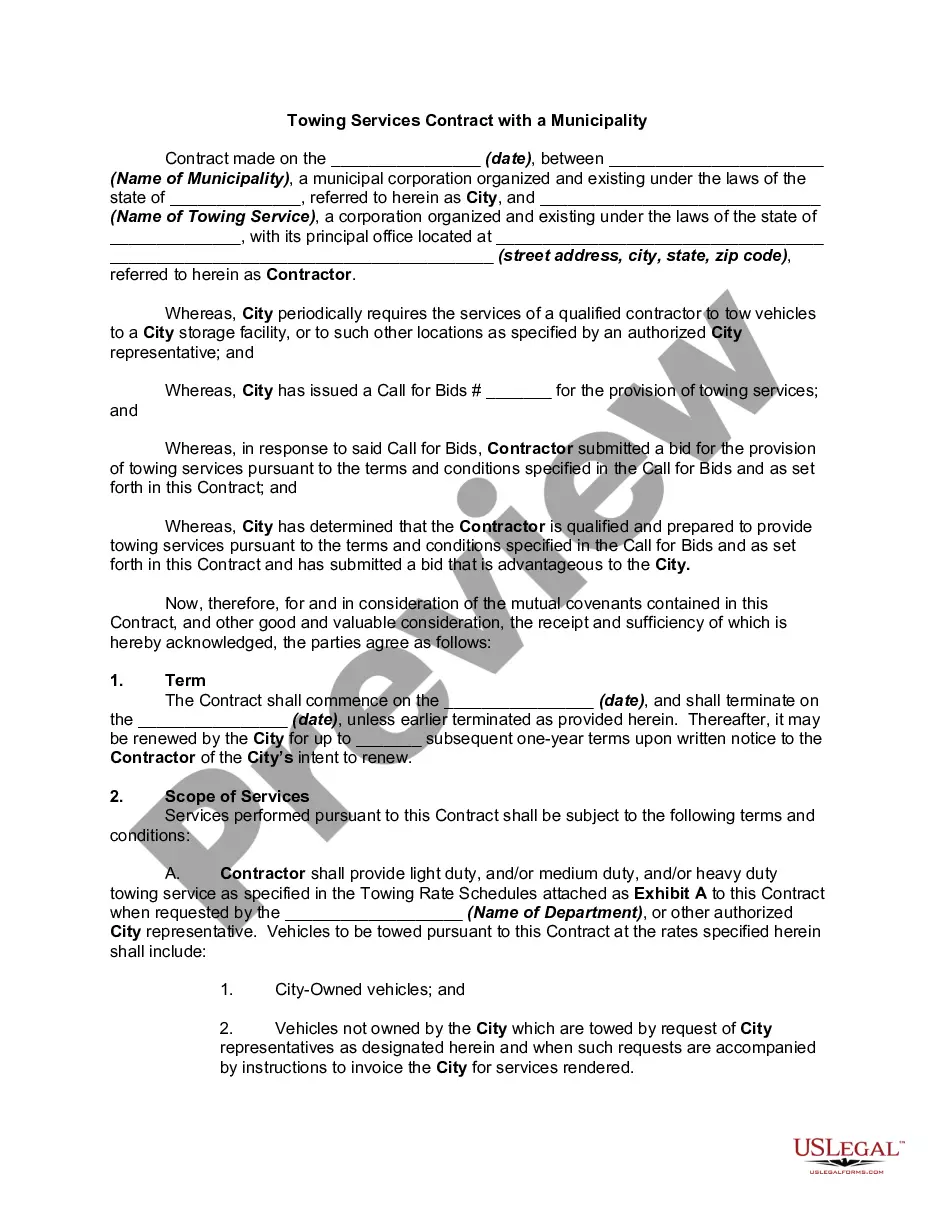
Get your form ready online
Our built-in tools help you complete, sign, share, and store your documents in one place.
Make edits, fill in missing information, and update formatting in US Legal Forms—just like you would in MS Word.
Download a copy, print it, send it by email, or mail it via USPS—whatever works best for your next step.
Sign and collect signatures with our SignNow integration. Send to multiple recipients, set reminders, and more. Go Premium to unlock E-Sign.
If this form requires notarization, complete it online through a secure video call—no need to meet a notary in person or wait for an appointment.
We protect your documents and personal data by following strict security and privacy standards.

Make edits, fill in missing information, and update formatting in US Legal Forms—just like you would in MS Word.

Download a copy, print it, send it by email, or mail it via USPS—whatever works best for your next step.

Sign and collect signatures with our SignNow integration. Send to multiple recipients, set reminders, and more. Go Premium to unlock E-Sign.

If this form requires notarization, complete it online through a secure video call—no need to meet a notary in person or wait for an appointment.

We protect your documents and personal data by following strict security and privacy standards.
Looking for another form?





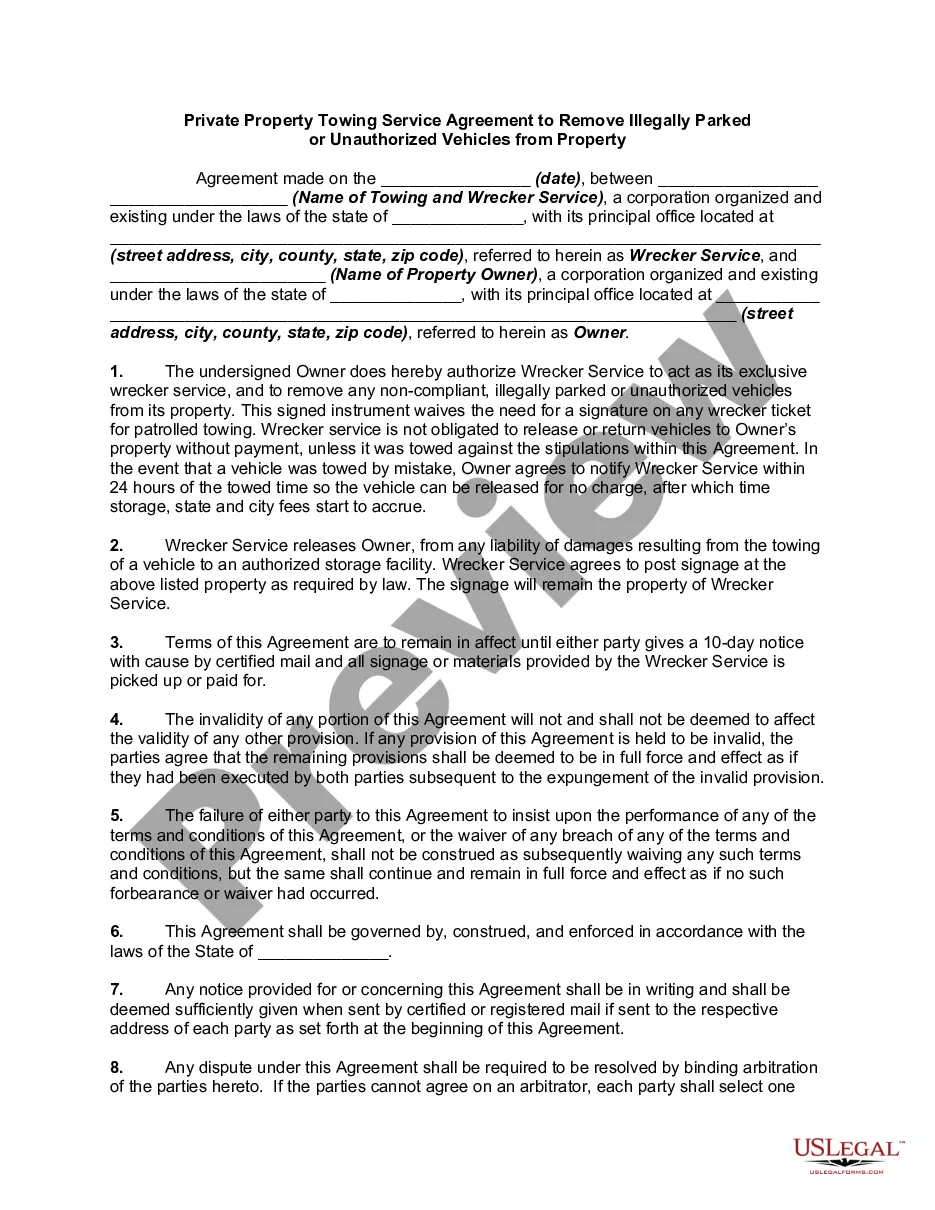
How to fill out Private Property Truck Towing Service Agreement To Remove Illegally Parked Or Unauthorized Vehicles From Property?
Creating legal documents from the ground up can frequently be daunting.
Certain situations may entail hours of investigation and significant financial expenditure.
If you’re looking for a more straightforward and economical method of preparing Towing Unauthorized Vehicles With Credit Cards or any other documentation without the need to navigate complex processes, US Legal Forms is always available to assist you.
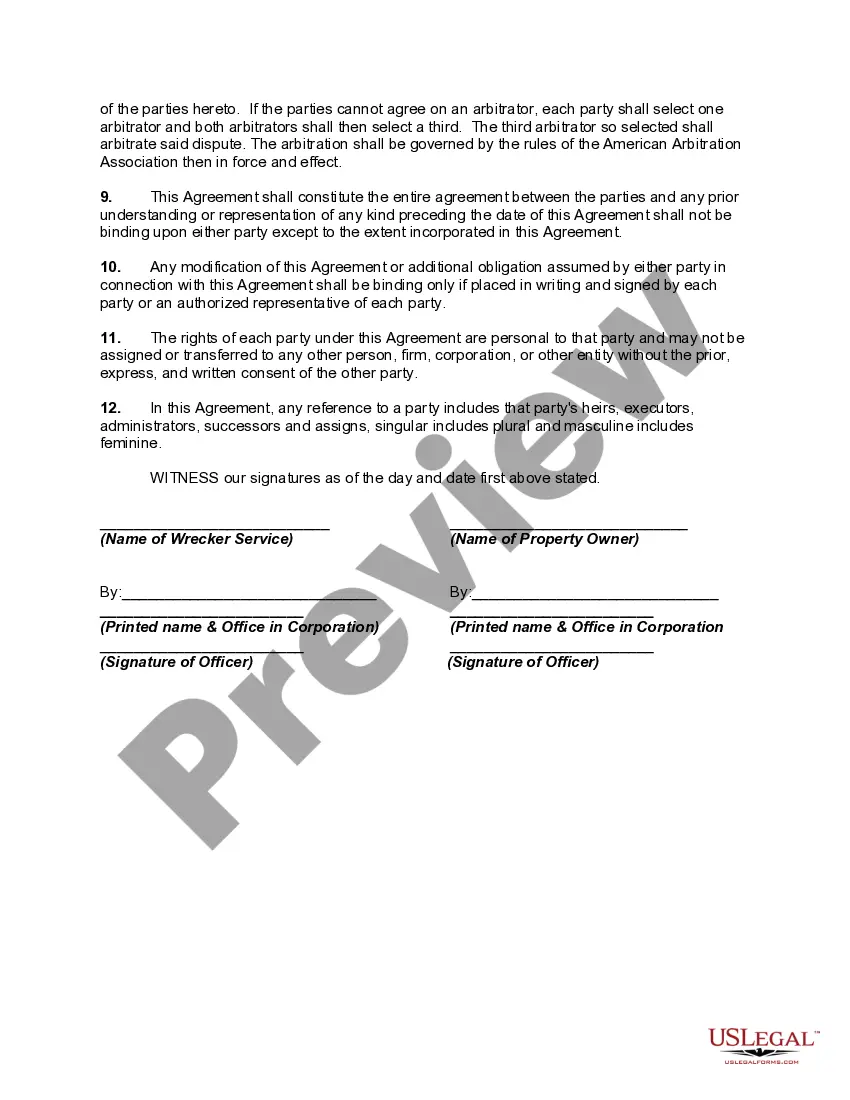
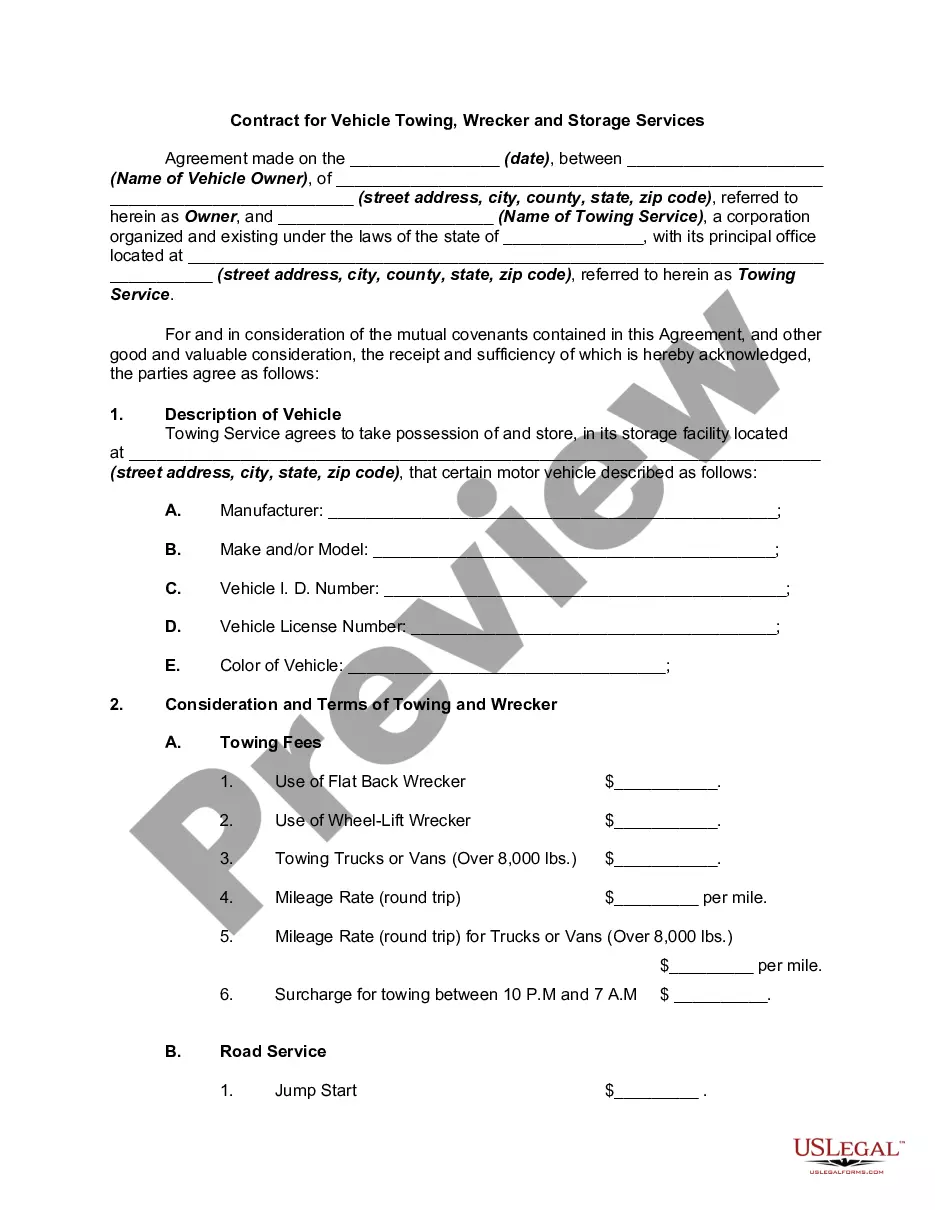
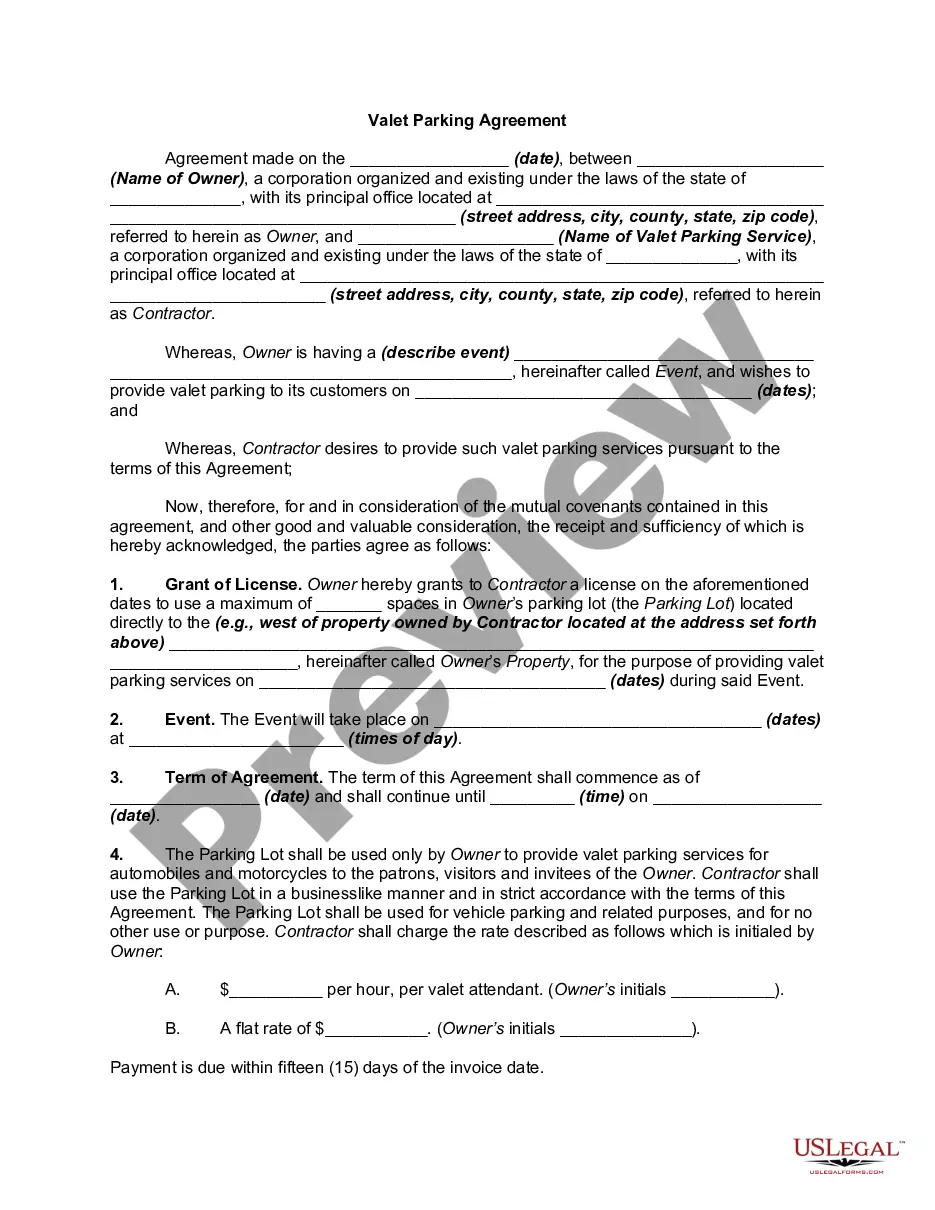
Our online library of over 85,000 current legal documents covers nearly every aspect of your financial, legal, and personal affairs. With just a few simple actions, you can rapidly access state- and county-specific templates meticulously crafted by our legal experts.
Ensure that the form you select complies with your state and county's rules and regulations. Choose the most suitable subscription option to purchase the Towing Unauthorized Vehicles With Credit Cards. Download the form, then fill it out, sign it, and print it. US Legal Forms enjoys an impeccable reputation and over 25 years of experience. Become a member today and make form completion an uncomplicated and efficient process!
- Utilize our platform whenever you require a dependable and trustworthy service through which you can effortlessly locate and download the Towing Unauthorized Vehicles With Credit Cards.
- If you’re already familiar with our site and have set up an account previously, simply Log In to your account, choose the form, and download it or re-download it at any time in the My documents section.
- Not registered yet? No problem. It only takes a few minutes to create an account and explore the library.
- But before diving directly into downloading Towing Unauthorized Vehicles With Credit Cards, keep these tips in mind.
- Review the document preview and descriptions to ensure you have located the document you are looking for.
Form popularity
FAQ
In Nevada, the law regarding towing unauthorized vehicles requires property owners to follow specific procedures. You must post clear signs indicating that unauthorized vehicles will be towed, and these signs should state the towing company's name and contact information. Additionally, towing unauthorized vehicles with credit cards is permitted, but you must ensure that the towing complies with local ordinances and regulations. For comprehensive guidance and resources, consider using US Legal Forms to access legal documentation tailored to your specific needs.
Unlawful towing occurs when a vehicle is towed without proper consent or legal justification. For instance, towing unauthorized vehicles with credit cards without the necessary signage or permissions can lead to disputes. It’s important to know your rights and responsibilities as a property owner or vehicle owner. To navigate these complexities, resources from US Legal Forms can provide clarity on lawful towing practices.
In Colorado, towing unauthorized vehicles requires adherence to specific laws. Property owners must post clear signage indicating the towing policy. If you find yourself needing to tow unauthorized vehicles with credit cards, it’s essential to ensure you follow these regulations to avoid potential legal issues. Utilizing platforms like US Legal Forms can help you understand and comply with Colorado’s towing laws effectively.
To report predatory towing, first gather all relevant information, including the towing company's name, vehicle details, and the circumstances of the towing. You can file a complaint with your local consumer protection agency or the Better Business Bureau. Towing unauthorized vehicles with credit cards should always be done ethically, and reporting unethical practices helps protect others. Resources available on US Legal Forms can guide you through the reporting process effectively.
In New Jersey, the towing statute outlines the legal requirements for towing unauthorized vehicles. This statute ensures that property owners have the right to remove vehicles that are parked without permission. When towing unauthorized vehicles with credit cards, it's essential to follow the state's regulations to avoid legal issues. You can find detailed information and necessary forms on US Legal Forms to navigate this process smoothly.
Yes, you can have an illegally parked car towed, especially if it is obstructing your property or is parked without permission. Towing unauthorized vehicles with credit cards is a straightforward process, as it allows you to handle the situation efficiently. Make sure to check local laws and regulations regarding towing to ensure compliance. Utilizing platforms like US Legal Forms can help you understand the necessary documentation and procedures.
Yes, you can use a credit card to retrieve your car from impound, provided the impound lot accepts credit card payments. Make sure to check with the impound facility beforehand, as each facility may have different payment policies. If your vehicle was towed without authorization, it's essential to understand your rights and the process for towing unauthorized vehicles with credit cards. Additionally, you can utilize platforms like uslegalforms to explore your options for addressing any disputes related to towing fees.
To get towing fees refunded, you first need to gather all relevant documentation, including receipts and any correspondence regarding the towing incident. Next, contact the towing company and request a refund, explaining your situation clearly. If the towing was unauthorized, mention that you are aware of your rights regarding towing unauthorized vehicles with credit cards. If the company denies your request, you can escalate the matter by filing a complaint with your local consumer protection agency or seeking legal assistance.