Trust Your Child
Description

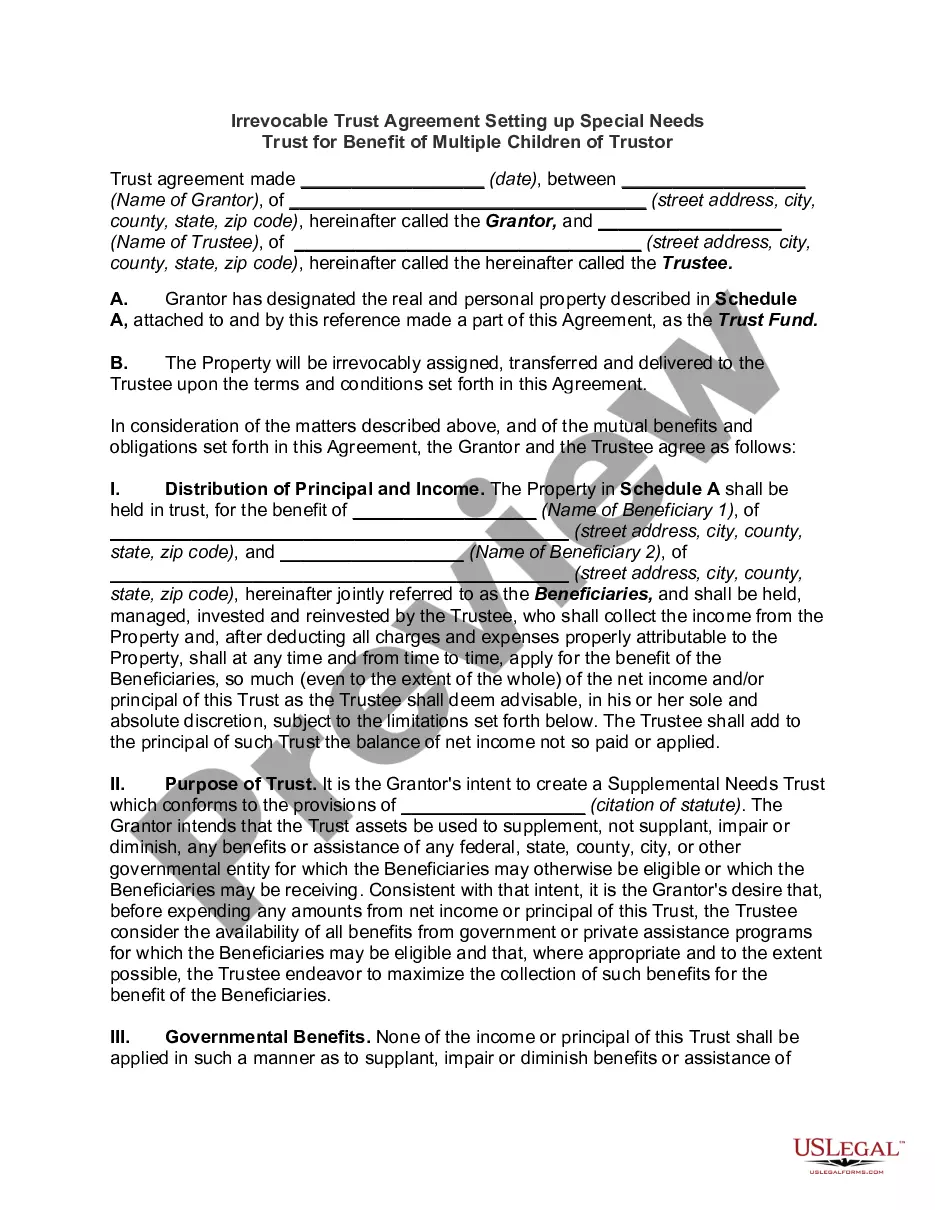
Get your form ready online
Our built-in tools help you complete, sign, share, and store your documents in one place.
Make edits, fill in missing information, and update formatting in US Legal Forms—just like you would in MS Word.
Download a copy, print it, send it by email, or mail it via USPS—whatever works best for your next step.
Sign and collect signatures with our SignNow integration. Send to multiple recipients, set reminders, and more. Go Premium to unlock E-Sign.
If this form requires notarization, complete it online through a secure video call—no need to meet a notary in person or wait for an appointment.
We protect your documents and personal data by following strict security and privacy standards.

Make edits, fill in missing information, and update formatting in US Legal Forms—just like you would in MS Word.

Download a copy, print it, send it by email, or mail it via USPS—whatever works best for your next step.

Sign and collect signatures with our SignNow integration. Send to multiple recipients, set reminders, and more. Go Premium to unlock E-Sign.

If this form requires notarization, complete it online through a secure video call—no need to meet a notary in person or wait for an appointment.

We protect your documents and personal data by following strict security and privacy standards.
Looking for another form?




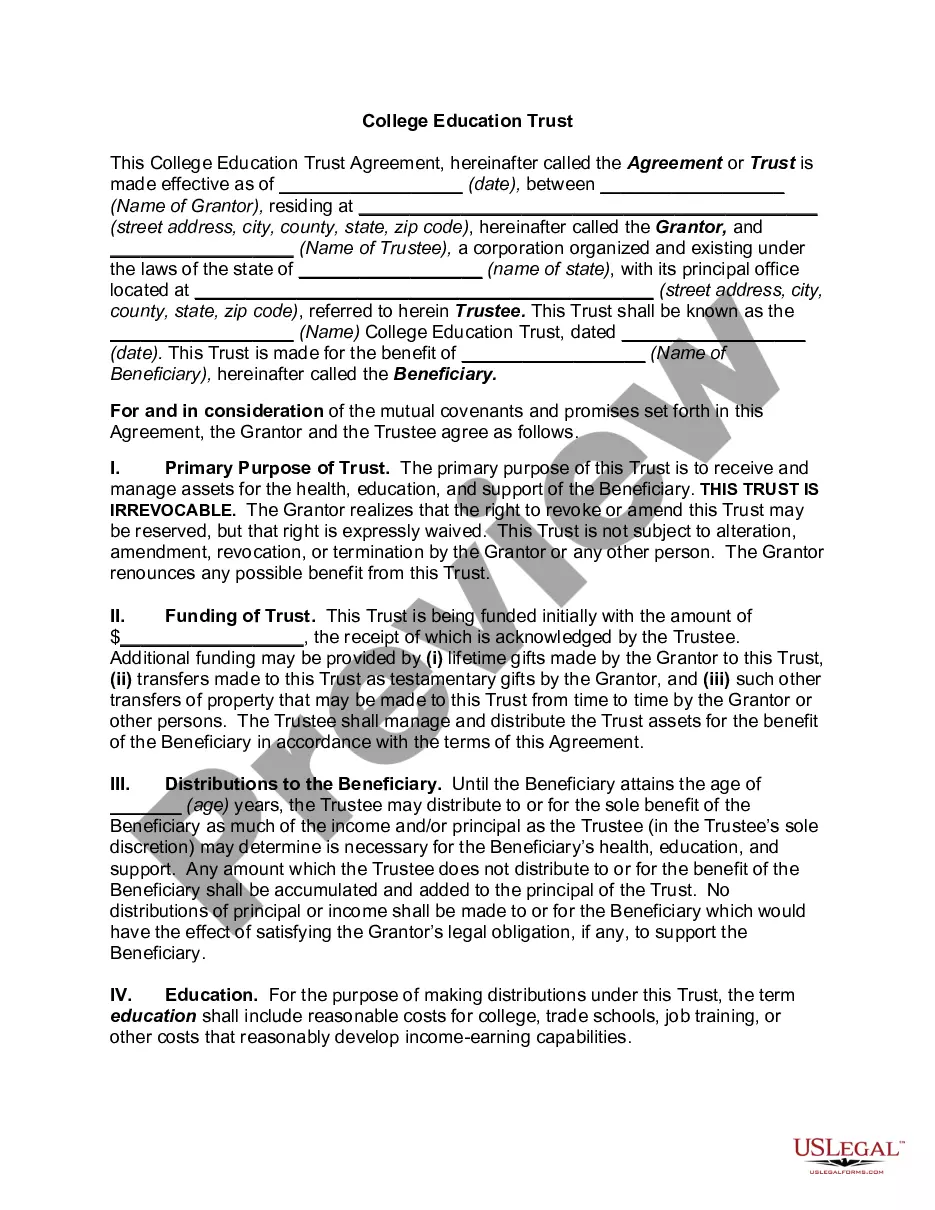





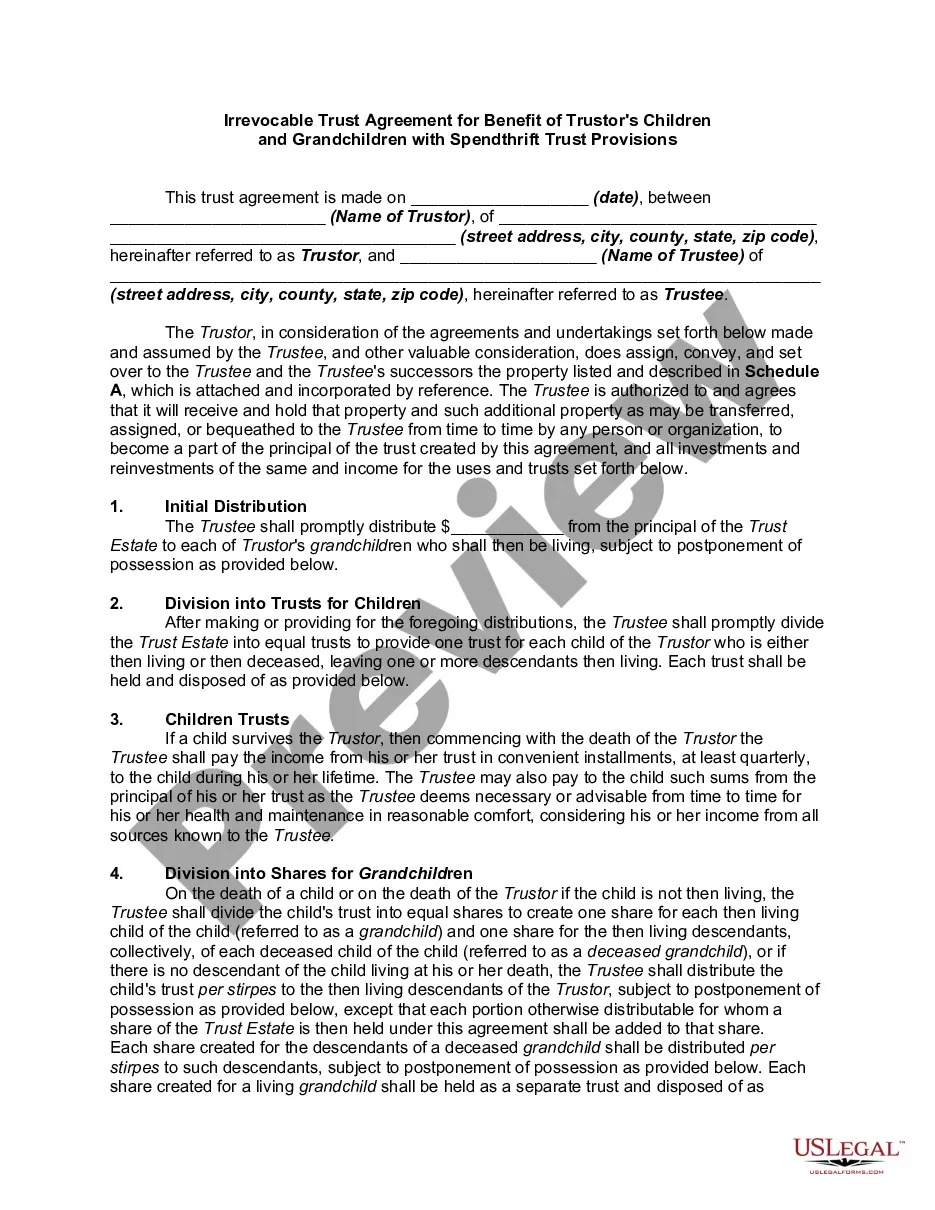
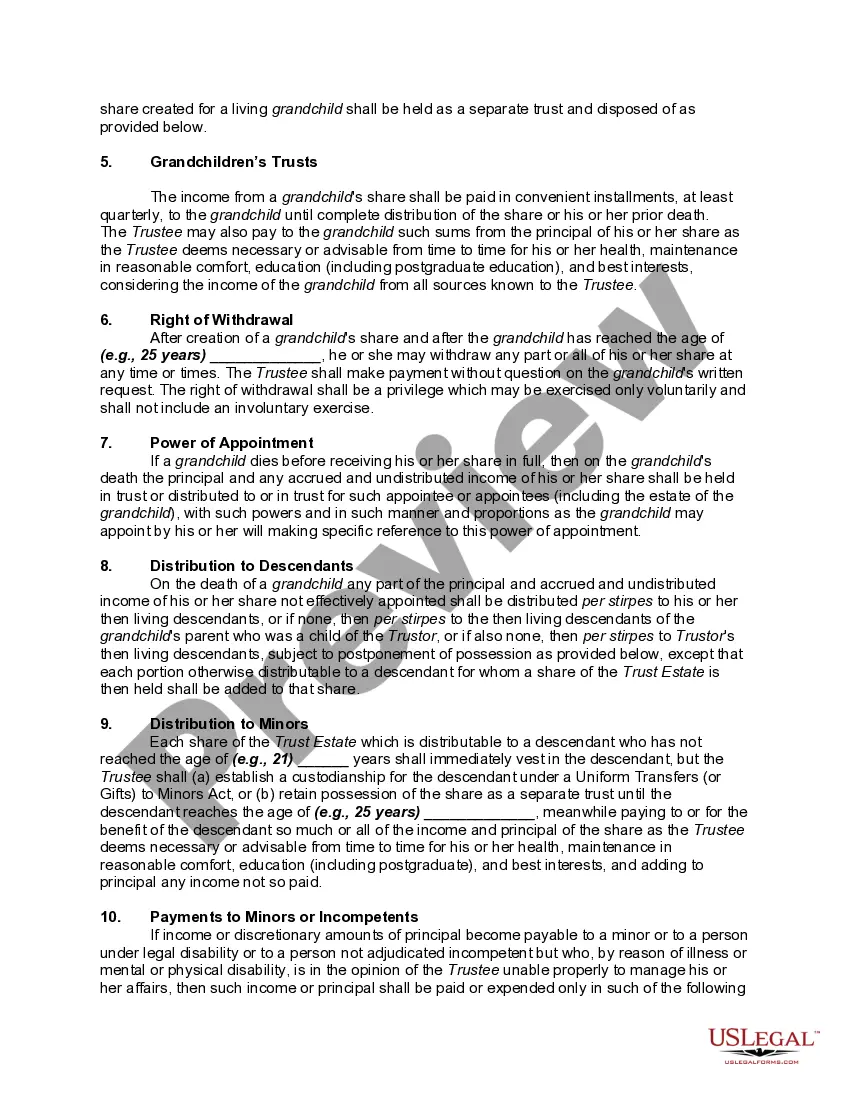
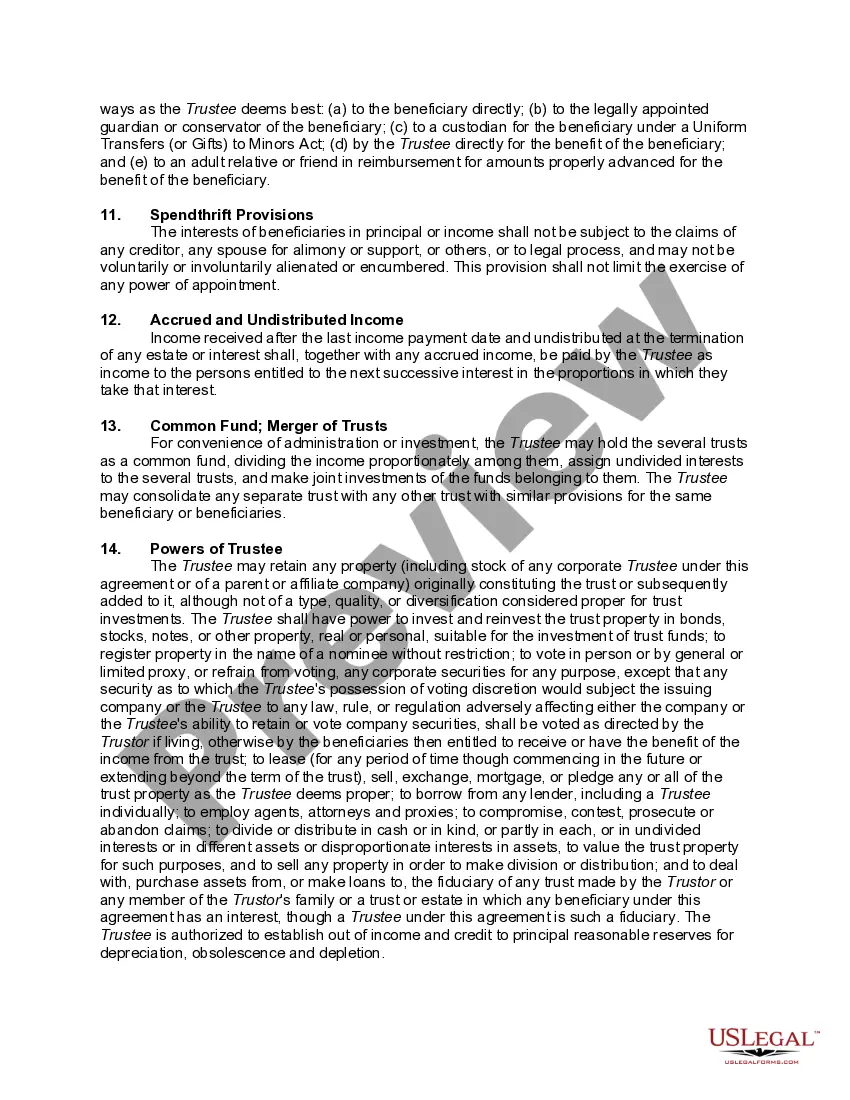
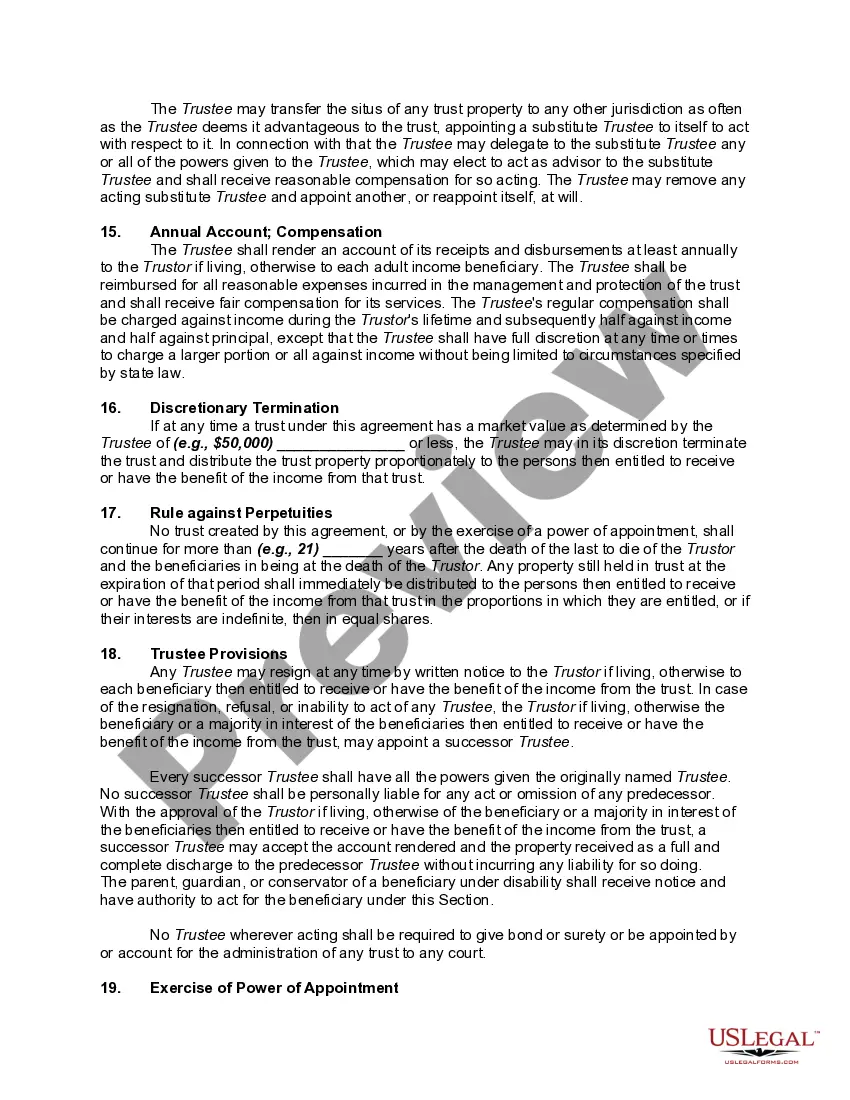
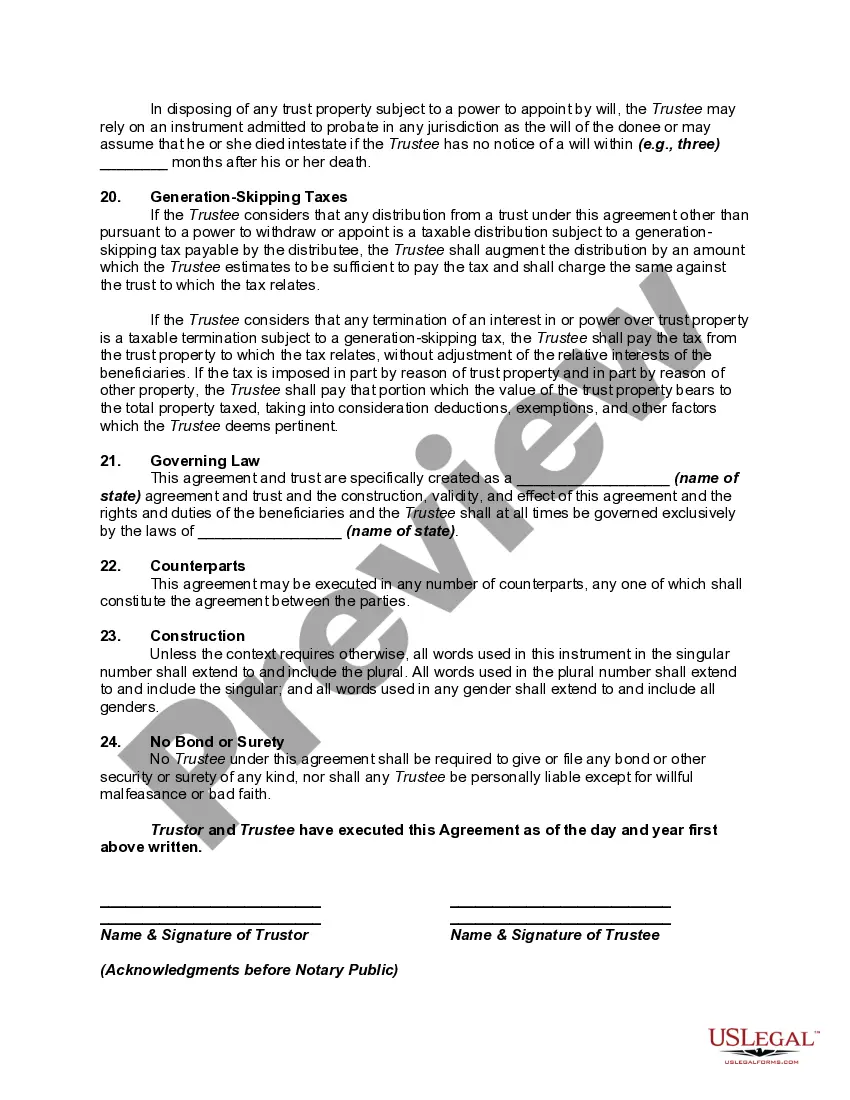
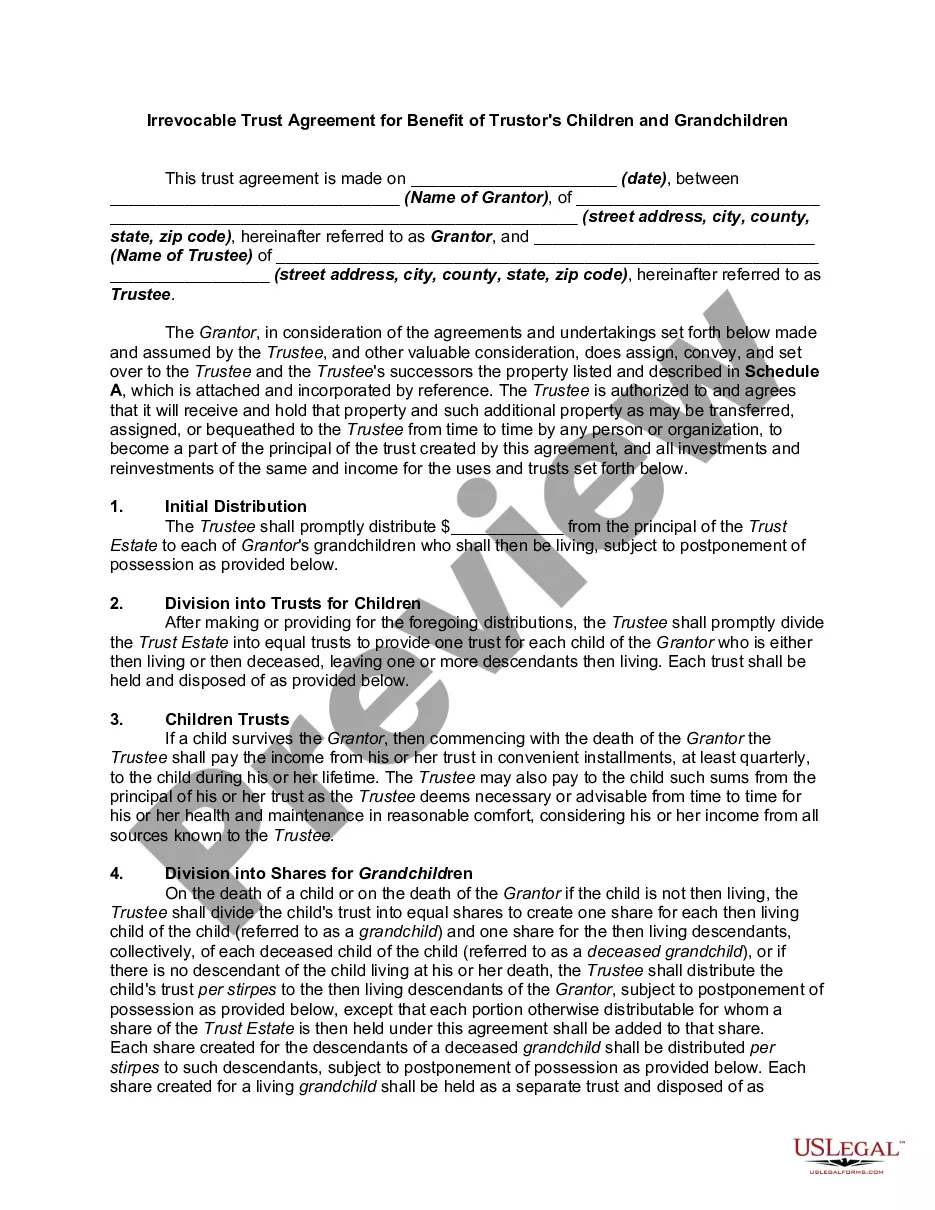
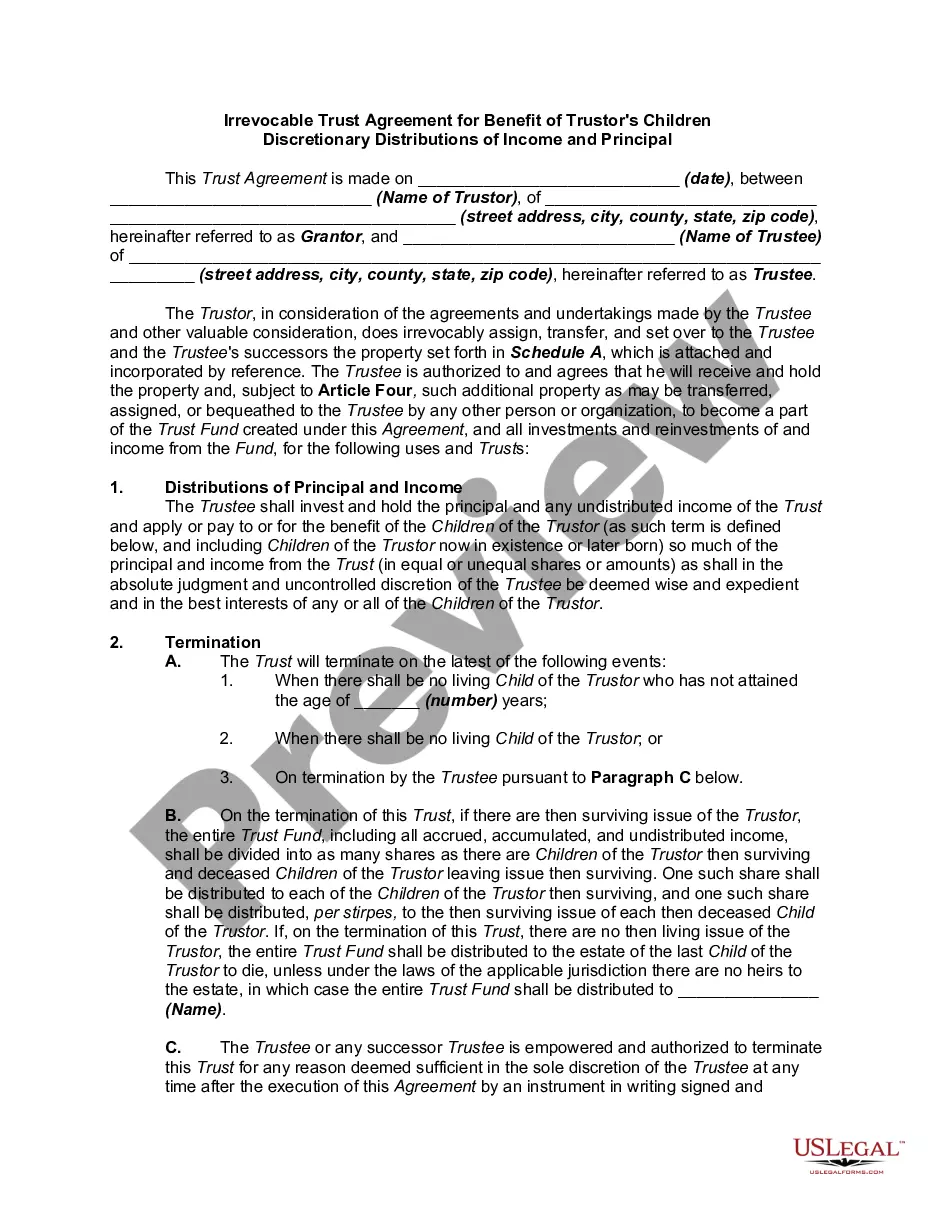
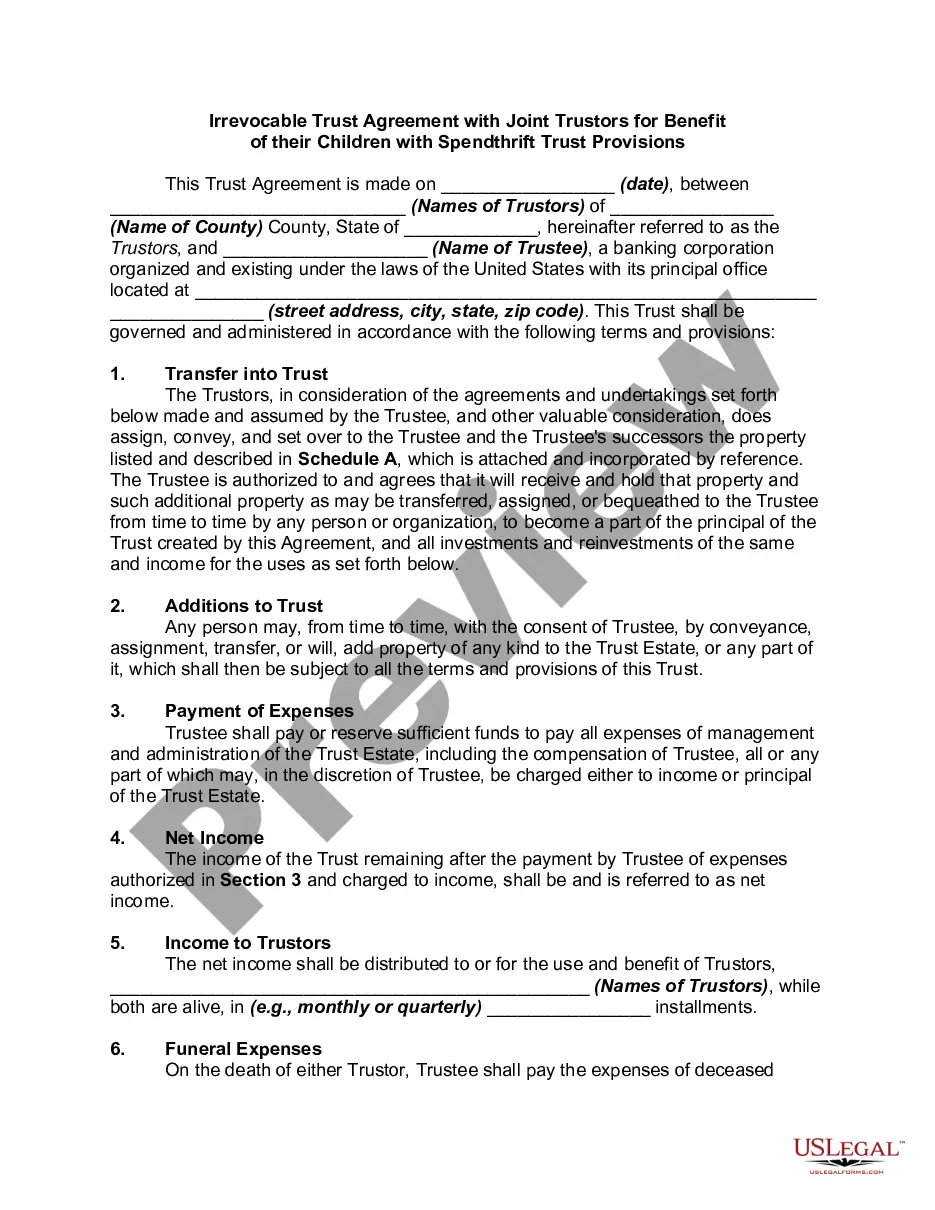
How to fill out Irrevocable Trust Agreement For Benefit Of Trustor's Children And Grandchildren With Spendthrift Trust Provisions?
- Start by checking out the Preview mode and form description to ensure you choose the right one for your needs and local jurisdiction.
- If the first template isn't suitable, utilize the Search tab to find an alternative that meets your requirements.
- When you've identified the correct document, click on the Buy Now button and select your preferred subscription plan. Remember to create your account for full library access.
- Proceed with your purchase by providing your payment details, whether using a credit card or PayPal.
- Finally, download the completed form to your device to easily access and fill it out later. You can also find it anytime in the My Forms section of your account.
In conclusion, US Legal Forms offers a user-friendly platform that simplifies the legal documentation process. By following these straightforward steps, you can ensure that you have access to the necessary forms while receiving expert assistance for precise completion.
Don't wait—sign up today and trust your child with high-quality legal documents!
Form popularity
FAQ
When you can no longer care for your special needs child, it's essential to research resources and specialized support available. Look into educational and medical programs that can continue to provide for your child's unique needs. Additionally, consider setting up a trust that can offer long-term financial support for their care. By being proactive, you can trust your child to maintain a quality life, even in your absence.
If you can no longer take care of your child, first, assess your situation to understand the best path forward. Consulting professionals in child welfare can provide recommendations tailored to your specific needs. Exploring legal options such as trust funds or guardianship can provide security for your child’s future. Trust your child to professionals who can help navigate these sensitive decisions.
Yes, if you find yourself in a situation where you cannot care for your child, you may consider temporary foster care as a viable option. This allows your child to be in a safe environment while you work through your issues. Always make sure to choose a reputable agency that prioritizes your child's welfare. Trust your child by ensuring they are placed in a caring and supportive setting during difficult times.
When you find yourself unable to take care of your child anymore, consider exploring various options available to ensure they receive proper care. You might look into support groups or community services that can help manage your circumstances. Additionally, consider discussing trust options that can provide for your child's needs without compromising their future. Planning ahead will empower you to make confident choices for your child.
If you reach a point where you can no longer handle your child, the first step is to seek support from family, friends, or professionals. It's important to evaluate your options and trust your child with the right support systems, such as counseling or resources that can provide assistance. Don't hesitate to look into local programs that help families navigate challenging situations. Remember, reaching out for help is a positive step in ensuring your child's well-being.
One of the biggest mistakes parents make when setting up a trust fund is not considering their child's future needs. When you trust your child with a fund, it's crucial to plan for unexpected events, such as changing health or educational needs. Be sure to consult with a legal expert to create a comprehensive plan that addresses these factors. By planning well, you can ensure that your child will benefit from the trust throughout their life.
When you feel overwhelmed, it's essential to seek professional support like counseling or family therapy. These resources help you gain strategies for managing difficult behavior while fostering a supportive environment. Remember, trusting your child involves patience, understanding, and sometimes professional guidance.
The most tax-efficient method often involves using a trust to pass the property without facing tax implications immediately. By doing this, you establish control while minimizing potential estate and gift taxes. Consulting with a tax professional can further optimize your strategy, ensuring you trust your child with this great responsibility under the best conditions.
Gifting a house provides immediate ownership benefits but may trigger gift taxes. Placing the house in a trust can offer long-term management, asset protection, and avoid probate. By evaluating your family's situation, you can determine whether to gift the property directly or establish a trust to retain control.
Leaving your property to your children can be accomplished through a well-drafted will or a trust. A trust provides more control over how the property is managed and distributed. When you trust your child, you can also designate timelines or conditions for property transfer, ensuring it aligns with your family's needs.