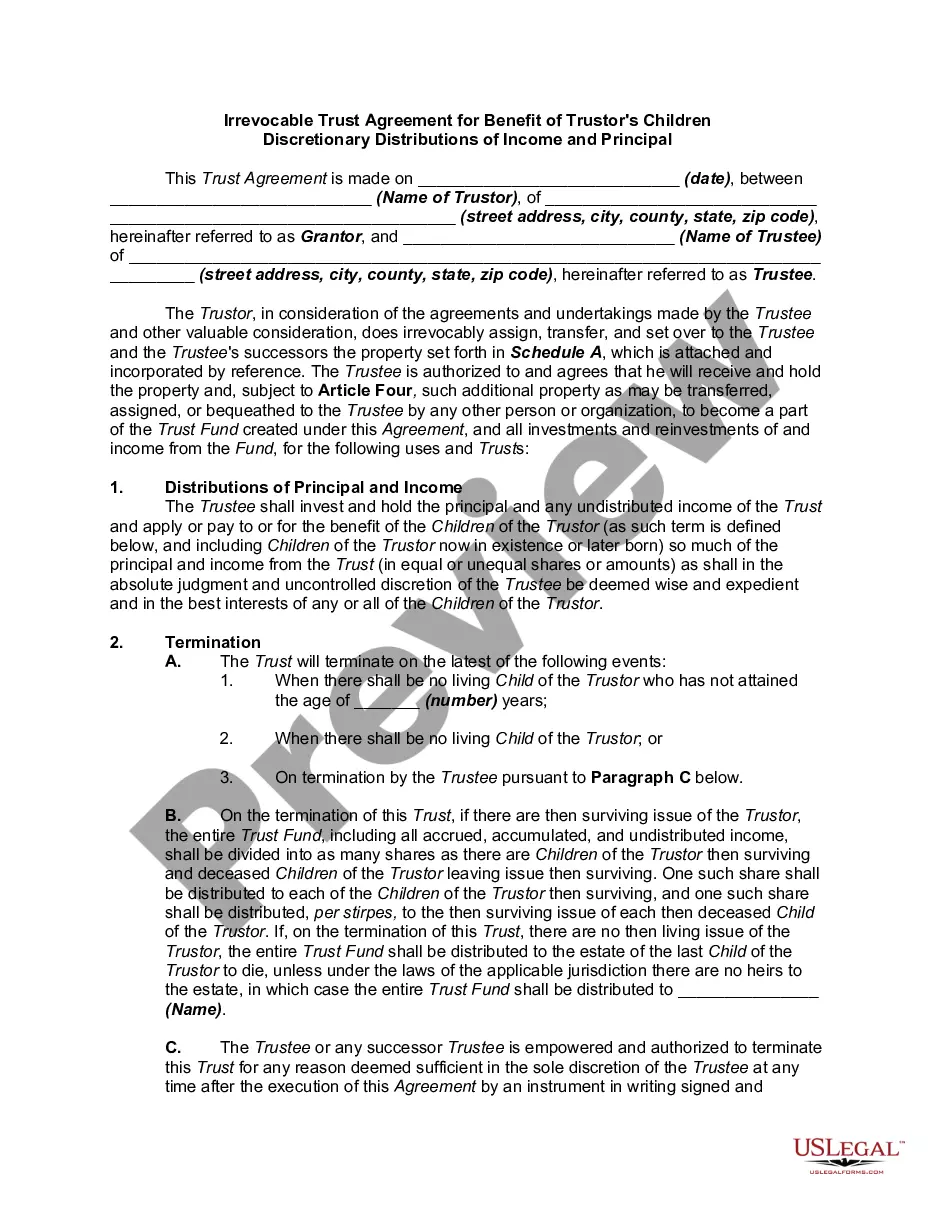
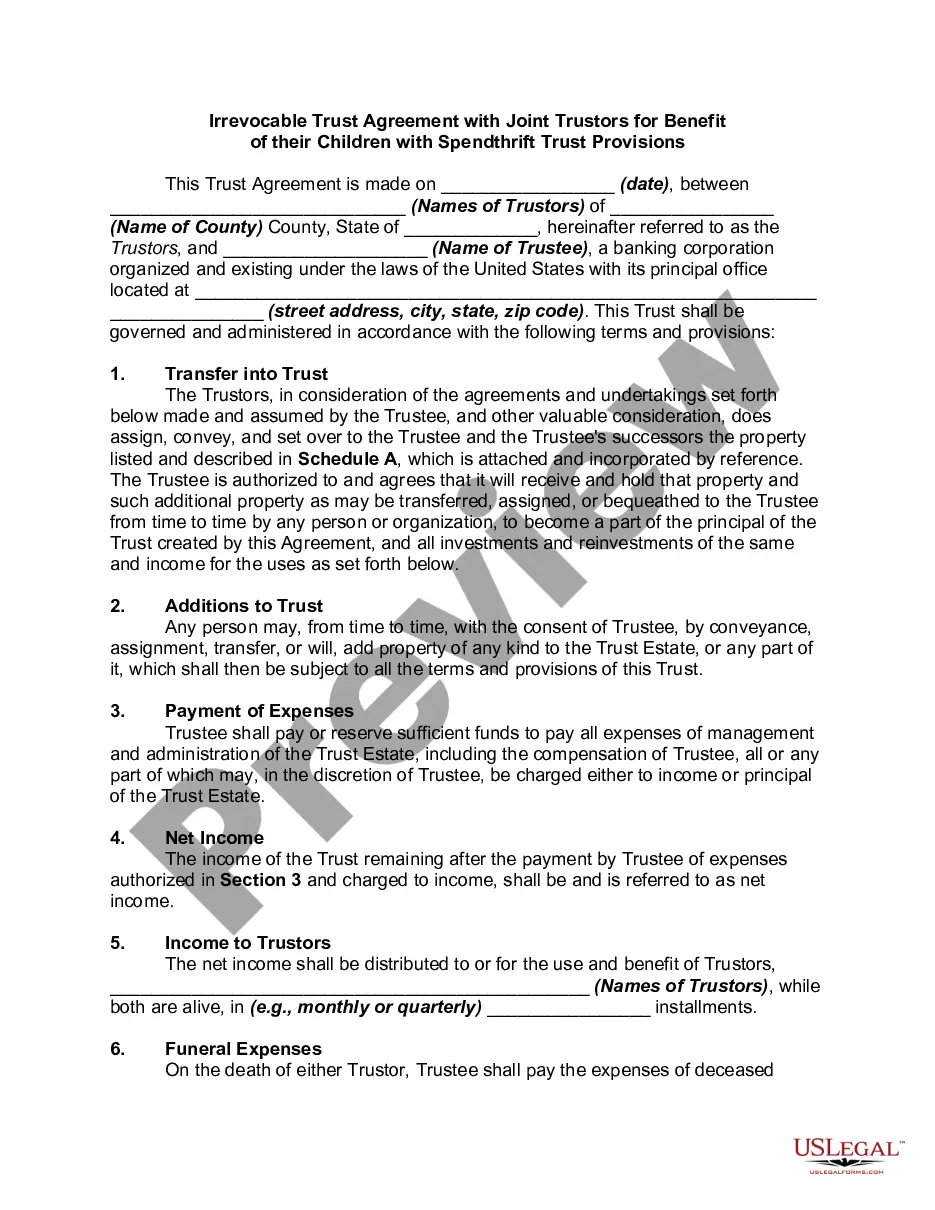
Terminating An Irrevocable Trust In California
Description




Get your form ready online
Our built-in tools help you complete, sign, share, and store your documents in one place.
Make edits, fill in missing information, and update formatting in US Legal Forms—just like you would in MS Word.
Download a copy, print it, send it by email, or mail it via USPS—whatever works best for your next step.
Sign and collect signatures with our SignNow integration. Send to multiple recipients, set reminders, and more. Go Premium to unlock E-Sign.
If this form requires notarization, complete it online through a secure video call—no need to meet a notary in person or wait for an appointment.
We protect your documents and personal data by following strict security and privacy standards.

Make edits, fill in missing information, and update formatting in US Legal Forms—just like you would in MS Word.

Download a copy, print it, send it by email, or mail it via USPS—whatever works best for your next step.

Sign and collect signatures with our SignNow integration. Send to multiple recipients, set reminders, and more. Go Premium to unlock E-Sign.

If this form requires notarization, complete it online through a secure video call—no need to meet a notary in person or wait for an appointment.

We protect your documents and personal data by following strict security and privacy standards.
Looking for another form?


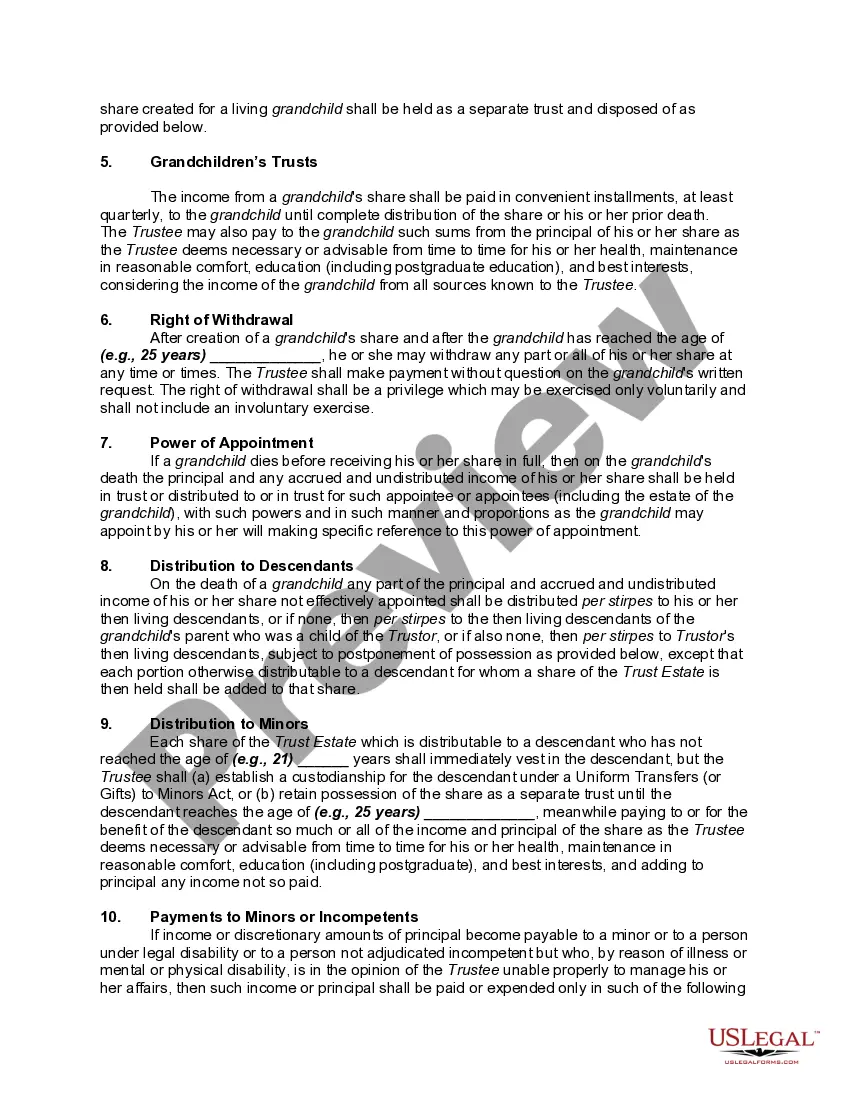
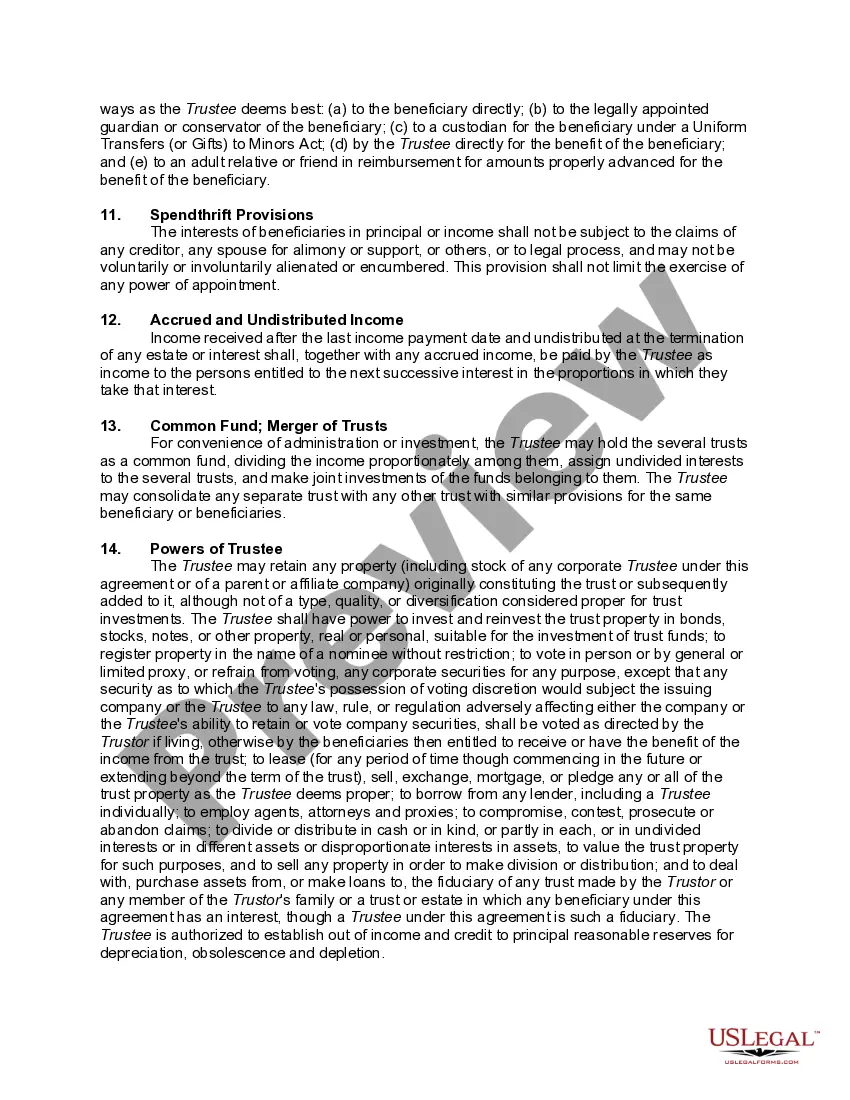
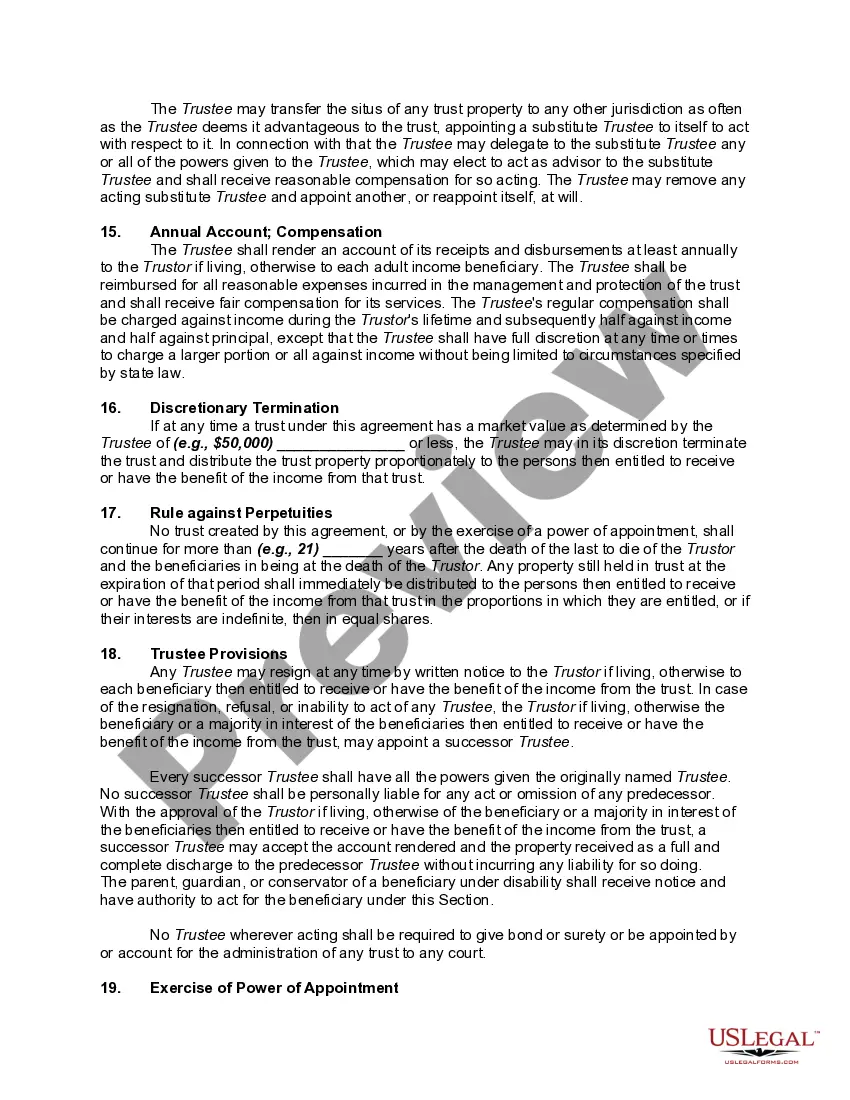
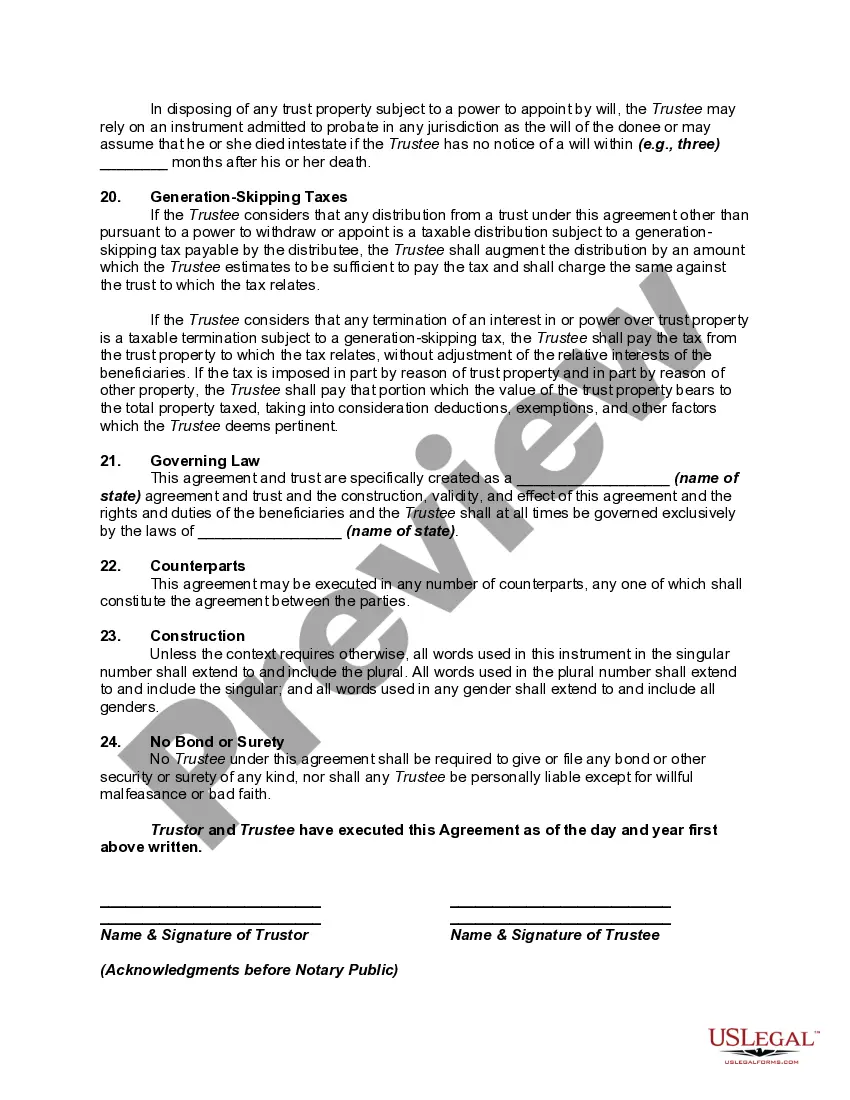
How to fill out Irrevocable Trust Agreement For Benefit Of Trustor's Children And Grandchildren With Spendthrift Trust Provisions?
The Concluding An Unalterable Trust In California seen on this page is a versatile legal template created by qualified attorneys in accordance with federal and local laws.
For over 25 years, US Legal Forms has offered individuals, businesses, and lawyers more than 85,000 validated, state-specific documents for any business and personal situation. It’s the fastest, simplest, and most dependable method to acquire the necessary paperwork, as the service guarantees the utmost level of data protection and anti-malware measures.
Subscribe to US Legal Forms to access validated legal templates for all of life's situations at your fingertips.
- Find the document you require and review it.
- Browse through the sample you queried and view it or examine the form description to ensure it meets your needs. If it doesn't, utilize the search bar to locate the suitable one. Click 'Purchase Now' when you have found the template you require.
- Choose and Log In.
- Select the pricing option that fits you and create an account. Use PayPal or a credit card for a quick payment. If you already possess an account, Log In and check your subscription to continue.
- Obtain the editable template.
- Select the format you desire for your Concluding An Unalterable Trust In California (PDF, Word, RTF) and save the document on your device.
- Complete and sign the document.
- Print the template to fill it out manually. Alternatively, use an online multifunctional PDF editor to quickly and accurately complete and sign your form with an electronic signature.
- Download your files again.
- Utilize the same document again whenever necessary. Access the 'My documents' section in your profile to redownload any previously acquired documents.
Form popularity
FAQ
Getting out of an irrevocable trust in California is challenging, but not impossible. You may need to demonstrate a valid reason, such as fraud or mistake, and obtain court approval. Sometimes, negotiating with beneficiaries can lead to a resolution that allows for termination. Engaging with a professional who specializes in trust law can clarify your choices.
The main methods of terminating a trust are by revocation, setting aside, passing of time, distribution of the trust fund or termination by the beneficiaries under the rule in Saunders v Vautier.
To terminate an active trust, a party with standing must petition the court and provide evidence that persuades a judge to issue an order dissolving the trust or all beneficiaries of the trust must agree to its termination.
A noncharitable irrevocable trust (which are most trusts after the death of a settlor) may be terminated upon the consent of all of the beneficiaries if the court concludes that modification is not inconsistent with a material purpose of the trust.
Modifying an Irrevocable Trust under California Law Under Probate Code §15404(a) any trust may be modified or terminated by the written consent of the settlor and all beneficiaries without court approval of the modification or termination.
The two most common ways to terminate and/or modify an irrevocable trust is to 1) argue that there has been a change of circumstances not anticipated by the settlors at the time they created the trust (for example changes in tax law, and 2) argue that all beneficiaries consent to the proposed termination and or ...