Sample Irrevocable Trust For Grandchildren
Description
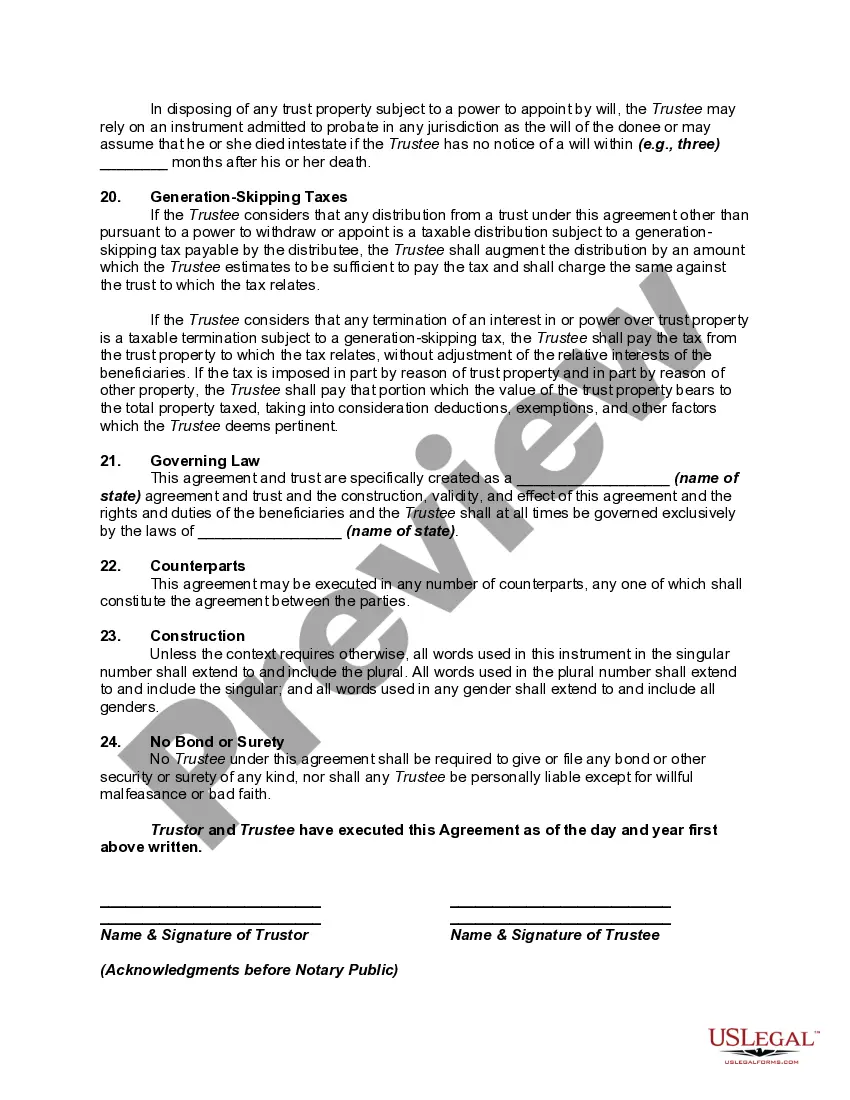


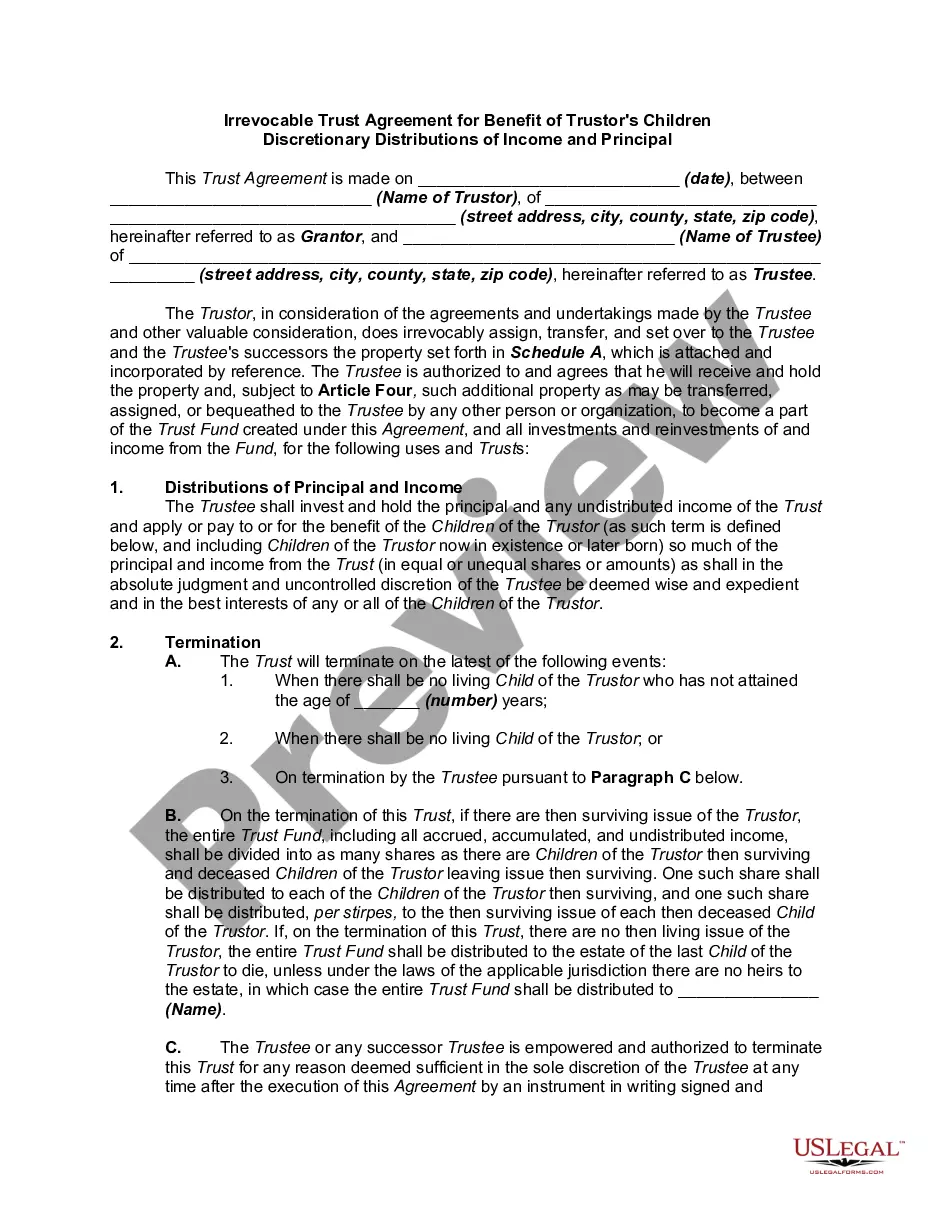
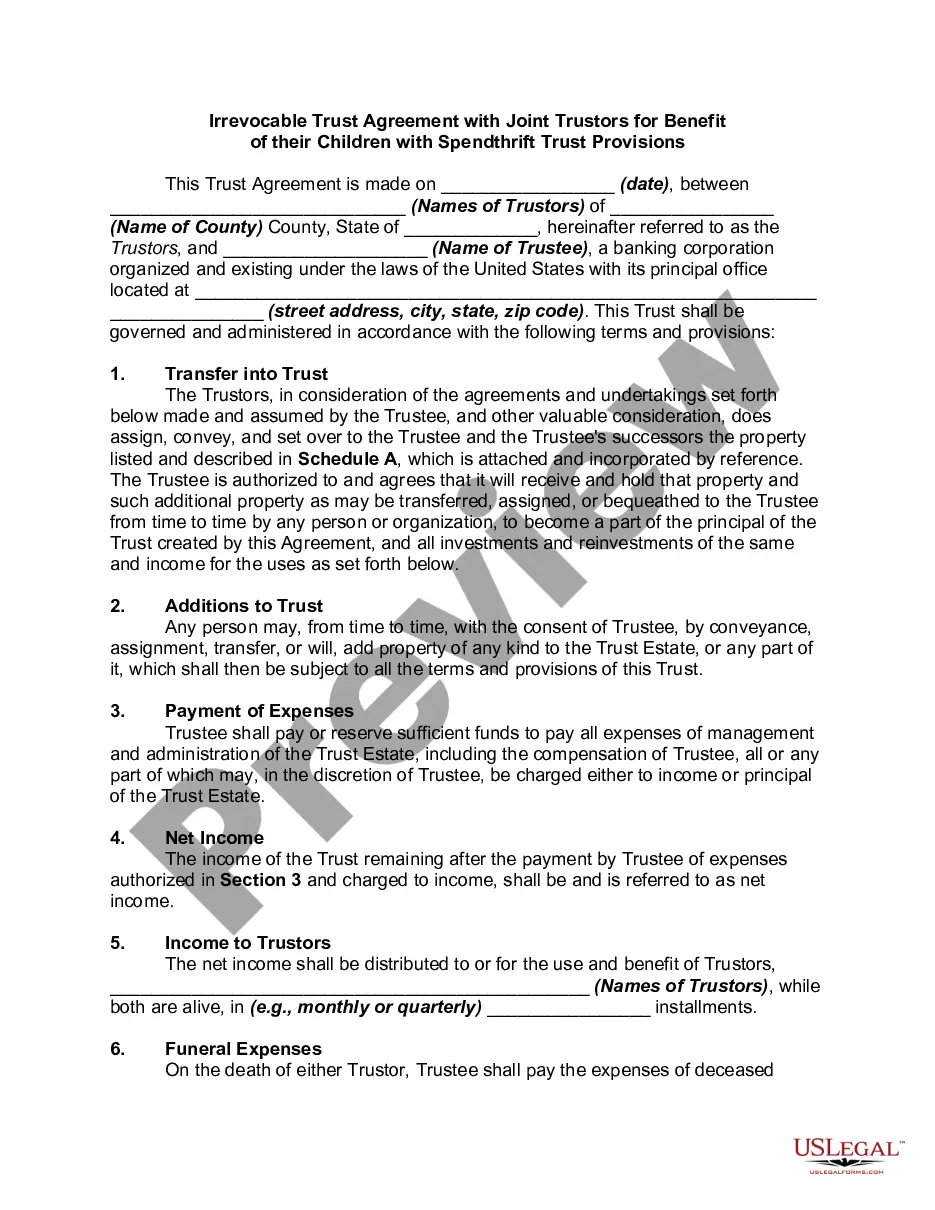
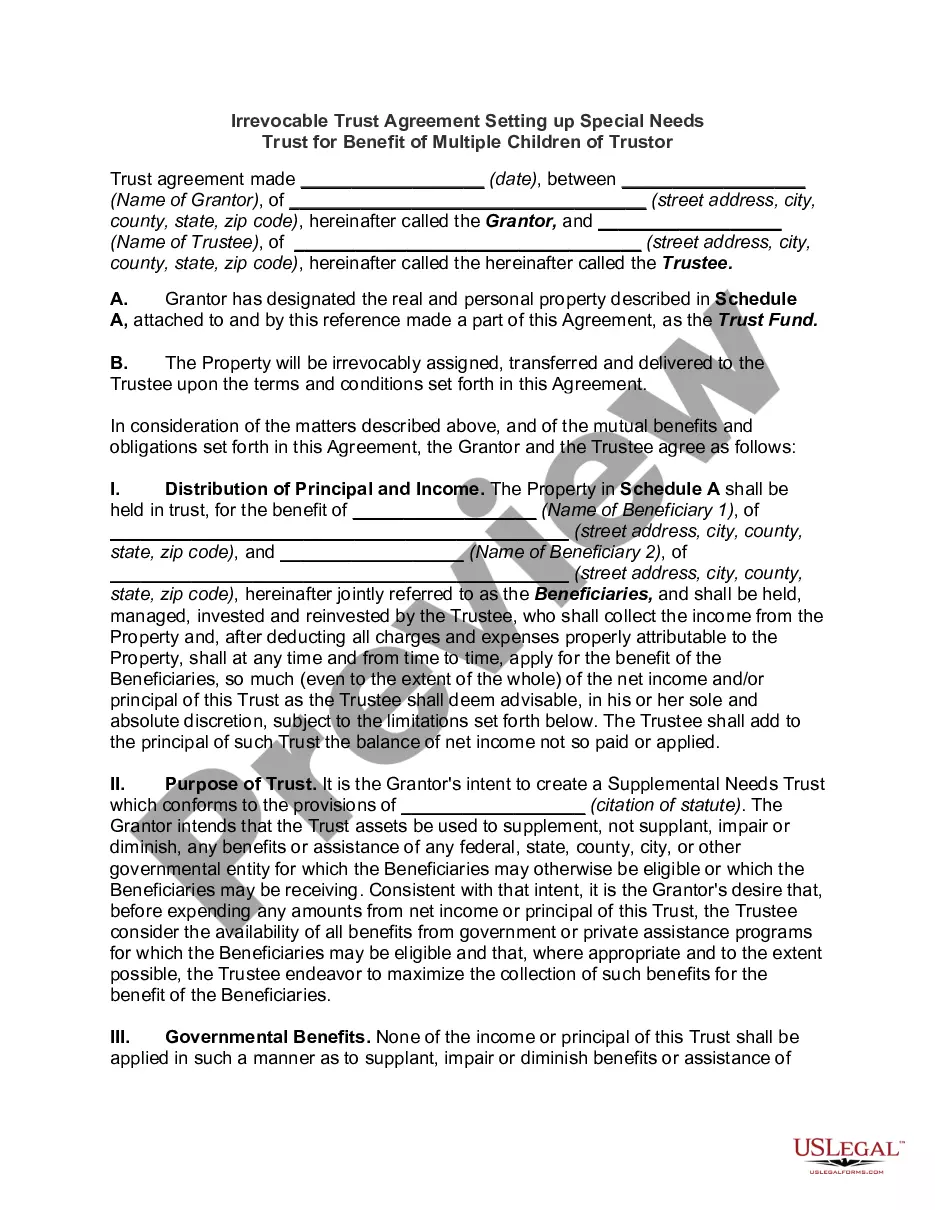
Get your form ready online
Our built-in tools help you complete, sign, share, and store your documents in one place.
Make edits, fill in missing information, and update formatting in US Legal Forms—just like you would in MS Word.
Download a copy, print it, send it by email, or mail it via USPS—whatever works best for your next step.
Sign and collect signatures with our SignNow integration. Send to multiple recipients, set reminders, and more. Go Premium to unlock E-Sign.
If this form requires notarization, complete it online through a secure video call—no need to meet a notary in person or wait for an appointment.
We protect your documents and personal data by following strict security and privacy standards.

Make edits, fill in missing information, and update formatting in US Legal Forms—just like you would in MS Word.

Download a copy, print it, send it by email, or mail it via USPS—whatever works best for your next step.

Sign and collect signatures with our SignNow integration. Send to multiple recipients, set reminders, and more. Go Premium to unlock E-Sign.

If this form requires notarization, complete it online through a secure video call—no need to meet a notary in person or wait for an appointment.

We protect your documents and personal data by following strict security and privacy standards.
Looking for another form?




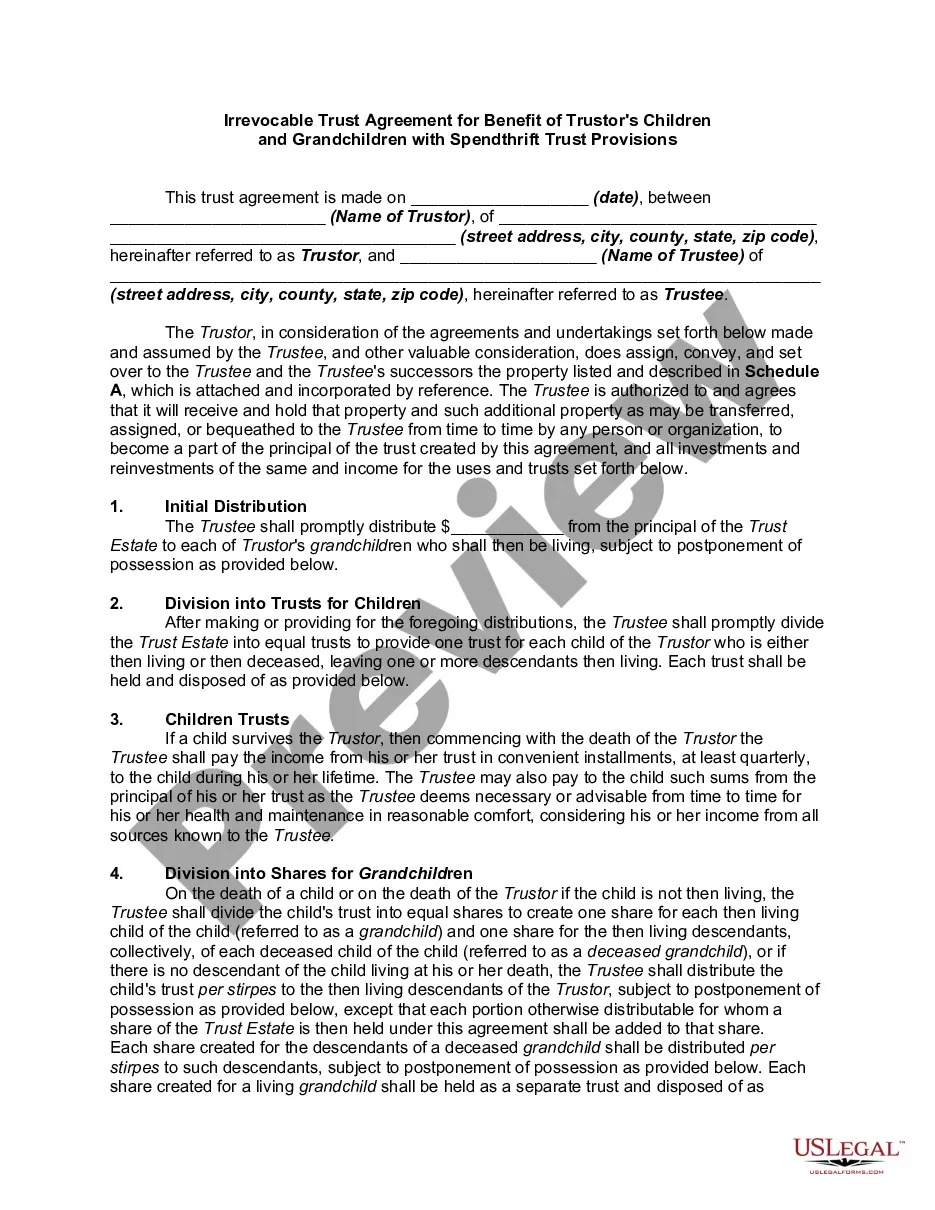
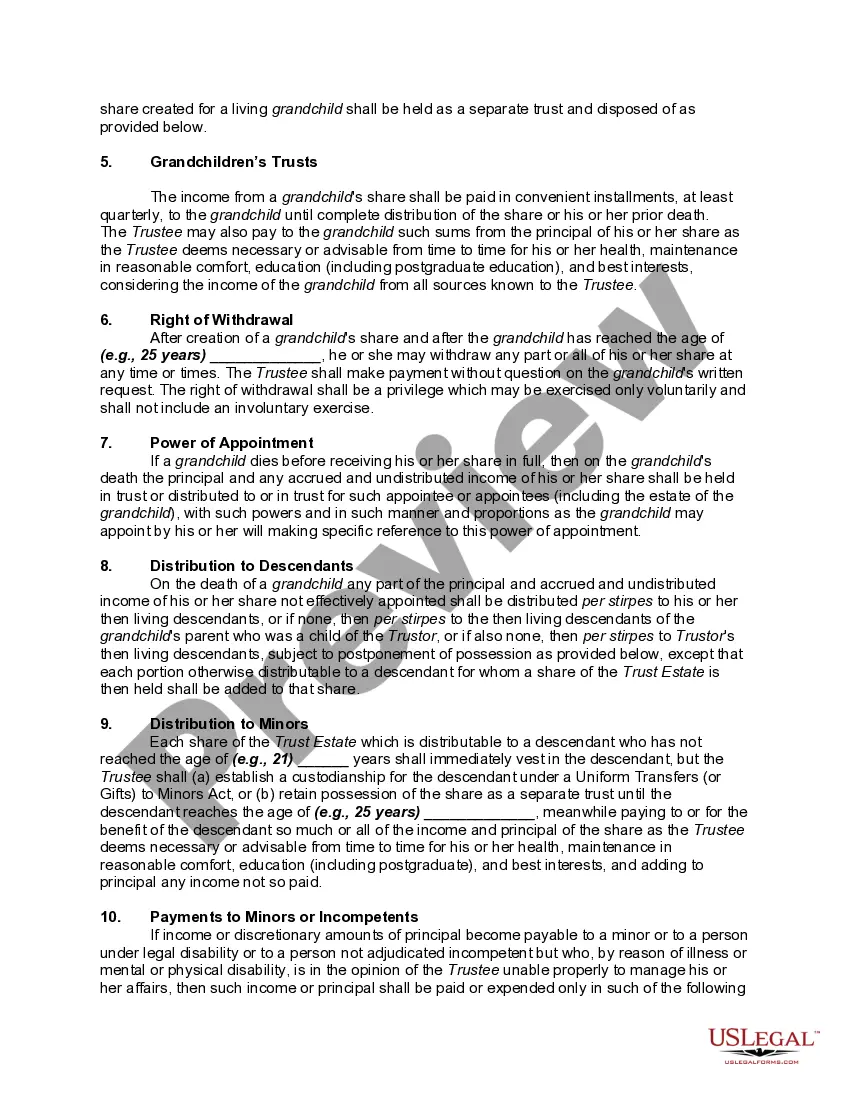
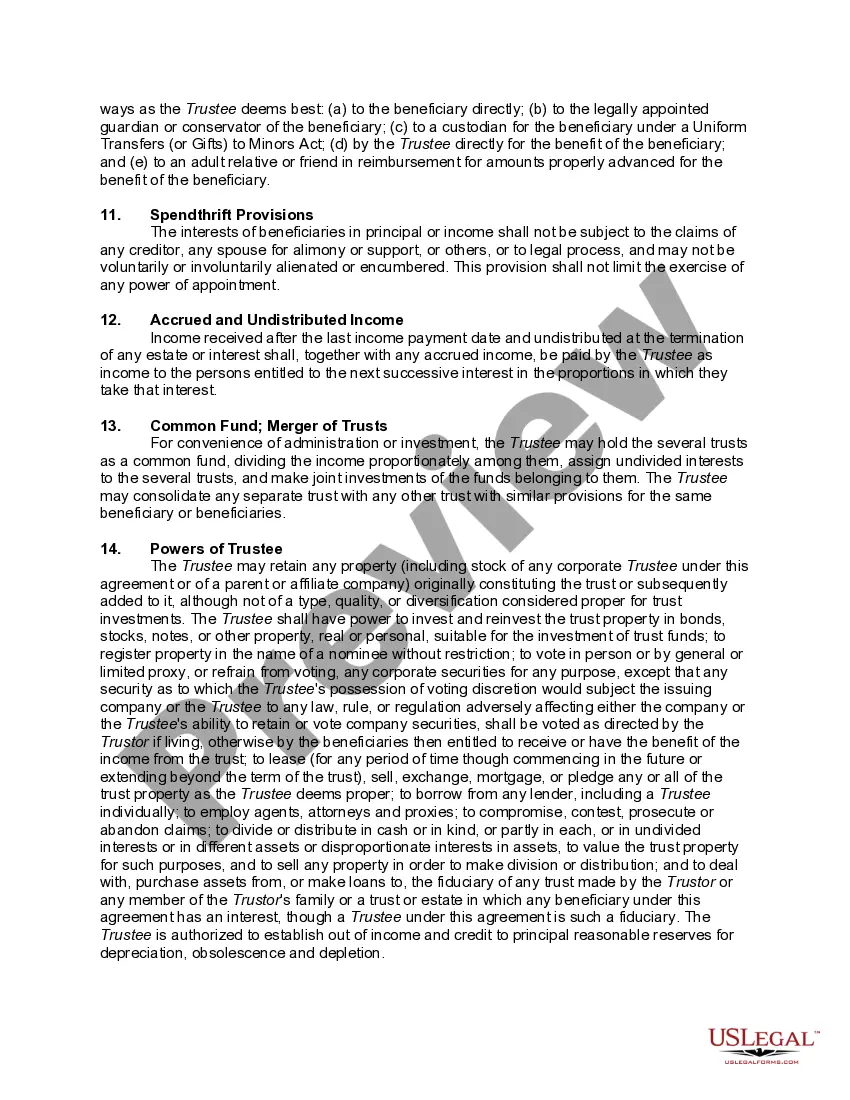
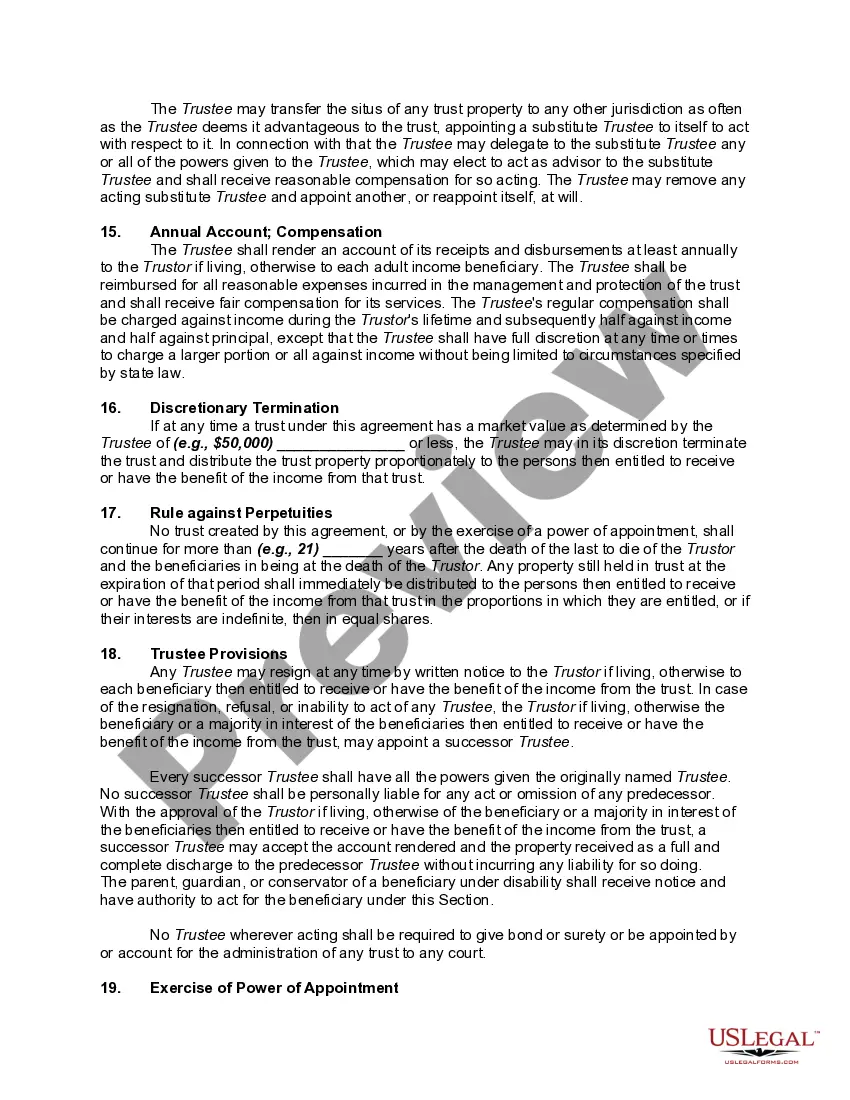
How to fill out Irrevocable Trust Agreement For Benefit Of Trustor's Children And Grandchildren With Spendthrift Trust Provisions?
Whether for corporate reasons or for personal matters, everyone must handle legal issues at some point in their life.
Completing legal paperwork requires careful consideration, starting with selecting the appropriate form template.
With an extensive US Legal Forms catalog available, you never have to waste time looking for the right template online. Take advantage of the library’s straightforward navigation to find the suitable template for any situation.
- Locate the template you require by using the search feature or browsing the catalog.
- Review the form’s details to ensure it aligns with your situation, state, and county.
- Click on the form’s preview to inspect it.
- If it is the wrong document, return to the search tool to find the Sample Irrevocable Trust For Grandchildren template you need.
- Download the file if it satisfies your requirements.
- If you hold a US Legal Forms account, simply click Log in to access previously saved files in My documents.
- If you do not have an account yet, you may acquire the form by clicking Buy now.
- Choose the suitable pricing option.
- Complete the account registration form.
- Select your payment method: use a credit card or PayPal account.
- Choose the document format you desire and download the Sample Irrevocable Trust For Grandchildren.
- Once it is downloaded, you can fill out the form using editing software or print it and complete it by hand.
Form popularity
FAQ
A common example of an irrevocable trust is a charitable remainder trust, which allows you to provide for beneficiaries while supporting a charity. Another example includes a sample irrevocable trust for grandchildren, where you allocate assets specifically for their future, ensuring they are used wisely and in accordance with your wishes.
Establishing a trust Since trusts for grandchildren are legal structures, you'll work with an attorney to establish them. However, you may also want to discuss wealth planning and investment options with your contacts at Wells Fargo Private Bank before you finalize your plans, Sowell says.
The trusts shall be irrevocable, and the Grantor expressly waives all rights and powers, whether alone or in conjunction with others, and regardless of when or from what source he may have acquired such rights or powers, to alter, amend, revoke, or terminate the trusts, or any of the terms of this Agreement, in whole ...
Unlike a Revocable Trust, which allows for flexibility, you cannot change or revoke this type of trust. Like a Revocable Trust, however, an Irrevocable Trust should be set up with the assistance of a reputable estate planning attorney.
Types of Irrevocable Trusts Some living trust examples are: Irrevocable life insurance trust. Grantor-retained annuity trust (GRAT), spousal lifetime access trust (SLAT), and qualified personal residence trust (QPRT) (all types of lifetime gifting trusts)
How do you write an irrevocable trust document? Draft the written irrevocable trust agreement. Spell out which assets will be placed into the trust, name a trustee and beneficiaries, and outline the terms by which the trust assets will be distributed (how, when, to whom, etc.).