Revocation Of Irrevocable Trust Form With 2 Points
Description



Get your form ready online
Our built-in tools help you complete, sign, share, and store your documents in one place.
Make edits, fill in missing information, and update formatting in US Legal Forms—just like you would in MS Word.
Download a copy, print it, send it by email, or mail it via USPS—whatever works best for your next step.
Sign and collect signatures with our SignNow integration. Send to multiple recipients, set reminders, and more. Go Premium to unlock E-Sign.
If this form requires notarization, complete it online through a secure video call—no need to meet a notary in person or wait for an appointment.
We protect your documents and personal data by following strict security and privacy standards.

Make edits, fill in missing information, and update formatting in US Legal Forms—just like you would in MS Word.

Download a copy, print it, send it by email, or mail it via USPS—whatever works best for your next step.

Sign and collect signatures with our SignNow integration. Send to multiple recipients, set reminders, and more. Go Premium to unlock E-Sign.

If this form requires notarization, complete it online through a secure video call—no need to meet a notary in person or wait for an appointment.

We protect your documents and personal data by following strict security and privacy standards.
Looking for another form?







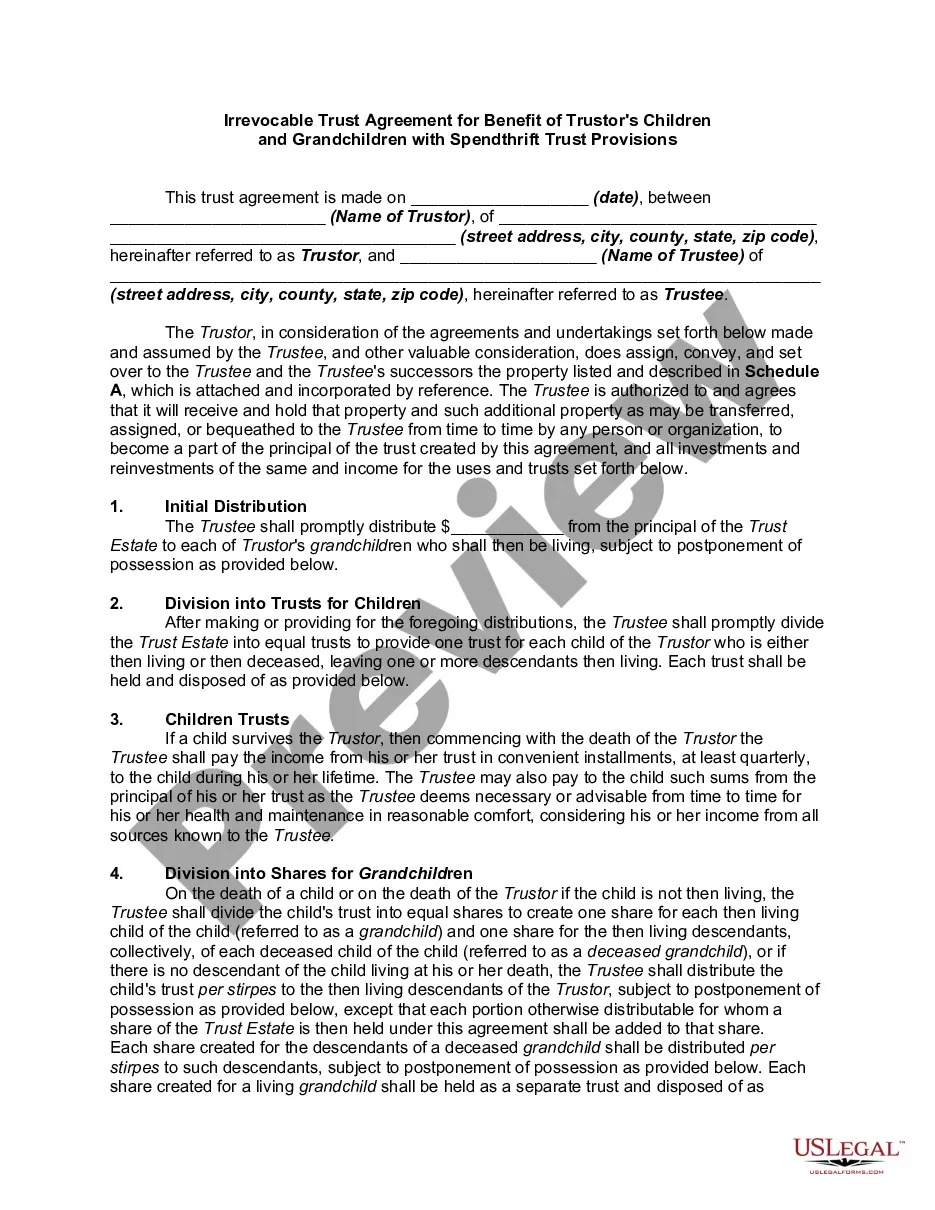
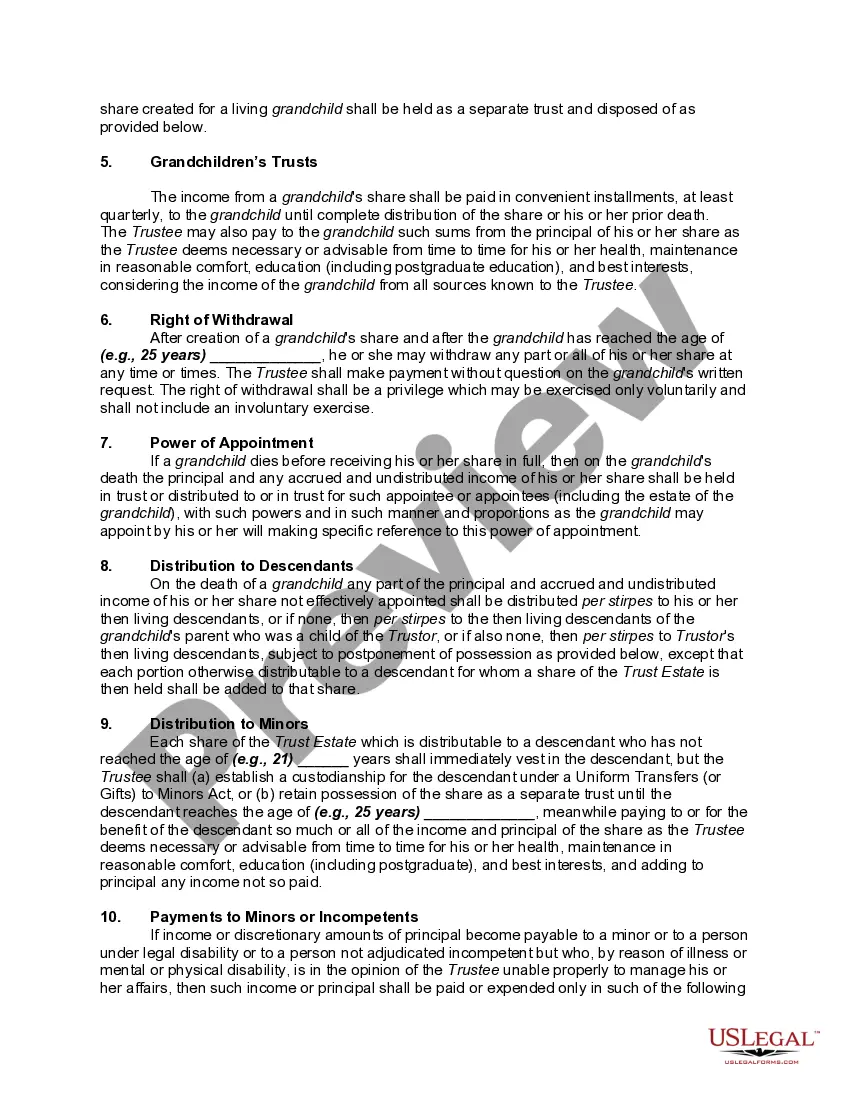
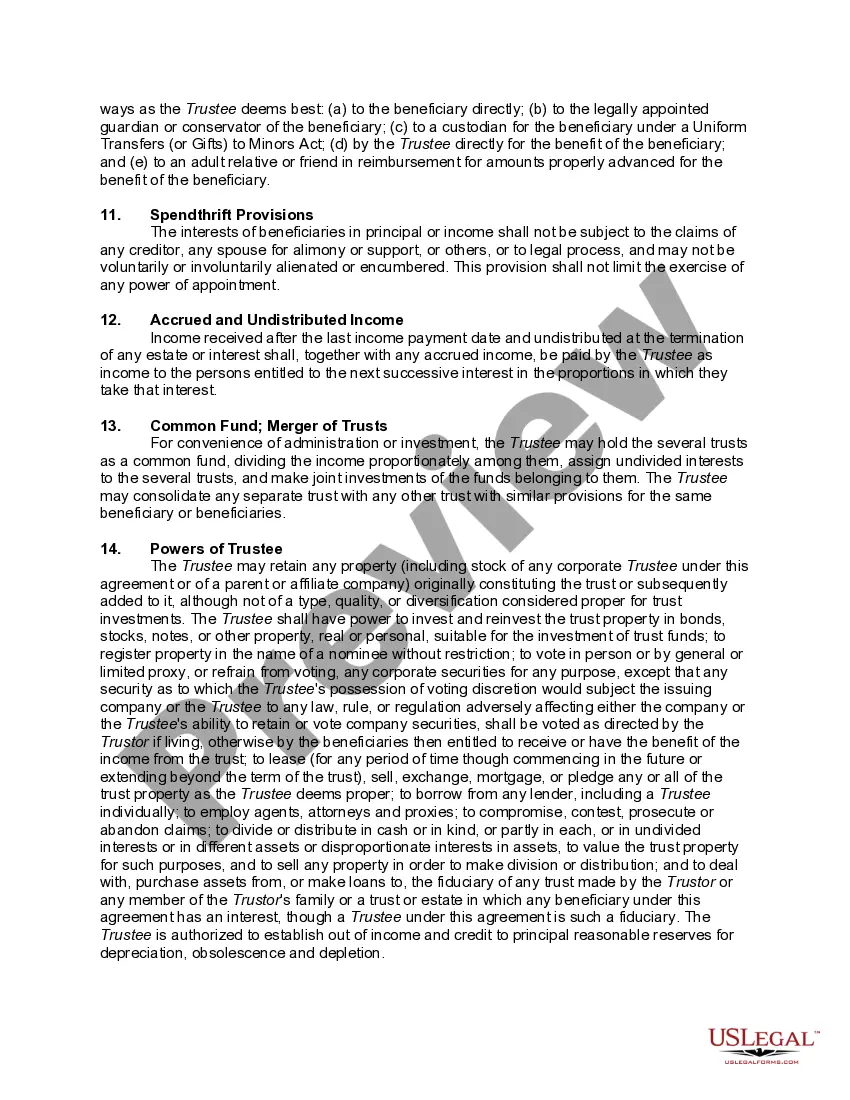
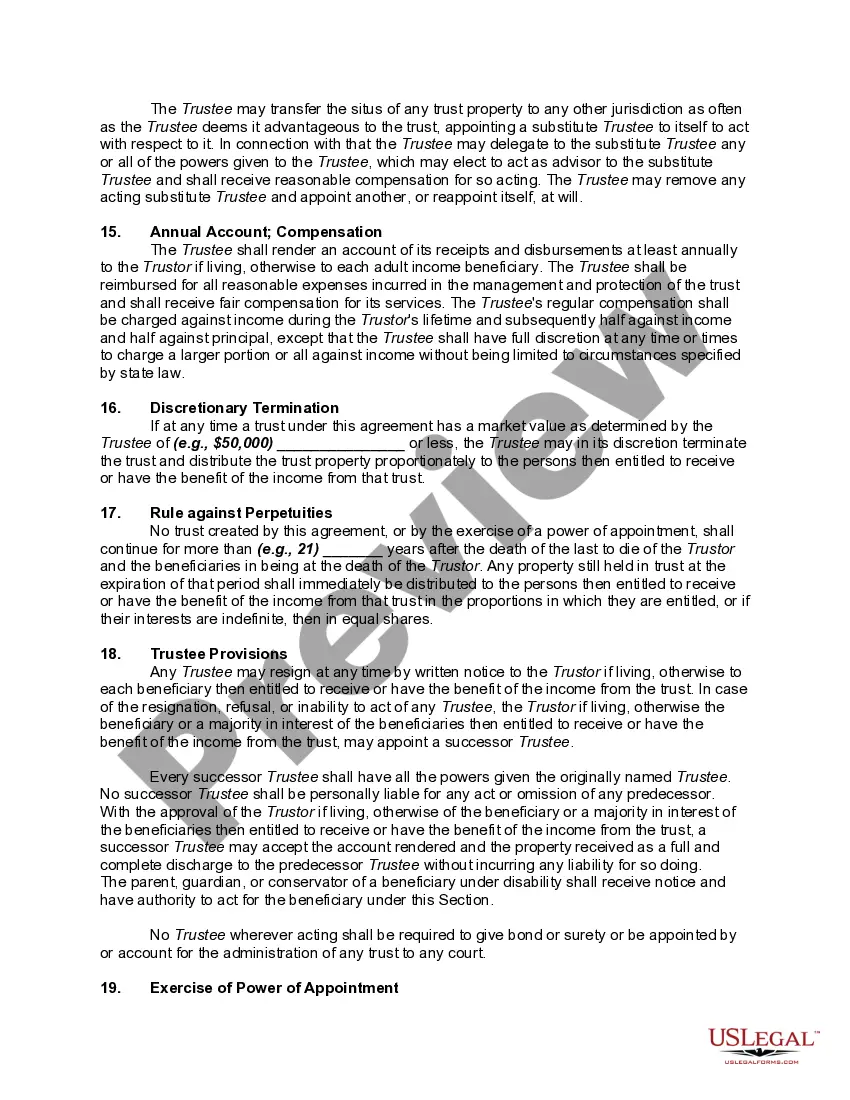
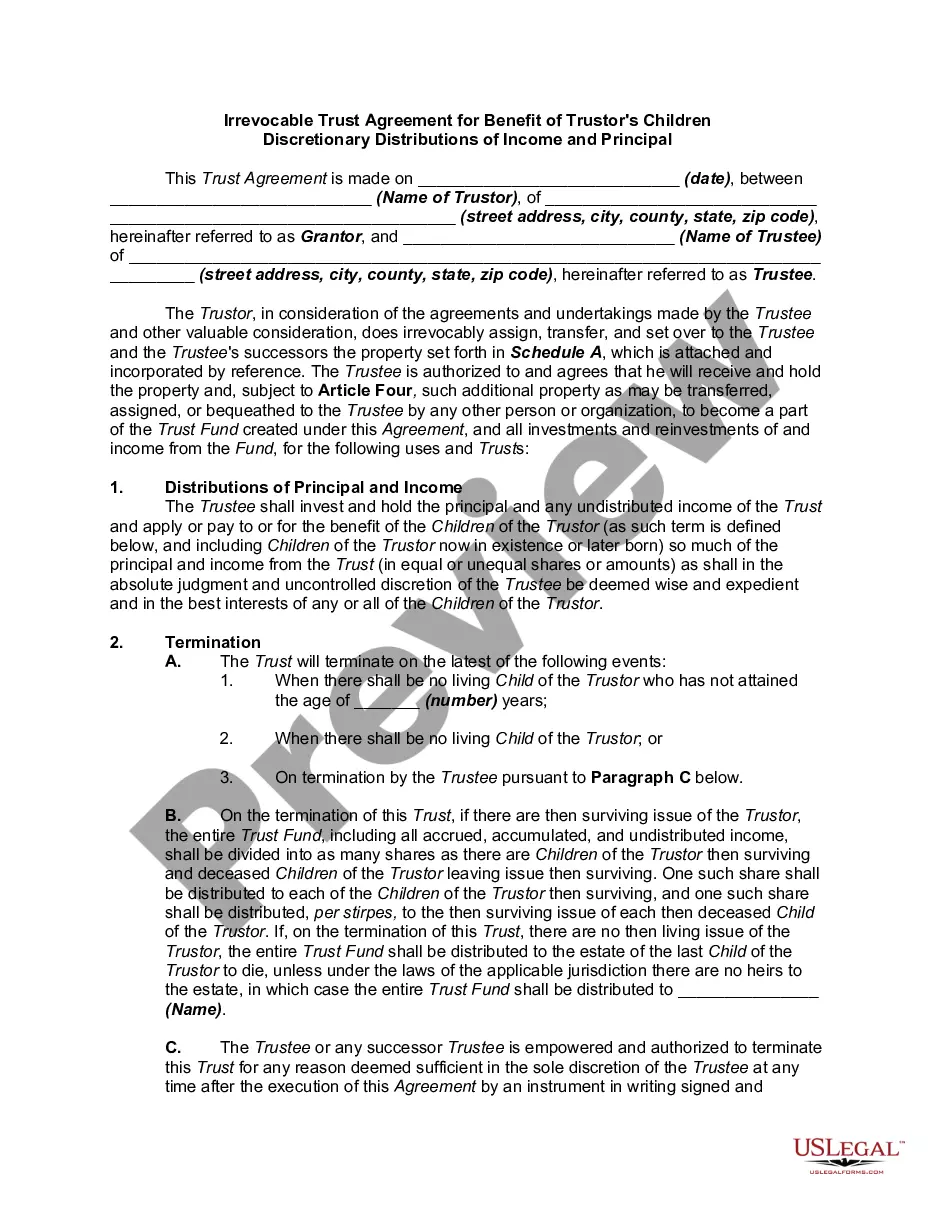
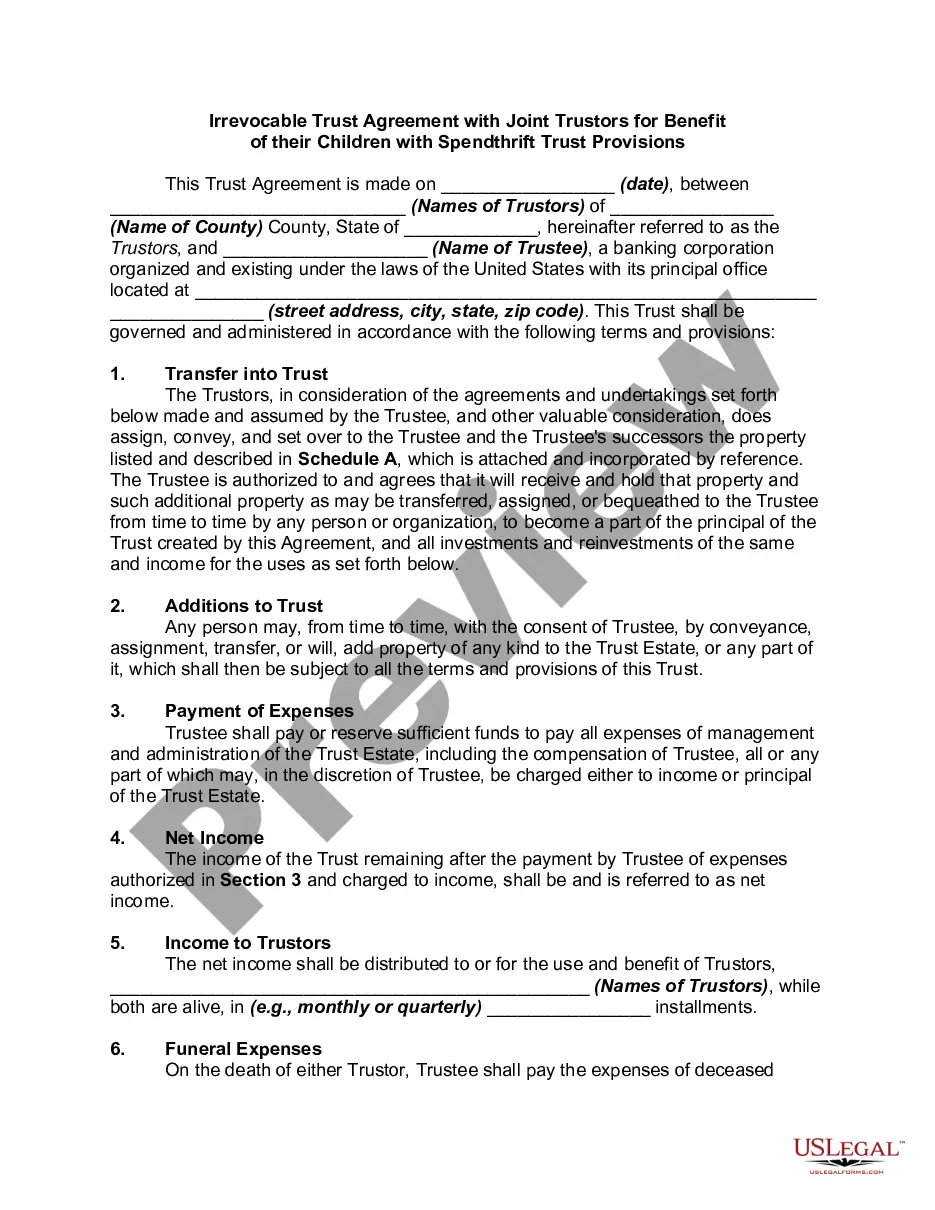
How to fill out Irrevocable Trust Agreement For Benefit Of Trustor's Children And Grandchildren With Spendthrift Trust Provisions?
It’s clear that you cannot transform into a legal expert instantly, nor can you swiftly learn how to compose a Revocation Of Irrevocable Trust Form With 2 Points without possessing a specialized education.
Drafting legal documents is a lengthy endeavor that necessitates specific training and expertise.
So why not entrust the development of the Revocation Of Irrevocable Trust Form With 2 Points to the specialists.
View it (if this feature is available) and examine the accompanying description to ascertain if Revocation Of Irrevocable Trust Form With 2 Points meets your needs.
If you require a different form, restart your search.
- With US Legal Forms, one of the largest legal form libraries, you can discover anything from courtroom papers to templates for internal business communication.
- We recognize how vital compliance and adherence to federal and regional regulations are.
- For this reason, on our platform, all documents are location-specific and current.
- Here’s how to begin with our website and acquire the document you need in just minutes.
- Utilize the search bar at the top of the page to find the form you require.
Form popularity
FAQ
An irrevocable trust can become invalid for several reasons. First, if the trust lacked a clear purpose or intent at its creation, it might not hold up legally. Additionally, if the trust creator did not follow proper legal procedures, such as failing to execute a Revocation of irrevocable trust form when necessary, it could lead to complications. Understanding these factors is essential, as navigating trust validity can be complex, and using trusted platforms like US Legal Forms can help you create and manage necessary documents effectively.
Breaking an irrevocable trust can be quite challenging, but it is not impossible. Typically, it requires demonstrating valid reasons, such as changing circumstances or the need to provide for beneficiaries. Additionally, you may need to file a petition in court along with the revocation of irrevocable trust form, and that process can be complex. Seeking assistance from a legal professional can help navigate these difficulties and improve your chances of success.
Revoking an irrevocable trust typically involves a formal process. First, you may need to submit a revocation of irrevocable trust form, which outlines the necessary steps and required signatures. Keep in mind that certain criteria, such as consent from beneficiaries or specific trust provisions, may need to be met. It is essential to consult with a legal expert to ensure you follow the correct procedures and to protect your interests.
To remove an irrevocable beneficiary, you generally need the beneficiary's consent unless specified otherwise in the trust agreement. If removal is necessary, it’s advisable to consult legal guidance through this process. The revocation of irrevocable trust form can streamline this action and ensure all parties are informed and in agreement, fostering a smoother transition.
Removing a trustee from an irrevocable trust can be challenging, depending on the provisions within the trust document and state laws. Most often, the trust document will outline the process for removal, which may involve a petition to the court in some cases. Using the revocation of irrevocable trust form can assist you in this process by providing the necessary paperwork to facilitate the change in trustees.
An irrevocable beneficiary may be changed under specific conditions typically outlined in the trust document, such as mutual agreement between the parties involved. Additionally, a court may allow a change if it serves the trust's purpose and benefits all parties. In such situations, using the revocation of irrevocable trust form can help document the new arrangements, ensuring clarity and compliance.
Revoking an irrevocable beneficiary can be a complex process, as it generally requires the consent of that beneficiary. If you need to make changes, consult your original trust documents and consider legal advice. You may need the revocation of irrevocable trust form to formalize the changes, which can clarify the new beneficiary designations while adhering to legal requirements.
The 5 year rule for an irrevocable trust refers to the time period during which assets transferred into the trust are considered for Medicaid eligibility. If you transfer assets into an irrevocable trust and apply for Medicaid within five years, those assets may be counted against your eligibility. Understanding this rule helps you strategically plan the trust’s formation, particularly when considering the revocation of irrevocable trust form with careful timeliness.
An example of a revocation clause might read, 'This trust may be revoked at any time by the trustor by delivering a written notice to the trustee.' This statement clearly defines how the trust can be revoked and who needs to be notified. Having a well-drafted revocation clause can prevent future disputes and misunderstandings. A Revocation of irrevocable trust form can provide the necessary framework to establish this clause effectively.
To revoke an irrevocable trust, you typically need to follow specific legal procedures, which may involve filing a Revocation of irrevocable trust form. This form outlines your intent to annul the trust and must be properly executed according to state laws. It may also require notifying beneficiaries and trustees to ensure everyone is informed of this change. Consulting with a legal expert can help ensure the process goes smoothly.