Living Trust Schedule Of Assets Form With Spouse
Description

Get your form ready online
Our built-in tools help you complete, sign, share, and store your documents in one place.
Make edits, fill in missing information, and update formatting in US Legal Forms—just like you would in MS Word.
Download a copy, print it, send it by email, or mail it via USPS—whatever works best for your next step.
Sign and collect signatures with our SignNow integration. Send to multiple recipients, set reminders, and more. Go Premium to unlock E-Sign.
If this form requires notarization, complete it online through a secure video call—no need to meet a notary in person or wait for an appointment.
We protect your documents and personal data by following strict security and privacy standards.

Make edits, fill in missing information, and update formatting in US Legal Forms—just like you would in MS Word.

Download a copy, print it, send it by email, or mail it via USPS—whatever works best for your next step.

Sign and collect signatures with our SignNow integration. Send to multiple recipients, set reminders, and more. Go Premium to unlock E-Sign.

If this form requires notarization, complete it online through a secure video call—no need to meet a notary in person or wait for an appointment.

We protect your documents and personal data by following strict security and privacy standards.
Looking for another form?
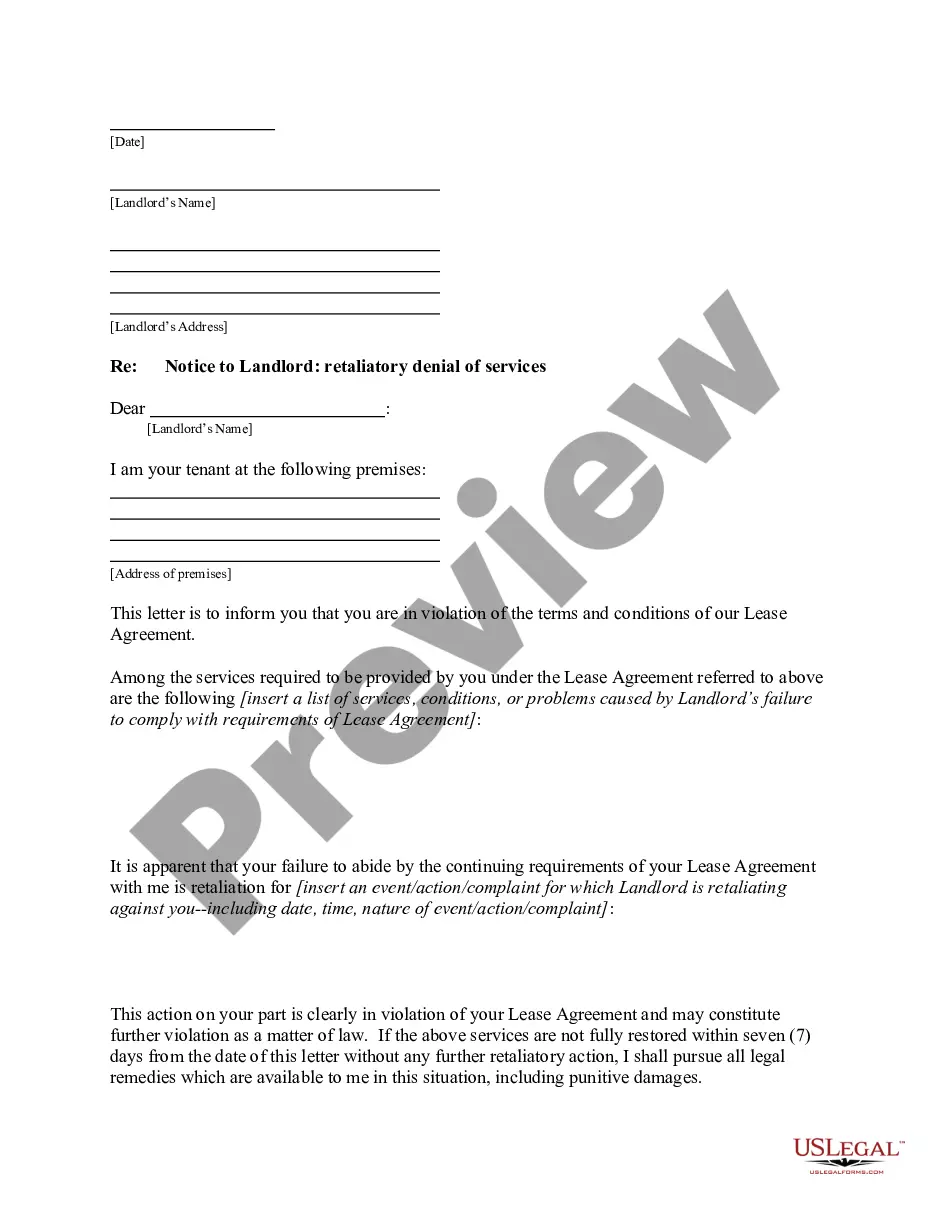

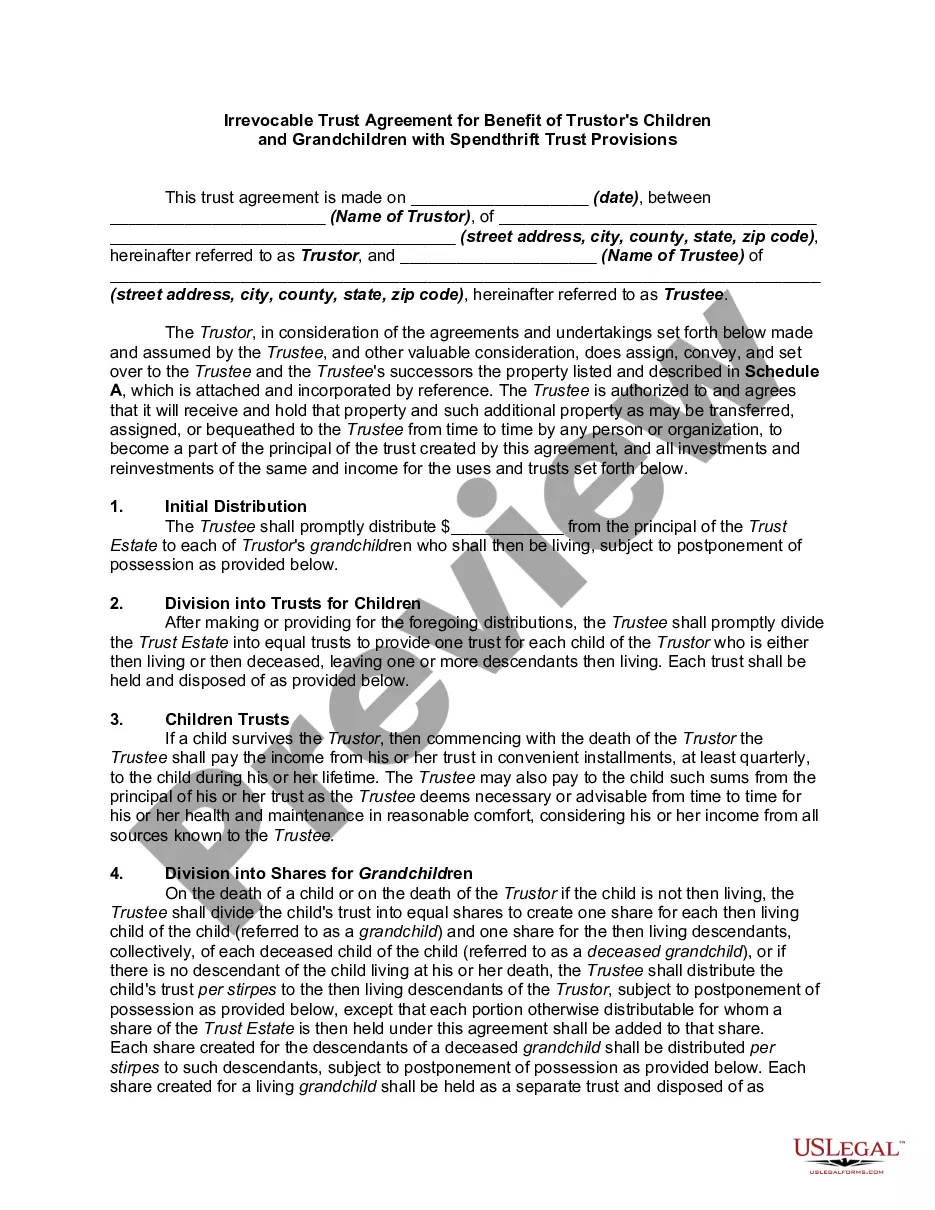
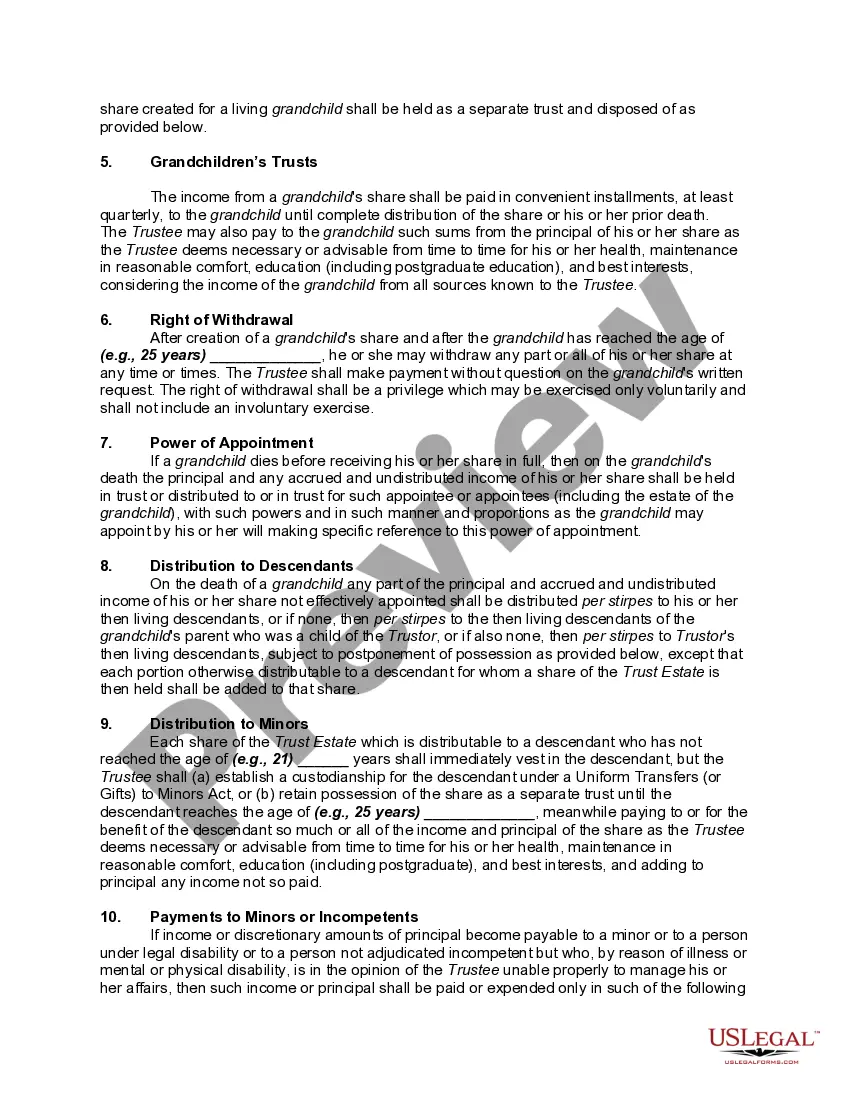
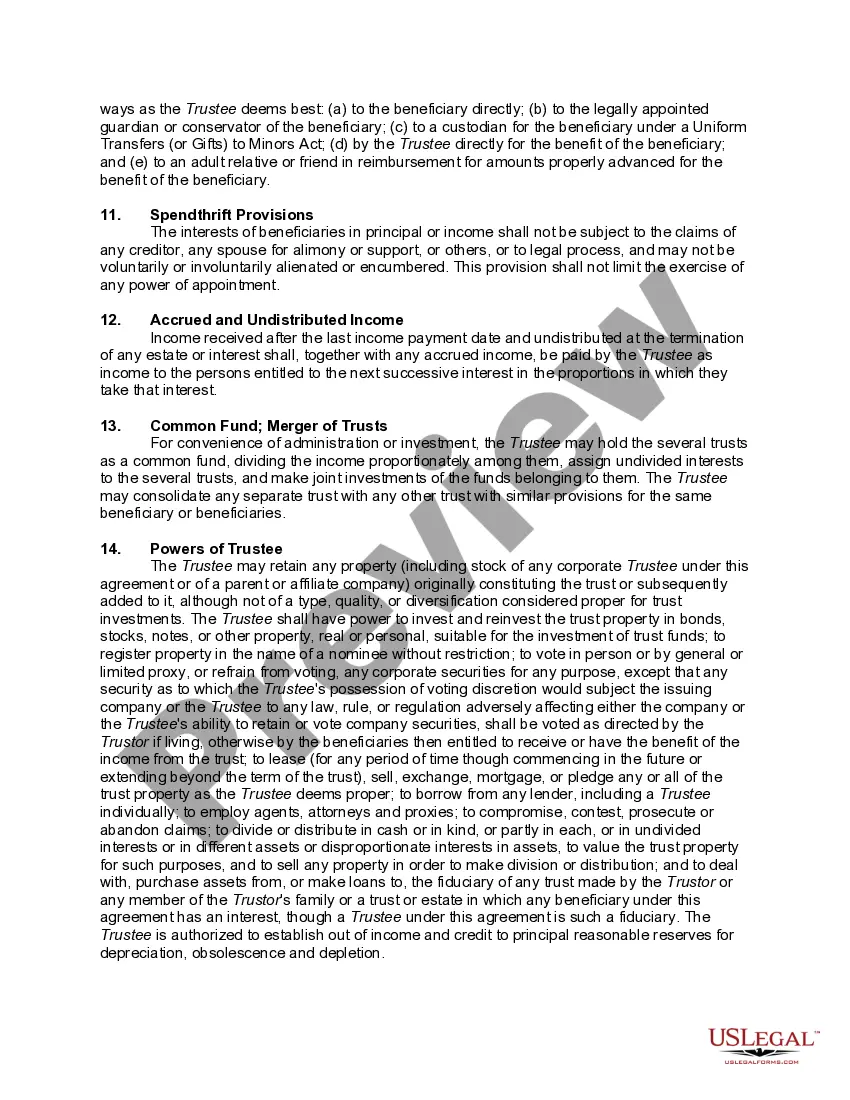
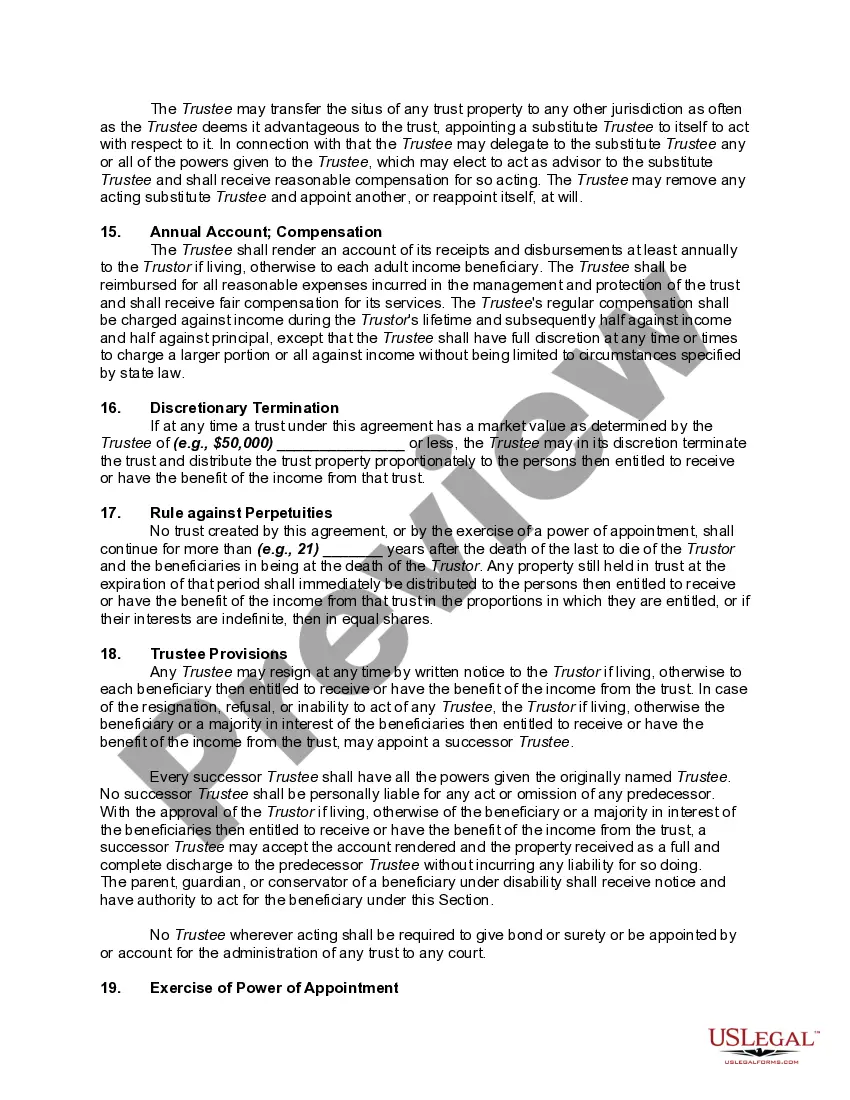
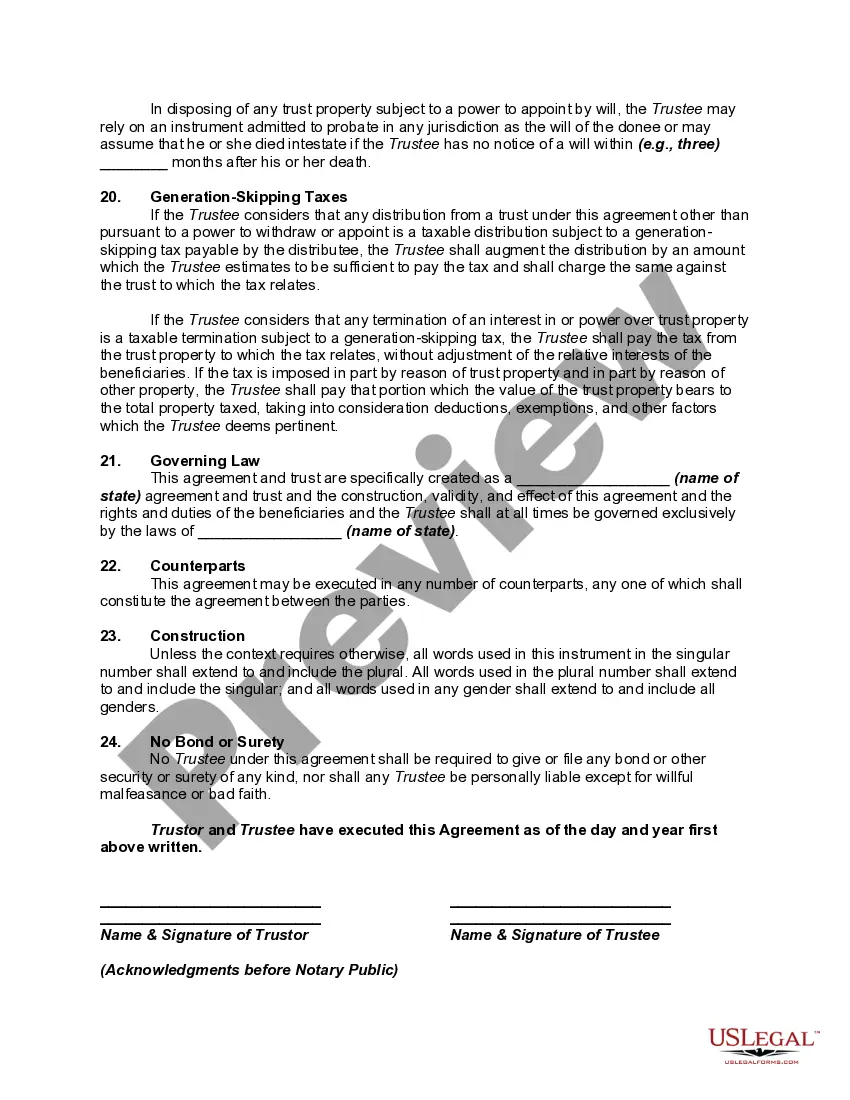
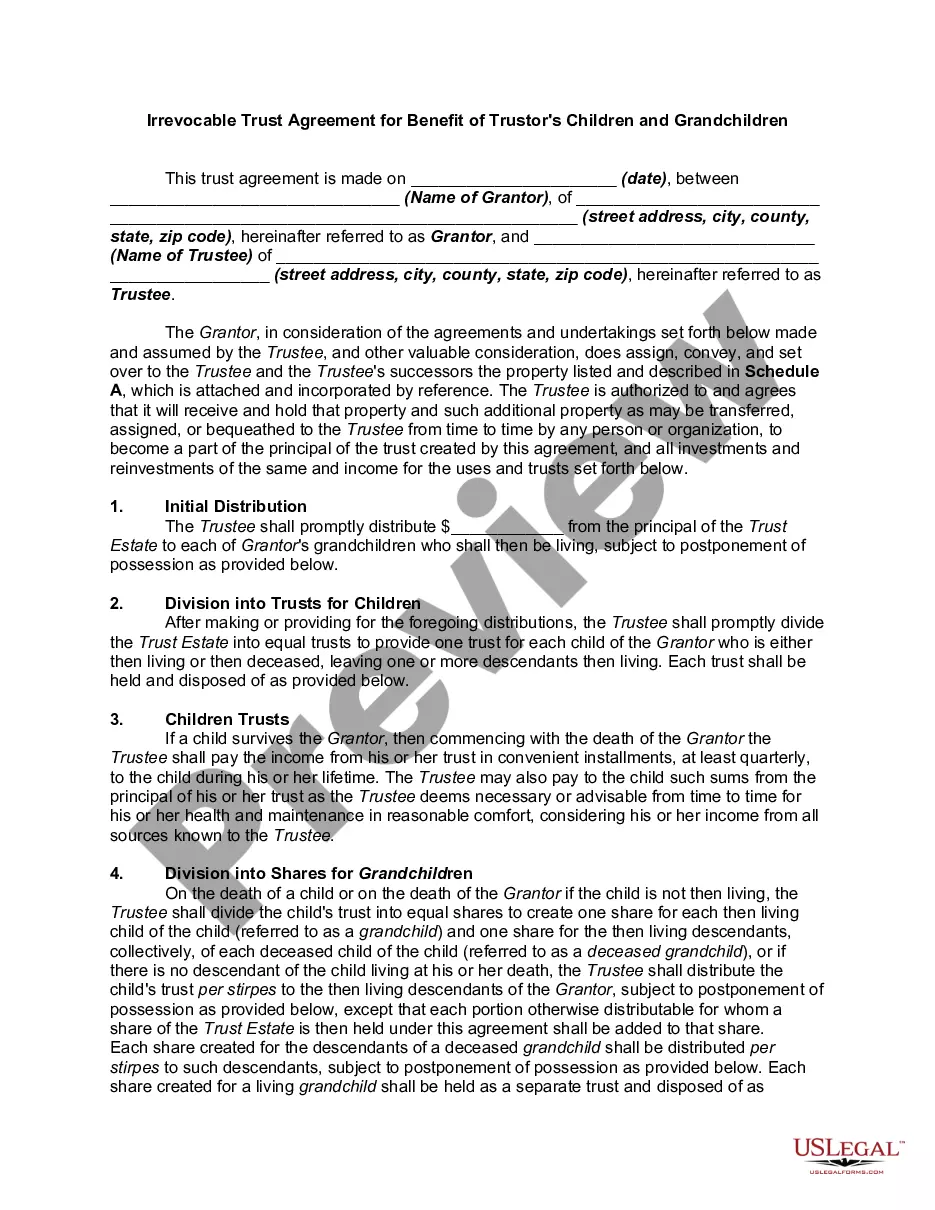
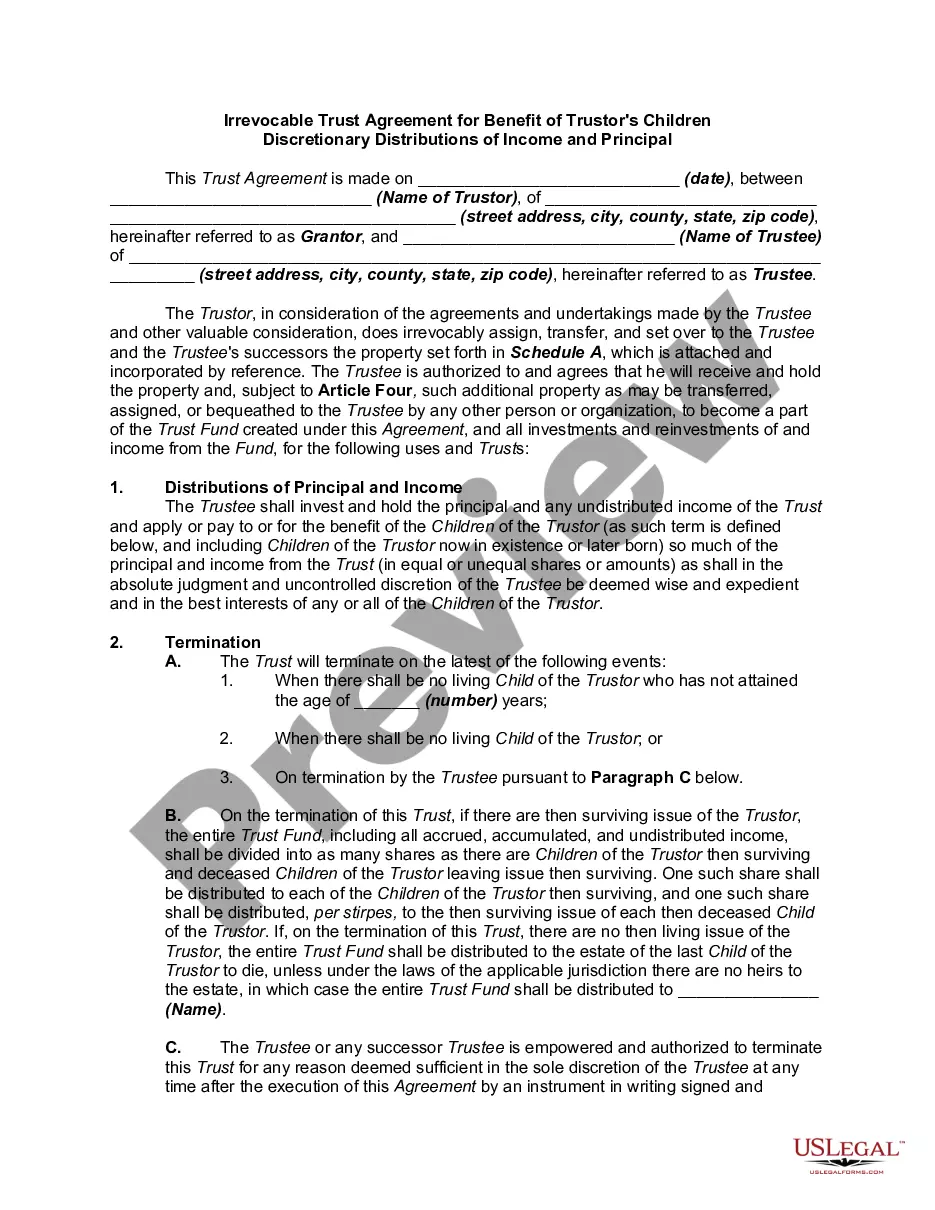
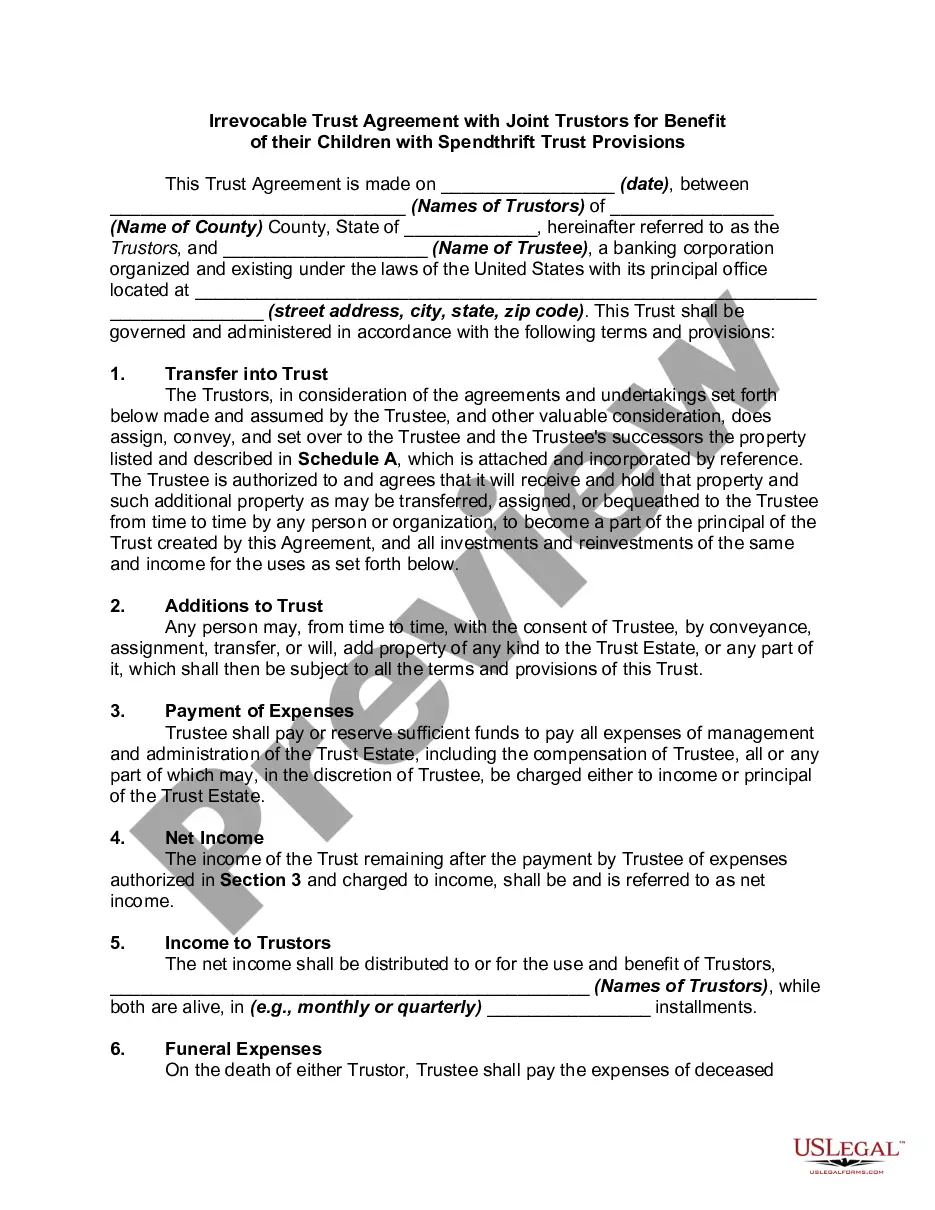
How to fill out Irrevocable Trust Agreement For Benefit Of Trustor's Children And Grandchildren With Spendthrift Trust Provisions?
Managing legal documents can be quite overwhelming, even for the most seasoned experts.
When you are on the lookout for a Living Trust Schedule Of Assets Form With Spouse and you can't dedicate the time to find the correct and current version, the process can become stressful.
US Legal Forms meets all your needs, whether personal or business-related, all in one place.
Utilize cutting-edge resources to fill out and manage your Living Trust Schedule Of Assets Form With Spouse.
Here are the steps to follow once you've downloaded the desired form.
- Access a wealth of articles, guides, handbooks, and tools pertinent to your specific situation and requirements.
- Save precious time hunting for the necessary documents, and utilize the advanced search and Review functionality of US Legal Forms to find and download your Living Trust Schedule Of Assets Form With Spouse.
- If you possess a membership, Log In to your US Legal Forms account, locate the form, and download it.
- Check your My documents tab to review the documents you've previously downloaded and manage your file organization as needed.
- If this is your first time with US Legal Forms, create an account to enjoy unlimited access to the entire library's benefits.
- A comprehensive online form repository can be a transformative tool for anyone looking to handle these matters efficiently.
- US Legal Forms stands out as a leader in online legal documents, offering more than 85,000 legal forms specific to each state available at your convenience.
- With US Legal Forms, you can access tailored legal and business documents pertinent to your state or county.
Form popularity
FAQ
Typically, assets you place in trust for your beneficiaries are eligible for a step-up in basis if the trust is revocable, and therefore considered part of your taxable estate. But with an irrevocable trust (which exists outside of your estate), trust assets do not receive a step-up in tax basis.
Typically, when a married couple utilizes a Revocable Living Trust-based estate plan, each spouse creates and funds his or her own separate Revocable Living Trust. This results in two trusts. However, in the right circumstances, a married couple may be better served by creating a single Joint Trust.
The surviving spouse is the sole Settlor/Trustee/Beneficiary if one dies. In short, nothing changes. The surviving spouse manages the Trust and its assets as they see fit. For example, if the surviving spouse desires to, they can amend the Trust, add or remove assets, change future beneficiaries, etc.
A joint trust gives the surviving spouse more flexibility to use all of the assets of the trust after the death of the first spouse. A joint revocable trust is also easier to fund and maintain during a couple's lifetime. All assets simply go into the same place; there's no need to decide which trust an asset goes into.
The marital trust also gets a new basis upon the death of the grantor. Because the assets are also included in the surviving spouse's estate upon death, however, the assets receive a new basis at the time they are transferred to the remaining beneficiaries.