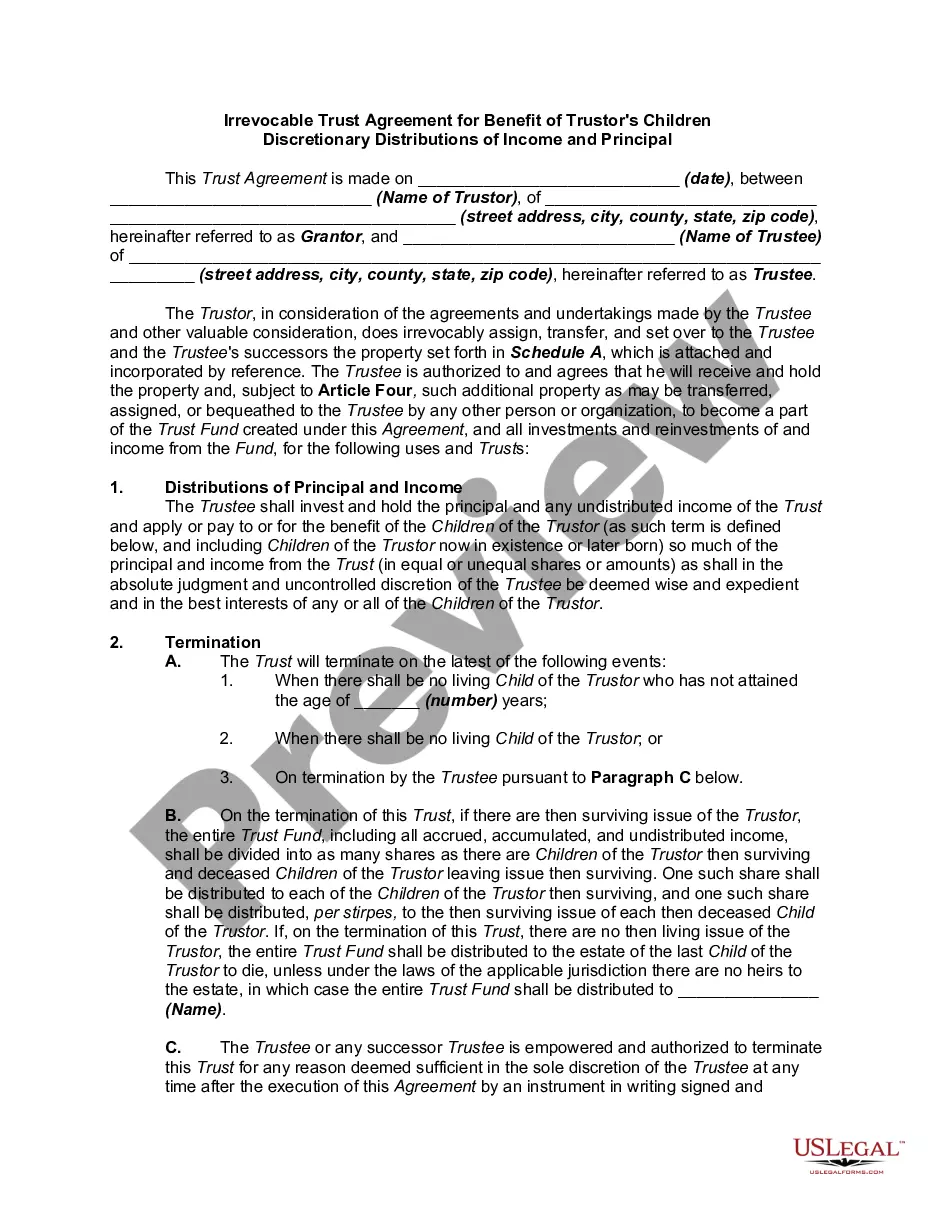
Irrevocable Trust In Texas With A Trust
Description



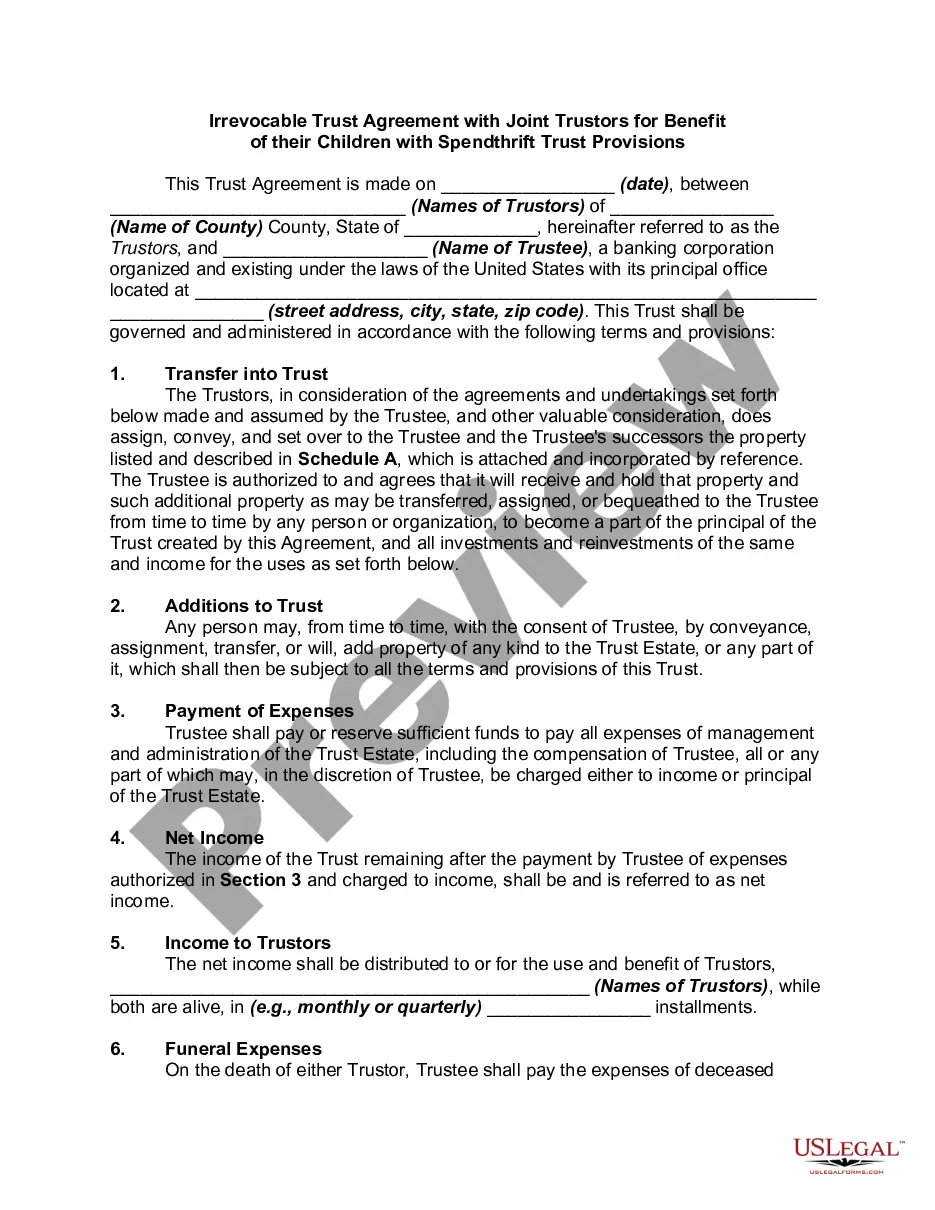

Get your form ready online
Our built-in tools help you complete, sign, share, and store your documents in one place.
Make edits, fill in missing information, and update formatting in US Legal Forms—just like you would in MS Word.
Download a copy, print it, send it by email, or mail it via USPS—whatever works best for your next step.
Sign and collect signatures with our SignNow integration. Send to multiple recipients, set reminders, and more. Go Premium to unlock E-Sign.
If this form requires notarization, complete it online through a secure video call—no need to meet a notary in person or wait for an appointment.
We protect your documents and personal data by following strict security and privacy standards.

Make edits, fill in missing information, and update formatting in US Legal Forms—just like you would in MS Word.

Download a copy, print it, send it by email, or mail it via USPS—whatever works best for your next step.

Sign and collect signatures with our SignNow integration. Send to multiple recipients, set reminders, and more. Go Premium to unlock E-Sign.

If this form requires notarization, complete it online through a secure video call—no need to meet a notary in person or wait for an appointment.

We protect your documents and personal data by following strict security and privacy standards.
Looking for another form?







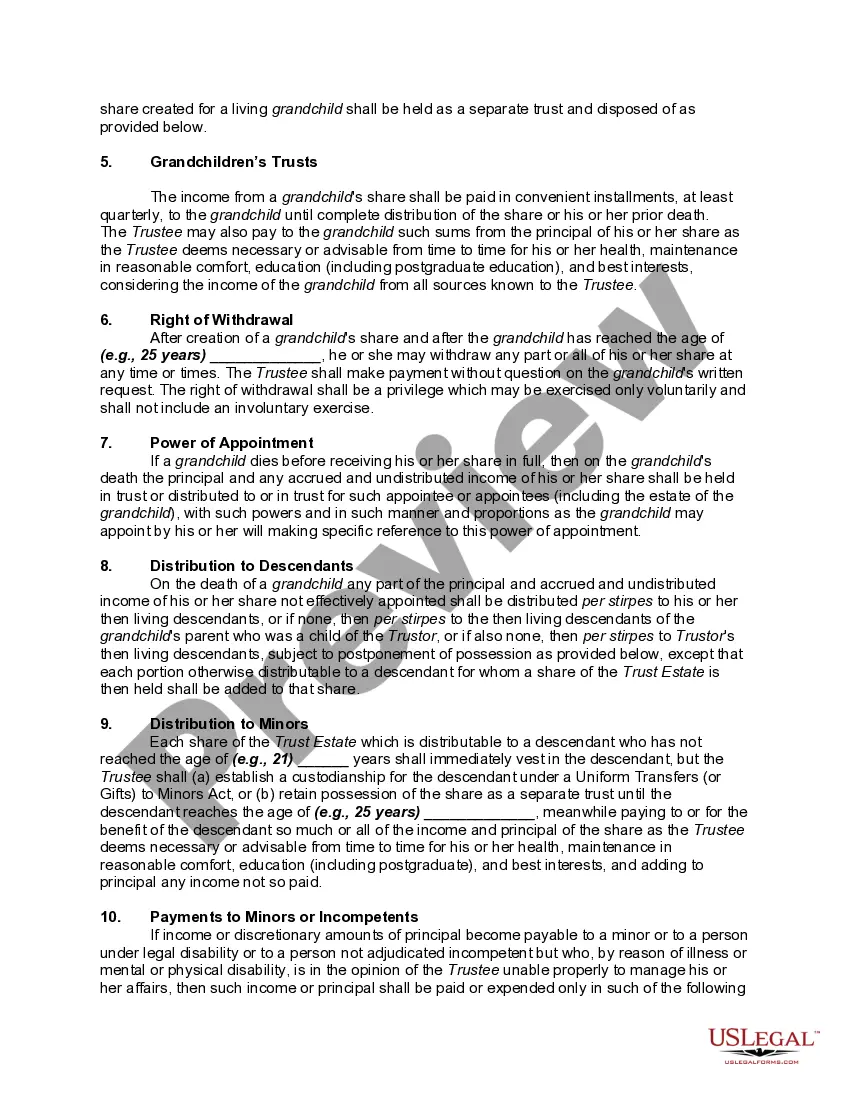
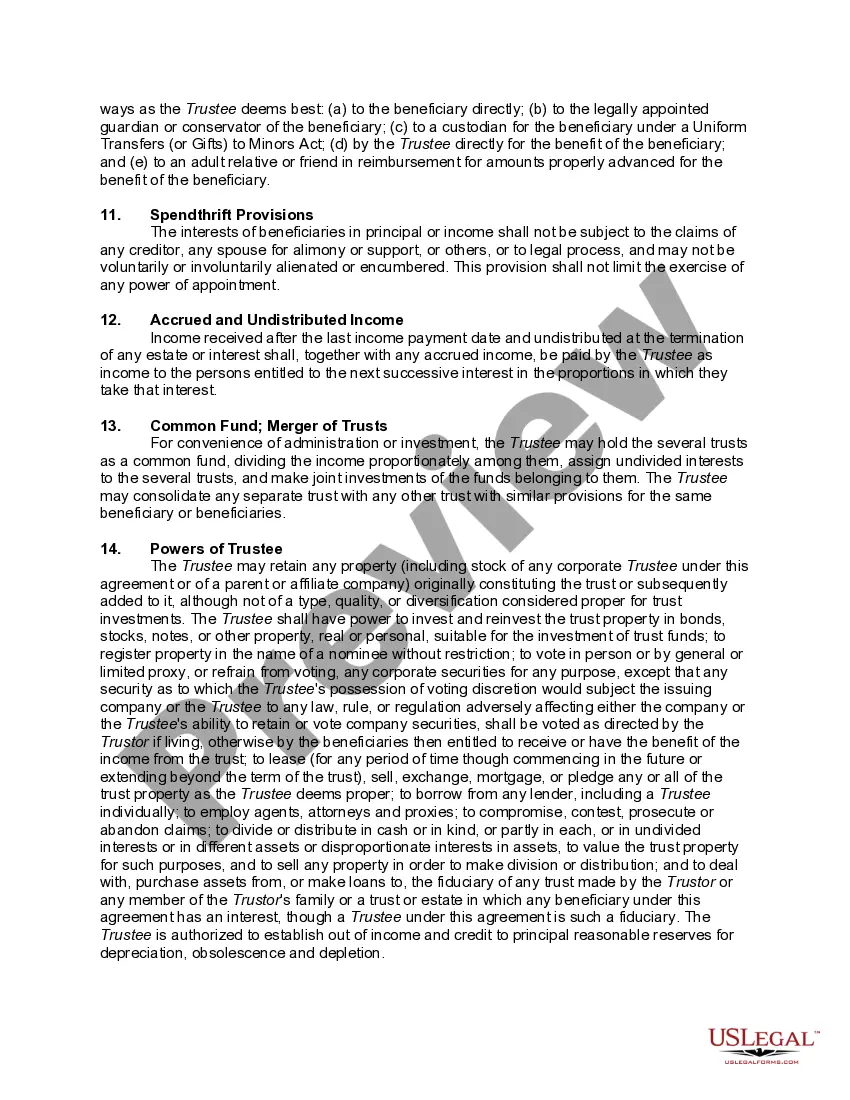
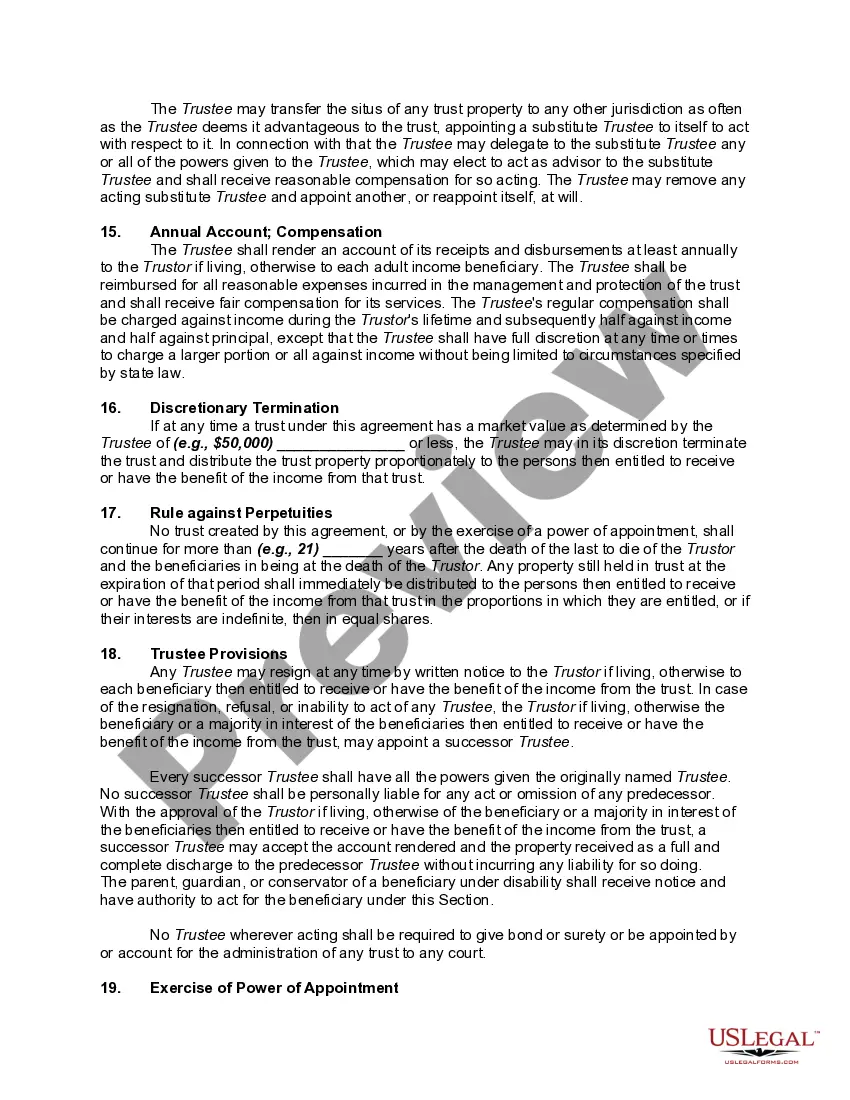
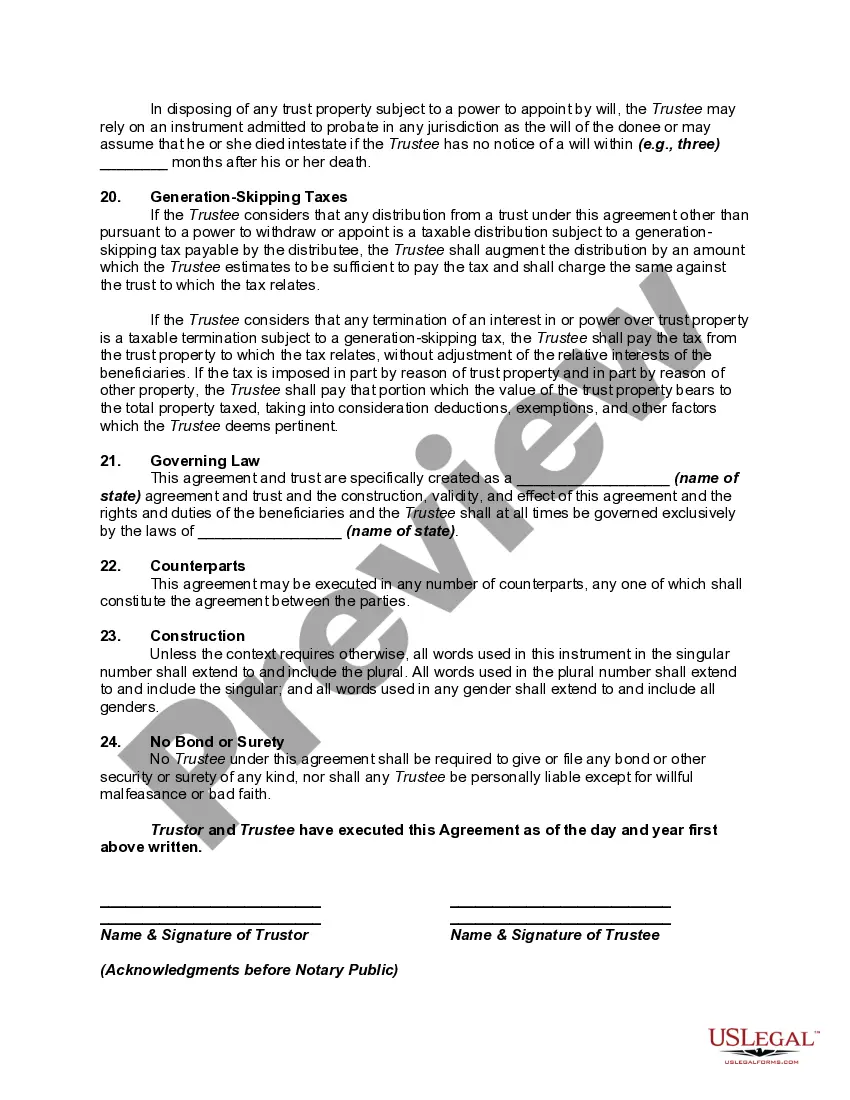
How to fill out Irrevocable Trust Agreement For Benefit Of Trustor's Children And Grandchildren With Spendthrift Trust Provisions?
Managing legal documents can be exasperating, even for the most seasoned professionals.
When seeking an Irrevocable Trust in Texas with a Trust and not being able to dedicate time to find the correct and current version, the experiences can be overwhelming.
Tap into a valuable resource hub of articles, guides, and materials related to your circumstances and requirements.
Save time and effort in searching for the documents you need, and make use of US Legal Forms’ sophisticated search and Review feature to find the Irrevocable Trust in Texas with a Trust and obtain it.
Select Buy Now when you’re ready, pick a monthly subscription plan, choose the format you require, and Download, complete, sign, print, and send your documents. Take advantage of the US Legal Forms online catalog, supported by 25 years of expertise and dependability. Transform your daily document management into a simple and user-friendly experience today.
- If you have a subscription, Log In to your US Legal Forms account, search for the form, and acquire it.
- Check the My documents section to view the documents you have previously downloaded and manage your files as needed.
- If this is your first time using US Legal Forms, create a free account and gain unlimited access to all the advantages of the library.
- Here are the steps to follow after obtaining the necessary form.
- Ensure this is the correct document by previewing it and reviewing its details.
- Confirm that the template is authorized in your state or county.
- Utilize state- or county-specific legal and business documents.
- US Legal Forms accommodates all your requirements, from individual to organizational paperwork, all in one location.
- Employ advanced tools to fill out and manage your Irrevocable Trust in Texas with a Trust.
Form popularity
FAQ
As long as you are confident that your trust is validly formed in ance with state law, recording is not required nor necessary. However, for extra peace of mind, you may choose to record your Certificate of Trust with the county clerk's office in order to protect it from unauthorized changes or access.
What Should I Avoid with My Irrevocable Trust? Use trust funds to pay for personal expenses. Use trust funds to pay for monthly bills, such as phone bills or utilities. Use trust assets to purchase vehicles. Gift assets from the trust to beneficiaries. Transfer assets into the trust without consulting your lawyer.
Insurance policies. Bank accounts: savings, checking, safe deposit boxes, money markets, certificates of deposit (CDs), mutual funds, and brokerage accounts. Bonds, stocks, and other investments. Real estate property.
Unlike a Revocable Trust, which allows for flexibility, you cannot change or revoke this type of trust. Like a Revocable Trust, however, an Irrevocable Trust should be set up with the assistance of a reputable estate planning attorney.
There is no legal requirement to record a Trust in a public forum, such as a court or a state institution. This allows Settlors to manage their property discreetly, and eventually distribute their property as they choose to their beneficiaries.