Irrevocable Trust For Real Estate
Description
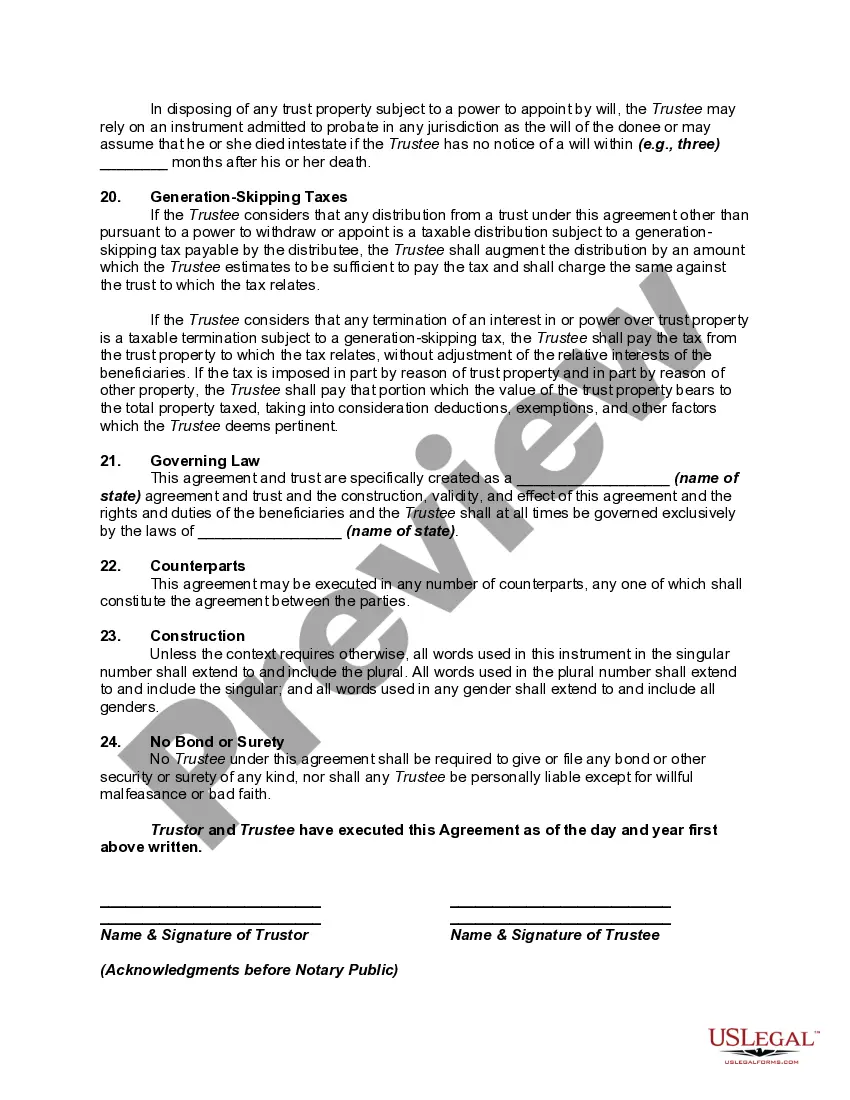


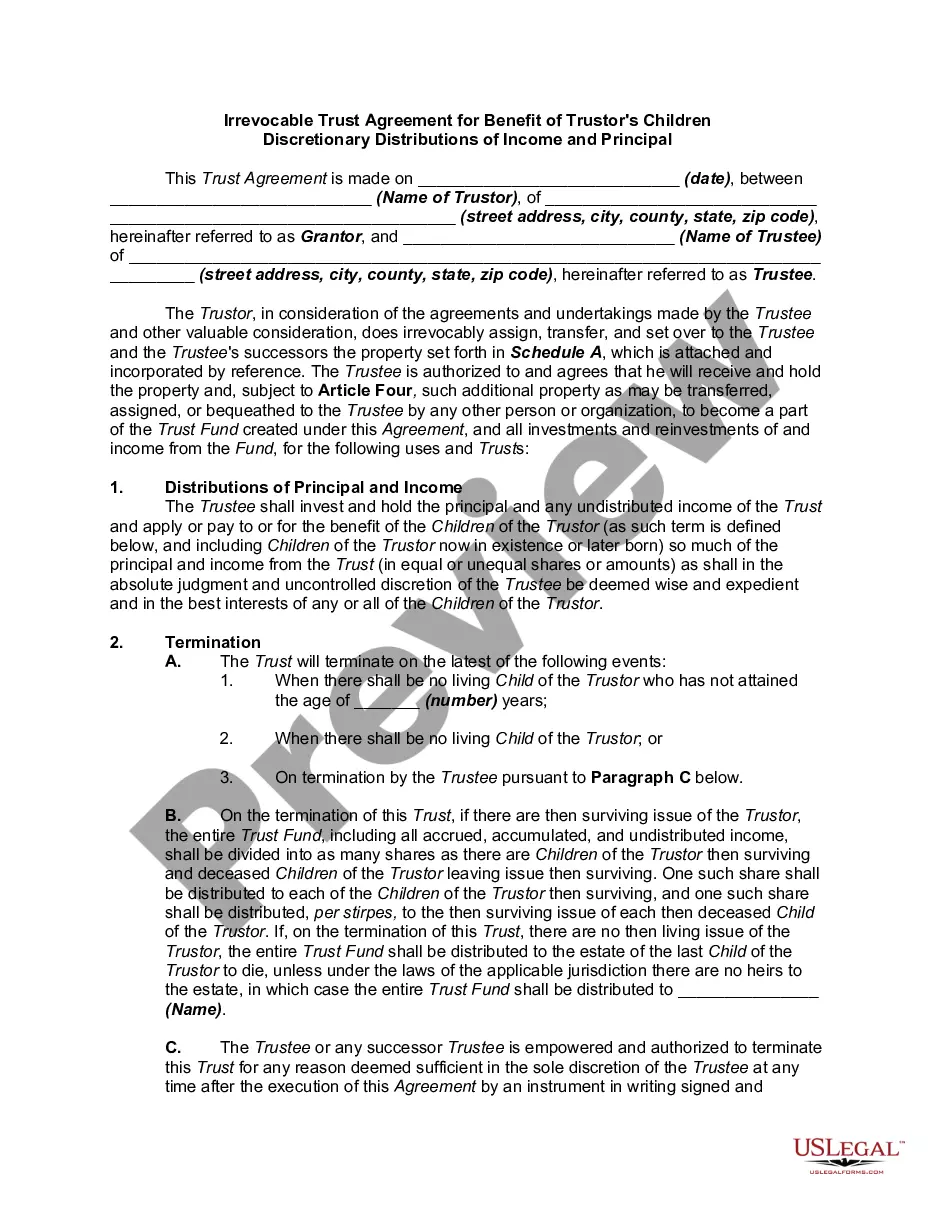

Get your form ready online
Our built-in tools help you complete, sign, share, and store your documents in one place.
Make edits, fill in missing information, and update formatting in US Legal Forms—just like you would in MS Word.
Download a copy, print it, send it by email, or mail it via USPS—whatever works best for your next step.
Sign and collect signatures with our SignNow integration. Send to multiple recipients, set reminders, and more. Go Premium to unlock E-Sign.
If this form requires notarization, complete it online through a secure video call—no need to meet a notary in person or wait for an appointment.
We protect your documents and personal data by following strict security and privacy standards.

Make edits, fill in missing information, and update formatting in US Legal Forms—just like you would in MS Word.

Download a copy, print it, send it by email, or mail it via USPS—whatever works best for your next step.

Sign and collect signatures with our SignNow integration. Send to multiple recipients, set reminders, and more. Go Premium to unlock E-Sign.

If this form requires notarization, complete it online through a secure video call—no need to meet a notary in person or wait for an appointment.

We protect your documents and personal data by following strict security and privacy standards.
Looking for another form?






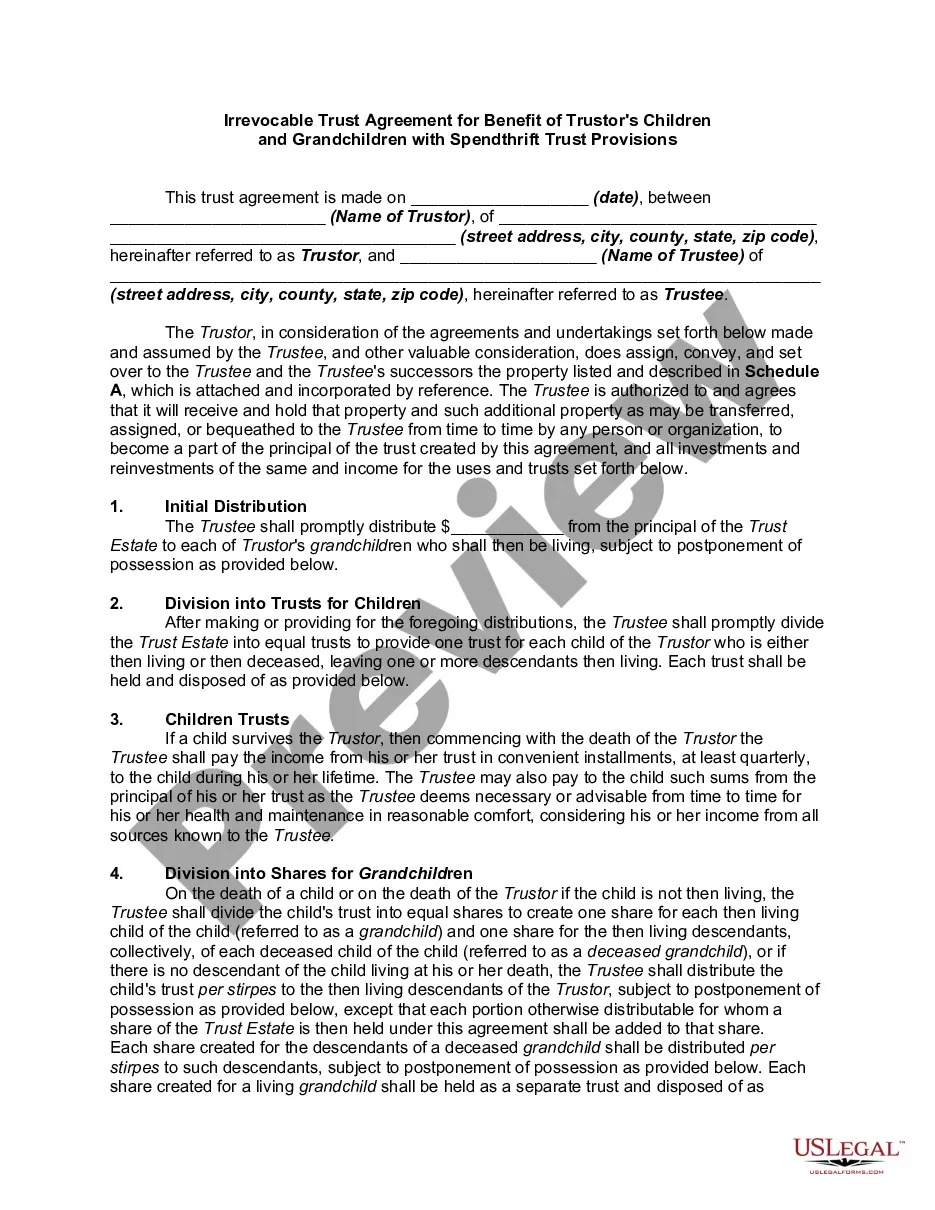
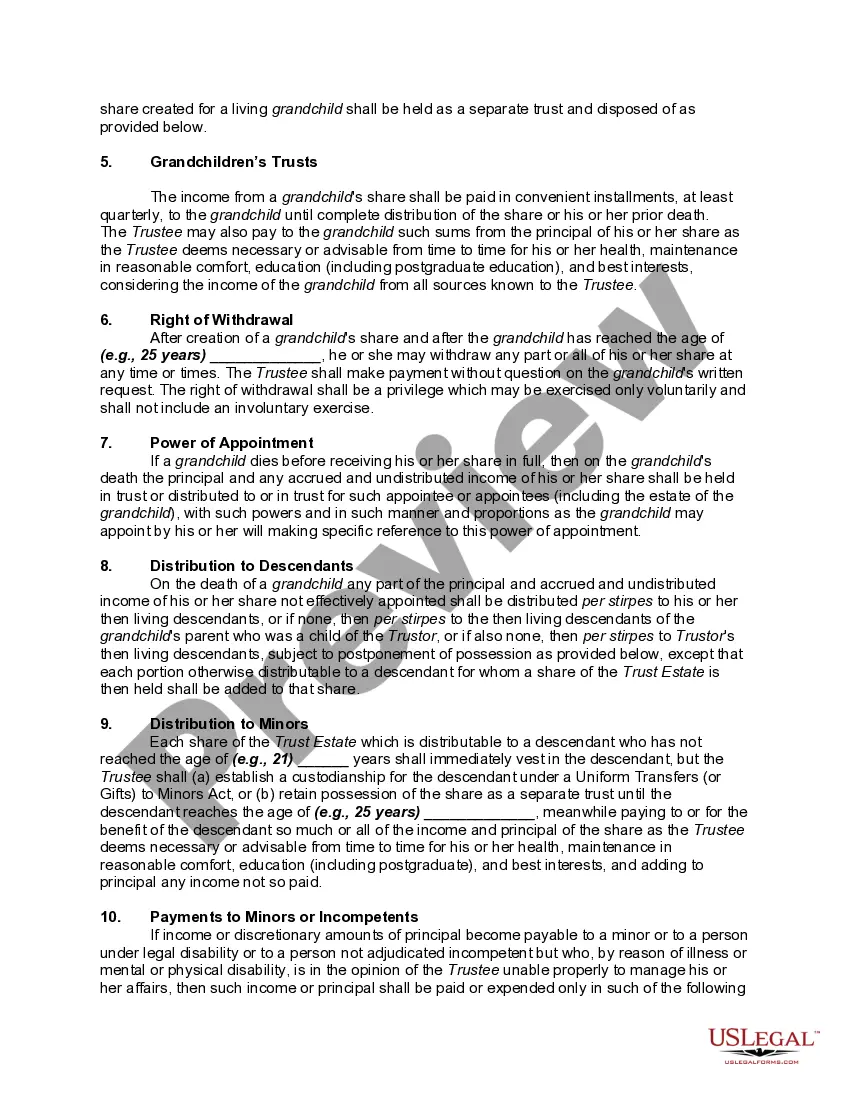
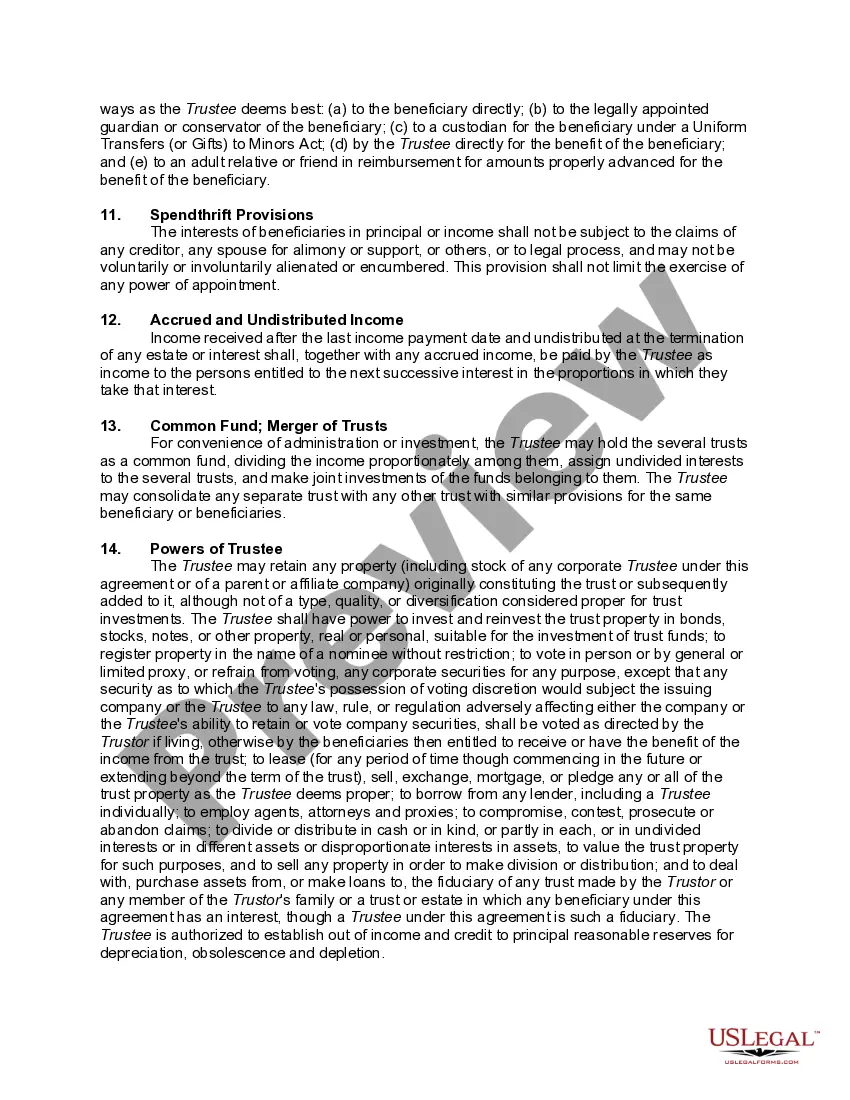
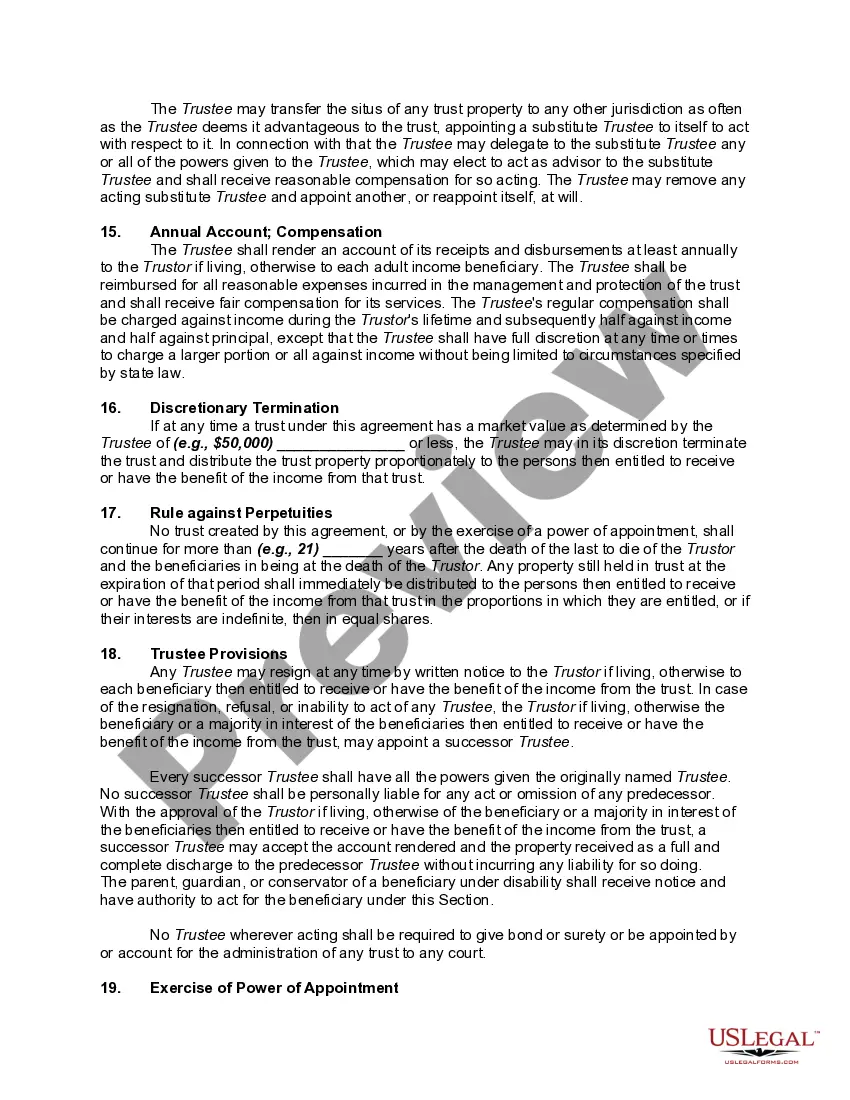
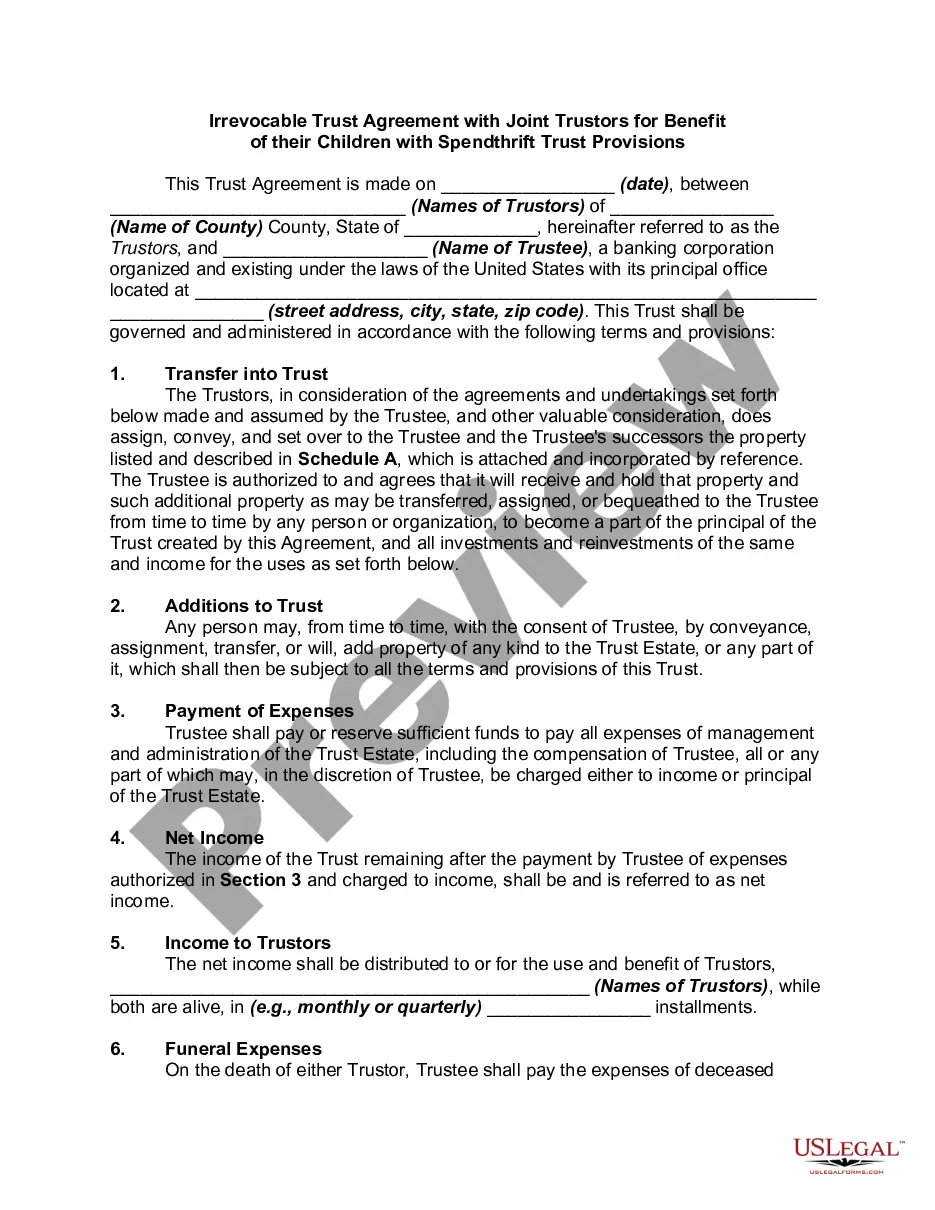
How to fill out Irrevocable Trust Agreement For Benefit Of Trustor's Children And Grandchildren With Spendthrift Trust Provisions?
Managing legal documentation and processes can be a time-intensive addition to your whole day.
Irrevocable Trust For Real Estate and similar forms typically necessitate you to search for them and comprehend how to fill them out accurately.
For that reason, if you are addressing financial, legal, or personal issues, utilizing a comprehensive and easy-to-use online repository of forms readily available will assist greatly.
US Legal Forms stands as the leading online resource for legal templates, providing over 85,000 state-specific documents and various tools that will enable you to finalize your paperwork swiftly.
Is this your first time using US Legal Forms? Register and create your account in a few minutes and you’ll gain entry to the form library and Irrevocable Trust For Real Estate. Afterwards, follow the instructions below to fulfill your form: Be certain you have located the correct form by utilizing the Review feature and examining the form details. Select Buy Now when ready, and pick the subscription plan that best fits you. Hit Download then fill out, eSign, and print the form. US Legal Forms has 25 years of expertise assisting users manage their legal documents. Obtain the form you need now and streamline any process effortlessly.
- Discover the repository of relevant documents accessible to you with a single click.
- US Legal Forms delivers state- and county-specific documents obtainable anytime for download.
- Protect your document management tasks by utilizing a premium service that permits you to prepare any form within minutes without additional or concealed fees.
- Simply Log In to your account, search for Irrevocable Trust For Real Estate, and acquire it instantly from the My documents section.
- You can also access forms you have downloaded before.
Form popularity
FAQ
Disadvantages of Irrevocable Trusts Fairly Rigid terms: They are not very flexible. Once the terms are established, they can be difficult to change. The Three-Year Rule: If you include life insurance in an irrevocable trust and pass away within three years, the proceeds return to your estate and become taxable.
Irrevocable trusts are generally set up to minimize estate taxes, access government benefits, and protect assets. This is in contrast to a revocable trust, which allows the grantor to modify the trust, but loses certain benefits such as creditor protection.
Upon the grantor's death, the trustee continues managing the irrevocable trust or distributes the assets ing to the trust's terms. Unlike a will, an irrevocable trust avoids probate, often expediting the asset distribution process and making it an appealing option for some families.
1) You name multiple people on the title of the property, which means that they each have part ownership and claim on the property. 2) Or you add one person on the title and hope they share the usage with the other members. Instead, you can put the property in a family trust.
Benefits of a Trust There are many types of trusts, but the revocable living trust is probably the most common and useful for holding title to real estate. The major benefit from holding property in a trust is that the property avoids probate after your death.