Discharge Garnishment For Us Citizens
Description
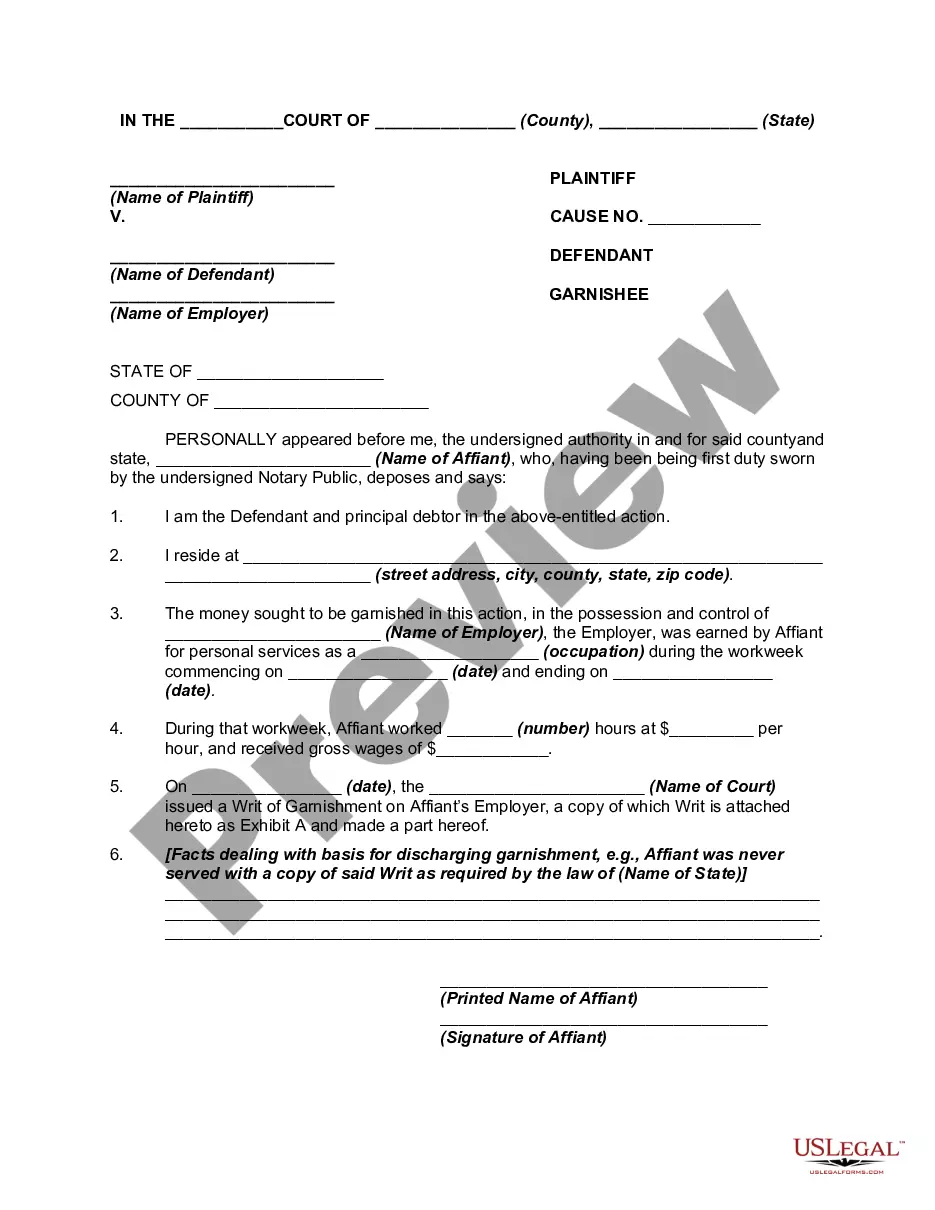
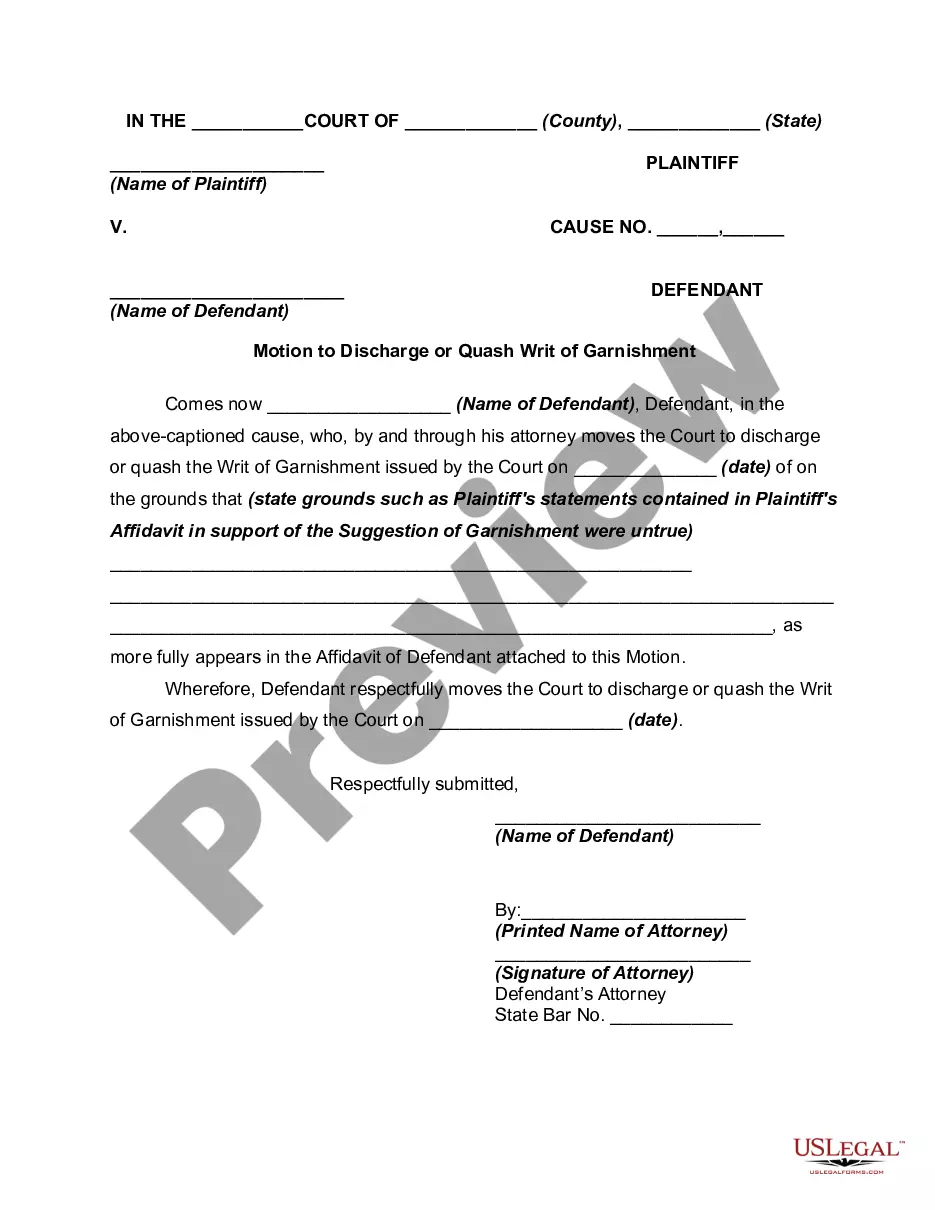
Get your form ready online
Our built-in tools help you complete, sign, share, and store your documents in one place.
Make edits, fill in missing information, and update formatting in US Legal Forms—just like you would in MS Word.
Download a copy, print it, send it by email, or mail it via USPS—whatever works best for your next step.
Sign and collect signatures with our SignNow integration. Send to multiple recipients, set reminders, and more. Go Premium to unlock E-Sign.
If this form requires notarization, complete it online through a secure video call—no need to meet a notary in person or wait for an appointment.
We protect your documents and personal data by following strict security and privacy standards.

Make edits, fill in missing information, and update formatting in US Legal Forms—just like you would in MS Word.

Download a copy, print it, send it by email, or mail it via USPS—whatever works best for your next step.

Sign and collect signatures with our SignNow integration. Send to multiple recipients, set reminders, and more. Go Premium to unlock E-Sign.

If this form requires notarization, complete it online through a secure video call—no need to meet a notary in person or wait for an appointment.

We protect your documents and personal data by following strict security and privacy standards.
Looking for another form?
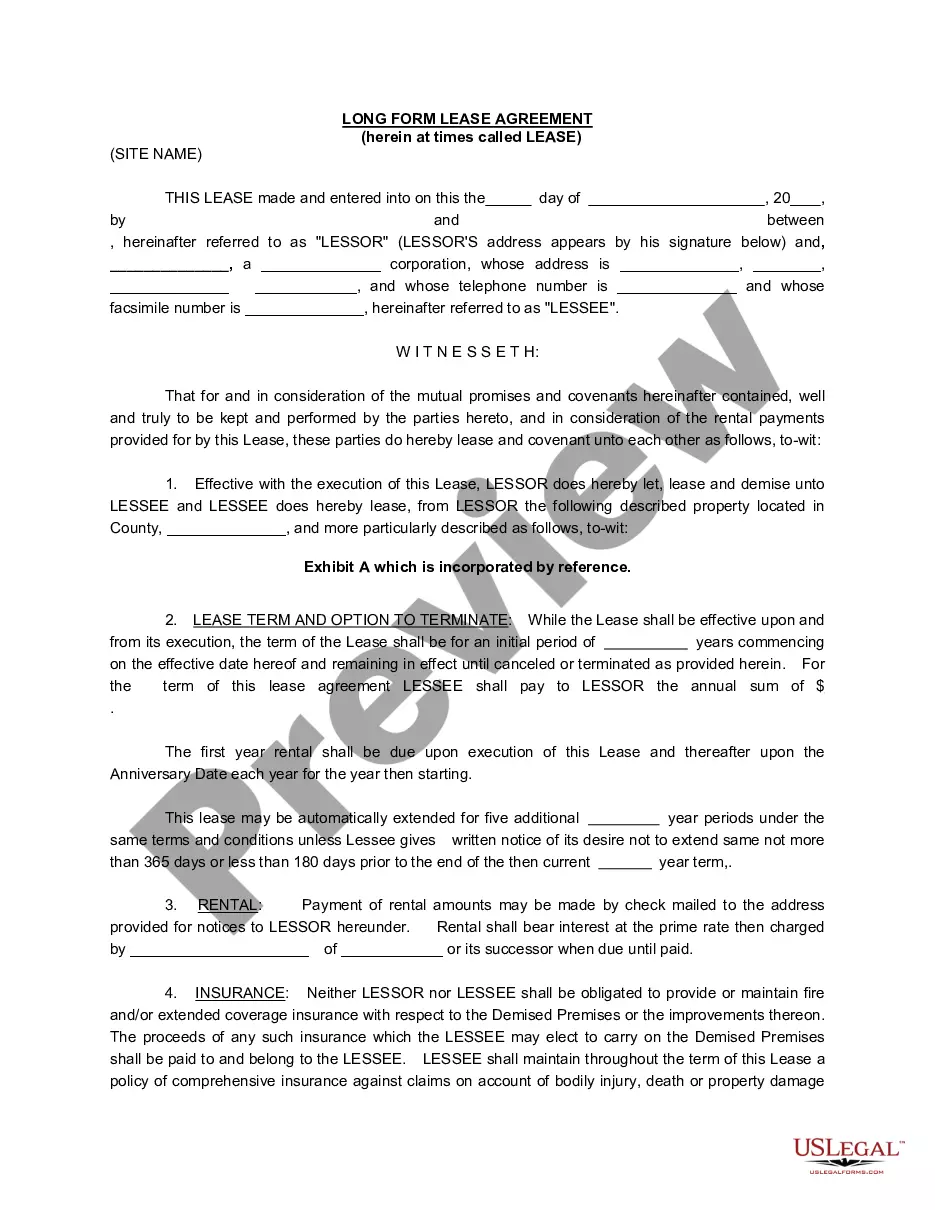




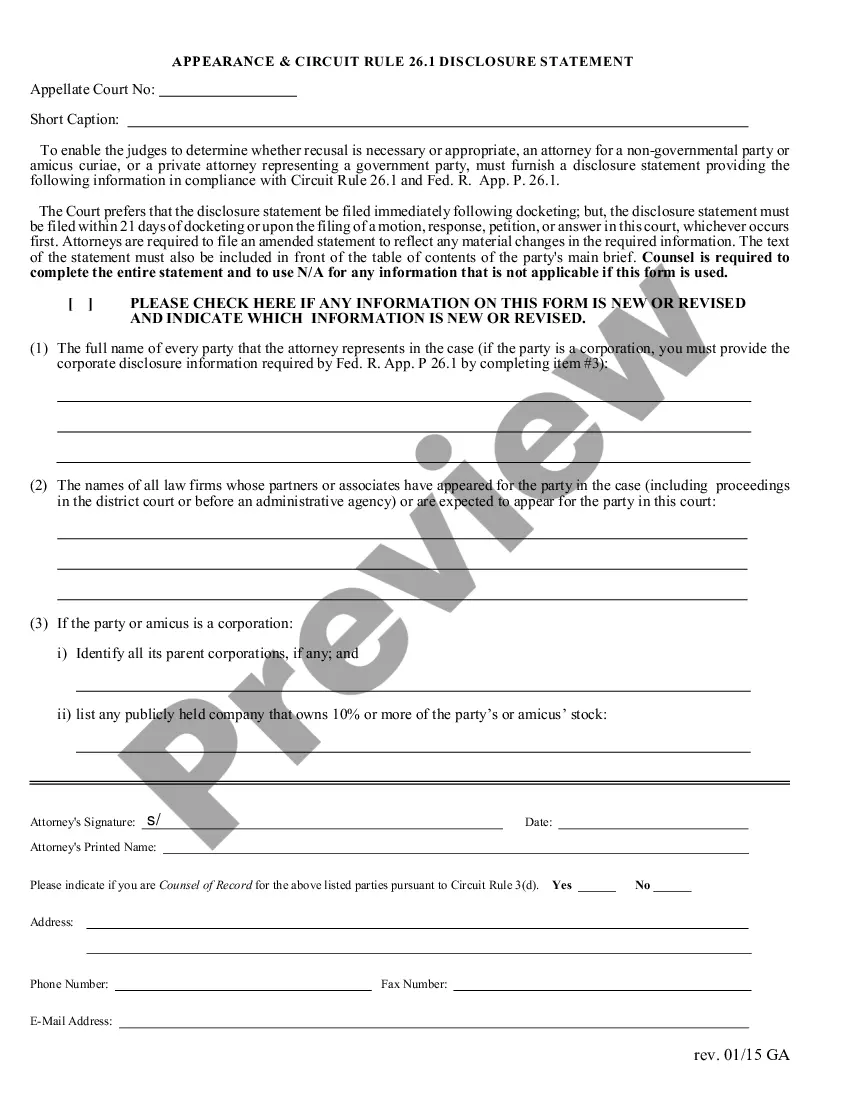
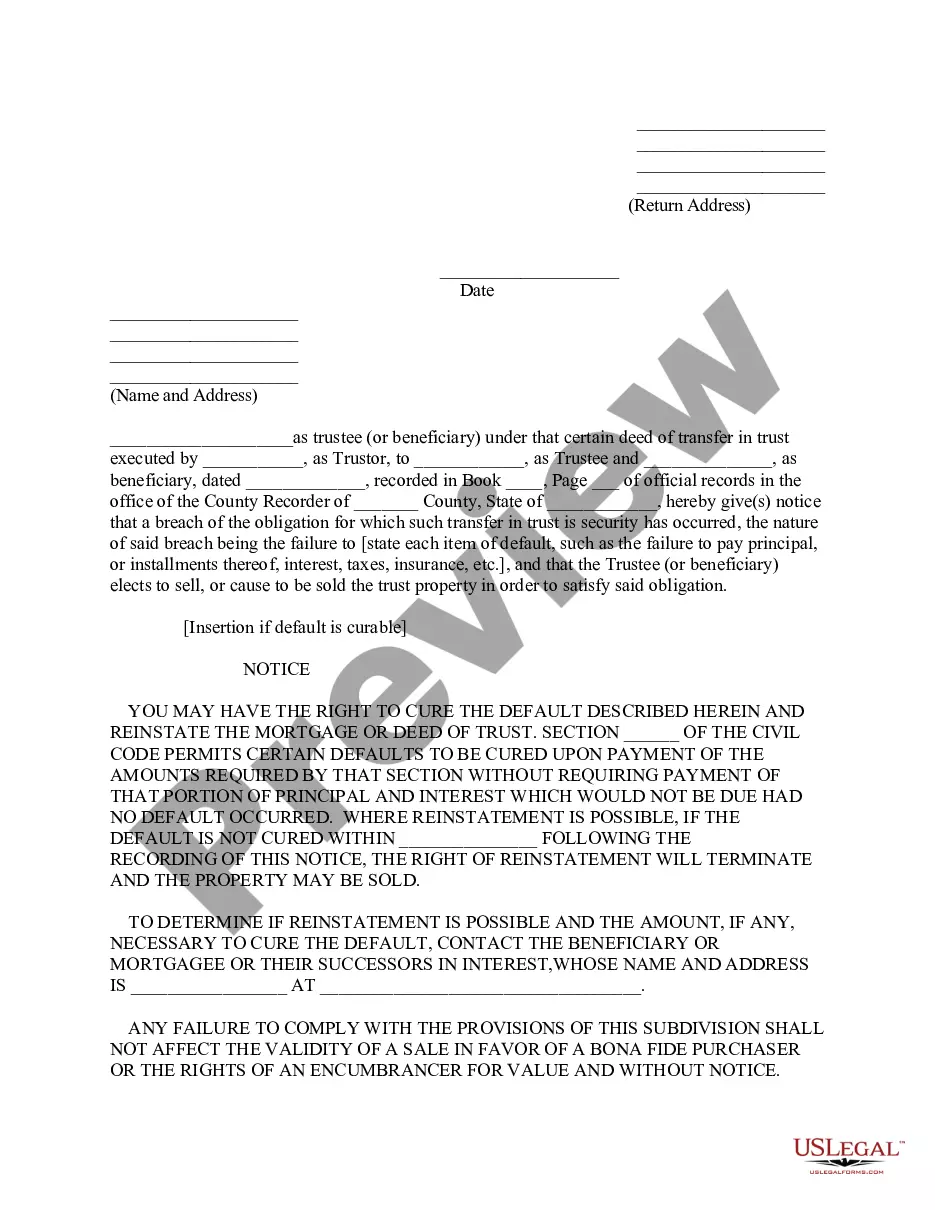

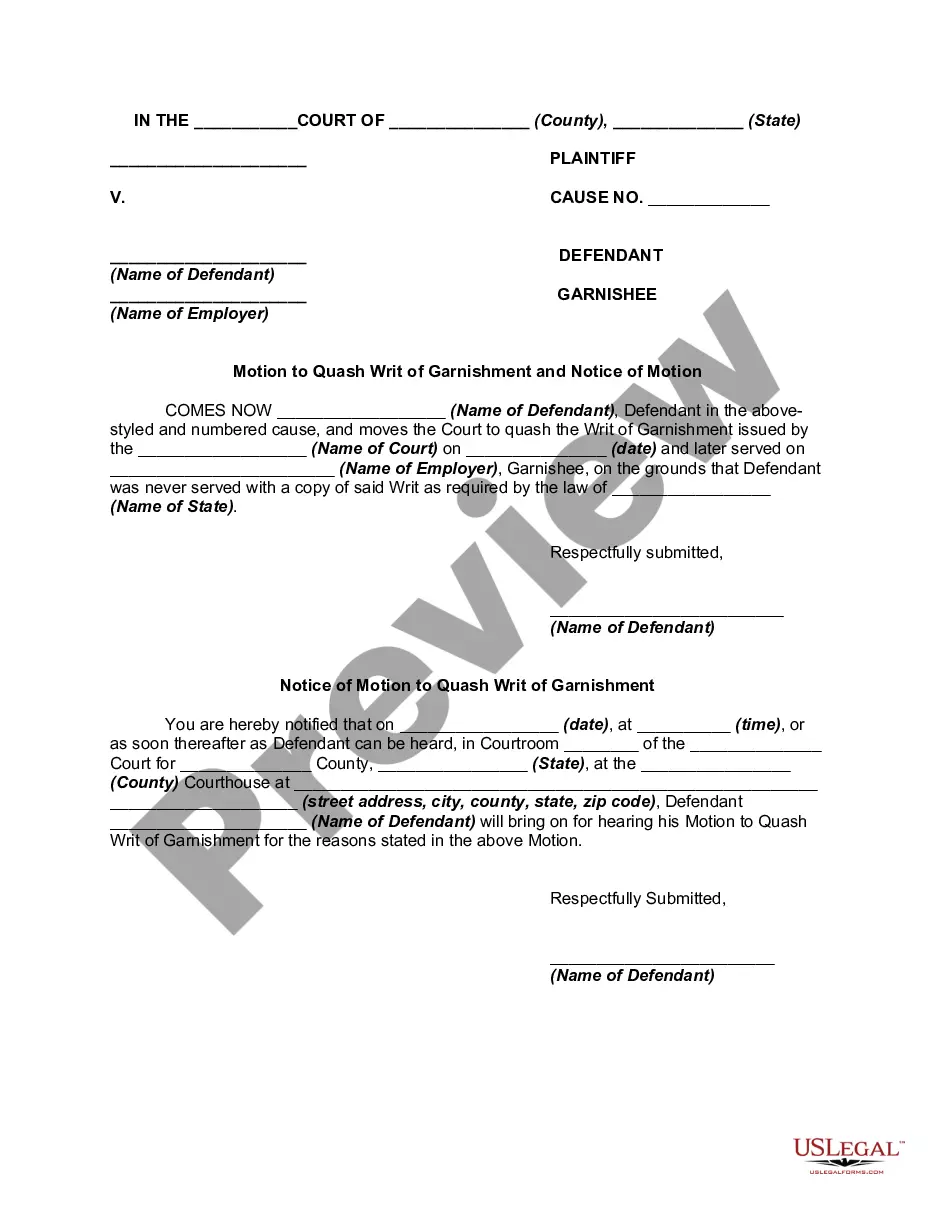
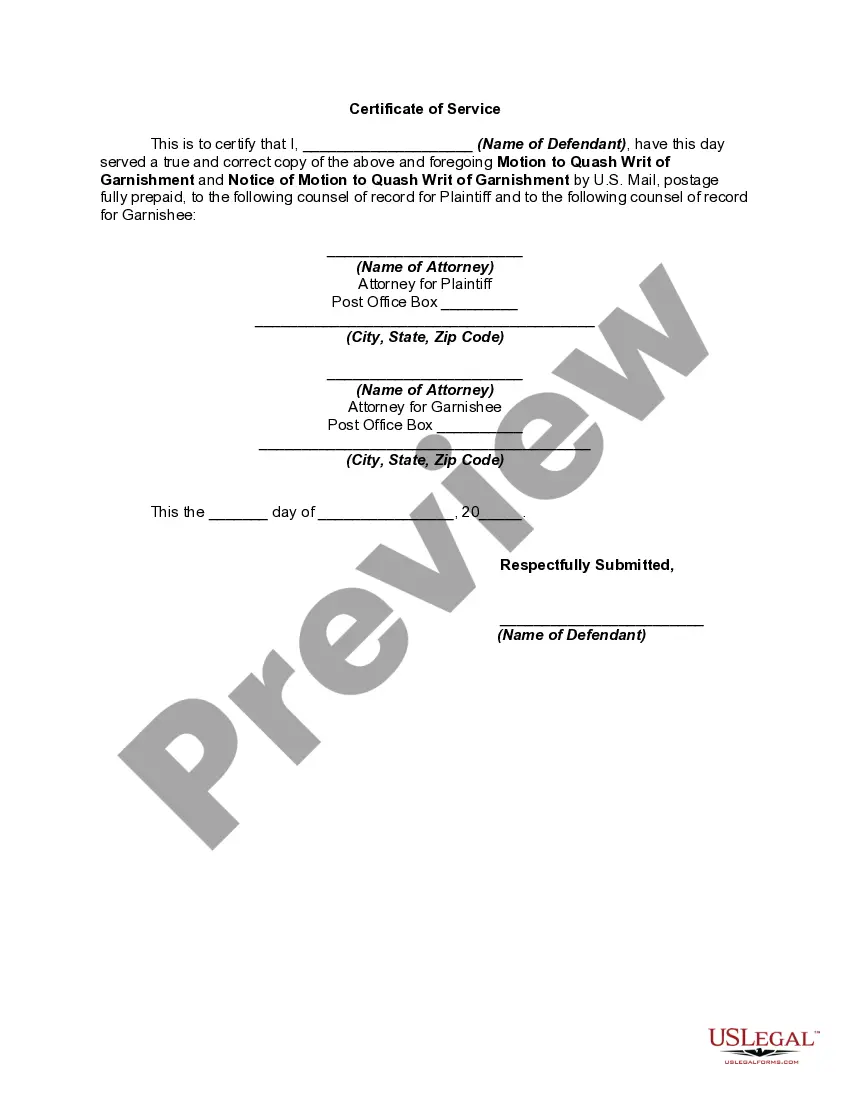
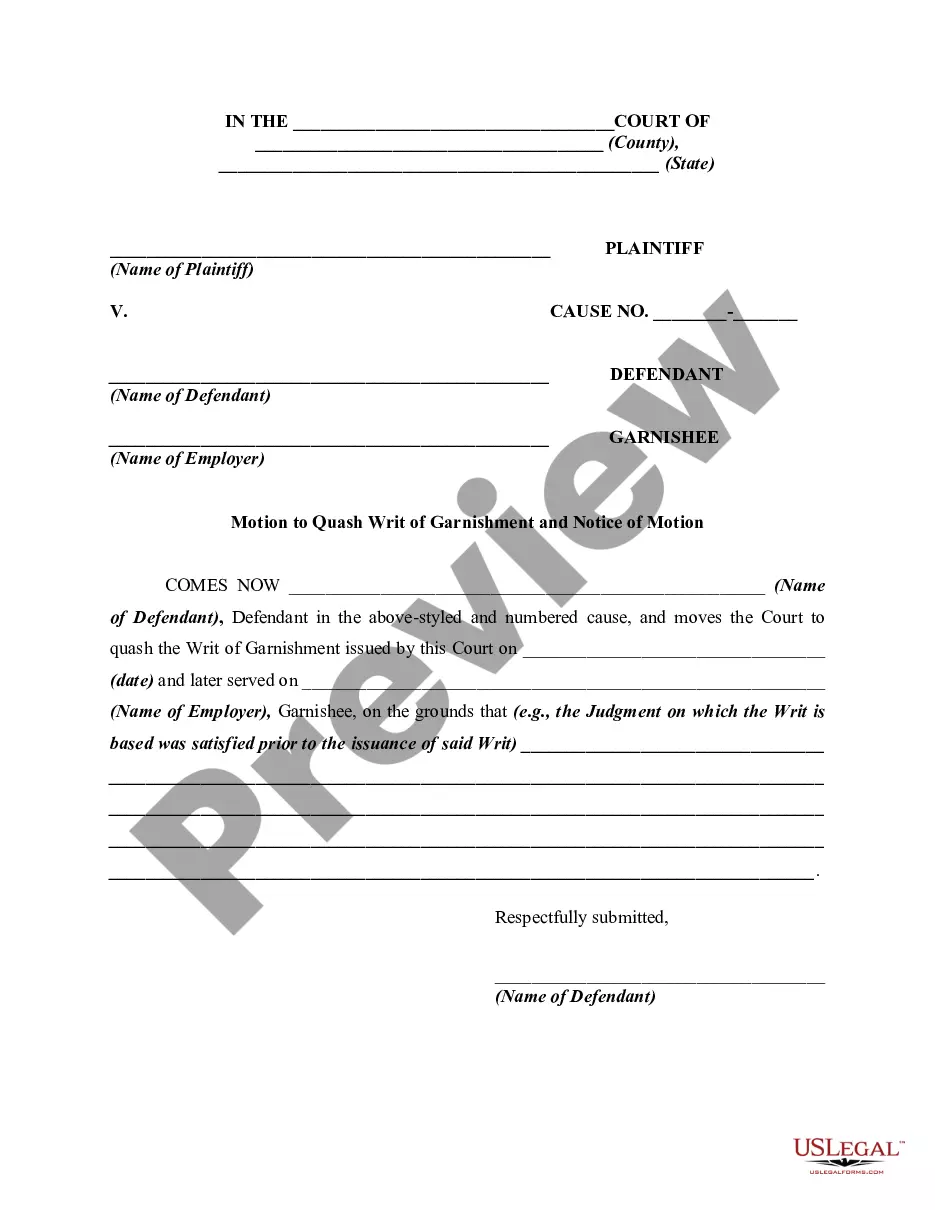
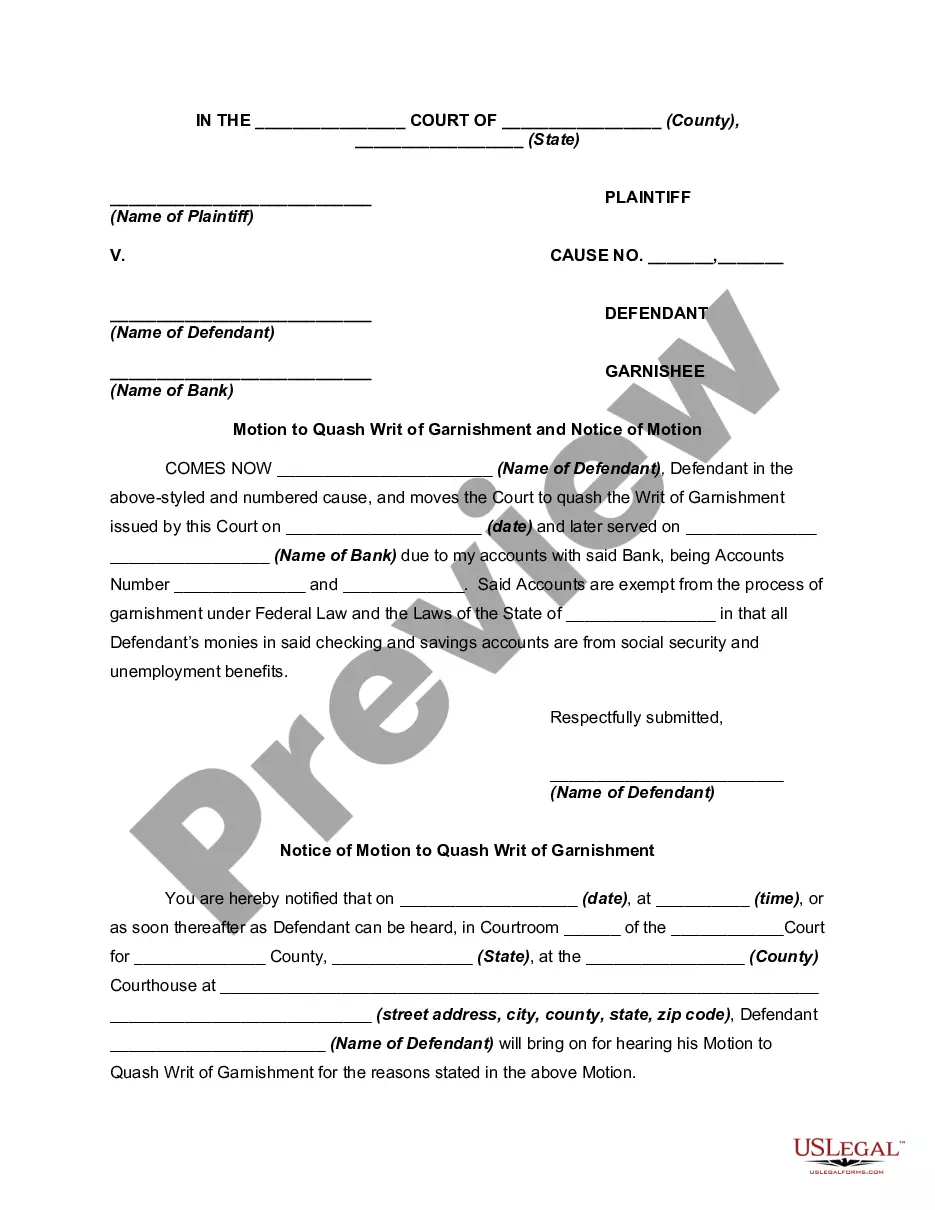
How to fill out Motion Of Defendant To Discharge Or Quash Writ Of Garnishment For Failure To Serve Copy Of Writ On Defendant And Notice Of Motion?
- If you're a returning user, log in to your account and download your required form by clicking the Download button. Ensure that your subscription is active; if not, renew it based on your payment plan.
- For first-time users, begin by using the Preview mode to review the descriptions and verify that the template meets your needs and adheres to your jurisdiction requirements.
- Utilize the Search tab to locate additional templates if necessary. If you spot any discrepancies, identify the proper form that fits your requirements.
- Select your document by clicking the Buy Now button and choose the subscription plan that suits you. Make sure to create an account for access to a wealth of resources.
- Complete your purchase by entering your credit card information or opting to pay through PayPal.
- Finally, download your form and save it to your device. You can access it later from the My Forms section of your account.
By utilizing US Legal Forms, you empower yourself with a robust collection of over 85,000 legally compliant documents. The service ensures easy access to tailor-made forms that adhere to your specific requirements.
Take action now and make your legal processes simpler with US Legal Forms. Start your journey today to ensure your discharge garnishment is managed efficiently!
Form popularity
FAQ
Yes, if you owe a debt and a creditor files for garnishment in your state of employment, even if you reside in a different state, they can still pursue garnishment. This is often done through an interstate agreement that allows the original creditor to enforce the judgment across state lines. It's vital to understand these processes to protect yourself effectively during discharge garnishment for US citizens.
A garnishment can be deemed invalid if proper legal procedures were not followed. For example, if you were not given notice or if the creditor failed to obtain a valid court judgment against you. Familiarizing yourself with your rights can help you identify and counter unjust garnishments, aiding in the discharge garnishment for US citizens.
In New Jersey, wage garnishment is typically limited to 25% of your disposable income or the amount by which your income exceeds 40 times the federal minimum wage, whichever is less. Creditors must also provide you with a notice before garnishment begins. Understanding these regulations helps in managing the process of discharge garnishment for US citizens.
Yes, you can be garnished from another state. If you owe a debt and the creditor obtains a judgment against you, they can seek garnishment from your wages even if you live in a different state. It's crucial to stay informed about your rights to discharge garnishment for US citizens, as laws vary by state.
Some states, notably Texas and Florida, have laws that protect personal assets and do not allow wage garnishments for most debts. This means that if you live in one of these states, you may benefit from stronger protections against discharge garnishment for US citizens. However, always check local laws, as exceptions can apply.
Certain types of income are exempt from garnishment, including Social Security benefits, unemployment benefits, and disability payments. Understanding what cannot be garnished can protect your essential income. If you are unsure about your situation regarding discharge garnishment for US citizens, seeking help from US Legal Forms may provide you with clarity and support.
FMLA benefits themselves cannot be garnished, which allows employees to take essential leave without financial worries. This assurance is crucial for maintaining stability in challenging times. If you face issues with discharge garnishment for US citizens, contacting a professional can provide you with tailored assistance.
The maximum amount that can be garnished from your paycheck usually is 25% of your disposable earnings. However, certain laws may offer additional protections based on your individual circumstances. If you are facing a discharge garnishment for US citizens, understanding these limits can empower you to take control of your financial situation.
You cannot be fired while your FMLA request is pending, as this leave is protected under federal law. Your employer must maintain your job or a similar position during your leave. If you encounter problems regarding discharge garnishment for US citizens while on FMLA, knowing your rights can help you navigate these challenges.
Family and Medical Leave Act (FMLA) benefits typically cannot be garnished like regular wages. This is important for employees to know, as their access to essential leave should not be jeopardized. If you're dealing with a discharge garnishment for US citizens, understanding your rights under FMLA can help you manage financial burdens while protecting your job.