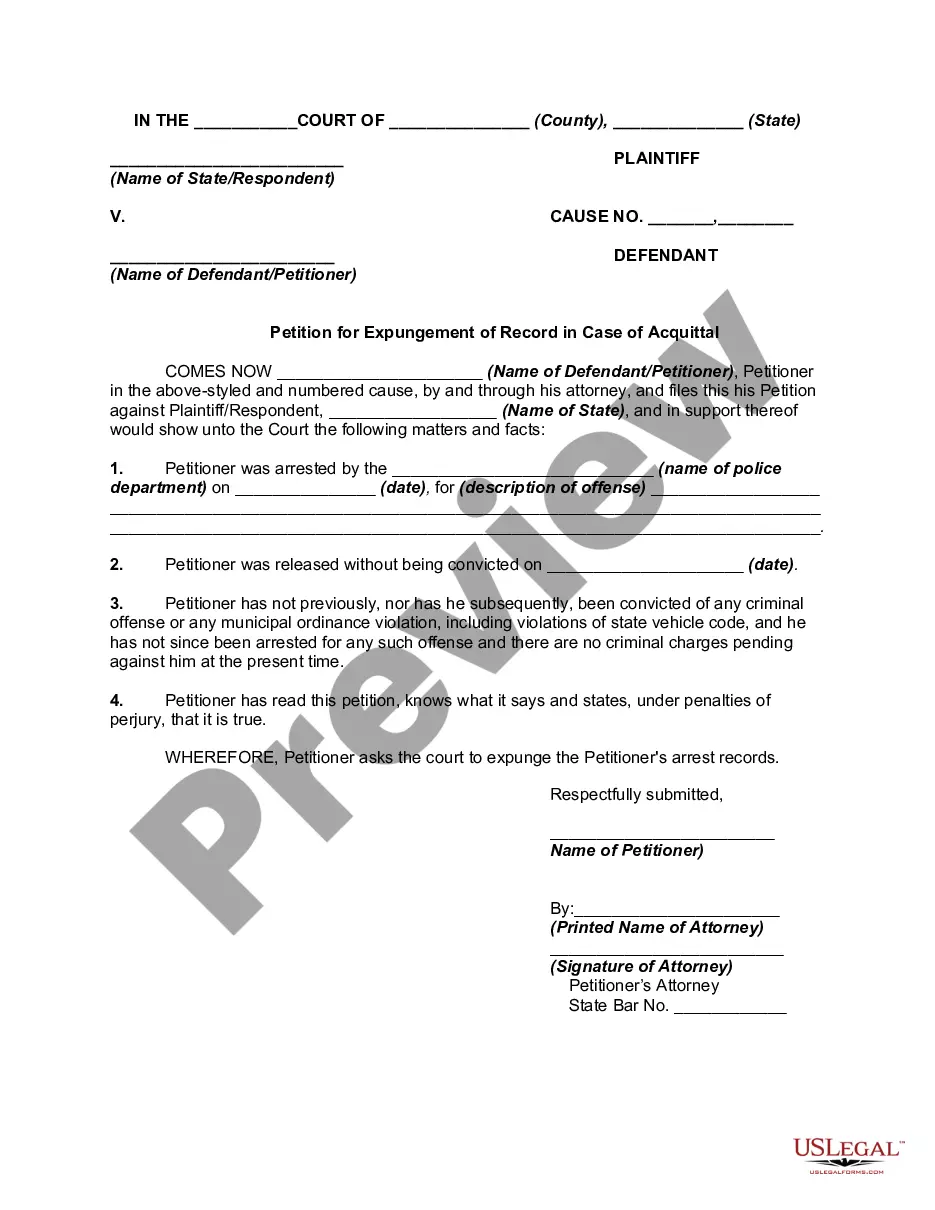
Petition For Expungement With A Child
Description
Get your form ready online
Our built-in tools help you complete, sign, share, and store your documents in one place.
Make edits, fill in missing information, and update formatting in US Legal Forms—just like you would in MS Word.
Download a copy, print it, send it by email, or mail it via USPS—whatever works best for your next step.
Sign and collect signatures with our SignNow integration. Send to multiple recipients, set reminders, and more. Go Premium to unlock E-Sign.
If this form requires notarization, complete it online through a secure video call—no need to meet a notary in person or wait for an appointment.
We protect your documents and personal data by following strict security and privacy standards.

Make edits, fill in missing information, and update formatting in US Legal Forms—just like you would in MS Word.

Download a copy, print it, send it by email, or mail it via USPS—whatever works best for your next step.

Sign and collect signatures with our SignNow integration. Send to multiple recipients, set reminders, and more. Go Premium to unlock E-Sign.

If this form requires notarization, complete it online through a secure video call—no need to meet a notary in person or wait for an appointment.

We protect your documents and personal data by following strict security and privacy standards.
Looking for another form?









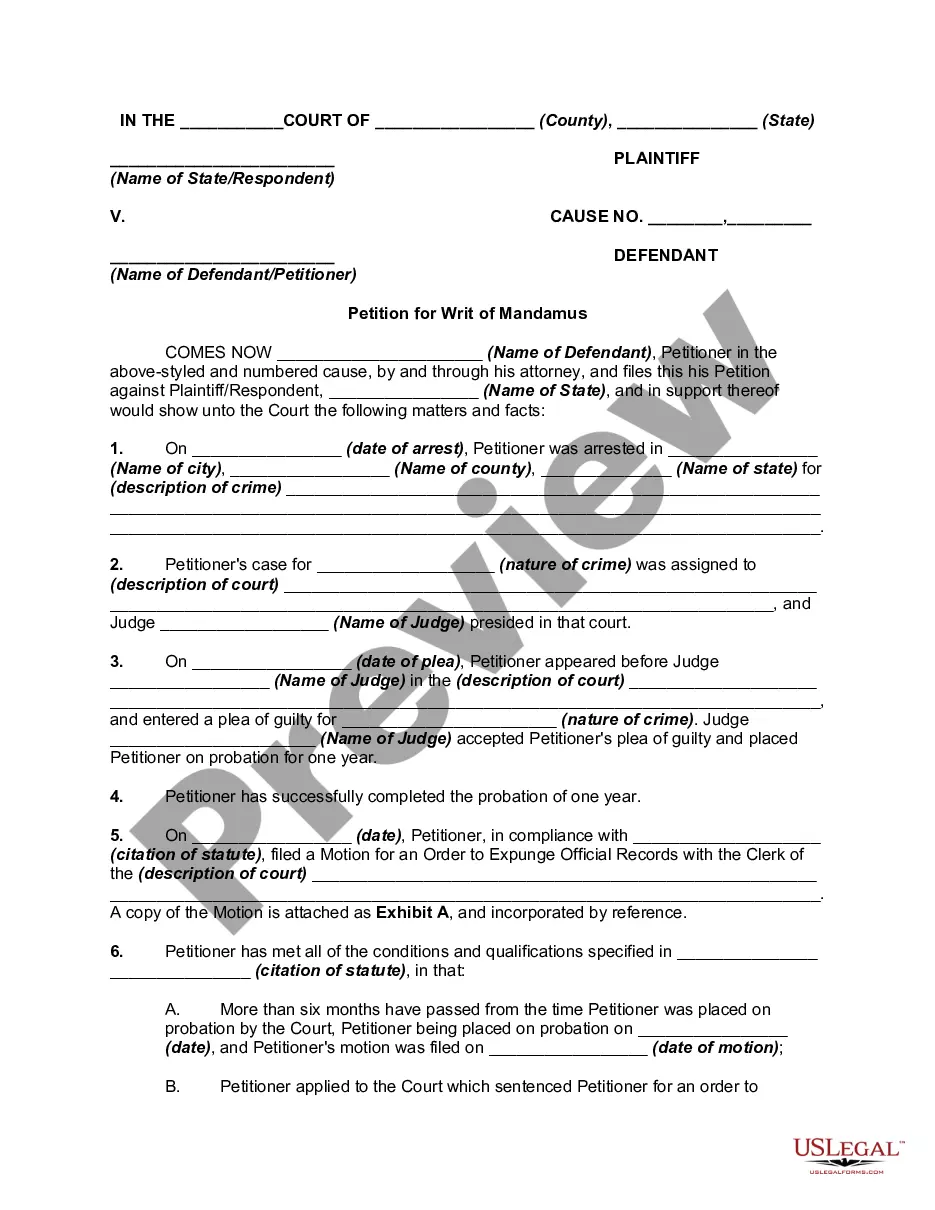
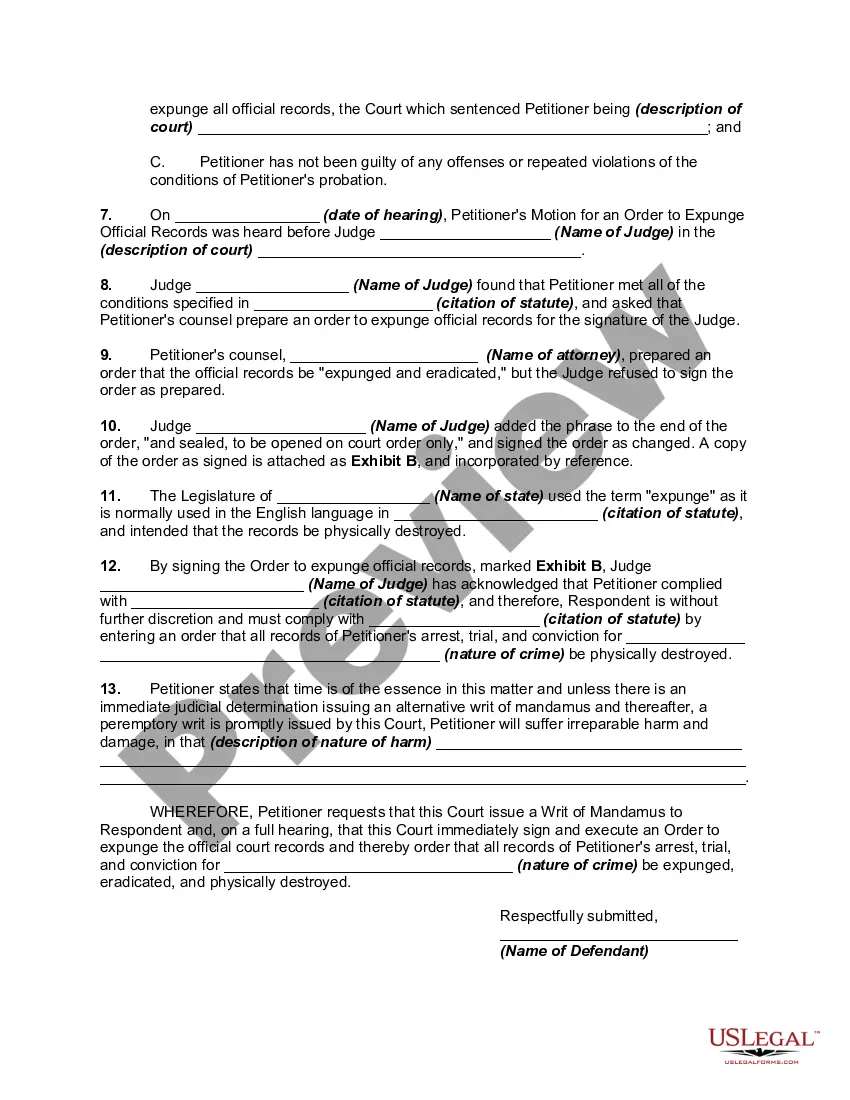
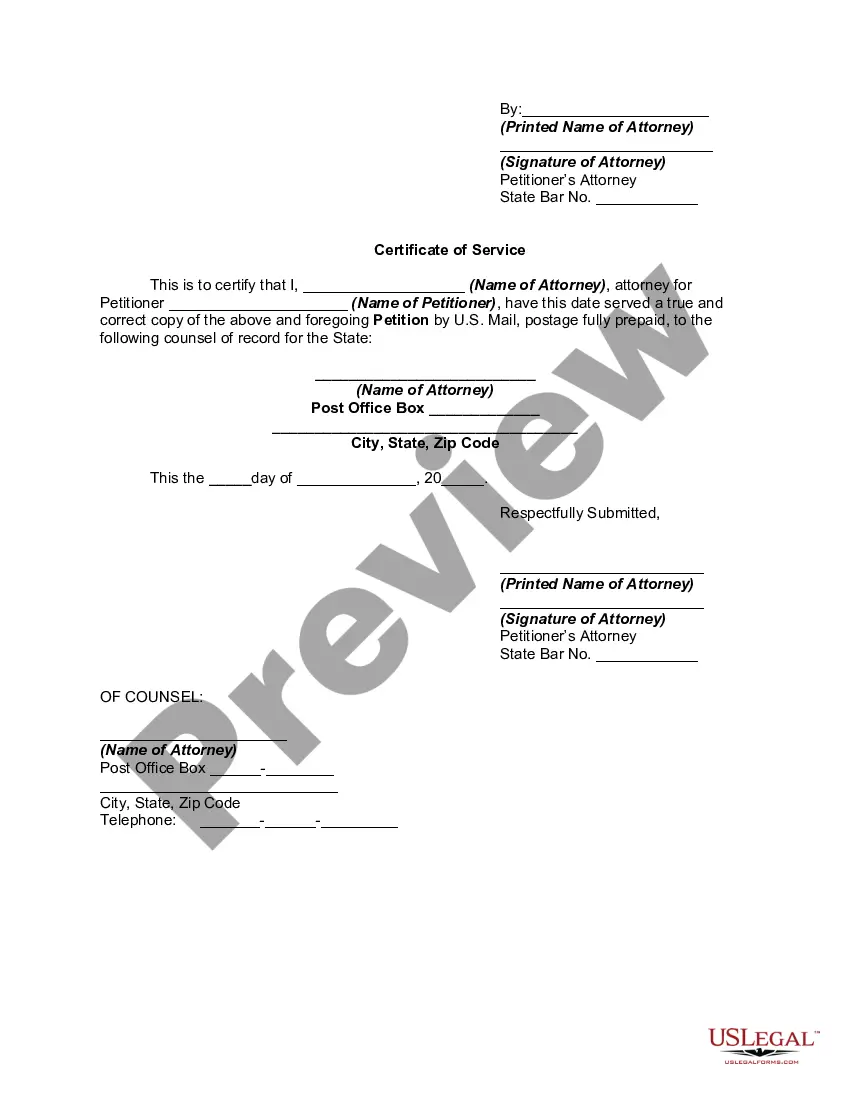
How to fill out Petition For Writ Of Mandamus Or Mandate To Compel Court To Expunge Record Of Arrest, Trial, And Conviction - Expungement?
- Log in to your US Legal Forms account if you are an existing user. Ensure your subscription is active; if not, renew it according to your plan.
- For first-time users, begin by exploring the Preview mode to review form descriptions. Confirm the selected document aligns with your local jurisdiction and requirements.
- Use the Search tab to find alternative templates if necessary. Once you find a suitable document, proceed to the next step.
- Purchase the document by clicking the Buy Now button and selecting your preferred subscription plan. You will need to register for an account to access the library.
- Complete your purchase using your credit card or PayPal account to finalize your subscription.
- Download your form to your device, allowing for easy access in the My Forms section whenever you need it.
In conclusion, US Legal Forms simplifies the legal documentation process by providing an extensive range of easily accessible templates tailored for your needs. Whether you are a first-time user or returning, their resources empower you to create legally sound documents efficiently.
Start your journey today by visiting US Legal Forms and ensuring your expungement process is seamless!
Form popularity
FAQ
Typically, expunged records cannot be introduced in family court. This means that once your petition for expungement with a child is granted, the records related to that case should not have any bearing on family law matters. However, always be mindful of the specific laws in your state as they can influence how your past issues might be viewed in family court.
In custody cases, expunged records generally cannot be used against you. However, judges may still consider the context of past conduct, especially if it relates to the well-being of the child. Filing a petition for expungement with a child is a step to demonstrate your commitment to positive change, helping to convey your suitability as a custodial parent.
When writing an expungement letter, you should clearly outline your request and provide reasons for the expungement. Include any relevant details, such as your conviction, the steps you've taken to rehabilitate, and how expungement will benefit you and your child. A well-structured petition for expungement with a child can increase your chances of success, so focus on clarity and sincerity.
Generally, an expunged record should not show up on a federal background check. The purpose of expungement is to erase the record from public view, including federal databases. Nonetheless, it is wise to understand that various agencies may have different access rights, so ensure you know the implications of your specific situation regarding a petition for expungement with a child.
Yes, you can file your own petition for expungement in Texas, but it can be a complex process. If you choose to do it yourself, make sure to thoroughly research the legal requirements for expungement in your particular case. However, consulting with a legal expert can simplify the process and help ensure that your petition for expungement with a child is properly filed.
When you pursue a security clearance, disclosures regarding any criminal history may still be required. Even if you have successfully filed a petition for expungement with a child, some agencies may still access certain records. Therefore, it is important to be transparent during the security clearance process, as varying guidelines apply based on the level of clearance.
Generally, judges cannot access expunged records, as they are treated as if they never existed. This confidentiality protects the individual, especially when it comes to a 'Petition for expungement with a child.' However, there are certain exceptions where law enforcement may access these records. Thus, it is crucial to understand the nuances of expungement in your state.
In Oklahoma, the requirements for expungement include the completion of the sentence, lack of subsequent offenses, and a waiting period. To successfully file a 'Petition for expungement with a child,' you must also demonstrate rehabilitation. Understanding these requirements is essential, and you may want to seek assistance from resources like US Legal Forms to ensure all criteria are met.
Getting a dismissed case expunged can be straightforward, especially with the correct guidance. Completing a 'Petition for expungement with a child' often simplifies this process. It may require gathering specific documents, but overall, many find it manageable. Utilizing resources like US Legal Forms can guide you through the necessary steps for a successful expungement.
For kids, expungement means that their records are sealed and not accessible to the public. This process is vital in ensuring a brighter future, as it allows them to move forward without the burden of past legal issues. A 'Petition for expungement with a child' can help remove obstacles they may face in education or employment. The goal is to provide a clean slate for the child to thrive.