Recuse Recusal With You
Description
Get your form ready online
Our built-in tools help you complete, sign, share, and store your documents in one place.
Make edits, fill in missing information, and update formatting in US Legal Forms—just like you would in MS Word.
Download a copy, print it, send it by email, or mail it via USPS—whatever works best for your next step.
Sign and collect signatures with our SignNow integration. Send to multiple recipients, set reminders, and more. Go Premium to unlock E-Sign.
If this form requires notarization, complete it online through a secure video call—no need to meet a notary in person or wait for an appointment.
We protect your documents and personal data by following strict security and privacy standards.

Make edits, fill in missing information, and update formatting in US Legal Forms—just like you would in MS Word.

Download a copy, print it, send it by email, or mail it via USPS—whatever works best for your next step.

Sign and collect signatures with our SignNow integration. Send to multiple recipients, set reminders, and more. Go Premium to unlock E-Sign.

If this form requires notarization, complete it online through a secure video call—no need to meet a notary in person or wait for an appointment.

We protect your documents and personal data by following strict security and privacy standards.
Looking for another form?









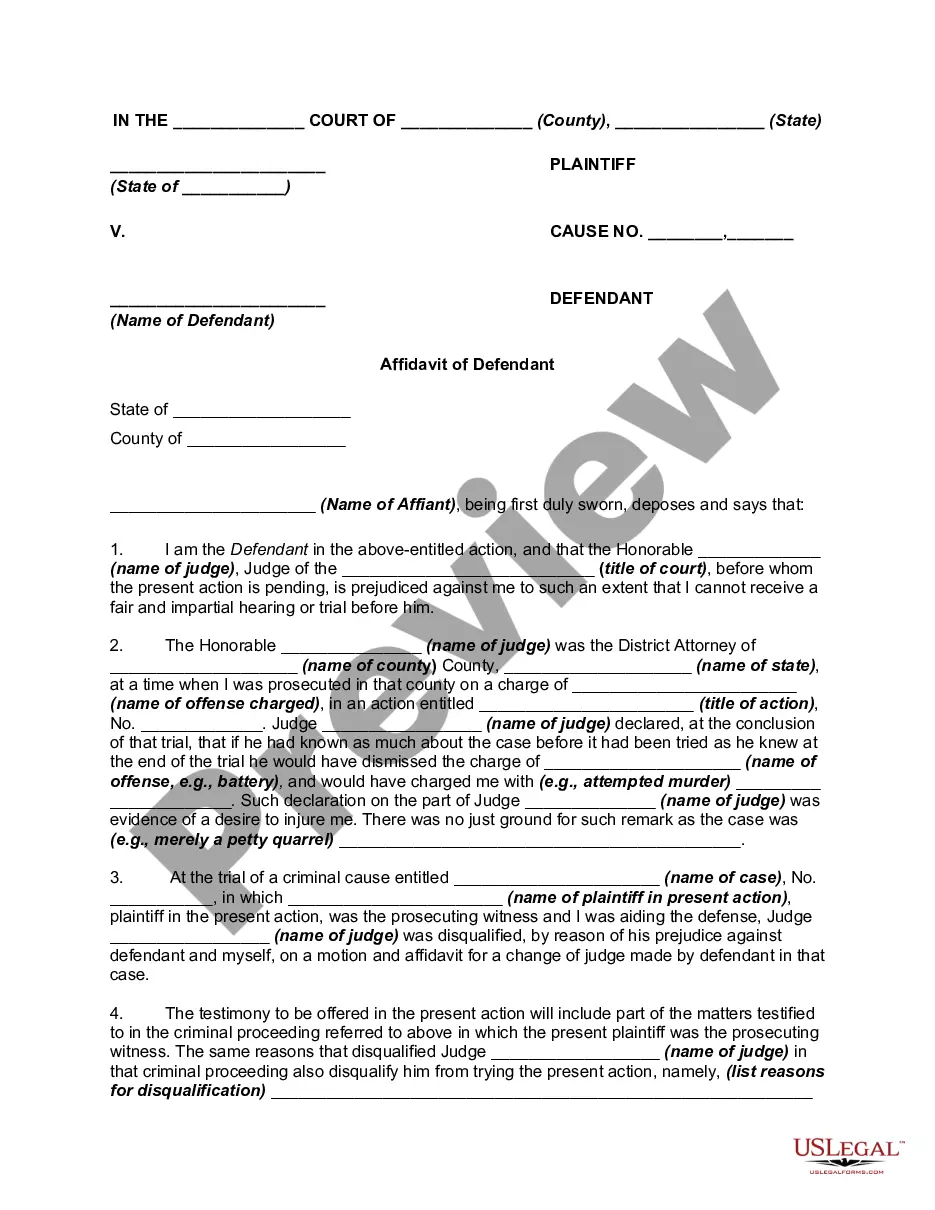
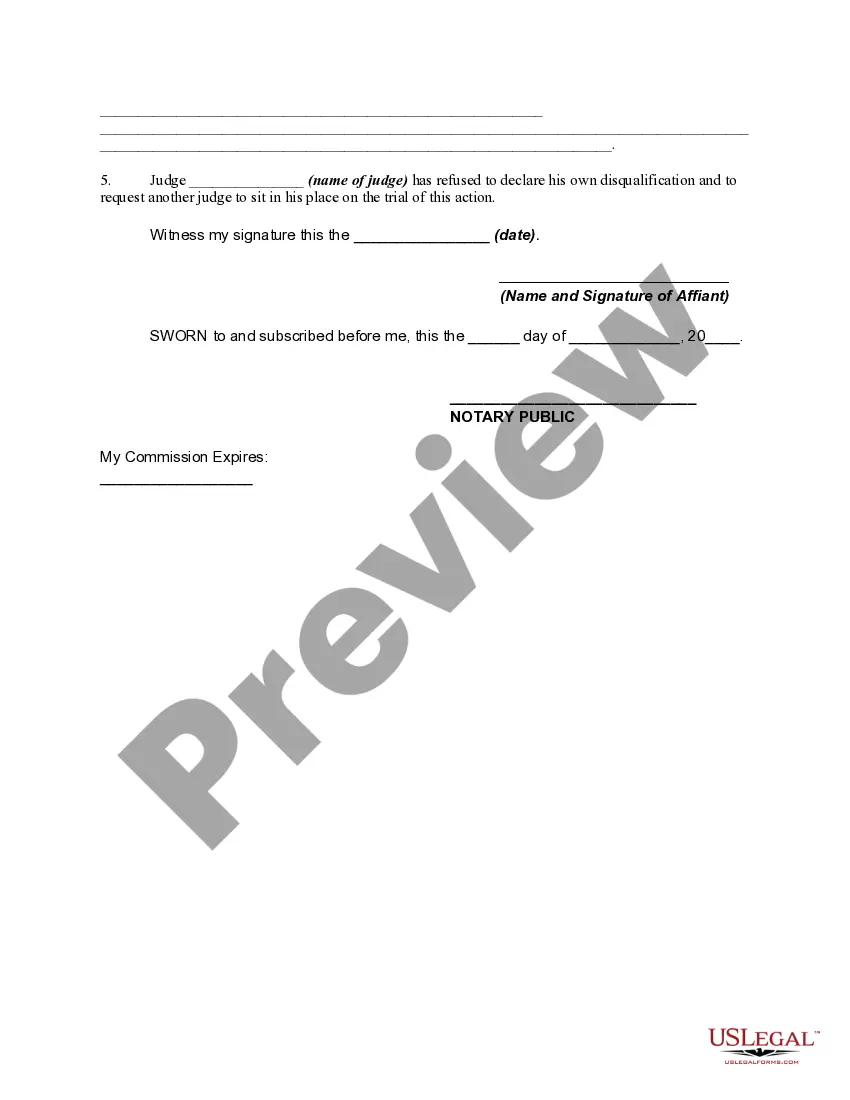
How to fill out Affidavit To Disqualify Or Recuse Judge For Prejudice - Recusal Or Removal?
- Log in to your account if you're a returning user, ensuring your subscription is active. Click the Download button to get your desired form template.
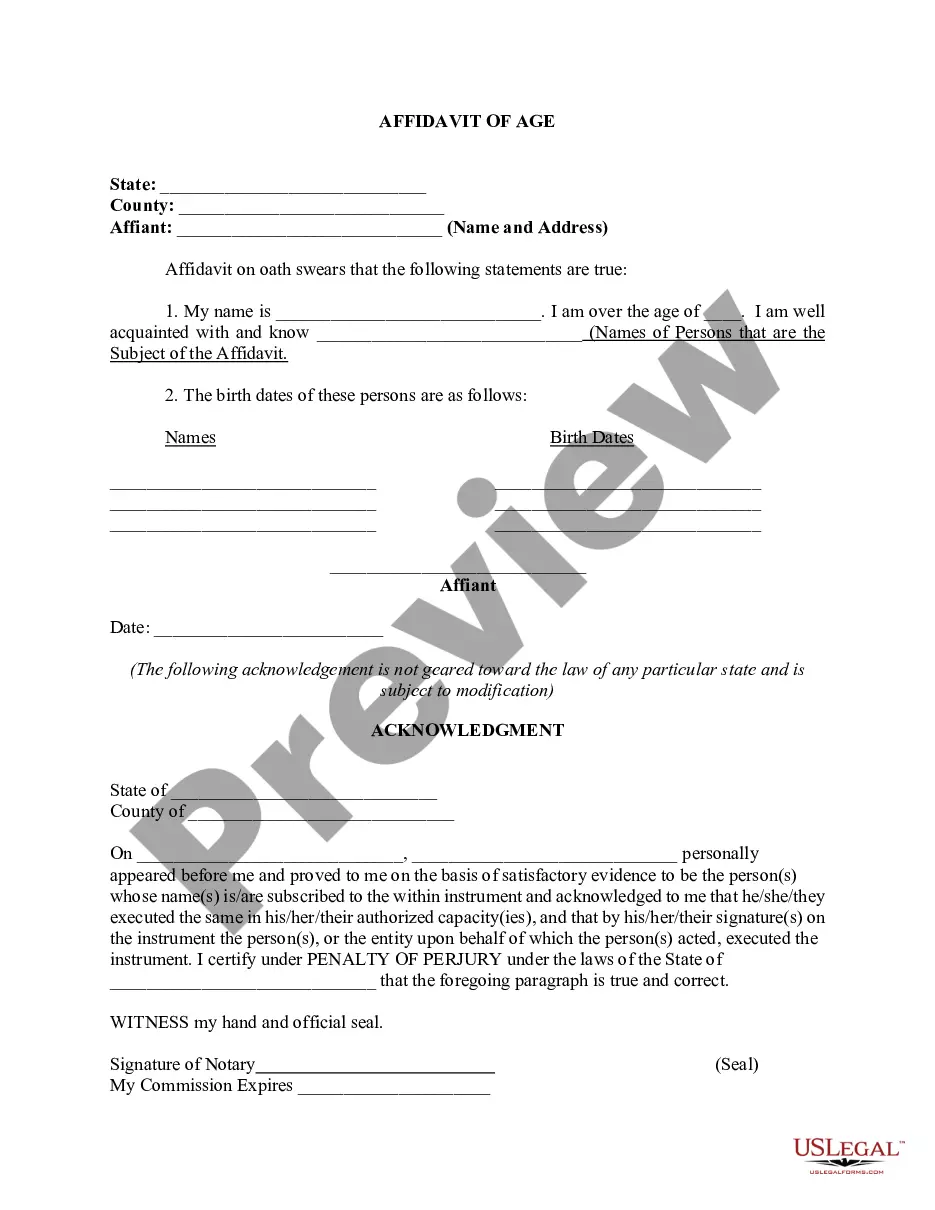
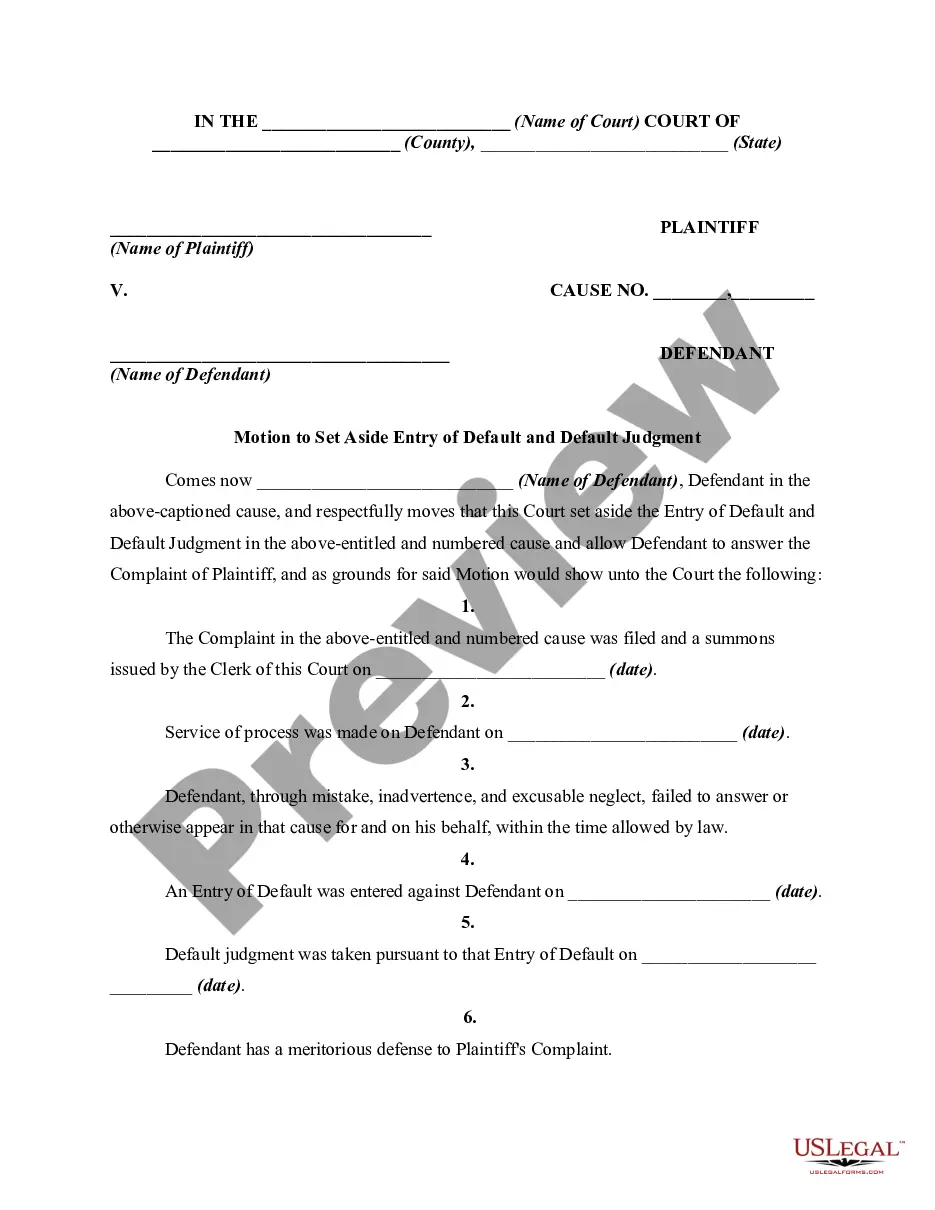
- For first-time users, start by checking the Preview mode and description of the required form to confirm it meets your local jurisdiction's requirements.
- In case of discrepancies, use the Search tab to find the correct template that suits your needs.
- Once you have the right document, click the Buy Now button and select your preferred subscription plan. You will need to create an account to gain access.
- Proceed to payment by entering your credit card information or using your PayPal account to secure your subscription.
- Finally, download your form and save it on your device. You can access it later through the My Forms section in your profile.
Utilizing US Legal Forms not only simplifies the process of obtaining legal documents but also gives you access to premium expert assistance, ensuring your forms are filled out correctly.
Start today and make your legal form experience smoother with US Legal Forms. Don’t hesitate—explore our collection and empower your legal journey now!
Form popularity
FAQ
The ruling on recusal involves decisions made by higher courts regarding a judge's ability to preside over a case without bias. Such rulings help establish precedents that guide future recusal situations. Therefore, understanding these rulings can significantly aid your legal strategy. If you're looking for insights on recent rulings related to recusal, US Legal Forms has comprehensive resources to aid your research.
The rules for recusal often include service on a case where personal relationships or financial stakes exist. These rules vary by jurisdiction but serve to protect the integrity of the legal system. It's crucial for you to know the recusal rules applicable to your situation. For easy access to these rules, US Legal Forms can provide tailored legal documentation and resources that suit your needs.
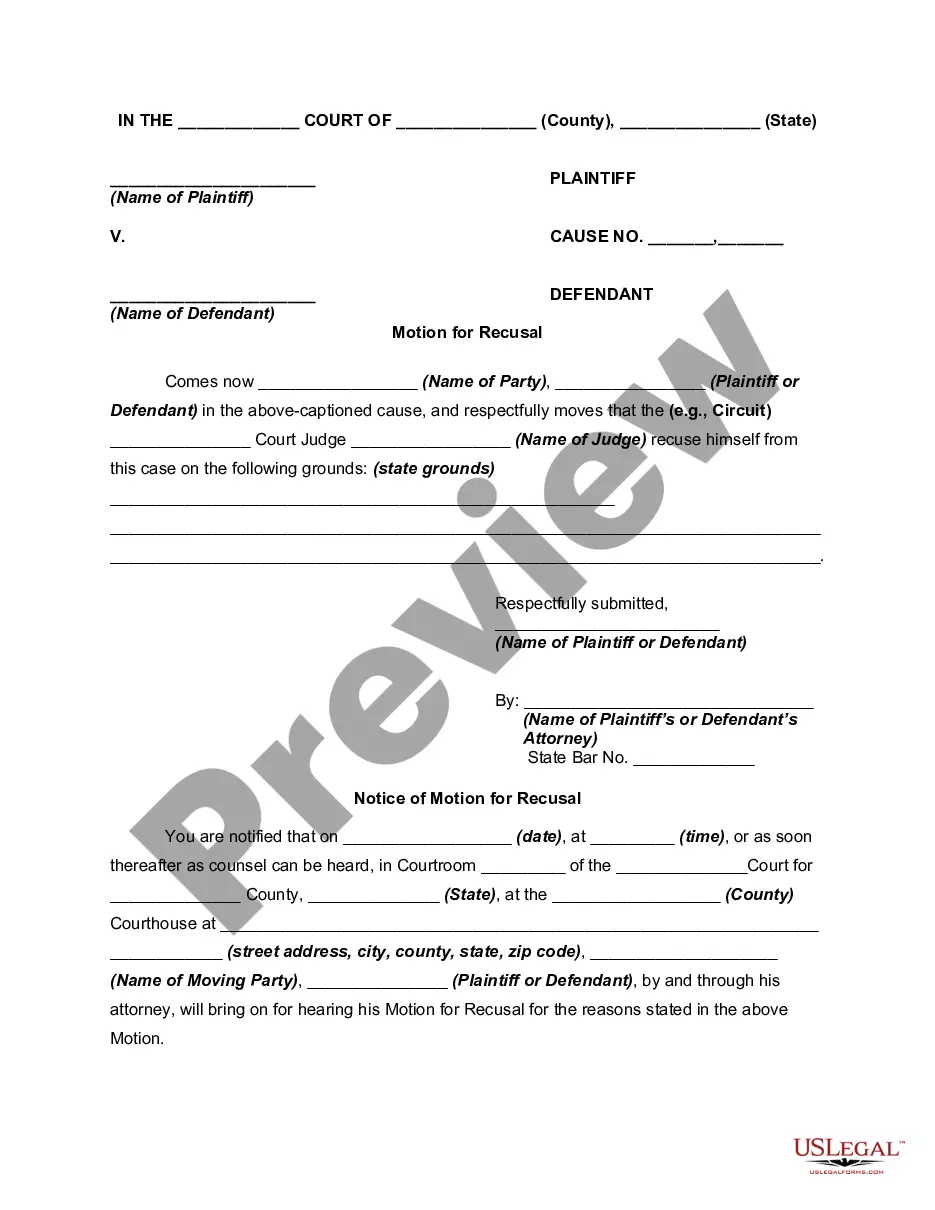
The rule of recuse emphasizes that a judge must step aside from a case if their impartiality might reasonably be questioned. This rule supports transparency and fairness within the judicial system. Therefore, you should understand when and how to recuse recusal with you in mind. For practical resources and guidance, consider visiting US Legal Forms to learn more about applying this rule effectively.
Recusal is typically based on personal biases, financial interests, or other connections that could influence a judge's impartiality. It ensures that justice remains unbiased and protects both the court's integrity and the parties involved. Knowing how to recuse recusal with you is vital for maintaining a fair judicial process. If you need more information on this, US Legal Forms provides detailed explanations and templates to assist you.
Judges are required to recuse themselves under various laws, including ethical guidelines and specific state statutes. These laws often focus on avoiding conflicts of interest to ensure fair trials. When you understand the grounds for recusal, you can better navigate the legal landscape. The US Legal Forms platform can assist you in finding resources on these laws and help with any necessary documentation.
You can use 'recusal' in a sentence by saying, 'Her recusal from the committee allowed for a more unbiased decision-making process.' This highlights the importance of stepping back to promote fairness. If you find this concept challenging, our resources can provide you with further clarity and examples.
A recusal statement is a formal declaration explaining why an individual is stepping away from a particular case or decision-making process. This statement clarifies the reasons for the recusal, helping to maintain transparency and trust in legal proceedings. If you have questions about drafting such statements, our services can guide you in creating a comprehensive document.
An example of recusal occurs when a jury member knows one of the parties involved in a case, prompting them to withdraw from serving. This action ensures that the trial remains fair and unbiased. For those facing legal challenges, understanding the implications of recusal can benefit your case, and our site offers valuable insights to help you.
To recuse yourself of condemnation means to withdraw from making decisions or judgments that could seem biased or unfair. It is often used when someone believes their opinion may be influenced by personal interests. Ensuring fairness is essential in any legal situation, and learning about recusal can help you approach these matters responsibly.
Recusal refers to the act of stepping away from a position of judgment, especially in legal contexts. When someone recuses themselves, they acknowledge a potential conflict that could compromise impartiality. Understanding recusal is crucial, especially if you are involved in any legal processes, and our platform can assist you in navigating these legal terms.