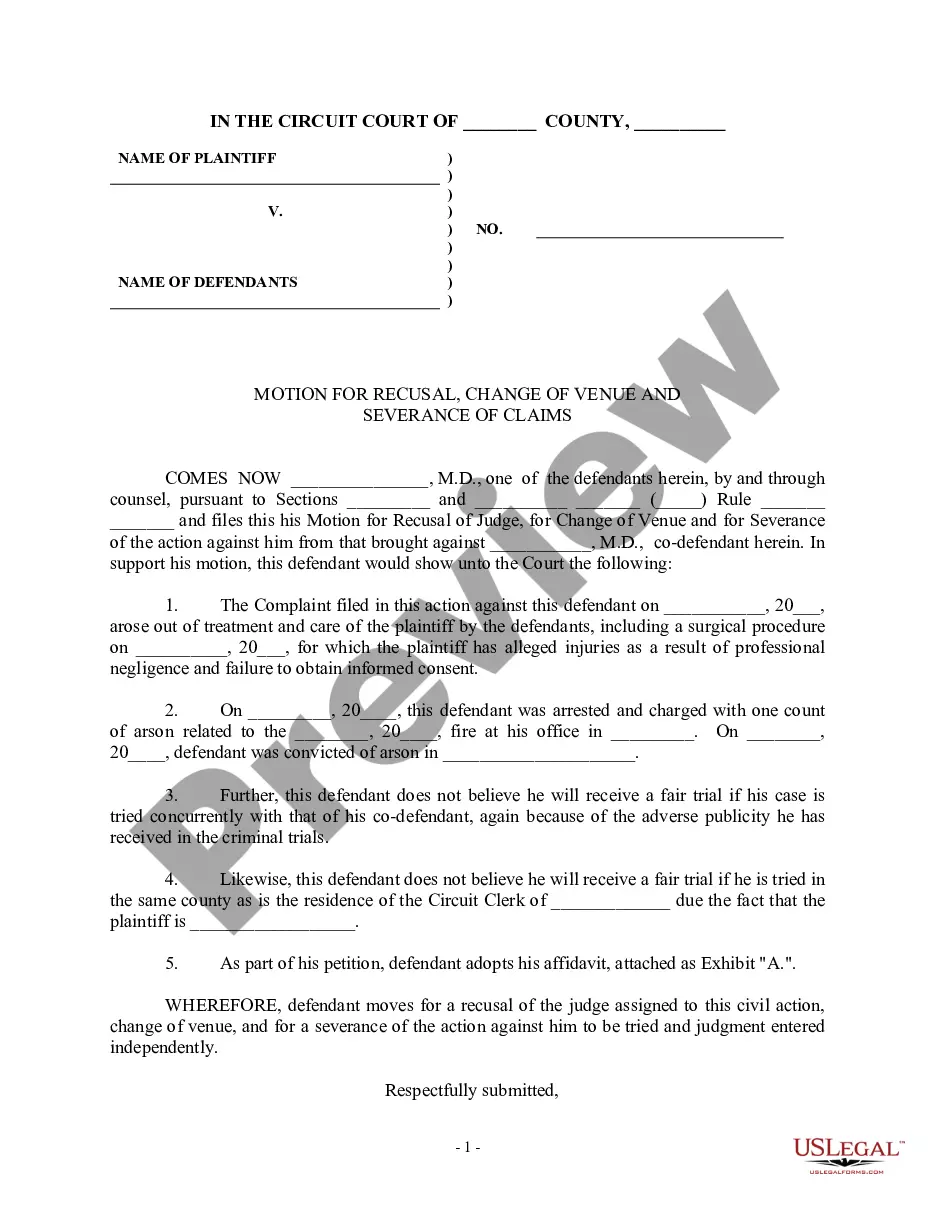
Recursal Motion
Description

Get your form ready online
Our built-in tools help you complete, sign, share, and store your documents in one place.
Make edits, fill in missing information, and update formatting in US Legal Forms—just like you would in MS Word.
Download a copy, print it, send it by email, or mail it via USPS—whatever works best for your next step.
Sign and collect signatures with our SignNow integration. Send to multiple recipients, set reminders, and more. Go Premium to unlock E-Sign.
If this form requires notarization, complete it online through a secure video call—no need to meet a notary in person or wait for an appointment.
We protect your documents and personal data by following strict security and privacy standards.

Make edits, fill in missing information, and update formatting in US Legal Forms—just like you would in MS Word.

Download a copy, print it, send it by email, or mail it via USPS—whatever works best for your next step.

Sign and collect signatures with our SignNow integration. Send to multiple recipients, set reminders, and more. Go Premium to unlock E-Sign.

If this form requires notarization, complete it online through a secure video call—no need to meet a notary in person or wait for an appointment.

We protect your documents and personal data by following strict security and privacy standards.
Looking for another form?








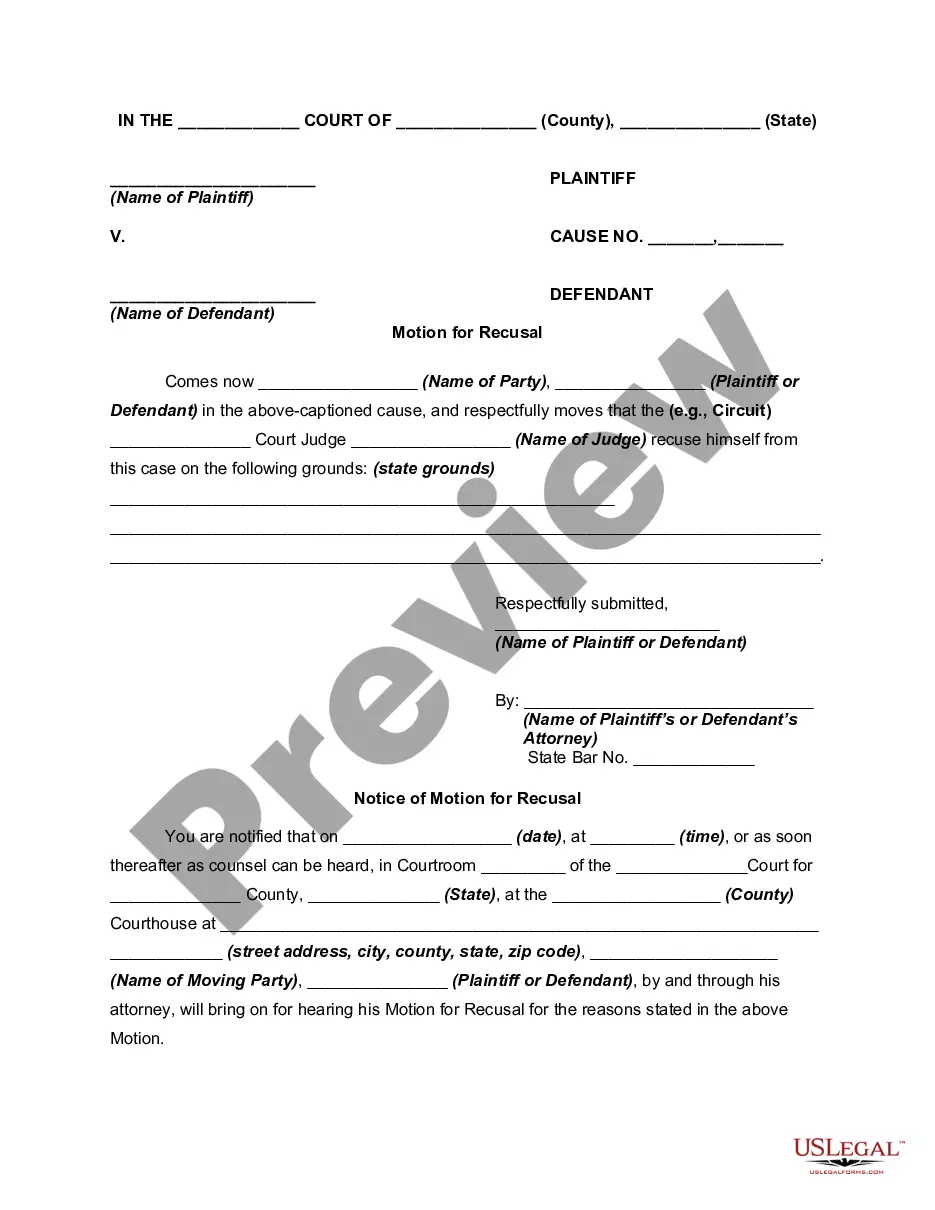
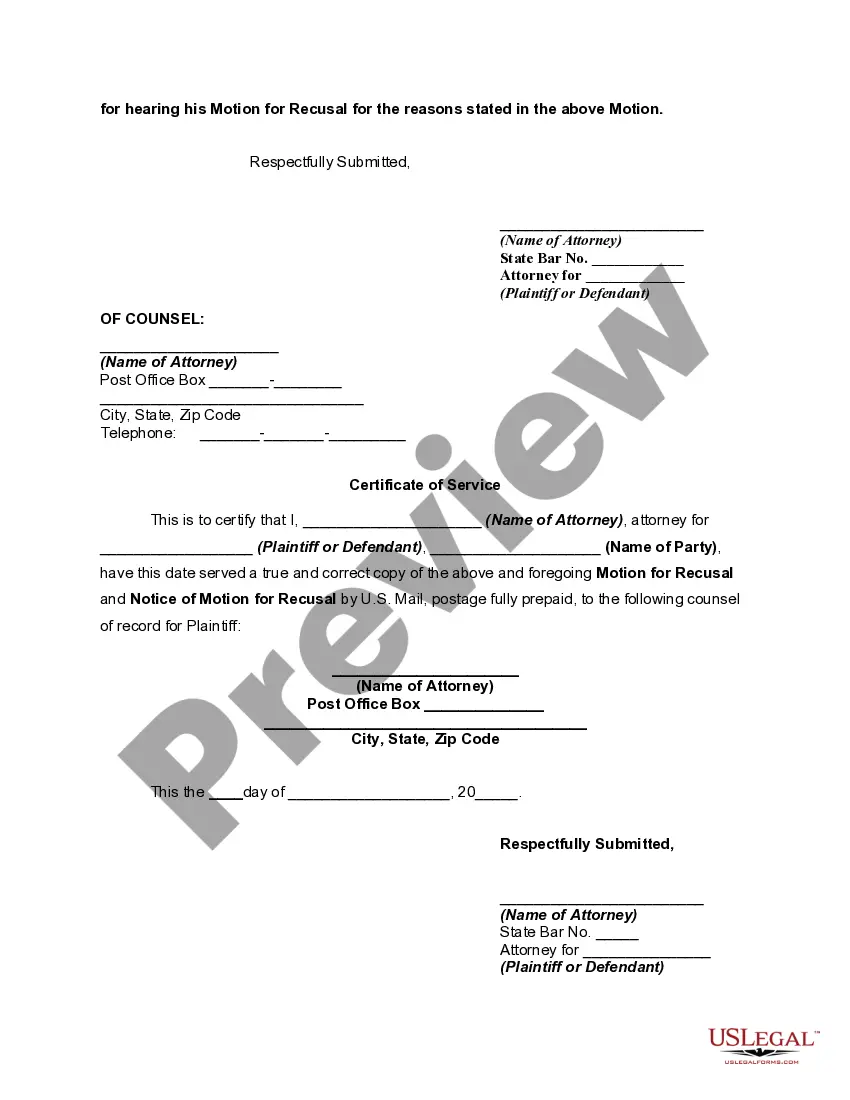
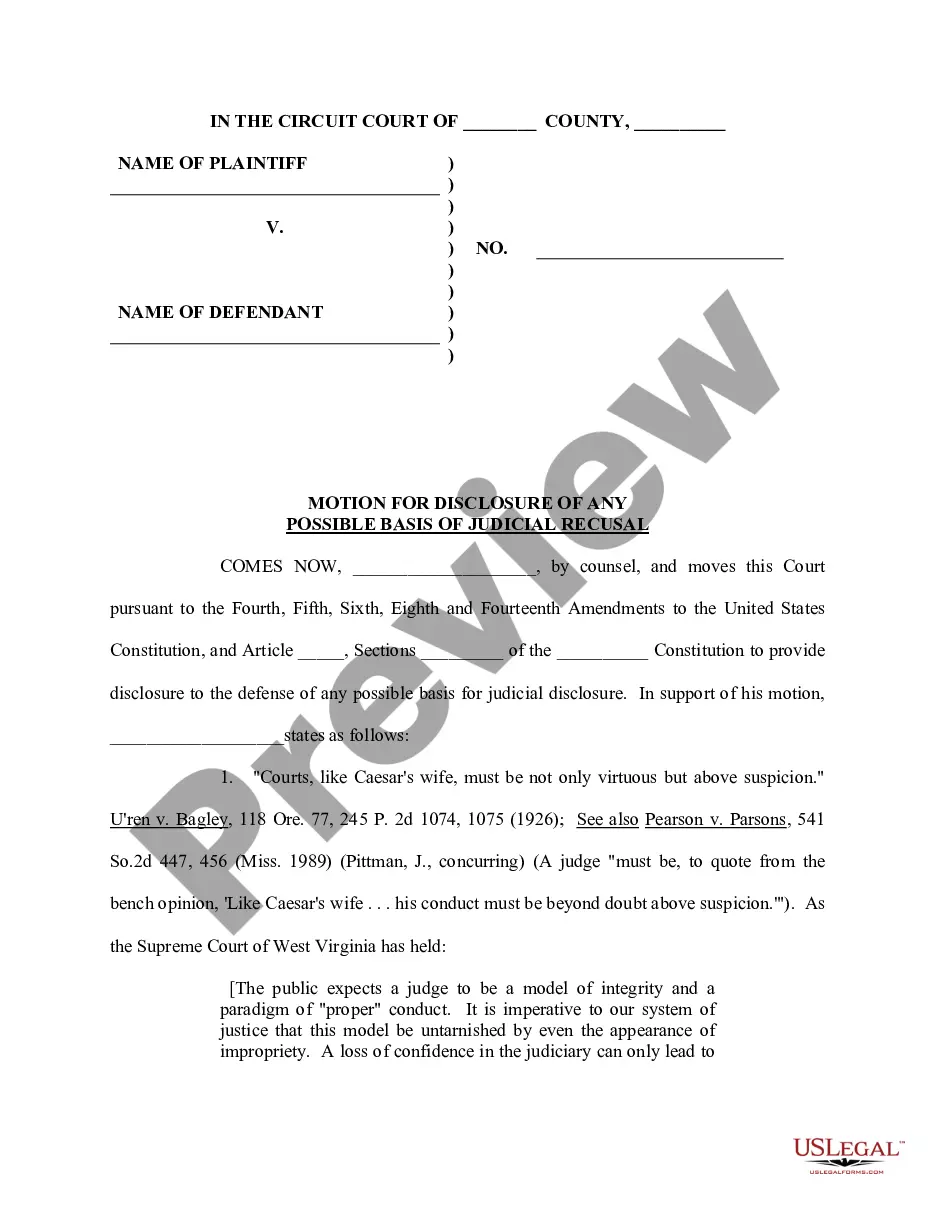
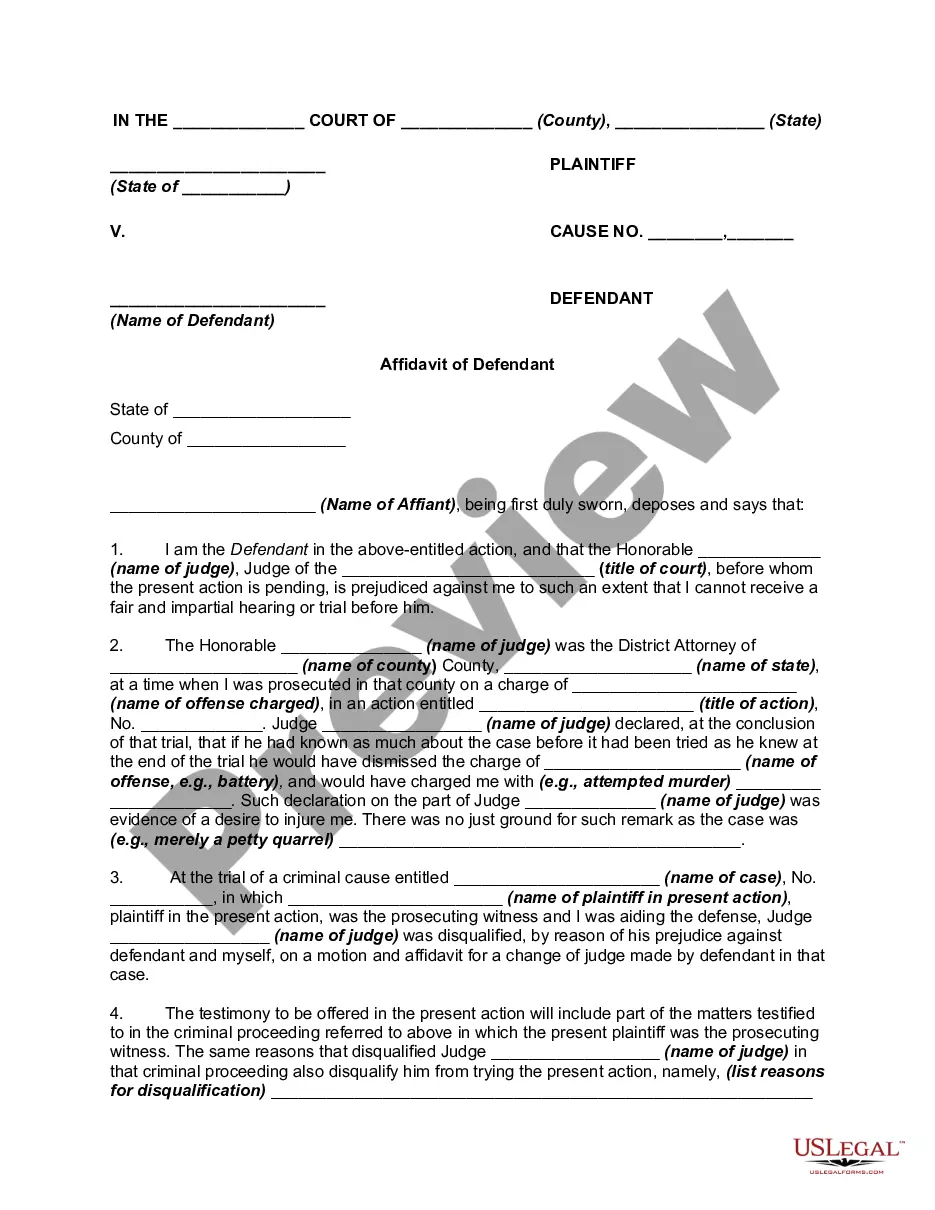
How to fill out Motion For Recusal Of Judge - Removal?
- If you're a returning user, log in to your account and verify your subscription. Then, find and download the recusal motion template that fits your needs.
- For first-time users, start by exploring the Preview mode and description of the recusal motion form. Ensure it aligns with your local jurisdiction requirements.
- If you encounter any discrepancies, utilize the Search function to find an alternative template. Make sure it fulfills your needs before proceeding.
- Once you've selected your form, click the Buy Now button. Choose the subscription plan that best suits you and create an account to gain full access.
- Complete your purchase using your credit card or PayPal account to pay for the subscription.
- After your purchase is confirmed, download your recusal motion template. You can access it anytime from the My Forms section of your account.
Utilizing US Legal Forms not only streamlines the process of obtaining legal documents but also ensures that you have access to a plethora of resources and expert advice.
Take the first step towards efficiently handling your legal needs by exploring US Legal Forms today!
Form popularity
FAQ
When a judge refers to a motion to recuse, they indicate that someone is requesting the judge to withdraw from a case due to a potential conflict of interest. This motion is vital for preserving the court's integrity, ensuring that all parties involved receive a fair trial. Understanding this concept helps clarify the dynamics of legal proceedings.
Another word for recuse is 'disqualify.' This term similarly denotes the act of stepping away from participating in a case due to a conflict of interest. Both terms emphasize the importance of fairness, particularly when discussing procedures like a recursal motion in a courtroom.
An example of recuse is when a lawyer steps aside from a case in which a family member is involved. This action ensures that the legal proceedings remain unbiased. Such scenarios highlight the importance of maintaining integrity in cases that could easily lead to ethical dilemmas.
Recuse means to withdraw from a situation due to a conflict of interest or potential bias. This term is frequently used in legal contexts, such as when a judge or juror feels they cannot be impartial. Understanding the word recuse is vital when discussing a recursal motion in court.
An example of recusal occurs when a judge must step away from a case because they previously worked with one of the lawyers involved. This action ensures that the judge does not influence the case's outcome due to personal relationships. Such careful considerations support the fairness inherent in the legal process.
Legally, to recuse means to disqualify oneself from a case due to a potential conflict of interest or bias. This action is crucial in upholding the integrity of the judicial process. The concept connects closely with recursal motion, as it often occurs to avoid any perceived impropriety.
When someone recuses themselves, they choose to withdraw from a situation where their impartiality could be questioned. In legal terms, this often occurs during a trial or hearing. This step helps maintain fairness in the proceedings and ensures that no conflicts of interest affect the outcome.
The three grounds for a motion for reconsideration typically include a change in the law, new evidence that was not previously available, or errors in the court's original ruling. Each of these grounds focuses on substantial factors that could change the outcome of your case. When preparing a recursal motion, clearly state which of these grounds you believe applies to your situation and back it up with supporting details. This helps enhance your case’s credibility.
To ask a judge to recuse herself, you should formally submit a motion outlining the grounds for your request. Clearly state any relationships, interests, or prior decisions that could influence her judgment. Supporting your motion with evidence is essential to present a strong case. Understanding how to craft a clear recusal motion can help ensure your concerns are taken seriously.
A judge should recuse herself if there is a reasonable doubt about her impartiality due to personal connections or potential biases. This includes situations involving family members, financial interests, or previous involvement with the case. The goal is to uphold justice and ensure fair proceedings. If you feel a judge should recuse herself, you may need to file a recusal motion to formally address the issue in court.