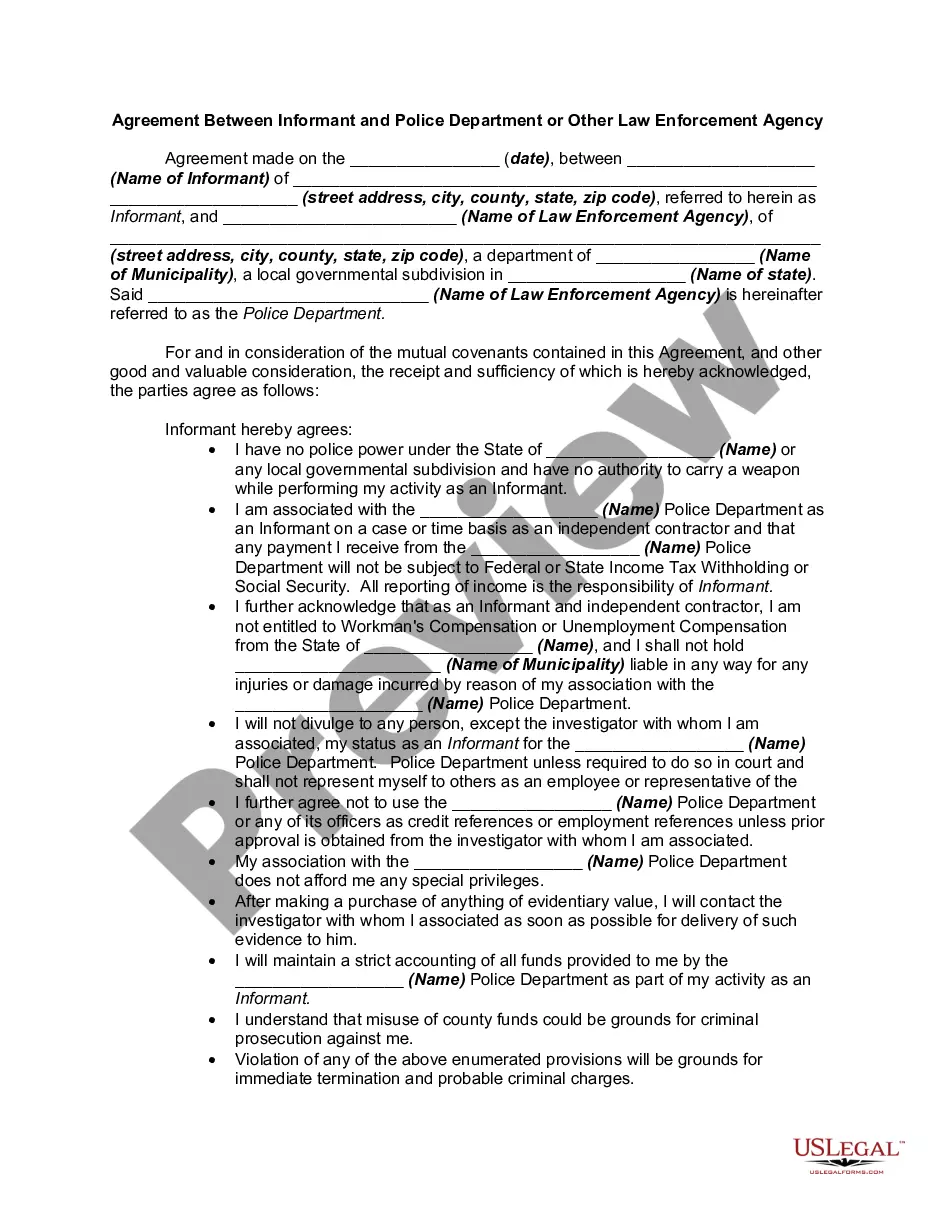
Confidential Informant On Probation
Description
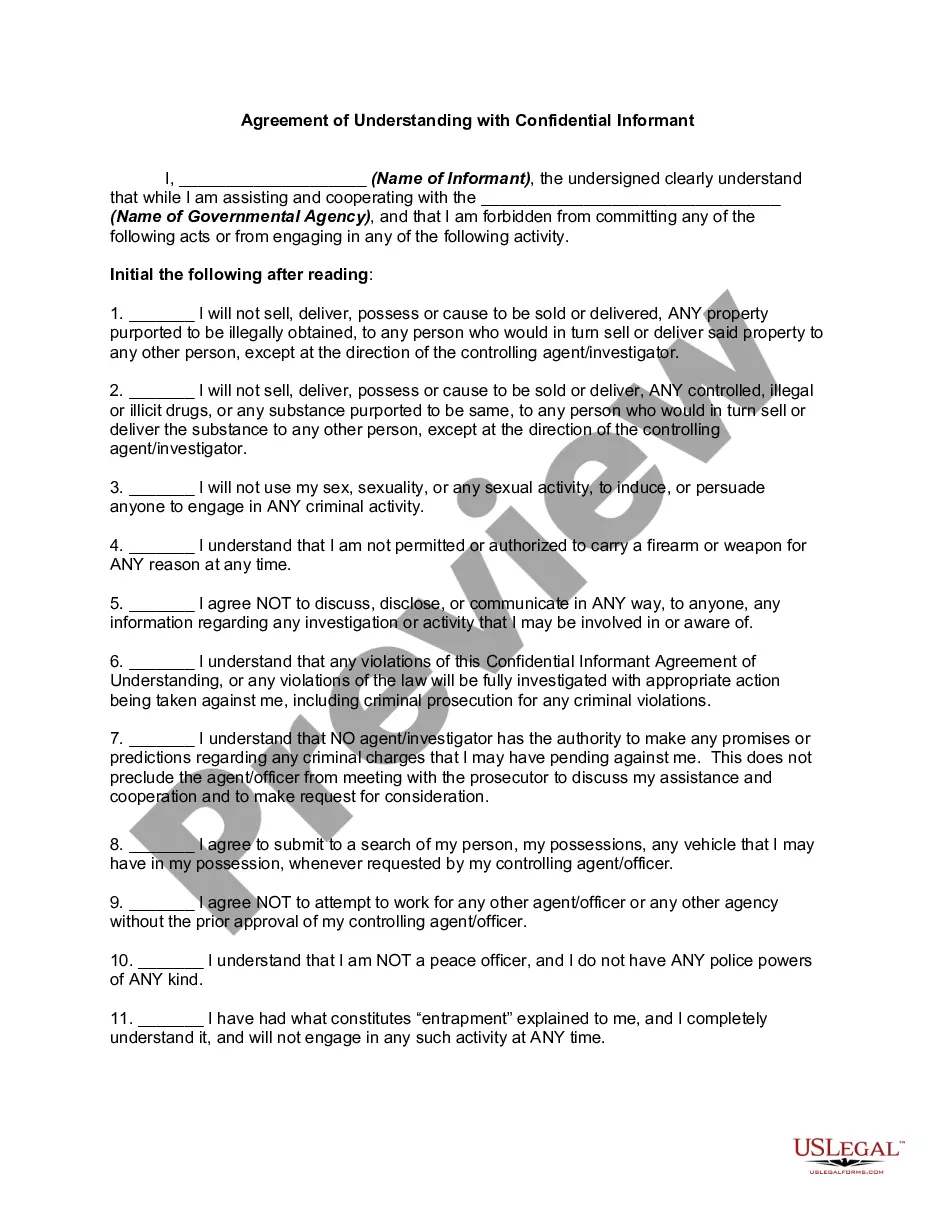
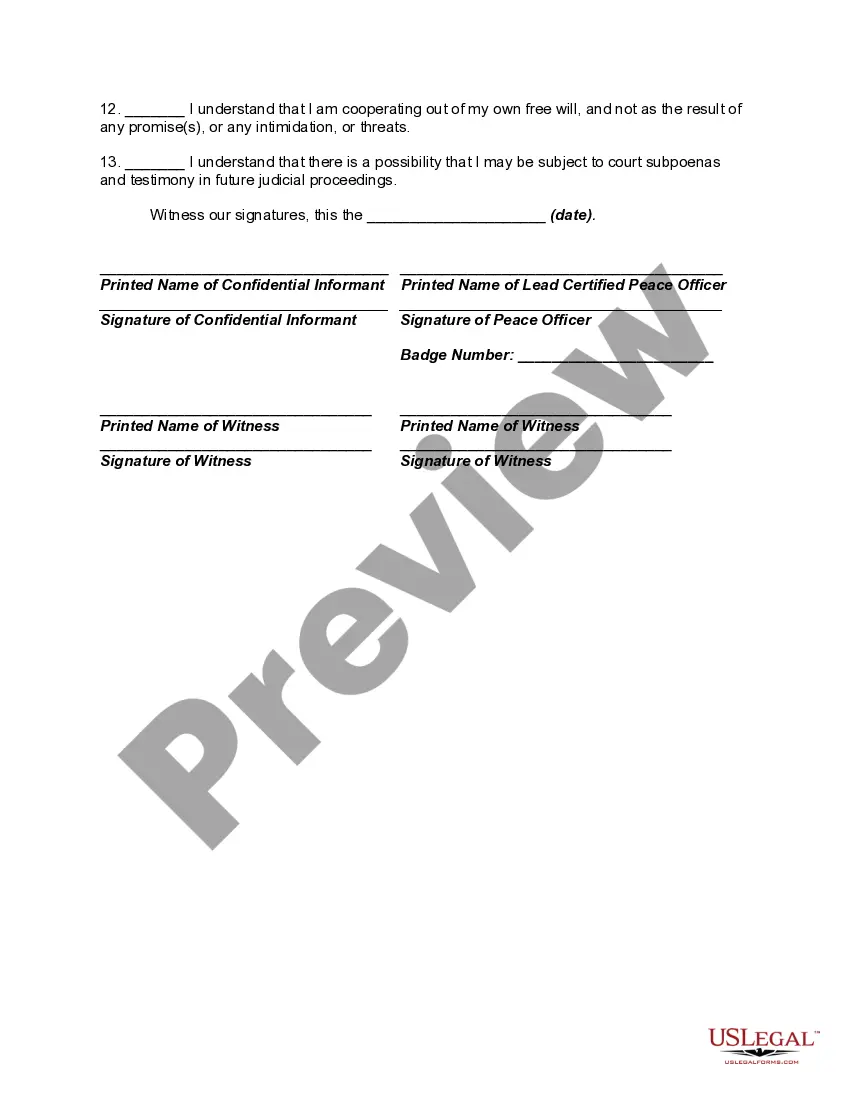
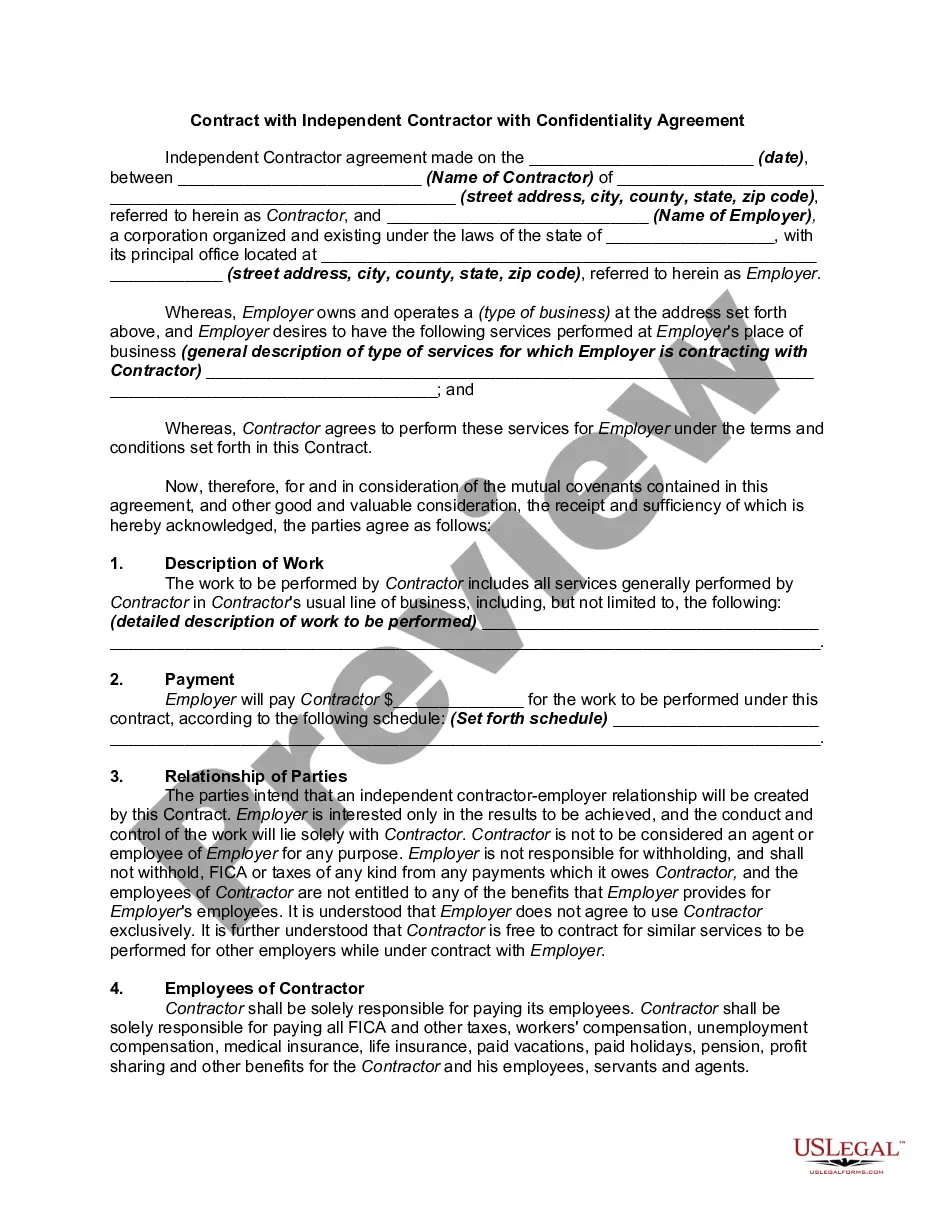
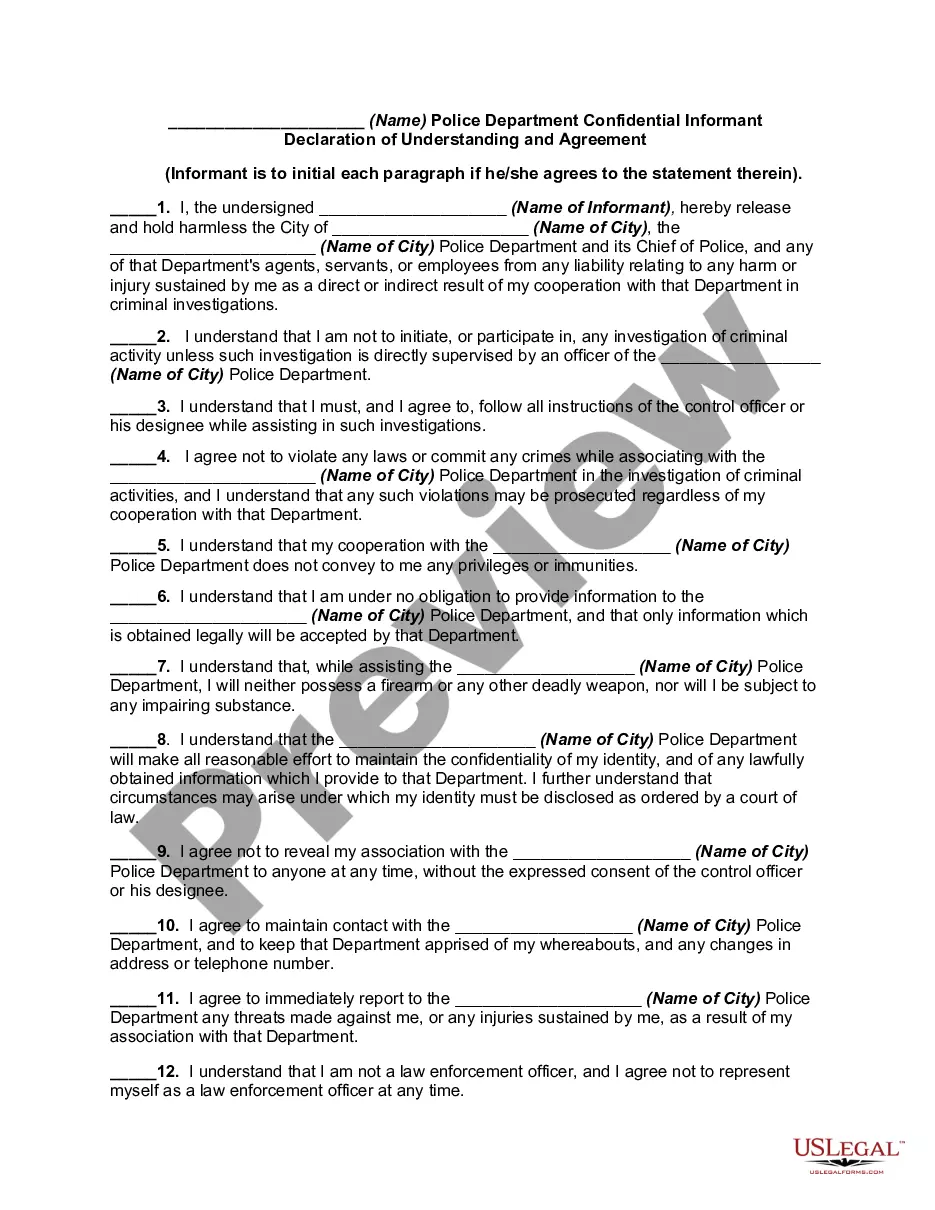
Get your form ready online
Our built-in tools help you complete, sign, share, and store your documents in one place.
Make edits, fill in missing information, and update formatting in US Legal Forms—just like you would in MS Word.
Download a copy, print it, send it by email, or mail it via USPS—whatever works best for your next step.
Sign and collect signatures with our SignNow integration. Send to multiple recipients, set reminders, and more. Go Premium to unlock E-Sign.
If this form requires notarization, complete it online through a secure video call—no need to meet a notary in person or wait for an appointment.
We protect your documents and personal data by following strict security and privacy standards.

Make edits, fill in missing information, and update formatting in US Legal Forms—just like you would in MS Word.

Download a copy, print it, send it by email, or mail it via USPS—whatever works best for your next step.

Sign and collect signatures with our SignNow integration. Send to multiple recipients, set reminders, and more. Go Premium to unlock E-Sign.

If this form requires notarization, complete it online through a secure video call—no need to meet a notary in person or wait for an appointment.

We protect your documents and personal data by following strict security and privacy standards.
Looking for another form?









How to fill out Agreement Of Understanding With Confidential Informant?
Regardless of whether it's for professional objectives or personal matters, everyone must handle legal issues at some time in their lives.
Completing legal forms requires meticulous focus, starting with selecting the correct form template.
With a vast catalog of US Legal Forms available, you won't need to waste time searching for the right template across the web. Utilize the library’s user-friendly navigation to discover the perfect template for any occasion.
- For example, if you choose an incorrect version of the Confidential Informant On Probation, it will be rejected upon submission.
- Thus, it is vital to have a reliable source for legal documents like US Legal Forms.
- If you need to obtain a Confidential Informant On Probation template, follow these simple instructions.
- 1. Acquire the template you need using the search bar or catalog navigation.
- 2. Review the form’s details to ensure it aligns with your situation, state, and county.
- 3. Click on the form’s preview to view it.
- 4. If it is not the correct document, return to the search feature to find the Confidential Informant On Probation template you need.
- 5. Acquire the template if it fulfills your needs.
- 6. If you possess a US Legal Forms account, simply click Log in to retrieve previously saved templates in My documents.
- 7. If you don’t have an account yet, you can download the form by clicking Buy now.
- 8. Choose the appropriate pricing plan.
- 9. Complete the account registration form.
- 10. Select your payment method: you can utilize a credit card or PayPal account.
- 11. Choose the document format you prefer and download the Confidential Informant On Probation.
- 12. Once downloaded, you can fill out the form using editing software or print it and fill it out by hand.
Form popularity
FAQ
When you become a confidential informant on probation, you assume a critical role in assisting law enforcement with investigations. Your information helps to expose criminal activities, which can lead to arrests and prosecutions. However, this role often requires you to adhere to strict guidelines and may involve risks to your safety and privacy. It is important to understand the implications of this role, and platforms like uslegalforms can guide you through legal obligations and rights.
Confidential informants on probation generally fall into four categories: professional informants, occasional informants, monitored informants, and coerced informants. Professional informants work regularly with law enforcement and are often compensated. Occasional informants provide information sporadically, while monitored informants are under watch during their operations. Coerced informants feel pressured to provide information, often due to facing legal consequences themselves.
A confidential informant on probation may lack credibility for several reasons. First, if they have a history of criminal behavior or dishonesty, their reliability can be questioned. Second, inconsistencies in their testimony or information may lead law enforcement to doubt their trustworthiness. Lastly, if the CI has ulterior motives, such as seeking leniency for their own legal troubles, their credibility can significantly diminish.
Identifying if someone is an FBI informant, particularly if they are a confidential informant on probation, can be quite difficult. Informants often maintain a low profile and avoid revealing their connections to law enforcement. If you have reasonable suspicions, consulting a legal professional may provide pathways to address your concerns and understand any implications.
Confidential informants on probation are not required to disclose their status to individuals involved in legal matters. Their anonymity is often essential to maintaining safety and security. If you suspect that someone is not being truthful about their involvement, it’s wise to speak with a legal advisor who can help navigate your options. Transparency varies significantly based on the specific case.
If a confidential informant on probation refuses to testify, the case may face challenges. Law enforcement may still rely on the information provided during investigations, but the informant’s cooperation is crucial for legal proceedings. Ultimately, decisions on how to proceed will depend on the specific case circumstances and legal advice. Consider consulting a legal expert for a deeper understanding of your situation.
Confidential informants on probation are generally not considered public records. Their identities are protected to ensure their safety and encourage collaboration with law enforcement. Accessing records related to their cases could provide some information, but expect limitations and restrictions. Be aware of legal boundaries when seeking such information.
There are no guaranteed methods to find out if someone is a confidential informant on probation. Investigative services might help, but they can be costly and may not always yield results. If you suspect someone, consider discussing your concerns with an attorney. They can provide guidance tailored to your specific situation.
Determining who snitched on you can be difficult, especially if the person is acting as a confidential informant on probation. Law enforcement agencies typically keep this information confidential to encourage cooperation. You might speak with a legal professional to explore your options, but patience is essential, as this process can take time.
Finding out who is a confidential informant can be challenging due to privacy laws. However, you may contact local law enforcement or use public records to gather clues. Keep in mind that confidential informants on probation often remain undisclosed to protect their safety. Always proceed with caution, as revealing informants can lead to legal issues.