Lease-back
Description
Get your form ready online
Our built-in tools help you complete, sign, share, and store your documents in one place.
Make edits, fill in missing information, and update formatting in US Legal Forms—just like you would in MS Word.
Download a copy, print it, send it by email, or mail it via USPS—whatever works best for your next step.
Sign and collect signatures with our SignNow integration. Send to multiple recipients, set reminders, and more. Go Premium to unlock E-Sign.
If this form requires notarization, complete it online through a secure video call—no need to meet a notary in person or wait for an appointment.
We protect your documents and personal data by following strict security and privacy standards.

Make edits, fill in missing information, and update formatting in US Legal Forms—just like you would in MS Word.

Download a copy, print it, send it by email, or mail it via USPS—whatever works best for your next step.

Sign and collect signatures with our SignNow integration. Send to multiple recipients, set reminders, and more. Go Premium to unlock E-Sign.

If this form requires notarization, complete it online through a secure video call—no need to meet a notary in person or wait for an appointment.

We protect your documents and personal data by following strict security and privacy standards.
Looking for another form?



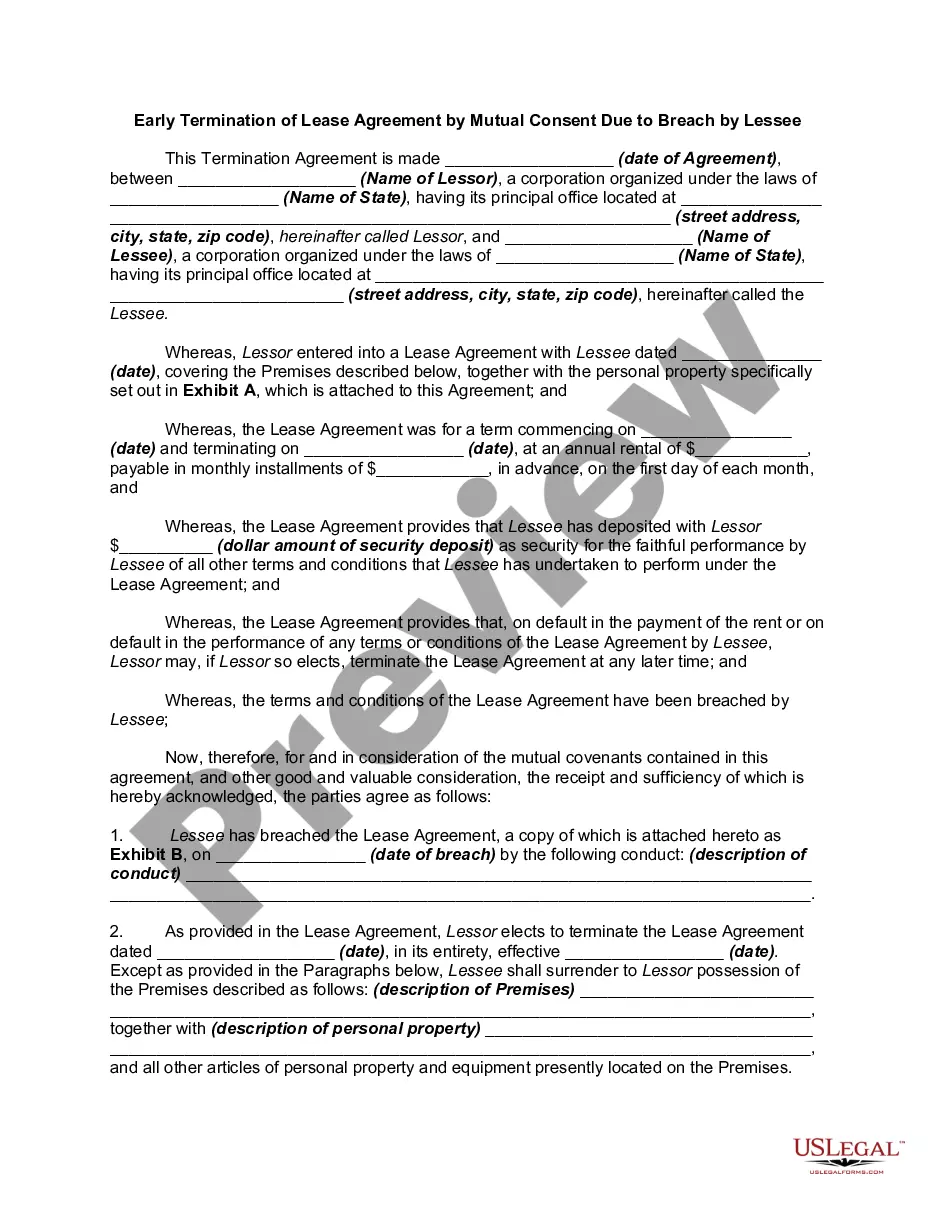
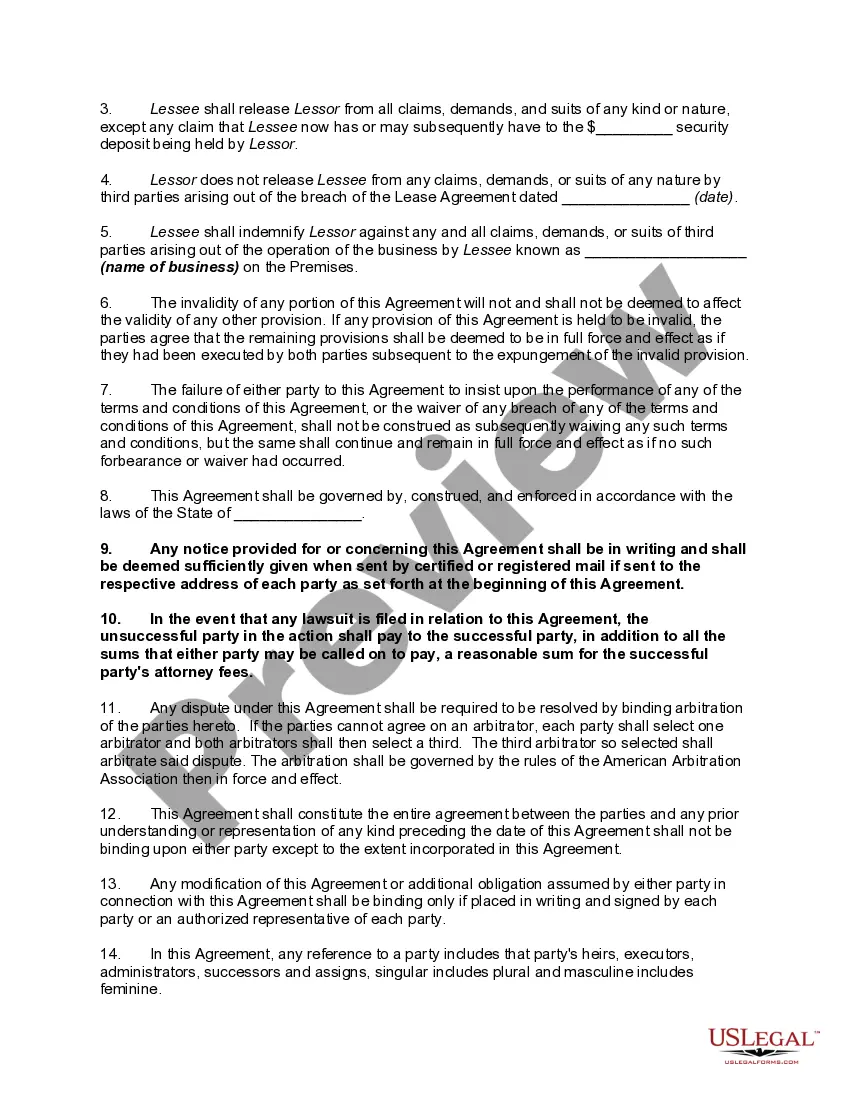
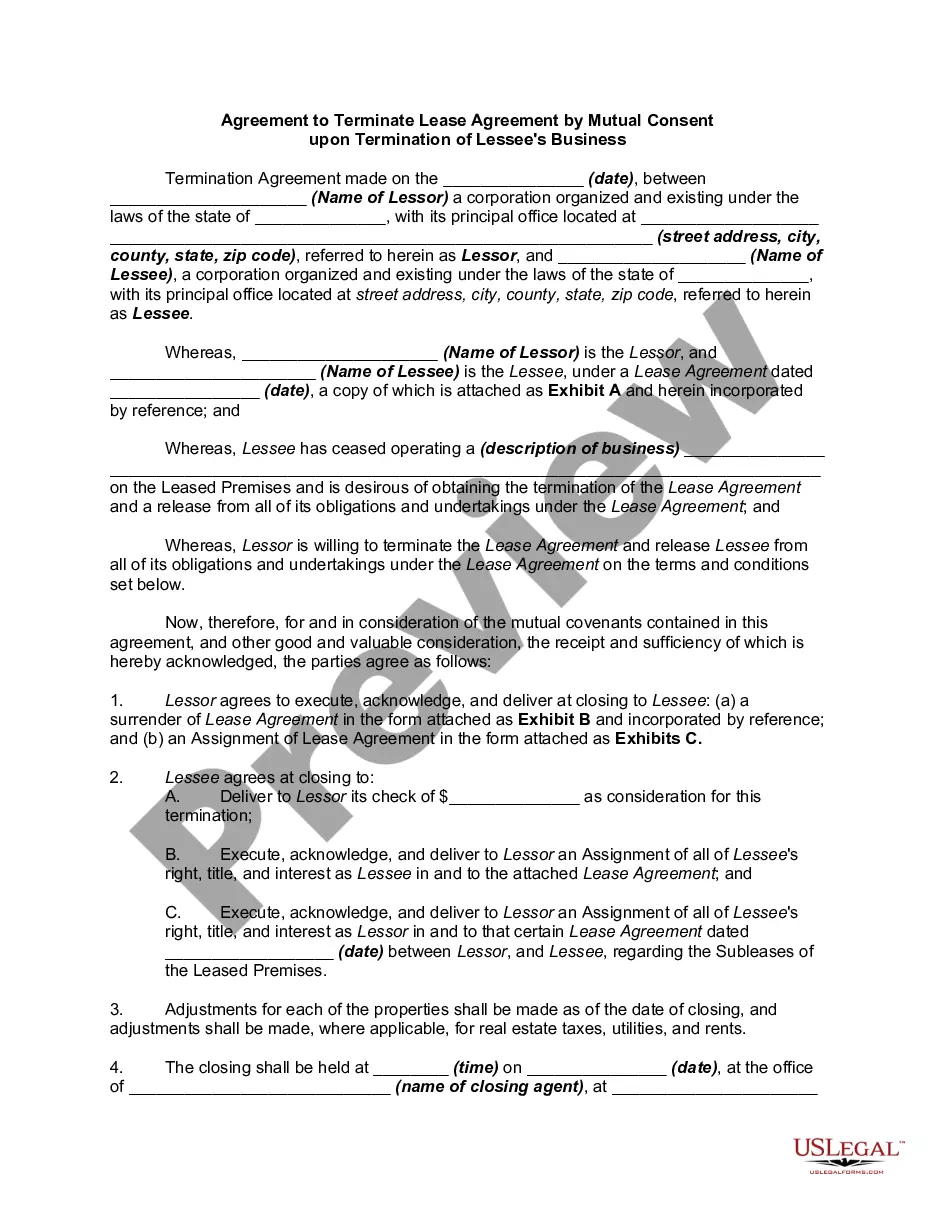
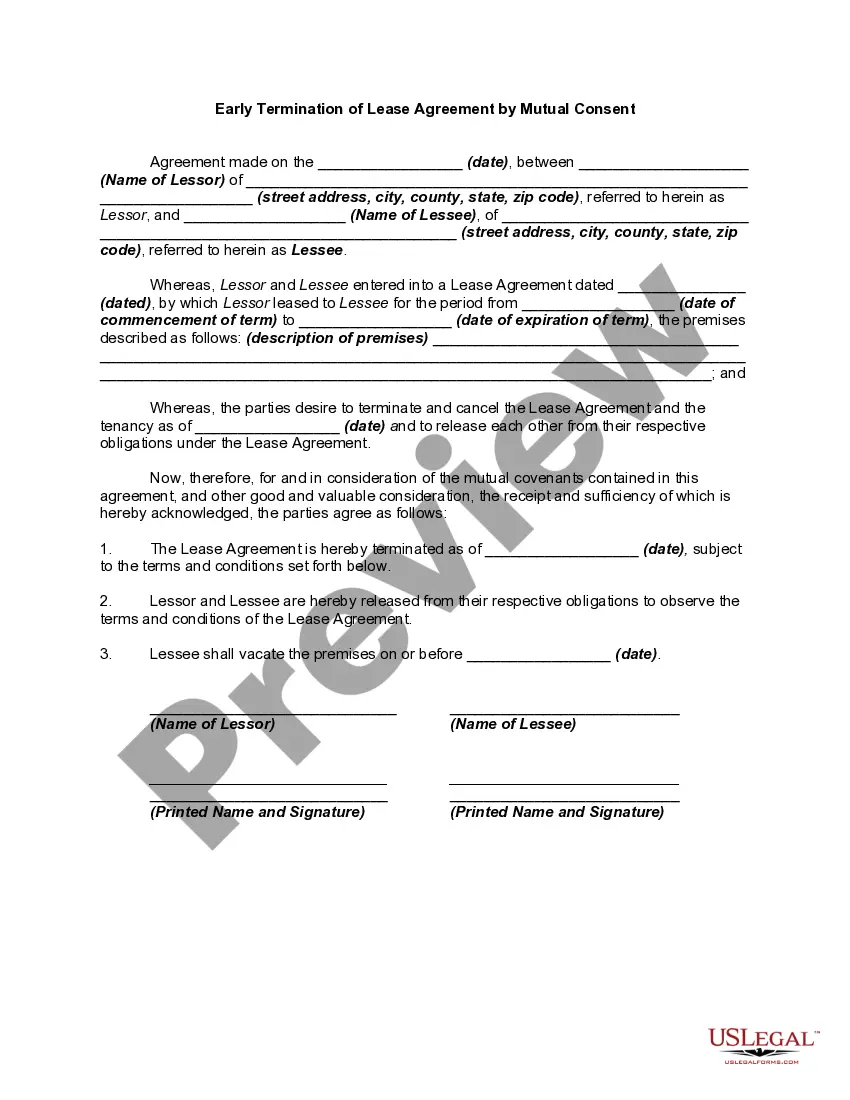
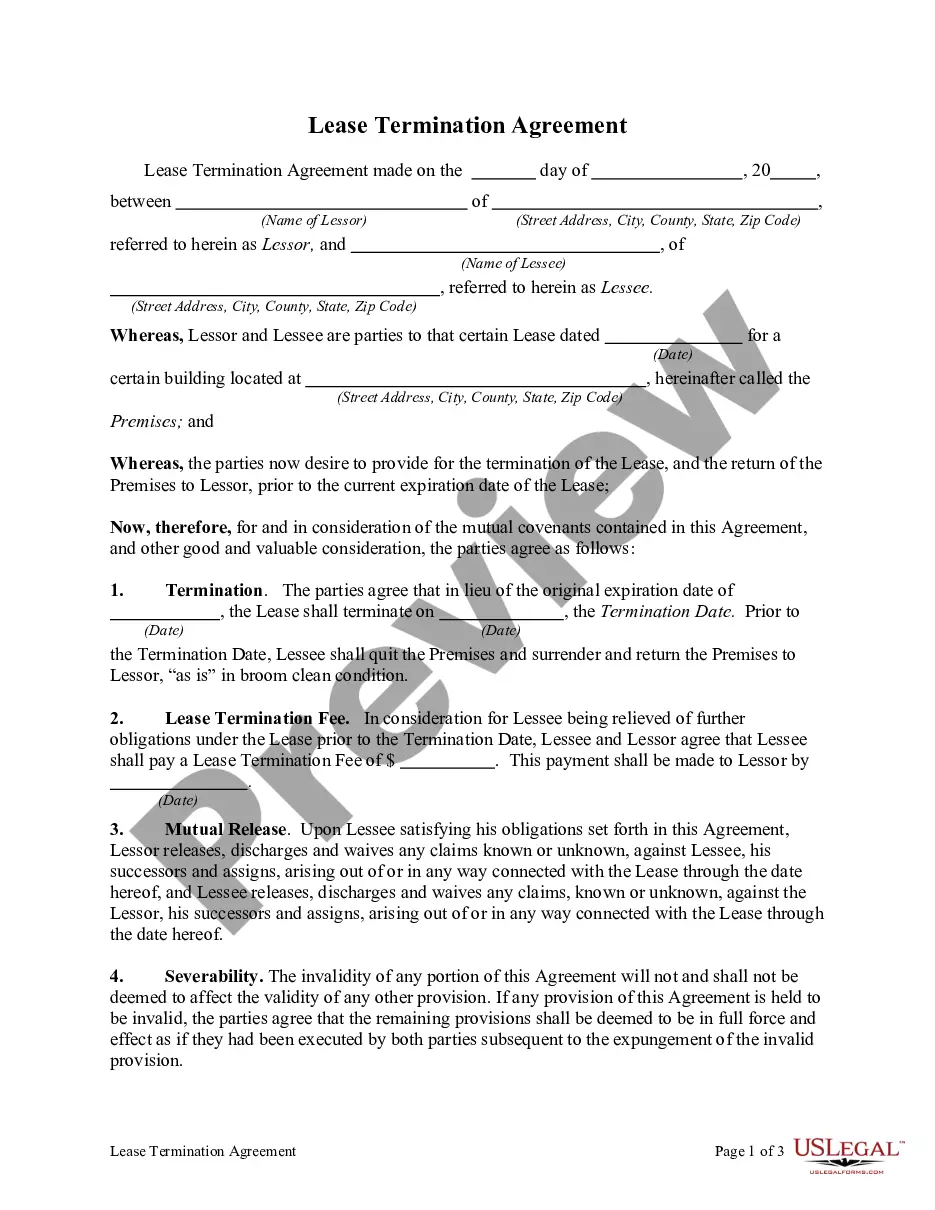
How to fill out Early Termination Of Lease Or Rental Agreement By Mutual Consent Due To Breach By Lessee?
- If you are an existing user, log in to your account and download the necessary lease-back form to your device by clicking the Download button. Ensure that your subscription is active; if not, renew it based on your payment plan.
- For first-time users, start by browsing the Preview mode and reviewing the form description to find the appropriate lease-back document that aligns with your jurisdiction's requirements.
- If your search shows discrepancies, utilize the Search tab at the top to locate a different template that meets your criteria.
- Once you've found the right document, click the Buy Now button and select your preferred subscription plan, ensuring you create an account to access the comprehensive library.
- Complete your purchase securely by providing your credit card information or opting for PayPal payment options.
- After your transaction, download the lease-back form to your device. You can access it anytime from the My documents section in your profile.
In conclusion, US Legal Forms is an invaluable resource for anyone looking to create legal documents efficiently. Its extensive library and expert support make the process straightforward and reliable.
Don't hesitate—get started today and streamline your lease-back document process with US Legal Forms!
Form popularity
FAQ
A lease by back is another term used to describe a lease-back arrangement. In this process, an entity sells an asset and re-leases it from the buyer, maintaining operational control over the asset. This method can be an effective financial strategy for businesses looking for capital without losing their facilities or equipment.
Whether a sale/leaseback is a good idea depends on your specific financial situation. This strategy can provide immediate liquidity while allowing continued use of the asset. However, you should carefully consider the long-term implications, including ongoing rental costs, which could impact your overall finances.
back refers to a financial transaction where one sells an asset and simultaneously leases it back from the buyer. This arrangement allows the seller to access capital while continuing to use the asset for operations. Essentially, the seller transforms the property into liquid funds without losing its operational use.
The risk of sale/leaseback lies in the long-term commitment it creates. Entering into a sale/leaseback agreement may tie you to a fixed rent payment, which can be burdensome if your financial situation changes. Moreover, the ultimate sale of the property can lead to complications if market conditions turn unfavorable.
One of the major pitfalls of sale and leaseback is the potential for losing equity in your property. When you sell an asset, you may miss out on future appreciation. Also, the long-term lease obligations can restrict your operational flexibility, making it challenging to adapt to changing business needs.
Leasebacks carry specific risks that you should be aware of. For instance, you may face changes in rental rates that affect the affordability of your lease payments. Additionally, if the market fluctuates, the value of your leased asset might decrease, leading to possible financial instability.
The disadvantages of lease-back include potential loss of ownership and control over the asset. When you enter a lease-back agreement, you relinquish the freedom to make significant decisions regarding the property. Additionally, lease-back arrangements can lead to long-term financial obligations, which may limit your liquidity and flexibility.
A leaseback works by allowing a property owner to sell real estate to an investor and then lease it back for continued use. After the sale, the original owner becomes the tenant, paying rent to the new owner. This arrangement enables businesses to maintain their operations while accessing capital from the sale.
Individuals or businesses might opt for a sale/leaseback to generate immediate funds while still retaining the use of their property. This approach can be particularly appealing for companies looking to improve liquidity and invest in growth while minimizing the risks associated with ownership. It combines financial flexibility with continued operational space.
A sale/leaseback may result in higher long-term costs due to rent payments. Additionally, you may lose some control over the property, and this arrangement could limit future financing options. It's important to weigh these factors carefully before proceeding with a lease-back.