Objection To Probate Petition
Description
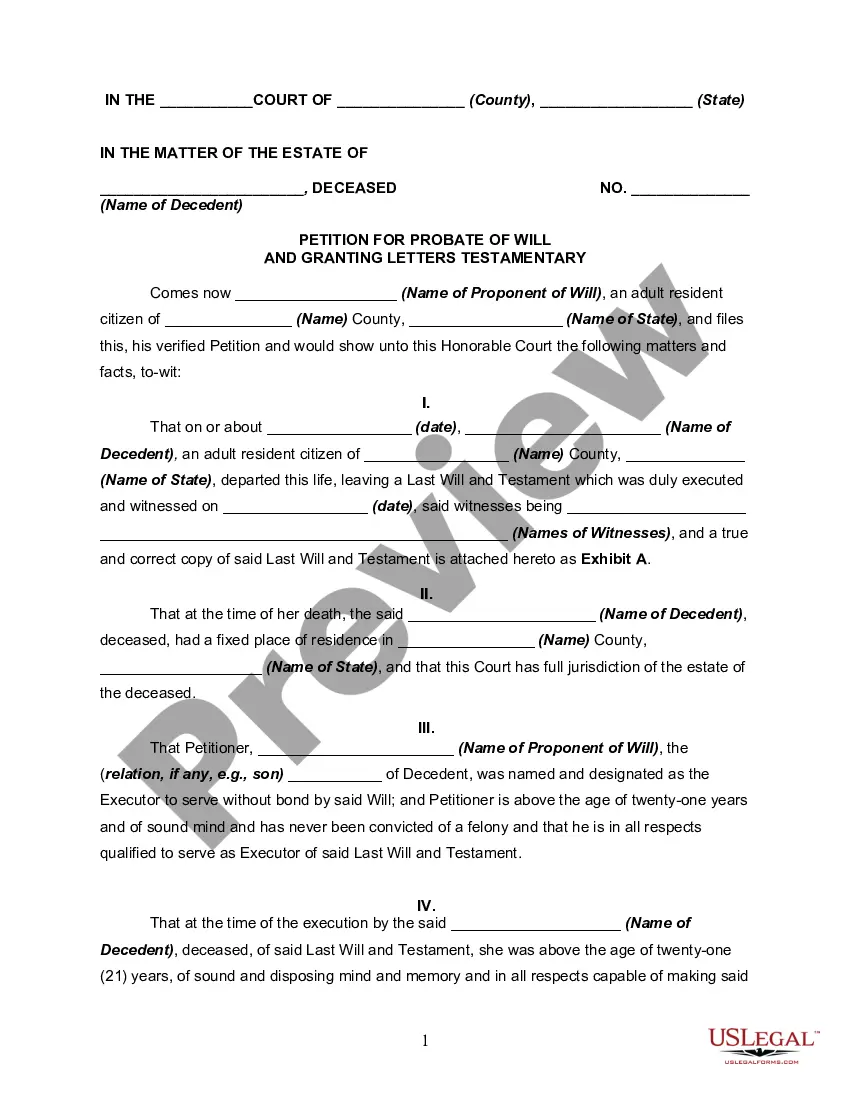
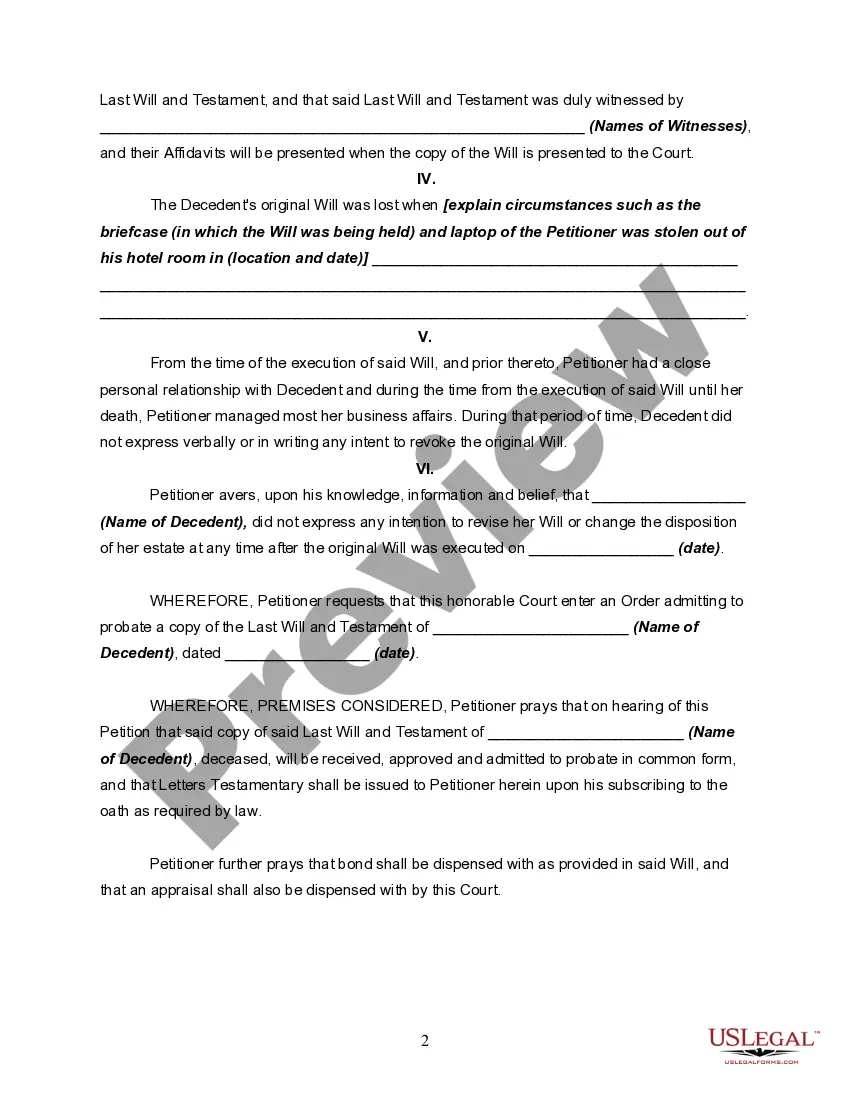
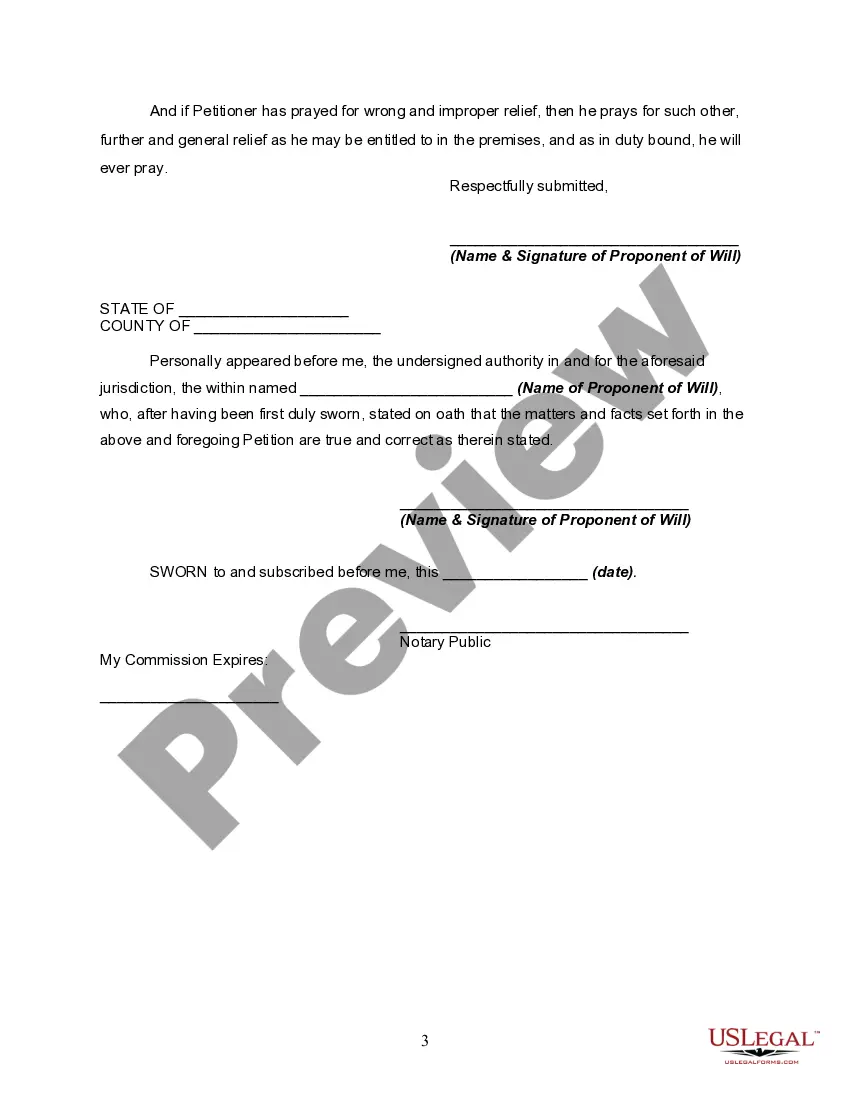
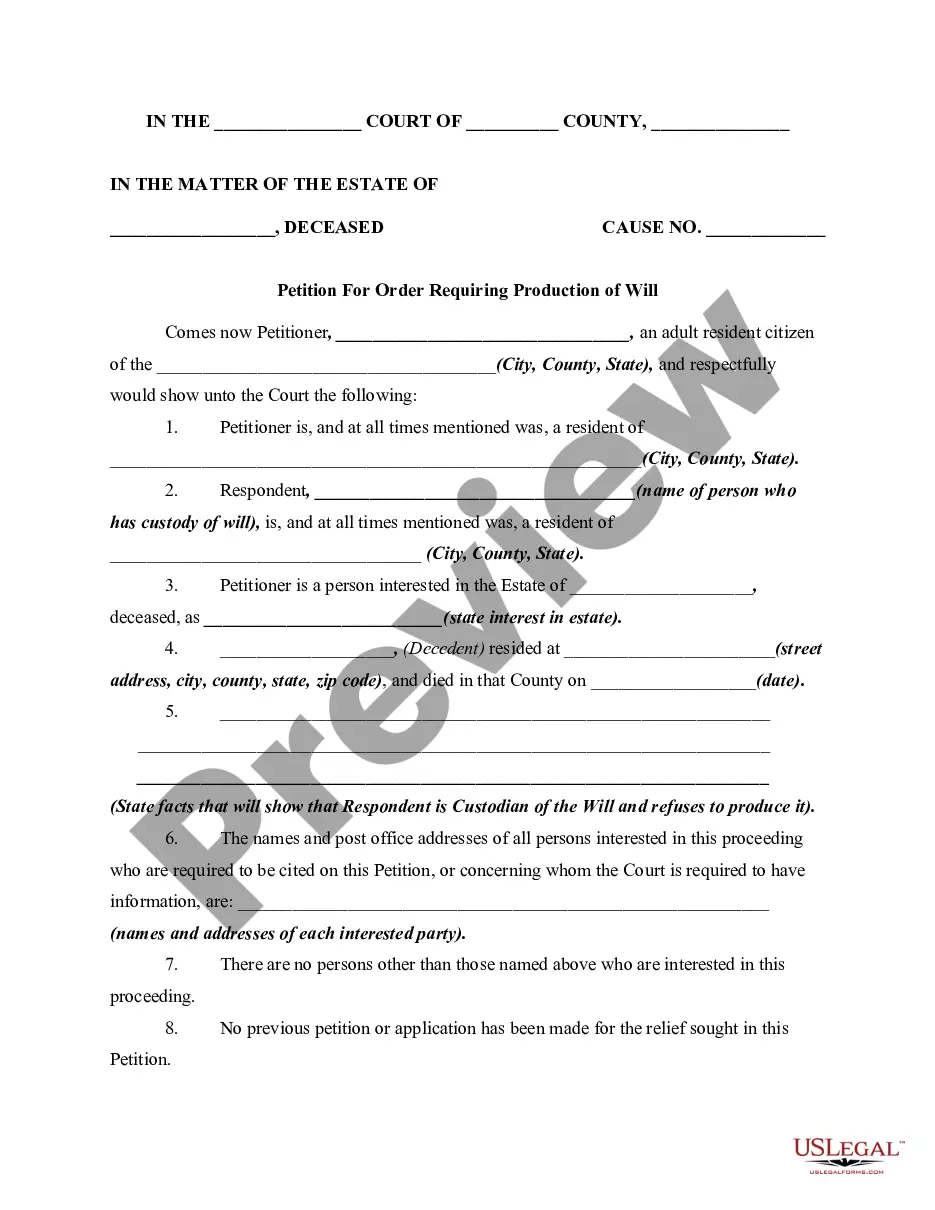

Get your form ready online
Our built-in tools help you complete, sign, share, and store your documents in one place.
Make edits, fill in missing information, and update formatting in US Legal Forms—just like you would in MS Word.
Download a copy, print it, send it by email, or mail it via USPS—whatever works best for your next step.
Sign and collect signatures with our SignNow integration. Send to multiple recipients, set reminders, and more. Go Premium to unlock E-Sign.
If this form requires notarization, complete it online through a secure video call—no need to meet a notary in person or wait for an appointment.
We protect your documents and personal data by following strict security and privacy standards.

Make edits, fill in missing information, and update formatting in US Legal Forms—just like you would in MS Word.

Download a copy, print it, send it by email, or mail it via USPS—whatever works best for your next step.

Sign and collect signatures with our SignNow integration. Send to multiple recipients, set reminders, and more. Go Premium to unlock E-Sign.

If this form requires notarization, complete it online through a secure video call—no need to meet a notary in person or wait for an appointment.

We protect your documents and personal data by following strict security and privacy standards.
Looking for another form?









How to fill out Petition To Probate Lost Will?
- Log in to your US Legal Forms account if you're a returning user. Ensure your subscription is active; if not, renew it based on your plan.
- For first-time users, start by checking the Preview mode and description of the objection to probate petition form to confirm it fits your local jurisdiction's requirements.
- If you find any issues or need a different template, utilize the Search tab to explore alternatives that better suit your situation.
- After you select the correct template, click on the Buy Now button and choose your desired subscription plan. Remember, registration is necessary for access to the resources.
- Proceed to payment by entering your credit card information or using your PayPal account to complete the purchase.
- Finally, download the objection to probate petition form to your device. You can easily access it again from the My Forms section of your profile.
By leveraging US Legal Forms, you gain access to a robust collection of forms and premium expert assistance, ensuring your documents are completed correctly and meet legal standards.
Don't let paperwork overwhelm you—start your journey today with US Legal Forms and handle your legal needs efficiently!
Form popularity
FAQ
To write an effective objection letter to the court, you should first clearly state your intent to contest the probate petition. Include relevant details such as the case number, the reasons for your objection, and any supporting evidence you have. Your letter should be respectful and concise, articulating your perspective while maintaining a formal tone. For those needing help, the US Legal Forms platform offers resources and templates to help structure this letter properly.
A client may need to file a Heggstad petition if they believe a deceased person's estate does not include certain assets that should have been transferred directly to them outside of probate. This situation often arises when there is a dispute about the ownership of property. In essence, a Heggstad petition serves as an 'objection to probate petition' when specific property should not be included in the probate estate. Utilizing the US Legal Forms platform can simplify the process, providing necessary templates and guidance.
The probate process can be time-consuming and expensive, often leading to delays in the distribution of an estate. Additionally, the process may require public disclosure of personal assets, which can raise privacy concerns. Moreover, there is a possibility of disputes among heirs, leading to further complications. For those considering an objection to probate petition, understanding these disadvantages can help in making informed decisions moving forward.
To write an effective objection letter for court, begin by clearly stating your intention to object to the probate petition. Include relevant details, such as the name of the deceased, the case number, and the grounds for your objection. Be specific about your concerns, and ensure that your letter is concise and respectful. Remember, a well-structured objection can significantly influence the court's decision regarding the objection to probate petition.
Non-probate property includes assets like payable-on-death accounts and assets held in irrevocable trusts. These types of properties transfer directly to beneficiaries without entering the probate process. Understanding the distinction between probate and non-probate property can support your case when filing an objection to probate petition.
The timeframe to file for probate after death varies by state, but it usually ranges from a few weeks to several months. Prompt filing is important, as delays may complicate the administration of the estate and affect any objection to the probate petition you may plan to file. Always check local laws and consider consulting a legal expert for guidance.
Generally, assets like bank accounts held jointly or assets placed in a revocable trust do not go through probate. Instead, they transfer automatically upon death to the surviving owners or trustees. Having a clear understanding of these assets can help you prepare an informed objection to probate petition if necessary.
Assets such as life insurance policies with designated beneficiaries, retirement accounts, and properties held in joint tenancy do not go through probate. These assets pass directly to the named beneficiaries, bypassing court intervention. Knowing this can be beneficial when assessing the need for an objection to the probate petition.
To file an objection to a probate petition, you must first gather the necessary evidence and documents supporting your objection. Next, prepare a formal objection statement, and submit it to the probate court where the petition was filed. Consulting an attorney can streamline this process and enhance your chances of success.
Creating a living trust is one of the most effective methods to avoid probate. By transferring ownership of your assets into a trust, these assets are managed for your benefit during your lifetime and distributed without going through probate after your death. This can simplify your estate planning and minimize the need to file an objection to probate petition.