Criminal Charges For Battery
Description
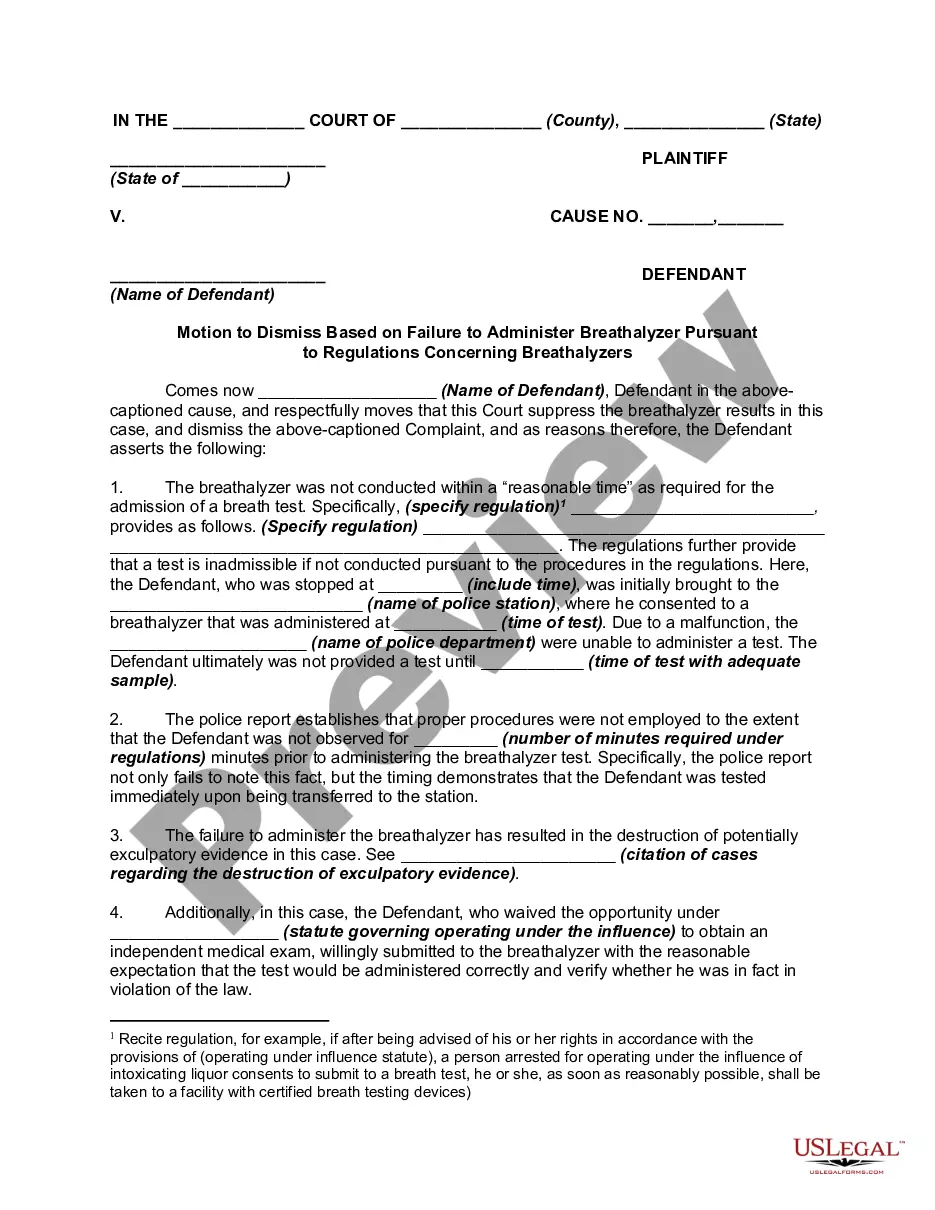
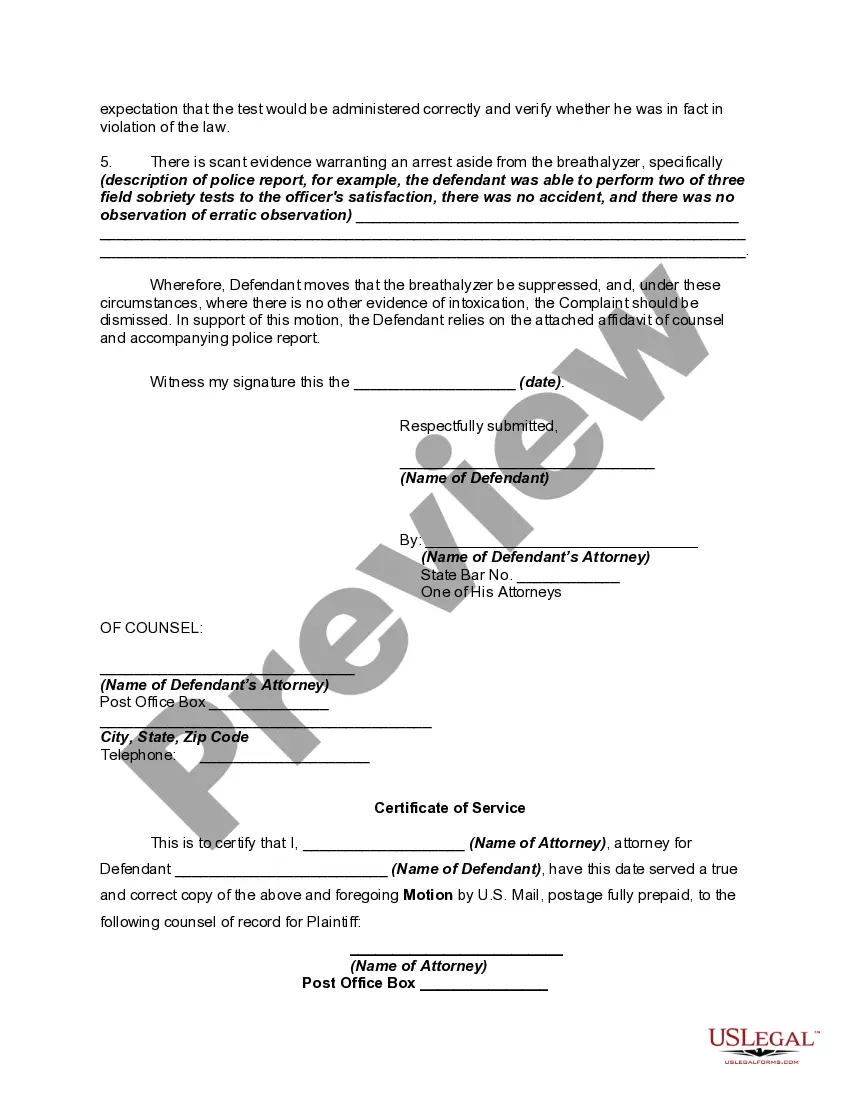
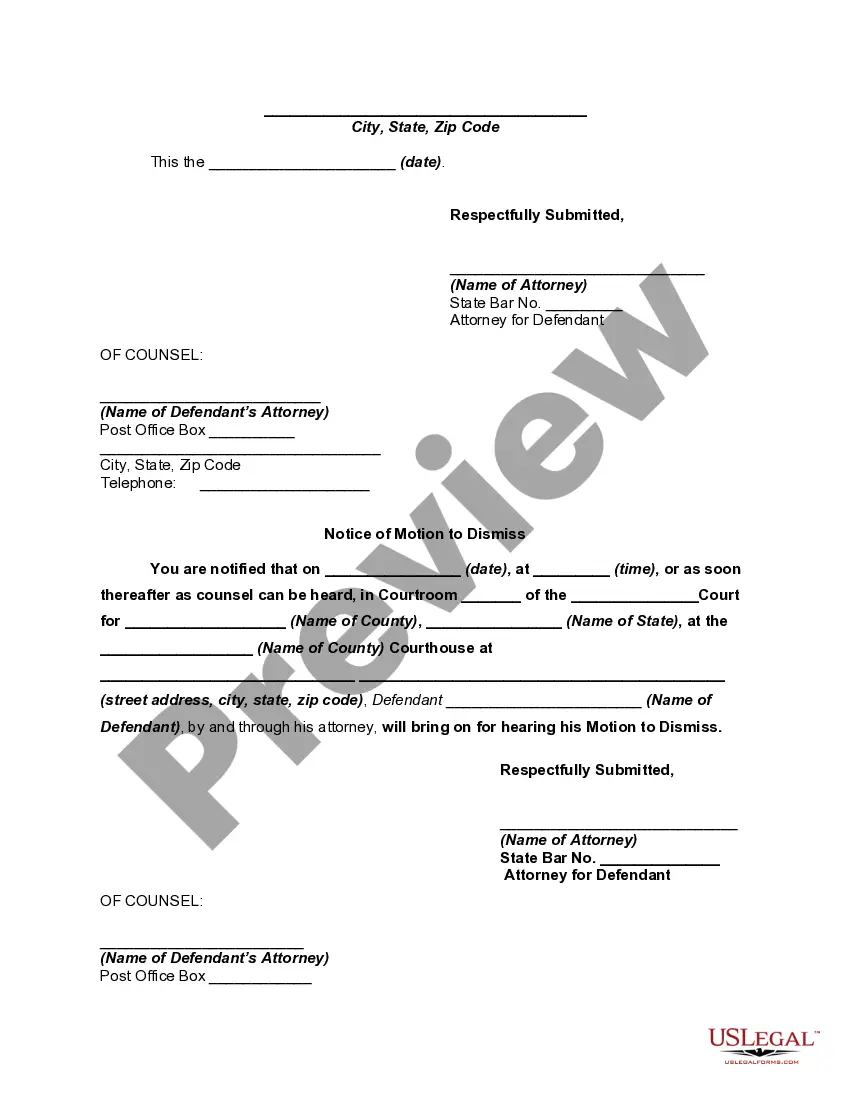

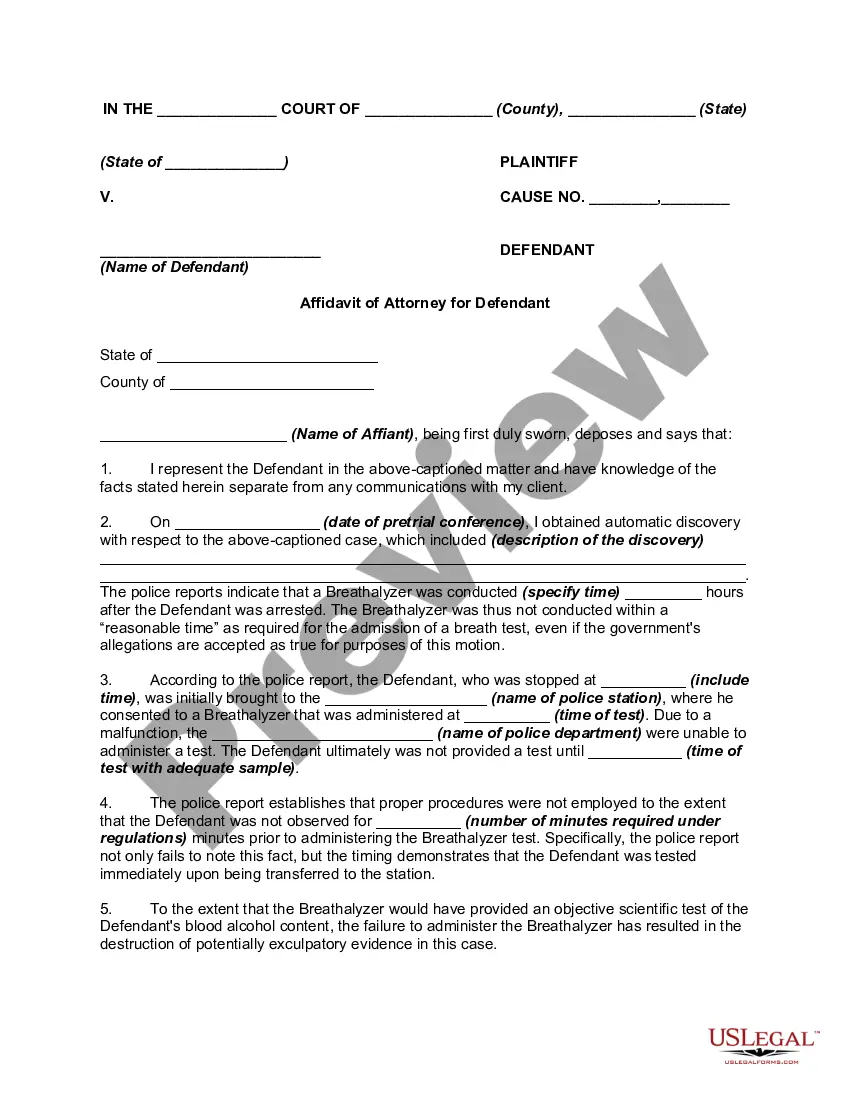
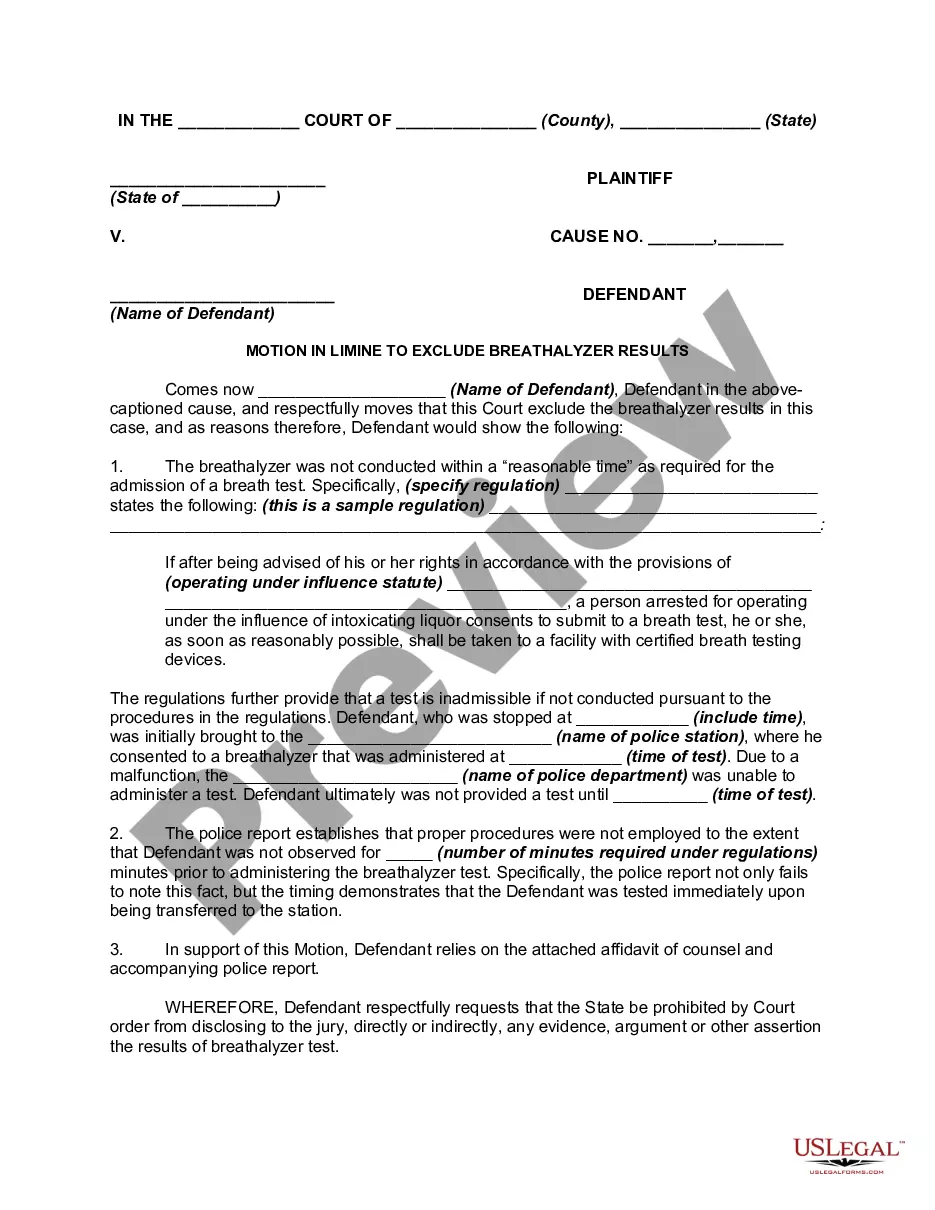
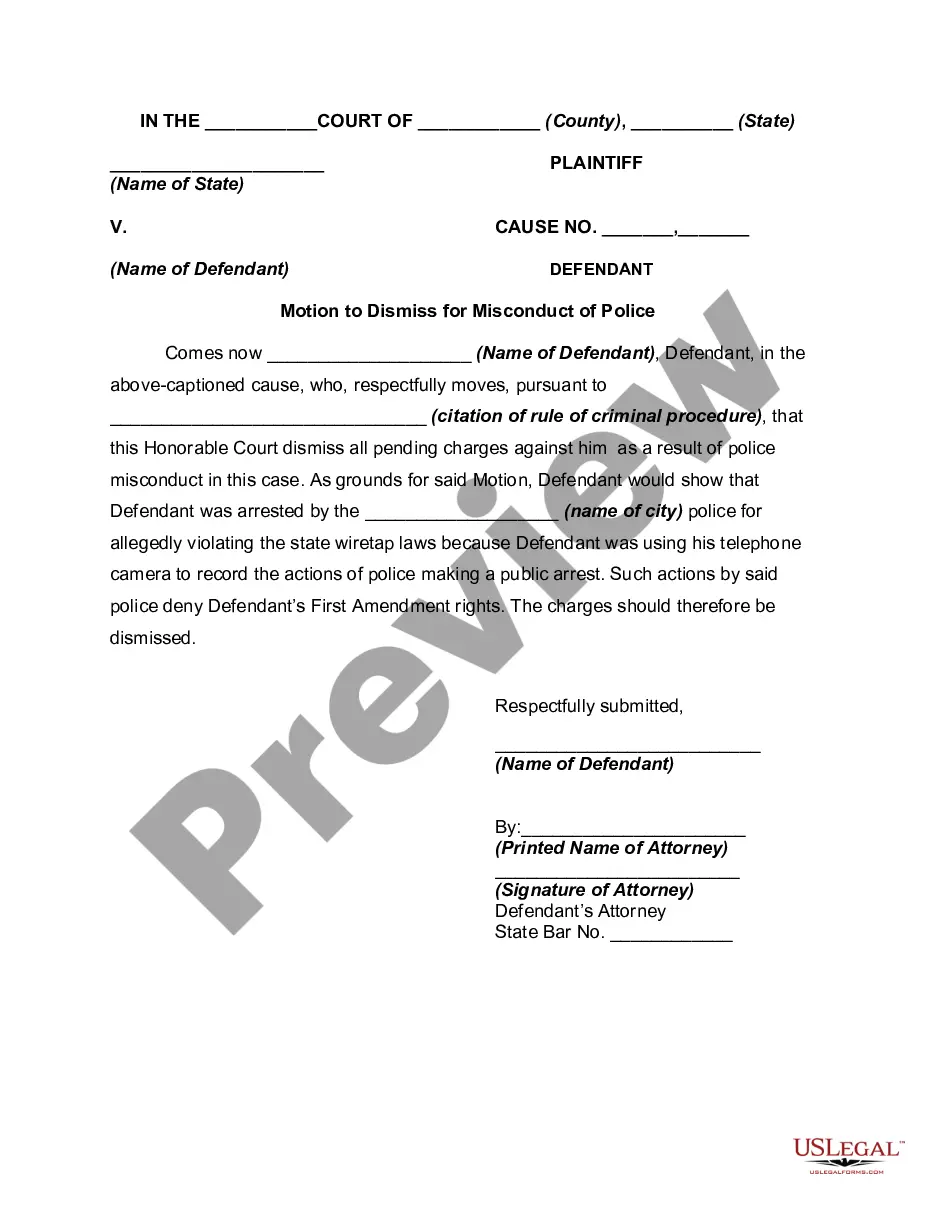





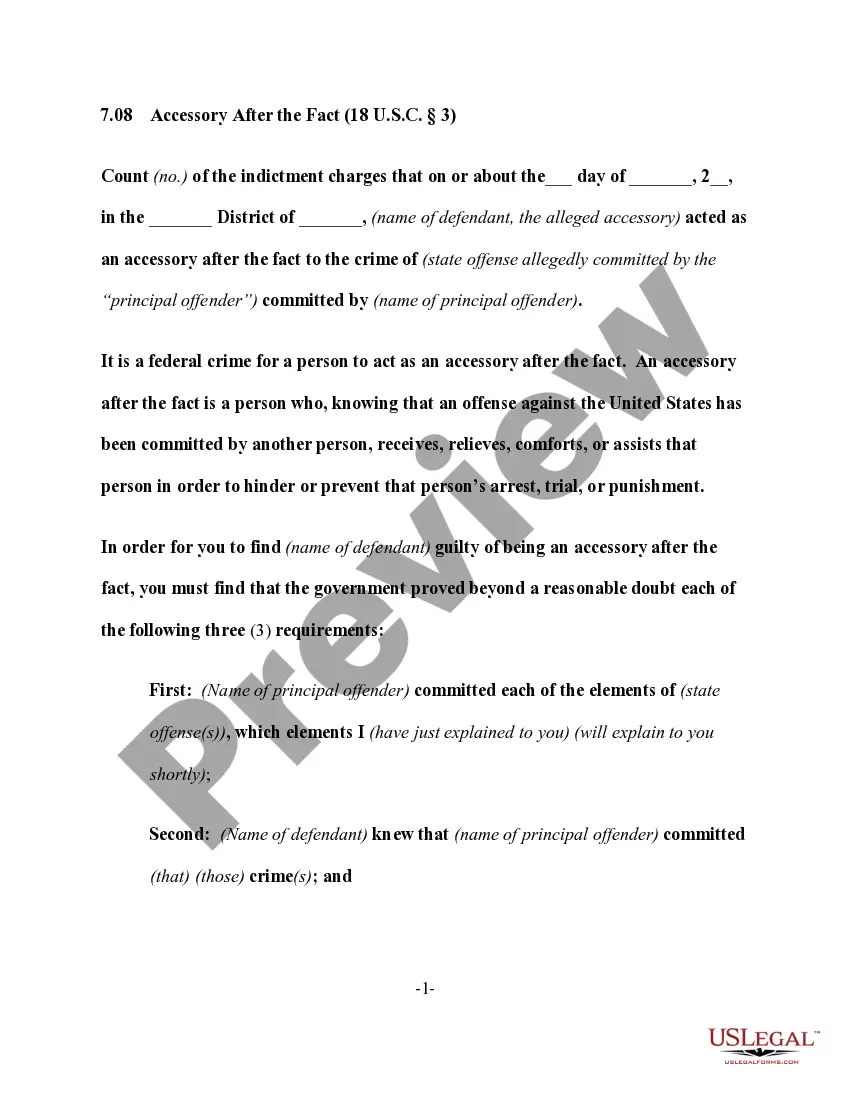


How to fill out Motion To Dismiss Criminal Charges For Failure To Follow Breathalyzer Protocols - DUI?
- Log into your US Legal Forms account if you're a returning user. Ensure your subscription is up to date to access the documents you need.
- For first-time users, start by browsing the extensive library and filtering for 'criminal charges for battery'. Review the form descriptions to find one that fits your specific requirements.
- If you don't find a suitable form, utilize the Search tab to explore additional templates related to criminal charges for battery.
- Once you've selected the appropriate document, click the 'Buy Now' button. Choose the subscription plan that best suits your needs and create an account if you haven’t already.
- Complete your purchase by entering your payment details through credit card or PayPal to access the forms.
- After your transaction is processed, download the form directly to your device for easy completion. You can also revisit it anytime under the 'My Forms' section of your profile.
By following these steps, you can efficiently procure the necessary legal documents related to criminal charges for battery. US Legal Forms stands out with its vast collection of over 85,000 fillable legal forms, ensuring users have access to a diverse range of templates at competitive prices.
Taking control of your legal documentation has never been easier. Start your journey with US Legal Forms today and ensure your legal needs are met swiftly and accurately!
Form popularity
FAQ
An example of battery is when one person throws a drink at another during a confrontation, resulting in unexpected physical contact. Even without severe injury, this act qualifies as battery due to the intentional nature of the contact. Legal implications often arise from such interactions, potentially resulting in criminal charges for battery. To navigate these matters effectively, consider utilizing the resources offered by uslegalforms for accurate guidance.
A classic example of a battery crime is when someone strikes another person in a heated argument. This action causes physical harm to the victim and fulfills the legal definition of battery. Such incidents can lead to serious criminal charges for battery, which may have long-lasting consequences. If you're facing a situation like this, exploring resources on uslegalforms can guide you through the legal complexities.
Battery occurs when a person intentionally causes physical contact with another person without consent. An example of battery without assault could be an individual who secretly pushes someone while they are unaware. In this scenario, the victim does not experience the threat of harm before the contact occurs. Understanding these distinctions can help clarify the nature of criminal charges for battery.
Yes, criminal charges for battery typically show up on your record if you are convicted. A battery conviction can have lasting effects on various aspects of your life, including employment opportunities and personal relationships. In certain situations, individuals may explore options for expungement or mitigation of their record. Consulting with a legal professional can provide clarity on how to manage these issues and protect your future.
In the context of criminal charges for battery, battery refers to the unlawful use of force against another person, resulting in harmful or offensive contact. This offense can include a wide range of actions, from hitting someone to unwanted touching. Understanding this definition is crucial if you or someone you know is facing criminal charges for battery, as the implications can be severe. It is essential to seek legal advice to navigate these charges effectively.
Battery qualifies whenever there is intentional and unlawful physical contact with another person. This contact doesn't have to result in visible injury, as even the threat of harmful contact can qualify as battery. Knowing what qualifies can help you navigate the complexities surrounding criminal charges for battery, making it essential to consult legal professionals.
The four elements of battery include intent, contact, harm, and causation. First, the accused must have intended to cause harmful or offensive contact. Next, there must be actual contact with the victim, resulting in physical harm or emotional distress, thus fulfilling all criteria for criminal charges for battery.
Establishing criminal charges for battery requires evidence proving both intent and harm. This could include physical injuries, eyewitness accounts, or any recorded communications that suggest aggressive behavior. Documenting all relevant evidence is vital for ensuring a fair trial.
To prove battery, one needs to show that the defendant had the intent to cause harm or offensive contact. Essential evidence can include witness statements, video footage, or any physical proof of injury. Gathering this evidence promptly after the incident can significantly impact the outcome of the case involving criminal charges for battery.
To establish criminal charges for battery, evidence must demonstrate that a physical act occurred, causing harm or offensive contact. This may include witness testimonies, medical records, or photographs showing injuries. Collecting solid evidence is key in building a strong defense or prosecuting a battery case.