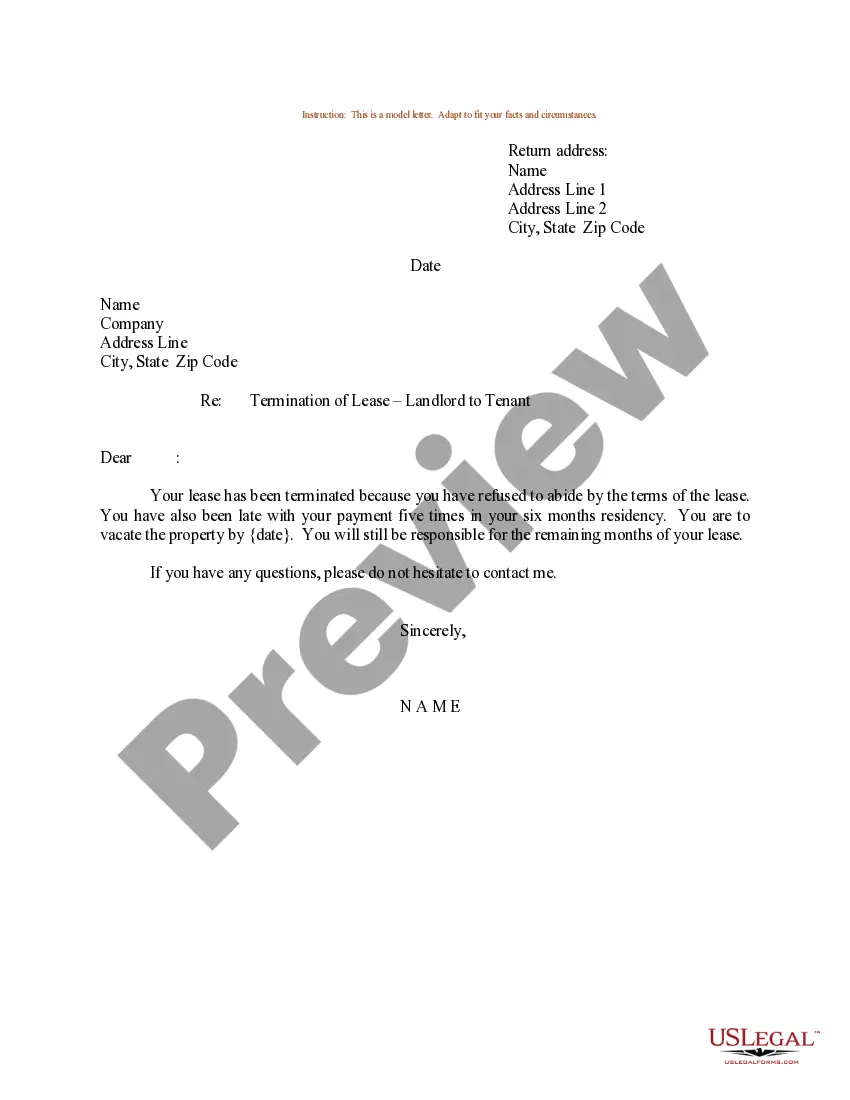
Termination Landlord With Tenancy
Description
Get your form ready online
Our built-in tools help you complete, sign, share, and store your documents in one place.
Make edits, fill in missing information, and update formatting in US Legal Forms—just like you would in MS Word.
Download a copy, print it, send it by email, or mail it via USPS—whatever works best for your next step.
Sign and collect signatures with our SignNow integration. Send to multiple recipients, set reminders, and more. Go Premium to unlock E-Sign.
If this form requires notarization, complete it online through a secure video call—no need to meet a notary in person or wait for an appointment.
We protect your documents and personal data by following strict security and privacy standards.

Make edits, fill in missing information, and update formatting in US Legal Forms—just like you would in MS Word.

Download a copy, print it, send it by email, or mail it via USPS—whatever works best for your next step.

Sign and collect signatures with our SignNow integration. Send to multiple recipients, set reminders, and more. Go Premium to unlock E-Sign.

If this form requires notarization, complete it online through a secure video call—no need to meet a notary in person or wait for an appointment.

We protect your documents and personal data by following strict security and privacy standards.
Looking for another form?
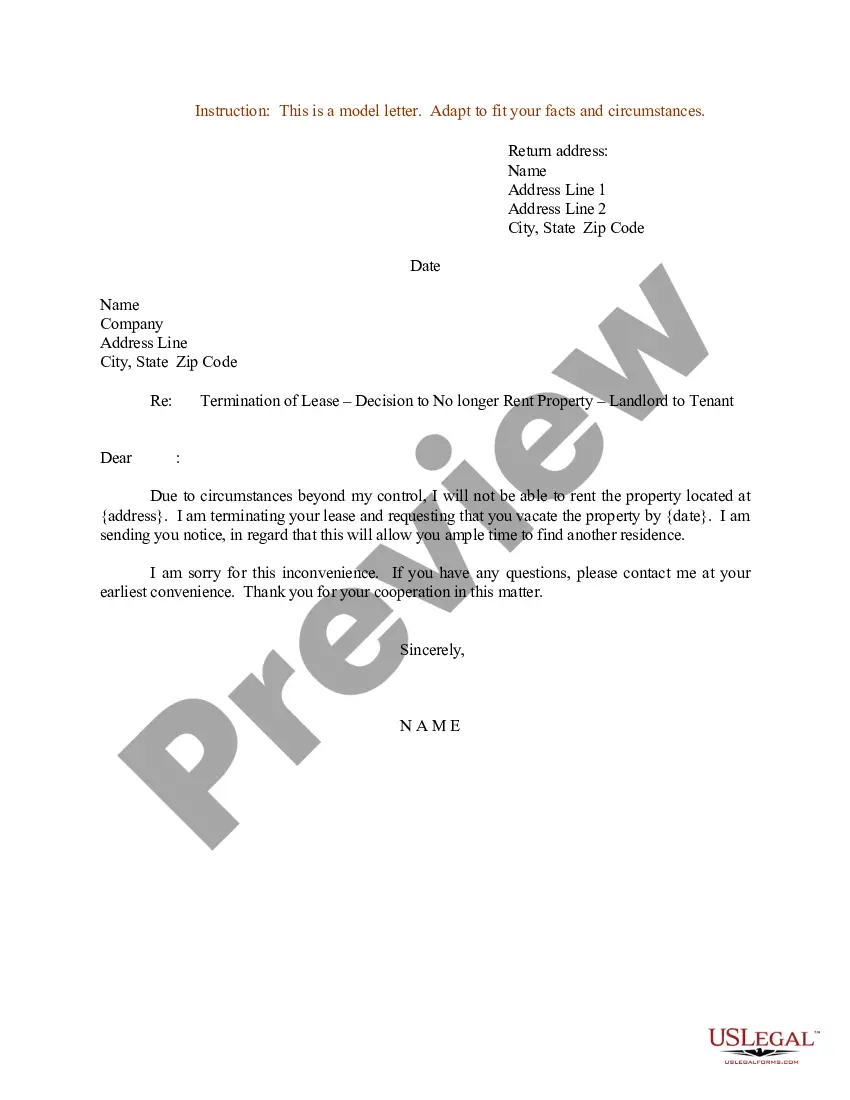
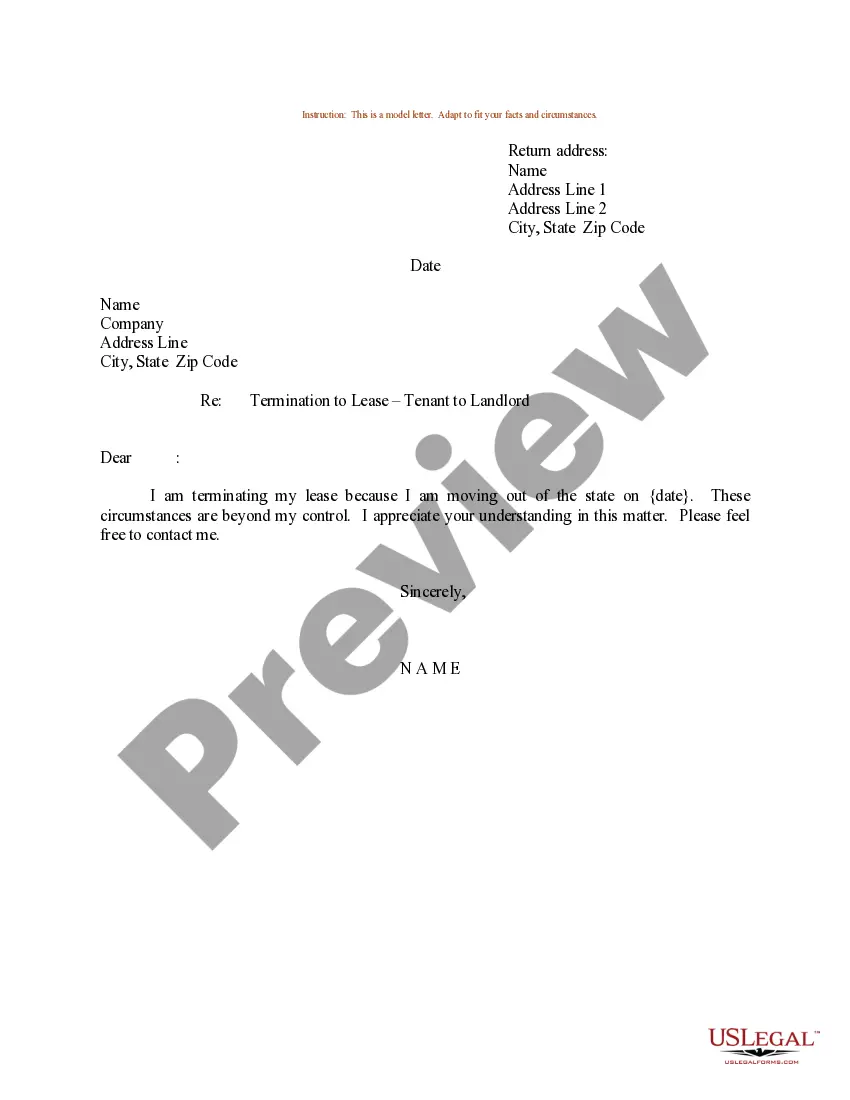
How to fill out Sample Letter For Termination Of Lease From Landlord To Tenant?
- If you’re an existing user, log in to your account and select the form template related to tenancy termination. Click the Download button while ensuring your subscription is active.
- For first-time users, start by browsing the form descriptions. Make sure to choose the correct document that aligns with your specific needs and legal jurisdiction.
- If you notice any discrepancies or if the form isn't suitable, utilize the Search feature to find the applicable template.
- Proceed to purchase the form by clicking the Buy Now button and selecting your subscription plan. Remember to create an account for ongoing access.
- Complete your purchase by entering your payment information, either via credit card or PayPal.
- Download the form to your device, which you can later access anytime from the My Forms section in your profile.
By utilizing US Legal Forms, you equip yourself with the tools needed to ensure your documents are comprehensive and legally sound. The platform not only saves valuable time but also provides access to expert assistance for form completion.
Don't hesitate to take control of your legal needs. Start using US Legal Forms today and experience the convenience it brings to your legal document management!
Form popularity
FAQ
As a tenant, you can end a tenancy by providing written notice to your landlord, following the terms outlined in your tenancy agreement. It's important to communicate clearly and to give proper notice according to the agreement or state laws. If you need templates or guidance on forming a notice, consider using USLegalForms to ensure everything is done correctly.
Evicting a tenant in Massachusetts can be a complex process that requires adherence to strict legal guidelines. It often involves filing an eviction notice, attending court hearings, and potentially handling tenant responses. For landlords navigating this challenging landscape, understanding the legalities of termination landlord with tenancy is essential, and resources like USLegalForms can offer valuable assistance.
Yes, one person can end a joint tenancy, but the process may involve notifying all other tenants and following specific procedures outlined in the tenancy agreement. Depending on state laws, the remaining tenants may have rights that need consideration. Always consult a legal professional or utilize resources like USLegalForms to ensure you proceed correctly.
No, a notice of termination of tenancy is not the same as an eviction. The notice informs the tenant that the landlord intends to end the tenancy, whereas eviction is a legal process to remove the tenant from the property. Both actions are part of the broader scope of termination landlord with tenancy, and understanding this distinction is key for effective resolution.
To terminate a tenancy relationship, the landlord must provide a written notice to the tenant, stating the intention to end the tenancy. The notice period varies depending on the type of tenancy and local laws, so it's vital to check those regulations. Utilizing a platform like USLegalForms can simplify the process by providing templates for termination notices, ensuring compliance with the law.
A minimum break clause in a tenancy agreement allows either the landlord or tenant to end the tenancy after a specific period. Typically, this clause requires the parties to give notice before terminating the agreement, ensuring a fair process for both sides. Understanding these terms is crucial for navigating the termination landlord with tenancy effectively.
In Nevada, the required notice period for a landlord depends on the reason for termination. Typically, landlords must provide a 30-day notice for month-to-month tenancies. However, in cases of lease violations or other specific circumstances, the notice periods may differ. It's best to consult resources or professionals on termination landlord with tenancy for clarity.
Responding to a termination notice involves reviewing the notice's details and understanding your rights as a tenant. You can choose to accept the notice, negotiate with your landlord, or seek legal counsel if you disagree with the termination grounds. Being informed will help you navigate the termination landlord with tenancy smoothly.
Yes, tenants can challenge a notice of termination if they believe it is unjust or does not comply with state laws. It is vital for tenants to review their lease and any relevant legal provisions. Seeking legal advice may also be beneficial if there is a strong case for disputing the termination landlord with tenancy.
When a tenant gives notice, it's important to acknowledge their communication promptly and professionally. You should confirm the receipt of the notice and review the terms of the lease to ensure compliance with the notice period. This response helps maintain a positive relationship while clearly addressing the termination landlord with tenancy.