Pay Property Taxes With Escrow
Description
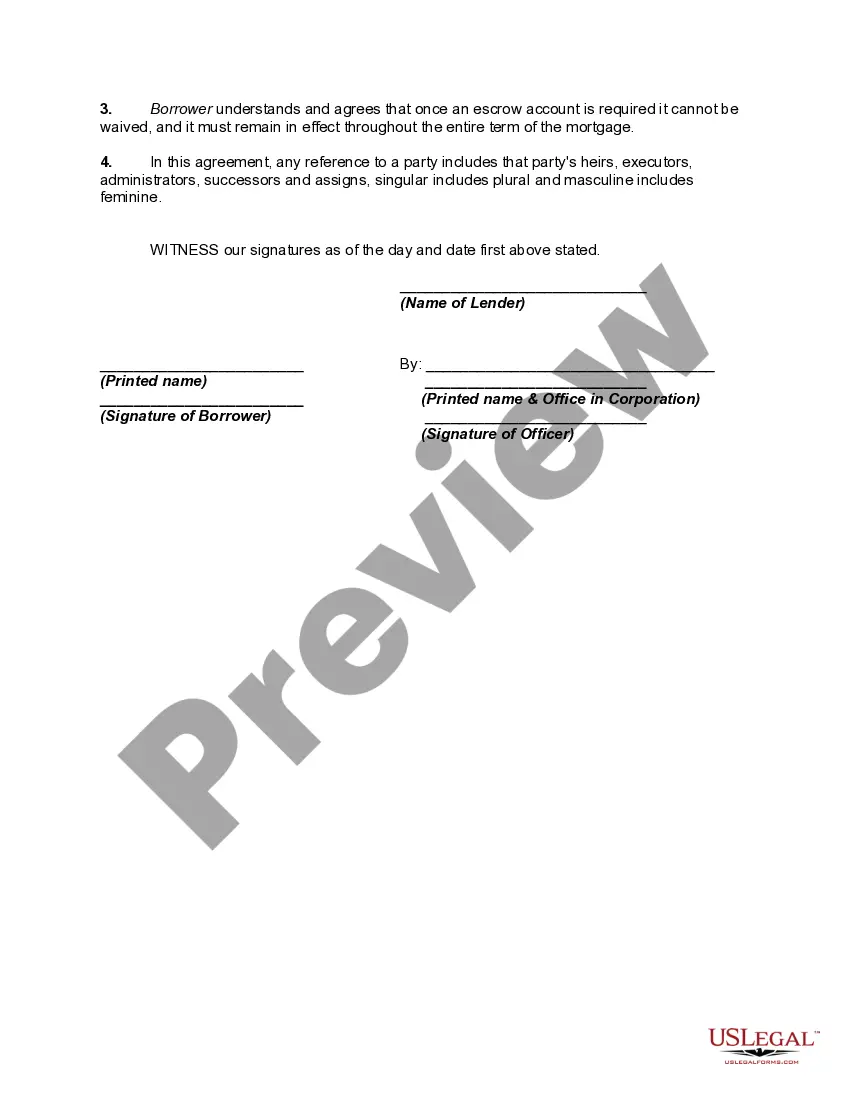
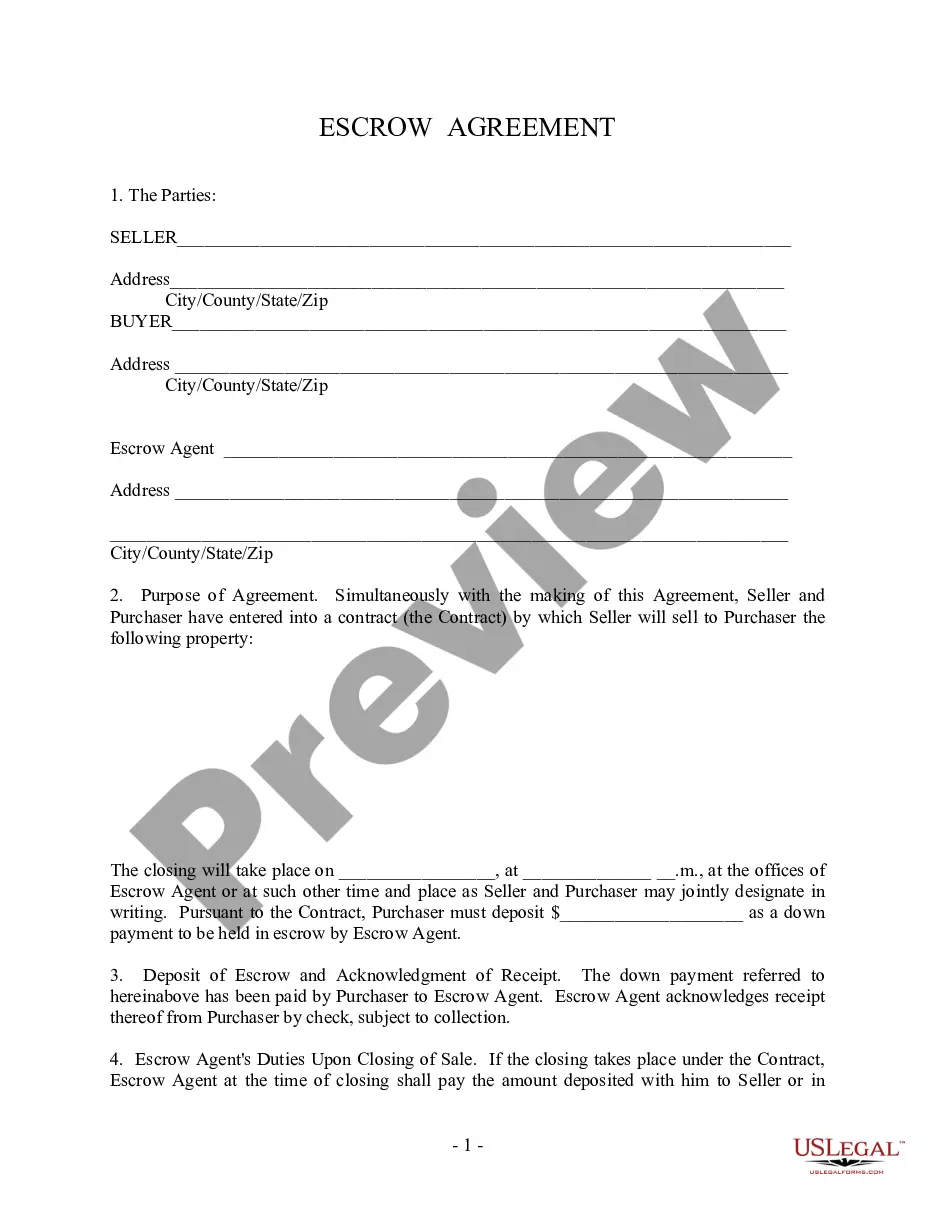
Get your form ready online
Our built-in tools help you complete, sign, share, and store your documents in one place.
Make edits, fill in missing information, and update formatting in US Legal Forms—just like you would in MS Word.
Download a copy, print it, send it by email, or mail it via USPS—whatever works best for your next step.
Sign and collect signatures with our SignNow integration. Send to multiple recipients, set reminders, and more. Go Premium to unlock E-Sign.
If this form requires notarization, complete it online through a secure video call—no need to meet a notary in person or wait for an appointment.
We protect your documents and personal data by following strict security and privacy standards.

Make edits, fill in missing information, and update formatting in US Legal Forms—just like you would in MS Word.

Download a copy, print it, send it by email, or mail it via USPS—whatever works best for your next step.

Sign and collect signatures with our SignNow integration. Send to multiple recipients, set reminders, and more. Go Premium to unlock E-Sign.

If this form requires notarization, complete it online through a secure video call—no need to meet a notary in person or wait for an appointment.

We protect your documents and personal data by following strict security and privacy standards.
Looking for another form?
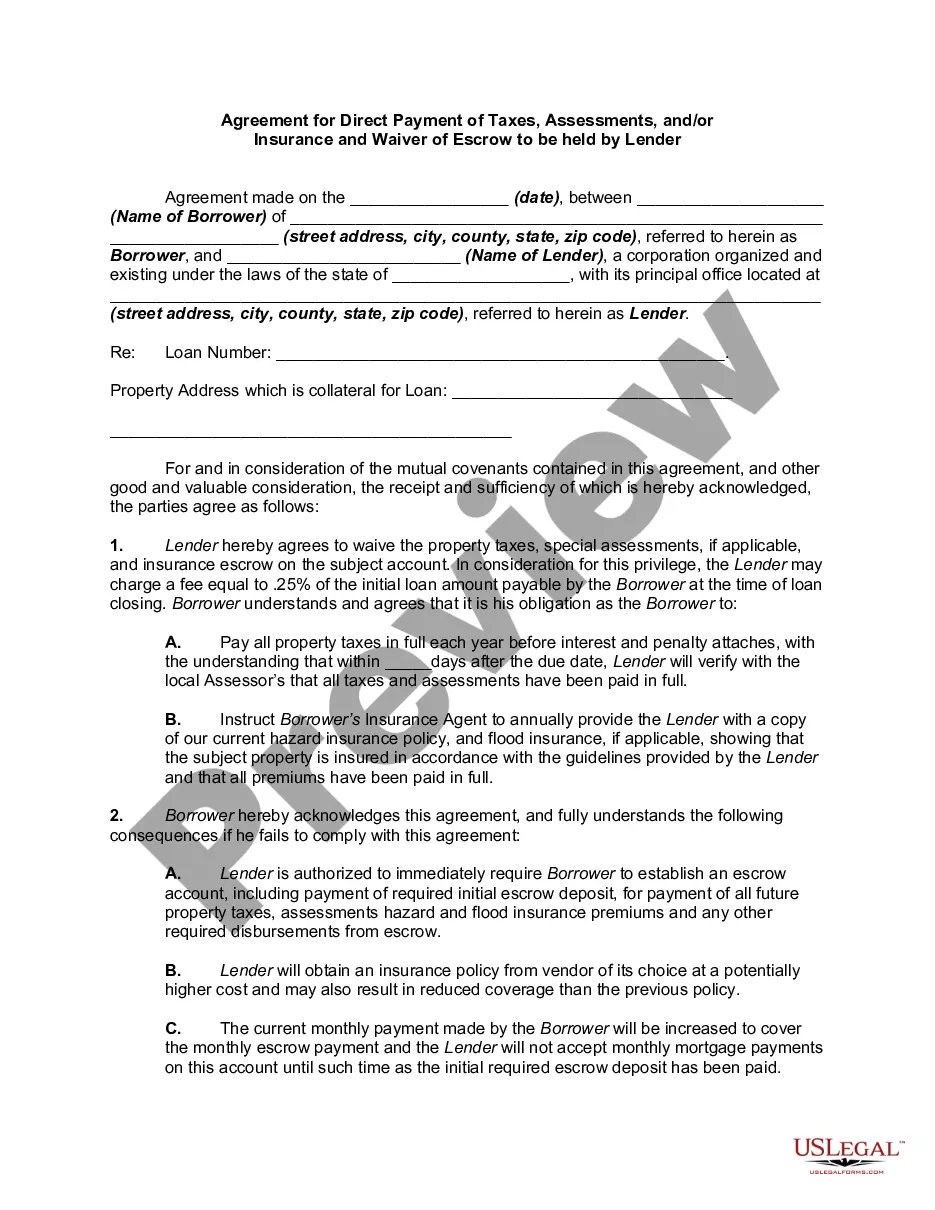
How to fill out Agreement For Direct Payment Of Taxes, Assessments, And/or Insurance And Waiver Of Escrow To Be Held By Lender?
It’s well known that you cannot become a legal expert instantly, nor can you understand how to swiftly prepare Pay Property Taxes With Escrow without a specialized skill set.
Drafting legal documents is a lengthy procedure that necessitates specific education and expertise. So why not entrust the creation of the Pay Property Taxes With Escrow to the experts.
With US Legal Forms, one of the most extensive legal document collections, you can locate anything from court filings to templates for internal communication.
You can access your forms again from the My documents section at any time. If you are a current client, you can just Log In, and find and download the template from the same section.
No matter the reason for your documents—whether it’s financial, legal, or personal—our website has you covered. Experience US Legal Forms today!
- Find the document you need using the search bar at the top of the webpage.
- Preview it (if this option is available) and review the accompanying description to see if Pay Property Taxes With Escrow is what you need.
- If you require a different template, start your search again.
- Sign up for a free account and select a subscription plan to purchase the template.
- Click Buy now. Once the payment is complete, you can access the Pay Property Taxes With Escrow, complete it, print it, and send or mail it to the relevant individuals or organizations.
Form popularity
FAQ
To pay property taxes with your escrow account, first ensure that your mortgage lender has included property taxes in your escrow setup. Your lender will collect a portion of your monthly mortgage payment and deposit it into the escrow account. When the tax payment is due, your lender will automatically send the payment from your escrow account, allowing you to pay property taxes with escrow without additional effort.
If you prefer to pay property taxes separate from your mortgage, you can do so by contacting your local tax authority. You will need to make arrangements to pay your taxes directly, usually on an annual or semi-annual basis. However, if you want a more streamlined approach, consider using a service like US Legal Forms that helps you manage these payments effectively.
Yes, escrow can be used for paying property taxes. When you pay property taxes with escrow, your lender takes care of the payment process, relieving you of the responsibility. This arrangement helps you manage your financial obligations more easily, as you can avoid large lump-sum payments and instead budget for smaller monthly contributions.
Yes, your escrow account is designed to automatically pay property taxes on your behalf. When you set up your mortgage, a portion of your monthly payment goes into the escrow account. This amount accumulates until your property taxes are due, at which point the lender uses the funds to pay your taxes, ensuring you never miss a payment.
While escrow accounts offer convenience, there are some downsides. You may have less control over your funds, as your lender manages the payments. Additionally, some homeowners feel uneasy about overpaying into the account, which can happen if property taxes increase unexpectedly. Utilizing platforms like US Legal Forms can help you understand and manage escrow accounts better.
Receiving a property tax bill while having an escrow account can be confusing. This happens because the tax authority sends the bill directly to you, even though your escrow account handles the payment. It’s a good practice to review the bill to ensure your escrow account has sufficient funds to cover the payment.
Even with an escrow account, you still owe property taxes. However, the advantage of using escrow is that your lender manages the payments for you. This means you can pay property taxes with escrow, making budgeting easier and avoiding potential late fees.
Yes, when you set up an escrow account, it can automatically pay property taxes on your behalf. Your lender collects a portion of your property taxes each month and deposits it into the escrow account. This way, you can pay property taxes with escrow without worrying about missing deadlines or incurring penalties.
In California, property taxes are prorated at closing. This means that the seller pays a portion of the property taxes for the year up until the closing date, while the buyer takes responsibility for the remaining amount. If you choose to pay property taxes with escrow, your escrow account will manage these payments, ensuring they are made on time.