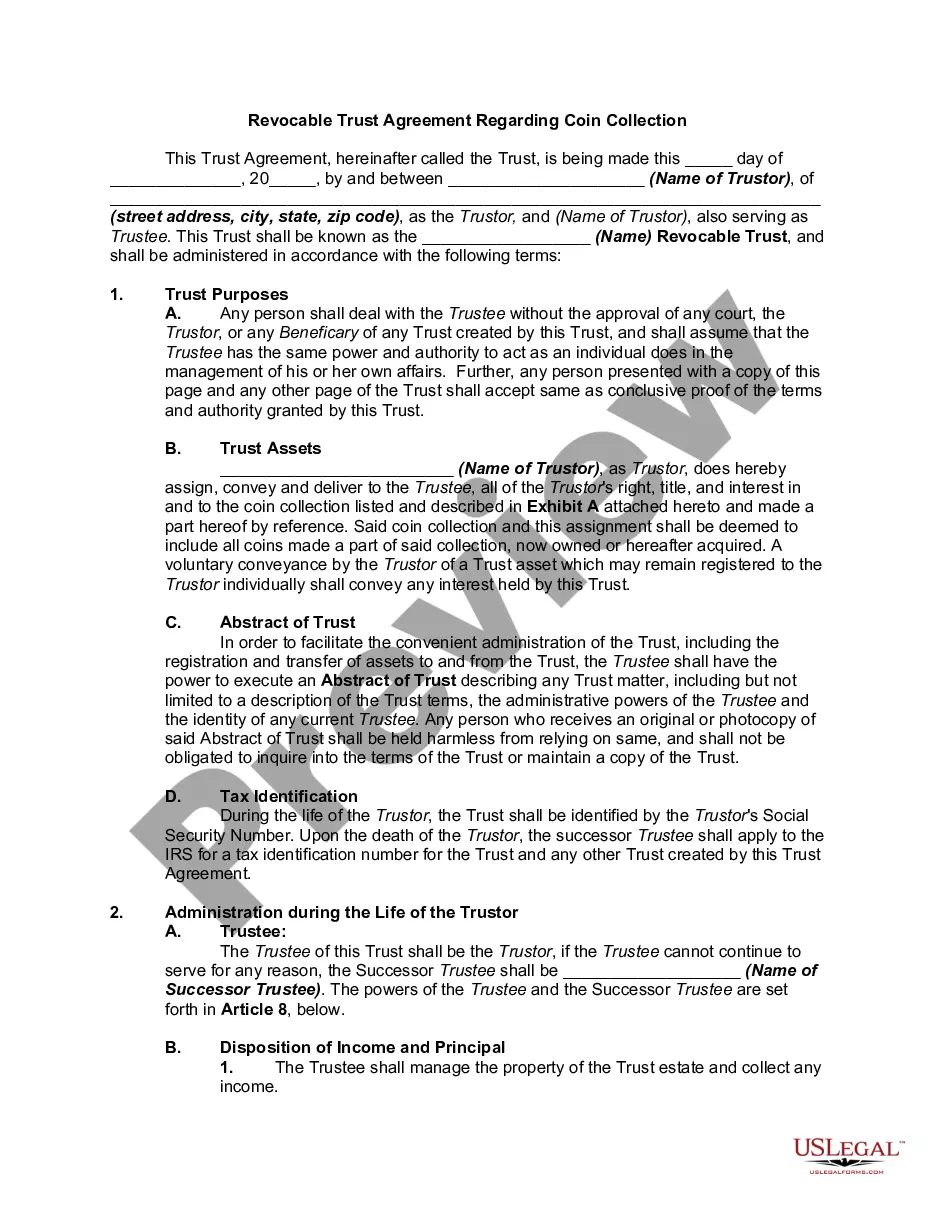
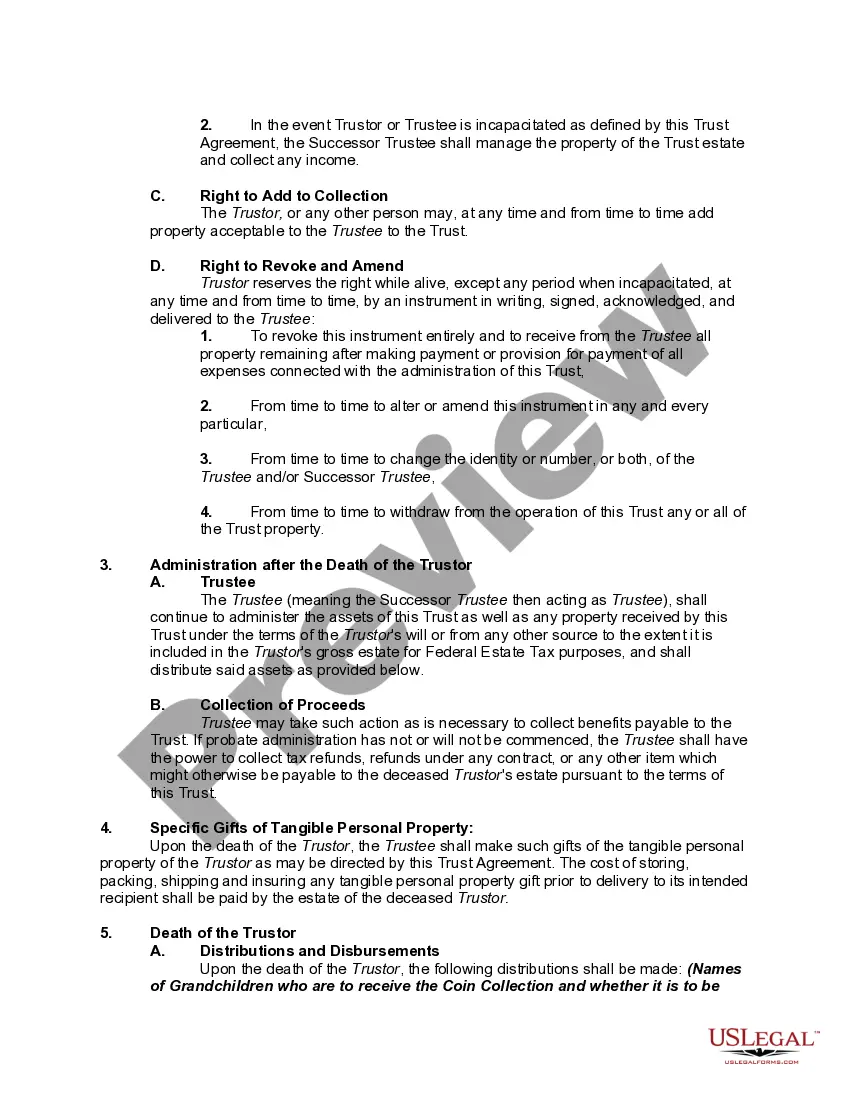
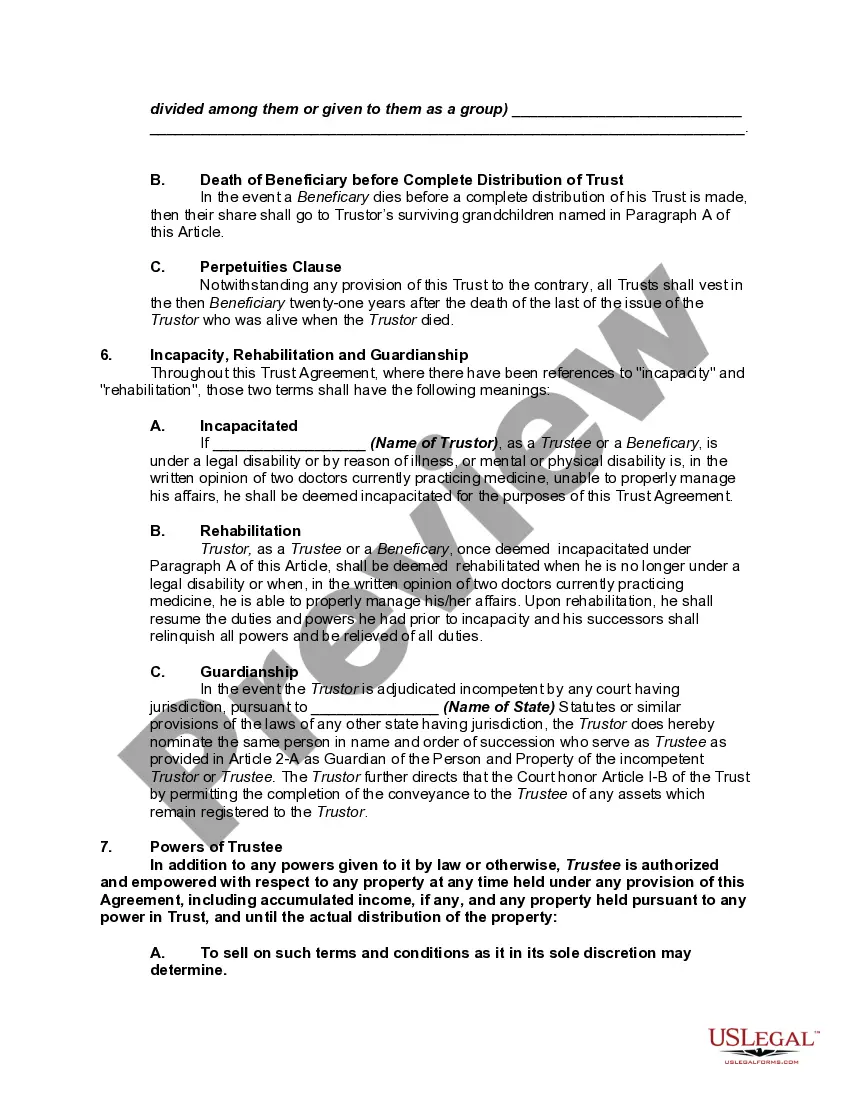
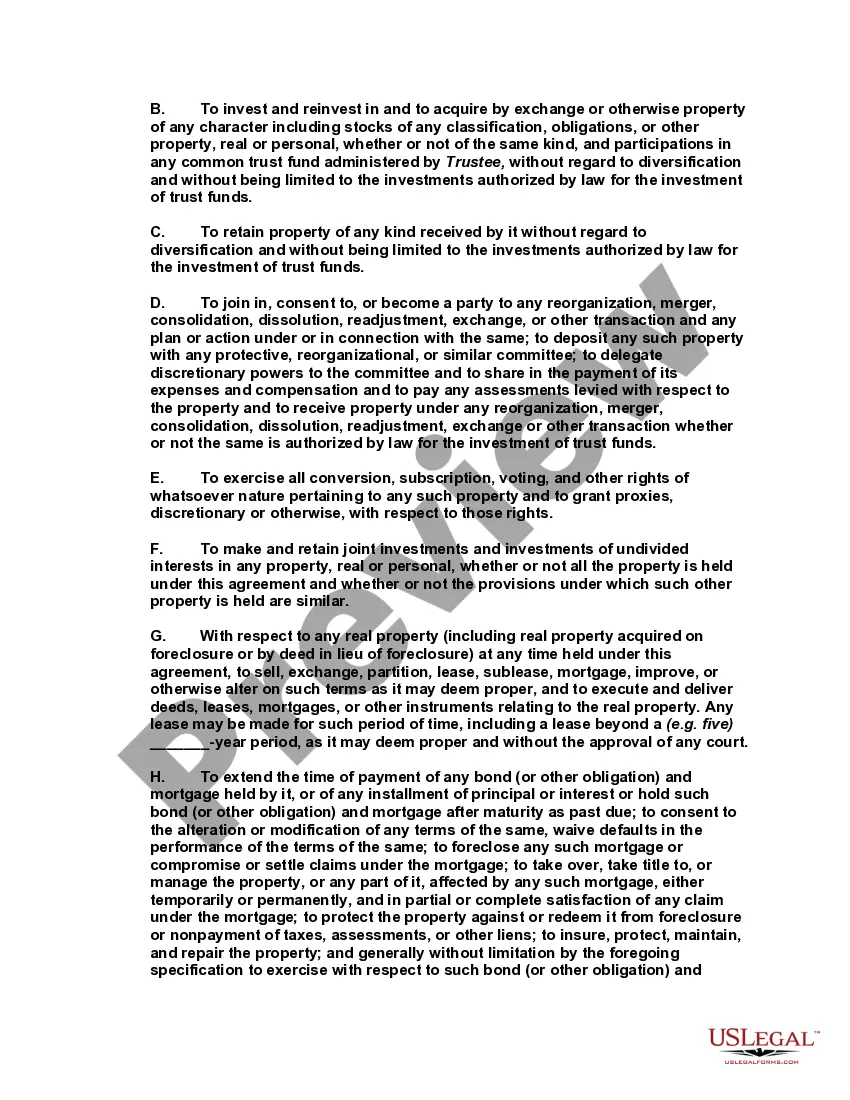
Trust Form Revocable With A Trust
Description
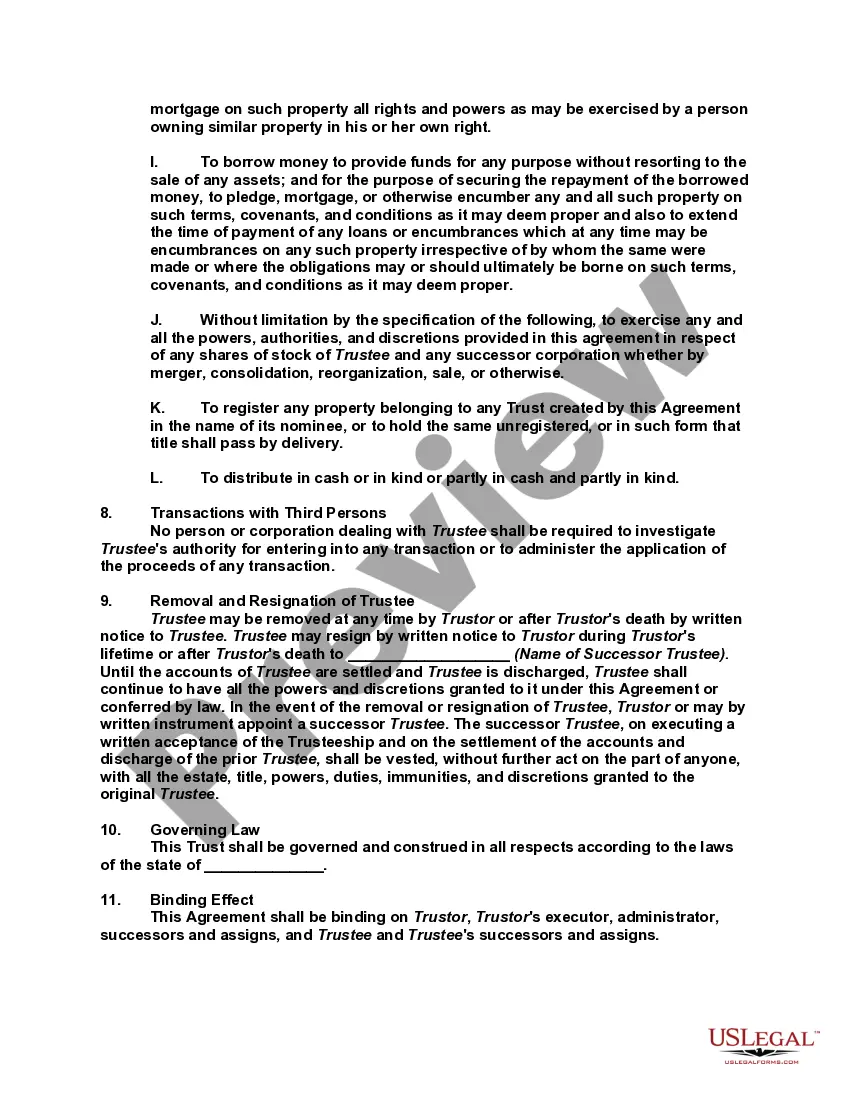
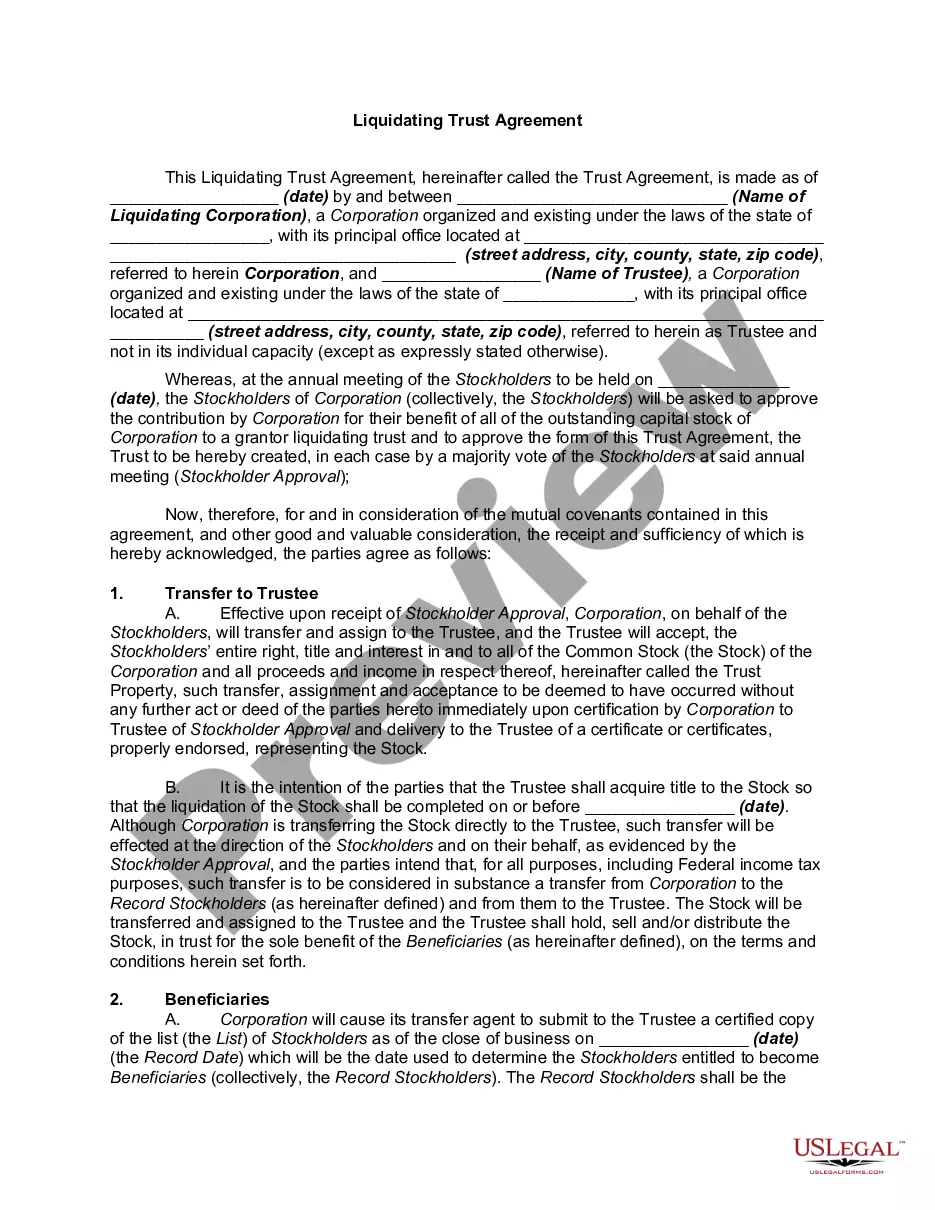
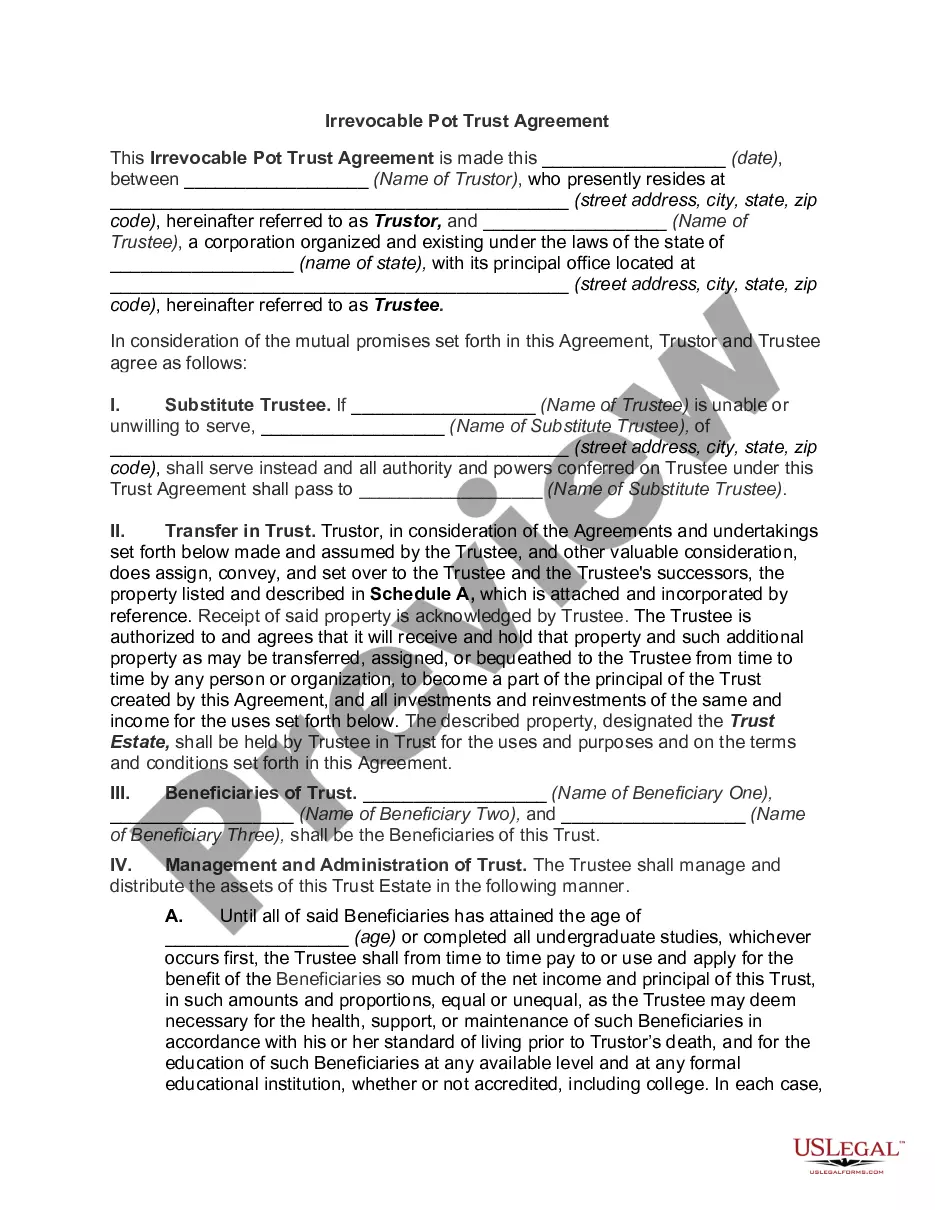
Get your form ready online
Our built-in tools help you complete, sign, share, and store your documents in one place.
Make edits, fill in missing information, and update formatting in US Legal Forms—just like you would in MS Word.
Download a copy, print it, send it by email, or mail it via USPS—whatever works best for your next step.
Sign and collect signatures with our SignNow integration. Send to multiple recipients, set reminders, and more. Go Premium to unlock E-Sign.
If this form requires notarization, complete it online through a secure video call—no need to meet a notary in person or wait for an appointment.
We protect your documents and personal data by following strict security and privacy standards.

Make edits, fill in missing information, and update formatting in US Legal Forms—just like you would in MS Word.

Download a copy, print it, send it by email, or mail it via USPS—whatever works best for your next step.

Sign and collect signatures with our SignNow integration. Send to multiple recipients, set reminders, and more. Go Premium to unlock E-Sign.

If this form requires notarization, complete it online through a secure video call—no need to meet a notary in person or wait for an appointment.

We protect your documents and personal data by following strict security and privacy standards.
Looking for another form?









How to fill out Revocable Trust Agreement Regarding Coin Collection?
- Log in to your US Legal Forms account to access previously downloaded forms. Make sure your subscription is active; if it's expired, renew it based on your chosen payment plan.
- For first-time users, begin by browsing the extensive collection and previewing the revocable trust form to ensure it meets your requirements and complies with local laws.
- If the initial template isn't suitable, utilize the search tab to find the appropriate revocable trust form that aligns with your needs.
- Purchase your chosen document by clicking the 'Buy Now' button. Choose a subscription plan that works best for you, and create an account to unlock full access.
- Complete the payment process by entering your credit card details or opting for PayPal. Ensure all information is correct.
- Download the completed revocable trust form directly to your device. You can also find it later in the 'My Forms' section of your account.
Once you have your revocable trust form, you can easily fill it out and make necessary edits to suit your intentions. US Legal Forms simplifies the process of obtaining legal documents, saving you time and ensuring accuracy.
Take the first step towards securing your estate today. Visit US Legal Forms to explore our library and start your journey towards effective estate planning.
Form popularity
FAQ
Amending a trust is generally not very difficult, especially if you have a solid plan in place. Utilizing a trust form revocable with a trust simplifies the process, allowing you to clearly document your changes. Ensure you follow your state's specific regulations for amendments to ensure validity. Overall, with the right resources, such as uslegalforms, you can manage trust amendments smoothly.
An amendment form for a revocable trust is a specific document that details the changes you wish to make to your trust. This form ensures that any adjustments to beneficiaries, terms, or trustees align with your current goals. When utilizing a trust form revocable with a trust, consider including clear instructions for each amendment. This clarity helps avoid confusion in the future.
The amendment of trust means making changes to an existing trust document. This process allows the grantor to adapt the trust to their changing wishes or circumstances. By utilizing a trust form revocable with a trust, you can effectively communicate your desired modifications. It’s a straightforward way to reflect your current intentions regarding asset management and distribution.
A trust amendment form for a revocable trust is a legal document used to modify the terms of an existing trust. This form allows you to change beneficiaries, adjust asset allocations, or update trustee information. Using a personalized trust form revocable with a trust can help you specify your modifications accurately. It's essential to sign and date the amendment for it to be valid.
To write a revocable trust, start by gathering necessary information, including the names and addresses of the grantor, beneficiaries, and trustees. Use a trustworthy trust form revocable with a trust to ensure it meets legal requirements in your state. Clearly outline how you want your assets managed and distributed. Finally, sign the document in front of a notary to validate it.
When creating a revocable trust, certain assets may be better kept outside of it. For example, retirement accounts like 401(k) plans typically need to remain in your name to take advantage of tax benefits. Similarly, assets that require special handling, such as certain insurance policies, should not be placed in a trust. Understanding what not to include can help you optimize your trust form revocable with a trust.
While a revocable trust offers flexibility in managing your assets, it does come with some disadvantages. One major drawback is that it does not protect your assets from creditors or legal claims. Additionally, the assets in a revocable trust are still considered part of your estate for tax purposes, which might lead to higher estate taxes. It's essential to evaluate these factors while creating a trust form revocable with a trust.
Whether your parents should place their assets in a trust form revocable with a trust depends on their specific financial goals and family situation. A trust can simplify estate planning, protect assets, and facilitate smoother transfers upon passing. However, it is important for them to assess their unique needs, and using services like uslegalforms can provide guidance throughout this decision-making process.
One disadvantage of a family trust is the level of control you relinquish over the assets once they are placed in the trust form revocable with a trust. You must also carefully consider how family dynamics may affect the trust's operation and distribution. Additionally, if not structured correctly, a family trust may complicate matters for beneficiaries who might misunderstand its terms.
One downside of placing assets in a trust form revocable with a trust is the potential administrative burden it creates. Trustees may face ongoing management responsibilities, which can become time-consuming. Additionally, while revocable trusts provide flexibility, they may not offer the same tax benefits as other estate planning tools, so consulting with an expert is advisable.