Revocable Trust Trustee With A Trust
Description
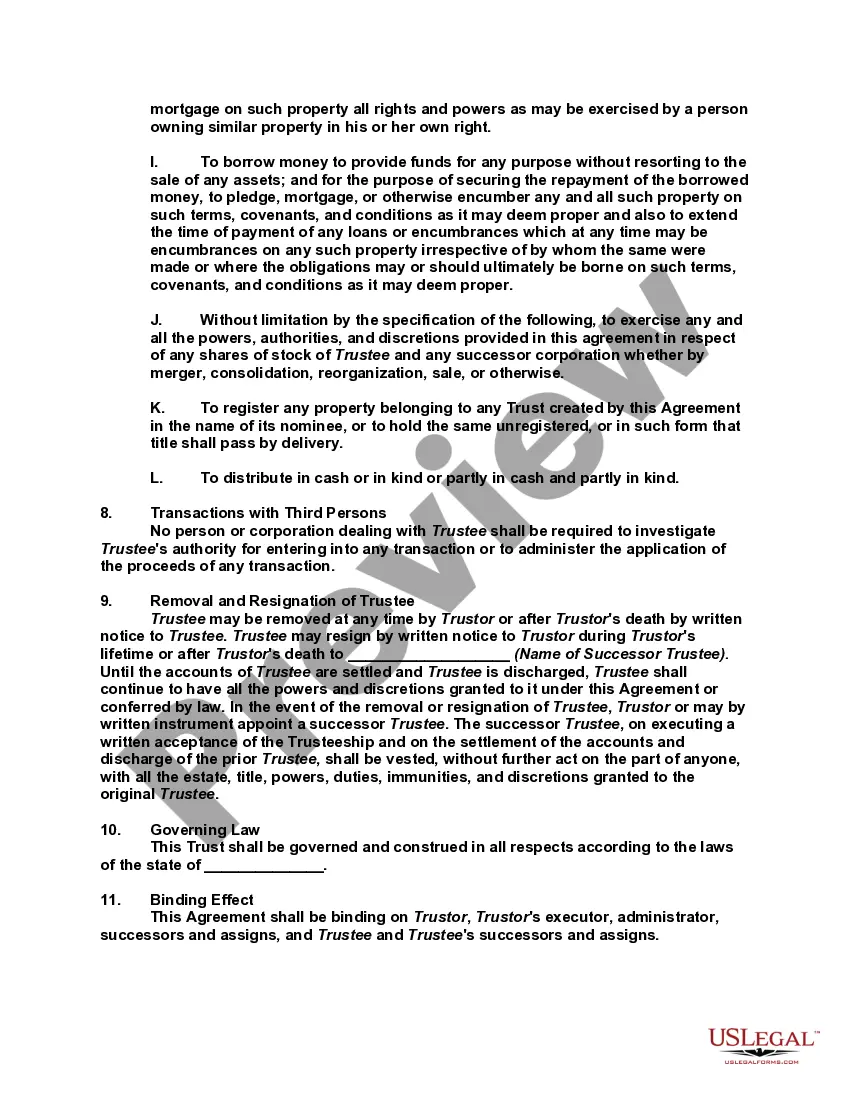
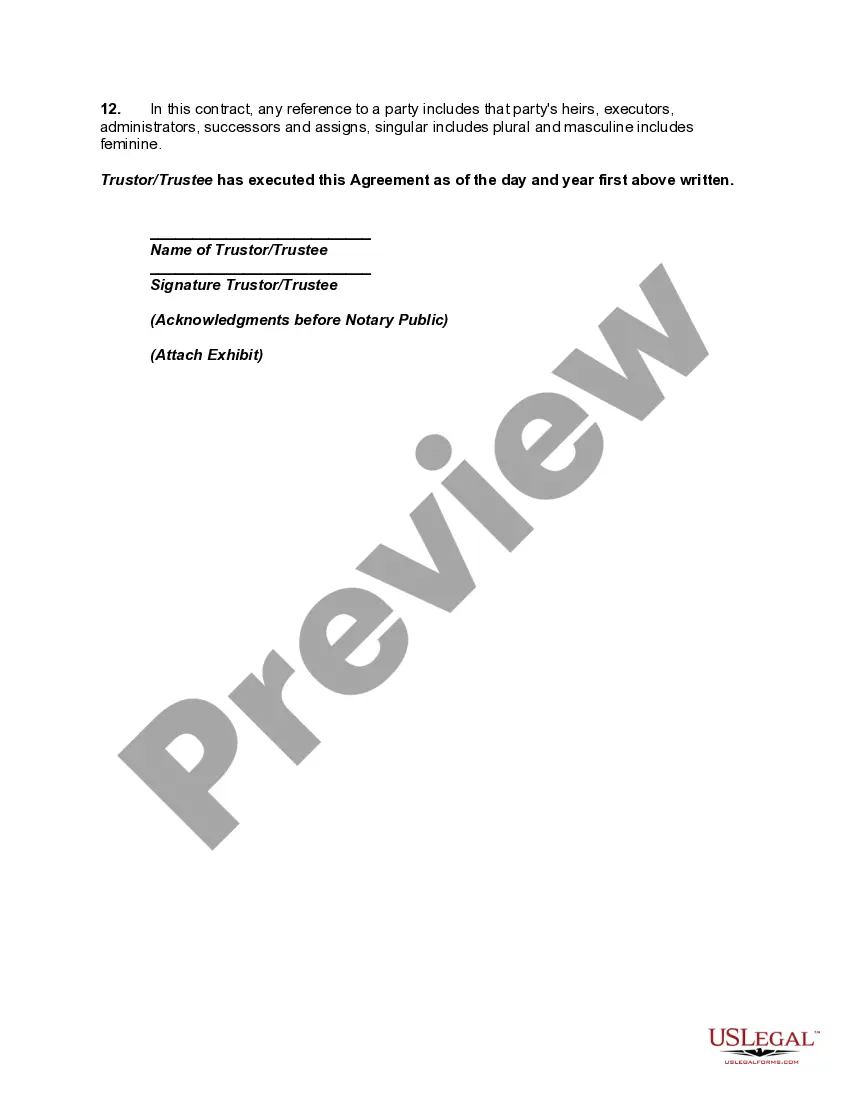
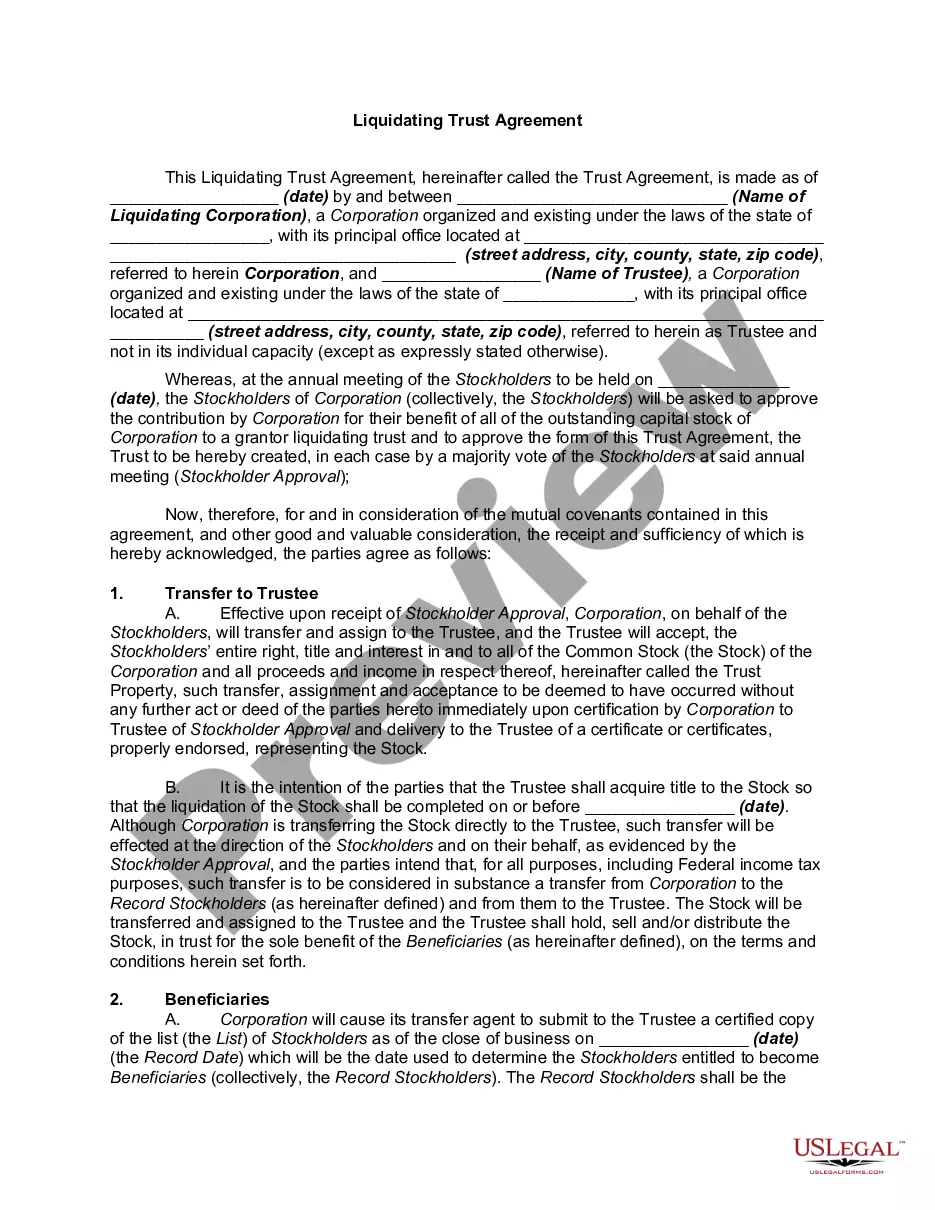
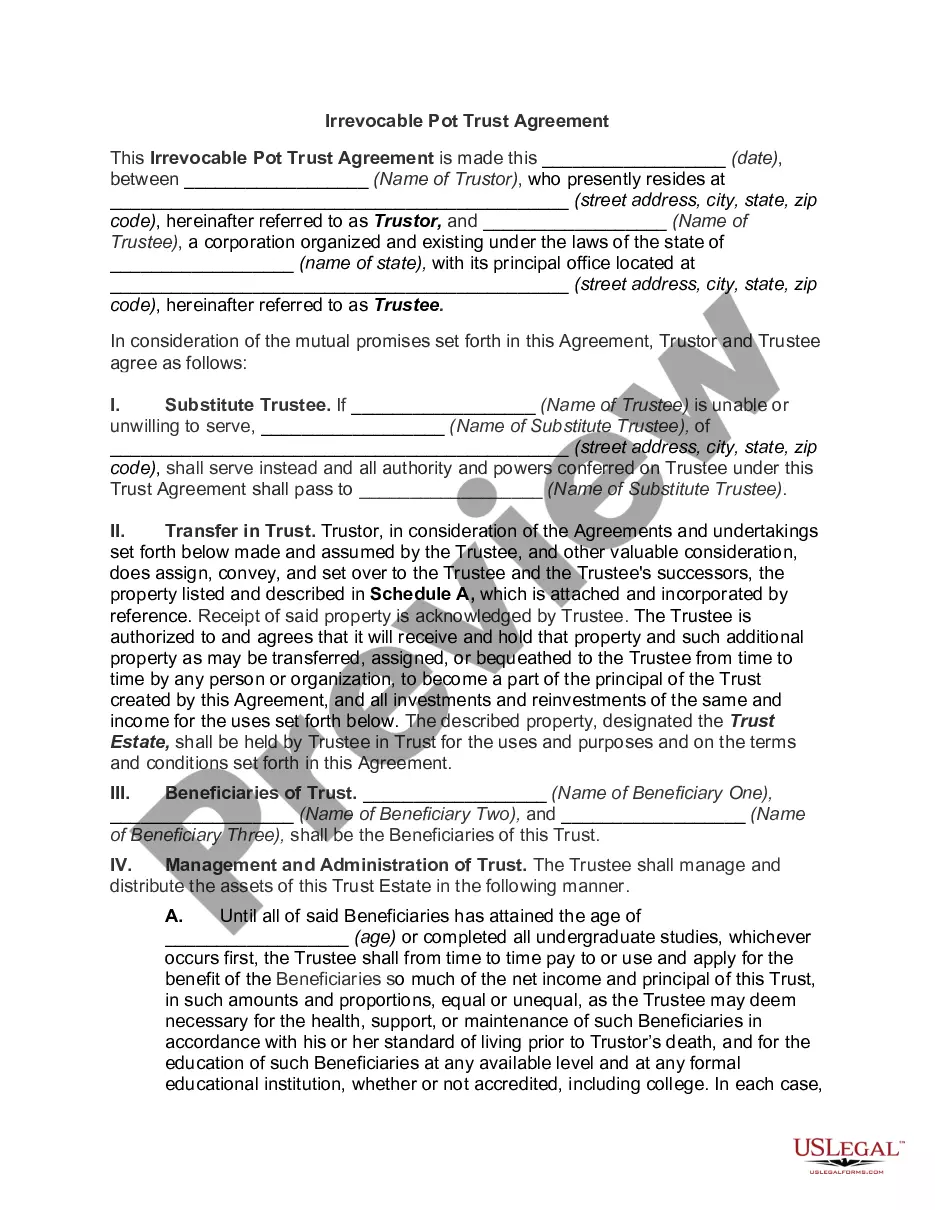
Get your form ready online
Our built-in tools help you complete, sign, share, and store your documents in one place.
Make edits, fill in missing information, and update formatting in US Legal Forms—just like you would in MS Word.
Download a copy, print it, send it by email, or mail it via USPS—whatever works best for your next step.
Sign and collect signatures with our SignNow integration. Send to multiple recipients, set reminders, and more. Go Premium to unlock E-Sign.
If this form requires notarization, complete it online through a secure video call—no need to meet a notary in person or wait for an appointment.
We protect your documents and personal data by following strict security and privacy standards.

Make edits, fill in missing information, and update formatting in US Legal Forms—just like you would in MS Word.

Download a copy, print it, send it by email, or mail it via USPS—whatever works best for your next step.

Sign and collect signatures with our SignNow integration. Send to multiple recipients, set reminders, and more. Go Premium to unlock E-Sign.

If this form requires notarization, complete it online through a secure video call—no need to meet a notary in person or wait for an appointment.

We protect your documents and personal data by following strict security and privacy standards.
Looking for another form?





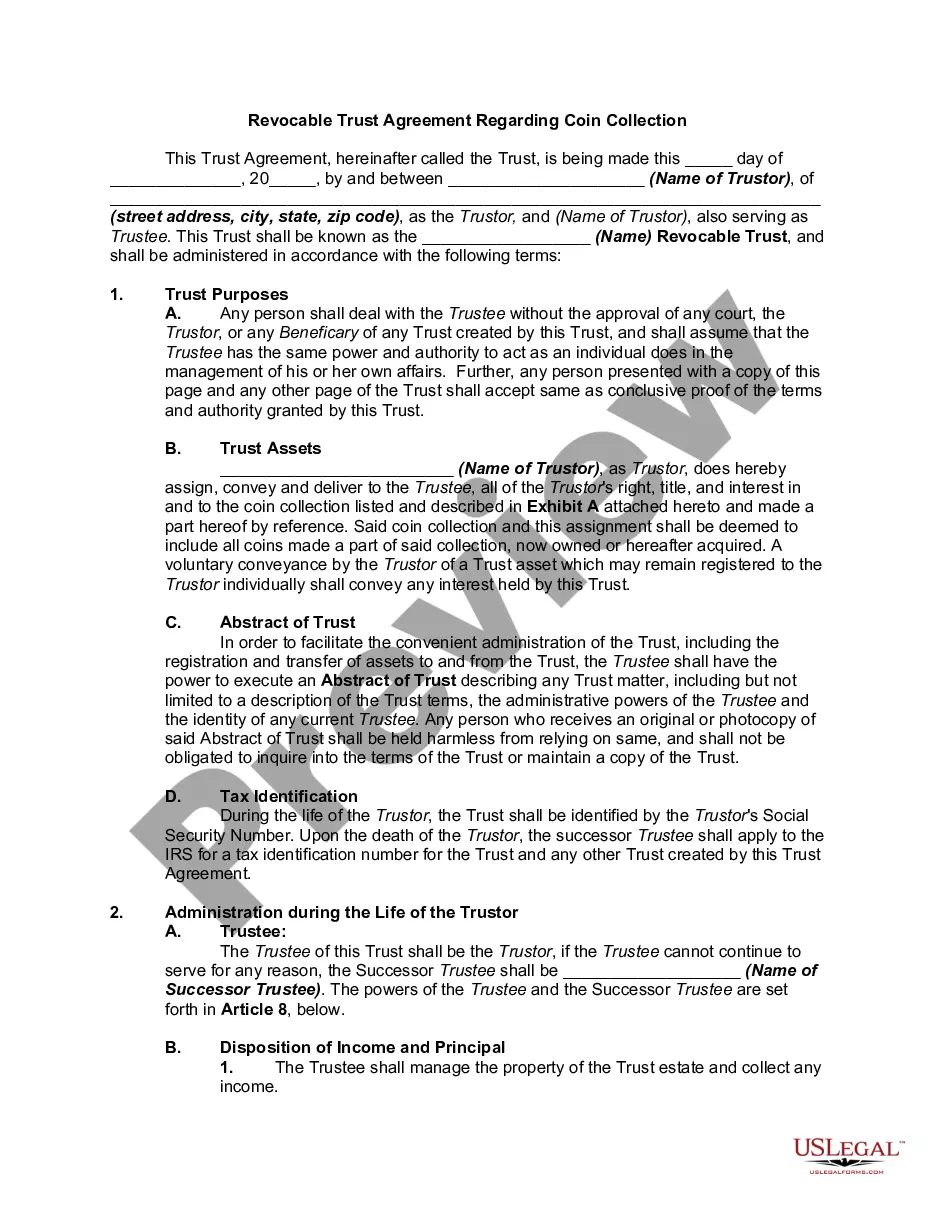
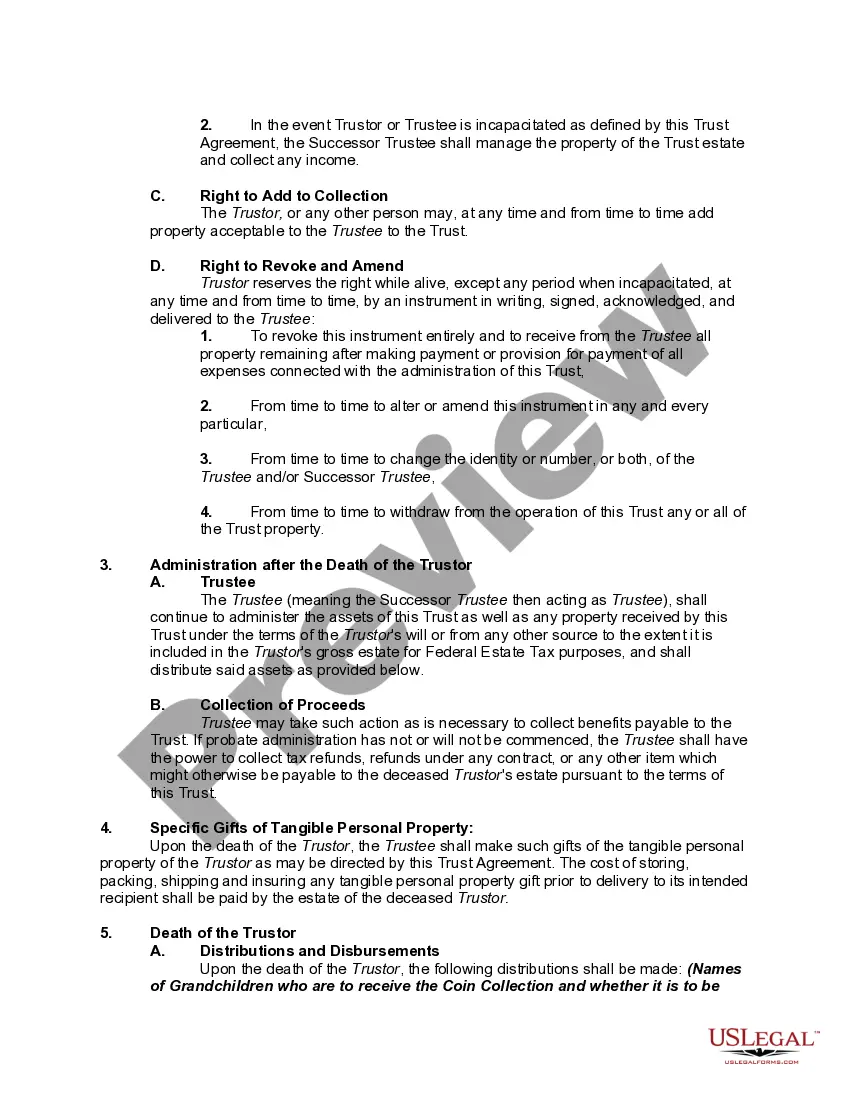
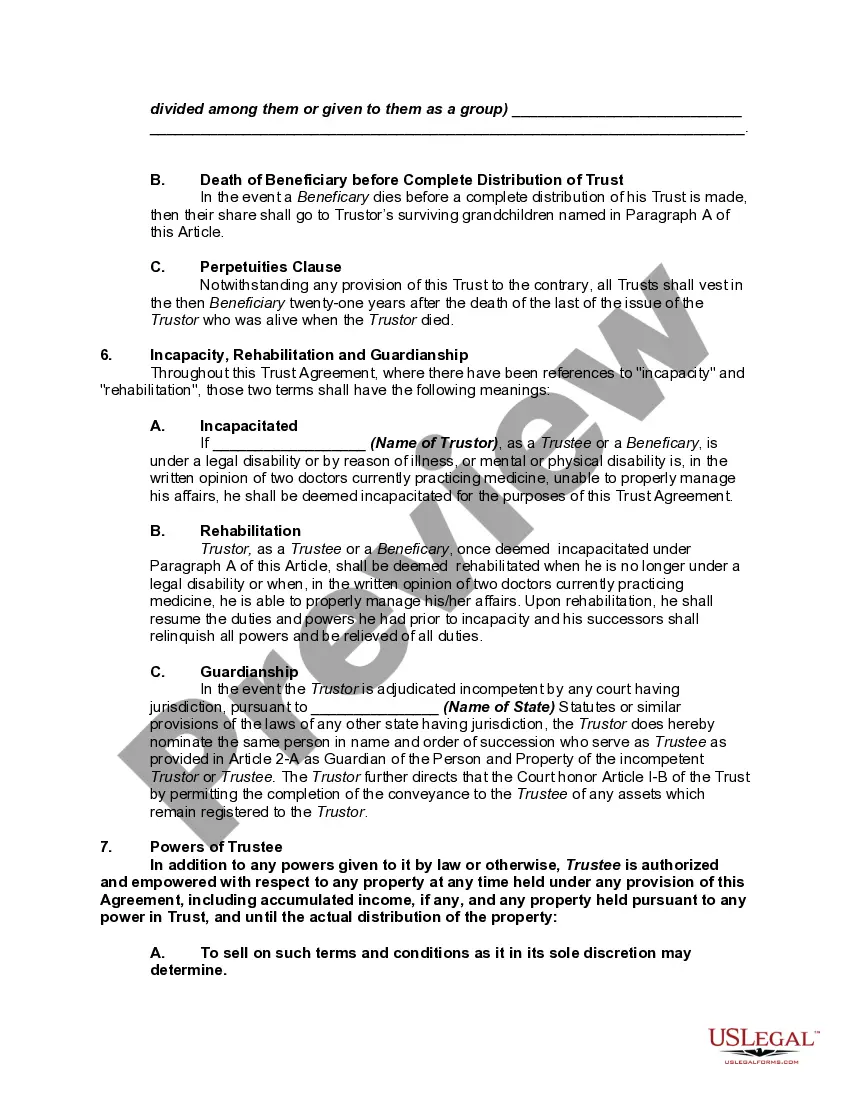
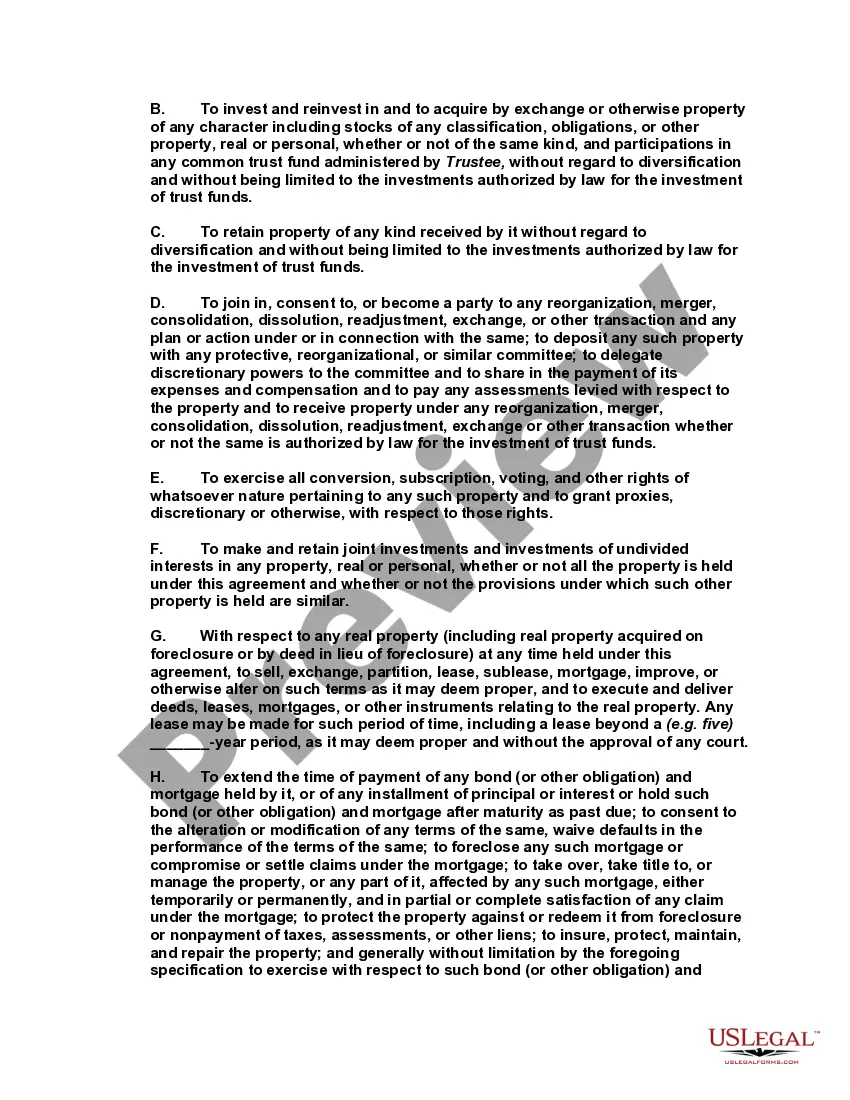
How to fill out Revocable Trust Agreement Regarding Coin Collection?
- If you're a returning user, log in to your account and locate the desired form template. Click the Download button to save it to your device, ensuring your subscription remains active. If it needs to be renewed, follow your payment plan.
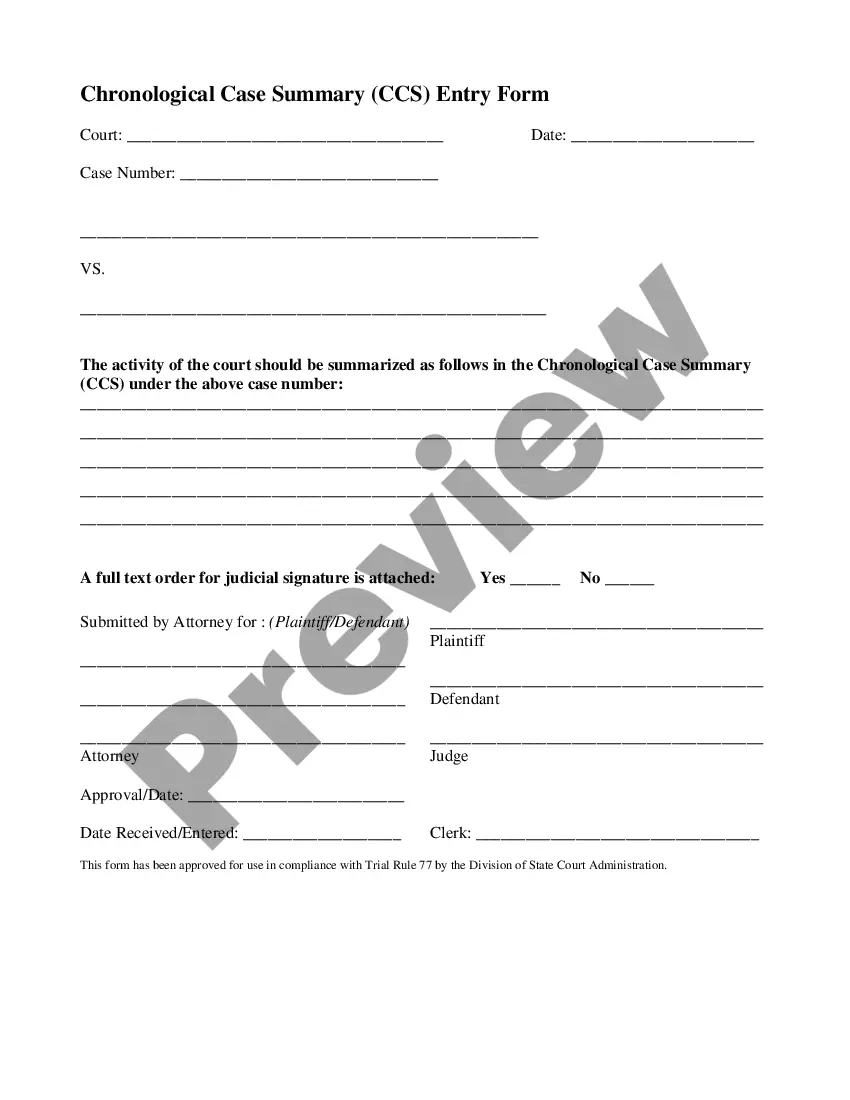
- For first-time users, start by reviewing the form's Preview mode and description. Confirm that it meets your requirements and complies with local regulations.
- In case the template doesn’t fit your needs, utilize the Search tab above to find the correct document.
- Once you find the right template, proceed by clicking the Buy Now button and select a suitable subscription plan. Create an account to unlock the full library access.
- Complete your purchase by entering your credit card details or using your PayPal account to pay for the subscription.
- Finally, download your form and save it for future use. You can also access it anytime from the My Forms section in your profile.
US Legal Forms empowers users to effectively manage legal documentation, providing access to an expansive library of over 85,000 editable forms. This means you have more choices than competitors and the flexibility to create precise documents tailored to your needs.
In conclusion, using US Legal Forms simplifies the process of obtaining a revocable trust trustee template, ensuring you have the proper tools for efficient trust management. Get started today and leverage the power of our extensive resources!
Form popularity
FAQ
Certainly, a trust can have a corporate trustee to manage its assets effectively. Utilizing a corporate trustee can provide professional administration, leading to better financial outcomes for the trust. This is especially helpful if you're looking for a dedicated approach to handling your trust's financial matters and ensuring compliance with the law.
Yes, a revocable trust can have two trustees serving simultaneously. This arrangement allows for shared responsibility and oversight, which can be beneficial in managing complex trust assets. However, it is essential that both trustees work collaboratively to ensure smooth administration of your revocable trust.
Yes, you can remove a trustee from your revocable trust, provided you follow the guidelines outlined in the trust document. If you're feeling uncomfortable with a trustee’s performance, it’s essential to address the issue promptly. Revising your trust to appoint a new revocable trust trustee with a trust can help ensure your assets are managed according to your preferences.
You may want to use a corporate trustee when your trust involves complex assets or if your family dynamics make it difficult to choose an individual trustee. A corporate trustee can bring professionalism, administrative capabilities, and impartiality to your revocable trust, making them an ideal option for more complex situations.
Yes, you can appoint a corporate trustee for your revocable trust. Many people choose this path for the added reliability and experience a corporate trustee provides. With a corporate trustee, you can rest assured that your trust will be managed according to your wishes and legal requirements.
Yes, a revocable trust can have a corporate trustee as its administrator. This option allows you to rely on the expertise of a financial institution or a trust company to manage the trust's assets. By choosing a corporate trustee, you can benefit from professional investment management and administration, ensuring that your revocable trust operates smoothly.
A disadvantage of a family trust is the potential for family conflicts over the management and distribution of trust assets. If not clearly defined, beneficiaries may dispute the trustee's decisions, leading to tension among family members. Additionally, while a family trust can avoid probate, it does not protect assets from creditors. Engaging a revocable trust trustee with a trust and outlining clear instructions can help mitigate these concerns.
Whether your parents should put their assets in a trust depends on their specific financial and familial situation. A revocable trust can provide them with flexibility and control over their assets during their lifetime, as well as ease the transfer of those assets after death. Evaluating their estate planning goals is essential, and a revocable trust trustee with a trust can facilitate this process smoothly. Seeking advice from professionals can help clarify their options.
The downside of putting assets in a trust includes the administrative complexities that may arise. For instance, transferring assets into a revocable trust can be time-consuming and may require additional paperwork. Moreover, if not managed properly, assets might remain outside the trust, potentially leading to probate issues. It’s beneficial to consult professionals to ensure that the revocable trust trustee with a trust manages everything effectively.
A revocable trust trustee with a trust manages the assets within the trust according to the grantor's wishes. This includes distributing funds, paying expenses, and handling investments. The trustee also has the authority to amend the trust during the grantor's lifetime, ensuring that the trust reflects current intentions. This flexibility makes a revocable trust an effective estate planning tool.