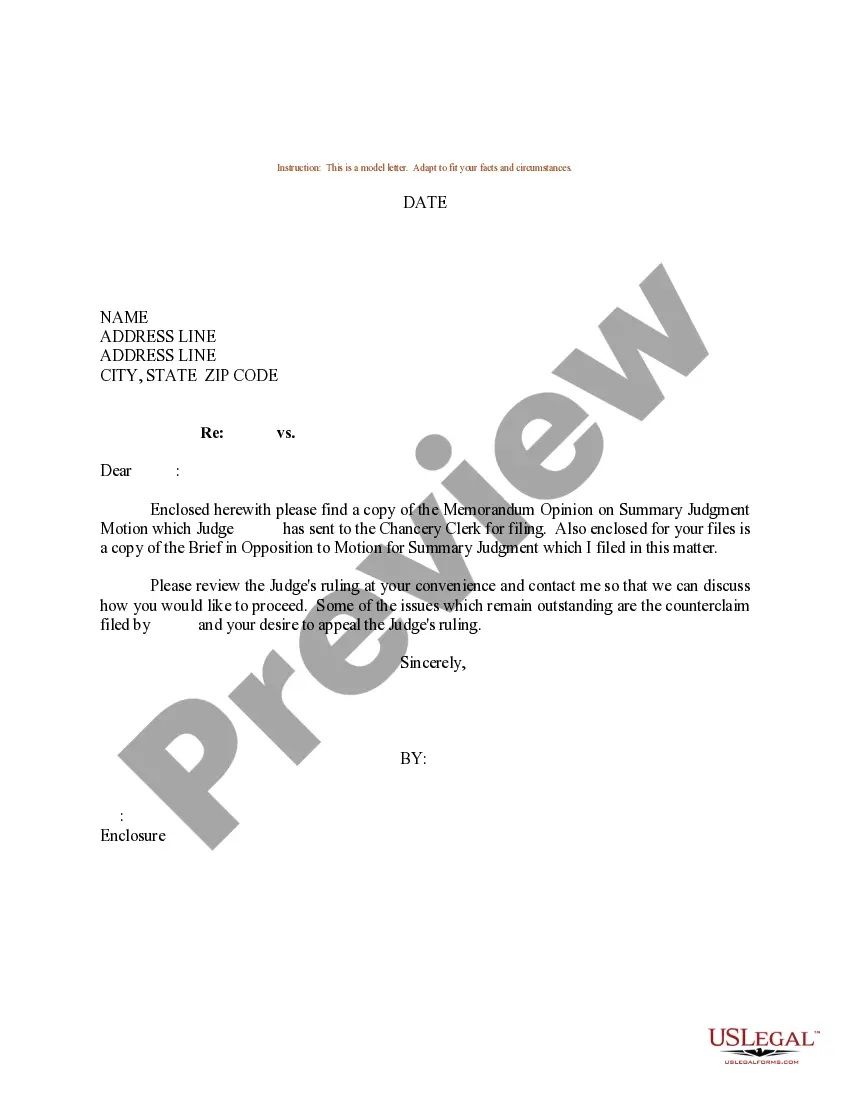
Summary Judgment Motion Template Withdraw
Description
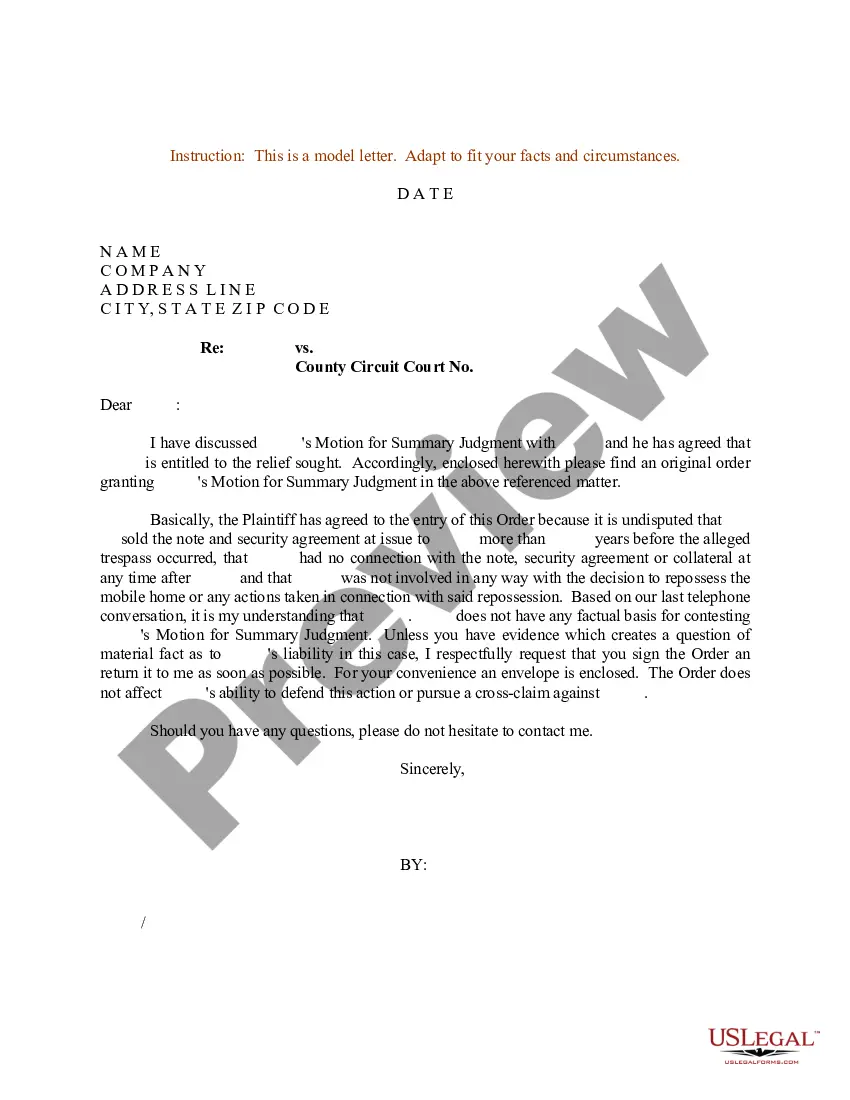
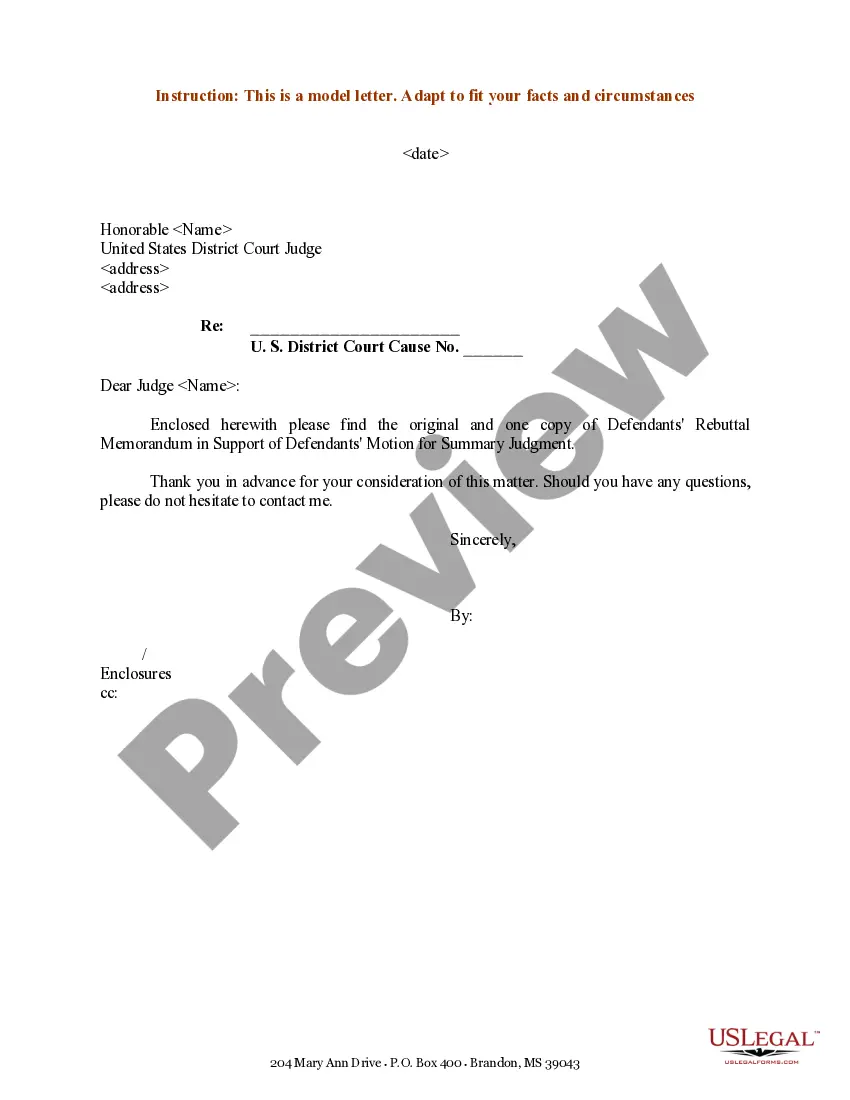
Get your form ready online
Our built-in tools help you complete, sign, share, and store your documents in one place.
Make edits, fill in missing information, and update formatting in US Legal Forms—just like you would in MS Word.
Download a copy, print it, send it by email, or mail it via USPS—whatever works best for your next step.
Sign and collect signatures with our SignNow integration. Send to multiple recipients, set reminders, and more. Go Premium to unlock E-Sign.
If this form requires notarization, complete it online through a secure video call—no need to meet a notary in person or wait for an appointment.
We protect your documents and personal data by following strict security and privacy standards.

Make edits, fill in missing information, and update formatting in US Legal Forms—just like you would in MS Word.

Download a copy, print it, send it by email, or mail it via USPS—whatever works best for your next step.

Sign and collect signatures with our SignNow integration. Send to multiple recipients, set reminders, and more. Go Premium to unlock E-Sign.

If this form requires notarization, complete it online through a secure video call—no need to meet a notary in person or wait for an appointment.

We protect your documents and personal data by following strict security and privacy standards.
Looking for another form?

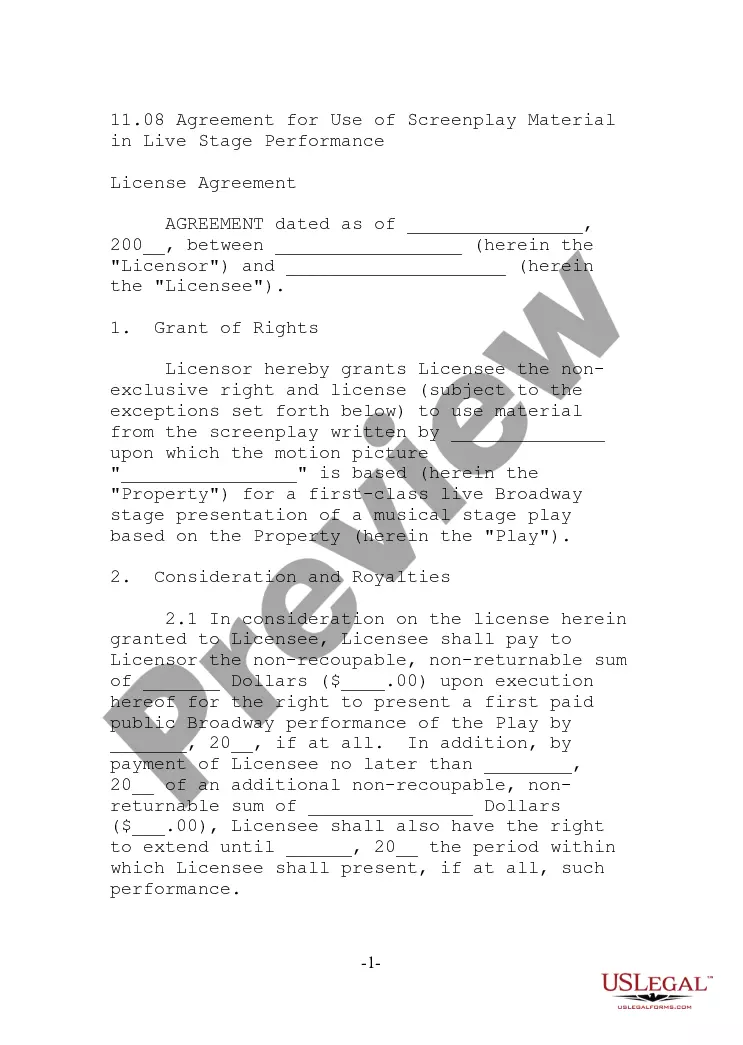






How to fill out Sample Letter Regarding Memorandum Opinion On Summary Judgment Motion?
Locating a reliable source for acquiring the most up-to-date and suitable legal templates is a significant part of navigating bureaucracy.
Identifying the correct legal documents requires meticulousness and thoroughness, which underscores the necessity of obtaining Summary Judgment Motion Template Withdraw exclusively from trustworthy providers, such as US Legal Forms.
Eliminate the inconvenience associated with your legal documentation. Explore the vast US Legal Forms repository where you can access legal templates, verify their suitability for your situation, and download them instantly.
- Utilize the catalog navigation or search tool to find your template.
- Examine the form’s particulars to ensure it meets the standards of your state and area.
- Check the form preview, if available, to confirm that the template is precisely what you need.
- Continue your search and identify the appropriate template if the Summary Judgment Motion Template Withdraw does not fulfill your requirements.
- If you are confident about the form’s pertinence, download it.
- As an authorized user, click Log in to verify and access your chosen forms in My documents.
- If you do not possess an account yet, click Buy now to obtain the template.
- Select the pricing option that meets your needs.
- Proceed to the sign-up process to finalize your purchase.
- Complete your purchase by selecting a payment method (credit card or PayPal).
- Choose the document format for downloading Summary Judgment Motion Template Withdraw.
- After obtaining the form on your device, you can modify it using the editor or print it and fill it out manually.
Form popularity
FAQ
To respond effectively to a motion for summary judgment, you first need to carefully review the motion and its supporting documents. Next, gather evidence that counters the claims made in the motion, and then structure your response according to the guidelines provided in your local court rules. Using a summary judgment motion template withdraw can help you format your arguments clearly, ensuring that you present a strong case.
Obtaining a summary judgment typically involves filing a motion along with supporting evidence to demonstrate that there are no material disputes of fact. You will need to prepare a strong argument based on the facts and applicable law. Using a summary judgment motion template withdraw can aid in structuring your documents effectively to present a compelling case.
When formatting a motion for summary judgment, start with a clear title and ensure all sections are correctly labeled. Follow the required court rules regarding margins, font size, and citation style. Utilizing a summary judgment motion template withdraw can streamline this process, providing a solid framework for your arguments and evidence. Clarity and organization should be your main focus to facilitate the judge's understanding.
To successfully defeat a motion for summary judgment, focus on demonstrating that there are genuine disputes over material facts. You can provide counter-evidence and utilize a summary judgment motion template withdraw to format your arguments logically. Highlighting these factual discrepancies can make a compelling case for the court to deny the motion. Your preparation and attention to detail will be key factors in your success.
In this case, you must be able to prove the amount you are owed. If you are the defendant, you can apply for summary judgment on the ground that there is no merit to all or part of the claim that the plaintiff is making against you.
The chance of success in these cases is less than 10% [1]. Another study found that summary judgment is mostly granted in Title VII cases, for example, cases involving equal pay or employment discrimination [2]. When it comes to federal cases, summary judgments are filed in 17% of total cases.
Therefore, to win on summary judgment you have to convince a judge that it is a good use of his or her very limited time and resources to write the decision. This means that your written material has to demonstrate that the law and facts support summary judgment, and contain no misstatements of law or fact.
Stated differently, to successfully defend against summary judgment the non-moving party (you) should seek to demonstrate that indeed there are material facts in dispute. Alternatively, the non-moving party (you) can argue that the undisputed facts support a judgment as a matter of law in your favor.
Examples of summary judgement motions John says that Linda ran a red light and caused the crash. John happens to have a video of Linda running the red light and crashing into him. John's attorney files a motion for summary judgment claiming that: There are no material facts that can be reasonably disputed.