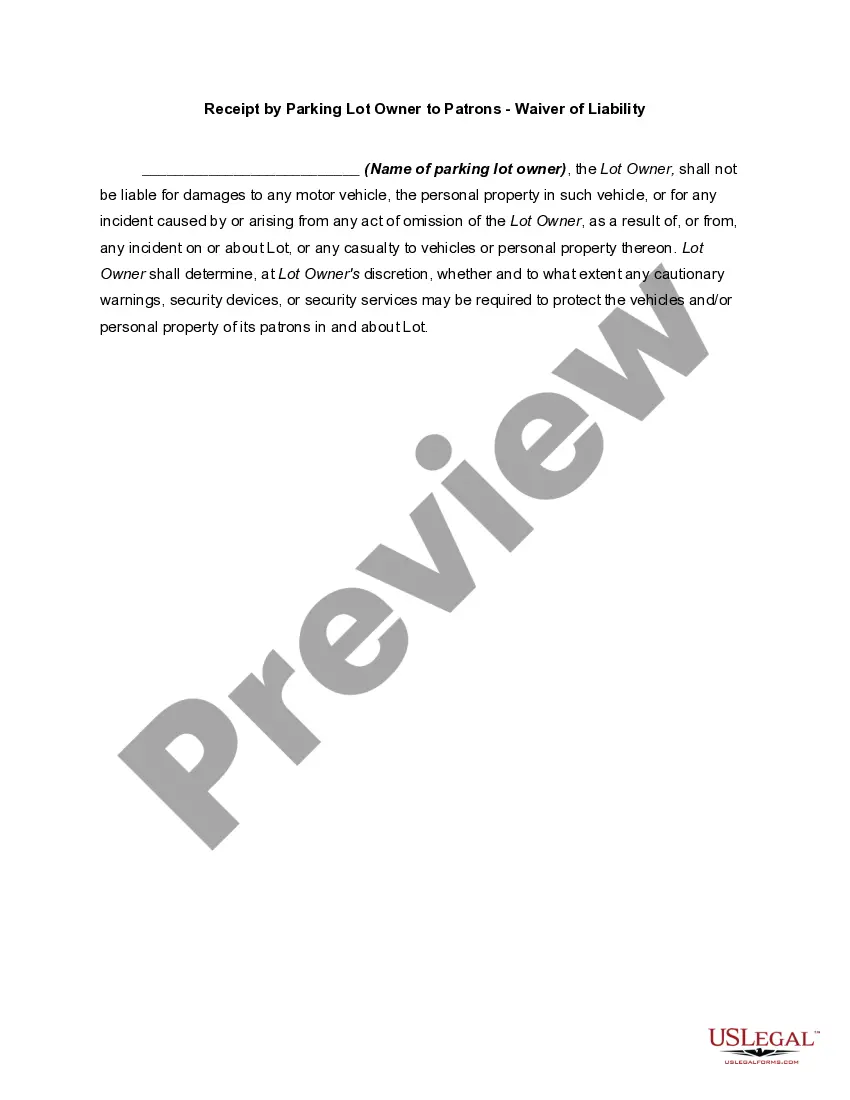
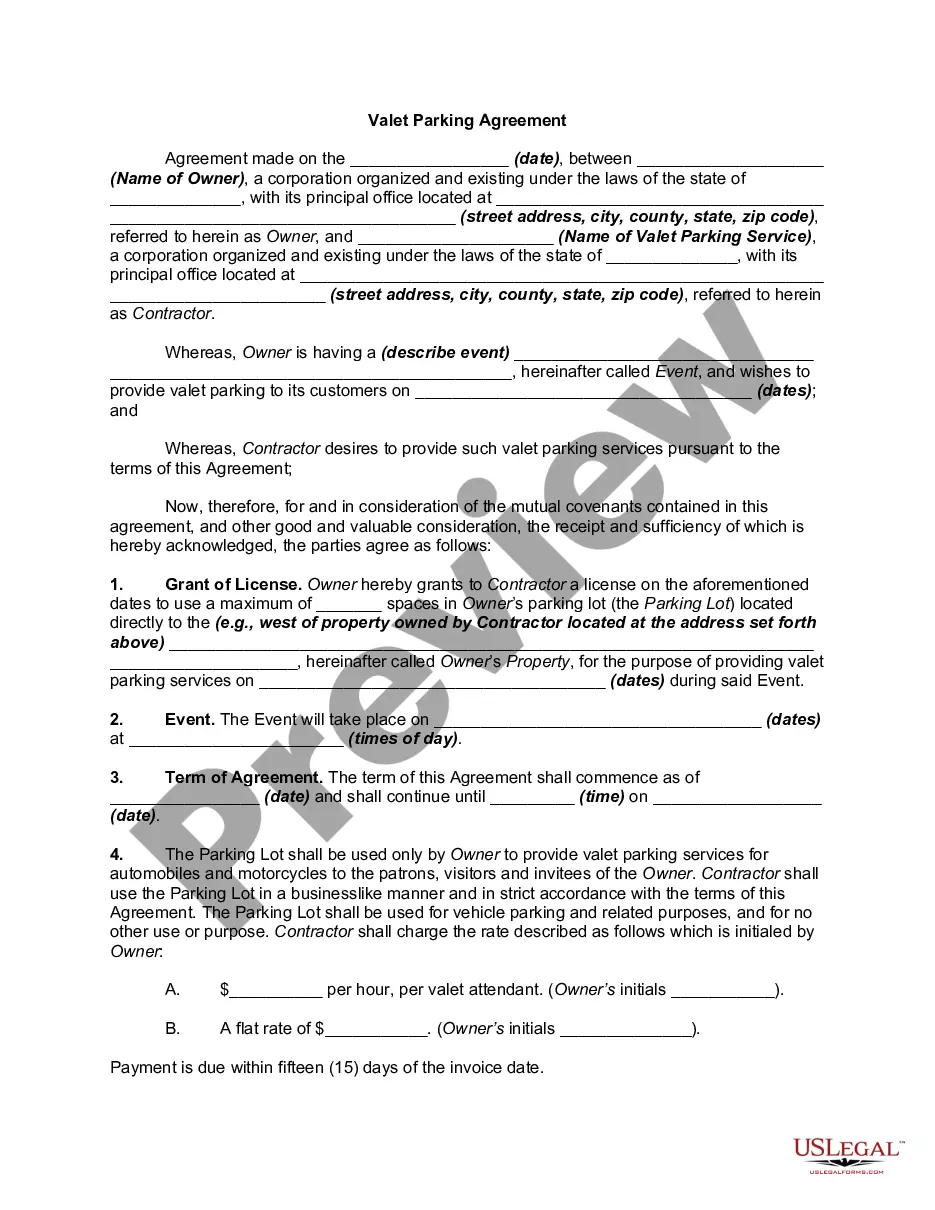
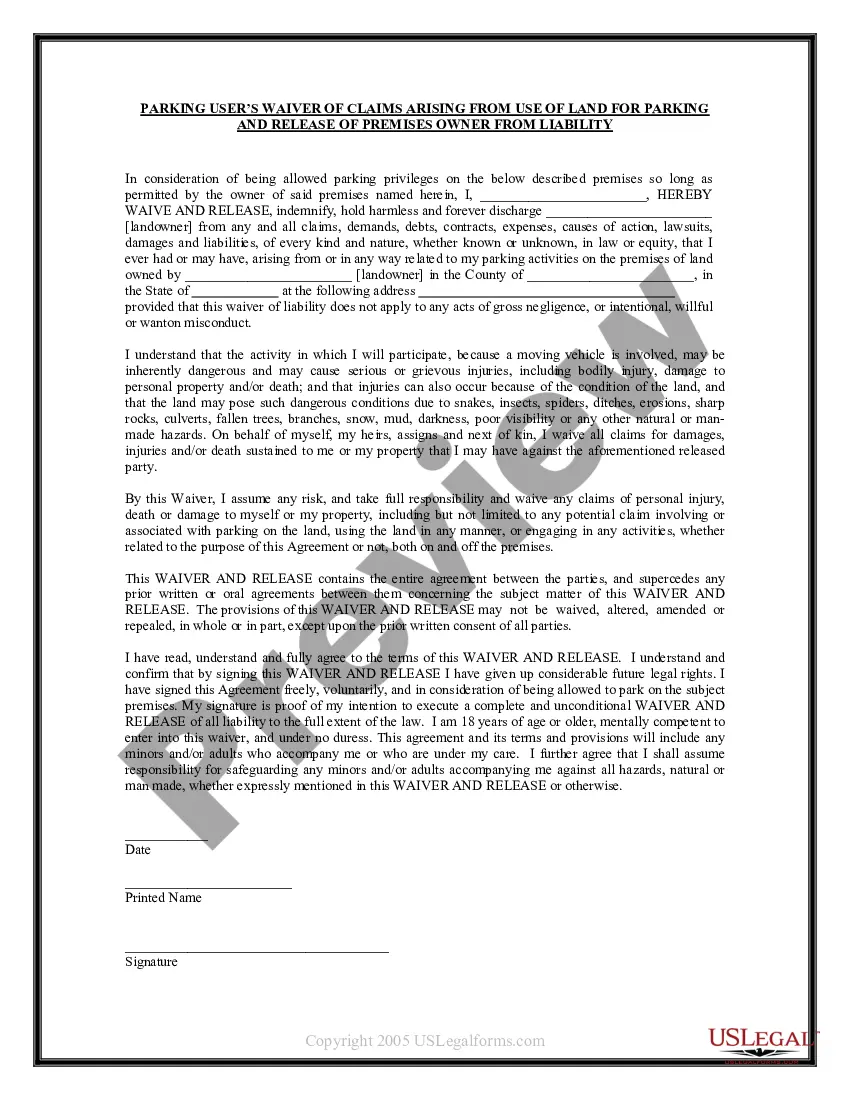
Liability Waiver For Parking Lot
Description

Get your form ready online
Our built-in tools help you complete, sign, share, and store your documents in one place.
Make edits, fill in missing information, and update formatting in US Legal Forms—just like you would in MS Word.
Download a copy, print it, send it by email, or mail it via USPS—whatever works best for your next step.
Sign and collect signatures with our SignNow integration. Send to multiple recipients, set reminders, and more. Go Premium to unlock E-Sign.
If this form requires notarization, complete it online through a secure video call—no need to meet a notary in person or wait for an appointment.
We protect your documents and personal data by following strict security and privacy standards.

Make edits, fill in missing information, and update formatting in US Legal Forms—just like you would in MS Word.

Download a copy, print it, send it by email, or mail it via USPS—whatever works best for your next step.

Sign and collect signatures with our SignNow integration. Send to multiple recipients, set reminders, and more. Go Premium to unlock E-Sign.

If this form requires notarization, complete it online through a secure video call—no need to meet a notary in person or wait for an appointment.

We protect your documents and personal data by following strict security and privacy standards.
Looking for another form?

How to fill out Receipt By Parking Lot Owner To Patrons - Waiver Of Liability?
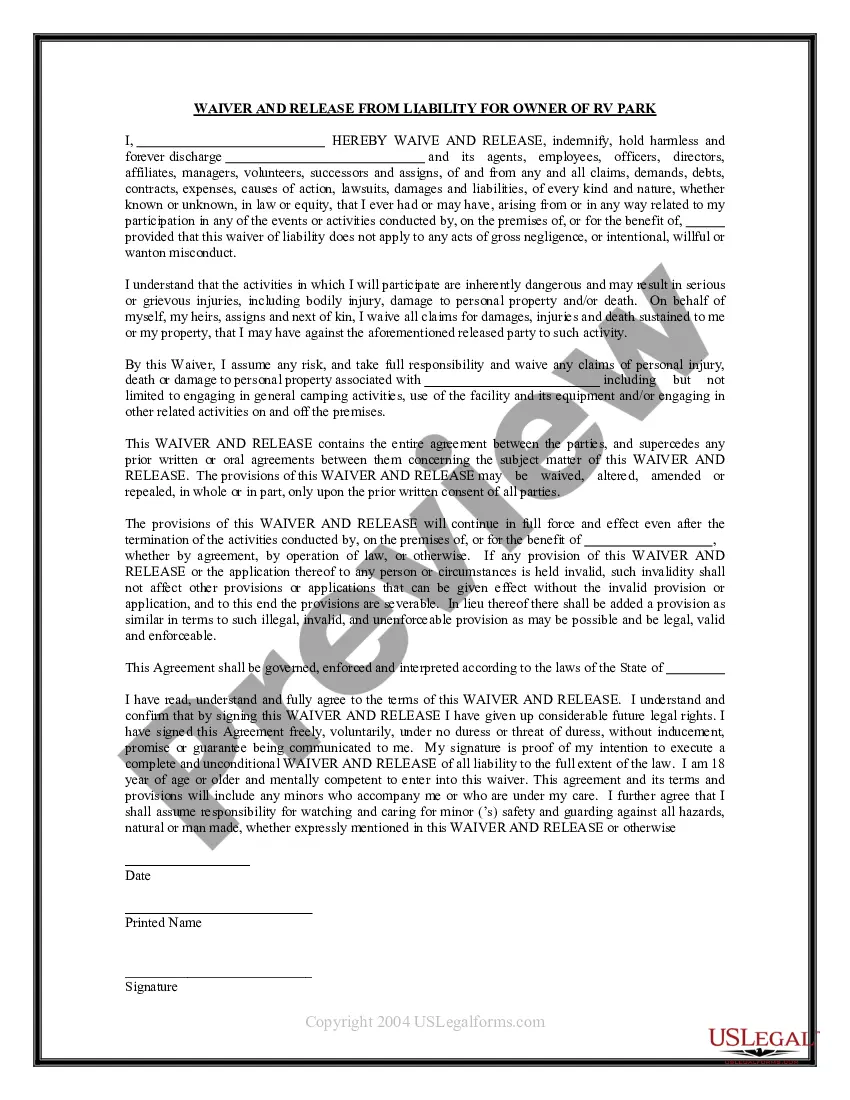
The Liability Release For Parking Area you observe on this site is a reusable official document created by experienced attorneys in compliance with national and local regulations.
For over 25 years, US Legal Forms has offered individuals, companies, and lawyers access to more than 85,000 validated, state-specific documents for any commercial and personal purpose. It’s the quickest, easiest, and most dependable method to acquire the forms you require, as the service assures bank-level data protection and anti-malware safeguards.
Choose the format you prefer for your Liability Release For Parking Area (PDF, Word, RTF) and download the document to your device.
- Search for the document you require and examine it.
- Browse through the file you looked for and preview it or review the form description to confirm it meets your needs. If it doesn’t, utilize the search function to find the appropriate one. Click Buy Now when you locate the template you desire.
- Register and Log In.
- Choose the pricing plan that fits you and create an account. Use PayPal or a credit card for quick payment. If you already possess an account, Log In and verify your subscription to proceed.
- Obtain the editable template.
Form popularity
FAQ
You can write your own liability waiver for parking lots, but it's essential to ensure the language is clear and legally binding. Utilizing templates from a platform like US Legal Forms can make this process easier and more reliable. These templates often include essential elements that fulfill legal requirements, thus protecting you better against potential liability.
A liability waiver for a parking lot can be worth it, especially if your lot experiences high traffic or potential hazards. This document helps limit your liability in case of accidents or damage, giving you peace of mind. By having a properly crafted waiver, you create a clear understanding between you and users about the risks involved.
While you do not necessarily need a lawyer to draft a liability waiver for parking lot use, consulting with a legal professional can provide valuable guidance. A lawyer can help ensure that your waiver complies with state laws and adequately protects you from potential claims. If you're unsure about the legal language or requirements, using a platform like US Legal Forms can simplify the process for you.
Parking lots may be covered by property insurance, but this often depends on the specific terms of your policy. Typically, property insurance covers damages to physical structures and assets, including parking lots. However, you should check with your insurance provider to see if any exclusions apply regarding liability waivers for parking lots.
In Florida, a liability waiver for parking lot use must clearly outline the risks and be written in clear, understandable language. It should be signed voluntarily by the participant, demonstrating an acknowledgment of the potential dangers. Additionally, the waiver must comply with the Florida laws regarding liability waivers to be enforceable. Consider using USLegalForms to access reliable templates tailored to meet these legal requirements.
Liability in a parking lot can depend on various factors, including negligence and specific circumstances. Generally, the property owner may bear responsibility for accidents caused by poor maintenance or unclear signage. However, individuals using the parking area may also be liable for their actions. Understanding these nuances is vital when considering a liability waiver for parking lot usage.
While it's possible to create a liability waiver for parking lot use on your own, consulting a lawyer can provide added security. A legal expert can ensure that your waiver meets state laws and includes all necessary provisions. This helps to protect you from potential future disputes. USLegalForms offers templates that can aid in drafting your own waiver, keeping legal compliance in mind.
Filling out a liability waiver for a parking lot is a straightforward process. Users should read the entire document carefully, ensuring they understand its content. After reading, they complete the necessary fields, typically including their name, signature, and date, confirming their acceptance of the terms laid out in the waiver.
Writing a simple liability waiver for parking lot use involves several key elements. Begin with an introduction that identifies the parties involved, followed by a statement outlining the risks associated with parking. Lastly, ensure it includes a clear release clause, allowing users to acknowledge they understand their responsibility.
To write a simple release of liability for a parking lot, start with a title that reflects its purpose. Clearly state that the signee releases the property owner from any claims related to accidents or injuries occurring on the property. Including space for signatures and the date ensures the document is complete and legally binding.