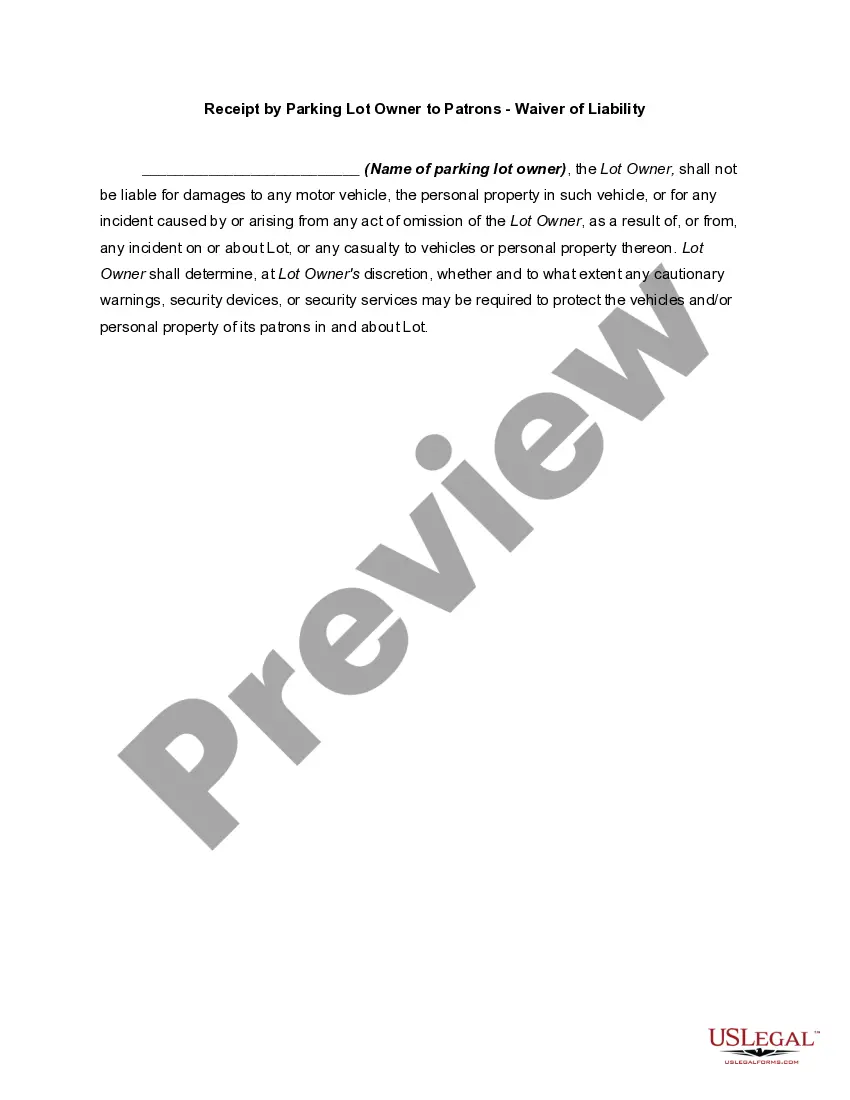
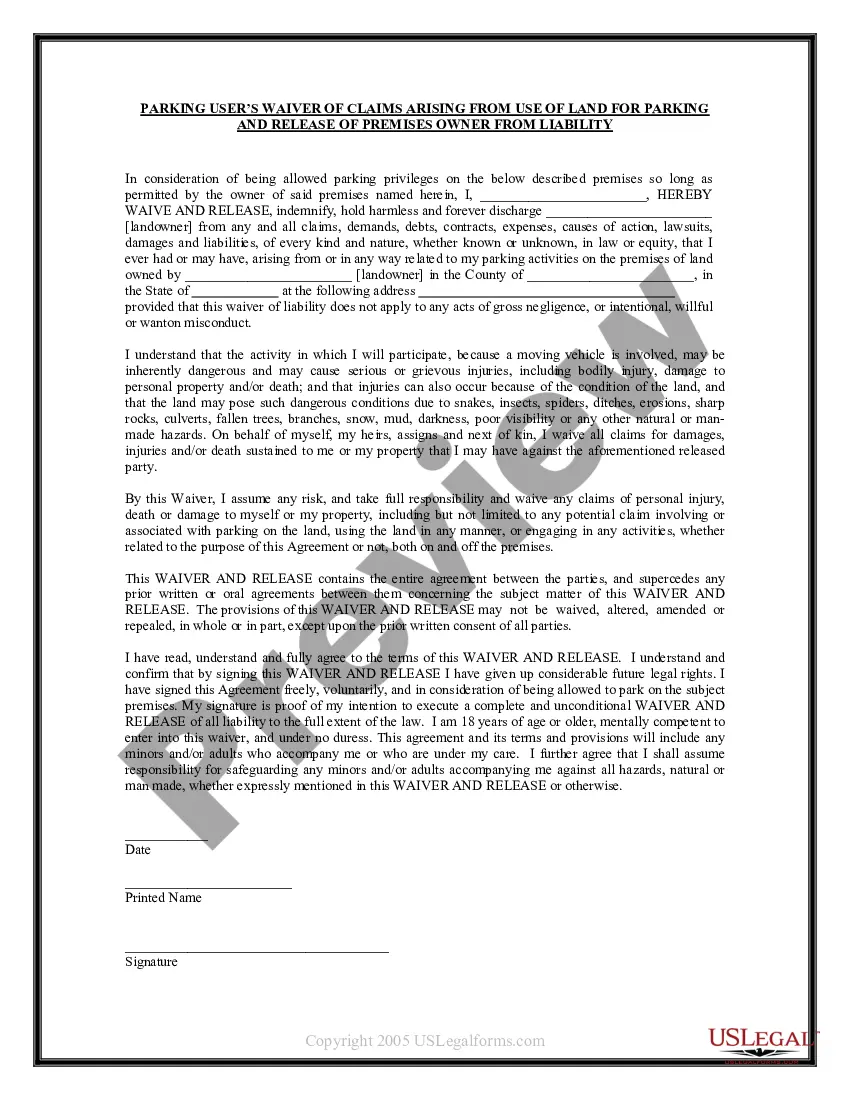
Liability Waiver For Parking Lot
Description
Get your form ready online
Our built-in tools help you complete, sign, share, and store your documents in one place.
Make edits, fill in missing information, and update formatting in US Legal Forms—just like you would in MS Word.
Download a copy, print it, send it by email, or mail it via USPS—whatever works best for your next step.
Sign and collect signatures with our SignNow integration. Send to multiple recipients, set reminders, and more. Go Premium to unlock E-Sign.
If this form requires notarization, complete it online through a secure video call—no need to meet a notary in person or wait for an appointment.
We protect your documents and personal data by following strict security and privacy standards.

Make edits, fill in missing information, and update formatting in US Legal Forms—just like you would in MS Word.

Download a copy, print it, send it by email, or mail it via USPS—whatever works best for your next step.

Sign and collect signatures with our SignNow integration. Send to multiple recipients, set reminders, and more. Go Premium to unlock E-Sign.

If this form requires notarization, complete it online through a secure video call—no need to meet a notary in person or wait for an appointment.

We protect your documents and personal data by following strict security and privacy standards.
Looking for another form?

Form popularity
FAQ
You can write your own waiver, but it is crucial to ensure that it meets legal standards and includes specific language to be enforceable. Using templates from platforms like US Legal Forms can simplify this process, providing you with essential features tailored for a liability waiver for parking lot situations. Ensuring proper wording and coverage reduces the risk of your waiver being challenged in court.
The purpose of a release of liability is to protect property owners from lawsuits by ensuring users recognize and accept risks associated with their activities. This legal document helps clarify expectations and responsibilities, reducing the likelihood of disputes. By using a liability waiver for parking lot situations, you create a safer environment for everyone involved.
Responsibility for a fall in a parking lot can vary based on circumstances. Typically, property owners must maintain safe conditions, but individuals also share some responsibility for their own safety. A liability waiver for parking lot use may affect claims, as it clarifies users' acknowledgment of potential risks when entering the property.
A parking lot release of liability is a specific type of waiver aimed at protecting property owners from legal claims arising from accidents in their parking areas. This document informs users about potential hazards, such as wet surfaces or uneven pavement. By agreeing to this release, individuals understand that they are assuming risk while using the parking lot.
A liability waiver for being on property is a legal document that limits the property owner's liability for injuries that may occur while someone is present. By signing this waiver, individuals acknowledge the risks involved and agree to release the property owner from any claims. In the context of a parking lot, this waiver protects both the owner and the users by clearly outlining responsibilities.
A waiver of liability consent form is a document that individuals sign to acknowledge their acceptance of potential risks while using a service, such as a parking lot. By signing this form, users agree that they understand these risks and will not hold the property owner liable for injuries or damages. This legal form serves as an important tool for managing risk and protecting interests.
To write a strong liability waiver for a parking lot, begin with clear language that outlines the risks associated with parking. Include a comprehensive explanation of the waiver's terms, and ensure that it is easily understood by users. Utilizing professional templates from services like USLegalForms can help ensure all necessary elements are included, enhancing its legal validity.
A liability statement for a parking lot could say, 'Use of this parking facility is at your own risk. The property owner is not liable for any damages or injuries that may occur.' This statement clearly outlines the risks involved and places the responsibility on the user. Clear communication helps prevent misunderstandings and potential legal disputes.
In many cases, a release of liability form does not need to be notarized to be valid. However, specific states or situations might require notarization for enforceability. To ensure compliance with local laws, consult legal resources or platforms like USLegalForms that can provide guidance tailored to your needs.
An effective release of liability clause in a liability waiver for a parking lot may state, 'The user agrees to release and indemnify the property owner from any claims arising from use of the parking facilities.' This clause provides legal protection for the owner while warning users of potential hazards. A well-drafted clause safeguards both parties involved.
