Sample Trust Document With Multiple Beneficiaries
Description

Get your form ready online
Our built-in tools help you complete, sign, share, and store your documents in one place.
Make edits, fill in missing information, and update formatting in US Legal Forms—just like you would in MS Word.
Download a copy, print it, send it by email, or mail it via USPS—whatever works best for your next step.
Sign and collect signatures with our SignNow integration. Send to multiple recipients, set reminders, and more. Go Premium to unlock E-Sign.
If this form requires notarization, complete it online through a secure video call—no need to meet a notary in person or wait for an appointment.
We protect your documents and personal data by following strict security and privacy standards.

Make edits, fill in missing information, and update formatting in US Legal Forms—just like you would in MS Word.

Download a copy, print it, send it by email, or mail it via USPS—whatever works best for your next step.

Sign and collect signatures with our SignNow integration. Send to multiple recipients, set reminders, and more. Go Premium to unlock E-Sign.

If this form requires notarization, complete it online through a secure video call—no need to meet a notary in person or wait for an appointment.

We protect your documents and personal data by following strict security and privacy standards.
Looking for another form?





How to fill out Qualified Income Miller Trust?
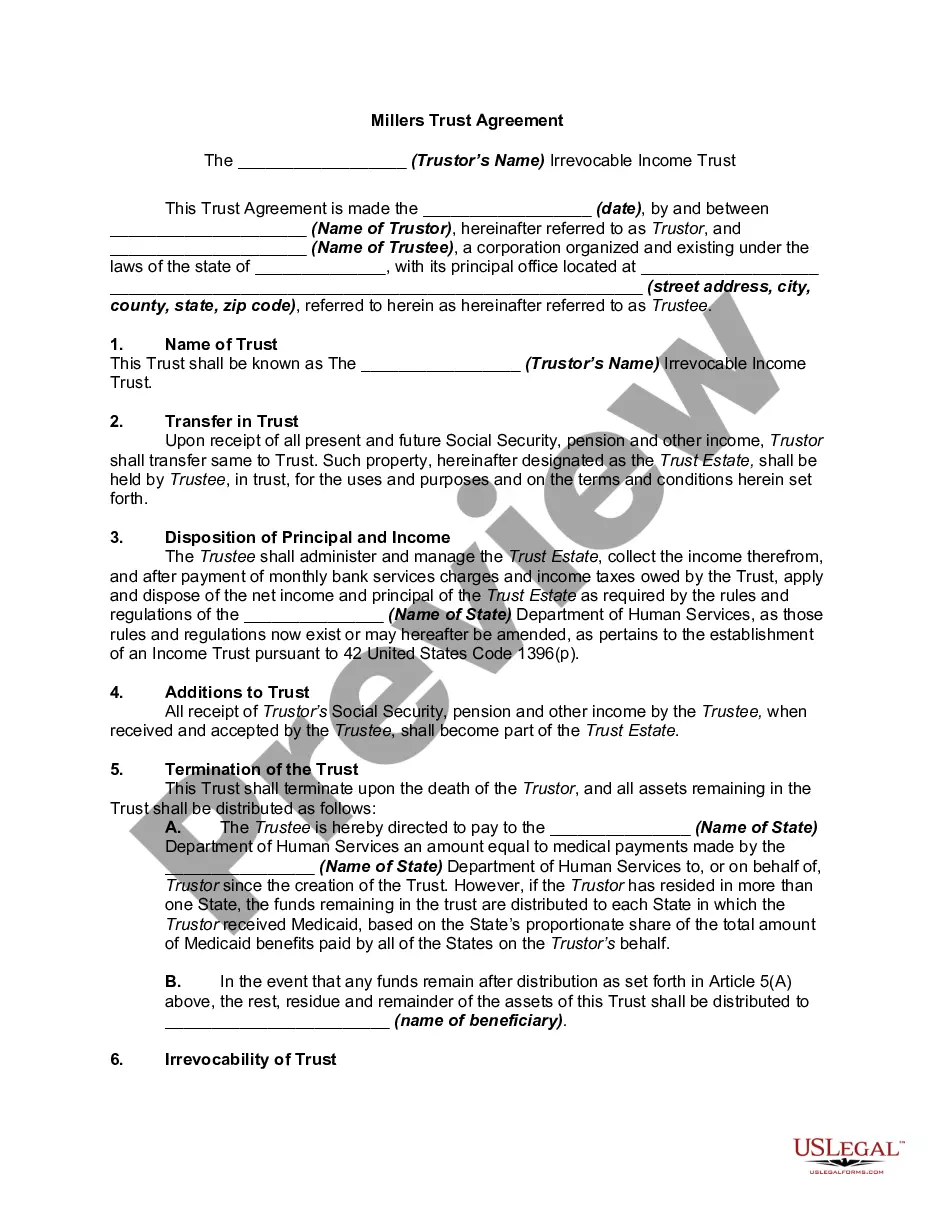
It’s widely known that you cannot become a legal expert instantly, nor can you easily learn to rapidly create a Sample Trust Document With Multiple Beneficiaries without a specialized education.
Crafting legal documents is an extensive process that necessitates specific training and abilities. Therefore, why not entrust the creation of the Sample Trust Document With Multiple Beneficiaries to the experts.
With US Legal Forms, one of the most extensive legal document repositories, you can discover anything from court forms to in-office communication templates. We understand the significance of compliance with both federal and state laws and regulations. That is why, on our site, all templates are location-specific and current.
You can regain access to your documents from the My documents section at any time. If you’re a returning customer, you can simply Log In, and find and download the template from the same section.
Regardless of the intention behind your documents—whether for financial, legal, or personal use—our platform has all your needs covered. Experience US Legal Forms today!
- Begin by finding the form you require using the search bar located at the top of the page.
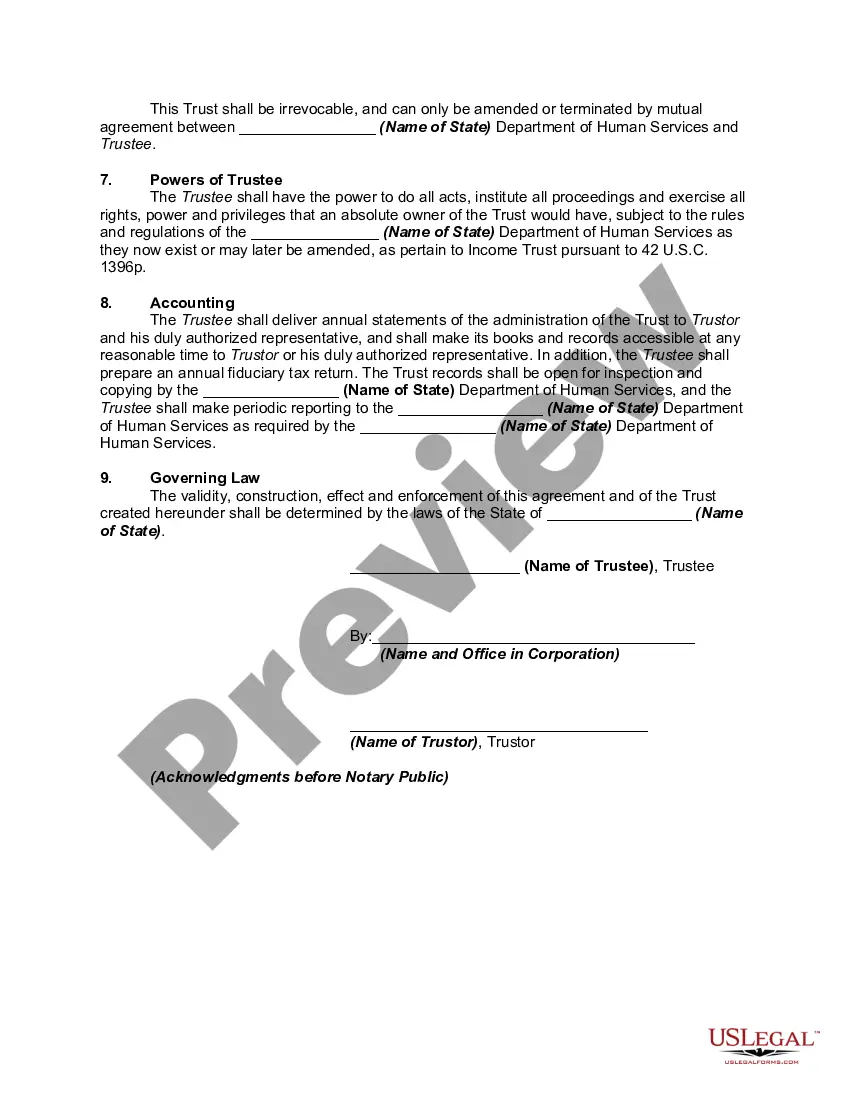
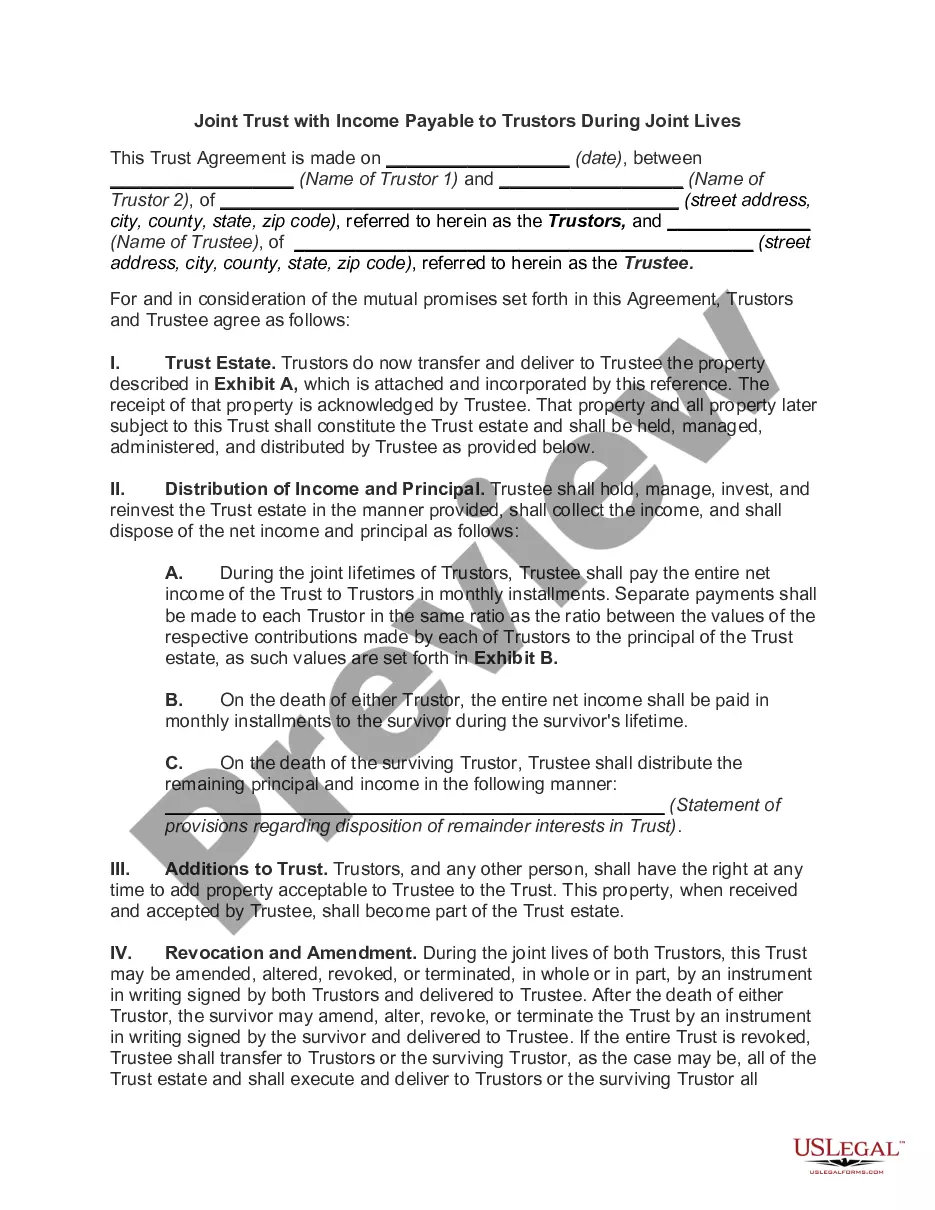
- Preview it (if this option is available) and read the accompanying description to determine if the Sample Trust Document With Multiple Beneficiaries is what you seek.
- If you need another form, restart your search.
- Create a complimentary account and select a subscription plan to acquire the template.
- Select Buy now. Once the payment is completed, you can access the Sample Trust Document With Multiple Beneficiaries, finalize it, print it, and send or mail it to the specified individuals or organizations.
Form popularity
FAQ
One of the biggest mistakes parents make is failing to communicate their intentions to their beneficiaries. When creating a sample trust document with multiple beneficiaries, clarity is crucial. Involving beneficiaries in discussions about your plans can help prevent misunderstandings and ensure that your wishes are honored.
Trusts with multiple beneficiaries operate by outlining the distribution of assets as specified in the trust document. Each beneficiary's rights are clearly defined, guiding the trustee in asset management. Creating a comprehensive sample trust document with multiple beneficiaries can help protect everyone’s interests and streamline the distribution process.
A trust with multiple beneficiaries allows you to distribute assets according to your wishes. Each beneficiary can receive different amounts or types of assets, based on your instructions. By establishing clear terms in your sample trust document with multiple beneficiaries, you ensure that each party understands their share and minimizes potential conflicts.
Drafting a trust document involves several steps. First, clearly define your intentions and list your beneficiaries. Next, choose a reliable trustee to manage the trust. You can utilize our platform, USLegalForms, to create a sample trust document with multiple beneficiaries that fits your specific needs.
Whether your parents should put their assets in a trust often depends on their financial situation and family dynamics. Trusts can provide valuable benefits such as avoiding probate and protecting assets from creditors. However, they also come with responsibilities and costs. Analyzing their needs against a sample trust document with multiple beneficiaries can help them decide if a trust is the right option.
Writing a trust document involves several key steps. Start by defining your goals, listing the assets you want to include, and identifying your beneficiaries. Then, outline the terms and conditions for the trust, ensuring clarity on how assets will be managed. Utilizing a sample trust document with multiple beneficiaries can guide your writing process and ensure that vital elements are included.
One downside of putting assets in a trust is the potential loss of control. Once assets are transferred to the trust, the original owner might find it difficult to change their mind or access those assets easily. Furthermore, there may be tax implications depending on the type of trust created. A well-crafted sample trust document with multiple beneficiaries can help mitigate these concerns if designed thoughtfully.
A significant downfall of having a trust is the time commitment required for proper management. Trusts need regular updates and reviews to remain effective, particularly as family situations change. Additionally, navigating trustee duties can become burdensome without clear guidelines. Using a sample trust document with multiple beneficiaries can simplify this process but still requires diligence.
One potential disadvantage of a family trust is the associated costs. Setting up a trust requires legal fees, and ongoing maintenance might incur additional expenses. Moreover, family dynamics can complicate trust management, especially with multiple beneficiaries. Therefore, it's crucial to weigh these factors against the benefits when considering a sample trust document with multiple beneficiaries.
In many cases, a certificate of trust does need to be notarized, but this can depend on state laws. A sample trust document with multiple beneficiaries often requires notarization to enhance its credibility and legal standing. Notarization prevents disputes over authenticity and ensures that all parties involved are protected. Always check local regulations or consult with a legal expert to confirm your requirements.