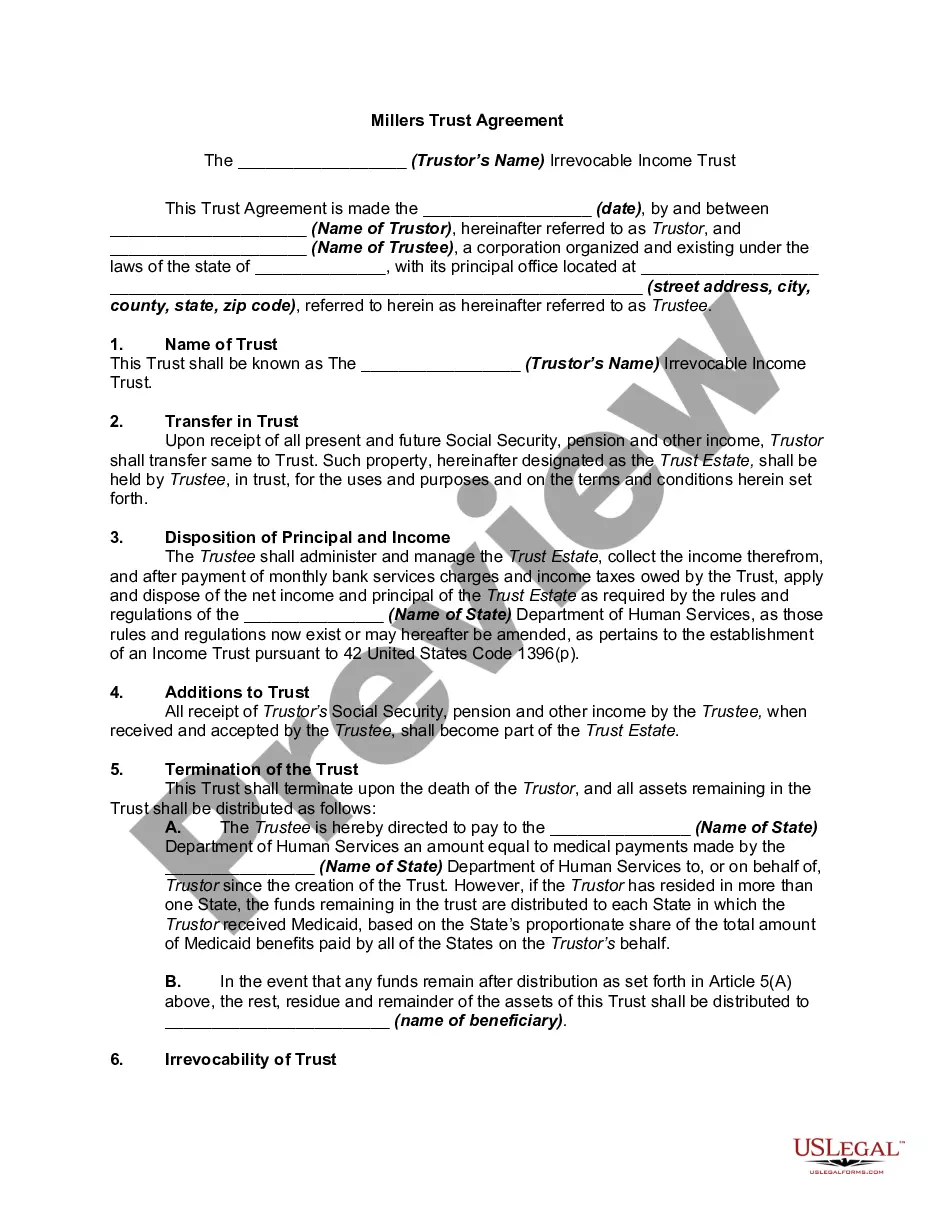
Qualified Trust Caps Contract With The Government
Description

Get your form ready online
Our built-in tools help you complete, sign, share, and store your documents in one place.
Make edits, fill in missing information, and update formatting in US Legal Forms—just like you would in MS Word.
Download a copy, print it, send it by email, or mail it via USPS—whatever works best for your next step.
Sign and collect signatures with our SignNow integration. Send to multiple recipients, set reminders, and more. Go Premium to unlock E-Sign.
If this form requires notarization, complete it online through a secure video call—no need to meet a notary in person or wait for an appointment.
We protect your documents and personal data by following strict security and privacy standards.

Make edits, fill in missing information, and update formatting in US Legal Forms—just like you would in MS Word.

Download a copy, print it, send it by email, or mail it via USPS—whatever works best for your next step.

Sign and collect signatures with our SignNow integration. Send to multiple recipients, set reminders, and more. Go Premium to unlock E-Sign.

If this form requires notarization, complete it online through a secure video call—no need to meet a notary in person or wait for an appointment.

We protect your documents and personal data by following strict security and privacy standards.
Looking for another form?







How to fill out Qualified Income Miller Trust?
- If you're already a US Legal Forms user, log in to your account and download the required form template directly by clicking the Download button. Check the status of your subscription to ensure it is active.
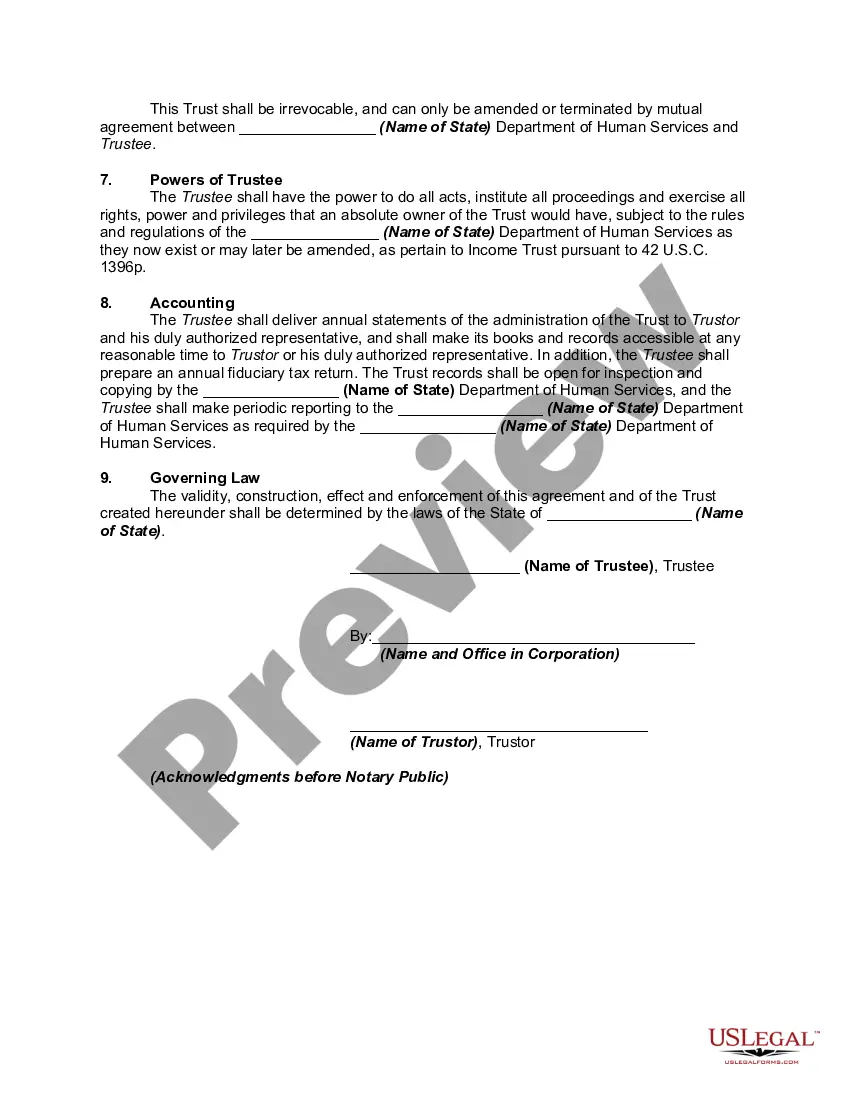
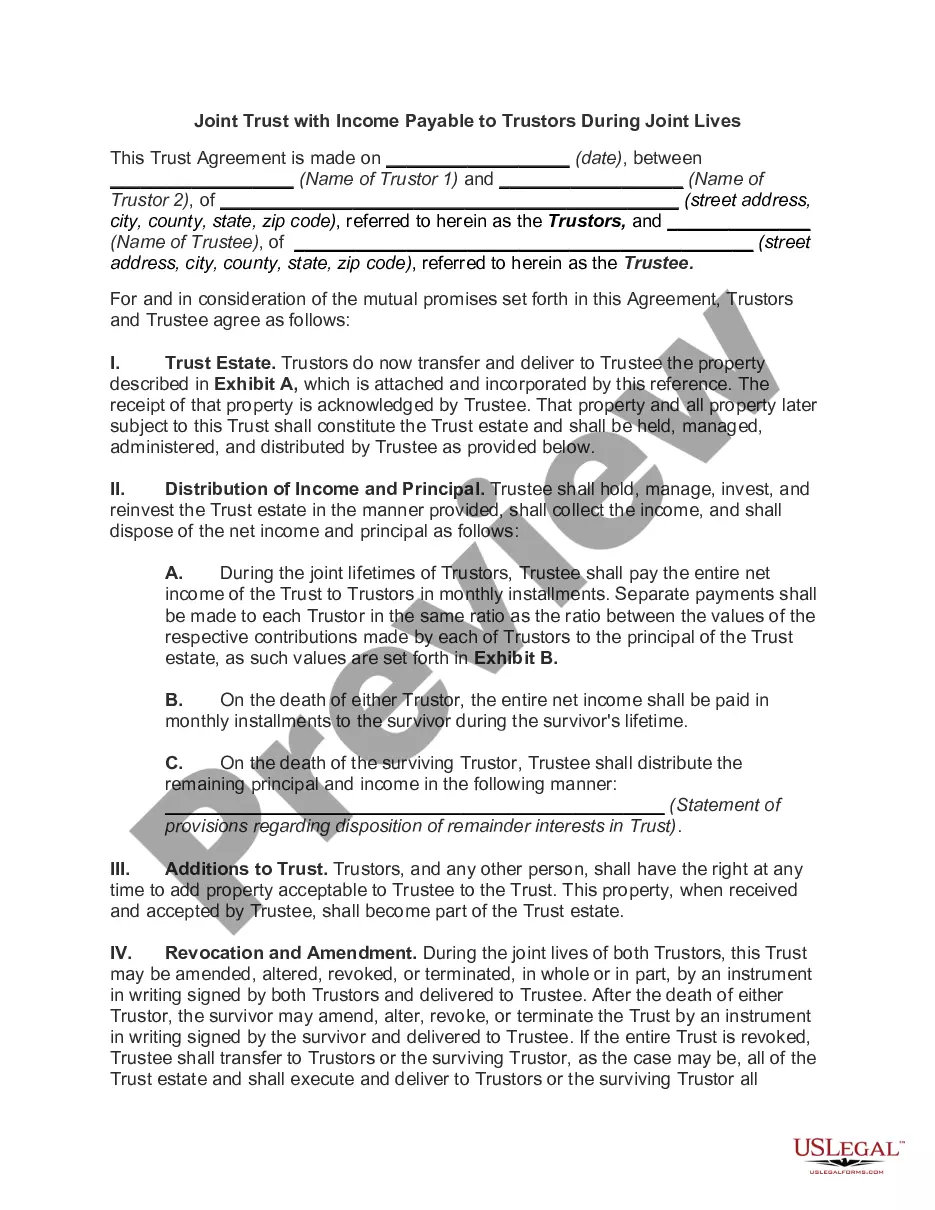
- For first-time users, start by exploring the Preview mode and the form description to confirm you've selected the right document that complies with your local jurisdiction.
- If you're not satisfied with your initial choice, utilize the Search tab to find an appropriate template that fits your requirements. Move forward once you've identified the correct form.
- To proceed with your document, click the Buy Now button and select your preferred subscription plan. Creating an account is necessary for accessing the full library.
- Finalize your purchase by entering your credit card information or opting for PayPal to complete your subscription.
- Once your transaction is complete, download your form to your device and access it anytime through the My Forms section of your account.
US Legal Forms empowers both individuals and attorneys to quickly execute their legal documents, offering a vast library of over 85,000 ready-to-edit forms. This extensive collection ensures that you have more options than with competitors.
With access to premium experts for additional support, you can create legally sound documents with confidence. Start your journey today by visiting US Legal Forms and simplify your legal form process!
Form popularity
FAQ
The easiest government contracts to obtain often involve simplified acquisition procedures or those targeted at small businesses. Contracts related to maintenance, supply, and professional services are commonly more accessible, including ones that may pertain to the qualified trust caps contract with the government. Businesses should consider exploring these options while also leveraging resources from USLegalForms to streamline their documentation and compliance efforts. This approach can significantly boost your chances of winning contracts.
Securing a government contract can be challenging, but it is not impossible. Many businesses successfully obtain contracts by focusing on specific opportunities, including those related to the qualified trust caps contract with the government. Key strategies include understanding the bidding process, meeting compliance requirements, and demonstrating capabilities. Working with USLegalForms can simplify the application process and enhance your business’s ability to compete.
Any business, ranging from small startups to large corporations, can qualify for government contracts. These contracts often require compliance with specific regulations, including those related to the qualified trust caps contract with the government. Moreover, businesses in various industries, such as construction, technology, and healthcare, can find opportunities. To navigate these complexities, using a platform like USLegalForms can provide essential resources and guidance.
A qualified blind trust is a legal entity that holds assets for a beneficiary while restricting the beneficiary's access to information about those assets. This type of trust can help eliminate potential conflicts of interest, especially for government officials. When a qualified trust caps contract with the government is in place, it ensures transparency and compliance with legal standards. Using a qualified blind trust can be an effective way to manage assets while adhering to ethical obligations.
Form 5227, which pertains to the Information Return for Generation-Skipping Trusts, is not required to be filed electronically as of recent guidelines. However, checking the IRS updates is crucial, as requirements may evolve. Staying informed about forms related to qualified trust caps contracts with the government helps ensure you comply with current regulations. For guidance, USLegalForms offers practical solutions.
The rules for a qualified trust include stipulations on distributions to beneficiaries, trust administration, and compliance with tax obligations. These trusts are often regulated to ensure they fulfill their intended purposes without tax complications. Understanding these regulations can aid in managing your trust properly. Consider consulting USLegalForms to enhance your compliance with qualified trust caps contracts with the government.
Requirements for a qualified trust typically include a clearly defined beneficiary, a lawful purpose, and adherence to specific distribution rules. The trust must also meet certain regulatory criteria that ensure it qualifies under tax laws. Keeping these factors in mind is pivotal when setting up any trust, especially one related to qualified trust caps contracts with the government. To simplify this process, check out the tools available on USLegalForms.
A significant mistake parents make when setting up a trust fund is failing to clearly define the trust's terms or beneficiaries. Ambiguity can lead to conflicts and unintended consequences, undermining the fund's purpose. It's essential to communicate details effectively to ensure the trust serves its intended function. Resources like USLegalForms can assist in creating a well-structured trust aligned with qualified trust caps contracts with the government.
To create a valid trust, you need a clear grantor, a definite beneficiary, a lawful purpose, a competent trustee, and formal trust documentation. Each of these elements plays a crucial role in establishing the trust's legality and functionality. You should ensure that the trust's intentions align with regulations governing qualified trust caps contracts with the government. For assistance in drafting, consider using USLegalForms.
A Qualified Subchapter S Trust (QSST) indeed files IRS Form 1041, the Income Tax Return for Estates and Trusts. The QSST is designed to adhere to specific regulations that ensure it can qualify for S-Corp status. By filing this form, the trust reports its income, deductions, gains, and losses. Understanding this process can help you navigate any qualified trust caps contract with the government.