Qualified Income Trust Form Sample For Ny
Description
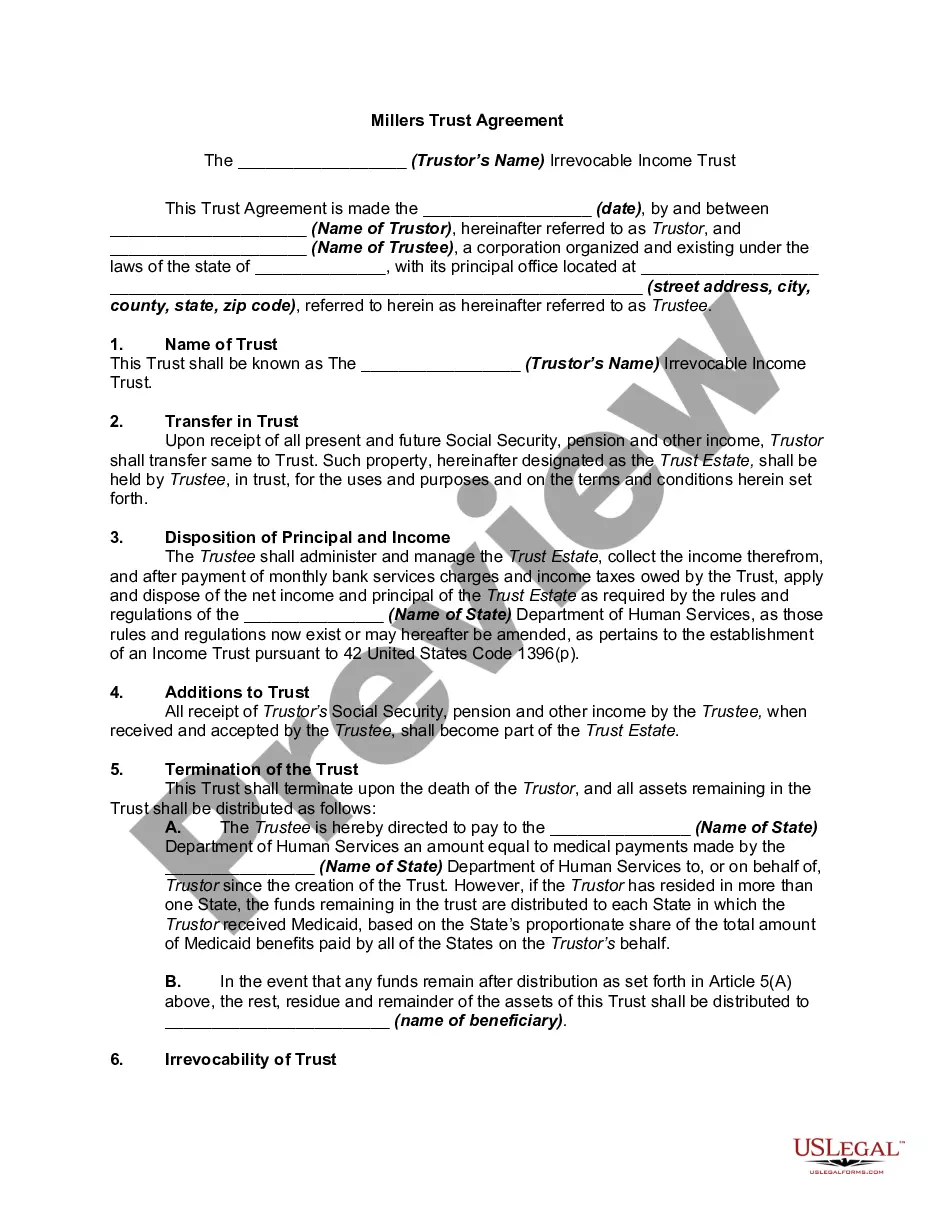
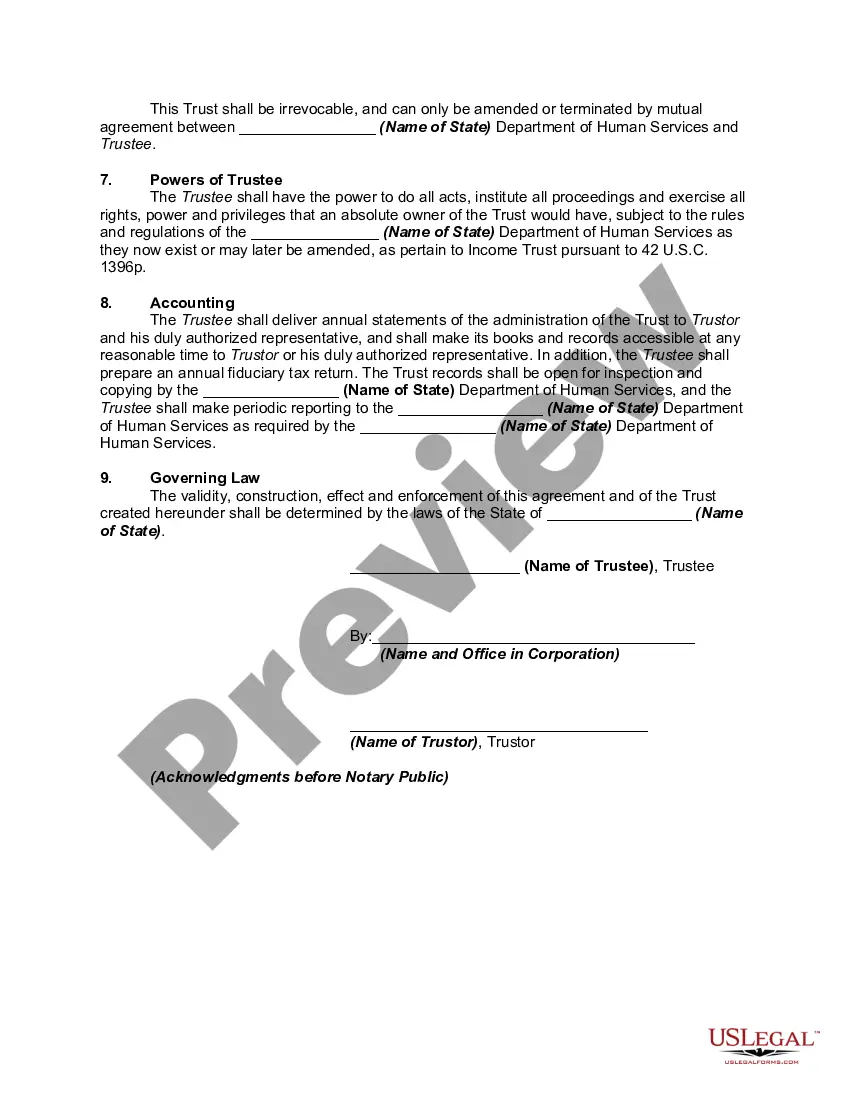

Get your form ready online
Our built-in tools help you complete, sign, share, and store your documents in one place.
Make edits, fill in missing information, and update formatting in US Legal Forms—just like you would in MS Word.
Download a copy, print it, send it by email, or mail it via USPS—whatever works best for your next step.
Sign and collect signatures with our SignNow integration. Send to multiple recipients, set reminders, and more. Go Premium to unlock E-Sign.
If this form requires notarization, complete it online through a secure video call—no need to meet a notary in person or wait for an appointment.
We protect your documents and personal data by following strict security and privacy standards.

Make edits, fill in missing information, and update formatting in US Legal Forms—just like you would in MS Word.

Download a copy, print it, send it by email, or mail it via USPS—whatever works best for your next step.

Sign and collect signatures with our SignNow integration. Send to multiple recipients, set reminders, and more. Go Premium to unlock E-Sign.

If this form requires notarization, complete it online through a secure video call—no need to meet a notary in person or wait for an appointment.

We protect your documents and personal data by following strict security and privacy standards.
Looking for another form?


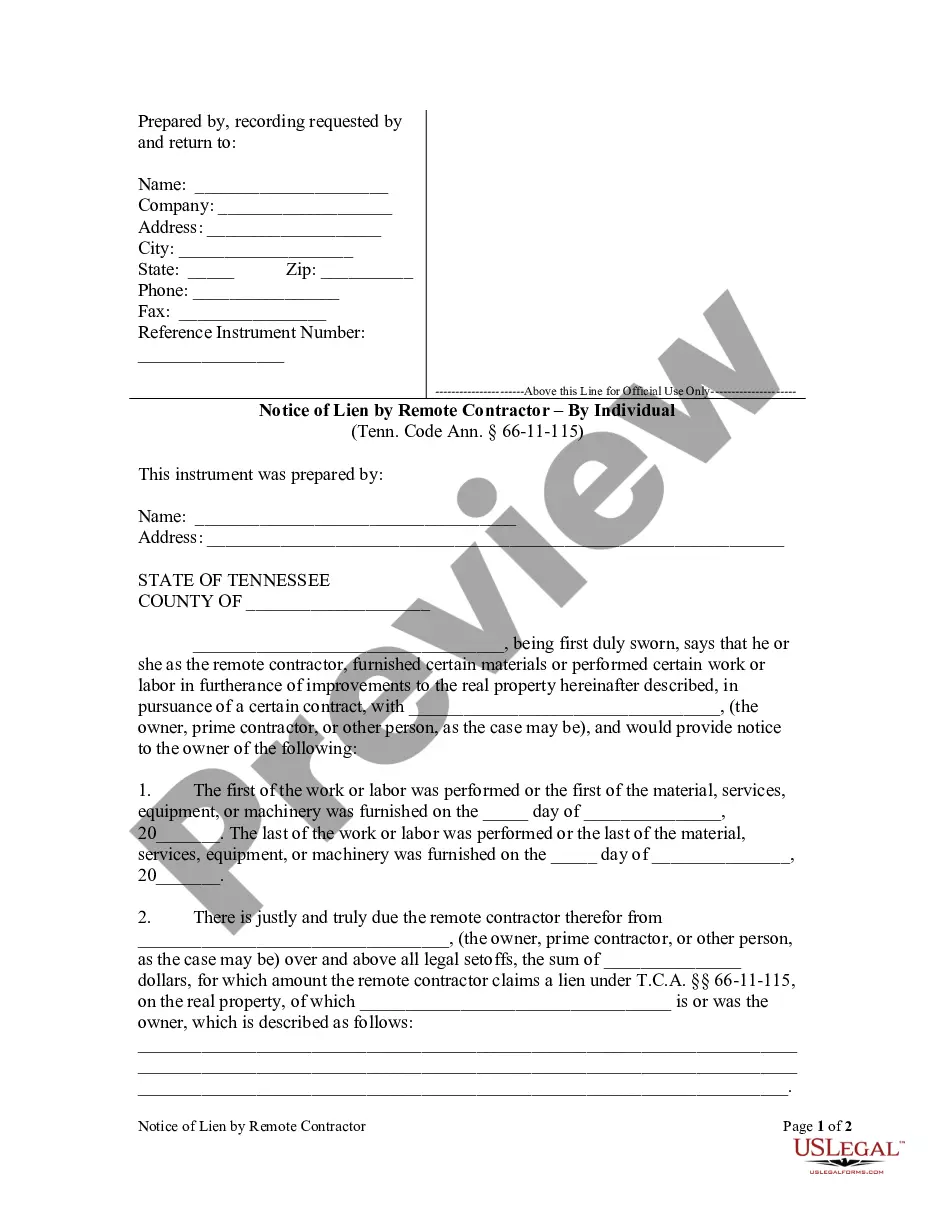





How to fill out Qualified Income Miller Trust?
The Authorized Income Trust Form Example For Ny displayed on this page is a versatile official template crafted by expert attorneys following national and local laws and regulations.
For over 25 years, US Legal Forms has offered individuals, entities, and legal experts more than 85,000 authenticated, state-specific forms for any corporate and personal situations. It’s the quickest, simplest, and most trustworthy method to obtain the documentation you require, as the service ensures the utmost level of data security and anti-virus protection.
Subscribe to US Legal Forms to have verified legal templates available for all situations in life.
- Search for the document you require and assess it.
- Browse through the file you looked for and preview it or examine the form description to confirm it meets your needs. If it doesn’t, utilize the search feature to find the correct one. Click Buy Now when you have identified the template you require.
- Register and Log Into your account.
- Choose the pricing plan that fits you best and set up an account. Use PayPal or a credit card for a swift transaction. If you already possess an account, Log In and verify your subscription to continue.
- Acquire the fillable template.
- Select the format you prefer for your Authorized Income Trust Form Example For Ny (PDF, Word, RTF) and download the sample to your device.
- Complete and sign the document.
- Print the template to fill it in manually. Alternatively, utilize an online versatile PDF editor to quickly and accurately complete and sign your form with a legally-binding electronic signature.
- Re-download your documents as needed.
- Use the same document repeatedly whenever required. Access the My documents tab in your profile to redownload any previously saved forms.
Form popularity
FAQ
New York Form IT-225 is used to report the New York State tax credits available to estates and trusts. This form allows you to claim various credits that can offset your tax liability. If you're dealing with a qualified income trust, referring to a Qualified income trust form sample for NY can provide a clear framework for completing the form accurately. For a more straightforward process, you might find uslegalforms helpful in navigating the intricacies of state forms.
Steps Suit is filed in City Court. Receipt is mailed to plaintiff. ... The Civil Office will send service information advising when the defendant was served. Defendant has 10 days from the date served in which to answer in writing.
Filing a civil action on your own is called proceeding "Pro Se." A civil action is the only type of case you can file in federal court and is different from a criminal action which can only be initiated by government officials.
How much does it cost to file a Civil Suit or Small Claims Suit? The cost to file a civil suit is $208 for one defendant and $30 per each additional defendant. The cost to file a Small Claims suit is $82.50 for one defendant and $35 per each additional defendant.
People who represent themselves in court without an attorney are Self-Represented Litigants (SRLs), also sometimes called pro se litigants. Under the law, an SRL is held to the same standards and duties as an attorney admitted to the practice of law in the state of Louisiana.
Introduction. Legal aid services provide free or low-cost legal advice and/or representation for those unable to afford full-cost legal services. This resource guide lists contact information for some of the legal aid service providers located throughout Louisiana.
When you represent yourself, you are referred to as a "self-represented litigant" or "pro-se litigant." Even if you don't have a lawyer, judges and court employees are not allowed to provide you with legal advice and may not be able to speak with you at all about your case outside of the courtroom.
Generally, the 5 steps to filing a lawsuit in Louisiana include: Investigate. Gather all relevant evidence. Write the petition for damages. File the petition for damages in the correct court. Serve the petition and summons on the defendant.
The state of Louisiana is unique in that nearly all civil actions have a one-year statute of limitations (most states range from two to five years for more claims). The exceptions are the three-year limits on collections of rent and debts and a 10-year statute of limitations for contracts and judgments.