Qit Trust With The Dead
Description

Get your form ready online
Our built-in tools help you complete, sign, share, and store your documents in one place.
Make edits, fill in missing information, and update formatting in US Legal Forms—just like you would in MS Word.
Download a copy, print it, send it by email, or mail it via USPS—whatever works best for your next step.
Sign and collect signatures with our SignNow integration. Send to multiple recipients, set reminders, and more. Go Premium to unlock E-Sign.
If this form requires notarization, complete it online through a secure video call—no need to meet a notary in person or wait for an appointment.
We protect your documents and personal data by following strict security and privacy standards.

Make edits, fill in missing information, and update formatting in US Legal Forms—just like you would in MS Word.

Download a copy, print it, send it by email, or mail it via USPS—whatever works best for your next step.

Sign and collect signatures with our SignNow integration. Send to multiple recipients, set reminders, and more. Go Premium to unlock E-Sign.

If this form requires notarization, complete it online through a secure video call—no need to meet a notary in person or wait for an appointment.

We protect your documents and personal data by following strict security and privacy standards.
Looking for another form?










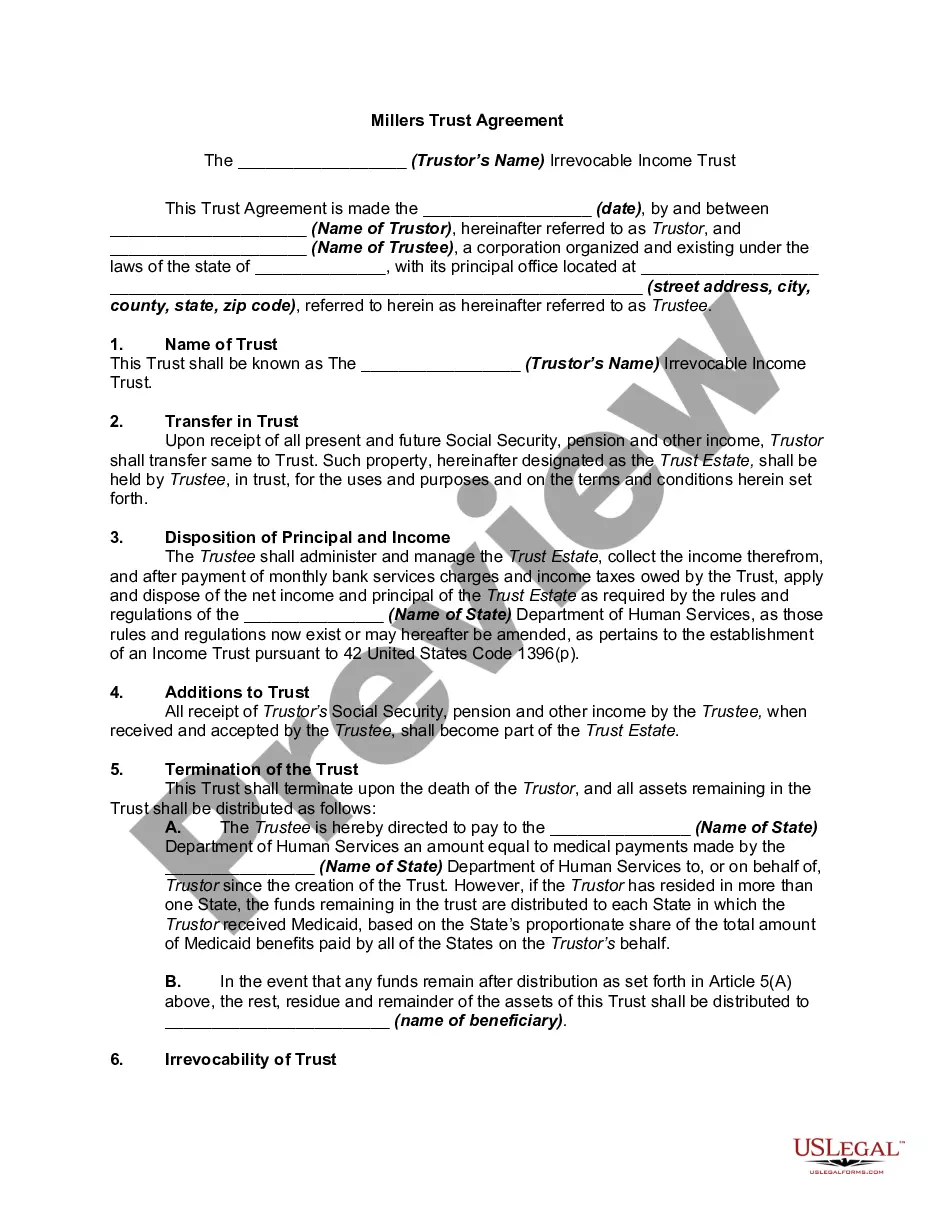
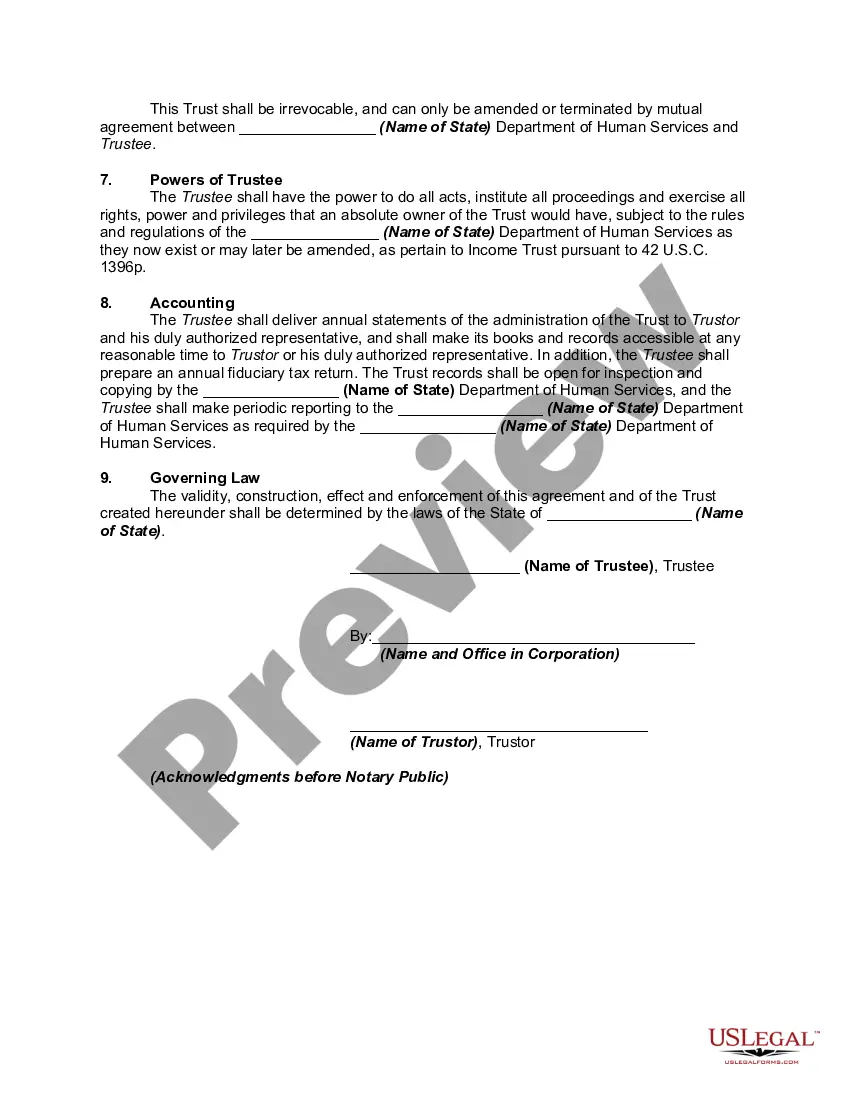
How to fill out Qualified Income Miller Trust?
- If you’re a returning user, log in to your account and download your desired form template by clicking the Download button. Ensure your subscription is current; if not, renew it as per your payment plan.
- For first-time users, start by browsing the Preview mode and read the form description carefully. Select a template that aligns with your needs and complies with local jurisdictional requirements.
- If you do not find what you need, utilize the Search tab to explore additional templates. Confirm it meets your requirements before moving to the next step.
- Purchase the document by clicking on the Buy Now button. Choose a subscription plan that suits you, noting that account registration is necessary for accessing the library’s resources.
- Complete your purchase by entering your credit card information or using your PayPal account to finalize the subscription.
- Download your selected form to your device. You can find it anytime under the My Forms section of your profile for future access.
Using US Legal Forms ensures access to a vast collection of legal documents that are easy to fill and customize. With premium expert assistance available, you can achieve accuracy and compliance in your forms.
Take control of your legal needs today. Start your journey with US Legal Forms and experience the ease of obtaining the necessary documents.
Form popularity
FAQ
Yes, a trust can be established and funded after a person's death; however, this often depends on the terms set forth in the trust agreement. The successor trustee can manage the trust according to these terms, and certain conditions may allow for continued benefits to the beneficiaries. If you are considering how to qit trust with the dead, consult professionals to ensure you take the correct steps.
A common mistake parents make when setting up a trust fund is failing to clearly define the terms and conditions for distributions. This uncertainty can lead to conflicts among beneficiaries and complications in managing the trust. Proper communication and a well-structured trust document are essential for avoiding misunderstandings. By understanding how to qit trust with the dead, you can prevent these common pitfalls.
After a person's death, a trust can remain open for as long as it is necessary to fulfill its purpose and manage the assets. This duration often depends on the types of assets in the trust and specific instructions outlined in the trust document. Some trusts can remain open for many years, while others may close shortly after distribution. Knowing how to qit trust with the dead can help streamline this process.
The 5 year rule for trusts refers to regulations concerning asset transfers and tax implications for trusts. Essentially, assets transferred to a trust cannot be given away freely without tax repercussions for five years. This rule is crucial for maintaining the integrity of your estate planning. If you want to qit trust with the dead effectively, understanding this rule is vital.
A QIT account is primarily used to hold excess income that exceeds Medicaid eligibility limits, allowing individuals to qualify for necessary benefits. This account aligns with the principles of a QIT trust with the dead, managing funds while preserving beneficiaries' financial integrity. It is crucial to ensure that expenditures through this account comply with Medicaid regulations to avoid complications. For comprehensive support in managing a QIT account, uslegalforms is a trusted resource.
The beneficiary of a QIT is typically the individual who requires Medicaid benefits and whose income would otherwise exceed eligibility limits. This arrangement protects their assets while ensuring access to necessary care under the laws of a QIT trust with the dead. It is crucial to designate a competent trustee who will manage the trust according to Medicaid guidelines. For assistance in beneficiaries' selection and management, uslegalforms can provide helpful insights.
In Texas, QIT funds can primarily cover healthcare-related expenses, including nursing home care and medical services not covered by Medicaid. The use of a QIT trust with the dead ensures that beneficiaries access these critical resources without jeopardizing their financial stability. Therefore, it is essential to maintain proper records of these expenditures. For clarity on how to set this up correctly, consider seeking help from uslegalforms.
In New Jersey, a Qualified Income Trust (QIT) helps individuals qualify for Medicaid benefits while maintaining ownership of their assets. Essentially, the QIT holds income exceeding the Medicaid limit, allowing the beneficiary access to necessary care. This trust is critical for ensuring that you receive benefits while protecting your financial interests. If you're navigating this process, uslegalforms can guide you in setting up a QIT trust with the dead.
Generally, a trust cannot be created after someone's death, as trusts require the intent and actions of a living individual. However, existing trusts can sometimes be modified or amended, depending on state laws and the terms specified in the trust document. If you're navigating this complex issue, consider using USLegalForms to find the right resources regarding Qit trust with the dead and estate planning.
The beneficiary of a qualified retirement plan is the person or entity chosen to receive the plan's assets after the account holder passes away. This designation should be clearly outlined in the retirement plan documentation. It's important to consider the implications of a Qit trust with the dead when designating beneficiaries, as it can impact both estate planning and potential tax liabilities.