How Much Does It Cost To Set Up A Trust For My House
Description

Get your form ready online
Our built-in tools help you complete, sign, share, and store your documents in one place.
Make edits, fill in missing information, and update formatting in US Legal Forms—just like you would in MS Word.
Download a copy, print it, send it by email, or mail it via USPS—whatever works best for your next step.
Sign and collect signatures with our SignNow integration. Send to multiple recipients, set reminders, and more. Go Premium to unlock E-Sign.
If this form requires notarization, complete it online through a secure video call—no need to meet a notary in person or wait for an appointment.
We protect your documents and personal data by following strict security and privacy standards.

Make edits, fill in missing information, and update formatting in US Legal Forms—just like you would in MS Word.

Download a copy, print it, send it by email, or mail it via USPS—whatever works best for your next step.

Sign and collect signatures with our SignNow integration. Send to multiple recipients, set reminders, and more. Go Premium to unlock E-Sign.

If this form requires notarization, complete it online through a secure video call—no need to meet a notary in person or wait for an appointment.

We protect your documents and personal data by following strict security and privacy standards.
Looking for another form?








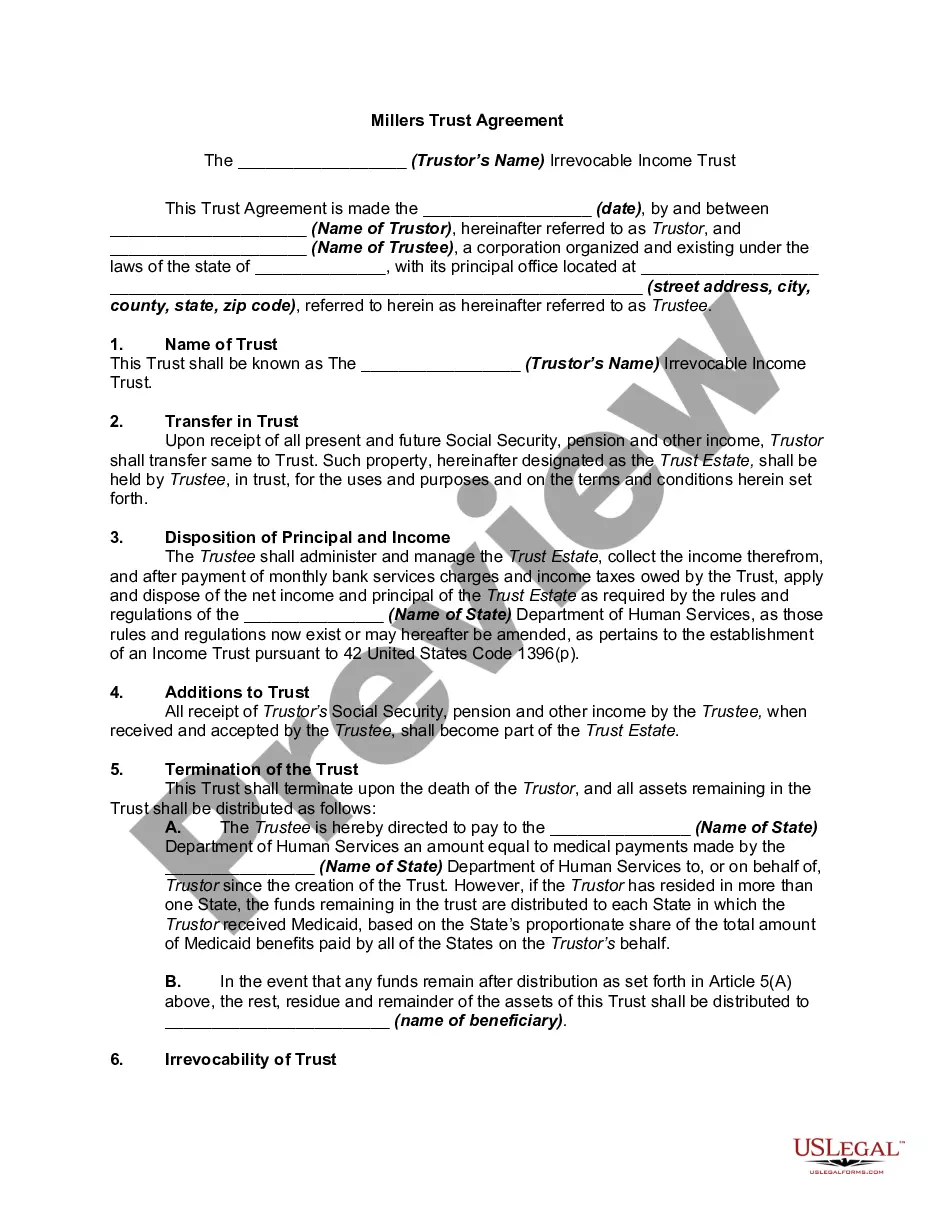
How to fill out Qualified Income Miller Trust?
- Log in to your US Legal Forms account if you are an existing user. If not, create an account to get started.
- Search for the appropriate trust form by using the preview mode to review its description and verify it meets your specific state requirements.
- If necessary, utilize the Search tab to locate an alternative form to ensure you have the right documentation.
- Select your desired form and click the 'Buy Now' button. Choose the subscription plan that suits your needs.
- Complete your purchase by entering your payment information through credit card or PayPal.
- Download your trust form to your device and access it any time via the 'My Forms' section of your profile.
By following these steps on the US Legal Forms platform, you’ll gain access to an extensive library of over 85,000 legal documents, ensuring you find exactly what you need.
Begin your estate planning journey today with US Legal Forms—where legal processes are made easier and more affordable!
Form popularity
FAQ
While placing your house in a trust can offer various benefits, it also has some disadvantages. For example, there may be upfront legal fees and setup costs, which can vary significantly. Additionally, once the house is in a trust, you may have limited access and control over the asset. To balance these factors, it’s essential to explore how much it costs to set up a trust for my house and consider seeking assistance from resources like USLegalForms.
Deciding whether to gift a house or place it in a trust depends on your long-term goals. Gifting a house can simplify the transfer of ownership, but it may have tax implications and reduce your control over the property. In contrast, placing the house in a trust allows for structured management of the asset and can provide added protection against creditors. Knowing how much it costs to set up a trust for my house will help you assess whether trust creation is the better choice.
Holding property in a trust offers several advantages, such as avoiding probate and better estate planning flexibility. However, there are also potential downsides, including the initial costs of setting up the trust and ongoing maintenance expenses. Ultimately, weighing how much it costs to set up a trust for my house against these benefits and drawbacks is crucial in making a sound decision. Platforms like USLegalForms can guide you through this process efficiently.
One significant mistake parents often make is not clearly defining the terms of the trust. This oversight can lead to confusion among beneficiaries about how the assets should be managed or distributed. Additionally, failing to periodically review and update the trust can create complications, especially as family dynamics change. Understanding how much it costs to set up a trust for my house can help you avoid these pitfalls and create a robust plan.