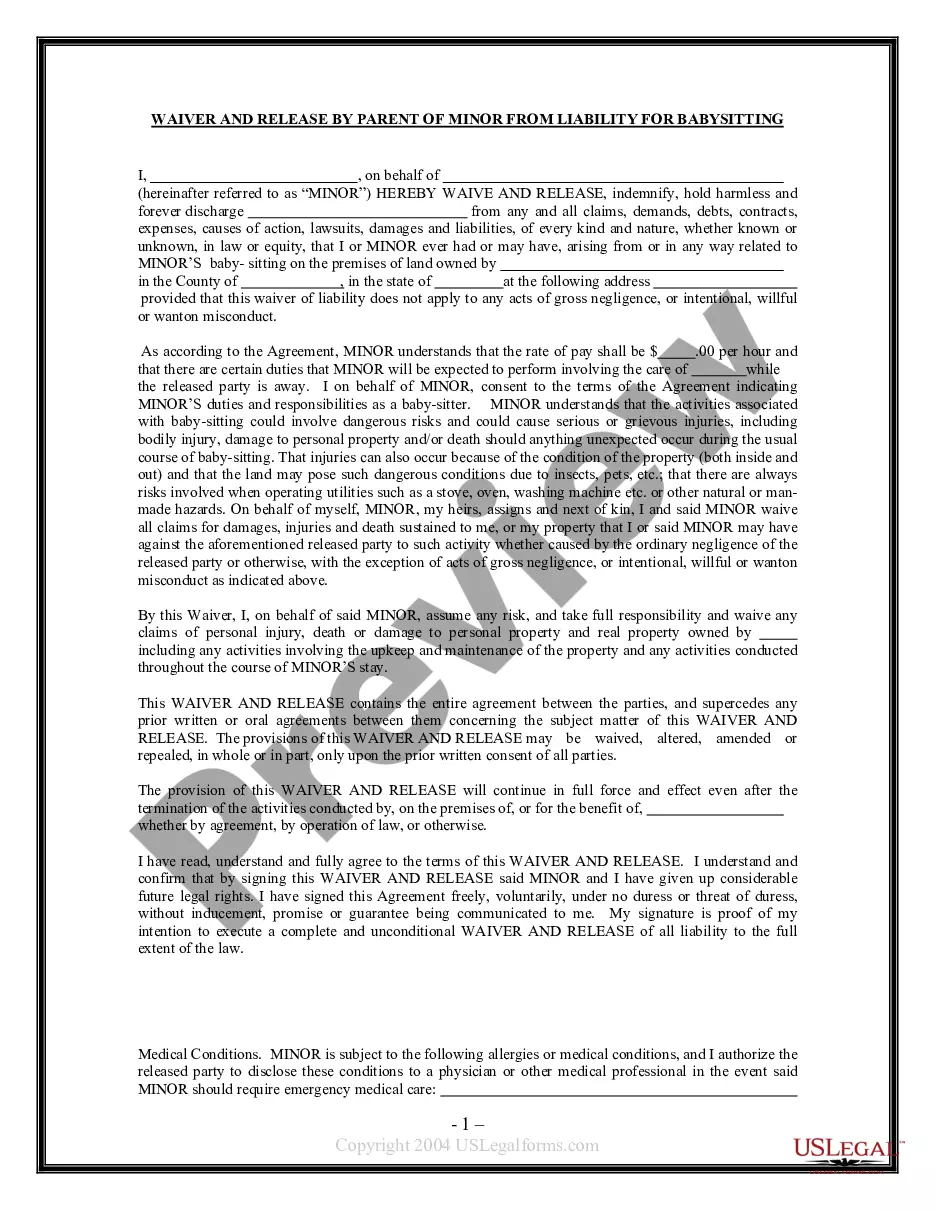
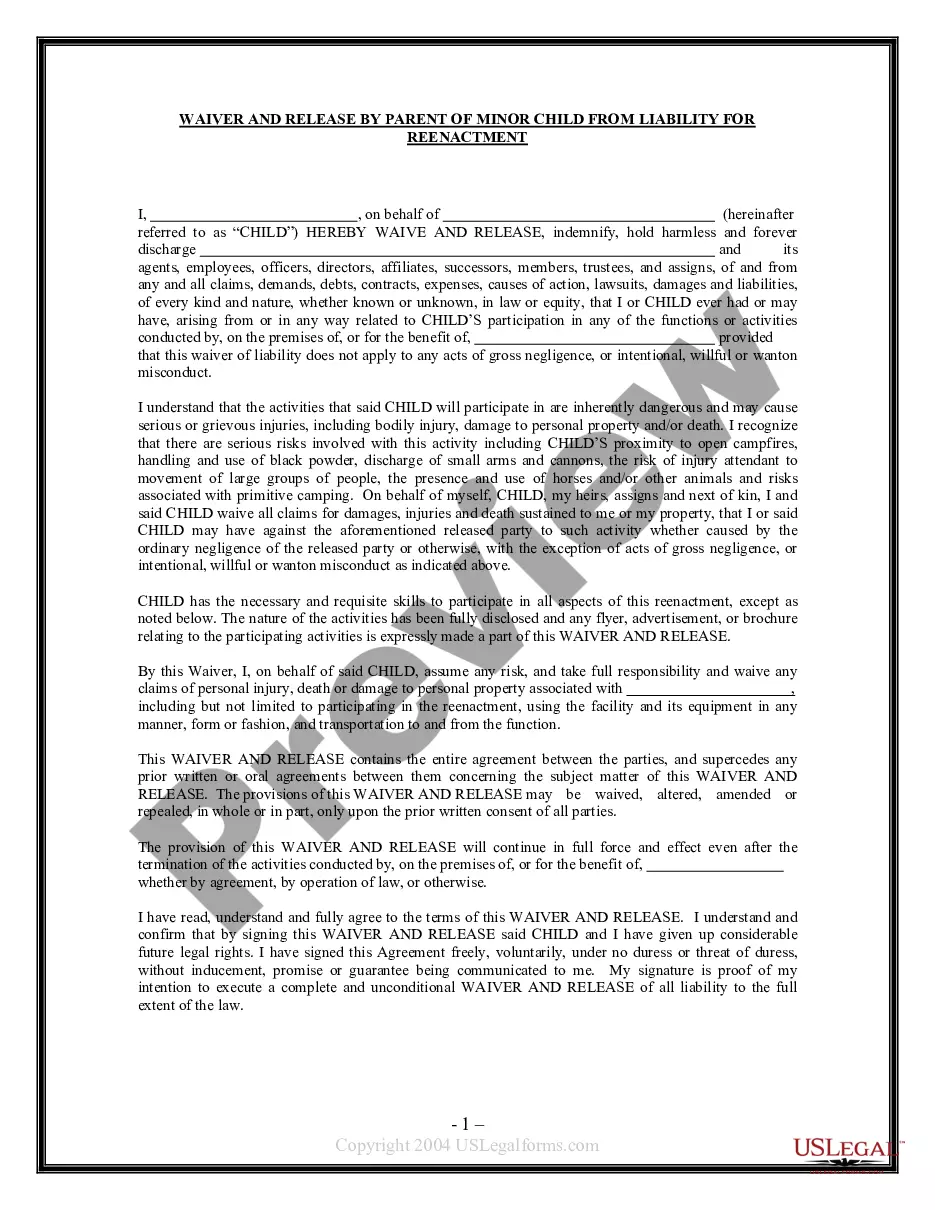
Parent/guardian Waiver For Minors
Description
Get your form ready online
Our built-in tools help you complete, sign, share, and store your documents in one place.
Make edits, fill in missing information, and update formatting in US Legal Forms—just like you would in MS Word.
Download a copy, print it, send it by email, or mail it via USPS—whatever works best for your next step.
Sign and collect signatures with our SignNow integration. Send to multiple recipients, set reminders, and more. Go Premium to unlock E-Sign.
If this form requires notarization, complete it online through a secure video call—no need to meet a notary in person or wait for an appointment.
We protect your documents and personal data by following strict security and privacy standards.

Make edits, fill in missing information, and update formatting in US Legal Forms—just like you would in MS Word.

Download a copy, print it, send it by email, or mail it via USPS—whatever works best for your next step.

Sign and collect signatures with our SignNow integration. Send to multiple recipients, set reminders, and more. Go Premium to unlock E-Sign.

If this form requires notarization, complete it online through a secure video call—no need to meet a notary in person or wait for an appointment.

We protect your documents and personal data by following strict security and privacy standards.
Looking for another form?







Form popularity
FAQ
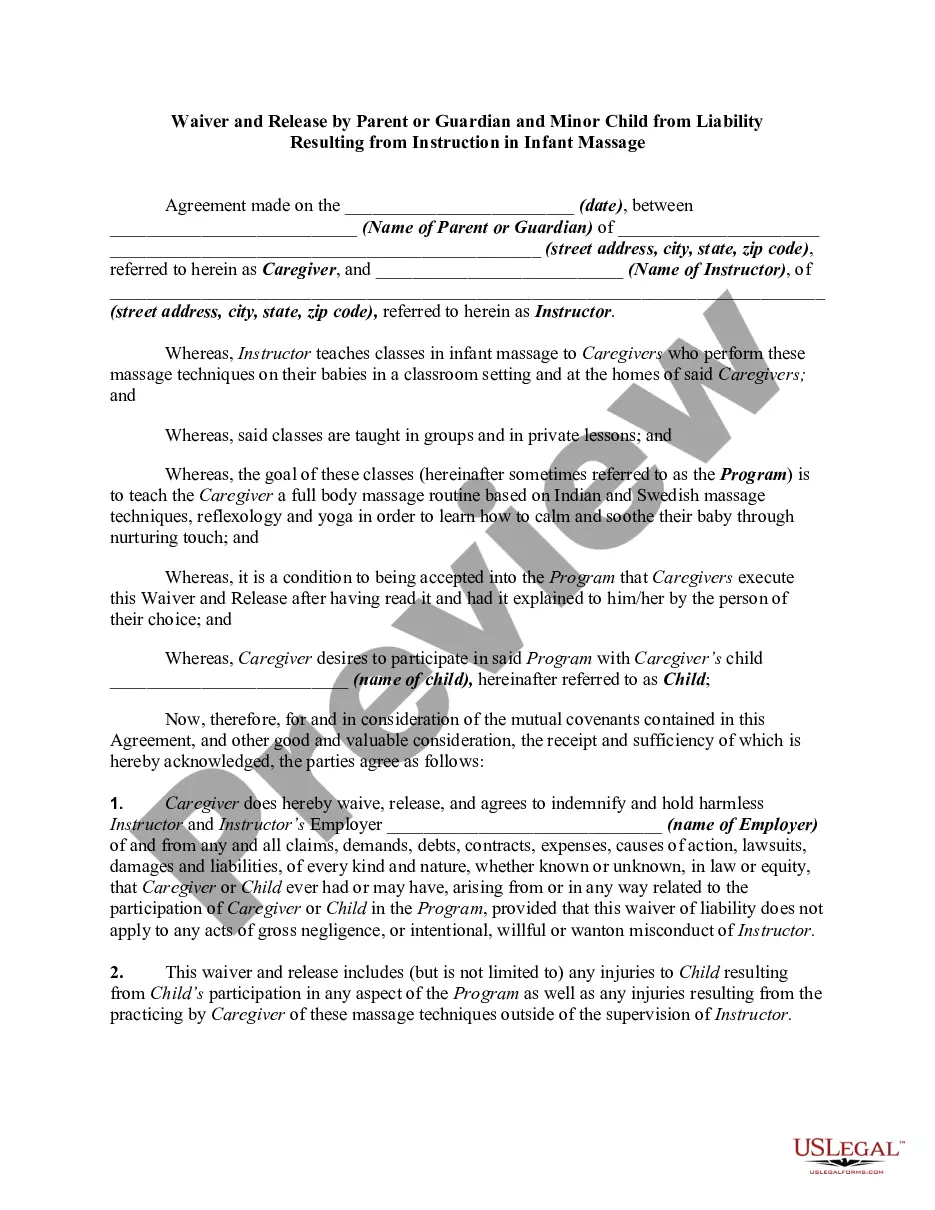
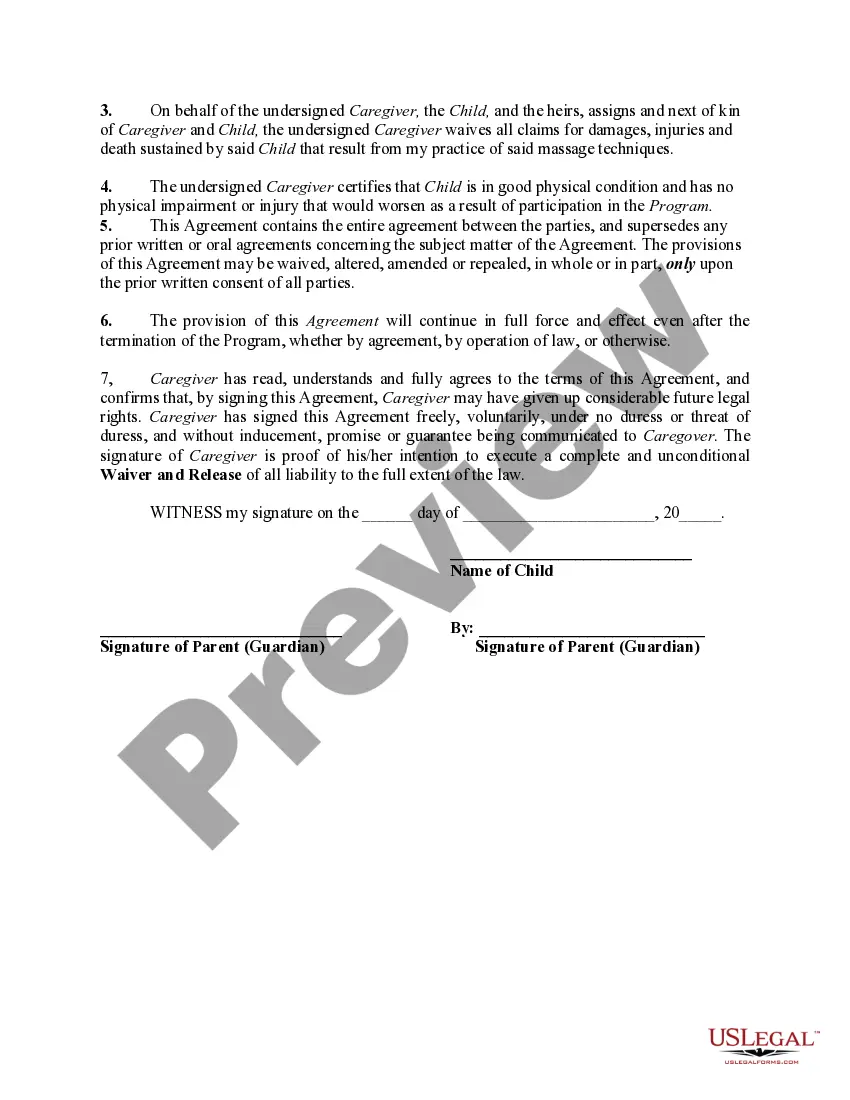
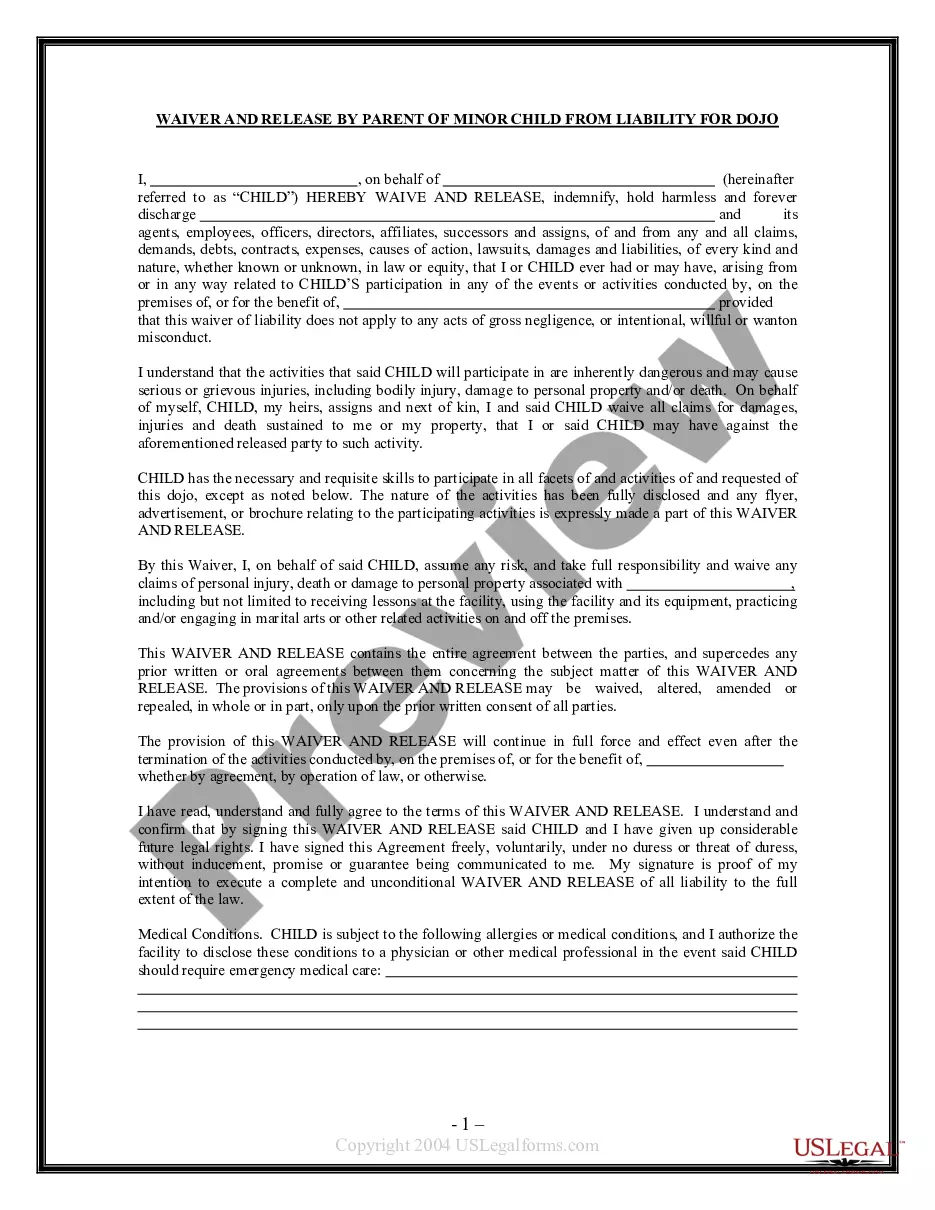
Waivers for minors must be signed by a parent or legal guardian. While minors themselves cannot legally enter into binding contracts, a parent/guardian waiver for minors ensures that guardians assume responsibility for the minor's involvement in the activity. This protective step is essential, as it provides clarity and legal backing to both parties involved in the waiver.
In many cases, a well-constructed waiver can hold up in court, especially when it is specifically tailored as a parent/guardian waiver for minors. Courts generally respect waivers that are clear, accurate, and comprehensive. However, they may review the circumstances surrounding the waiver, so it's essential to ensure its validity by following legal guidelines. Consult with a legal expert to enhance its enforceability.
A typical waiver statement might read: 'I, the undersigned parent or guardian, hereby assume all risks associated with my child's participation in this activity and acknowledge that I have read and understood the parent/guardian waiver for minors.' This statement should be clear and concise, ensuring that guardians comprehend their rights and responsibilities. Remember, clarity in your statement can prevent legal confusion.
There are several reasons why waivers may not hold up in court. A parent/guardian waiver for minors can be deemed unenforceable if it is ambiguous, lacks essential details, or if the activity falls under certain categories, like gross negligence. Additionally, courts may invalidate waivers for minors altogether, making proper drafting crucial. Understanding these factors can help you create an effective waiver.
Waivers are generally legally binding when they are properly executed and if they follow applicable laws. A parent/guardian waiver for minors must clearly outline the risks and have signatures from guardians. Courts typically enforce waivers unless they contain vague terms or fail to meet legal requirements. Therefore, it is crucial to ensure your waiver meets all legal standards.
Yes, waivers can indeed provide protection, but it depends on how well they are drafted. A well-crafted parent/guardian waiver for minors can help limit liability for organizations by ensuring that guardians acknowledge the risks involved. However, it is important to remember that waivers cannot protect against negligence. Thus, having a thorough waiver is essential.
To write a waiver request, start by clearly stating your intent to seek a parent/guardian waiver for minors. Include the purpose of the waiver and any relevant details about the activity or event. Make sure to specify who is being protected under the waiver and outline the risks involved. Finally, provide space for signatures to acknowledge understanding and acceptance.
In general, a parent can waive a child's right to sue by signing a parent/guardian waiver for minors. However, this waiver may not include certain rights, such as claims of gross negligence or willful misconduct. It's crucial to read the waiver carefully to understand its implications fully. The uSlegalforms platform can help you create a comprehensive waiver that meets your needs while maintaining legal protections.
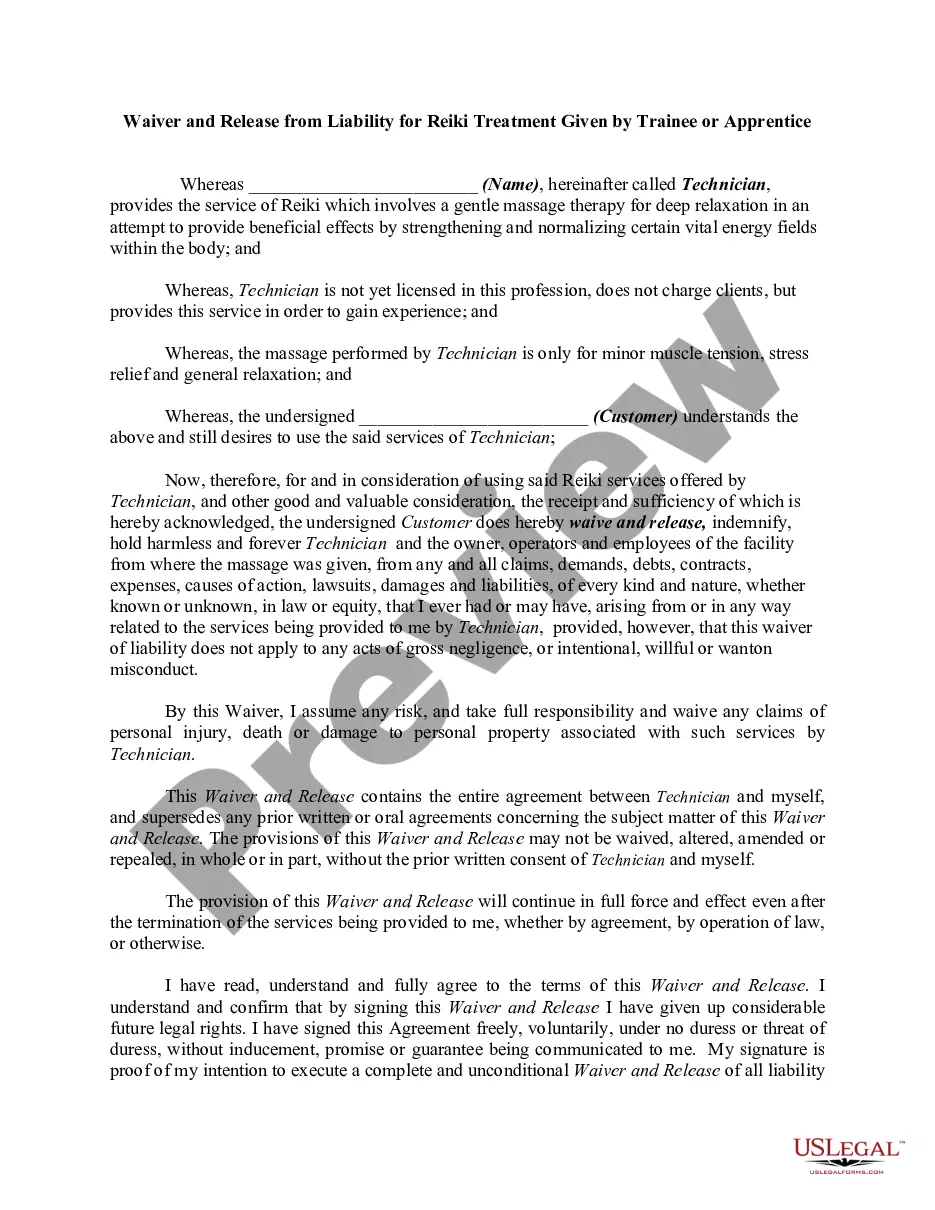
A minor waiver is a legal agreement that specifically covers the rights and responsibilities of minors in activities, events, or programs. This document, often referred to as a parent/guardian waiver for minors, protects both the minor and the organization. It outlines the inherent risks involved and typically requires a parent's or guardian's signature to validate the consent. Understanding this waiver is crucial for ensuring safety and legal protection during various activities.
Typically, a parent or guardian signs a waiver on behalf of a minor. This ensures that the responsible adult acknowledges the potential risks associated with the activity and agrees to the terms outlined in the parent/guardian waiver for minors. In some cases, additional signatures may be required from organizations or facilities involved. Always ensure that the appropriate parties sign the waiver to protect everyone's interests.
