Accounting For Insurance Proceeds Deloitte
Description
Get your form ready online
Our built-in tools help you complete, sign, share, and store your documents in one place.
Make edits, fill in missing information, and update formatting in US Legal Forms—just like you would in MS Word.
Download a copy, print it, send it by email, or mail it via USPS—whatever works best for your next step.
Sign and collect signatures with our SignNow integration. Send to multiple recipients, set reminders, and more. Go Premium to unlock E-Sign.
If this form requires notarization, complete it online through a secure video call—no need to meet a notary in person or wait for an appointment.
We protect your documents and personal data by following strict security and privacy standards.

Make edits, fill in missing information, and update formatting in US Legal Forms—just like you would in MS Word.

Download a copy, print it, send it by email, or mail it via USPS—whatever works best for your next step.

Sign and collect signatures with our SignNow integration. Send to multiple recipients, set reminders, and more. Go Premium to unlock E-Sign.

If this form requires notarization, complete it online through a secure video call—no need to meet a notary in person or wait for an appointment.

We protect your documents and personal data by following strict security and privacy standards.
Looking for another form?







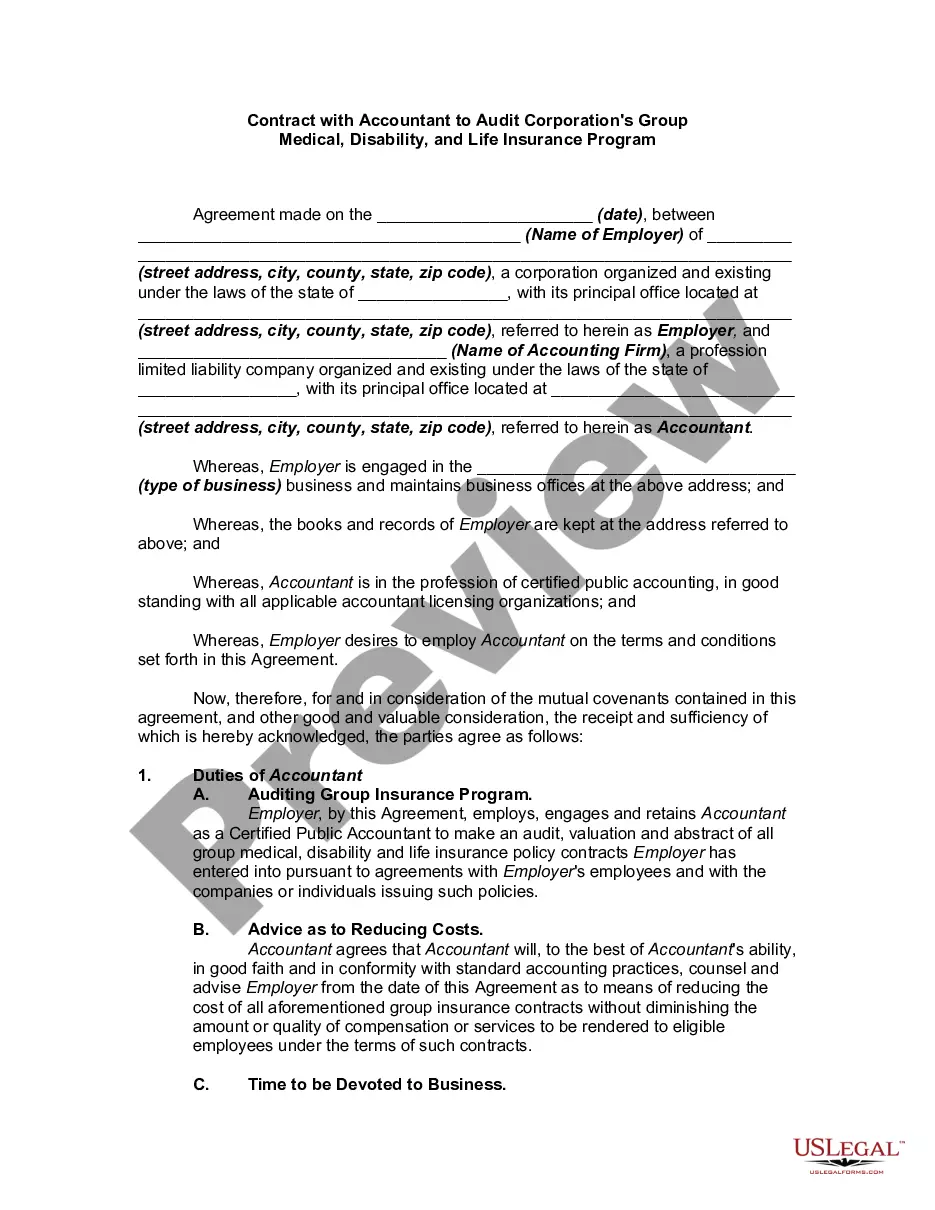
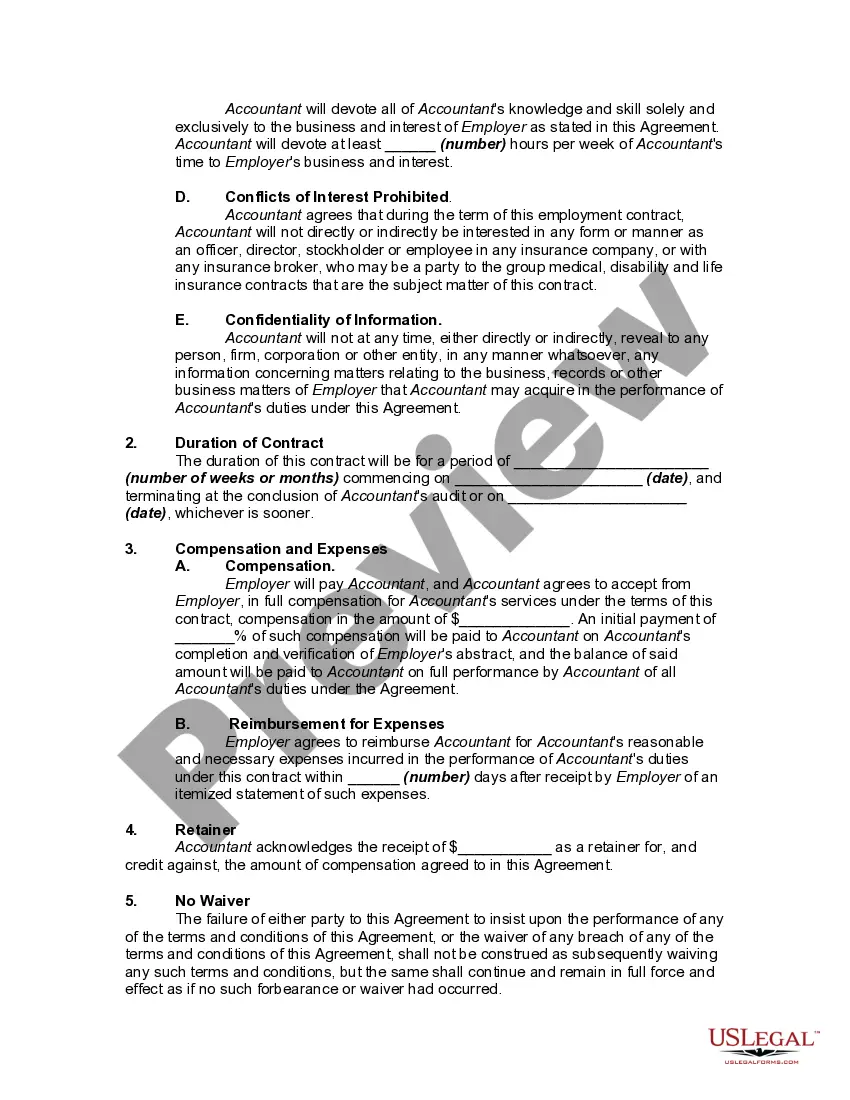
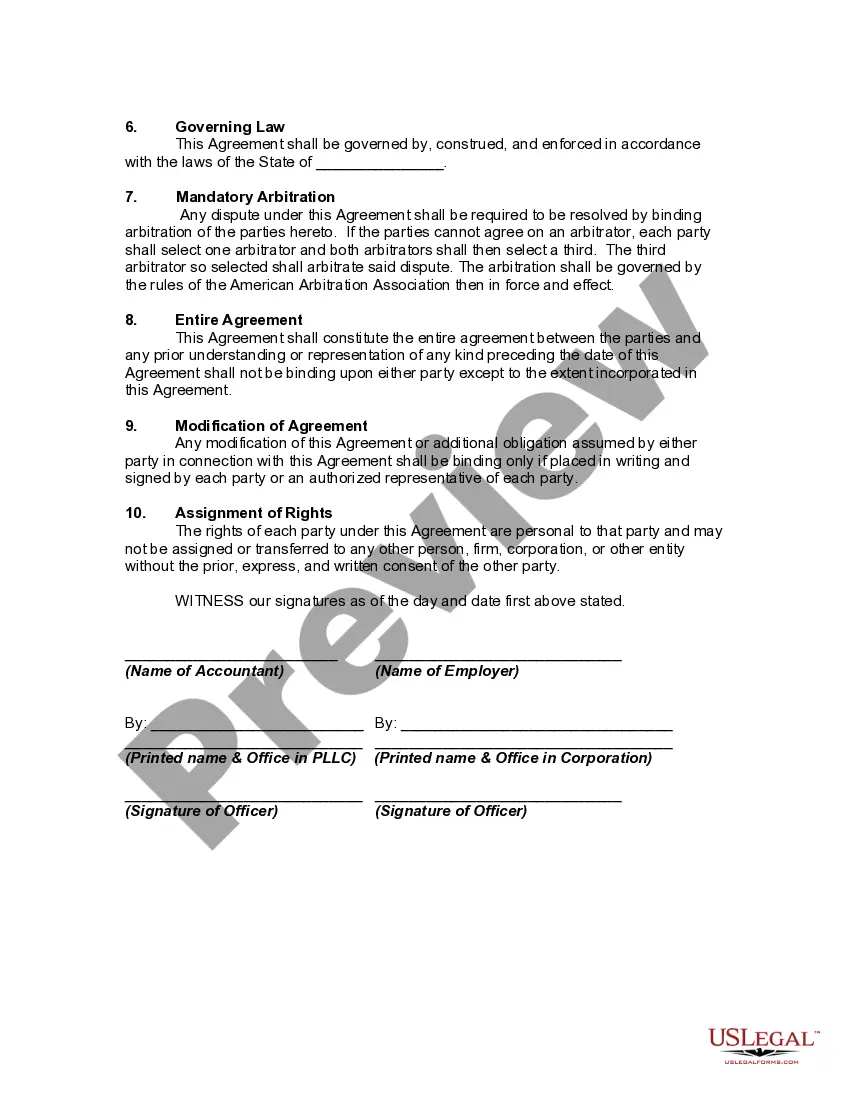
How to fill out Contract With Accountant To Audit Corporation's Group Medical, Disability, And Life Insurance Program?
Acquiring legal forms that adhere to federal and local regulations is crucial, and the web provides a plethora of choices.
However, what’s the use of spending time searching for the appropriate Accounting For Insurance Proceeds Deloitte example online if the US Legal Forms digital library already has such templates compiled in one location.
US Legal Forms is the premier online legal repository featuring over 85,000 fillable documents created by attorneys for various professional and personal situations.
Review the template through the Preview feature or the text description to ensure it fulfills your needs.
- They are easy to navigate with all documents categorized by state and purpose of use.
- Our experts keep pace with legislative updates, assuring you that your paperwork remains current and compliant when acquiring an Accounting For Insurance Proceeds Deloitte from our platform.
- Obtaining an Accounting For Insurance Proceeds Deloitte is quick and straightforward for both existing and new users.
- If you already possess an account with an active subscription, Log In and download the document sample you require in the desired format.
- If you’re new to our site, follow the steps below.
Form popularity
FAQ
Reimbursement for a loss: If the insurance proceeds are intended to reimburse the company for a loss or damage (e.g., property damage, theft, or loss of inventory), the proceeds are typically recorded as a reduction of the related loss or expense.
Generally, life insurance proceeds you receive as a beneficiary due to the death of the insured person, aren't includable in gross income and you don't have to report them. However, any interest you receive is taxable and you should report it as interest received. See Topic 403 for more information about interest.
If the gain is recorded prior to cash receipt, the offsetting debit to the gain is a receivable for expected insurance recoveries. A gain from insurance proceeds should be recorded in a separate account if the amount is material, thereby clearly labeling the gain as being non-operational in nature.
For example, if $10,000 of inventory is damaged in a fire and the proceeds are $7,000, the transaction should be recorded as a $7,000 debit to cash-fire damage reimbursement, a $3,000 debit to loss on insurance proceeds, and a $10,000 credit to inventory.
If $10,000 of inventory is damaged in a fire and the proceeds are $7,000, record the transaction as a $7,000 debit to Cash-Fire Damage Reimbursement, a $3,000 debit to Loss on Insurance Proceeds, and a $10,000 credit to Inventory. If the proceeds check is larger than the loss, the surplus is recorded as a gain.