Website User Terms For Dummies
Description
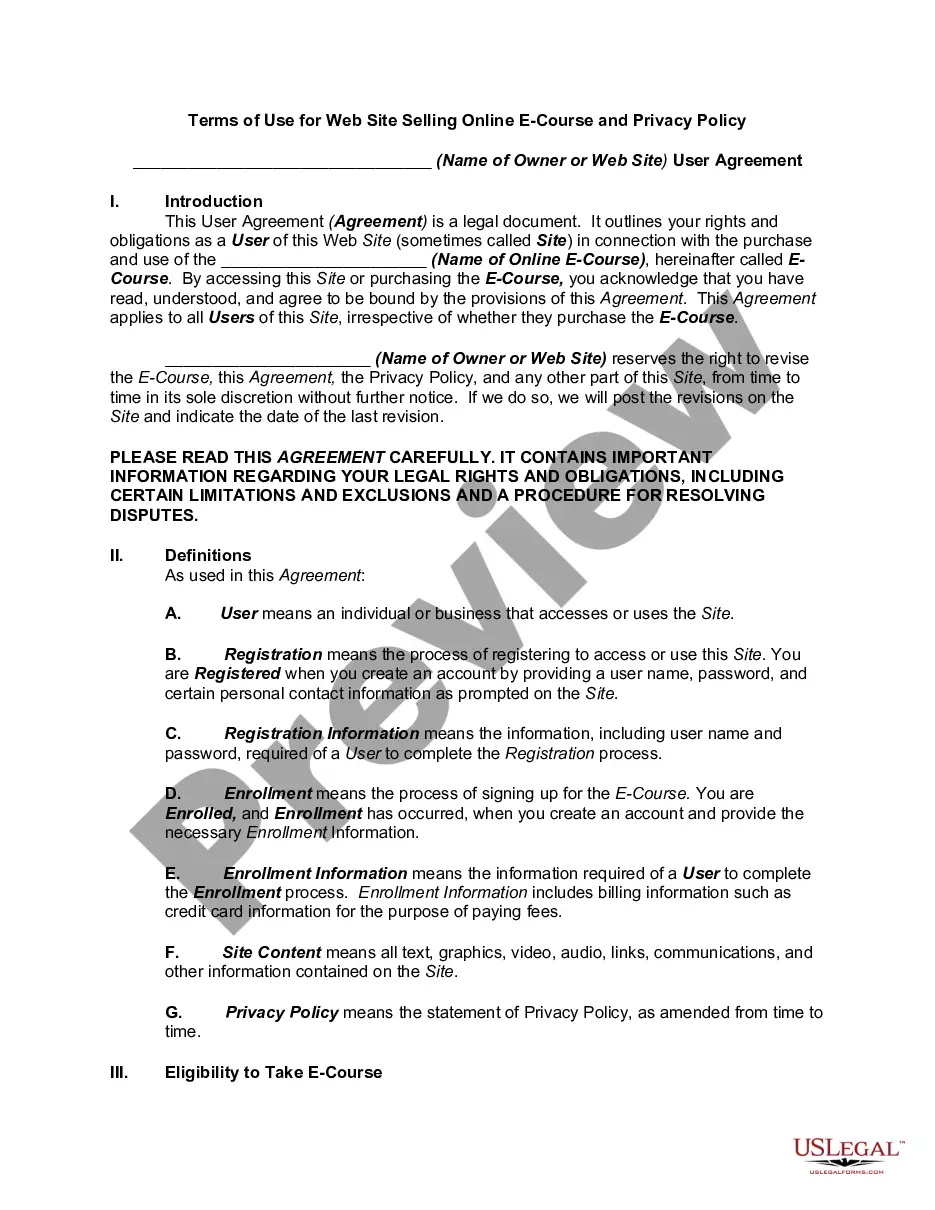
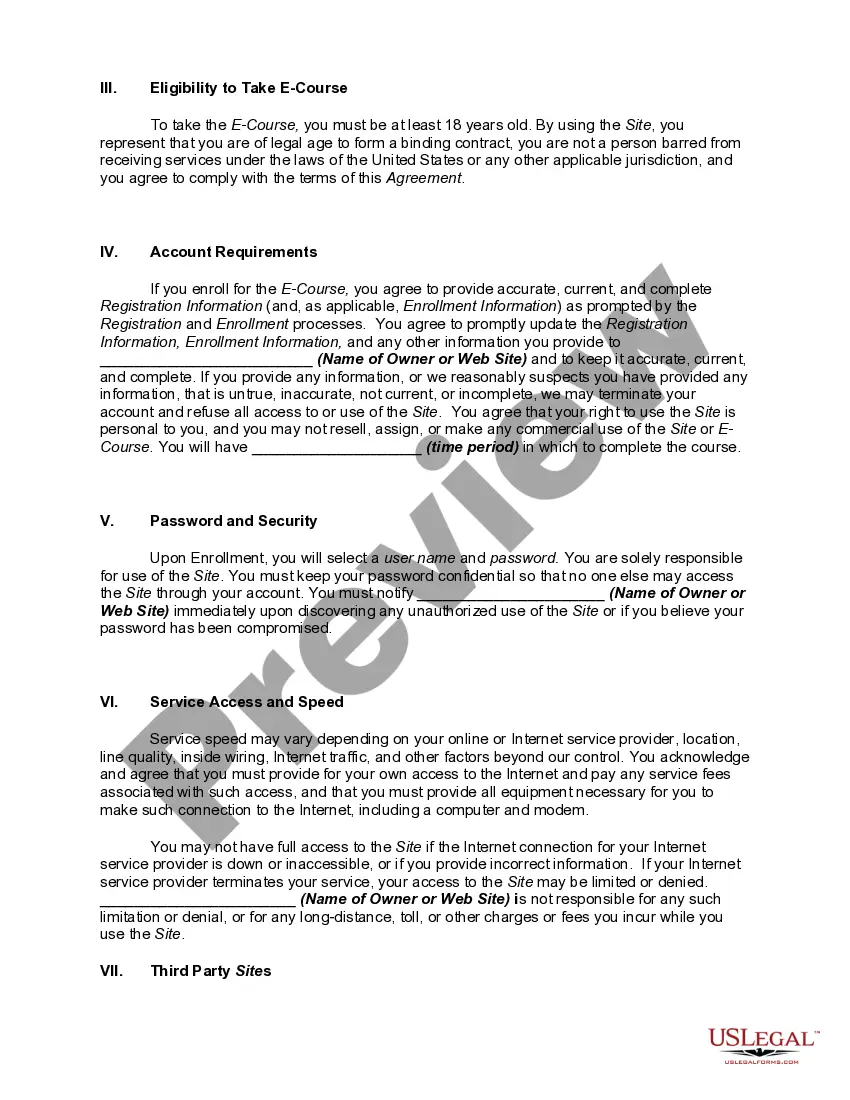
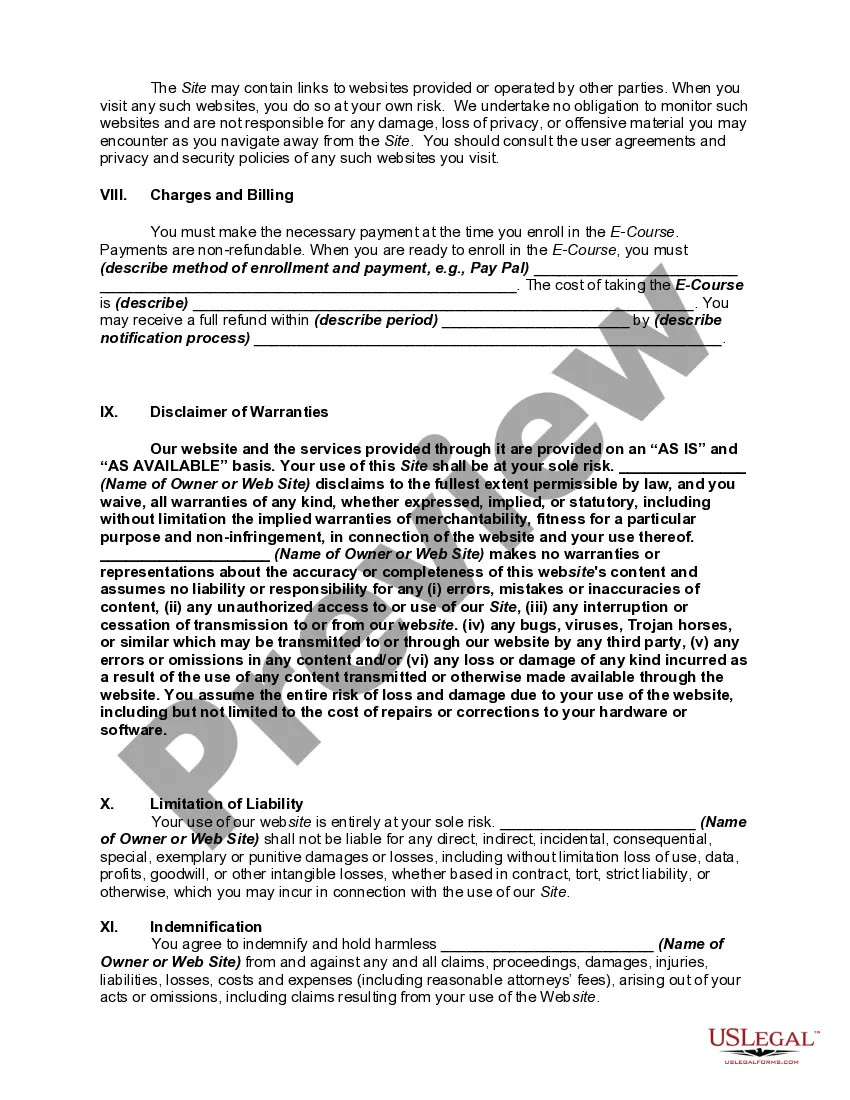
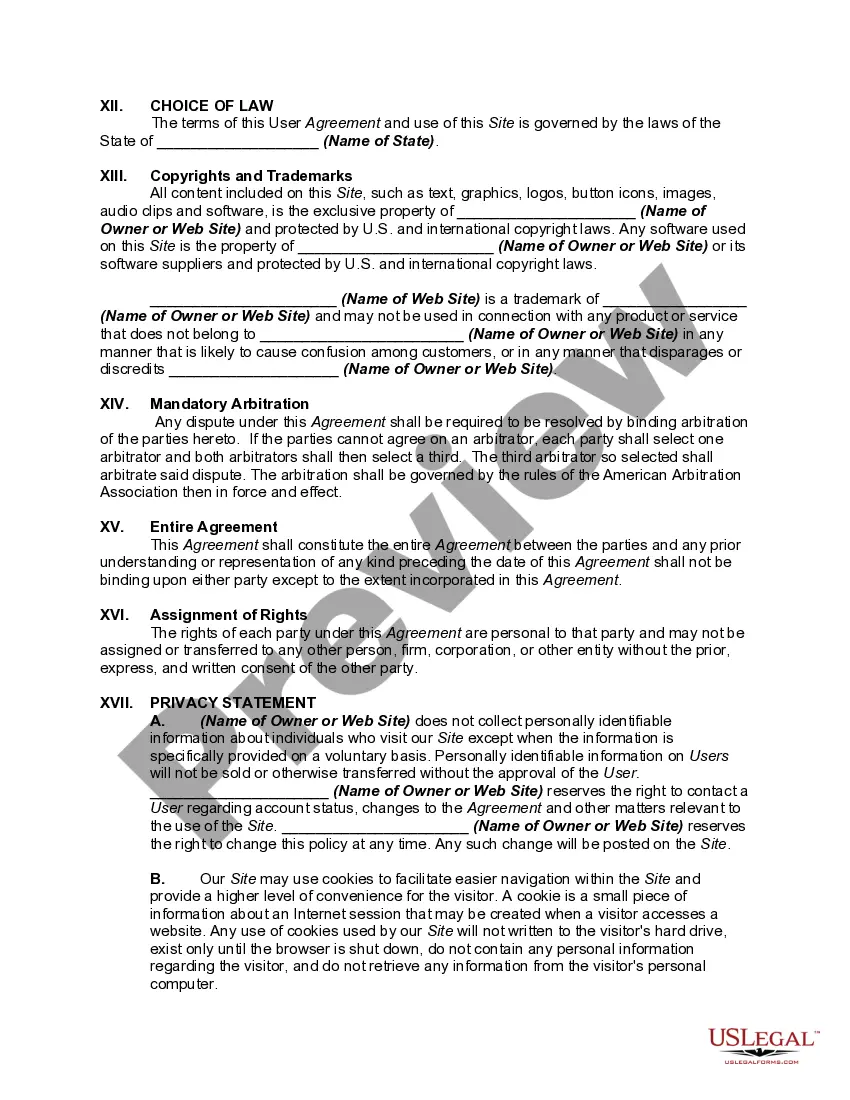
Get your form ready online
Our built-in tools help you complete, sign, share, and store your documents in one place.
Make edits, fill in missing information, and update formatting in US Legal Forms—just like you would in MS Word.
Download a copy, print it, send it by email, or mail it via USPS—whatever works best for your next step.
Sign and collect signatures with our SignNow integration. Send to multiple recipients, set reminders, and more. Go Premium to unlock E-Sign.
If this form requires notarization, complete it online through a secure video call—no need to meet a notary in person or wait for an appointment.
We protect your documents and personal data by following strict security and privacy standards.

Make edits, fill in missing information, and update formatting in US Legal Forms—just like you would in MS Word.

Download a copy, print it, send it by email, or mail it via USPS—whatever works best for your next step.

Sign and collect signatures with our SignNow integration. Send to multiple recipients, set reminders, and more. Go Premium to unlock E-Sign.

If this form requires notarization, complete it online through a secure video call—no need to meet a notary in person or wait for an appointment.

We protect your documents and personal data by following strict security and privacy standards.
Looking for another form?




How to fill out Website Subscription User Agreement - Terms Of Use For Website Selling Online E-Course Privacy Policy?
Whether for commercial reasons or personal matters, everyone must deal with legal circumstances at some stage in their life.
Completing legal documentation requires careful focus, starting with selecting the correct form template.
With an extensive US Legal Forms catalog available, you will never need to waste time searching for the suitable template online. Take advantage of the library’s straightforward navigation to find the right template for any circumstance.
- Locate the template you require by using the search bar or the catalog navigation.
- Review the form’s description to ensure it aligns with your case, jurisdiction, and county.
- Click on the form’s preview to take a look at it.
- If it is the incorrect document, go back to the search feature to locate the Website User Terms For Dummies example you need.
- Obtain the template when it fits your specifications.
- If you possess a US Legal Forms account, just click Log in to access previously saved documents in My documents.
- If you do not have an account currently, you can acquire the form by clicking Buy now.
- Choose the appropriate pricing option.
- Complete the account registration form.
- Select your payment method: you can utilize a credit card or PayPal account.
- Choose the file format you desire and download the Website User Terms For Dummies.
- After it is downloaded, you can fill out the form using editing software or print it and fill it out by hand.
Form popularity
FAQ
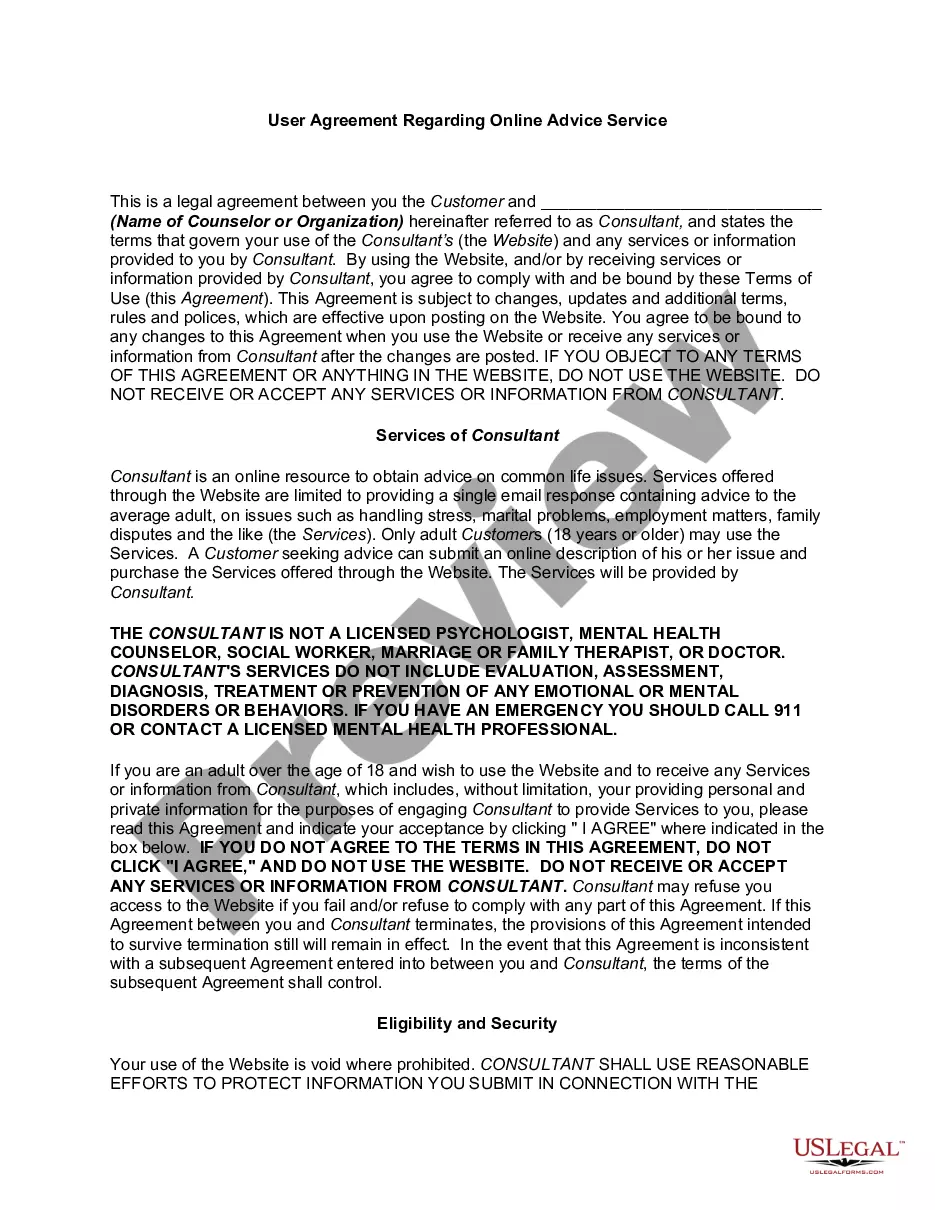
There are certain clauses your User Agreement should contain, including: Breach of contract. Choice of law. Contact information. Device licensing requirements. Limitations of liability. Modifications to the terms. Non-exclusivity and non-transferability. Payments.
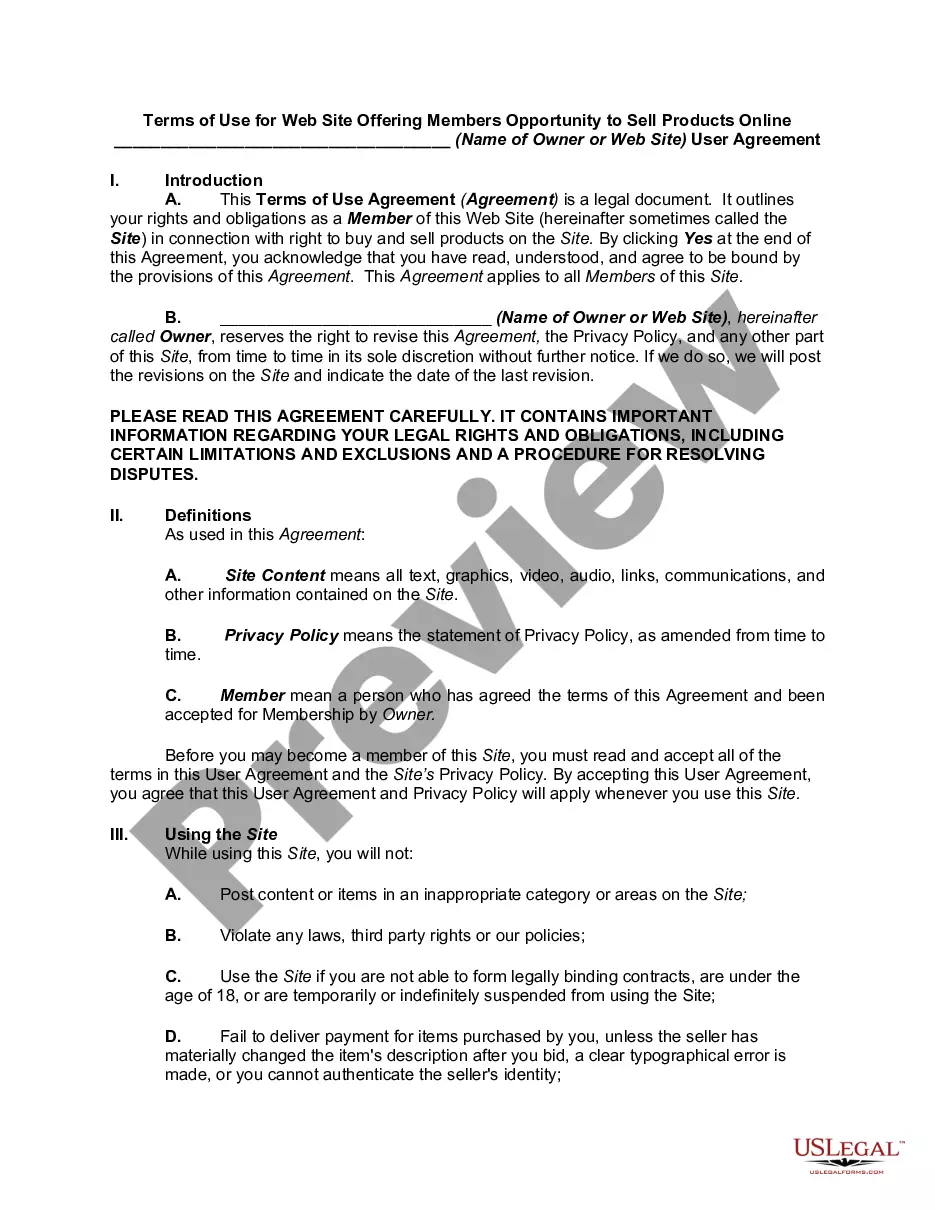
Here are a few examples of what you can include in yours: Establish and clarify your intellectual property rights. Limit your liabilities. Outline your dispute resolution options. Disclose your governing laws. Establish payment terms. Include shipping policy and return and refund details.
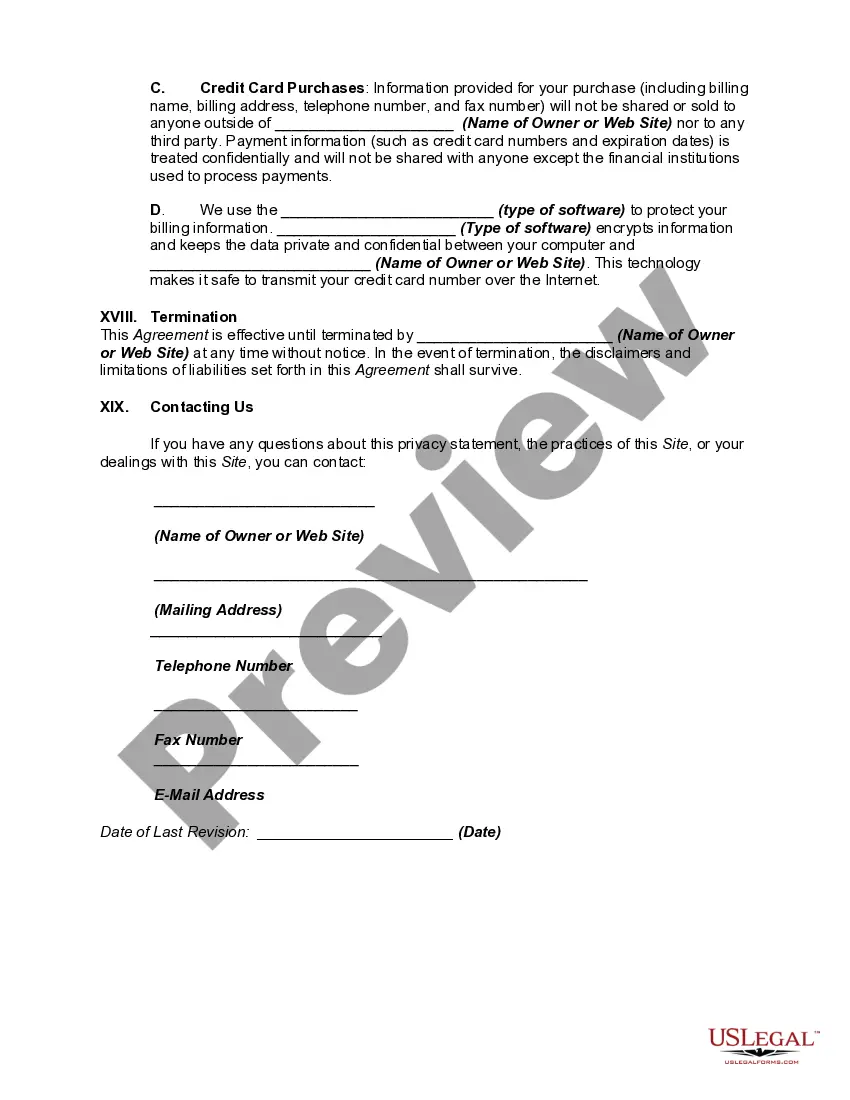
A terms of use agreement should include: Clear rules for acceptable use of the site. Disclaimers limiting liability. Information on website ownership and copyright. A privacy policy on data collection and usage. Termination provisions. Applicable law and jurisdiction. Procedures for resolving disputes.
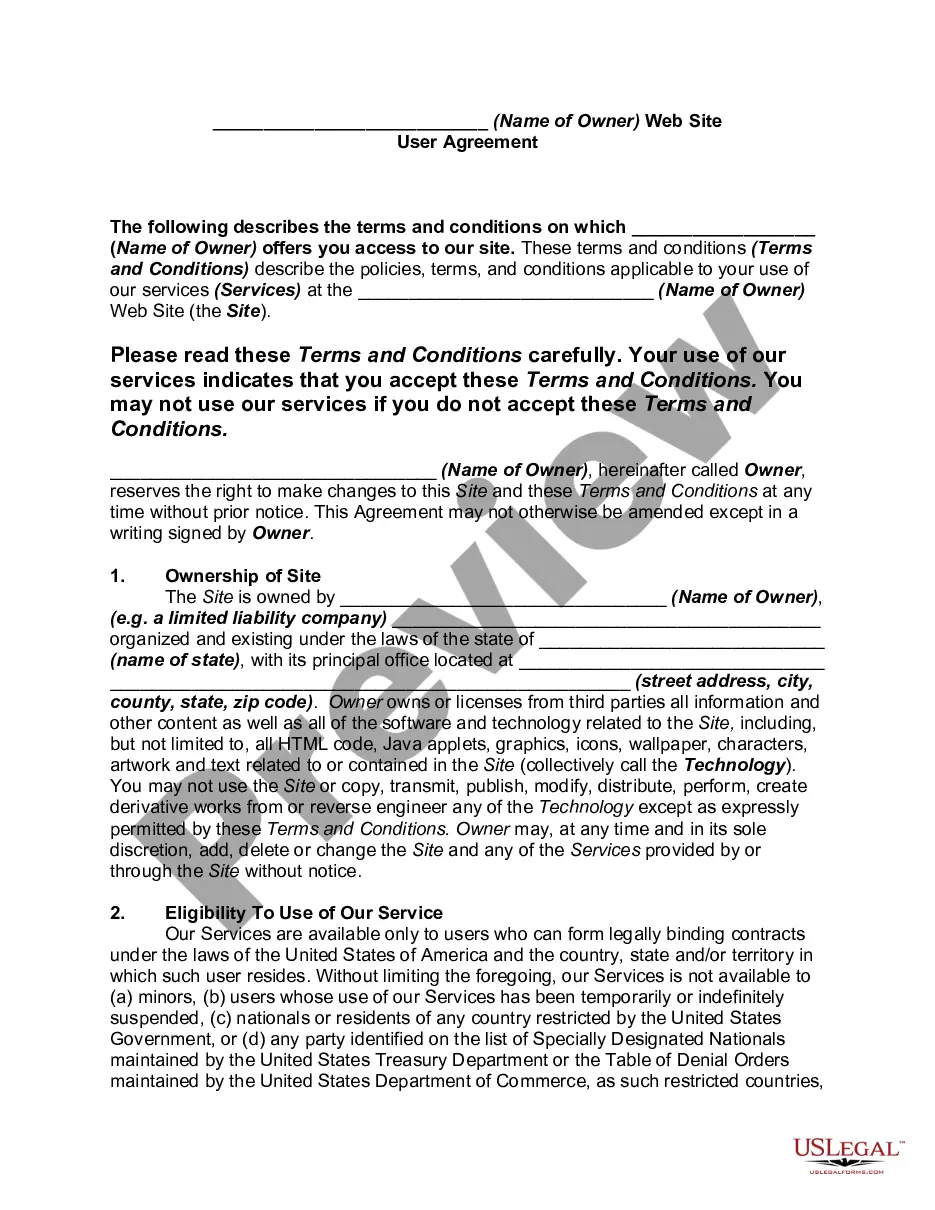
The website's terms and conditions?also called ?terms of use" or ?terms of service"?lay down the ground rules for users visiting your website and serve as a binding agreement between you and the user, or website visitor. The website terms and conditions protects you from legal liability should a dispute arise.
How to Write Terms and Conditions Detail Your Introduction. ... Talk About Updates to Your Terms of Service. ... Inform Users of the Agreement. ... Outline Your Responsibilities. ... Detail Prohibited Activities. ... Discuss Website and Content Ownership. ... Talk About Rights to Access. ... Write Your Company's Rights.