Summary Judgment With Prejudice
Description
Get your form ready online
Our built-in tools help you complete, sign, share, and store your documents in one place.
Make edits, fill in missing information, and update formatting in US Legal Forms—just like you would in MS Word.
Download a copy, print it, send it by email, or mail it via USPS—whatever works best for your next step.
Sign and collect signatures with our SignNow integration. Send to multiple recipients, set reminders, and more. Go Premium to unlock E-Sign.
If this form requires notarization, complete it online through a secure video call—no need to meet a notary in person or wait for an appointment.
We protect your documents and personal data by following strict security and privacy standards.

Make edits, fill in missing information, and update formatting in US Legal Forms—just like you would in MS Word.

Download a copy, print it, send it by email, or mail it via USPS—whatever works best for your next step.

Sign and collect signatures with our SignNow integration. Send to multiple recipients, set reminders, and more. Go Premium to unlock E-Sign.

If this form requires notarization, complete it online through a secure video call—no need to meet a notary in person or wait for an appointment.

We protect your documents and personal data by following strict security and privacy standards.
Looking for another form?


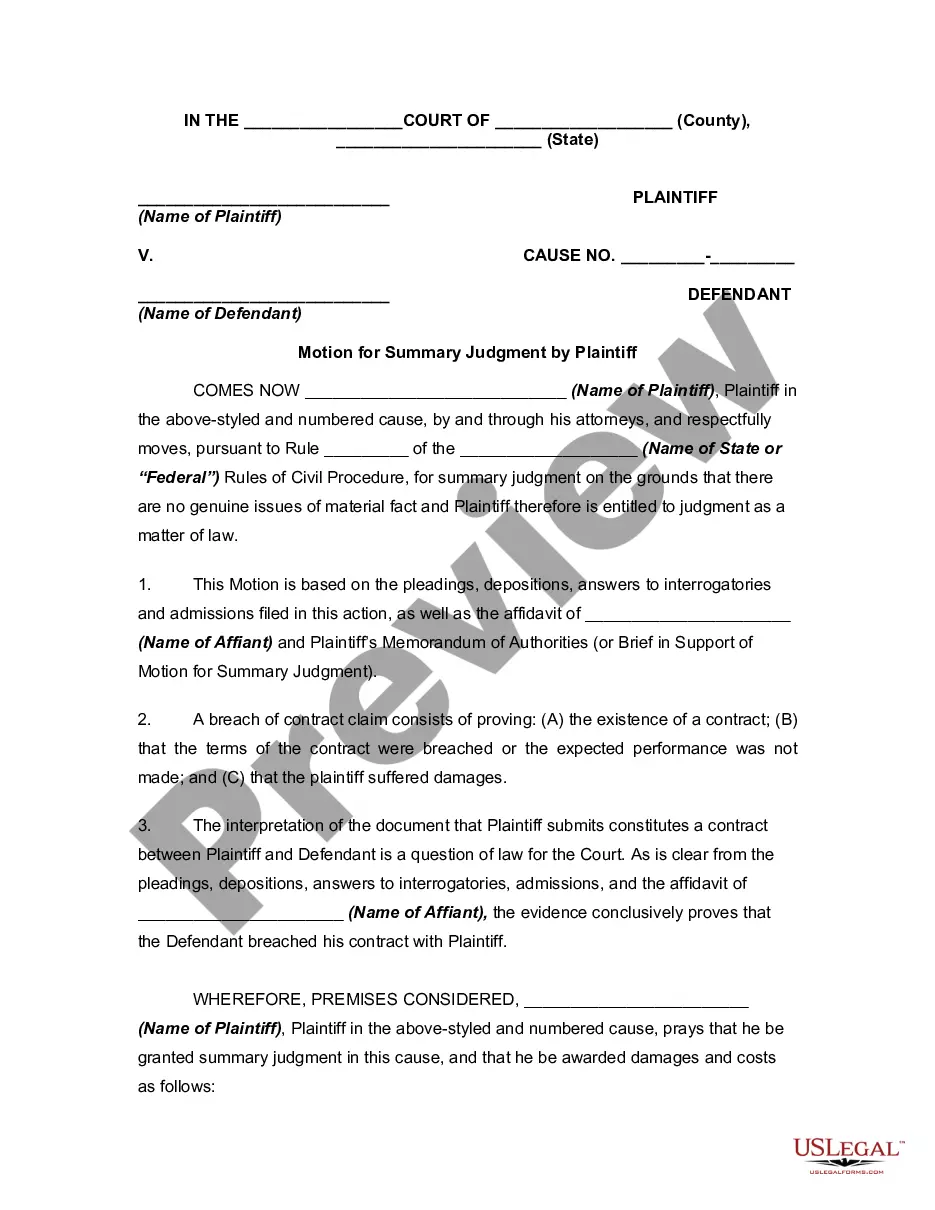
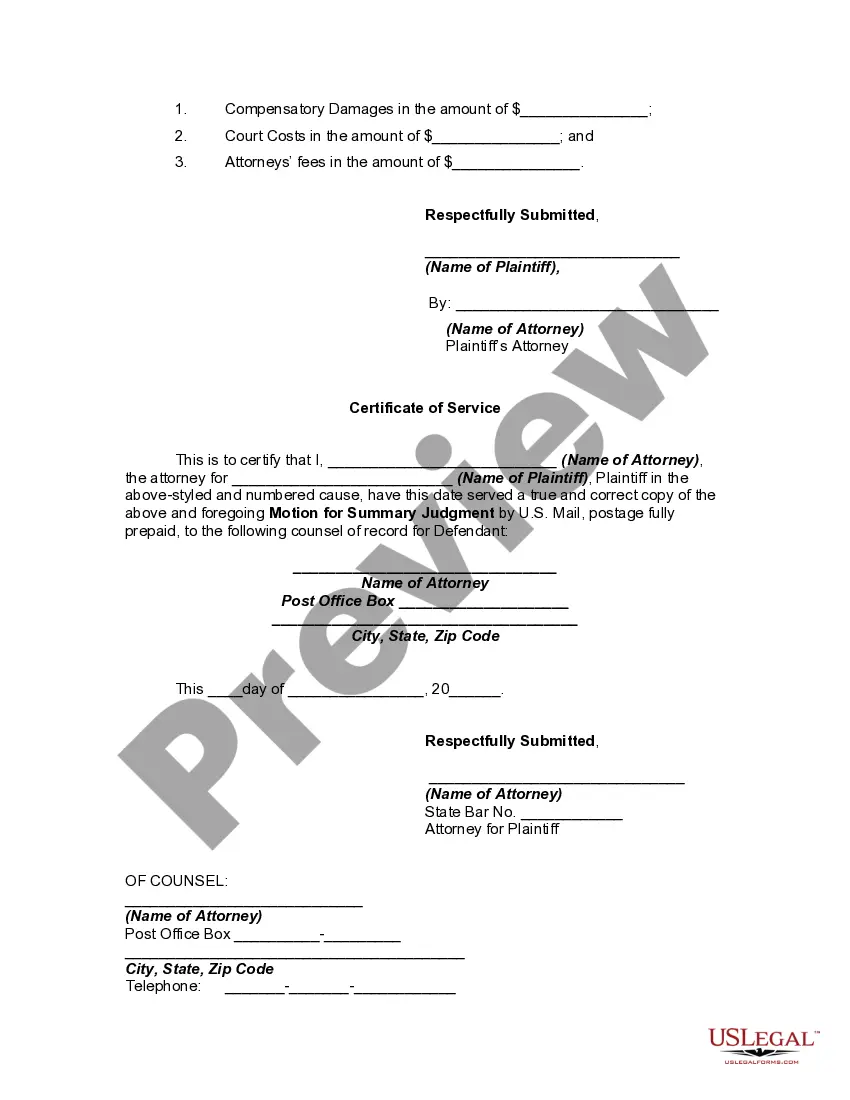
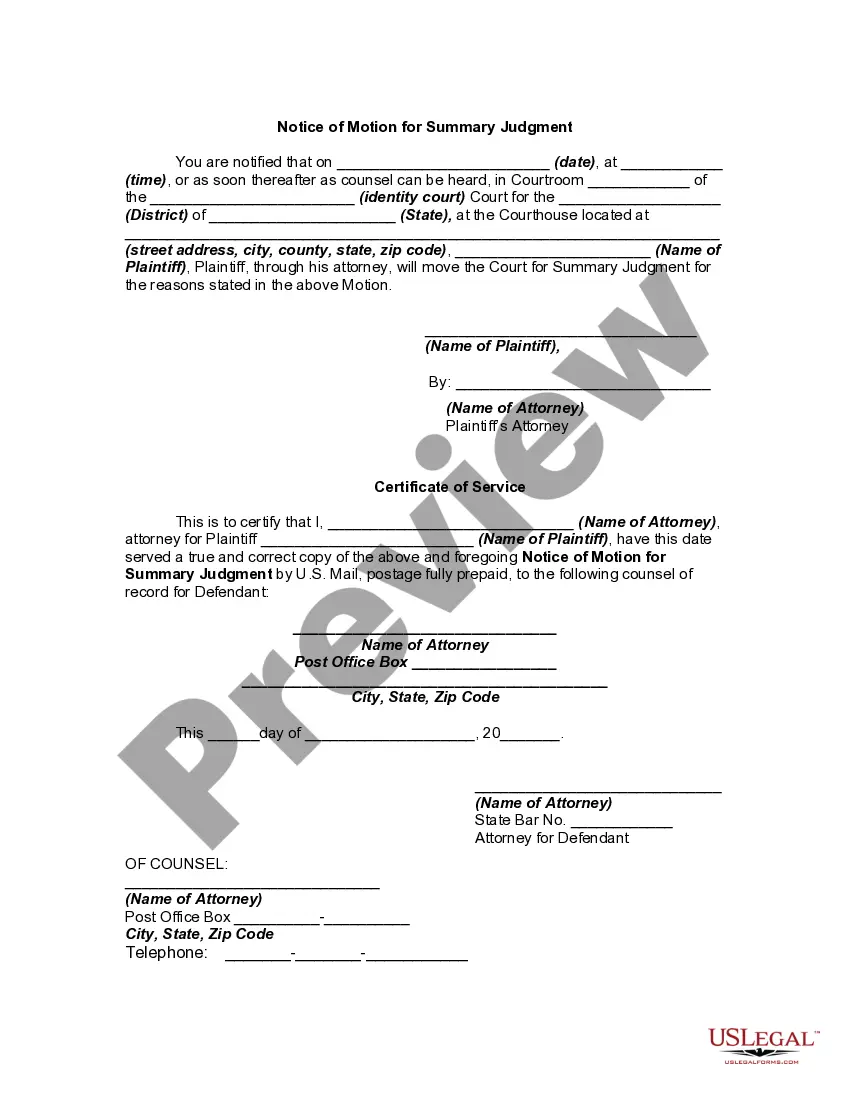
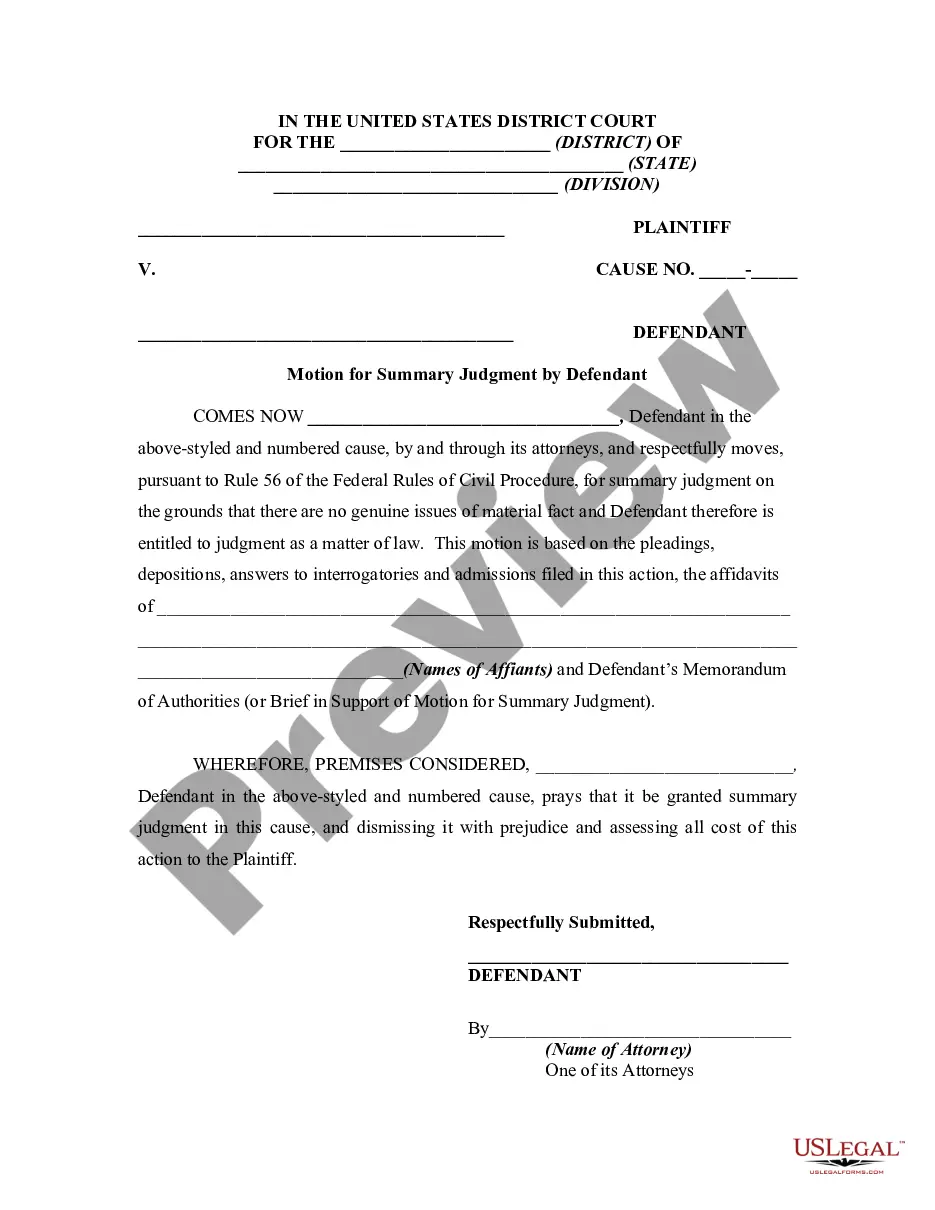
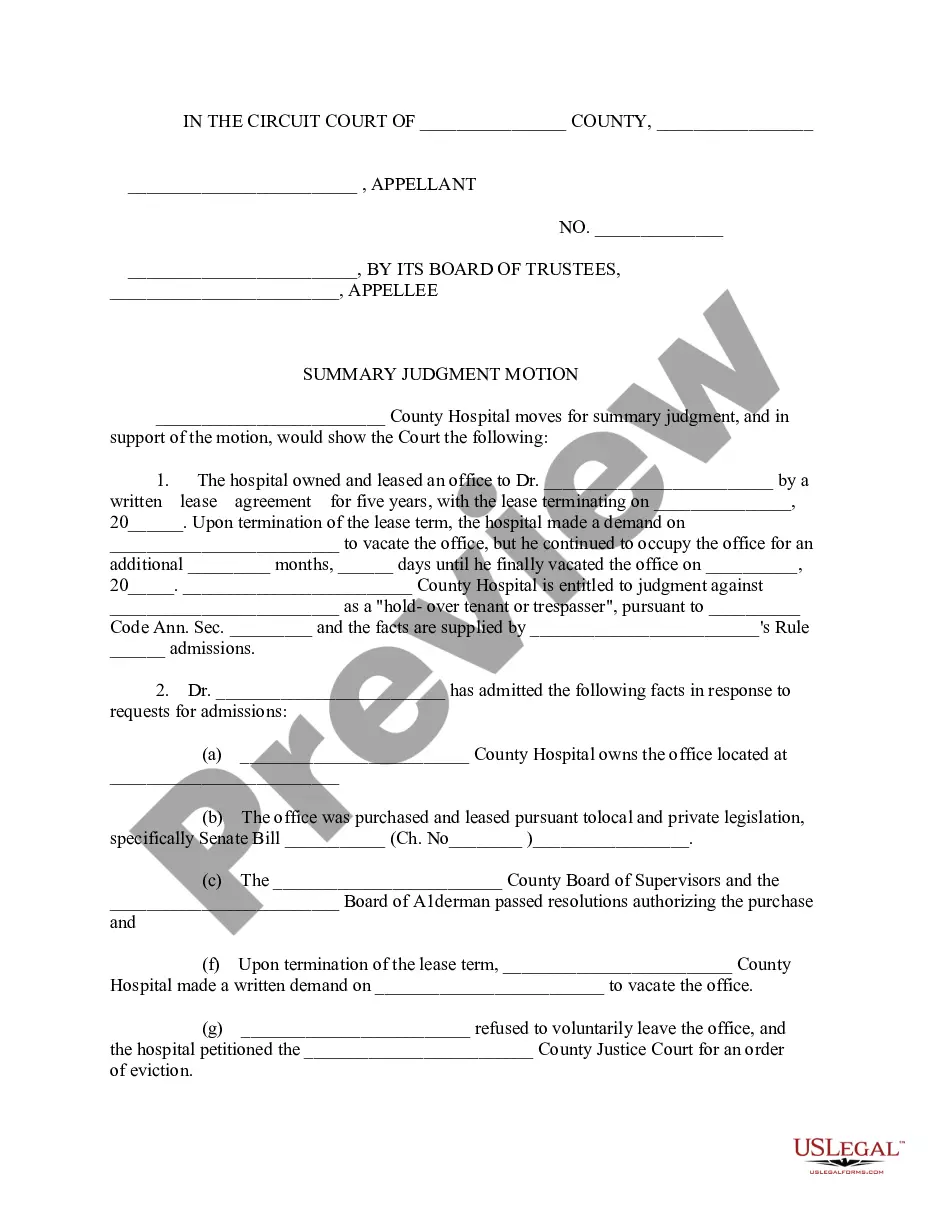
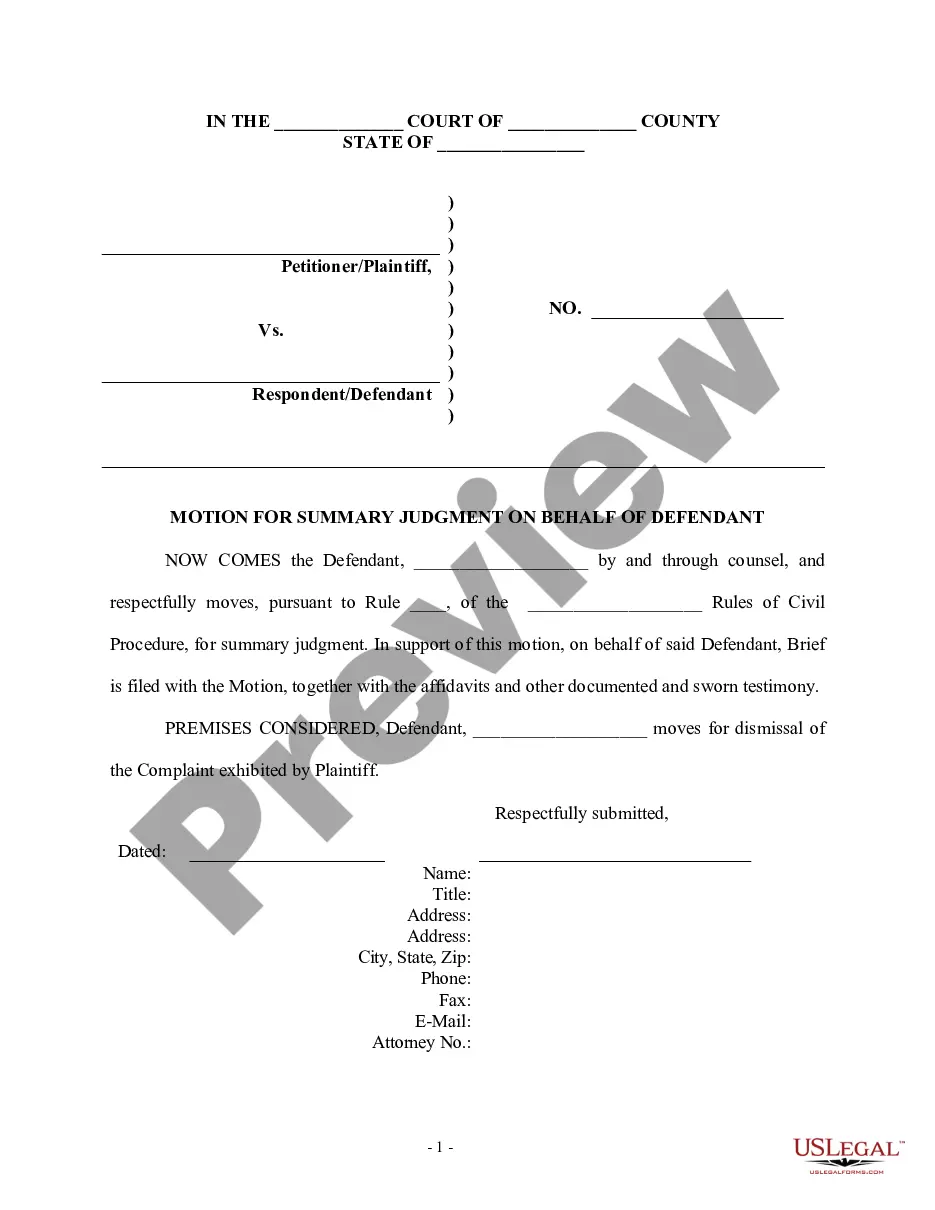
How to fill out Motion For Summary Judgment By Plaintiff For Breach Of Contract?
- Log in to your US Legal Forms account if you're a returning user, and ensure your subscription is active. If not, simply renew it based on your current payment plan.
- If you’re a new user, start by viewing the form description and preview mode. Confirm that the template fulfills your requirements and aligns with your local jurisdiction.
- Should you find the current template unsuitable, utilize the Search tab to locate the correct document that meets your needs.
- Once you've identified the right form, click the 'Buy Now' button, select your preferred subscription plan, and set up an account for full library access.
- Complete your purchase by entering your payment information via credit card or PayPal.
- Finally, download your completed form to your device and access it anytime under the 'My Forms' section of your profile.
In conclusion, US Legal Forms offers an unparalleled user experience, empowering you to handle your legal documents with confidence. Take advantage of their expert resources to ensure your forms are executed accurately.
Start your hassle-free legal documentation journey with US Legal Forms today!
Form popularity
FAQ
The burden of proof for summary judgment lies primarily with the party seeking the judgment. They must demonstrate that there are no genuine disputes regarding material facts and that they are entitled to judgment as a matter of law. This requirement emphasizes the necessity of a solid legal foundation when presenting your case in order to achieve a favorable outcome.
When a summary judgment is granted, the court decides that one party has enough evidence to support their case, eliminating the need for a trial. This decision means that the case will not proceed in court, either favoring the plaintiff or dismissing the claims. It highlights the importance of having strong evidence and legal basis in your arguments when you pursue litigation.
Summary judgment can be either with or without prejudice, depending on the court's ruling. A dismissal with prejudice prevents the case from being reopened, while a dismissal without prejudice allows the plaintiff the opportunity to refile the claim in the future. Understanding these distinctions is crucial when navigating the legal process surrounding summary judgment with prejudice.
Summary judgment dismissal with prejudice means that the case is dismissed permanently, and the plaintiff cannot bring the same claims back to court. This type of dismissal signifies that the court has found sufficient reasons to deny the plaintiff’s claims. A dismissal with prejudice can be significant as it concludes the legal process for those claims, underscoring the importance of thorough preparation before filing.
There are two main types of summary judgment: summary judgment in favor of the plaintiff and summary judgment in favor of the defendant. Summary judgment in favor of the plaintiff occurs when the court finds there is enough evidence to support the plaintiff’s claims. Conversely, summary judgment in favor of the defendant happens when the evidence does not support the plaintiff's case, leading to a dismissal that can either be with or without prejudice.
A judgment with prejudice indicates that a case has been conclusively decided by the court, barring the losing party from any further legal action on the matter. This term highlights the finality of a court's ruling in the context of summary judgment with prejudice. It ensures that the legal process cannot be endlessly prolonged. If you're seeking clarity on this process, consider using USLegalForms, which simplifies navigating these legal complexities.
Judgment with prejudice means that the court's decision is final and prevents the losing party from bringing the same claim again. This is a critical aspect of summary judgment with prejudice, as it offers closure to the matter. Thus, once the judgment is issued, it has a binding effect on both parties. Realizing this can save time and resources, allowing individuals to move forward without the fear of revisiting the same dispute.
A prejudice judgment refers to a decision made by a court that ends a case in favor of one party. Specifically, it means that the court has ruled against the party, and that party cannot return to court on the same issue. With the concept of summary judgment with prejudice, the ruling is final. This effectively closes the door on any future claims related to the same cause of action.
The odds of obtaining a summary judgment with prejudice depend on various factors, including the strength of your evidence and the specifics of your case. Generally, if your evidence clearly demonstrates no disputed facts, your chances increase significantly. By utilizing USLegalForms, you can access tools and templates to strengthen your argument for summary judgment, giving you a better shot at a favorable outcome.
In the legal landscape, the percentage of summary judgment with prejudice granted varies by jurisdiction, but studies show that approximately 20-30% of motions succeed. Judges typically grant summary judgment when there is no genuine dispute over material facts. Understanding these statistics can help you prepare for your case effectively. At USLegalForms, we provide resources to help you navigate the summary judgment process confidently.