Not Compliant With Medication
Description
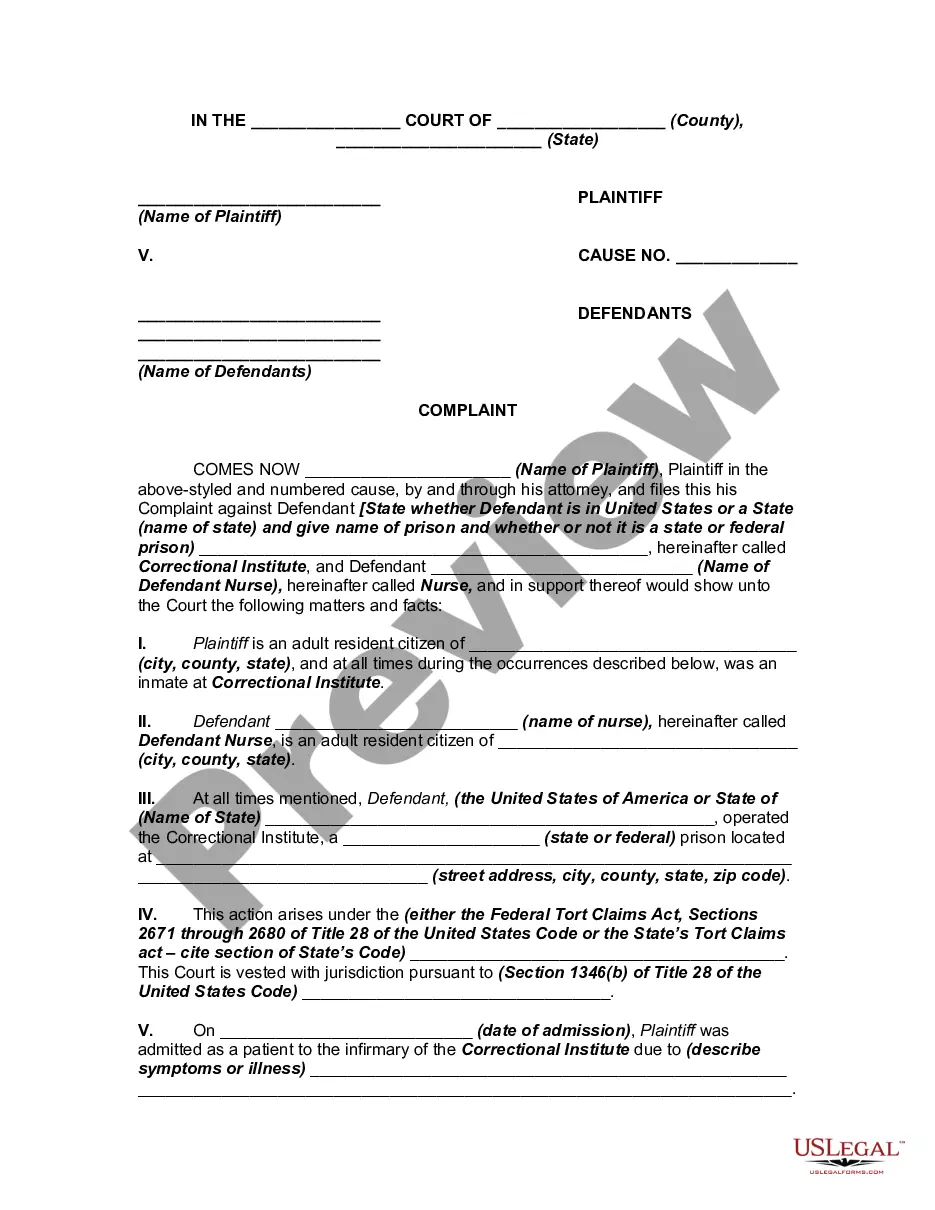
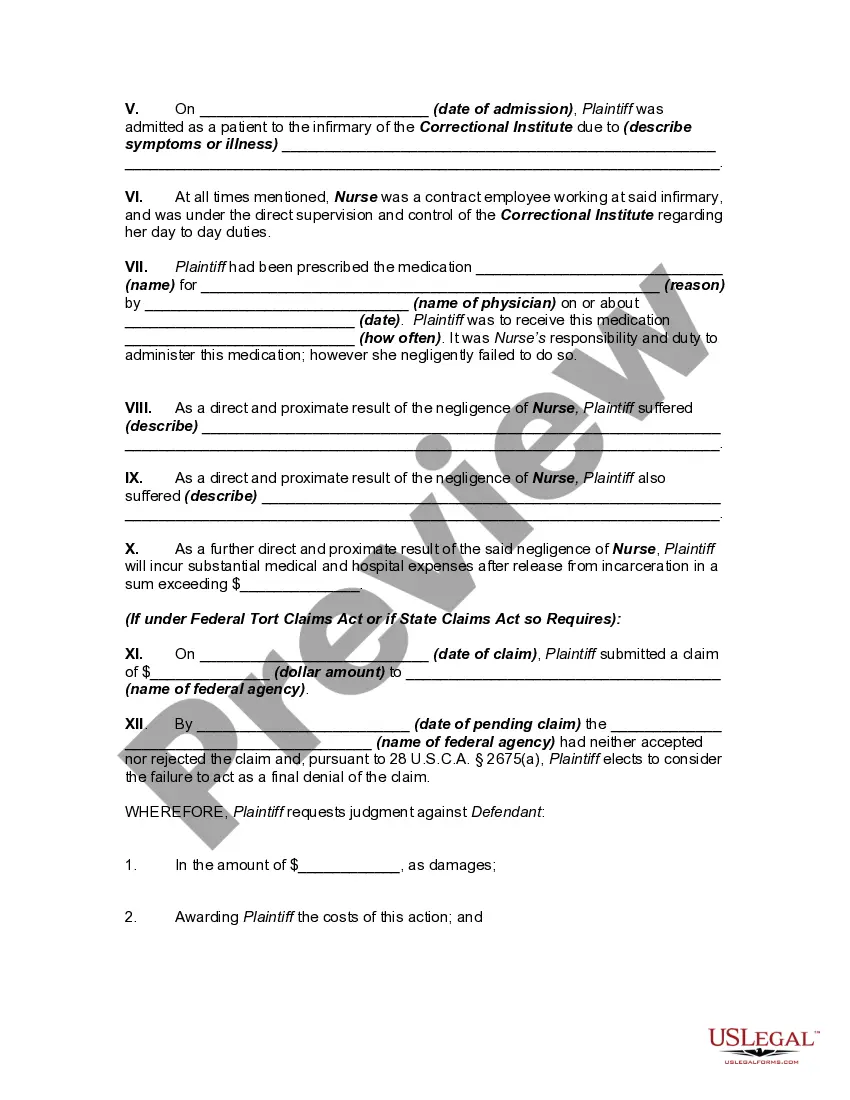
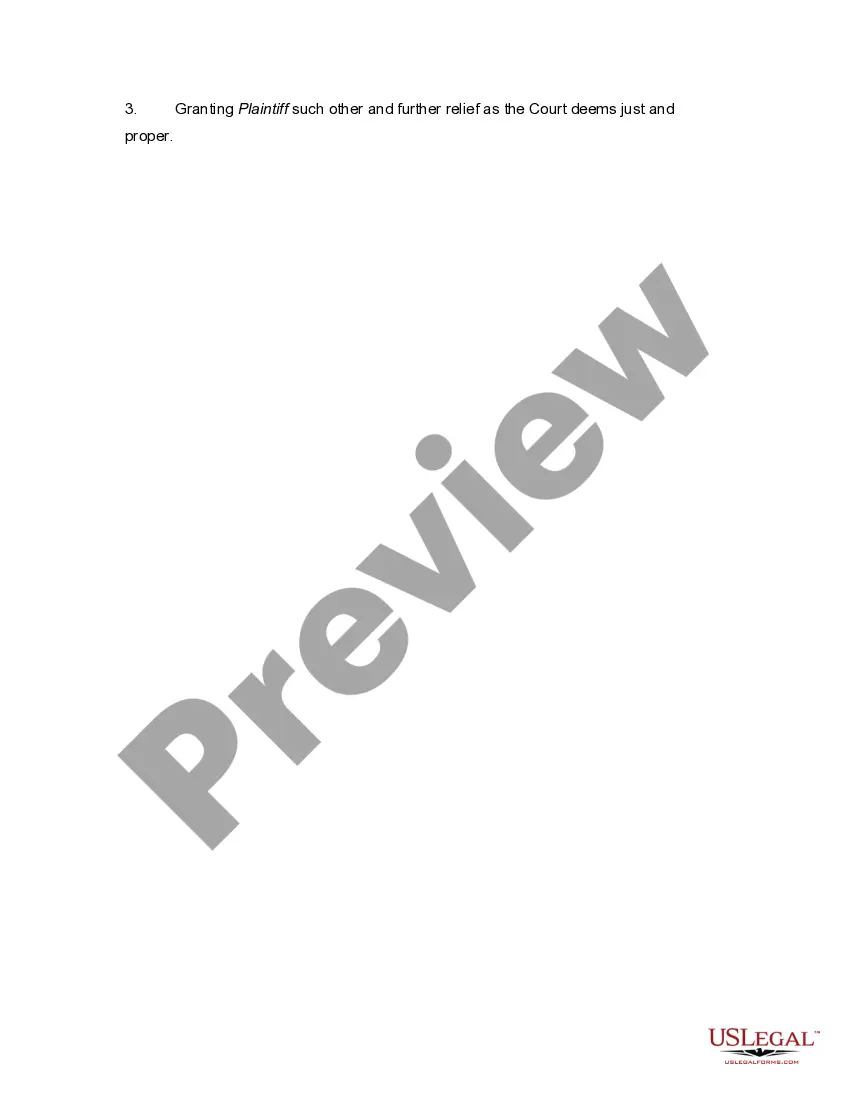
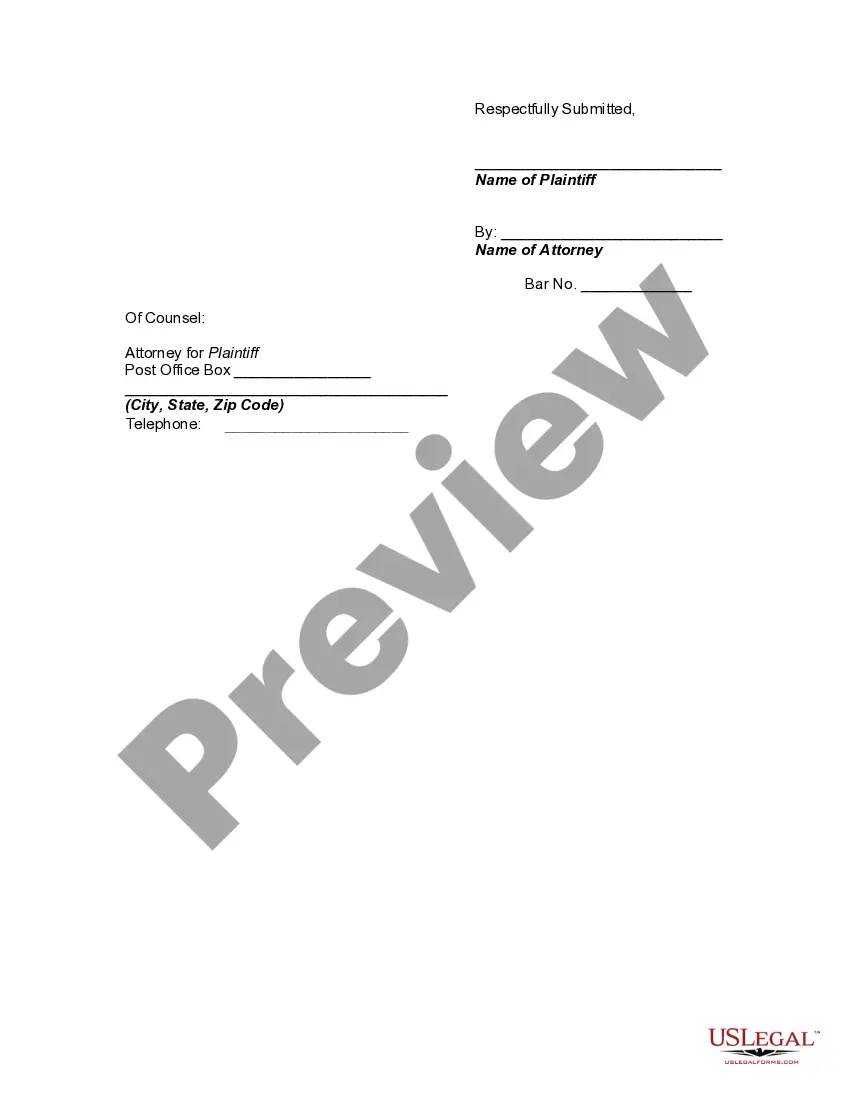
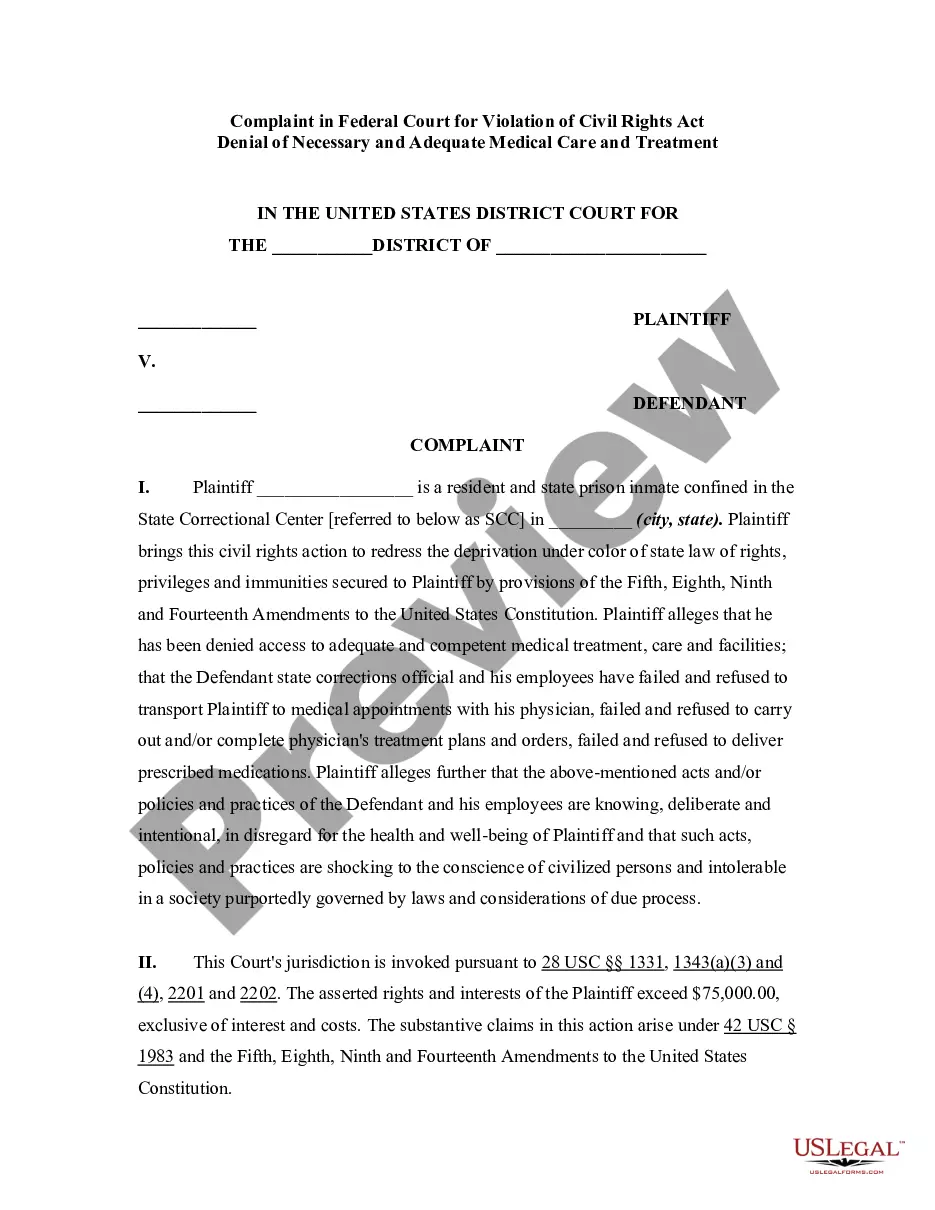
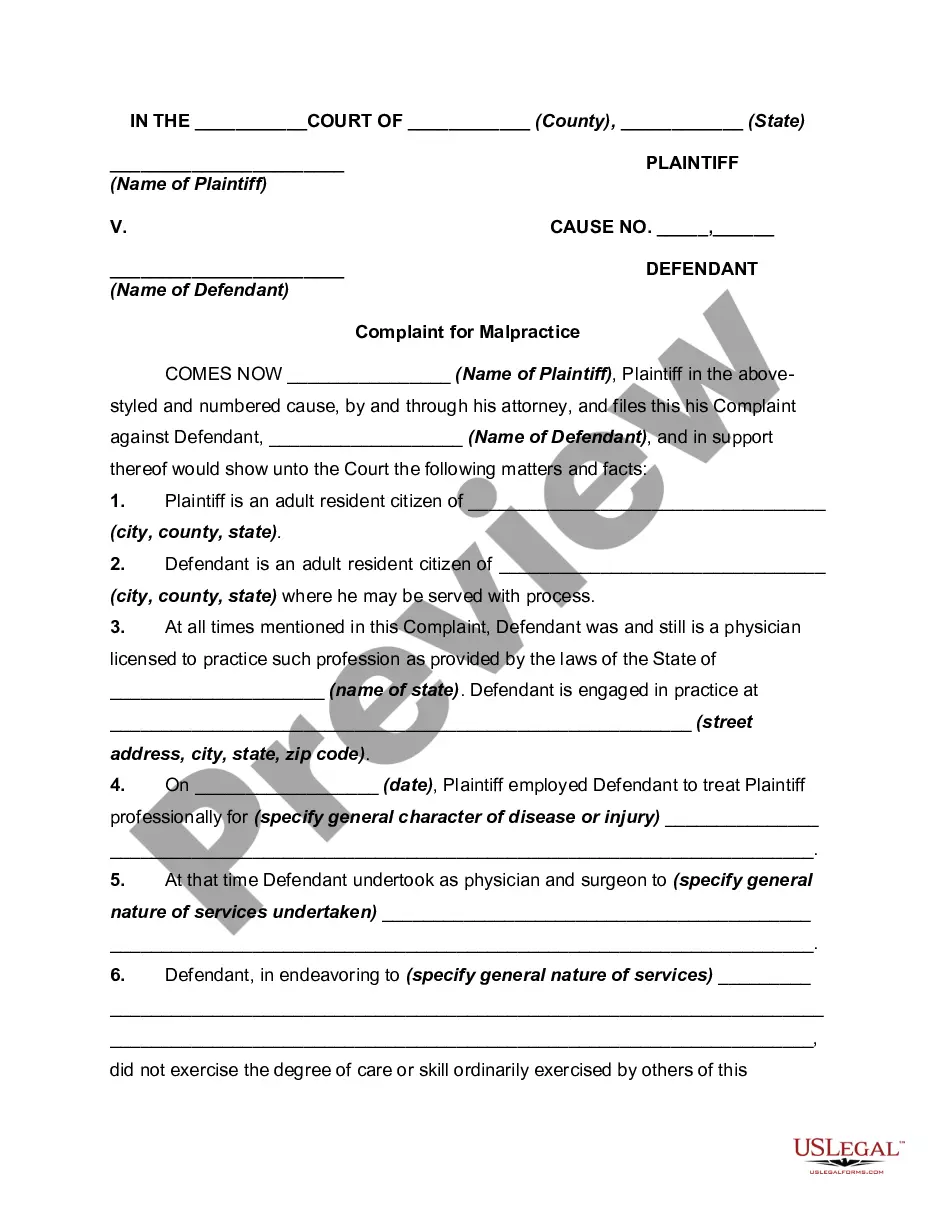
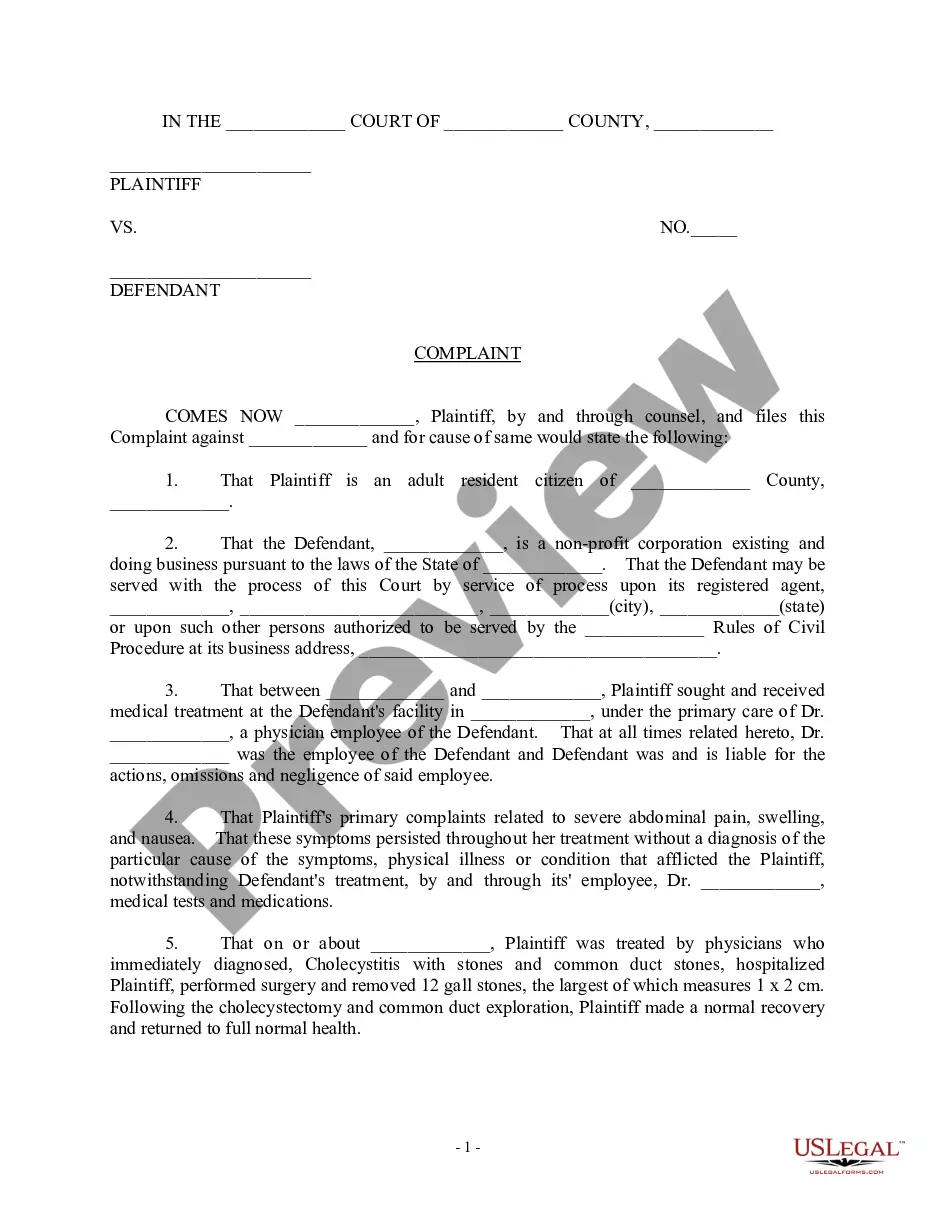
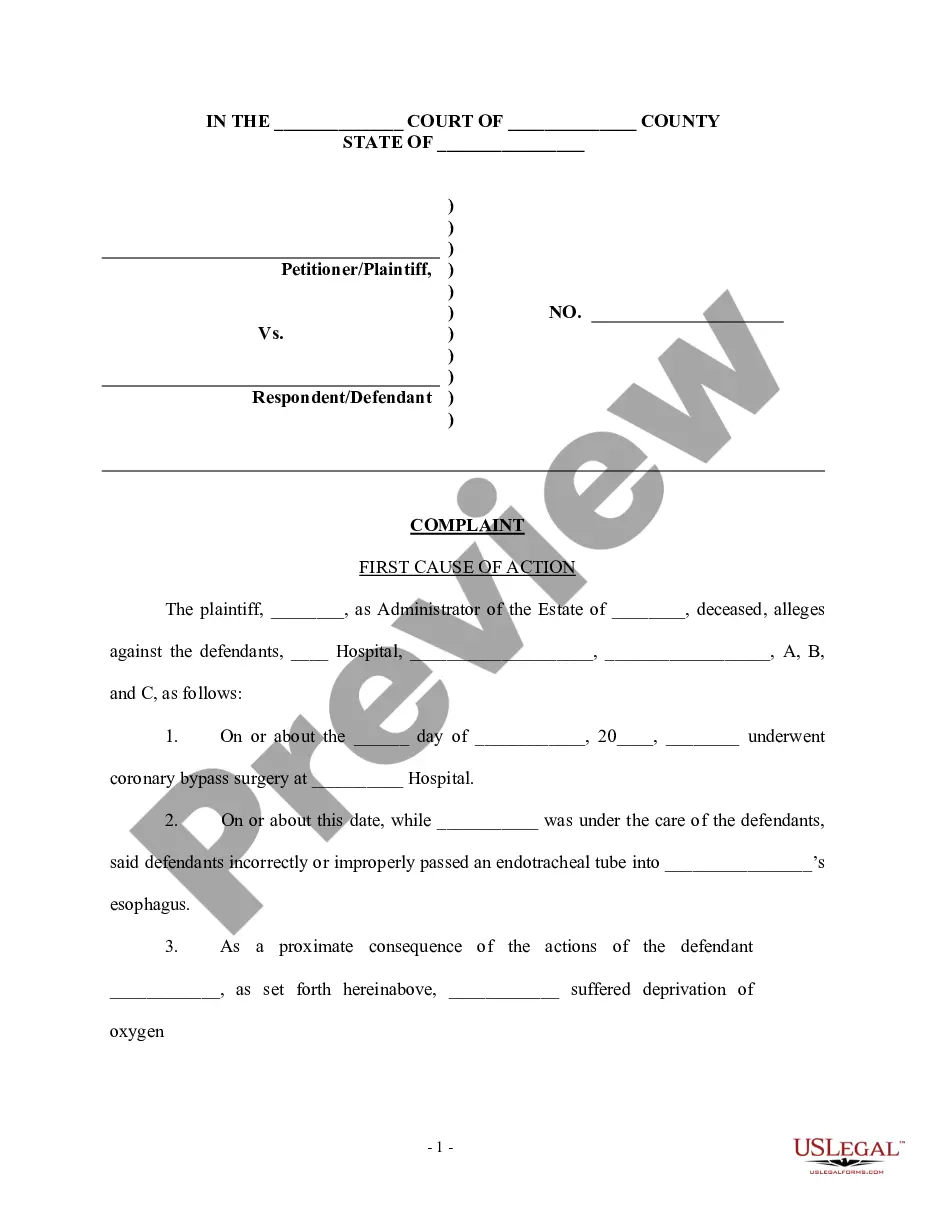
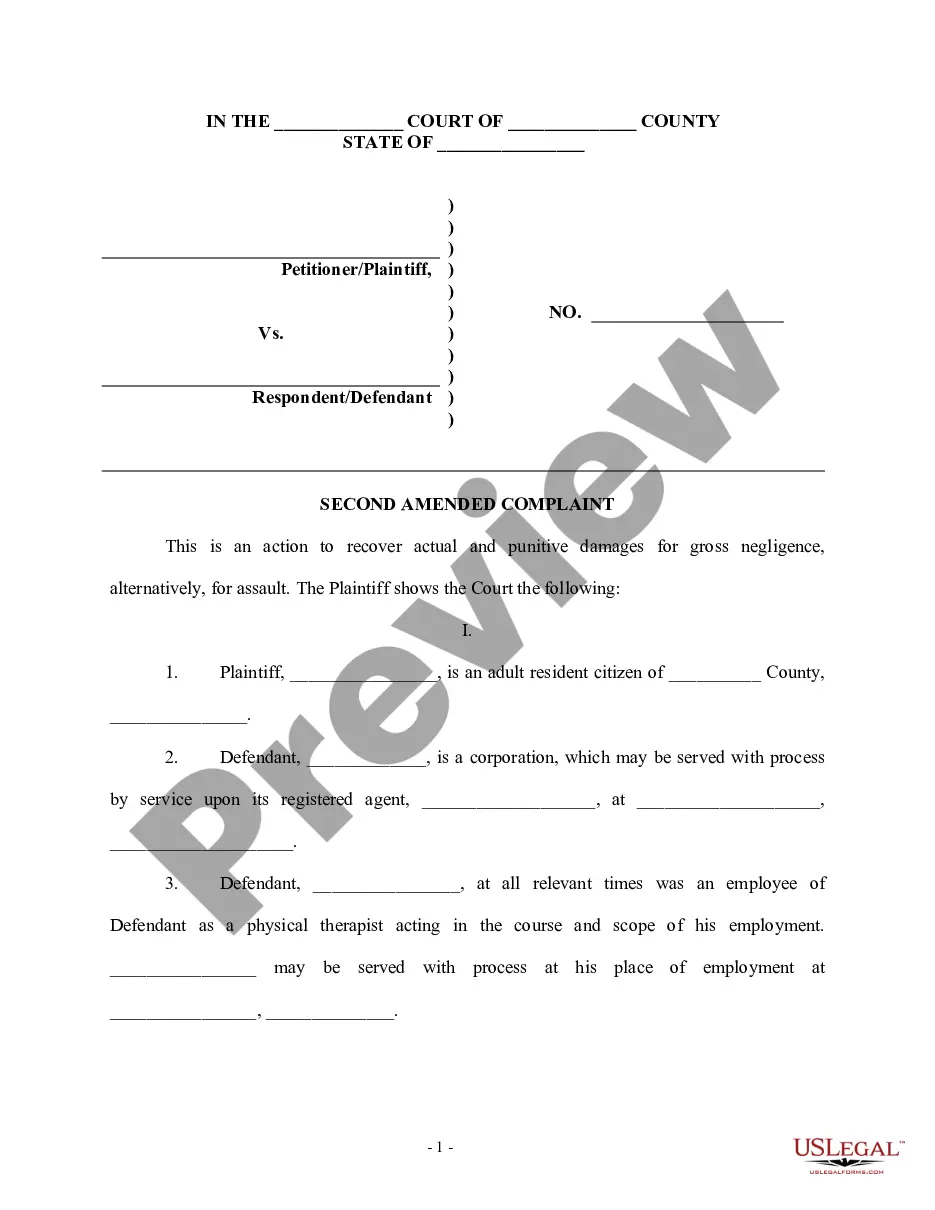
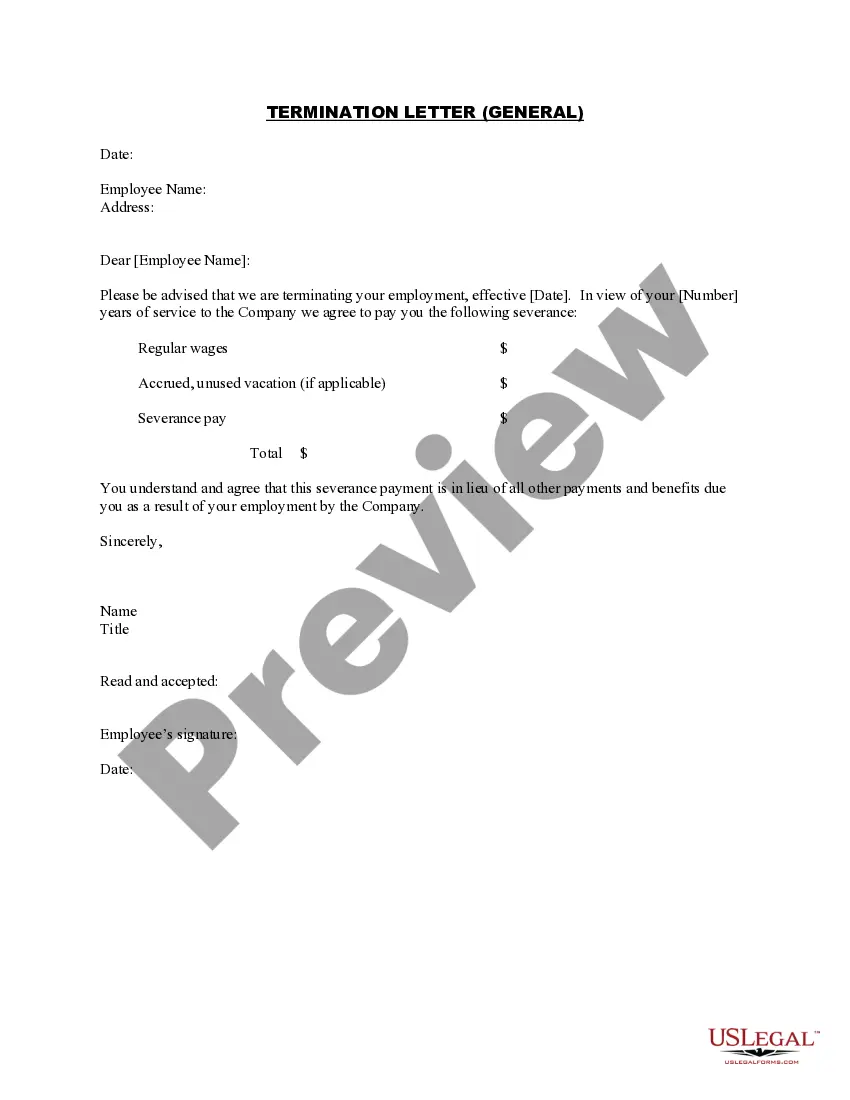
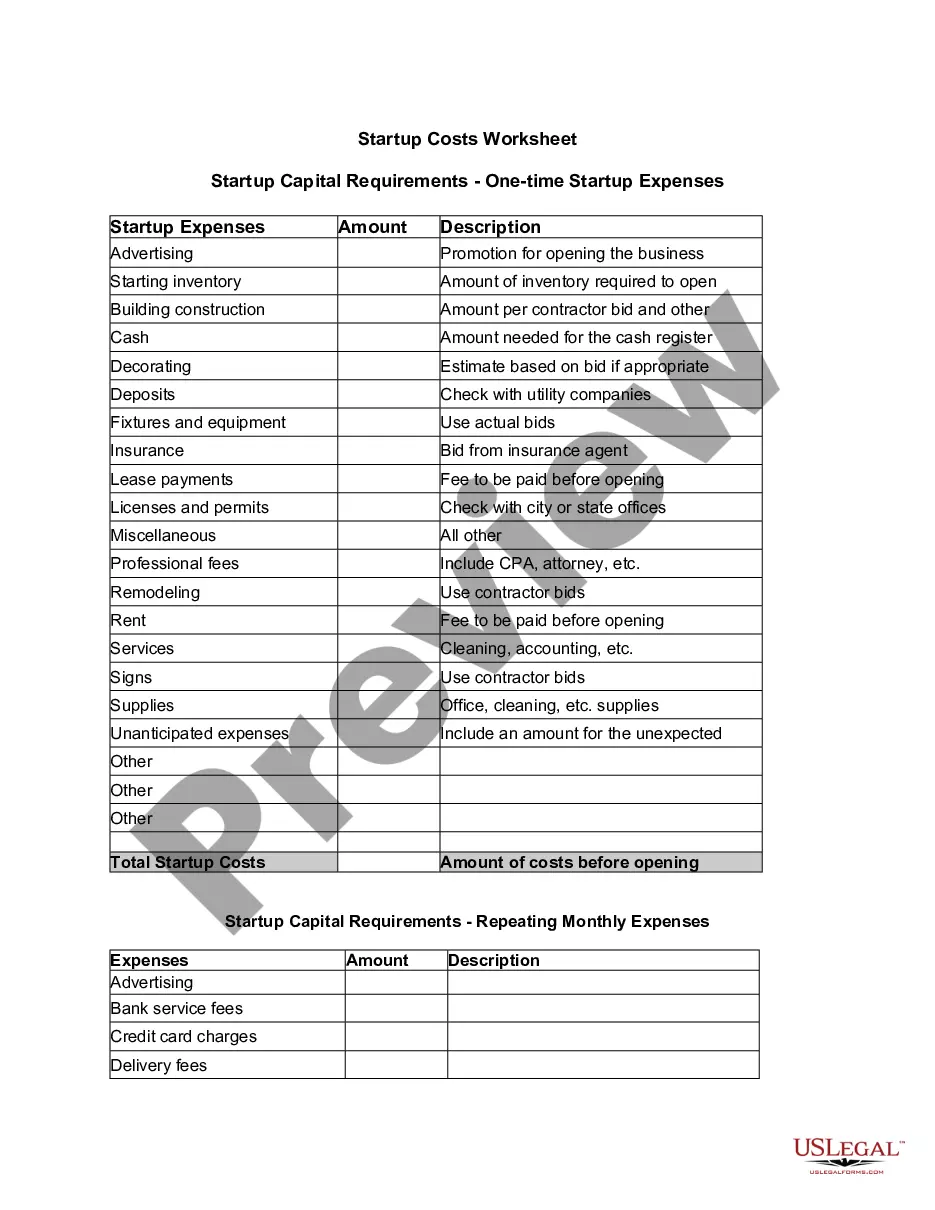

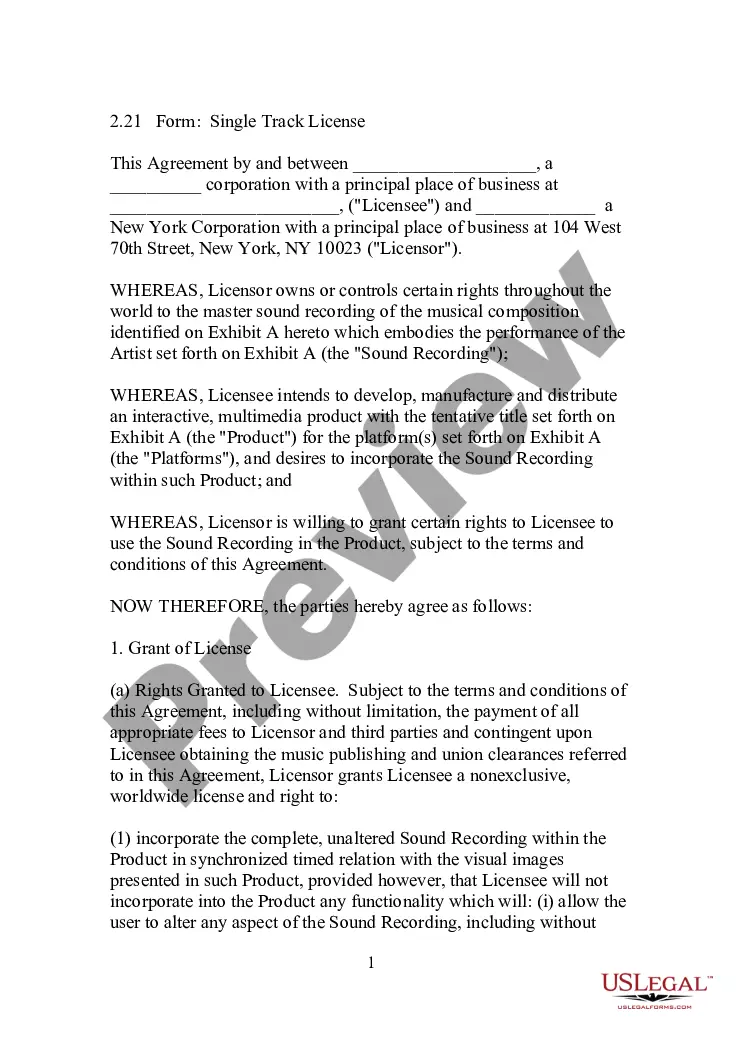
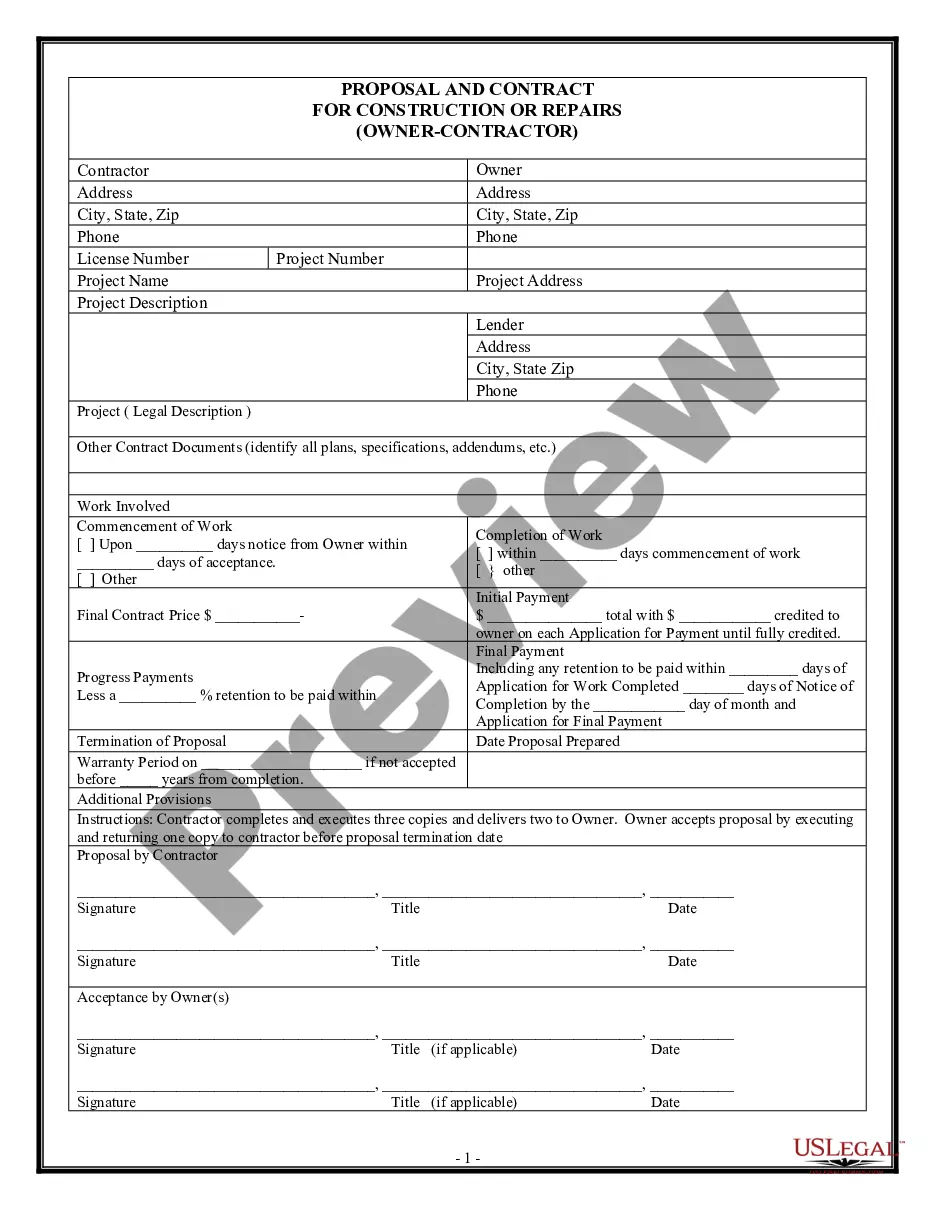


How to fill out Complaint Against Nurse And Correctional Institute For Damages For Failure To Give Medication To An Inmate?
- Log into your US Legal Forms account if you are a returning user. Ensure your subscription is active to access the required templates.
- For first-time users, start by reviewing the available templates in Preview mode. Make sure the selected form meets your needs and adheres to your local jurisdiction's requirements.
- If you need a different document, utilize the search feature at the top of the page to find the suitable template.
- Once you identify the appropriate document, click on the Buy Now button. Choose your desired subscription plan, which may require you to create an account.
- Complete your purchase by entering your payment information, either through credit card or PayPal.
- Download your legal form directly to your device and retrieve it anytime from the My Forms section in your profile.
With US Legal Forms, you can enjoy access to a robust collection of over 85,000 fillable and editable legal forms, ensuring you have the right documentation at your fingertips.
Don’t let legal paperwork overwhelm you. Start accessing your forms today and ensure you’re compliant with medication regulations by visiting US Legal Forms!
Form popularity
FAQ
Sensitivity to medication means that your body reacts strongly to the active ingredients or other components of the medication. This sensitivity can pose challenges, especially if you are frequently not compliant with medication, as your body might struggle to adapt. Understanding your body’s reaction can help you communicate effectively with your healthcare provider, leading to better treatment solutions.
Being compliant with medication means taking your medications exactly as prescribed by your healthcare provider. This ensures the medication can work effectively to manage your health condition. If you struggle with compliance, consider exploring resources, like uslegalforms, to help organize and track your medication schedule.
Your body may react badly to medication due to various factors, including drug interactions, allergies, or sensitivity to specific components. Being not compliant with medication can exacerbate these reactions, as your body may not be adequately prepared to handle abrupt changes. It’s important to share your experiences with your healthcare provider for personalized advice.
Hypersensitivity to medications can be influenced by your specific genetics, medical history, or concurrent health conditions. If you frequently find yourself not compliant with medication, your body might signal discomfort as a way to indicate that it requires a different approach or formulation. Discussing your symptoms with a specialist can help establish a more suitable treatment plan.
Inability to tolerate medications can stem from various reasons, such as allergic reactions or medication interactions. Additionally, if you are not compliant with medication, your body might react negatively as it struggles to adjust to the treatment. Consulting with your healthcare provider can help identify and resolve these issues.
Poor medication compliance refers to when a patient does not follow the prescribed medication plan. This includes missing doses or stopping medication without consulting a doctor. If you find yourself not compliant with medication, it’s crucial to assess the reasons and seek guidance for better management.
Your body's sensitivity to medication could arise from several factors, including genetics, age, and overall health. Individuals who are not compliant with medication may experience heightened sensitivity due to the body's adaptive response, leading to side effects or adverse reactions. It's essential to speak with your healthcare provider to understand these reactions better.
Being not compliant with medication means not taking your prescribed medication as directed by your healthcare provider. This can include skipping doses, altering the dosage, or not taking the medication at all. Such behavior can lead to ineffective treatment, worsening health conditions, and increased risks for complications.
Medication compliance is the degree to which a patient correctly follows medical advice regarding taking medications. This includes taking the right dose, at the right time, and for the right duration. Ensuring medication compliance is vital for the overall success of treatment plans and improving health outcomes. Utilizing platforms like uslegalforms can provide resources to enhance communication between patients and healthcare providers, fostering better compliance.
Noncompliance in medication refers to a situation where patients do not follow the prescribed medication instructions. This could mean not taking the medication at the right time, not taking it for the prescribed duration, or not following dosage recommendations. Noncompliance can seriously affect health outcomes, making it essential to identify and address these behaviors to ensure better health management. Understanding the reasons behind noncompliance may lead to improved strategies for adherence.