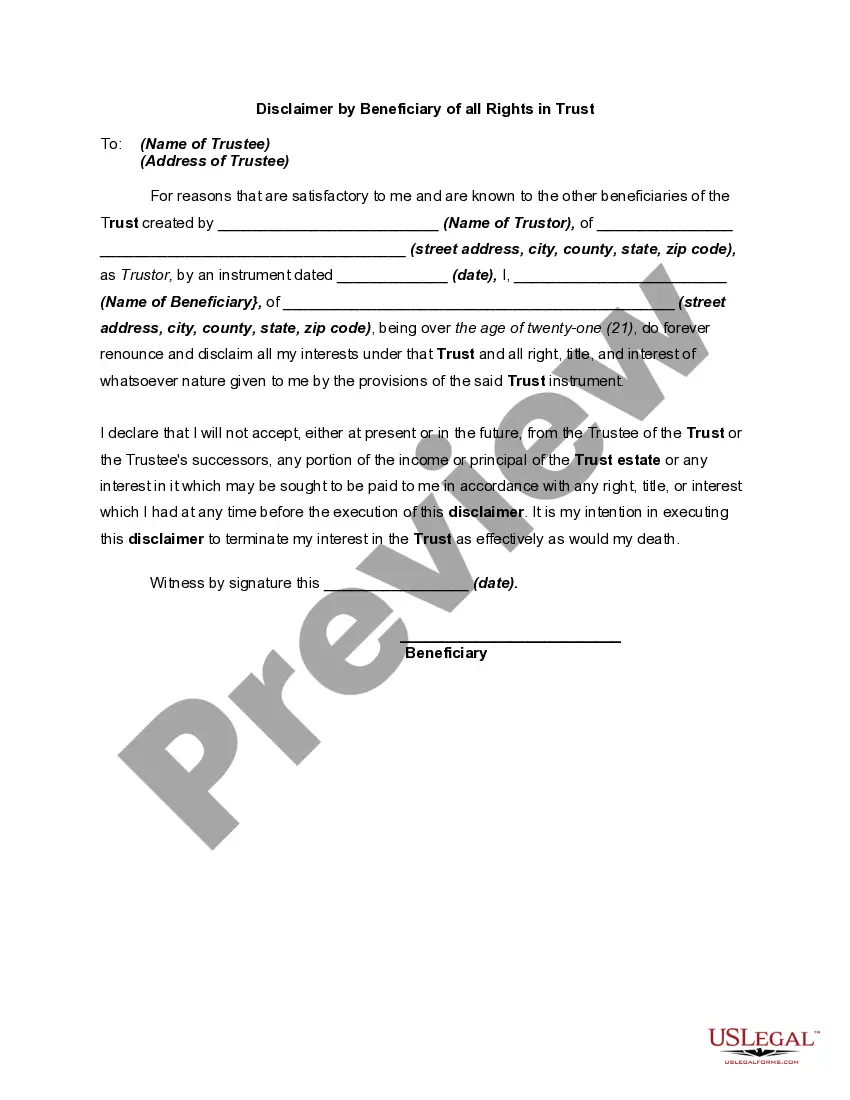
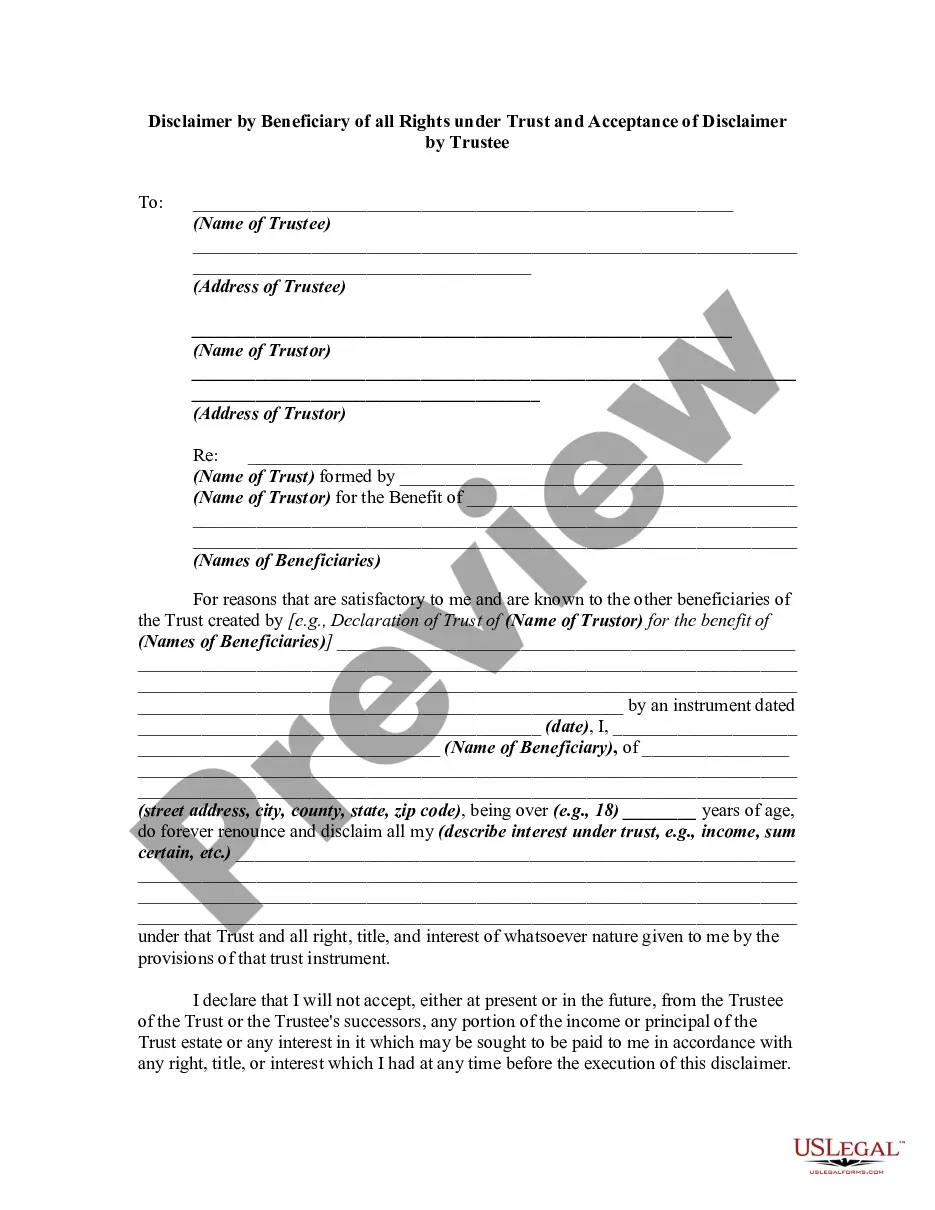
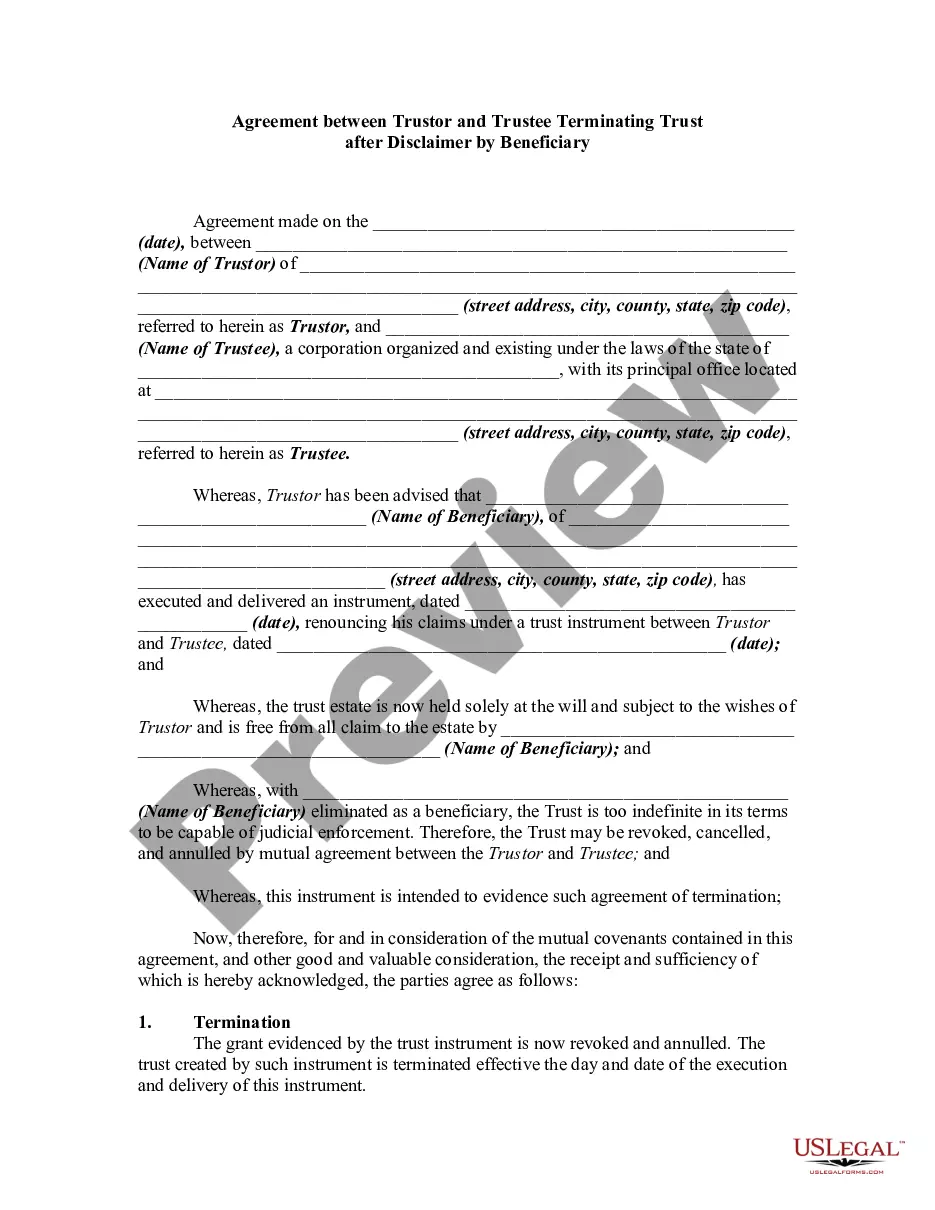
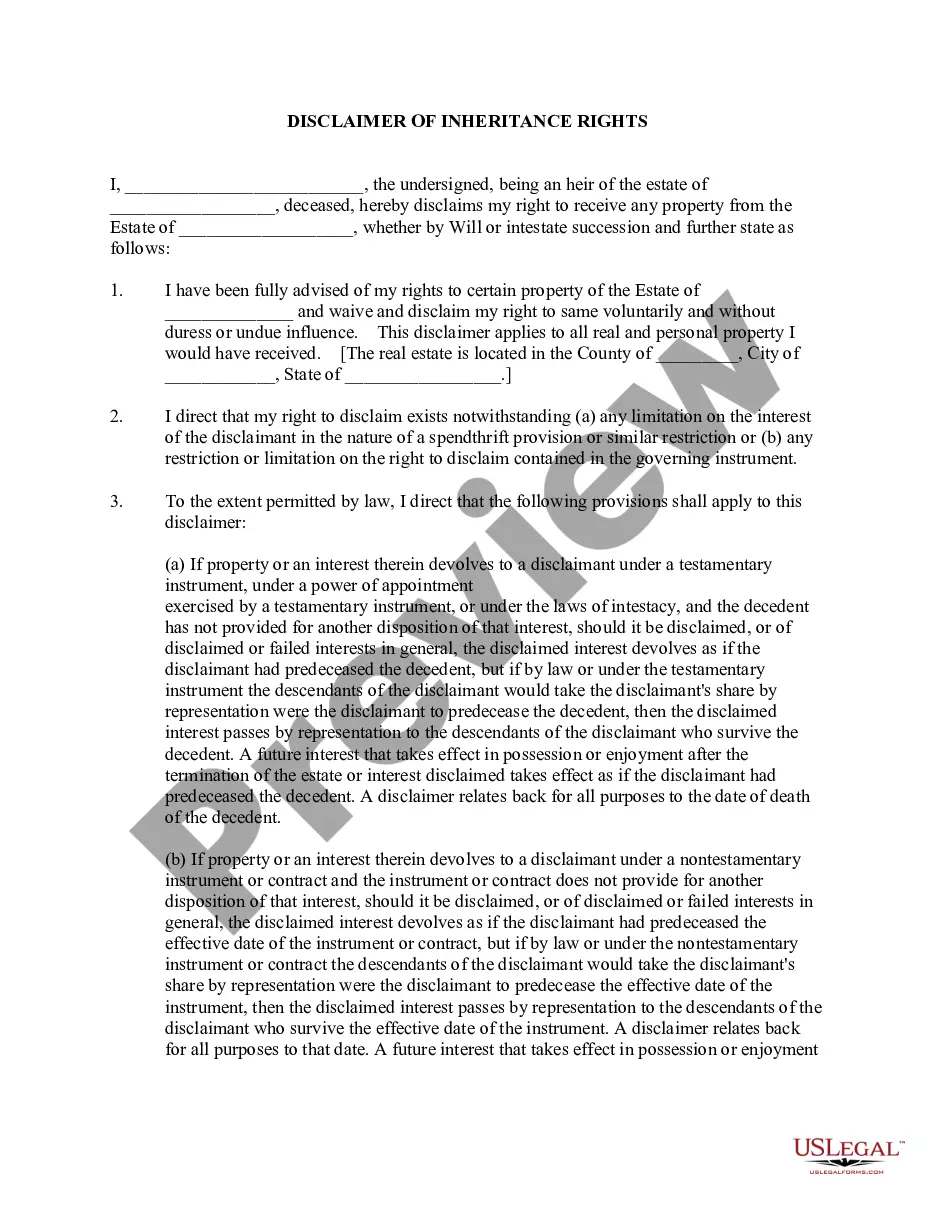
Disclaimer Beneficiary Form For Insurance
Description
Get your form ready online
Our built-in tools help you complete, sign, share, and store your documents in one place.
Make edits, fill in missing information, and update formatting in US Legal Forms—just like you would in MS Word.
Download a copy, print it, send it by email, or mail it via USPS—whatever works best for your next step.
Sign and collect signatures with our SignNow integration. Send to multiple recipients, set reminders, and more. Go Premium to unlock E-Sign.
If this form requires notarization, complete it online through a secure video call—no need to meet a notary in person or wait for an appointment.
We protect your documents and personal data by following strict security and privacy standards.

Make edits, fill in missing information, and update formatting in US Legal Forms—just like you would in MS Word.

Download a copy, print it, send it by email, or mail it via USPS—whatever works best for your next step.

Sign and collect signatures with our SignNow integration. Send to multiple recipients, set reminders, and more. Go Premium to unlock E-Sign.

If this form requires notarization, complete it online through a secure video call—no need to meet a notary in person or wait for an appointment.

We protect your documents and personal data by following strict security and privacy standards.
Looking for another form?








How to fill out Disclaimer By Beneficiary Of All Rights In Trust?
Legal document management might be overpowering, even for the most experienced experts. When you are searching for a Disclaimer Beneficiary Form For Insurance and do not have the a chance to commit in search of the appropriate and up-to-date version, the processes can be nerve-racking. A strong online form library might be a gamechanger for everyone who wants to deal with these situations successfully. US Legal Forms is a market leader in online legal forms, with more than 85,000 state-specific legal forms available to you at any moment.
With US Legal Forms, you can:
- Access state- or county-specific legal and organization forms. US Legal Forms covers any requirements you may have, from individual to business paperwork, in one place.
- Use advanced resources to accomplish and handle your Disclaimer Beneficiary Form For Insurance
- Access a useful resource base of articles, guides and handbooks and materials highly relevant to your situation and needs
Save time and effort in search of the paperwork you need, and use US Legal Forms’ advanced search and Preview tool to find Disclaimer Beneficiary Form For Insurance and acquire it. If you have a membership, log in to your US Legal Forms account, search for the form, and acquire it. Take a look at My Forms tab to find out the paperwork you previously downloaded as well as handle your folders as you can see fit.
If it is your first time with US Legal Forms, register an account and get unlimited access to all benefits of the library. Listed below are the steps for taking after getting the form you want:
- Confirm this is the proper form by previewing it and reading its information.
- Be sure that the sample is recognized in your state or county.
- Select Buy Now once you are all set.
- Select a monthly subscription plan.
- Find the formatting you want, and Download, complete, eSign, print out and send out your papers.
Take advantage of the US Legal Forms online library, backed with 25 years of experience and trustworthiness. Transform your daily papers administration in a easy and intuitive process right now.
Form popularity
FAQ
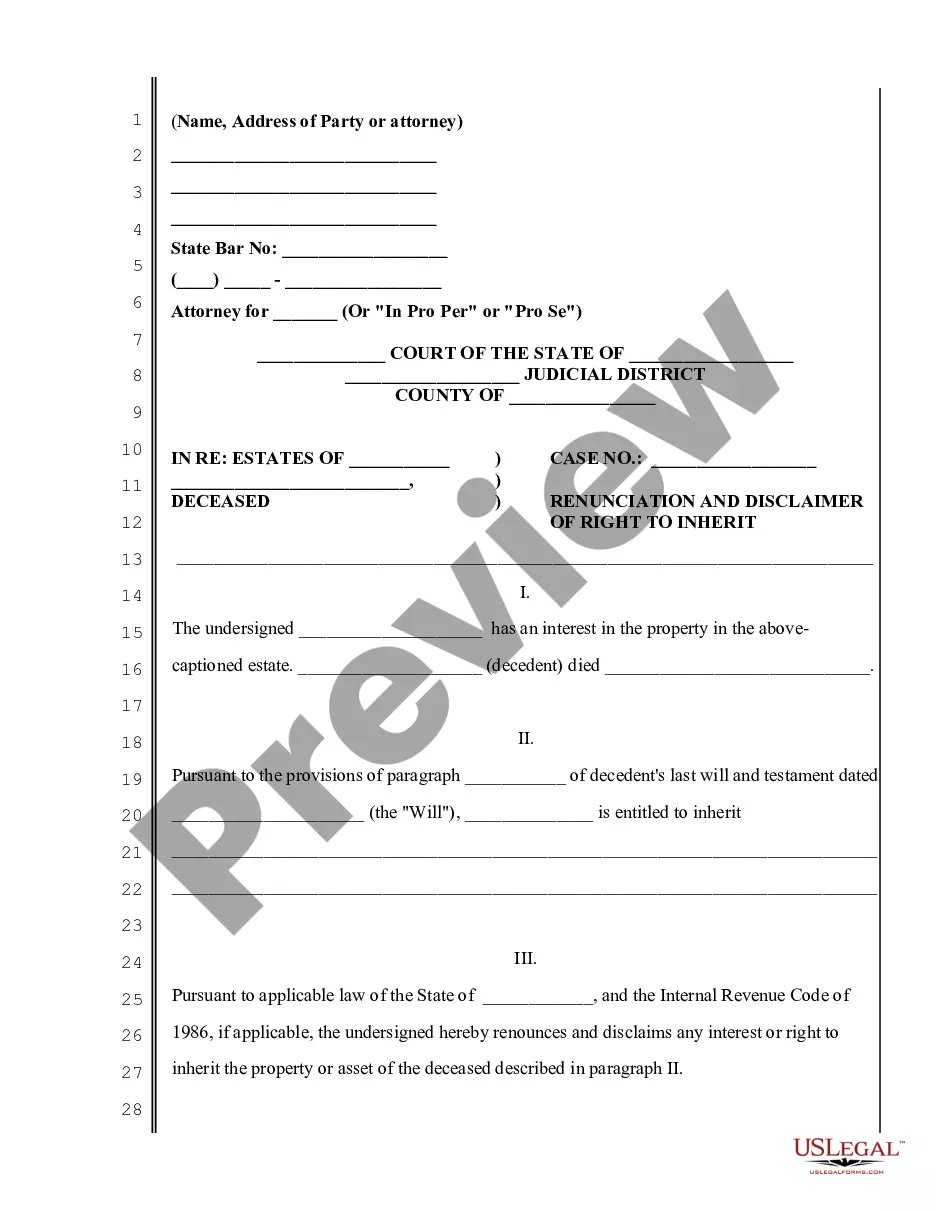
The disclaimer must be in writing: A signed letter by the person doing the disclaiming, identifying the decedent, describing the asset to be disclaimed, and the extent and amount, percentage or dollar amount, to be disclaimed, must be delivered to the person in control of the estate or asset, such as an executor, ...
You make your disclaimer in writing. Your inheritance disclaimer specifically says that you refuse to accept the assets in question and that this refusal is irrevocable, meaning it can't be changed. You disclaim the assets within nine months of the death of the person you inherited them from.
In order to disclaim an inheritance, you will need to write a Disclaimer, which states that you are disclaiming your inheritance in writing. Within your Disclaimer, you will need to explain what is being disclaimed, whether it is only part of your inheritance or all of it, as well as sign the document to make it legal.
Most beneficiary designations will require you to provide a person's full legal name and their relationship to you (spouse, child, mother, etc.). Some beneficiary designations also include information like mailing address, email, phone number, date of birth and Social Security number.
Name only living persons as beneficiaries, unless you are naming a trust, your estate or an organization. Do not name the same person or organization as both a primary and secondary beneficiary. Do not use the word ?or? when designating multiple beneficiaries. Do not impose any conditions on payment.