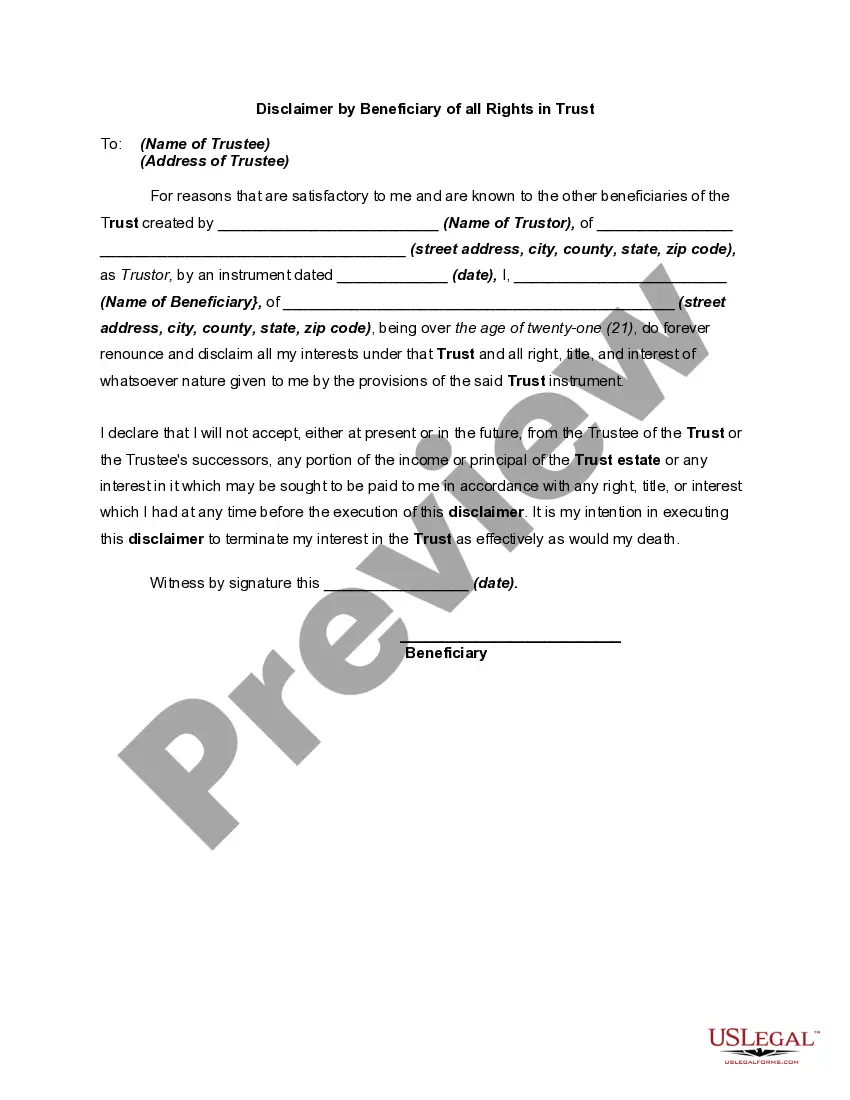
Beneficiary Form For Business Clients Trust Accounts
Description
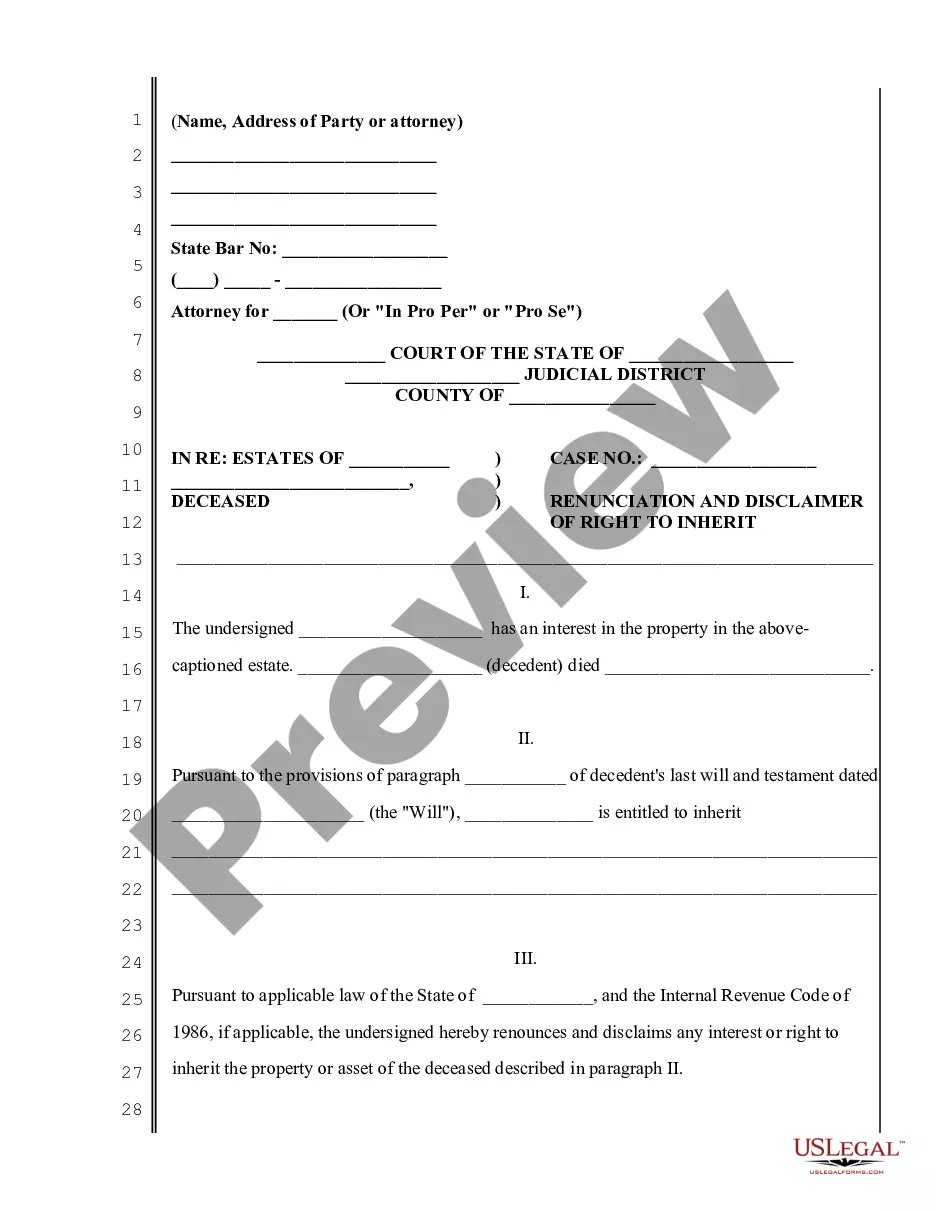
Get your form ready online
Our built-in tools help you complete, sign, share, and store your documents in one place.
Make edits, fill in missing information, and update formatting in US Legal Forms—just like you would in MS Word.
Download a copy, print it, send it by email, or mail it via USPS—whatever works best for your next step.
Sign and collect signatures with our SignNow integration. Send to multiple recipients, set reminders, and more. Go Premium to unlock E-Sign.
If this form requires notarization, complete it online through a secure video call—no need to meet a notary in person or wait for an appointment.
We protect your documents and personal data by following strict security and privacy standards.

Make edits, fill in missing information, and update formatting in US Legal Forms—just like you would in MS Word.

Download a copy, print it, send it by email, or mail it via USPS—whatever works best for your next step.

Sign and collect signatures with our SignNow integration. Send to multiple recipients, set reminders, and more. Go Premium to unlock E-Sign.

If this form requires notarization, complete it online through a secure video call—no need to meet a notary in person or wait for an appointment.

We protect your documents and personal data by following strict security and privacy standards.
Looking for another form?
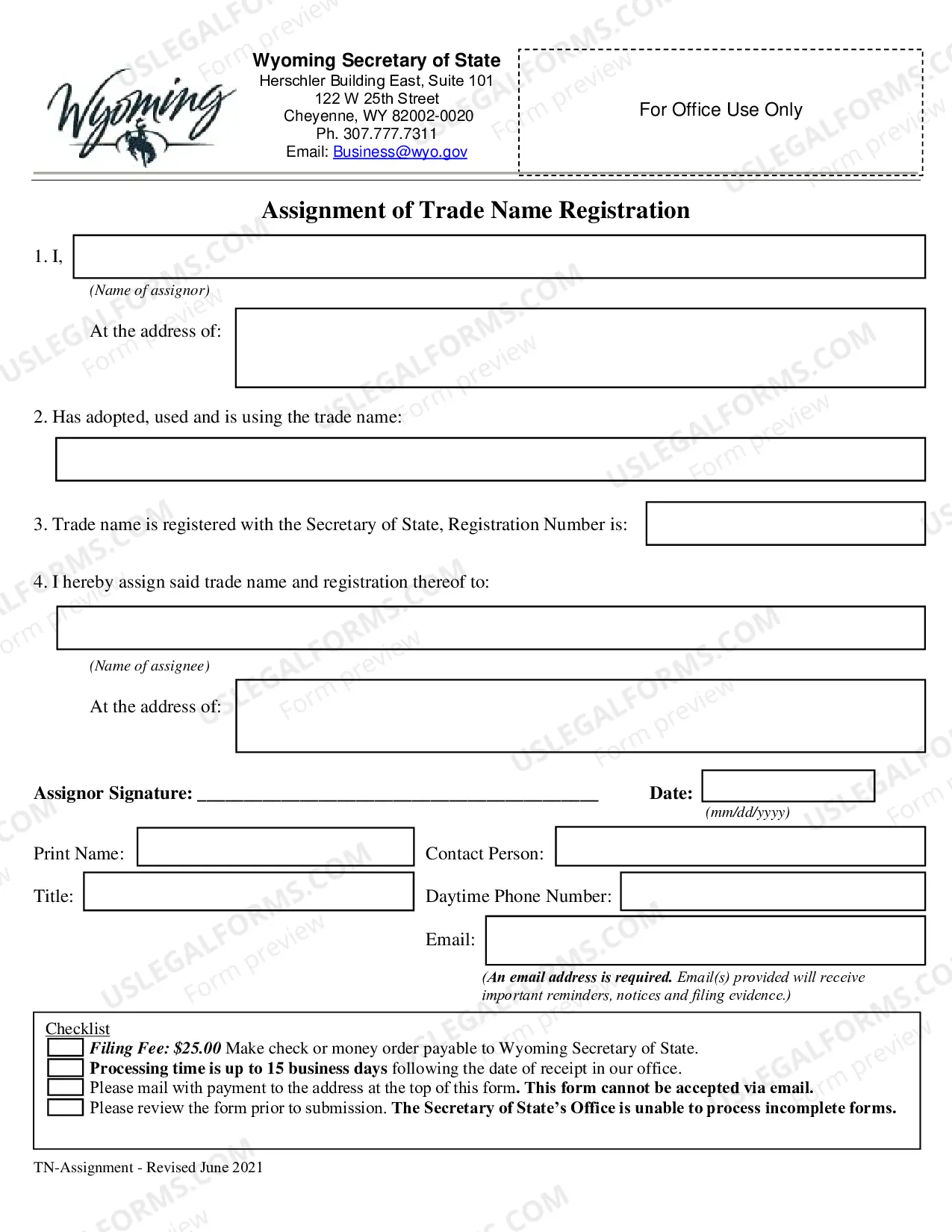









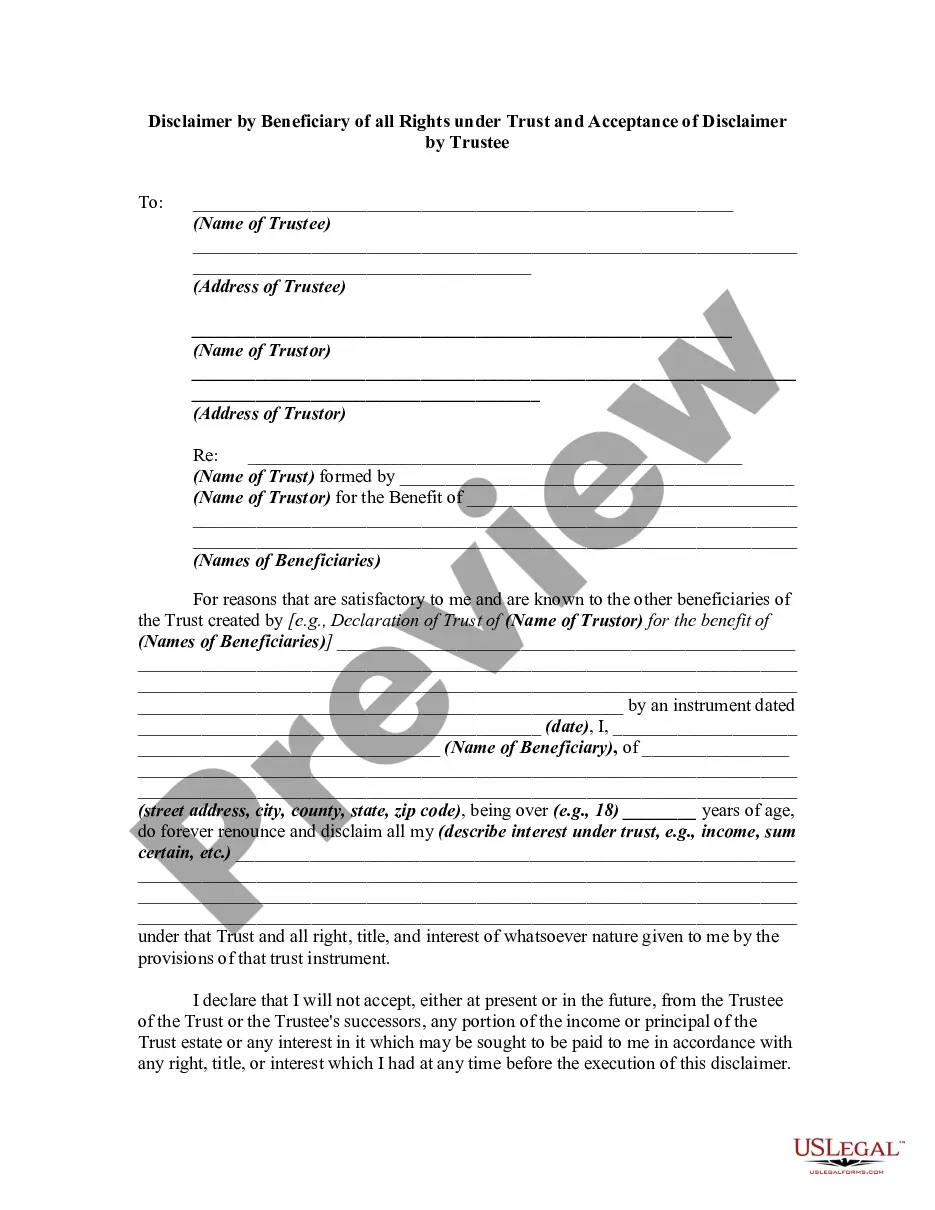
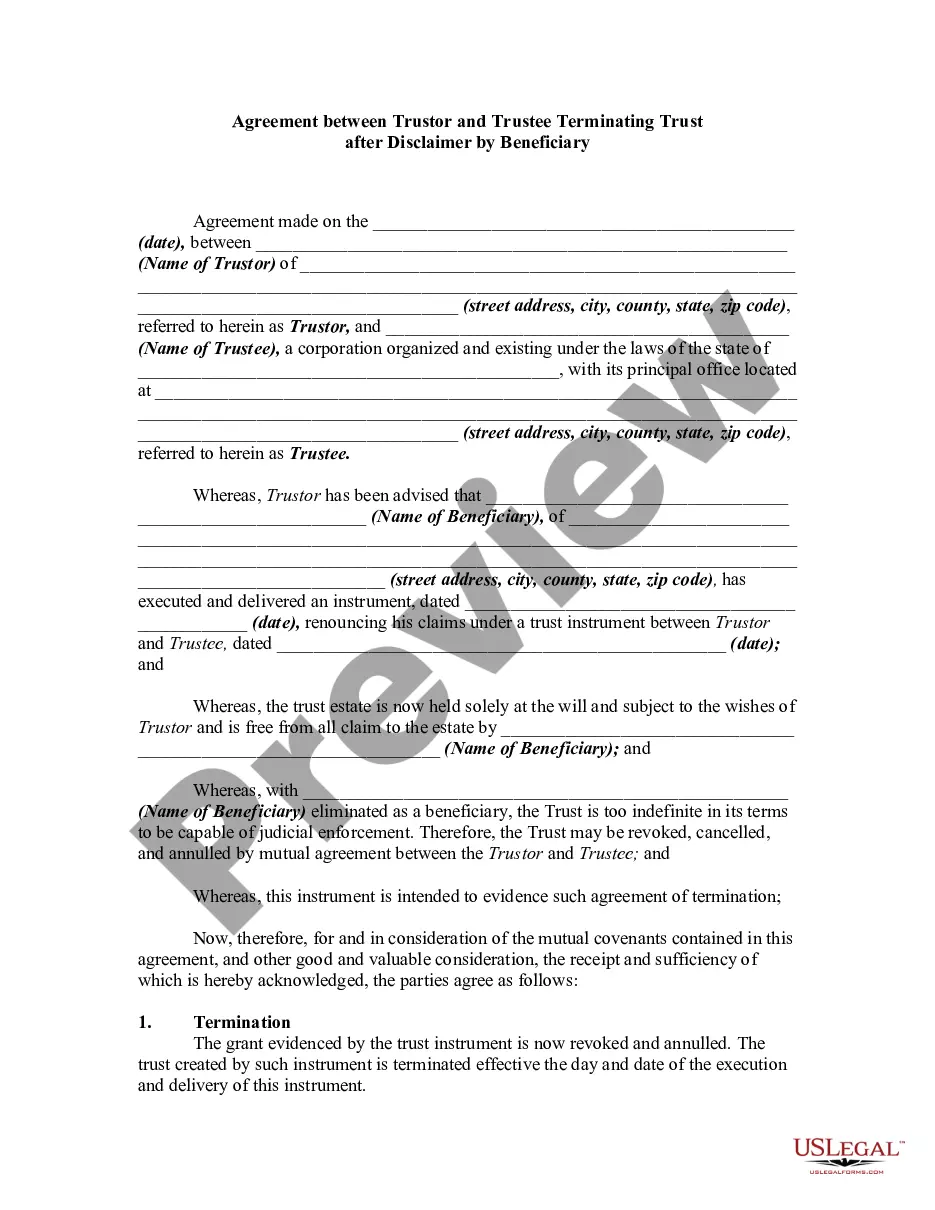
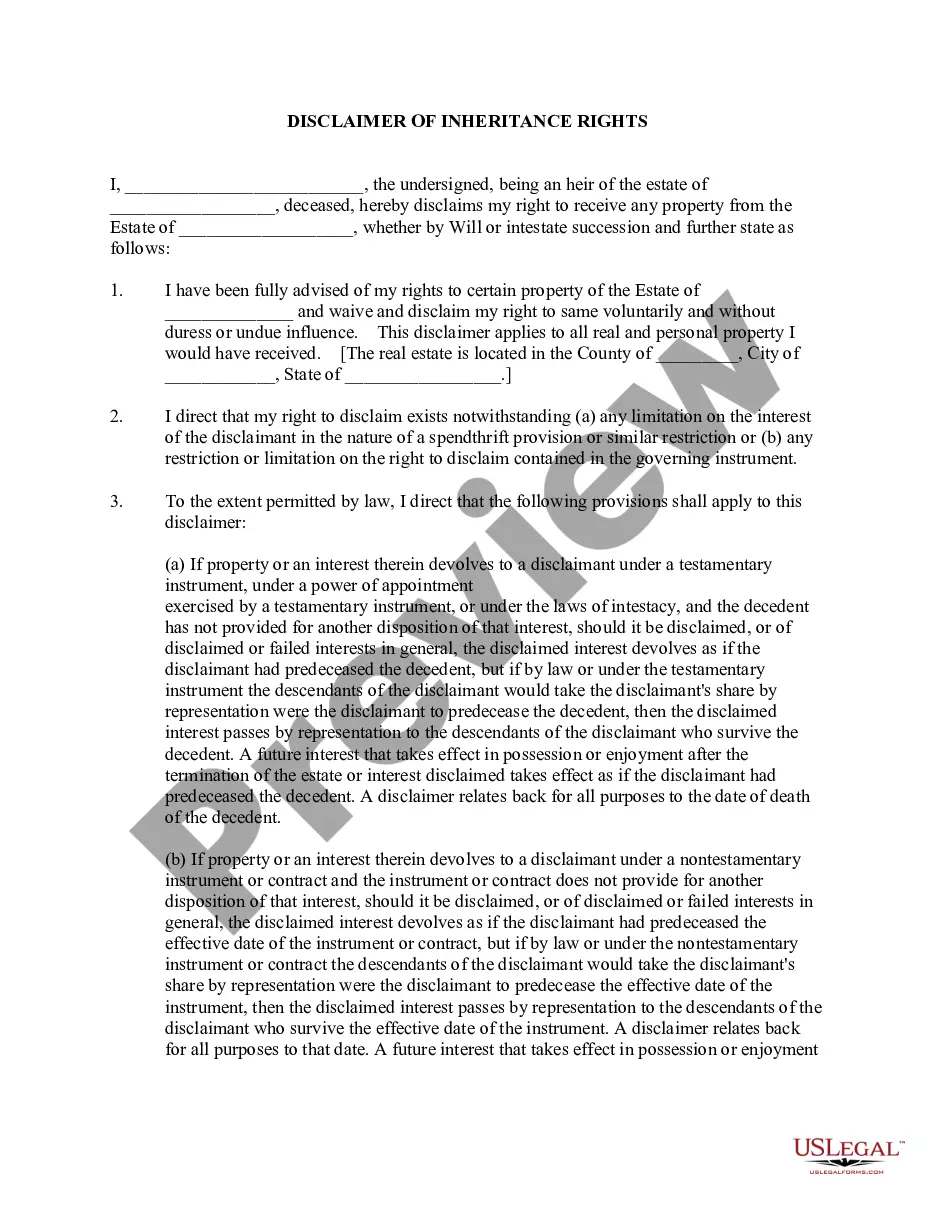
How to fill out Disclaimer By Beneficiary Of All Rights In Trust?
- If you are a returning user, log in to your account and easily download the beneficiary form by clicking the Download button, ensuring your subscription is active.
- If this is your first time using US Legal Forms, start by checking the Preview mode and form description to confirm it meets your requirements and aligns with your local jurisdiction.
- If needed, search for alternative templates using the Search tab to find the correct form for your needs.
- Proceed to purchase the document by clicking on the Buy Now button and selecting your preferred subscription plan; remember to register your account to access the legal resources.
- Complete your purchase with your credit card or PayPal details to finalize your subscription.
- Download your form and save it to your device, where you can access it anytime from the My Forms section of your profile.
In conclusion, utilizing US Legal Forms for your beneficiary forms streamlines the process, making it simpler and faster to secure legally sound documents. The extensive library and expert assistance reinforce your confidence in legal compliance.
Start your journey with US Legal Forms today and ensure your legal needs are met with professionalism and efficiency.
Form popularity
FAQ
A beneficiary trust account is an account set up to manage assets on behalf of beneficiaries, often used to hold funds until they are distributed according to the trust's terms. This type of account provides a secure way to manage and allocate assets while ensuring compliance with legal requirements. To set one up effectively, you may want to consider using a detailed beneficiary form for business clients trust accounts to guide the process.
A trust beneficiary certification form is a document that confirms who the beneficiaries of a trust are and outlines their specific entitlements. This form helps ensure transparency and clarity in the distribution process, which can prevent disputes among beneficiaries. Utilizing this form can enhance the efficiency of completing a beneficiary form for business clients trust accounts.
The certification of trust serves as a legal document that verifies the existence and terms of a trust without exposing all its details. Its primary purpose is to streamline transactions and interactions with third parties such as banks or financial institutions. This certification can be particularly useful when establishing a beneficiary form for business clients trust accounts, as it provides a clear framework for asset management.
A beneficiary certificate provides official confirmation of an individual's entitlement to the benefits from a trust or other estate. This document plays a key role in outlining roles and responsibilities, making it easier for trustees to manage distributions. Understanding how to properly use a beneficiary certificate is essential for completing a beneficiary form for business clients trust accounts accurately.
A trust agreement is a comprehensive document outlining the terms and conditions of the trust, including roles of the trustees and beneficiaries. In contrast, a trust certificate serves as a summary, confirming that a trust exists and providing essential details without revealing all the specifics. Both documents play a crucial role in managing trust assets, particularly when filling out a beneficiary form for business clients trust accounts.
One common mistake parents make when establishing a trust fund is failing to fully understand the rules and regulations that govern it. This often leads to improper distribution of assets, which can create confusion and conflict among beneficiaries later on. Additionally, not properly documenting the trust with a correct beneficiary form for business clients trust accounts can result in unintended tax consequences. Seeking guidance can help you avoid these pitfalls.
Yes, you can add a beneficiary to a trust account by updating the beneficiary form provided by your financial institution. It’s essential to ensure that this update adheres to your overall estate planning goals. A beneficiary form for business clients trust accounts can facilitate this process, ensuring that your updates are recorded accurately.
While you have discretion in naming beneficiaries, avoid naming minors or individuals who may not be financially responsible. It’s wise to consider individuals who can manage their inheritance prudently. Using a beneficiary form for business clients trust accounts can guide you in making the right choices that protect your financial legacy.
To fill out a beneficiary designation form for a trust, begin by gathering all necessary details about the trust and the beneficiaries. List each beneficiary’s name, their relationship to you, and any specific instructions about the distributions. Utilizing a beneficiary form for business clients trust accounts streamlines this process, making it straightforward for all parties involved.
Yes, an LLC account can have a designated beneficiary, but it may require specific documentation. When you fill out a beneficiary form for business clients trust accounts, make sure to include the LLC's name and confirm that you follow the necessary state laws. Properly designating a beneficiary helps ensure clarity in asset distribution.