All Rights Statement With Multiple Conditions
Description
Get your form ready online
Our built-in tools help you complete, sign, share, and store your documents in one place.
Make edits, fill in missing information, and update formatting in US Legal Forms—just like you would in MS Word.
Download a copy, print it, send it by email, or mail it via USPS—whatever works best for your next step.
Sign and collect signatures with our SignNow integration. Send to multiple recipients, set reminders, and more. Go Premium to unlock E-Sign.
If this form requires notarization, complete it online through a secure video call—no need to meet a notary in person or wait for an appointment.
We protect your documents and personal data by following strict security and privacy standards.

Make edits, fill in missing information, and update formatting in US Legal Forms—just like you would in MS Word.

Download a copy, print it, send it by email, or mail it via USPS—whatever works best for your next step.

Sign and collect signatures with our SignNow integration. Send to multiple recipients, set reminders, and more. Go Premium to unlock E-Sign.

If this form requires notarization, complete it online through a secure video call—no need to meet a notary in person or wait for an appointment.

We protect your documents and personal data by following strict security and privacy standards.
Looking for another form?

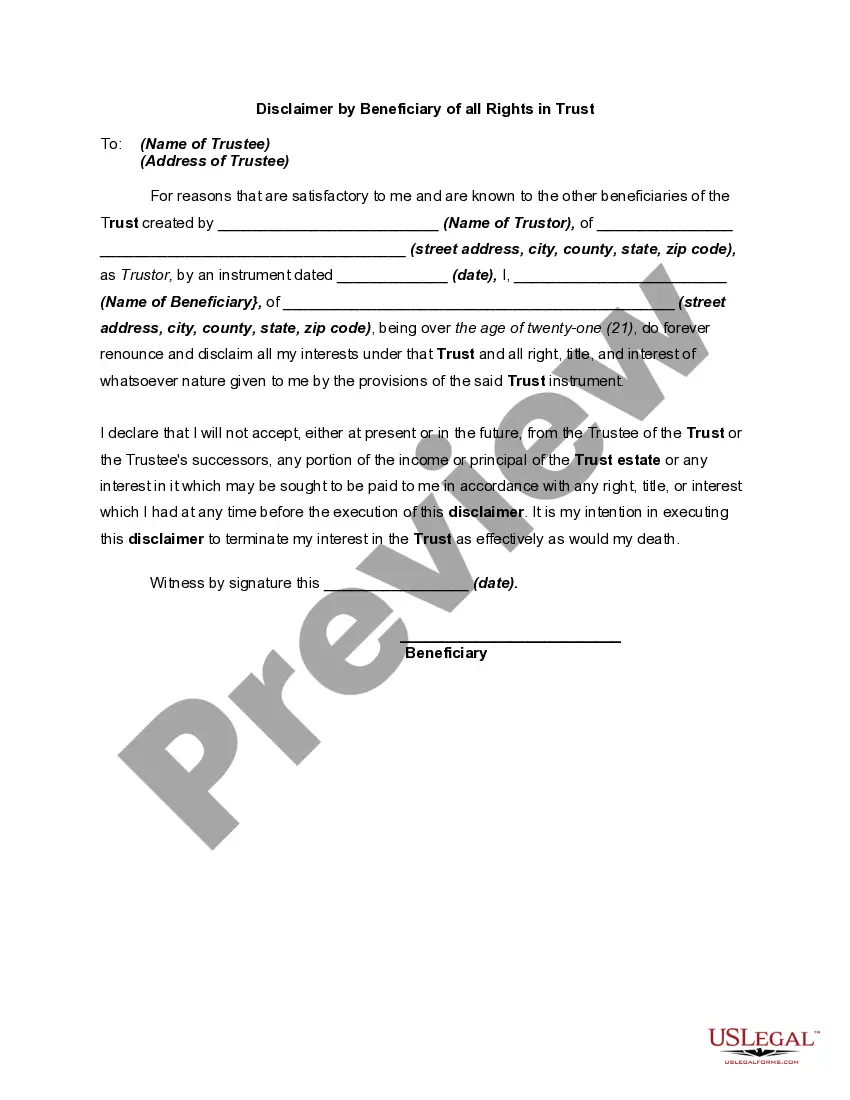
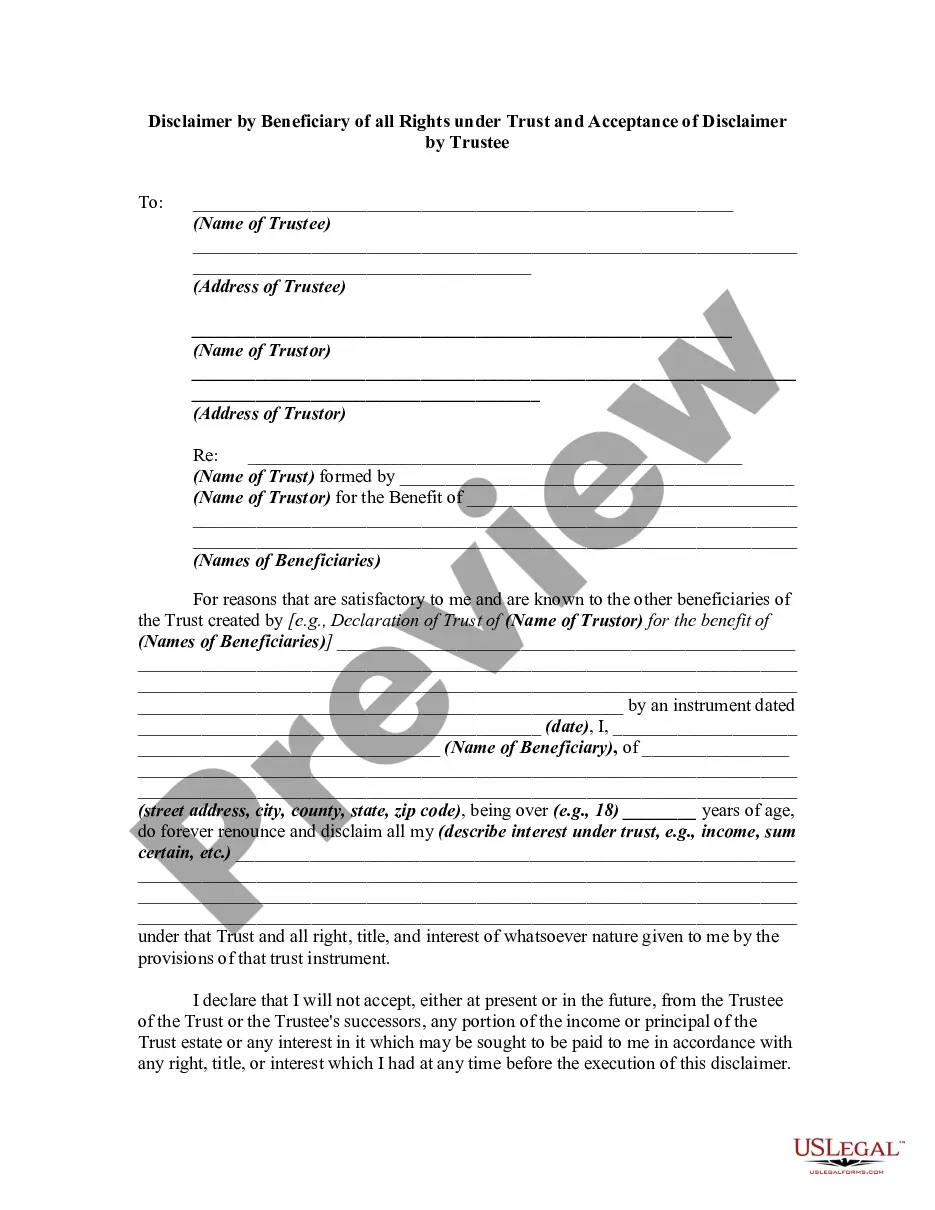
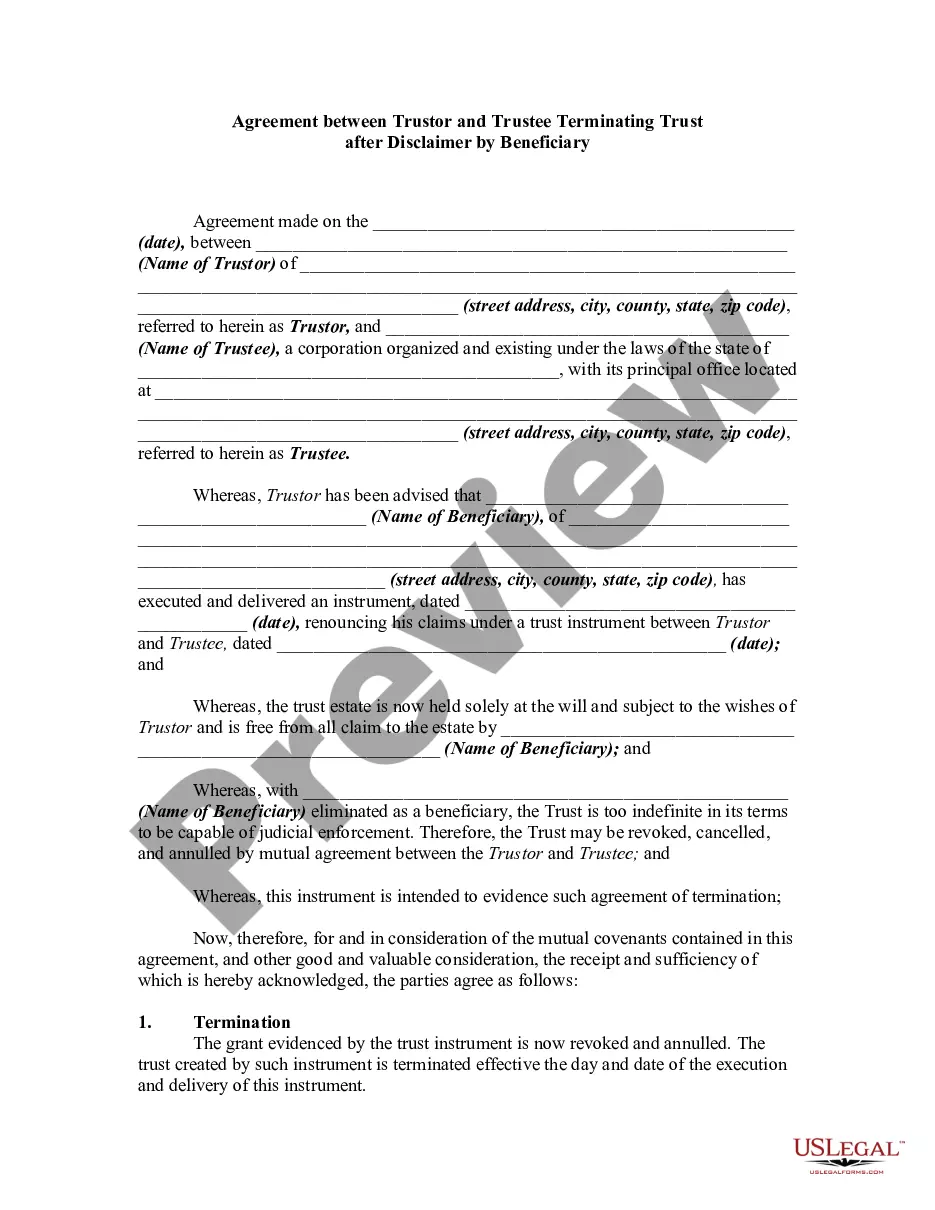
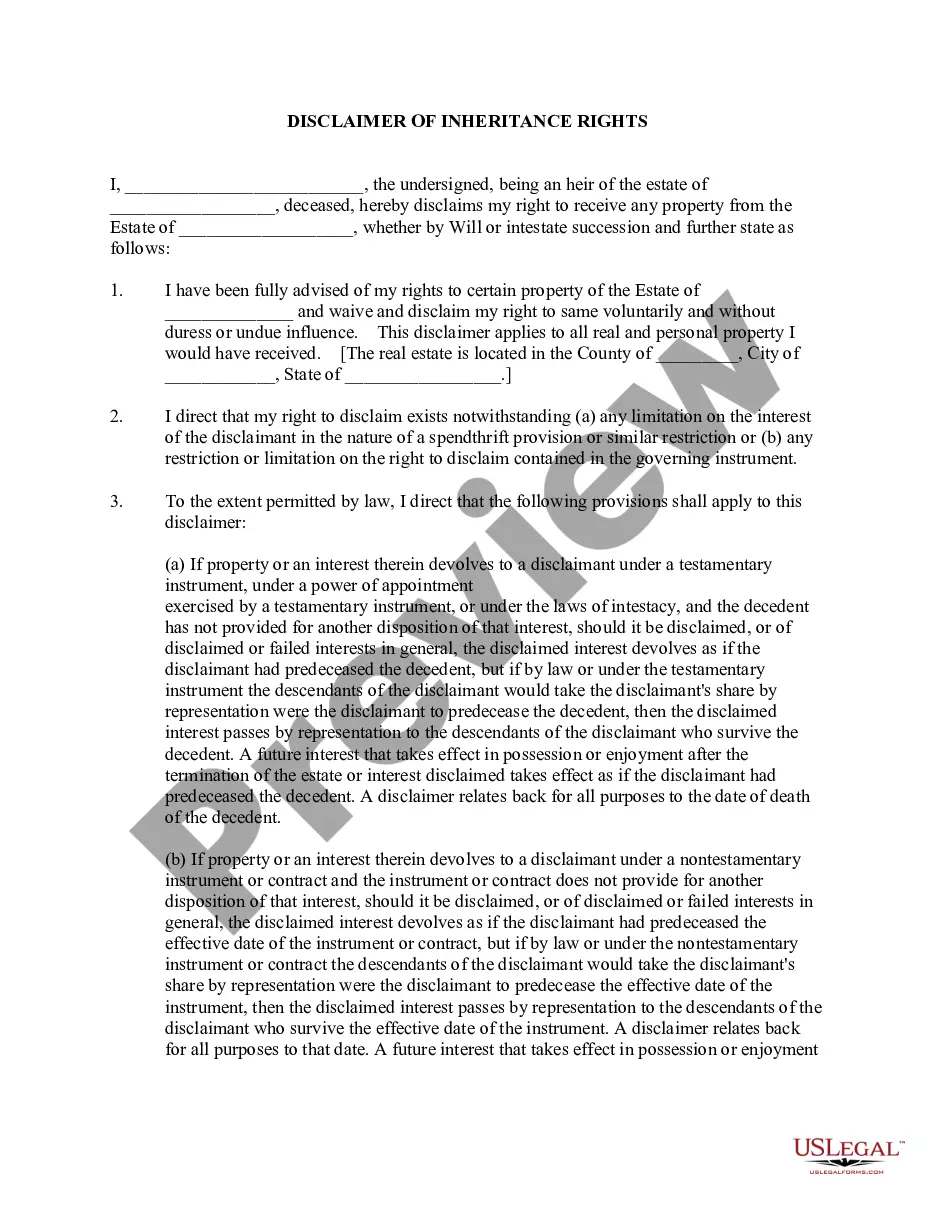
How to fill out Disclaimer By Beneficiary Of All Rights In Trust?
Creating legal documents from the beginning can occasionally be daunting.
Certain situations may require extensive research and significant financial investment.
If you are looking for a simpler and more economical method for preparing All Rights Statement With Multiple Conditions or any other forms without going through unnecessary steps, US Legal Forms is always available to assist you.
Our online catalog features over 85,000 contemporary legal documents that encompass nearly every aspect of your financial, legal, and personal matters.
Before going directly to download All Rights Statement With Multiple Conditions, keep in mind the following suggestions: Review the document preview and descriptions to confirm that you have located the document you need. Ensure that the template you select meets the regulations of your state and county. Choose the most suitable subscription option to acquire the All Rights Statement With Multiple Conditions. Download the form, then complete, sign, and print it.
- With just a few clicks, you can immediately obtain templates that comply with state and county regulations, professionally created by our legal experts.
- Utilize our service whenever you require trusted and dependable assistance to swiftly locate and download the All Rights Statement With Multiple Conditions.
- If you are already familiar with our services and have set up an account with us before, simply Log In, choose the template, and download it or retrieve it later in the My documents section.
- Not registered yet? No worries. It only takes a few minutes to sign up and explore the library.
Form popularity
FAQ
For civil record searches and questions regarding criminal and civil record searches, you can send an e-mail to: USJPARupport@ujs.state.sd.us. Criminal and protection order searches are available on the Public Access System or PARS at: . There is a $20 fee for each submitted search.
Status hearing ? A hearing in which the judge assesses the progress of the case or addresses problems the parties are having. Statute ? A statute is a formal written law. Federal statutes are found in the United Stated Code. South Dakota statutes are found in South Dakota Codified Laws.
South Dakota has a statewide record search program. CRIMINAL cases are available, unless sealed, on the UJS system from 1989 to present. CIVIL cases, unless confidential or sealed, are available from 2003 to present.
The right of the people to be secure in their persons, houses, papers and effects, against unreasonable searches and seizures shall not be violated, and no warrant shall issue but upon probable cause supported by affidavit, particularly describing the place to be searched and the person or thing to be seized.
The Fourth Amendment prohibits the United States government from conducting ?unreasonable searches and seizures." In general, this means police cannot search a person or their property without a warrant or probable cause. It also applies to arrests and the collection of evidence.
41 and is designed to implement the provisions of Article I, Section 8, of the North Dakota Constitution and the Fourth Amendment to the United States Constitution, which guarantee, "The right of the people to be secure in their persons, houses, papers and effects against unreasonable searches and seizures shall not be ...
The purpose of the indictment or information is to inform the defendant of the precise offense of which the defendant is accused so that the defendant may prepare the defendant's defense and further that a judgment will safeguard the defendant from subsequent prosecution for the same offense.
Corporate bylaws are legally required in South Dakota. Typically, directors adopt bylaws at the first organizational meeting.