Notary Public Fort Worth
Description
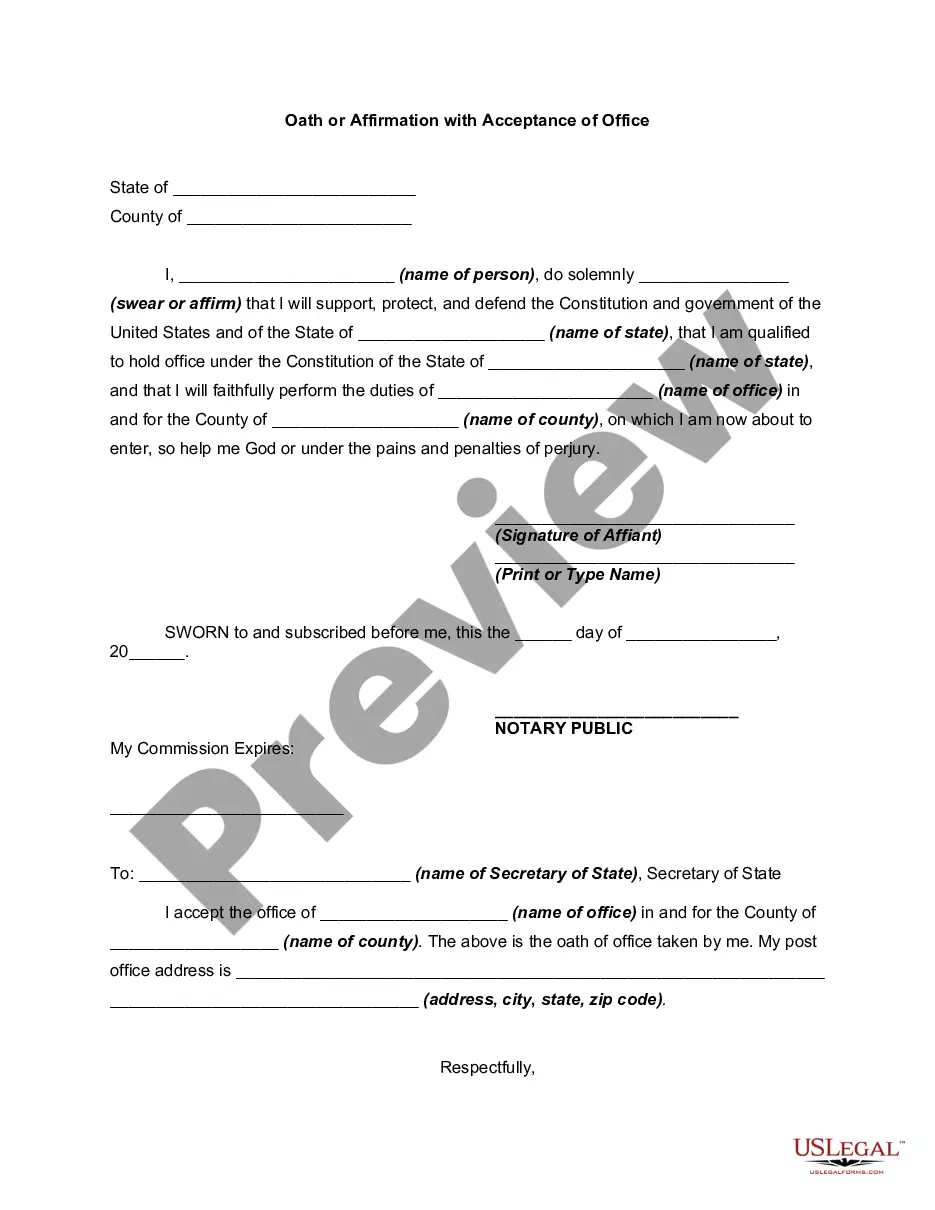
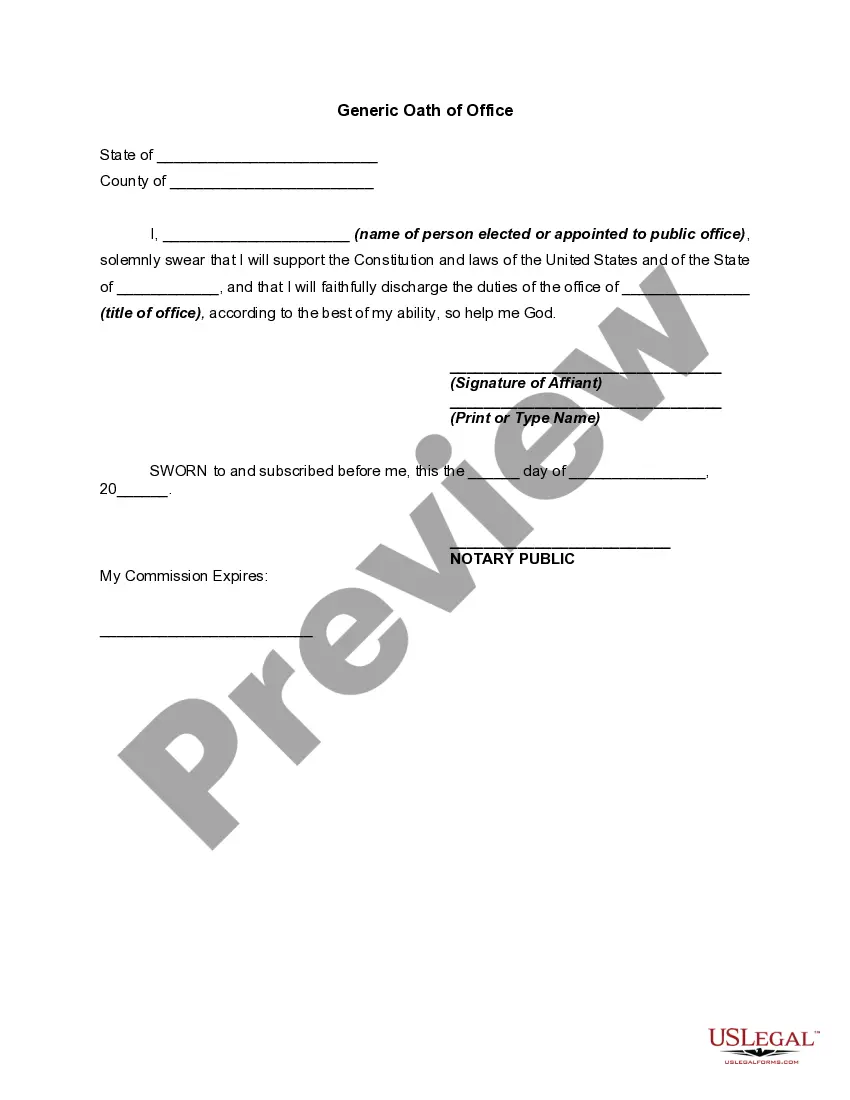
Get your form ready online
Our built-in tools help you complete, sign, share, and store your documents in one place.
Make edits, fill in missing information, and update formatting in US Legal Forms—just like you would in MS Word.
Download a copy, print it, send it by email, or mail it via USPS—whatever works best for your next step.
Sign and collect signatures with our SignNow integration. Send to multiple recipients, set reminders, and more. Go Premium to unlock E-Sign.
If this form requires notarization, complete it online through a secure video call—no need to meet a notary in person or wait for an appointment.
We protect your documents and personal data by following strict security and privacy standards.

Make edits, fill in missing information, and update formatting in US Legal Forms—just like you would in MS Word.

Download a copy, print it, send it by email, or mail it via USPS—whatever works best for your next step.

Sign and collect signatures with our SignNow integration. Send to multiple recipients, set reminders, and more. Go Premium to unlock E-Sign.

If this form requires notarization, complete it online through a secure video call—no need to meet a notary in person or wait for an appointment.

We protect your documents and personal data by following strict security and privacy standards.
Looking for another form?



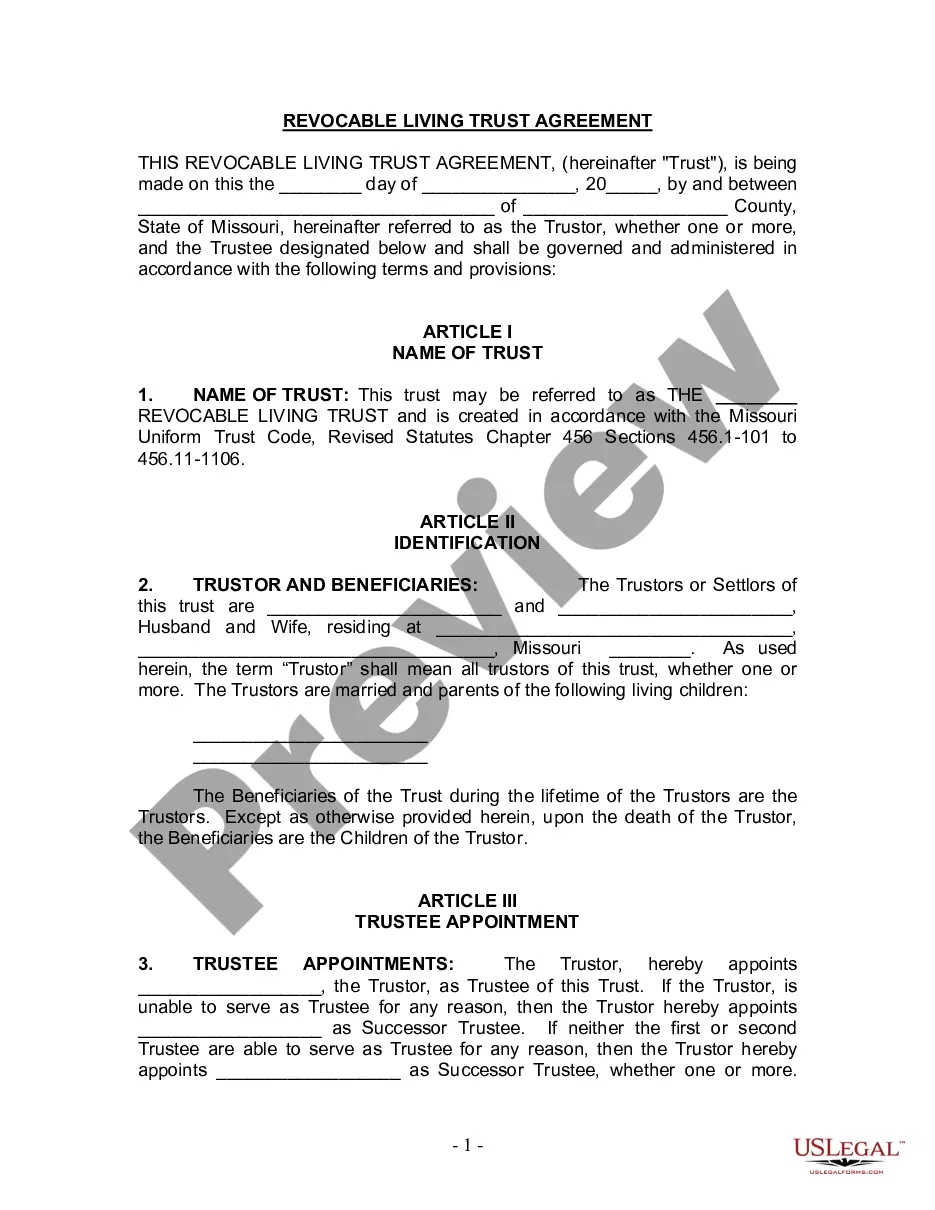






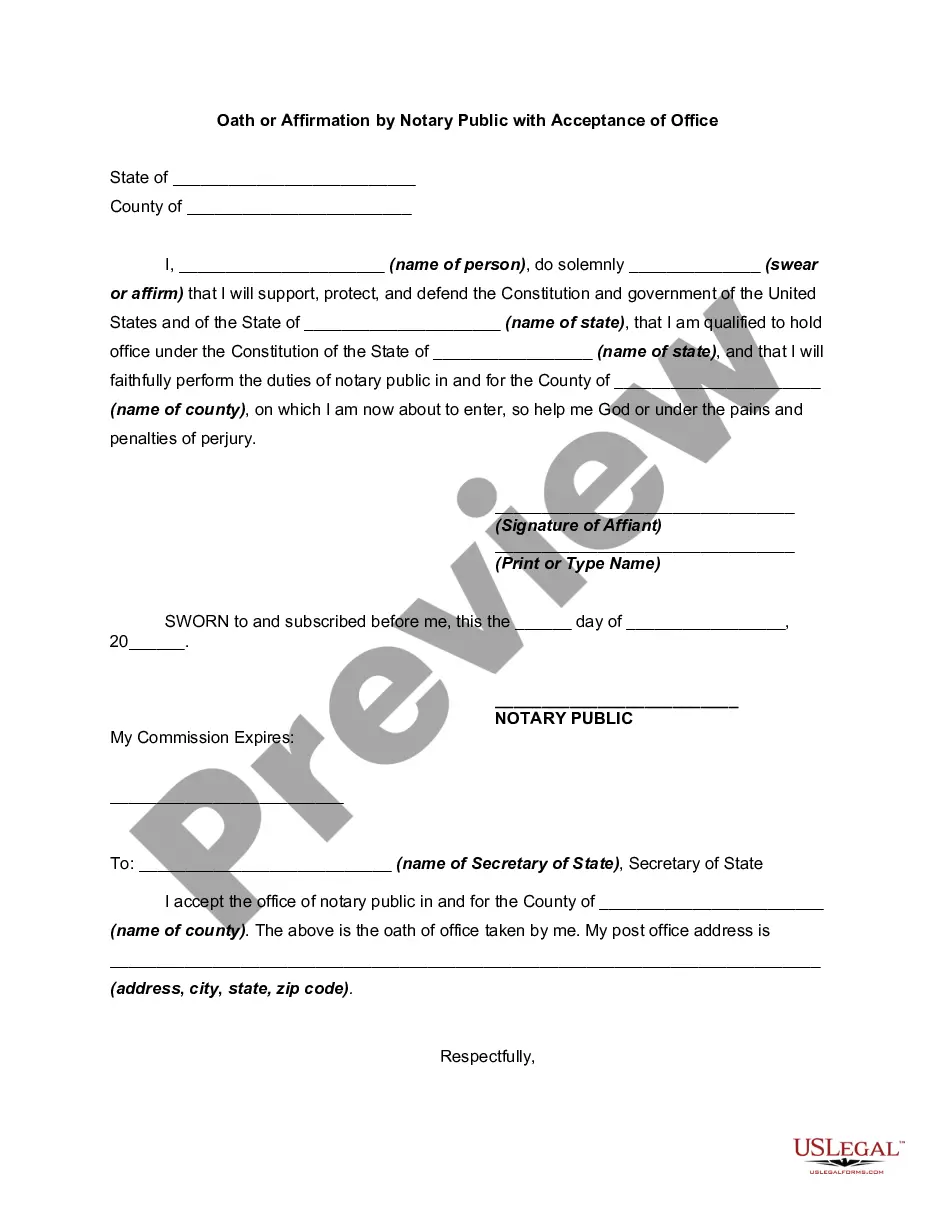
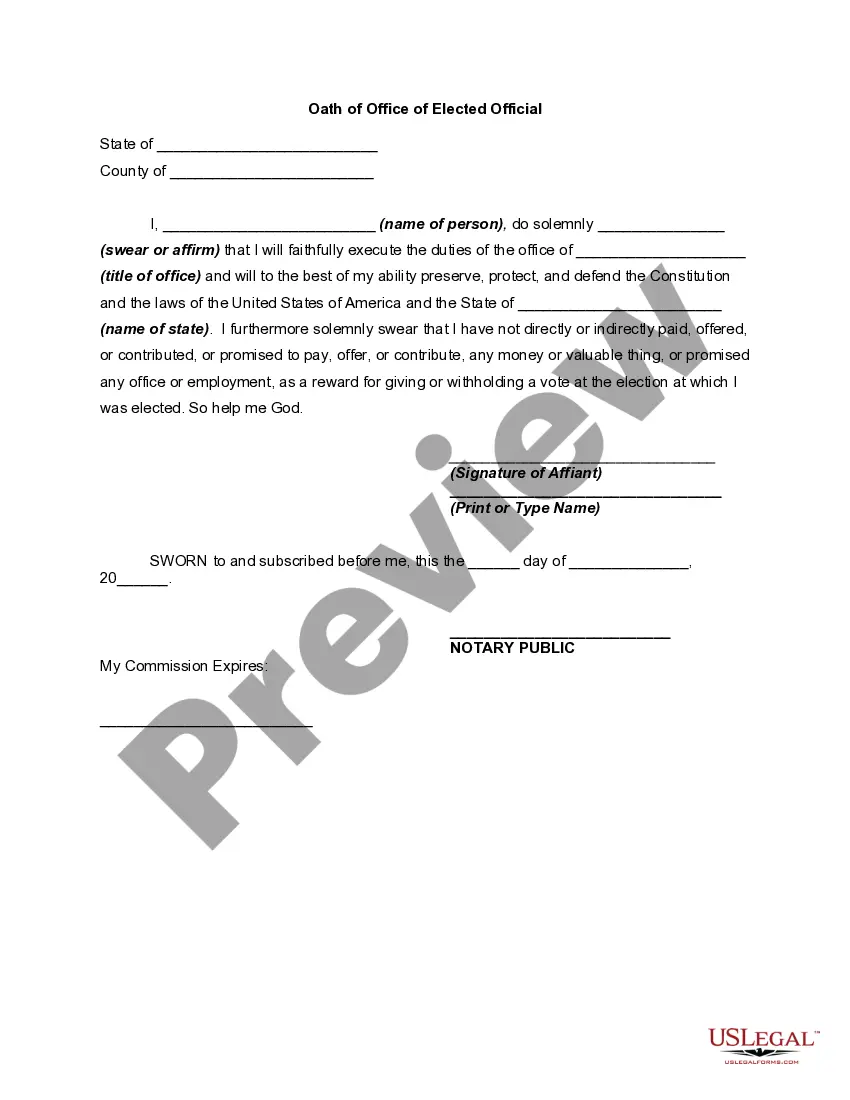
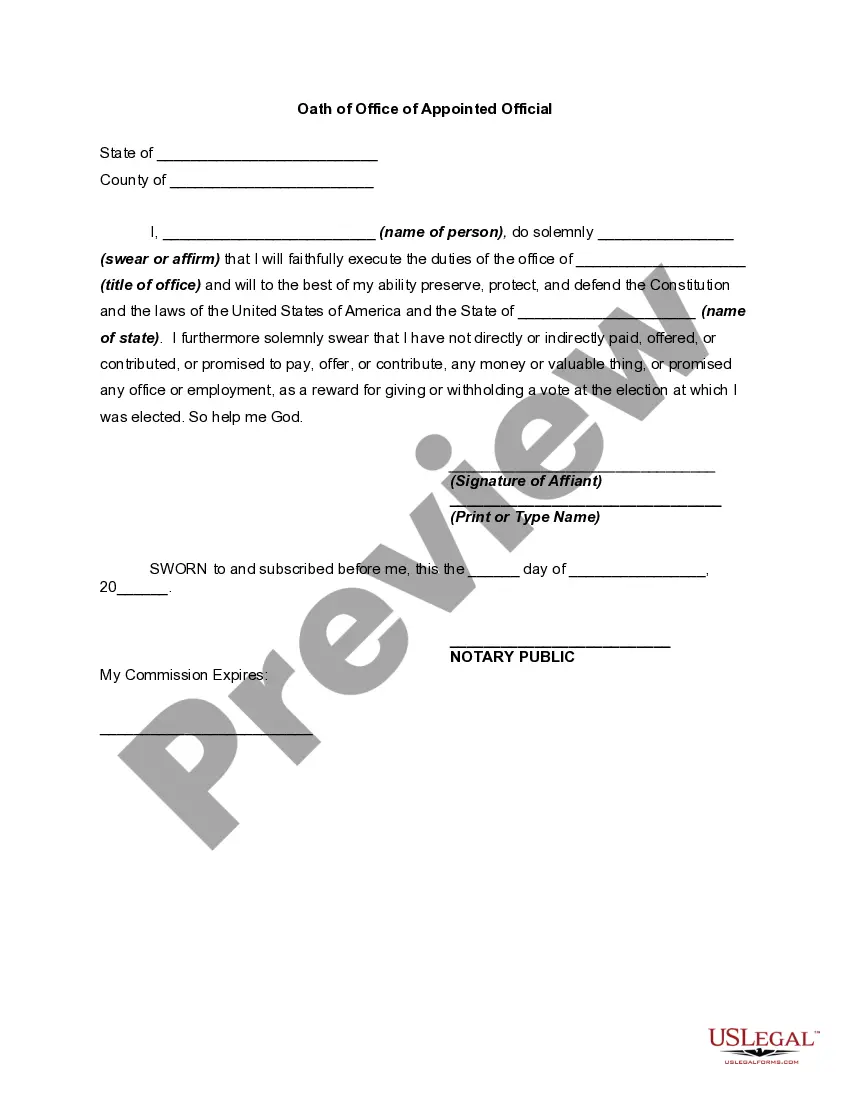
How to fill out Oath Or Affirmation By Notary Public With Acceptance Of Office?
Managing legal documents can be daunting, even for the most seasoned professionals.
When searching for a Notary Public in Fort Worth and lacking the time to delve into finding the correct and current version, the experience can be anxiety-inducing.
US Legal Forms meets all your needs, whether for personal or business-related documents, all in one place.
Utilize advanced tools to complete and oversee your Notary Public Fort Worth.
Here are the steps to follow once you acquire the form you need.
- Access a repository of articles, guides, and resources pertinent to your circumstances and requirements.
- Conserve time and effort searching for the necessary documents and use US Legal Forms’ sophisticated search and Review feature to locate and download Notary Public Fort Worth.
- For those with a monthly subscription, Log In to your US Legal Forms account, search for the form, and download it.
- Check your My documents tab to view the documents you have previously downloaded and to organize your folders as desired.
- If this is your first experience with US Legal Forms, create a free account for unlimited access to all the library's benefits.
- A comprehensive online catalog of forms could be transformative for anyone looking to manage these scenarios effectively.
- US Legal Forms is a frontrunner in online legal forms, offering over 85,000 state-specific legal documents available at your convenience.
- With US Legal Forms, you can access legal and business forms tailored to state or county specifications.
Form popularity
FAQ
(f) The offense of issuing or passing worthless checks is punishable as theft pursuant to § 39-14-105. Value shall be determined by the amount appearing on the face of the check on the date of issue.
The crime of passing worthless or bad checks is punishable as a theft charge, per T.C.A. 39-14-105. Per this statute, a theft crime is punishable based on the following criteria: Class A misdemeanor for theft of services or goods under $1,000.
WORTHLESS CHECK/SIGHT ORDER ? T.C.A. § 39-14-121 drawee for lack of funds, insufficient funds or account closed after issuing or passing the check or order, and the defendant failed to make good within ten (10) days after receiving written notice of that refusal if such notice was required.
A bad check is one that can't be negotiated because it's drawn on a nonexistent account or on an account that holds insufficient funds to cover its amount. A bad check is also known as a hot check and writing one is illegal.
Under the law in Tennessee, it's actually called ?worthless checks.? A person commits the offense of passing bad (worthless) checks when, with fraudulent intent or knowingly, they write a check and are aware there are not sufficient funds on deposit with the bank.
Worthless checks are a drain on the bottom line of any business, whether it's large or small. Follow these easy steps to get the law to help you collect: Notify the check writer with a certified letter giving them 10 days to pick up the bad check. The letter must be sent certified mail, return receipt.
The offense of issuing or passing worthless checks is punishable as theft pursuant to § 39-14-105. Value shall be determined by the amount appearing on the face of the check on the date of issue.
Per this statute, a theft crime is punishable based on the following criteria: Class A misdemeanor for theft of services or goods under $1,000. Class E felony for thefts over $1,000 but less than $,2500. Class D felony for theft of services or goods over $2,500 but less than $10,000.