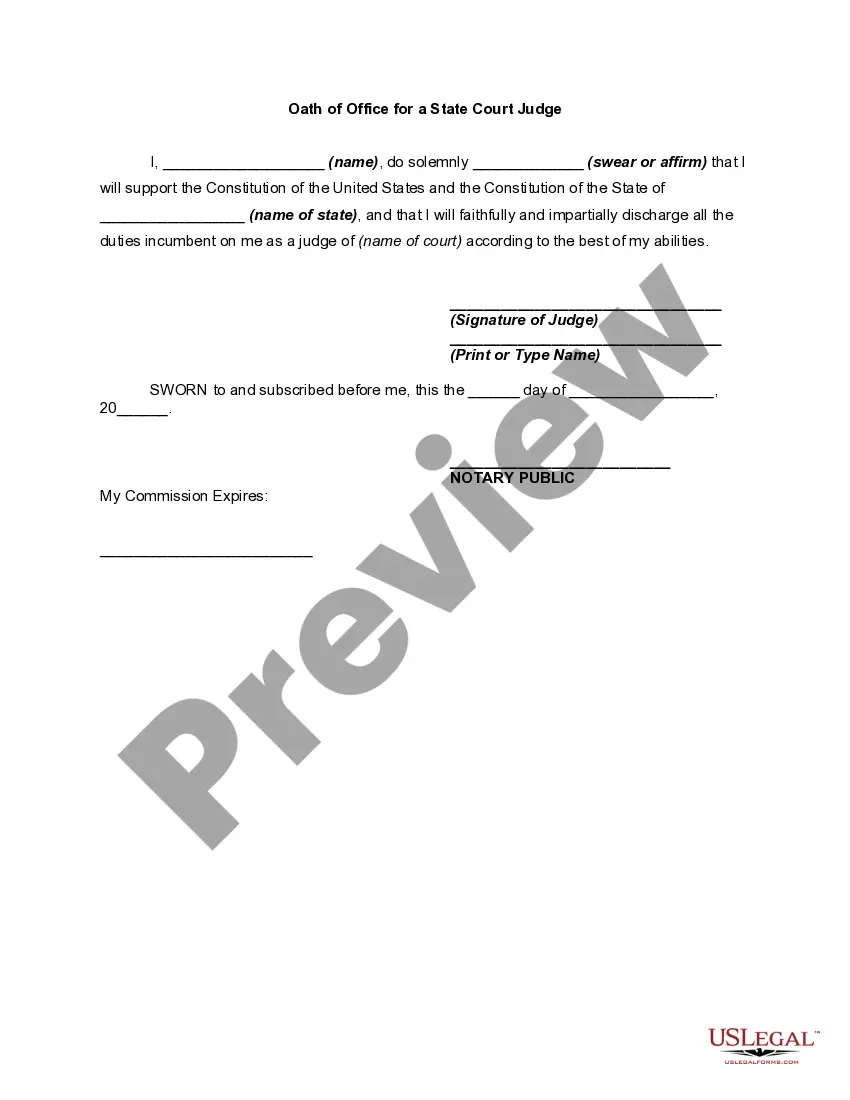
State Judge For Chief
Description
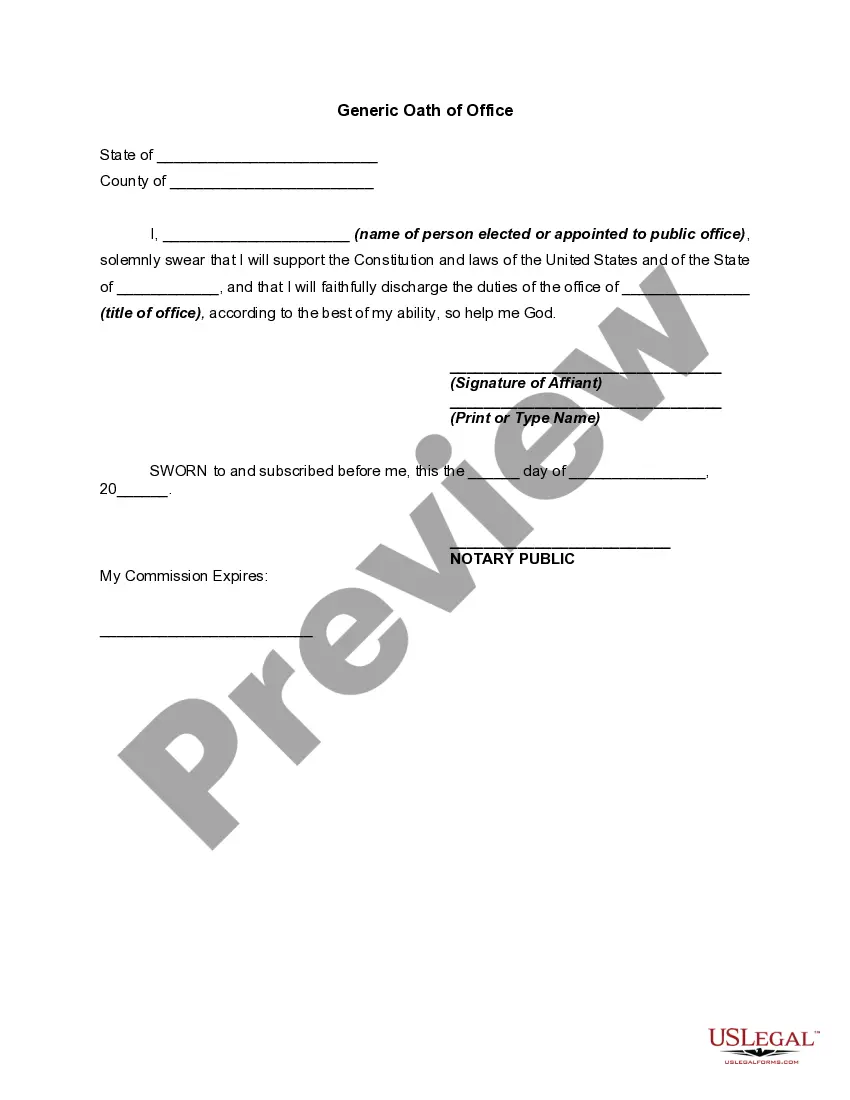
Get your form ready online
Our built-in tools help you complete, sign, share, and store your documents in one place.
Make edits, fill in missing information, and update formatting in US Legal Forms—just like you would in MS Word.
Download a copy, print it, send it by email, or mail it via USPS—whatever works best for your next step.
Sign and collect signatures with our SignNow integration. Send to multiple recipients, set reminders, and more. Go Premium to unlock E-Sign.
If this form requires notarization, complete it online through a secure video call—no need to meet a notary in person or wait for an appointment.
We protect your documents and personal data by following strict security and privacy standards.

Make edits, fill in missing information, and update formatting in US Legal Forms—just like you would in MS Word.

Download a copy, print it, send it by email, or mail it via USPS—whatever works best for your next step.

Sign and collect signatures with our SignNow integration. Send to multiple recipients, set reminders, and more. Go Premium to unlock E-Sign.

If this form requires notarization, complete it online through a secure video call—no need to meet a notary in person or wait for an appointment.

We protect your documents and personal data by following strict security and privacy standards.
Looking for another form?





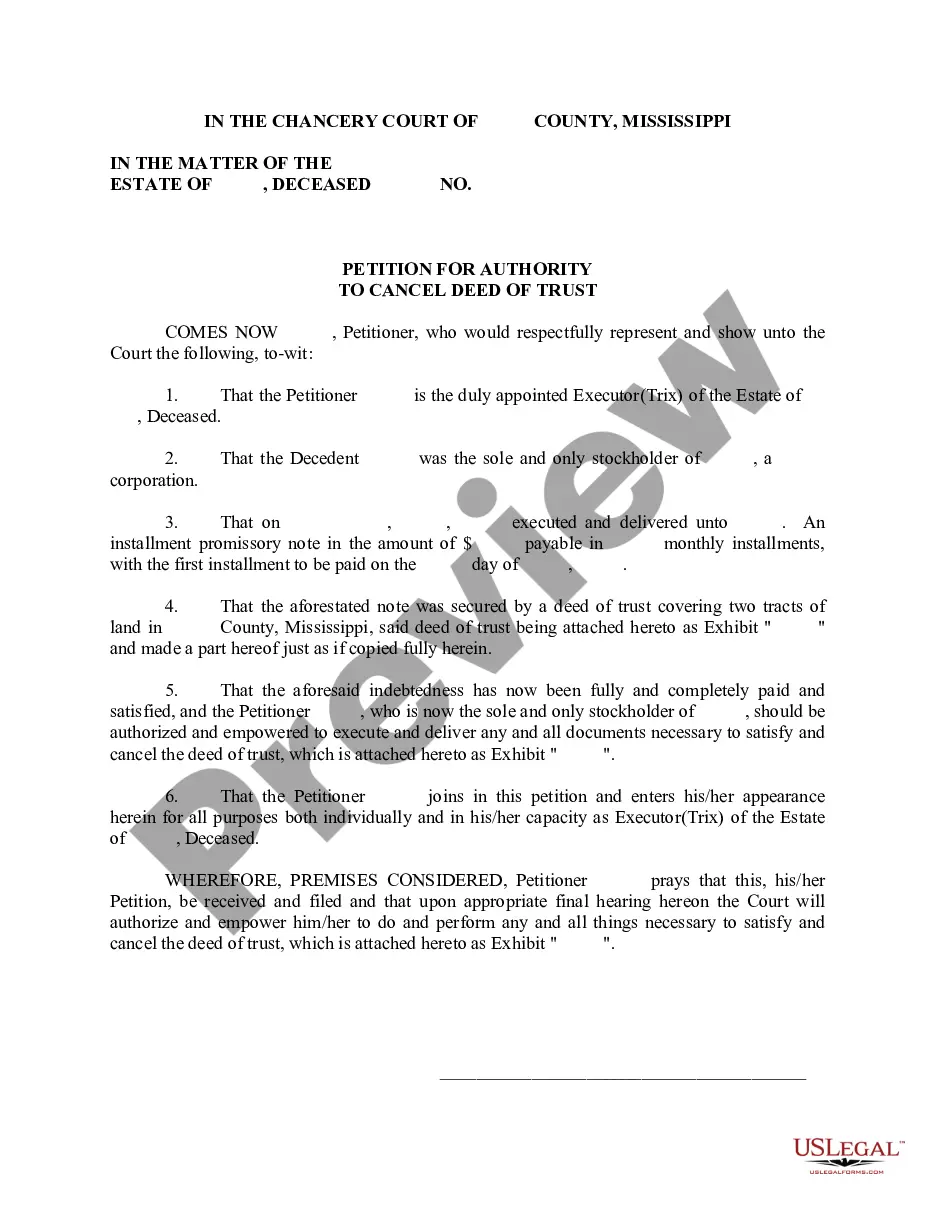



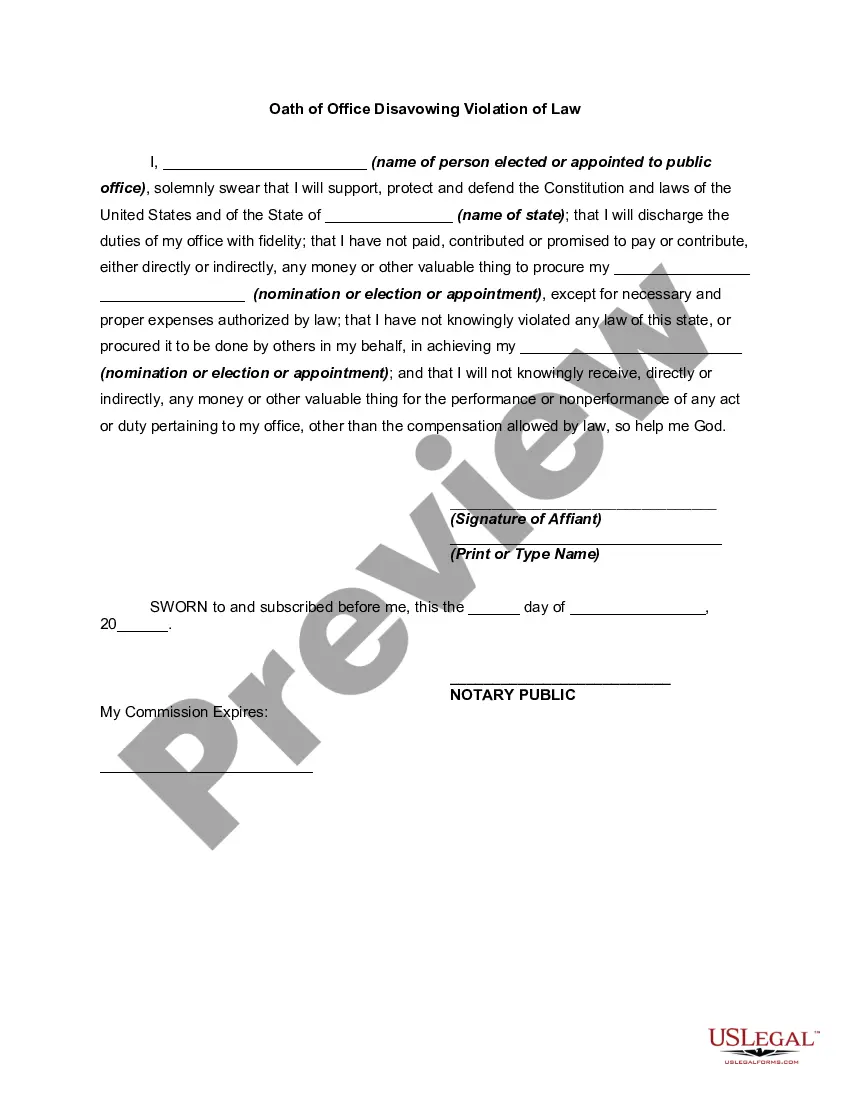
How to fill out Oath Of Office For A State Court Judge?
Managing legal documentation and operations can be a lengthy addition to your daily routine.
State Judge For Chief and similar forms frequently necessitate that you search for them and figure out how to fill them out efficiently.
Therefore, if you are managing financial, legal, or personal issues, having an extensive and user-friendly online directory of forms readily available will greatly assist.
US Legal Forms is the leading online platform for legal templates, offering over 85,000 state-specific forms and various tools to help you complete your documentation effortlessly.
Is this your first time using US Legal Forms? Register and create your account in just a few minutes to gain access to the form directory and State Judge For Chief. Then, follow these steps to complete your form: Ensure you have the correct form by utilizing the Preview feature and reviewing the form description. Click Buy Now when ready, and choose the monthly subscription plan that suits you best. Click Download then fill out, sign, and print the form. US Legal Forms has 25 years of experience assisting users with their legal documentation. Find the form you need today and streamline any process effortlessly.
- Explore the collection of relevant documents accessible to you with just one click.
- US Legal Forms provides state- and county-specific forms available for download at any time.
- Protect your document handling processes with a premium service that enables you to prepare any form in a matter of minutes without extra or hidden fees.
- Simply Log In to your account, locate State Judge For Chief, and download it directly from the My documents section.
- You can also access forms you have previously downloaded.
Form popularity
FAQ
To become a Chief Justice, you typically start as a state judge for chief. The appointment process varies by state, but it usually involves nomination by the governor or election by the public. After being selected, the Chief Justice often leads the state's judicial system, overseeing court administration and ensuring the fair application of laws. If you are interested in this path, consider exploring resources and forms available on USLegalForms, which can guide you through the necessary legal processes.
The role of a chief judge involves overseeing court administration, managing court schedules, and ensuring that legal proceedings run smoothly. Chief judges also handle administrative responsibilities, such as assigning cases to other judges and addressing any issues that arise within the court. Their leadership is crucial for maintaining an effective judicial system. If you are looking for details about the responsibilities of a state judge for chief, USLegalForms can provide valuable insights and resources.
In Colorado, the judges include district judges, county judges, and magistrates, all serving within various courts across the state. Each judge holds a specific role, contributing to the judicial system in their own way. You can find information about these judges and their qualifications on the Colorado Judicial Branch website. If you need help navigating this information, consider using USLegalForms to access relevant legal documents and resources.
A judge is an official who presides over court proceedings and makes decisions on legal matters. In contrast, a chief judge oversees the entire court system within a jurisdiction, managing court operations and administrative functions. The chief judge also provides guidance to other judges and ensures that cases are handled efficiently. Understanding this distinction is important, especially if you are searching for a state judge for chief.
In person: In an interview, social event, or in court, address a judge as ?Your Honor? or ?Judge [last name].? If you are more familiar with the judge, you may call her just ?Judge.? In any context, avoid ?Sir? or ?Ma'am.? Special Titles.
The President may select a Chief Justice nominee from within -- i.e., from among the Court's Associate Justices -- or from outside the Court. Each option may present the President with different considerations, attractions and drawbacks.
Dear Mr. Brand, Most of the time a judge is: 'The Honorable (first name, last name)'. Then after his name identify the office he holds: 'Chief Judge of the Third Circuit Court of Appeals of New York' or whatever ?
You can address the judge to ?The Honorable First Name Last Name? or ?Judge First Name Last Name? or ?Judge Last Name.? It is redundant to say ?Honorable Judge? so use either ?Judge? or ?Honorable.?
Write "Dear Judge (surname)," to begin the letter. If writing to a U.S. state or federal Supreme Court, use ?Dear Justice? instead. If a judge's title is "Chief Judge" or "Chief Justice," you may use that title instead. "Judge" or "Justice" is also acceptable.