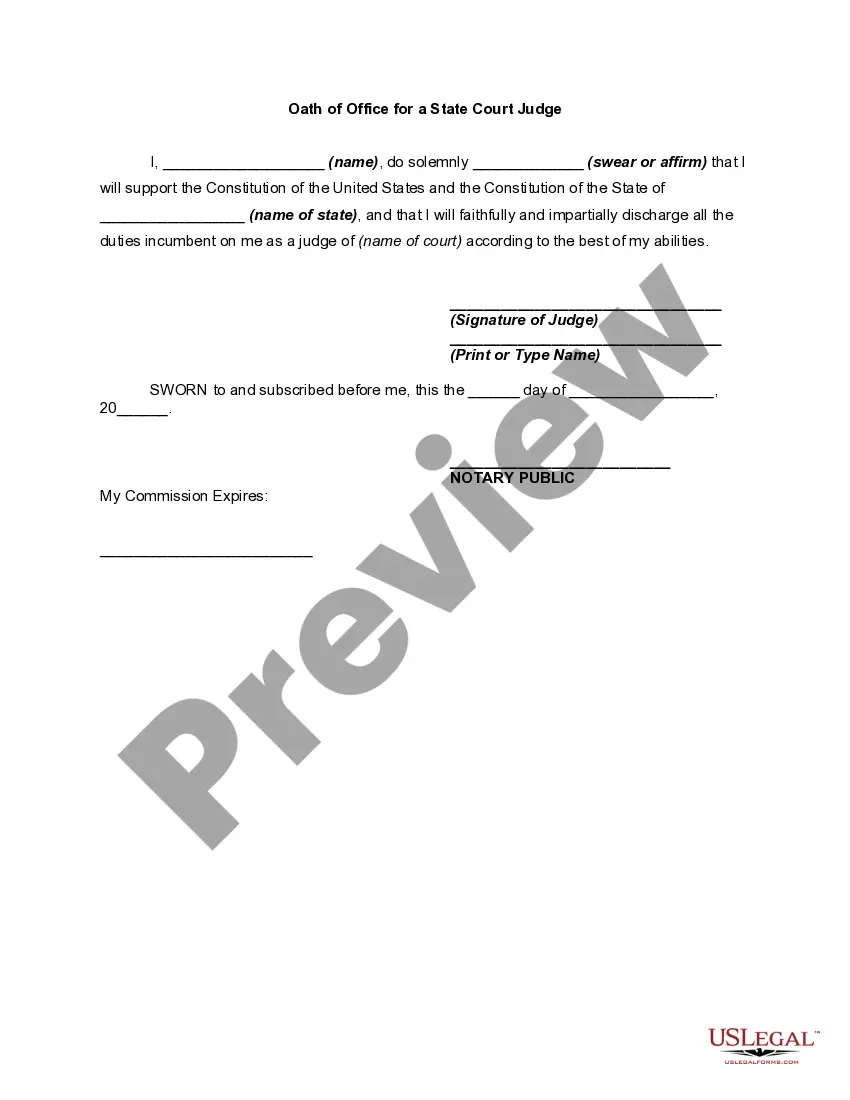
State Court Oath For Judges
Description
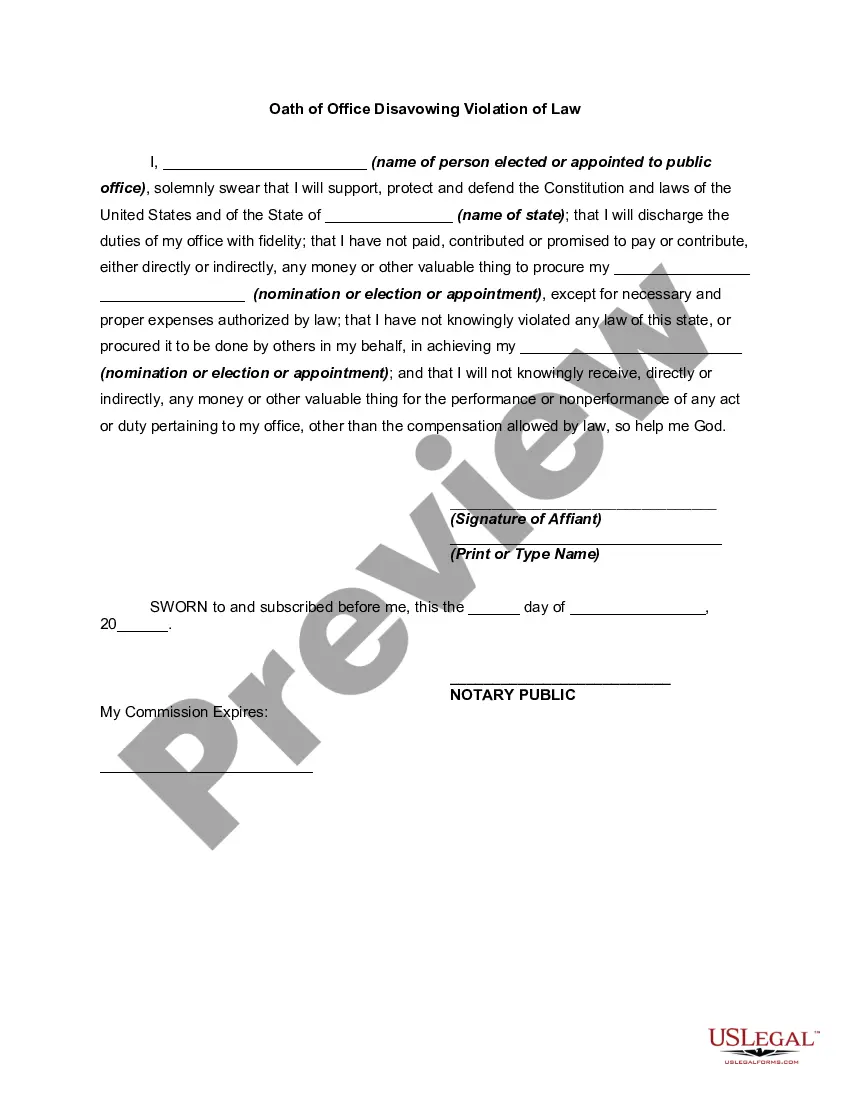
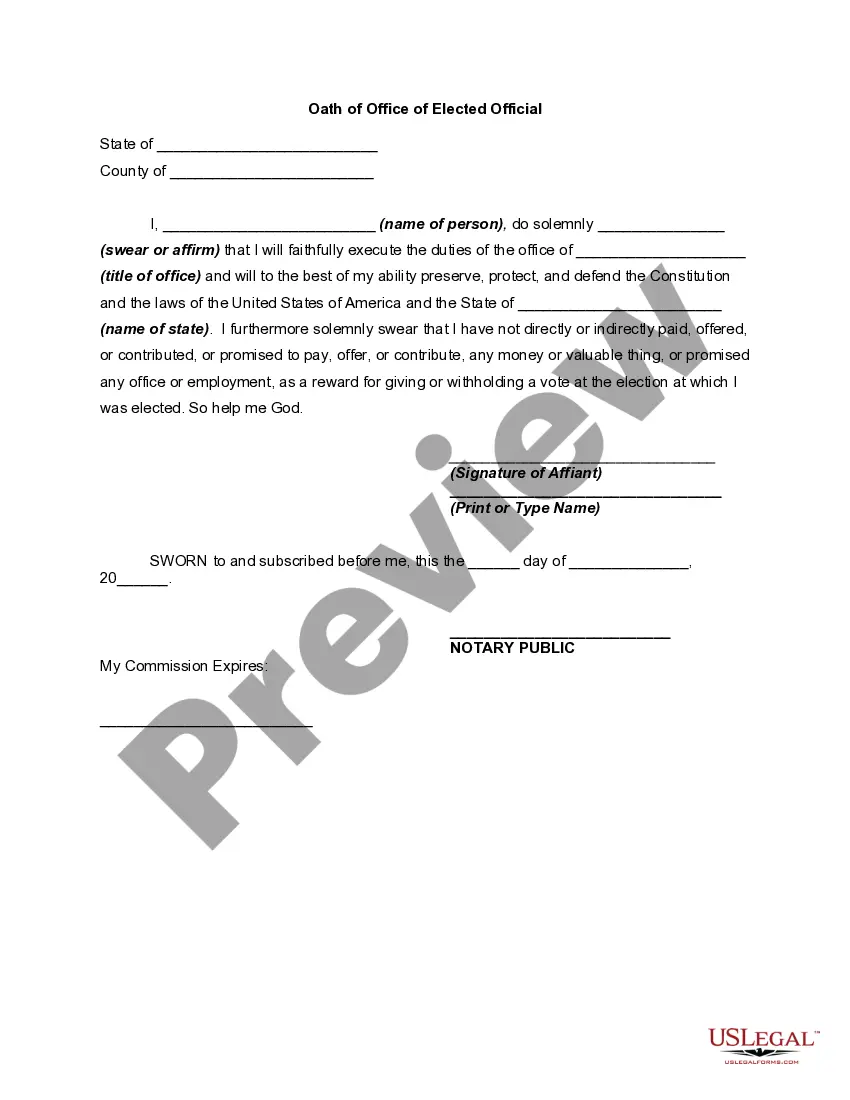
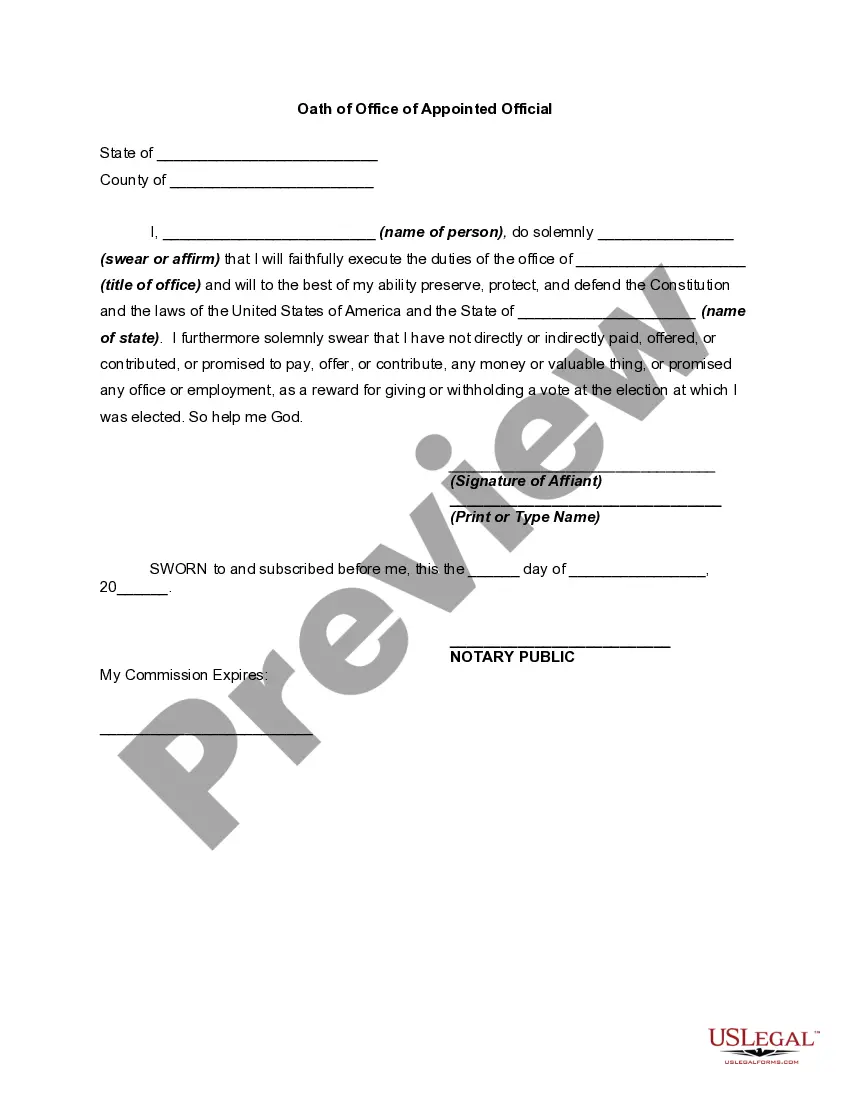
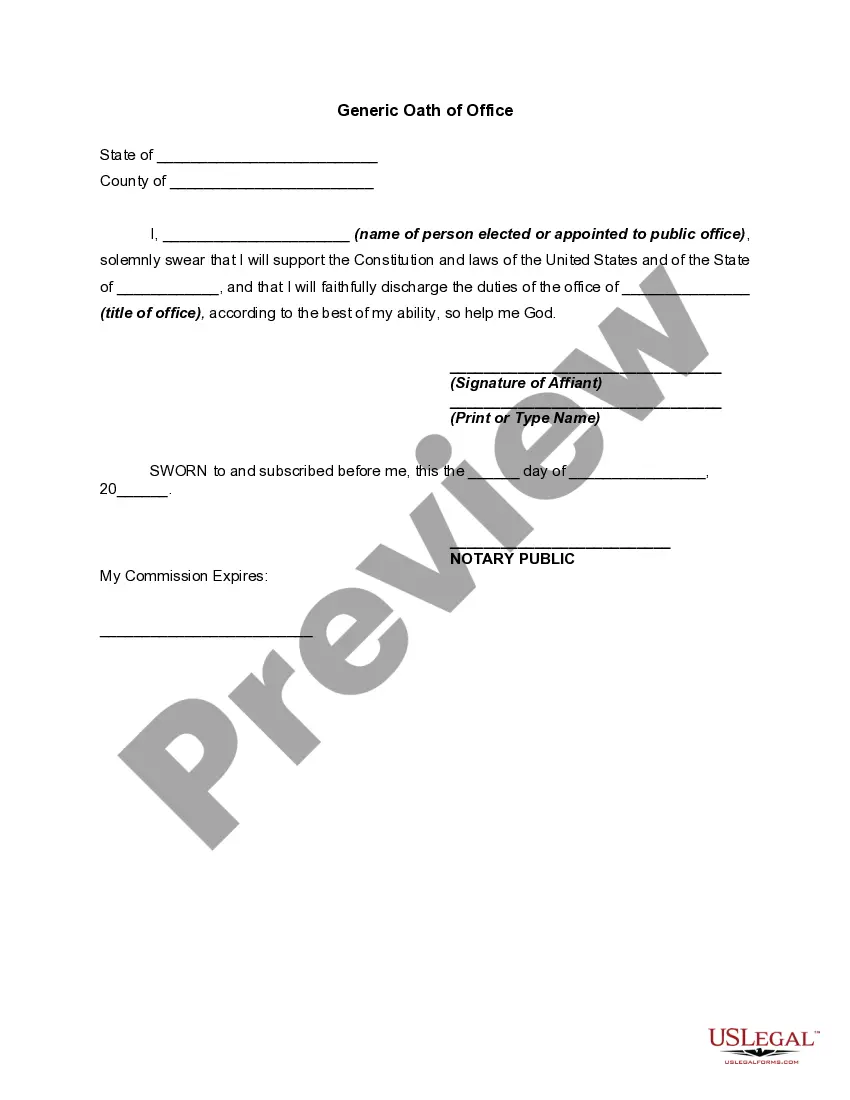
Get your form ready online
Our built-in tools help you complete, sign, share, and store your documents in one place.
Make edits, fill in missing information, and update formatting in US Legal Forms—just like you would in MS Word.
Download a copy, print it, send it by email, or mail it via USPS—whatever works best for your next step.
Sign and collect signatures with our SignNow integration. Send to multiple recipients, set reminders, and more. Go Premium to unlock E-Sign.
If this form requires notarization, complete it online through a secure video call—no need to meet a notary in person or wait for an appointment.
We protect your documents and personal data by following strict security and privacy standards.

Make edits, fill in missing information, and update formatting in US Legal Forms—just like you would in MS Word.

Download a copy, print it, send it by email, or mail it via USPS—whatever works best for your next step.

Sign and collect signatures with our SignNow integration. Send to multiple recipients, set reminders, and more. Go Premium to unlock E-Sign.

If this form requires notarization, complete it online through a secure video call—no need to meet a notary in person or wait for an appointment.

We protect your documents and personal data by following strict security and privacy standards.
Looking for another form?

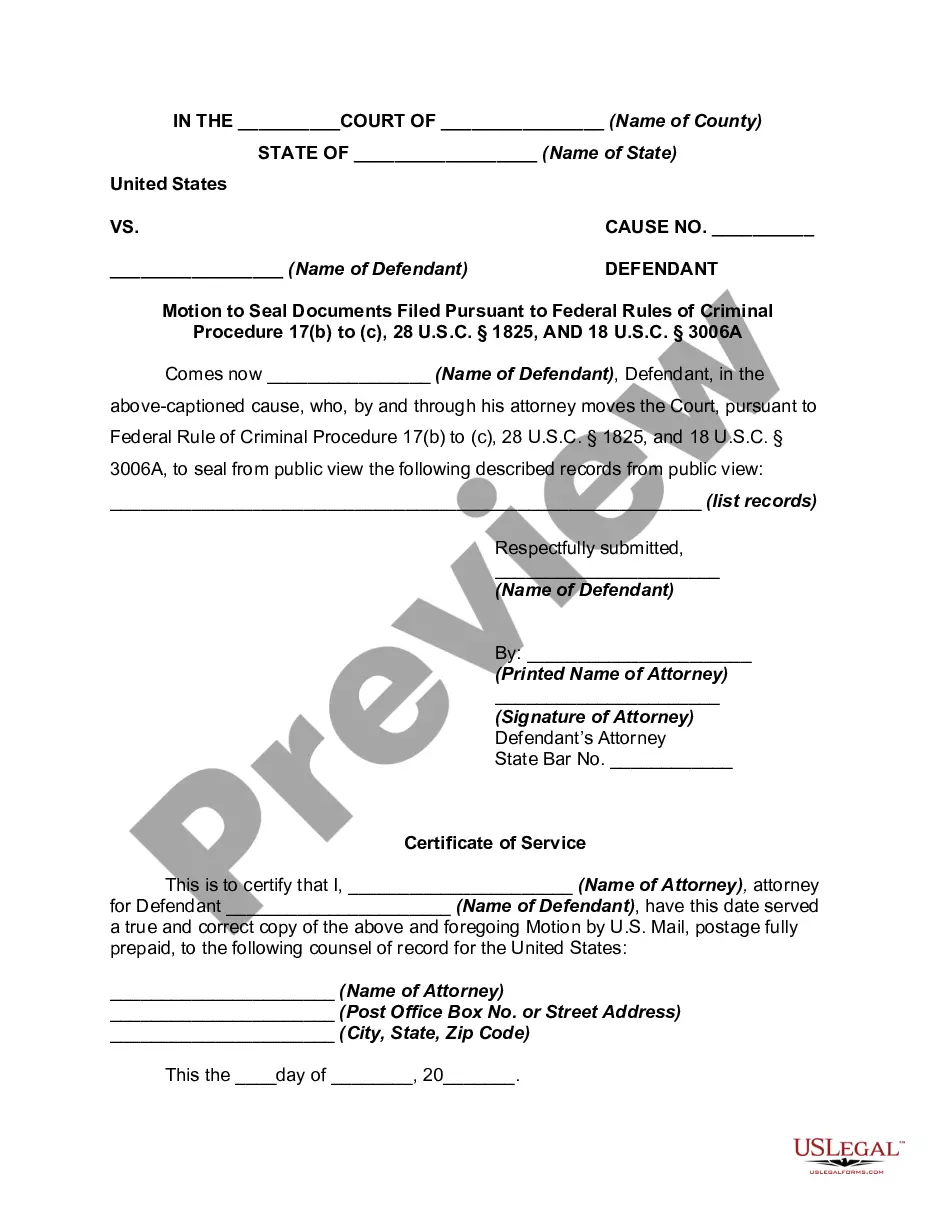





How to fill out Oath Of Office For A State Court Judge?
Creating legal documents from the ground up can occasionally be overwhelming.
Certain situations may require extensive research and significant financial investment.
If you’re looking for a simpler and more economical method of preparing the State Court Oath For Judges or any other forms without the hassle, US Legal Forms is readily available.
Our online library containing over 85,000 current legal documents covers nearly every aspect of your financial, legal, and personal affairs.
However, before proceeding to download the State Court Oath For Judges, adhere to these guidelines: Check the document preview and descriptions to confirm it’s the form you need. Ensure the chosen form complies with the laws and regulations of your state and county. Select the appropriate subscription plan to obtain the State Court Oath For Judges. Download the form, complete it, sign it, and print it out. US Legal Forms has an impeccable reputation and over 25 years of experience. Join us today and make form completion easy and efficient!
- With just a few clicks, you can quickly obtain state- and county-specific templates meticulously crafted by our legal experts.
- Utilize our platform whenever you require reliable services to swiftly find and download the State Court Oath For Judges.
- If you’re familiar with our site and have previously registered, simply Log In to your account, choose the form, and download it or retrieve it anytime from the My documents section.
- Not registered yet? No worries. Setting up an account and browsing the catalog only takes a few minutes.
Form popularity
FAQ
In most cases, the person who swears individuals in court is a judge or a court official. This individual administers the state court oath for judges to ensure that they commit to upholding the law impartially. The process is a direct reflection of the judicial system's values and aims to instill a sense of responsibility in those taking the oath. Ensuring proper procedures are followed enhances credibility and trust in court proceedings.
Authorized individuals to administer oaths include judges, clerks of court, and certain notaries public. Each state has specific laws outlining who can officiate over the state court oath for judges, ensuring that the oath is given by a qualified person. This authorization helps to uphold the legal framework and ensures that the process of swearing in judges remains consistent. Such rules safeguard the integrity of the judicial system.
The oath in court is generally given by a court official, such as a chief judge or a clerk of the court. This person plays a vital role in upholding the standards of justice by formally administering the state court oath for judges. The act of giving the oath symbolizes a commitment to serving the law and the community. Proper administration of this oath reinforces the gravity of the judicial role.
In a state court, the oath for judges is typically administered by a designated court official, often the presiding judge. This official ensures that the judge takes the required state court oath for judges before assuming their duties. The process emphasizes the importance of integrity and responsibility within the judicial system. Ensuring that the oath is administered properly is crucial for maintaining public trust in the courts.
Legal requirements for oath taking typically include a clear declaration of intent and adherence to statutory guidelines. The person taking the oath must have the capacity to understand and agree to the terms. In the context of the state court oath for judges, compliance with these legal demands reinforces their role in the justice system.
Administering an oath in court involves a designated official, such as a judge or court clerk, guiding the process. The individual being sworn in must raise their right hand and verbally confirm their commitment to the oath's terms. This procedure is vital, particularly for the state court oath for judges, ensuring all parties uphold their legal responsibilities.
An oath becomes legally binding when it is administered according to established legal standards and the individual taking the oath understands their commitment. Intent and the promise to tell the truth or fulfill duties play essential roles in the binding nature of the oath. For judges, the state court oath for judges reinforces their accountability in legal matters.
Typically, individuals need several documents for an oath ceremony, including proof of identity and residency. A government-issued photo ID and any paperwork indicating eligibility will also be necessary. Understanding these requirements is crucial for those preparing for a state court oath for judges, ensuring a smooth process.
The only president who did not use the Bible for the oath of office is Theodore Roosevelt. He took his oath in 1901 in a private ceremony in Buffalo, New York. This event highlights that the state court oath for judges and the presidential oath have some flexibility regarding religious texts.
Filling out an oath of office typically involves obtaining the correct form from your local government or court. You will need to provide personal information and sign the document in the presence of a witness or notary. If you're navigating this process, uslegalforms can guide you in completing your state court oath for judges accurately, ensuring your commitments are formally recorded.