Ucc 3 Termination Form California
Description
Get your form ready online
Our built-in tools help you complete, sign, share, and store your documents in one place.
Make edits, fill in missing information, and update formatting in US Legal Forms—just like you would in MS Word.
Download a copy, print it, send it by email, or mail it via USPS—whatever works best for your next step.
Sign and collect signatures with our SignNow integration. Send to multiple recipients, set reminders, and more. Go Premium to unlock E-Sign.
If this form requires notarization, complete it online through a secure video call—no need to meet a notary in person or wait for an appointment.
We protect your documents and personal data by following strict security and privacy standards.

Make edits, fill in missing information, and update formatting in US Legal Forms—just like you would in MS Word.

Download a copy, print it, send it by email, or mail it via USPS—whatever works best for your next step.

Sign and collect signatures with our SignNow integration. Send to multiple recipients, set reminders, and more. Go Premium to unlock E-Sign.

If this form requires notarization, complete it online through a secure video call—no need to meet a notary in person or wait for an appointment.

We protect your documents and personal data by following strict security and privacy standards.
Looking for another form?




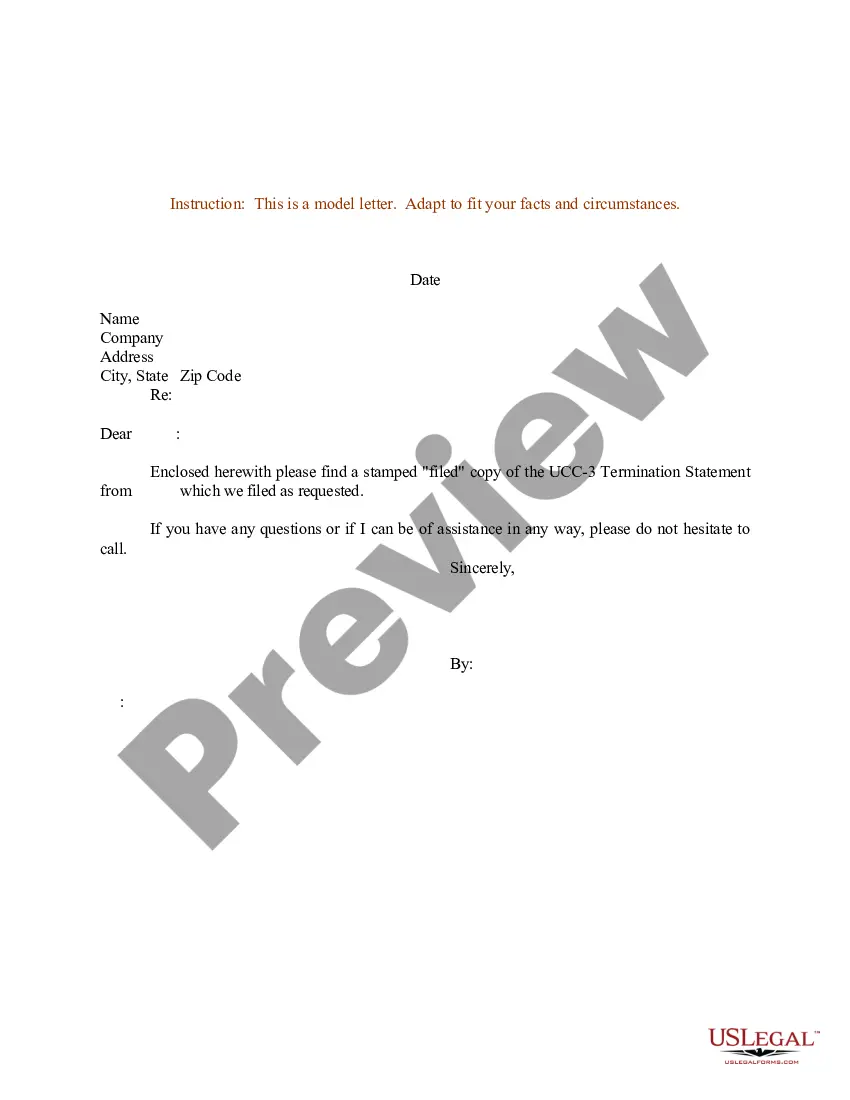
How to fill out Sample Letter For UCC-3 Termination Statement?
It’s clear that you cannot become a legal expert instantly, nor can you swiftly learn how to prepare the Ucc 3 Termination Form California without a specific skill set.
Drafting legal documents is an extensive undertaking that demands particular education and abilities.
So why not entrust the preparation of the Ucc 3 Termination Form California to the specialists.
You can revisit your forms from the My documents section at any time.
If you're an existing client, you can easily Log In to find and download the template from the same section.
- Discover the form you require using the search feature located at the top of the webpage.
- View it (if this option is available) and read the accompanying description to ascertain whether the Ucc 3 Termination Form California is what you are looking for.
- Restart your search if you are in need of a different form.
- Create a complimentary account and select a subscription plan to acquire the template.
- Click Buy now. Once your payment is processed, you can obtain the Ucc 3 Termination Form California, complete it, print it out, and send or mail it to the appropriate parties or organizations.
Form popularity
FAQ
1 form establishes a creditor's security interest in specific collateral, while a UCC3 form is used to amend or terminate that interest. In simple terms, the UCC1 creates the lien, and the UCC3 can remove it. Knowing the difference is essential for anyone dealing with secured transactions in California.
An UCC-3 document is used specifically for amending or terminating a UCC 1 filing. This document allows creditors to officially change their claims regarding collateral. Understanding the UCC 3 termination form California ensures you handle these legal documents correctly and maintain compliance.
The purpose of a UCC form is to provide a public record of secured transactions between creditors and borrowers. It helps in establishing the priority of claims on collateral. Utilizing the UCC 3 termination form California can help you effectively manage your obligations and clarify your legal standing.
To get a UCC filing released, you need to file a UCC 3 termination form. This document officially removes the creditor's security interest from the public record. Make sure to include relevant information, as an accurate submission ensures a smooth release process.
In California, you file a UCC-3 termination by submitting the completed UCC 3 form to the Secretary of State's office. Be sure to include all required details, such as the original UCC 1 filing number. Using US Legal Forms can simplify this process, providing you with the correct format and instructions.
To request a UCC termination, you need to complete a UCC 3 termination form. Ensure you have the original UCC 1 details, as this information is crucial for processing the termination successfully. You can streamline the process by using platforms like US Legal Forms, which offer guidance and templates for accurate filings.
A UCC 3 filing is a document used to terminate a previously filed UCC 1 financing statement. This process indicates that the secured party no longer claims an interest in the collateral. Understanding the UCC 3 termination form California is important for anyone looking to clear any encumbrances from their records.
3 termination is the form used to cancel a previously filed UCC1 statement, indicating that a secured party no longer has a claim against the specified collateral. Completing and filing this form in California removes any lingering security interests, which is important for both parties involved. Filing a UCC3 termination is a key step in maintaining clear ownership of assets and ensuring smooth business transactions. UsLegalForms provides easy access to the necessary forms to help streamline this process.
An UCC filing is a serious legal document that establishes a secured party's interest in collateral. It serves as public notice of the lender's claim and can impact the debtor's ability to secure additional financing. Understanding the seriousness of an UCC filing is crucial because it can affect your credit and business operations. Therefore, promptly addressing any necessary terminations, like using the UCC-3 termination form in California, is essential.
To terminate a UCC filing in California, you need to complete a UCC-3 termination form and submit it to the appropriate filing office. Ensure you provide all required details, including the UCC file number and the debtor’s information. Once submitted, it officially cancels the original UCC-1 filing, clearing any claims against the collateral. UsLegalForms offers resources and guidance to simplify this process, making it easier for you to manage your filings.