Subpoena For Court
Description

Get your form ready online
Our built-in tools help you complete, sign, share, and store your documents in one place.
Make edits, fill in missing information, and update formatting in US Legal Forms—just like you would in MS Word.
Download a copy, print it, send it by email, or mail it via USPS—whatever works best for your next step.
Sign and collect signatures with our SignNow integration. Send to multiple recipients, set reminders, and more. Go Premium to unlock E-Sign.
If this form requires notarization, complete it online through a secure video call—no need to meet a notary in person or wait for an appointment.
We protect your documents and personal data by following strict security and privacy standards.

Make edits, fill in missing information, and update formatting in US Legal Forms—just like you would in MS Word.

Download a copy, print it, send it by email, or mail it via USPS—whatever works best for your next step.

Sign and collect signatures with our SignNow integration. Send to multiple recipients, set reminders, and more. Go Premium to unlock E-Sign.

If this form requires notarization, complete it online through a secure video call—no need to meet a notary in person or wait for an appointment.

We protect your documents and personal data by following strict security and privacy standards.
Looking for another form?



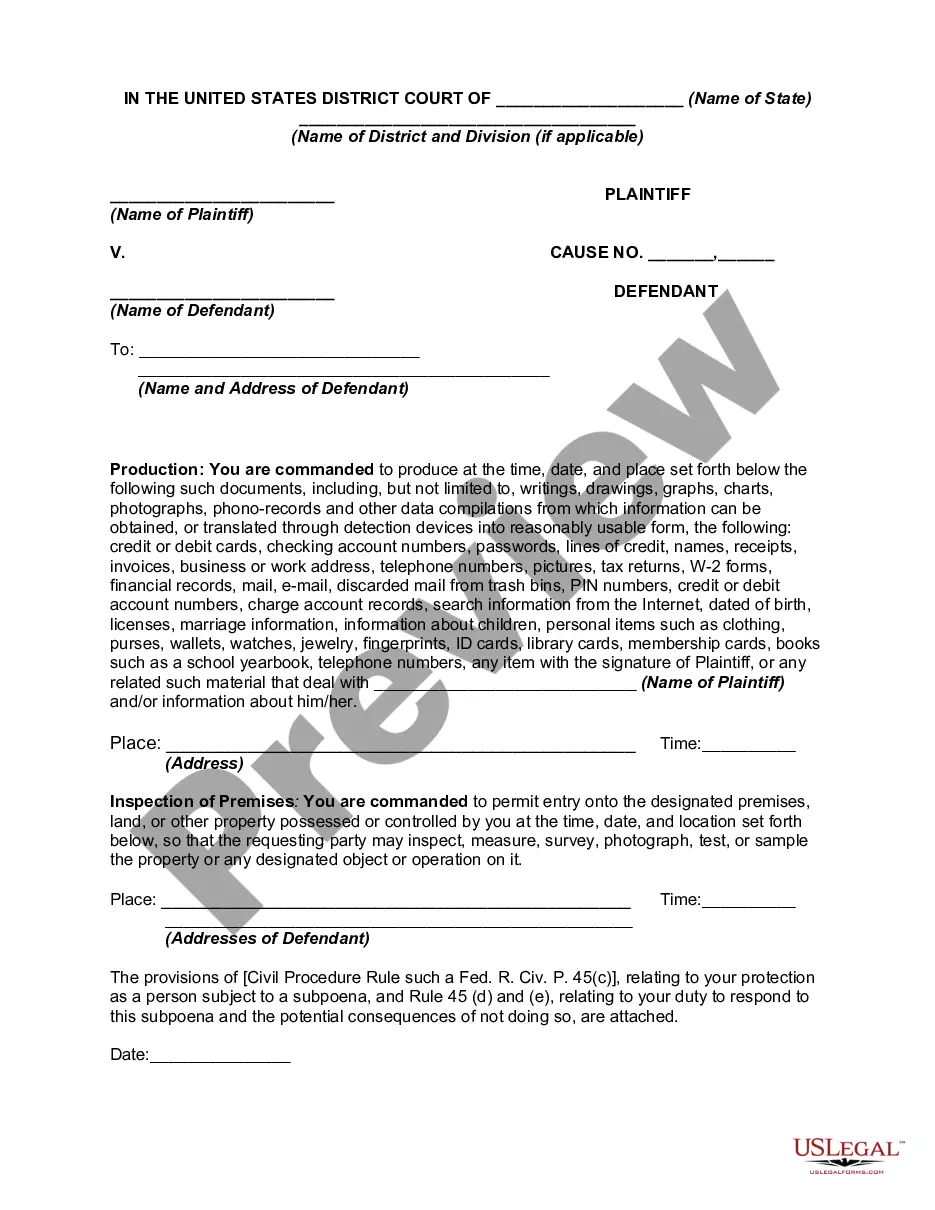
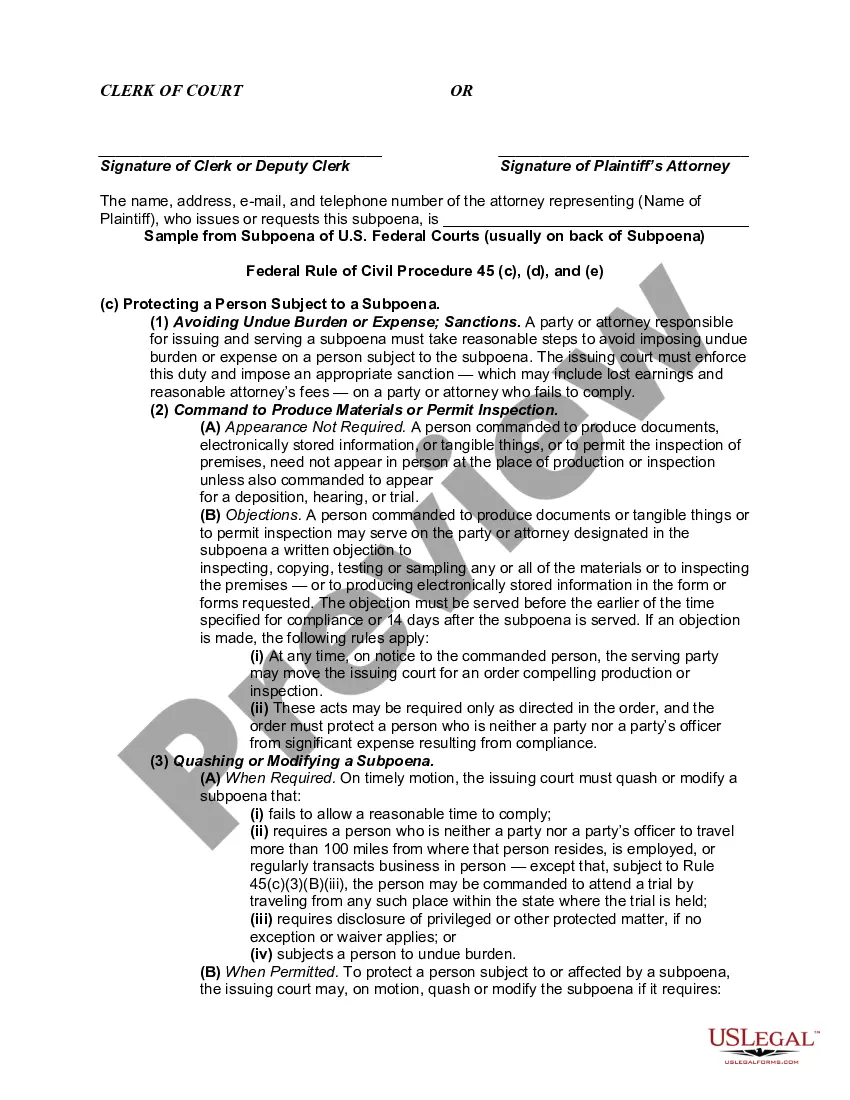
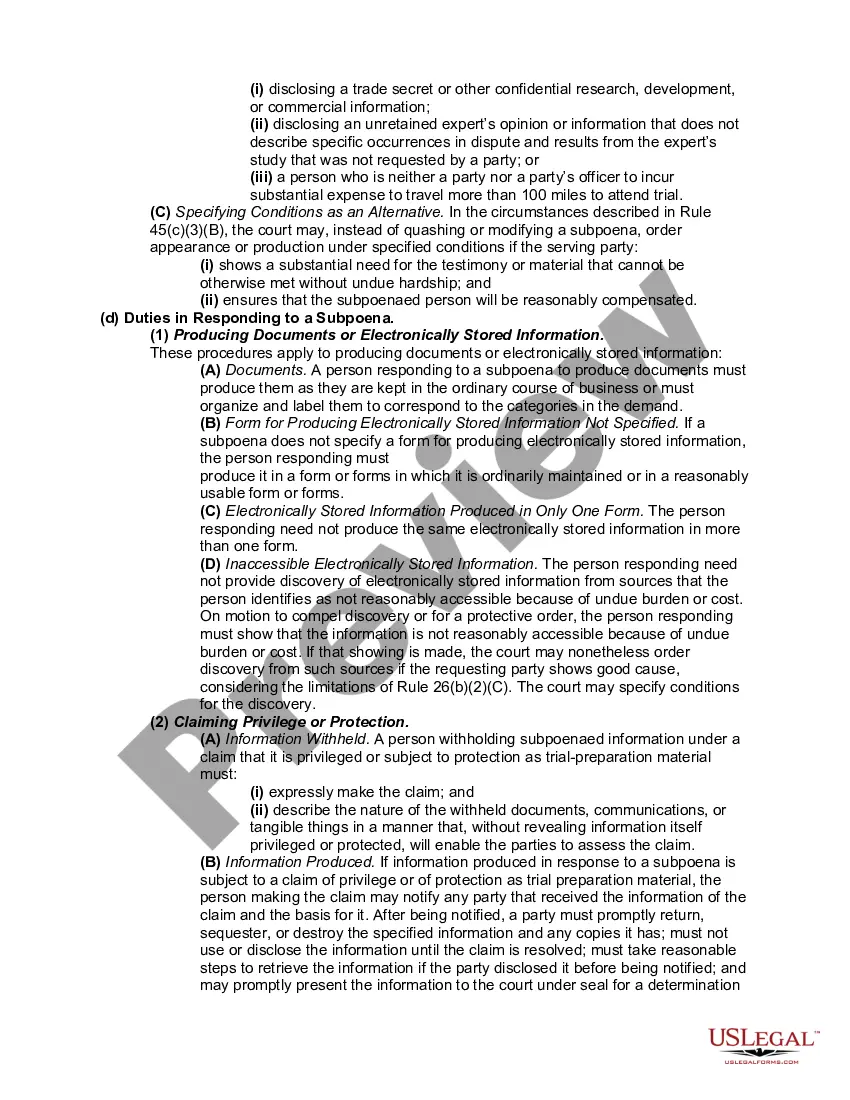
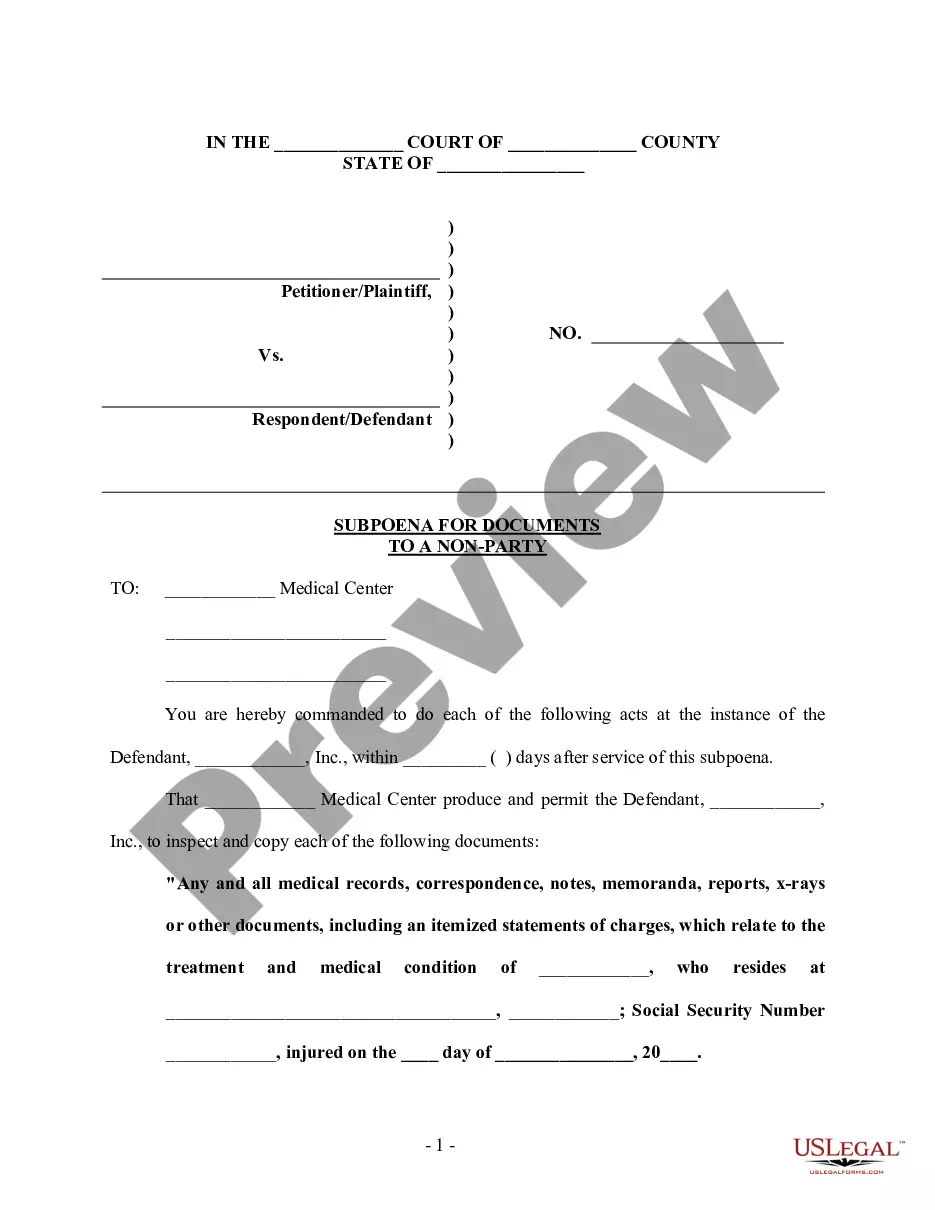
How to fill out Subpoena To Produce Documents, Information, Or Objects Or Permit Inspection Of Premises In A Civil Action Involving Identity Theft?
It’s widely recognized that you cannot instantly become a legal professional, nor can you swiftly learn how to prepare a Court Subpoena without possessing a specific skill set.
Compiling legal documents is a lengthy process that demands particular education and expertise. So why not entrust the assembly of the Court Subpoena to the experts.
With US Legal Forms, which boasts one of the largest legal document collections, you can discover everything from court documents to templates for workplace communication.
You can access your documents again from the My documents section at any time. If you are a current client, simply Log In, and find and download the template from the same section.
Regardless of the intention behind your forms—whether legal, financial, or personal—our website is equipped to assist you. Give US Legal Forms a try today!
- Locate the form you require using the search bar at the top of the website.
- Examine it (if this feature is available) and review the accompanying description to determine if the Court Subpoena is what you need.
- If you require a different template, begin your search again.
- Create a complimentary account and select a subscription plan to purchase the form.
- Click Buy now. After the payment is processed, you can download the Court Subpoena, complete it, print it, and send or mail it to the appropriate individuals or organizations.
Form popularity
FAQ
The timeline for obtaining a subpoena can range from a few days to a week, depending on the complexity of your case and local court processing times. Once filed, the court reviews it, leading to either a quick approval or potential follow-up inquiries. It's essential to remain patient and ensure all paperwork is correctly completed. Utilizing platforms like US Legal Forms can simplify this process and minimize delays.
To get subpoenaed to court, a legal authority must issue a subpoena for court, requiring your presence for testimony or to produce documents. This process usually stems from a legal action where your input is vital. Once issued, you will receive official notification of the subpoena. If you need assistance with the subpoena process, you can explore resources offered by US Legal Forms.
In Georgia, subpoenas can be served through various methods, including personal delivery or by certified mail. The recipient must receive the subpoena adequately, giving them the chance to comply. Understanding local rules is essential to ensure proper service, as mistakes may impact your case. US Legal Forms provides resources to help navigate this process smoothly.
Under federal rules, a subpoena must generally be served at least 14 days before the compliance date unless the court orders otherwise. Serving it in advance allows the recipient enough time to prepare or respond. It is crucial to check the specific requirements relevant to your case and jurisdiction. Consulting US Legal Forms can help clarify these details and ensure compliance.
Yes, a regular person can file a subpoena for court, but there are specific procedures involved. You typically need a valid reason, such as needing evidence for a legal matter. It's important to ensure you understand the rules in your jurisdiction, as incorrect filings may lead to delays. Platforms like US Legal Forms can provide useful templates and guidance for filing subpoenas.
The time it takes for a subpoena to be issued can vary, depending on jurisdiction and the specifics of the case. Generally, once filed, a subpoena for court may be processed in a few days to a week. For expedited cases, it can be faster. Depending on the urgency, it is advisable to allow enough time for service and compliance.
Serving a subpoena in Alaska requires adherence to specific legal protocols. You can serve it personally to the individual or send it through certified mail, provided local laws allow it. Be sure to follow the rules carefully to ensure that the subpoena for court is valid and enforceable.
To serve court papers in Alaska, you must follow the guidelines provided by Alaska law, which often involves delivering the documents to the individual named in the papers. Typically, a process server or an official authorized by the court performs this task. It's essential to keep records of the service for legal purposes.
A subpoena is typically served in person by a process server or law enforcement officer. In some cases, it can also be sent via mail, but this depends on the jurisdiction's rules. When you receive a subpoena for court, ensure you understand your obligations to respond appropriately.
Being subpoenaed generally involves receiving a legal document that requires you to appear in court or produce specific documents. The subpoena for court will detail what is expected of you and by when. It is important to read the document carefully and to consult with legal counsel if you have questions or concerns.