Sample Lease Agreement For Parking Lot
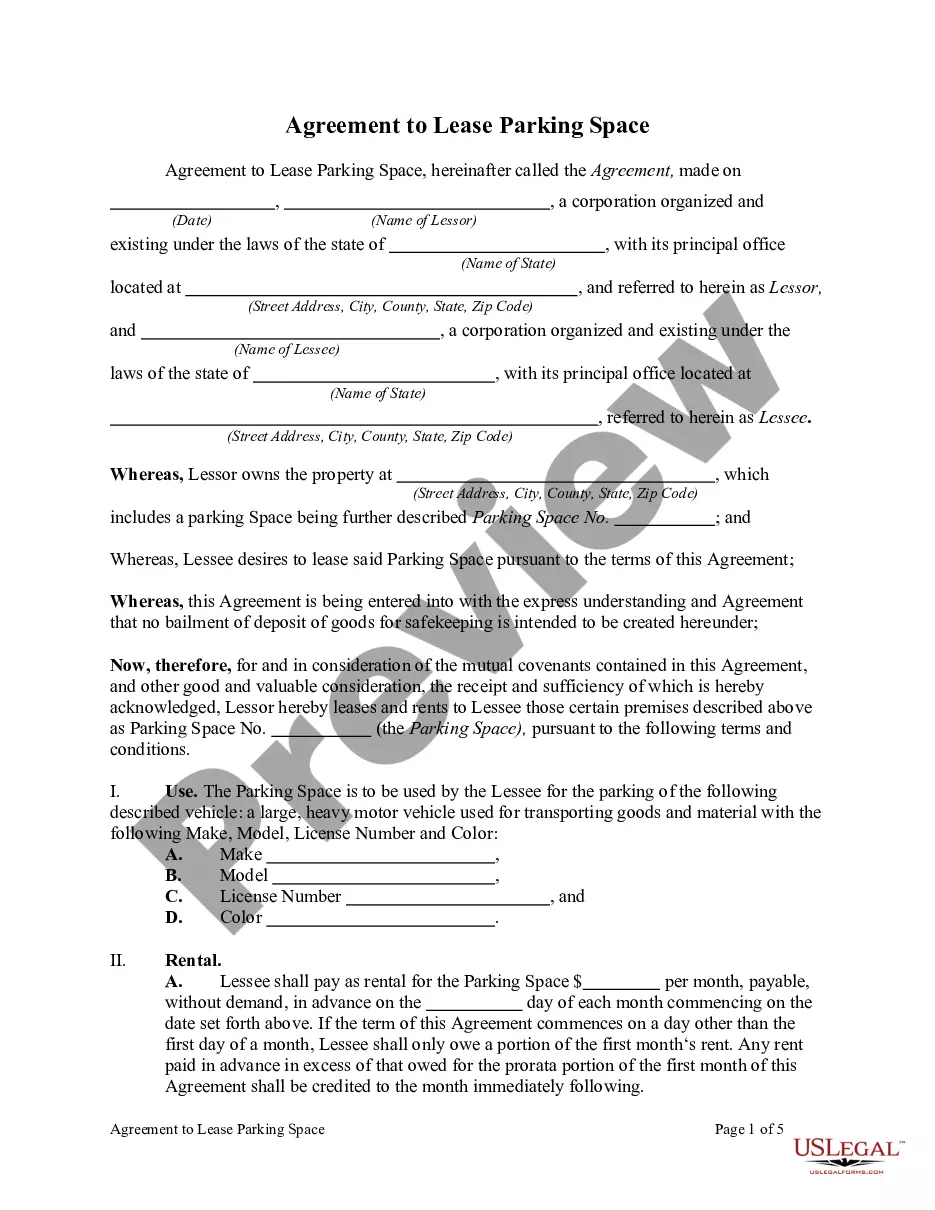
Description
Get your form ready online
Our built-in tools help you complete, sign, share, and store your documents in one place.
Make edits, fill in missing information, and update formatting in US Legal Forms—just like you would in MS Word.
Download a copy, print it, send it by email, or mail it via USPS—whatever works best for your next step.
Sign and collect signatures with our SignNow integration. Send to multiple recipients, set reminders, and more. Go Premium to unlock E-Sign.
If this form requires notarization, complete it online through a secure video call—no need to meet a notary in person or wait for an appointment.
We protect your documents and personal data by following strict security and privacy standards.

Make edits, fill in missing information, and update formatting in US Legal Forms—just like you would in MS Word.

Download a copy, print it, send it by email, or mail it via USPS—whatever works best for your next step.

Sign and collect signatures with our SignNow integration. Send to multiple recipients, set reminders, and more. Go Premium to unlock E-Sign.

If this form requires notarization, complete it online through a secure video call—no need to meet a notary in person or wait for an appointment.

We protect your documents and personal data by following strict security and privacy standards.
Looking for another form?

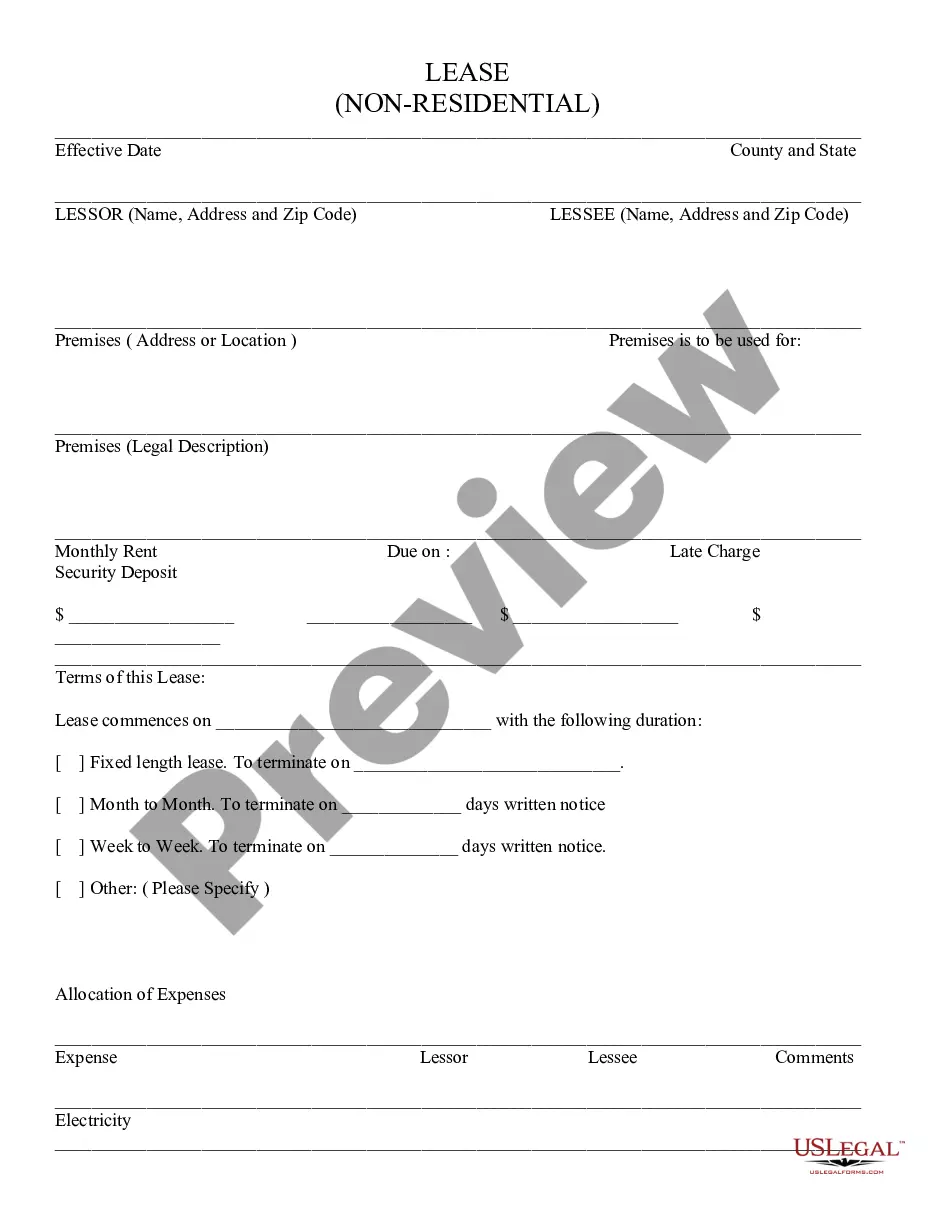
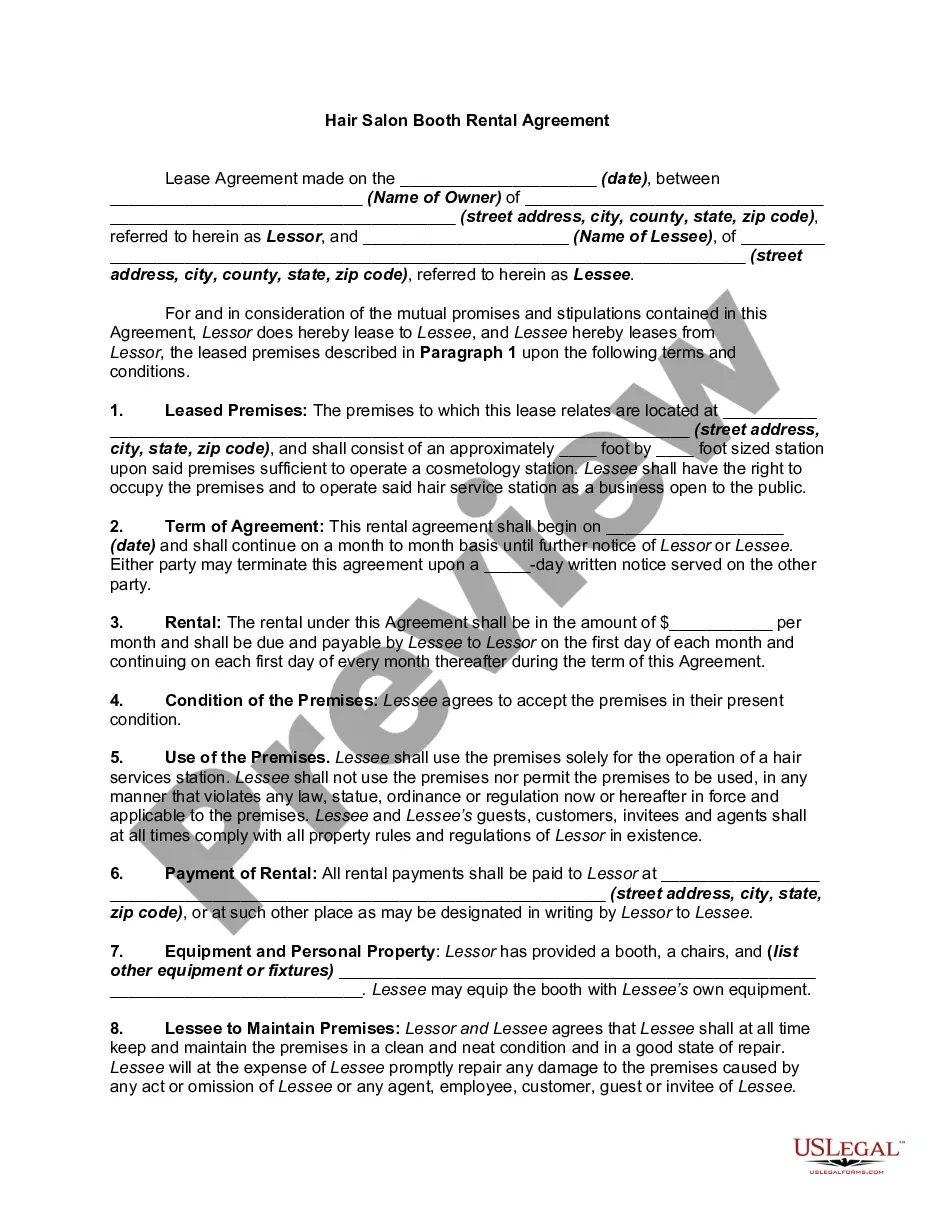
How to fill out Agreement To Lease Parking Space?
Whether for commercial reasons or for personal matters, everyone must manage legal issues at some point in their lives.
Completing legal documents requires meticulous care, starting from selecting the appropriate form template.
With an extensive US Legal Forms catalog available, you do not have to waste time searching for the correct sample online. Utilize the library’s user-friendly navigation to find the appropriate form for any situation.
- For instance, if you select an incorrect version of a Sample Lease Agreement For Parking Lot, it will be rejected once you submit it.
- Thus, it is vital to have a trustworthy source of legal forms such as US Legal Forms.
- If you need to obtain a Sample Lease Agreement For Parking Lot template, follow these simple steps.
- Acquire the sample you require using the search box or catalog navigation.
- Review the form’s description to ensure it aligns with your situation, state, and county.
- Click on the form’s preview to examine it.
- If it is the wrong document, return to the search feature to find the Sample Lease Agreement For Parking Lot sample you need.
- Download the file once it fulfills your criteria.
- If you already possess a US Legal Forms account, click Log in to access previously stored templates in My documents.
- If you do not have an account yet, you can obtain the form by clicking Buy now.
- Choose the appropriate pricing option.
- Complete the profile registration form.
- Select your payment method: use a credit card or PayPal account.
- Choose the file format you desire and download the Sample Lease Agreement For Parking Lot.
- Once it is saved, you can fill out the form using editing software or print it and complete it manually.
Form popularity
FAQ
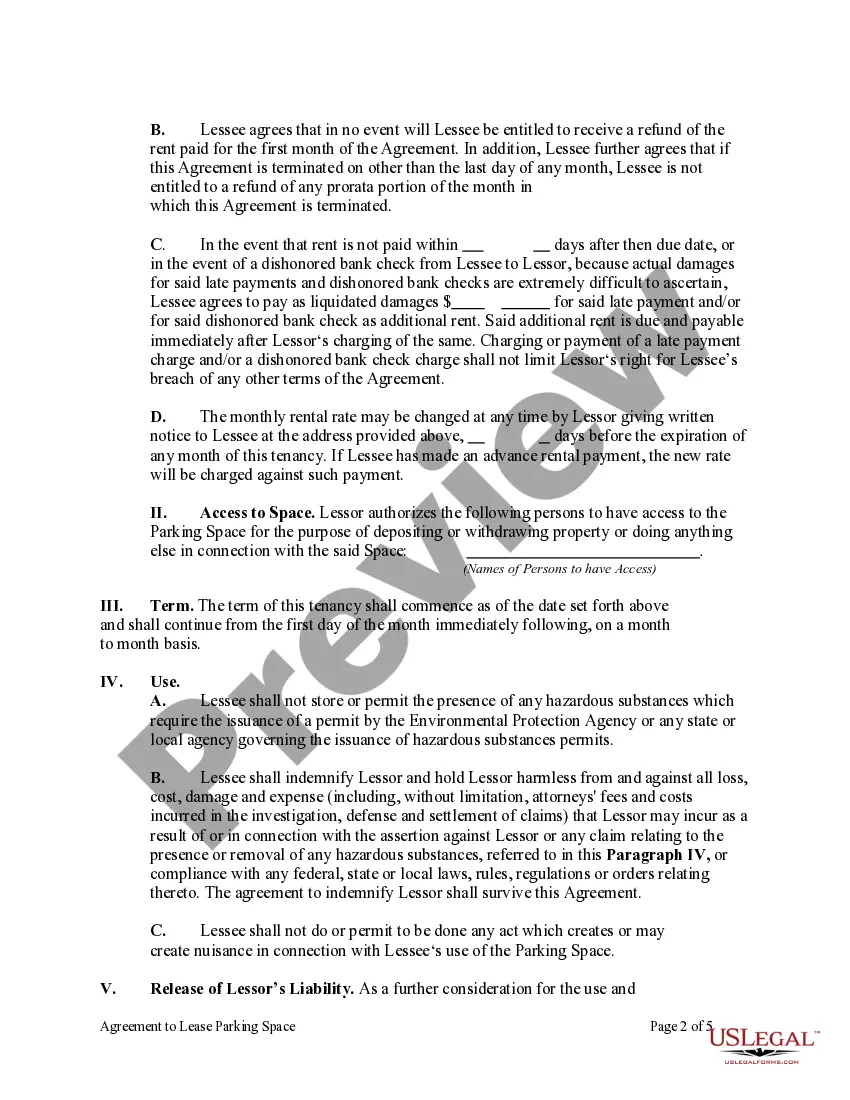
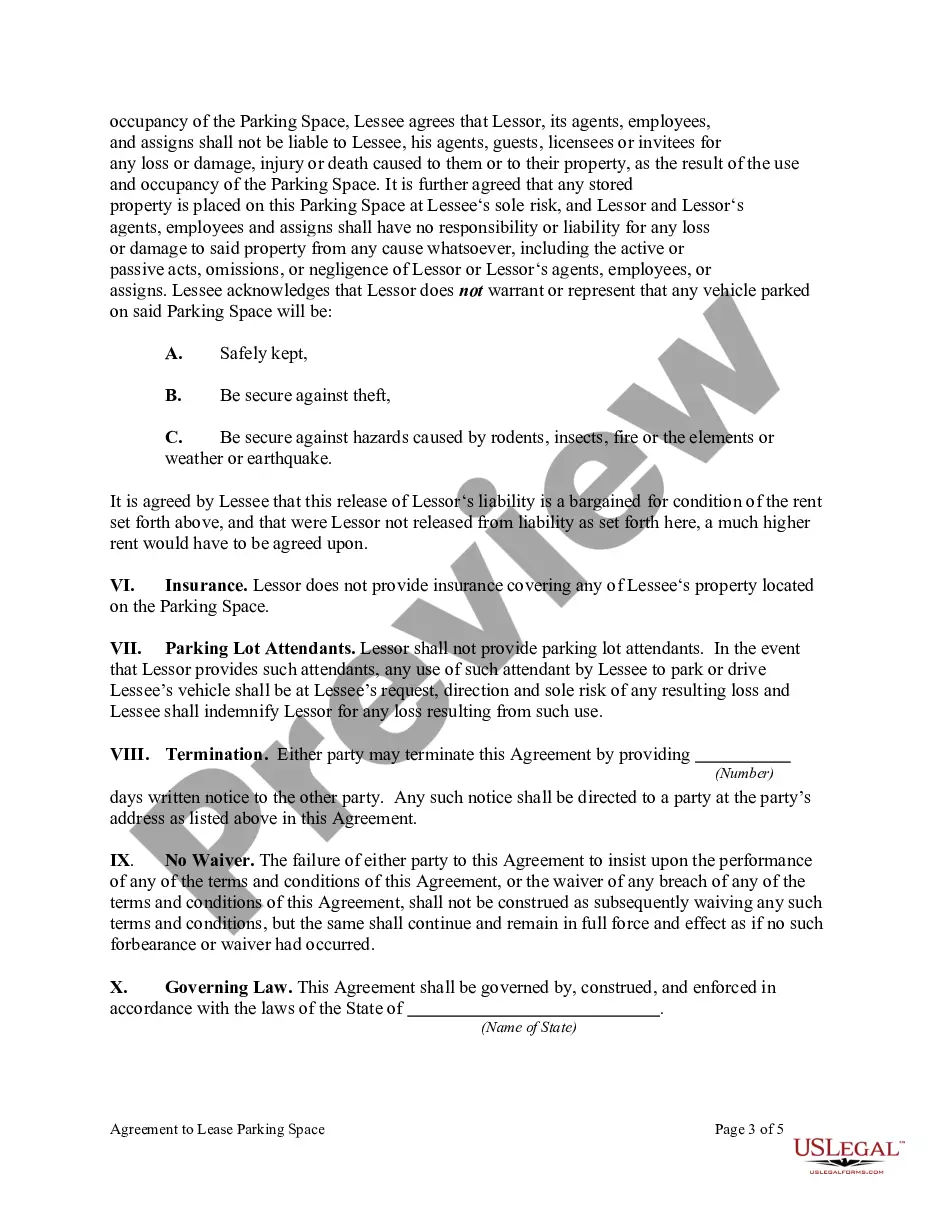
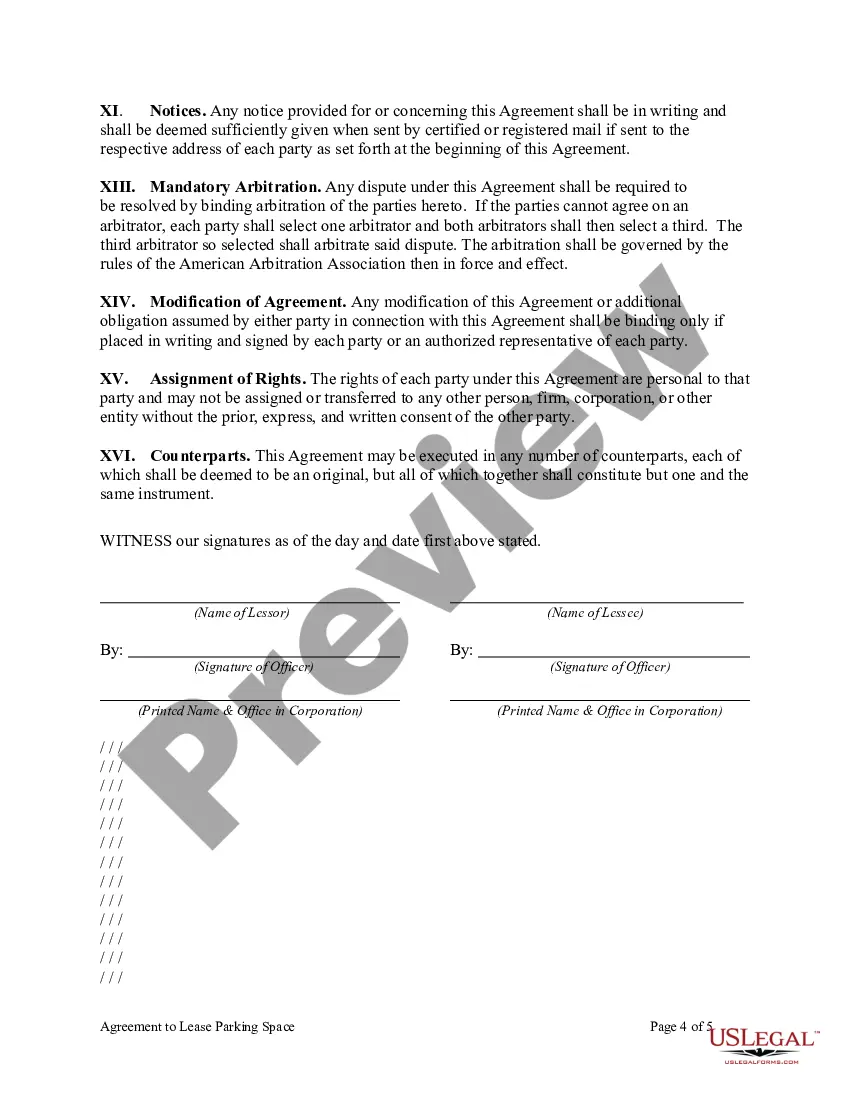
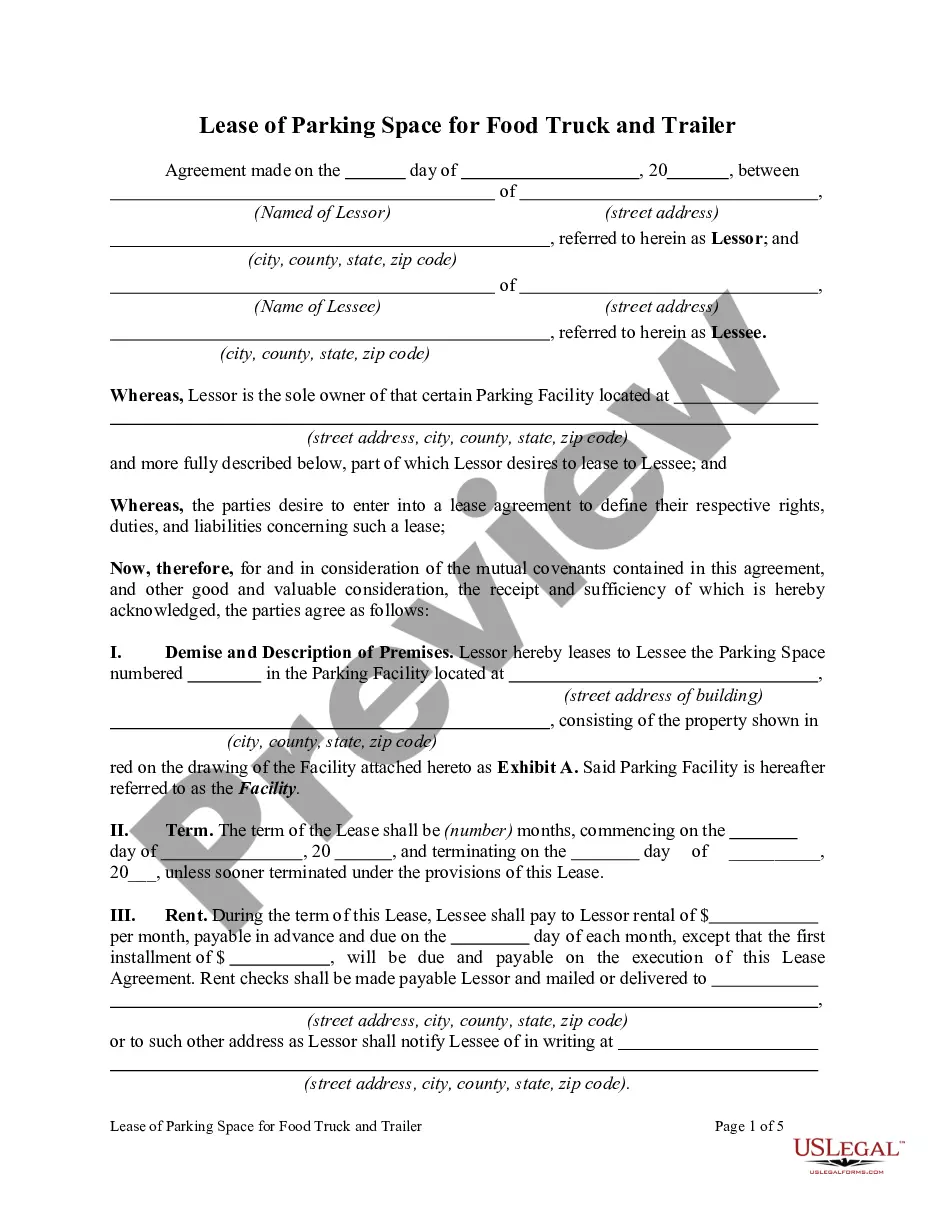
The parking clause in a residential lease agreement specifies the terms related to parking spaces allocated for tenants. This clause may outline the number of vehicles allowed, any fees associated with parking, and rules regarding guest parking. Including a well-defined parking clause can help prevent disputes among tenants and ensure proper use of shared spaces. You can refer to a sample lease agreement for parking lot to see how this clause can be effectively structured.
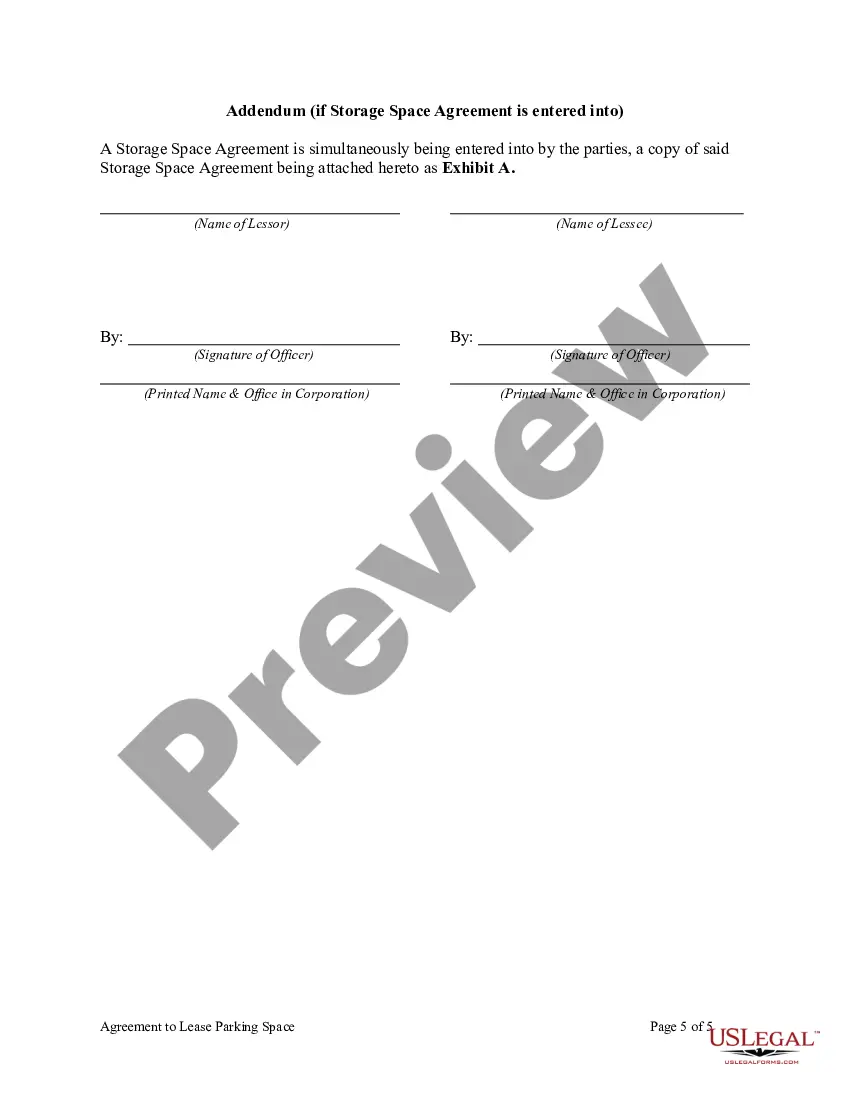
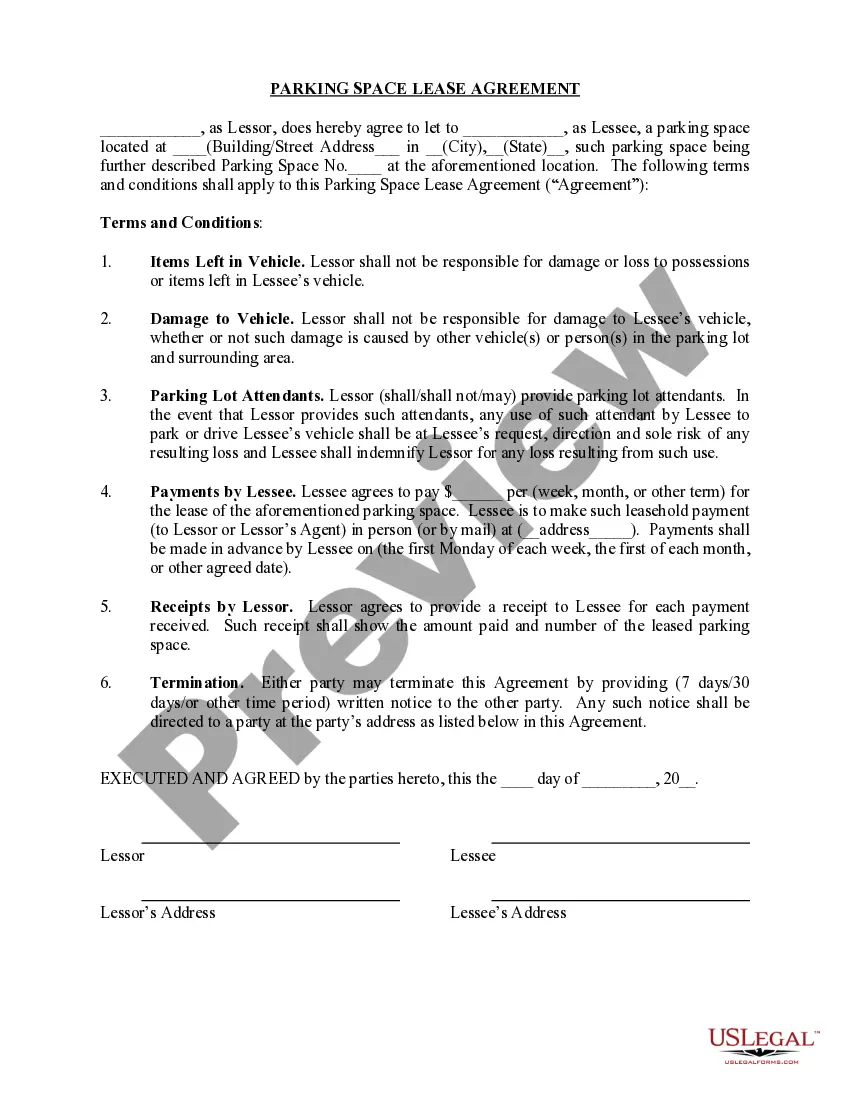
A tenancy agreement for a parking space is a legal document outlining the terms under which one party can use a parking area owned by another party. This agreement typically includes details such as the rental period, payment terms, and any restrictions on the use of the space. Having a clear tenancy agreement protects both the property owner and the tenant by defining expectations and responsibilities. Consider using a sample lease agreement for parking lot to create your own agreement tailored to your needs.
To properly fill out a lease agreement, begin by entering accurate information regarding the parties and the property being leased. Ensure that you specify the rental terms, payment schedule, and any additional clauses that may apply. After completing the form, both parties should review the document to confirm all details are correct before signing. You can find a sample lease agreement for parking lot on USLegalForms to help you understand the necessary components.
To write a lease agreement for a vehicle, you should start by clearly stating the parties involved, including the lessor and lessee. Next, outline the terms of the lease, such as duration, payment amounts, and any specific conditions related to the vehicle's use. It's essential to include details about insurance, maintenance responsibilities, and the process for terminating the agreement. Using a sample lease agreement for parking lot can guide you in structuring your document effectively.
Lessee: What's the difference? In a lease agreement, the lessor is the person or party that issues the lease (allows the property to be rented), and the lessee is the person that the lease is granted to (the person paying rent to use the property).
A lessee is a person who rents land or property from a lessor. The lessee is also known as the ?tenant? and must uphold specific obligations as defined in the lease agreement and by law. The lease is a legally binding document, and if the lessee violates its terms they could be evicted.
A Letter of Intent for a commercial lease may contain information about the landlord and tenant, description of the premises, such as the location of the property, its type, etc., terms of the lease, description of the business activity and other miscellaneous clauses pertaining to expiry of the LOI, exclusivity of the ...
For example, if a car dealership leases a vehicle to someone, the car is the asset. The person renting the car is the lessee and the dealership is the lessor. The lessee pays the dealership, or lessor, for the right to use the vehicle for an agreed-upon amount of time.
Landlords are required to have a ?just cause? reason to remove or sever specified housing services from a tenancy, including parking and storage. If parking or storage is taken away by the landlord, the tenant is entitled to a corresponding rent reduction.