Harassment Policy For Employees
Description
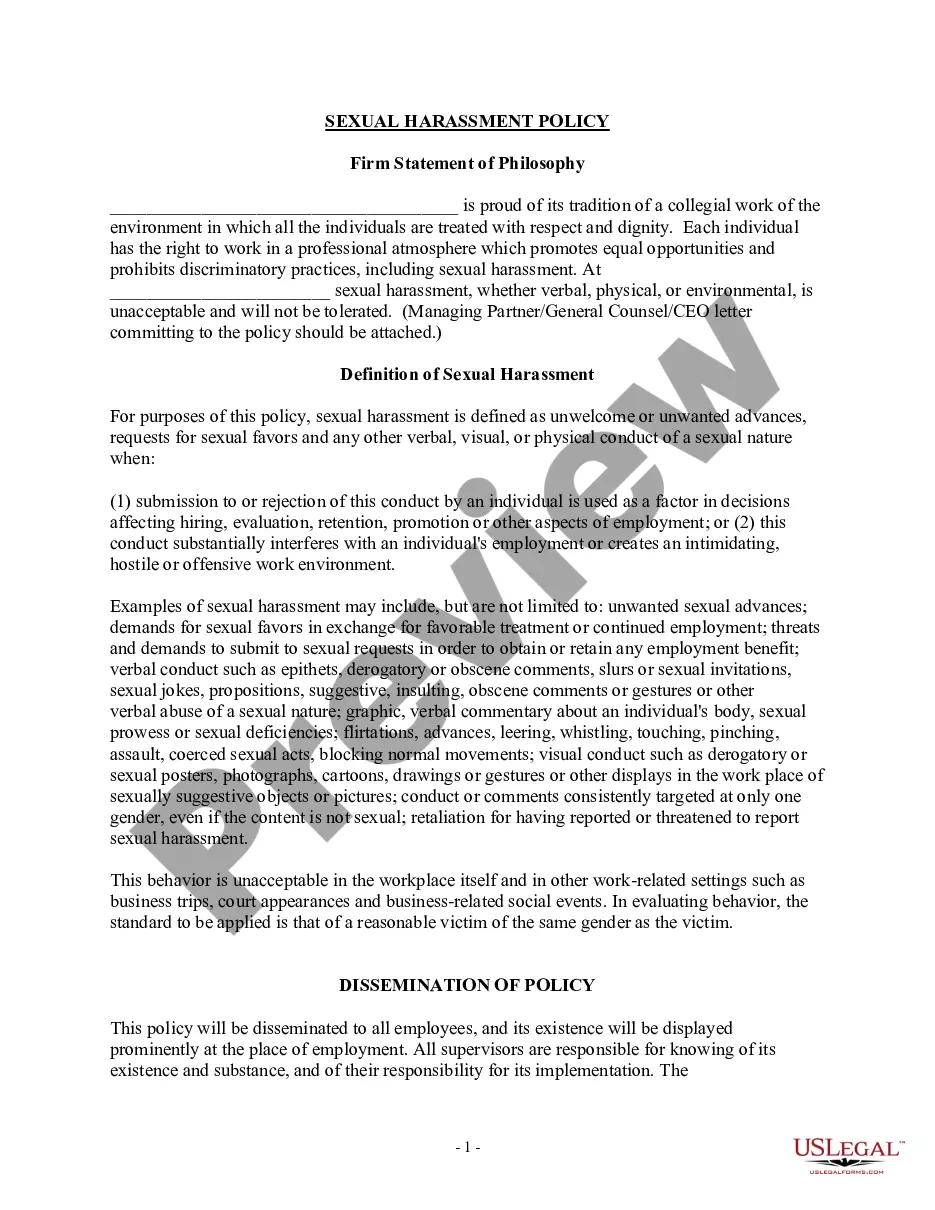
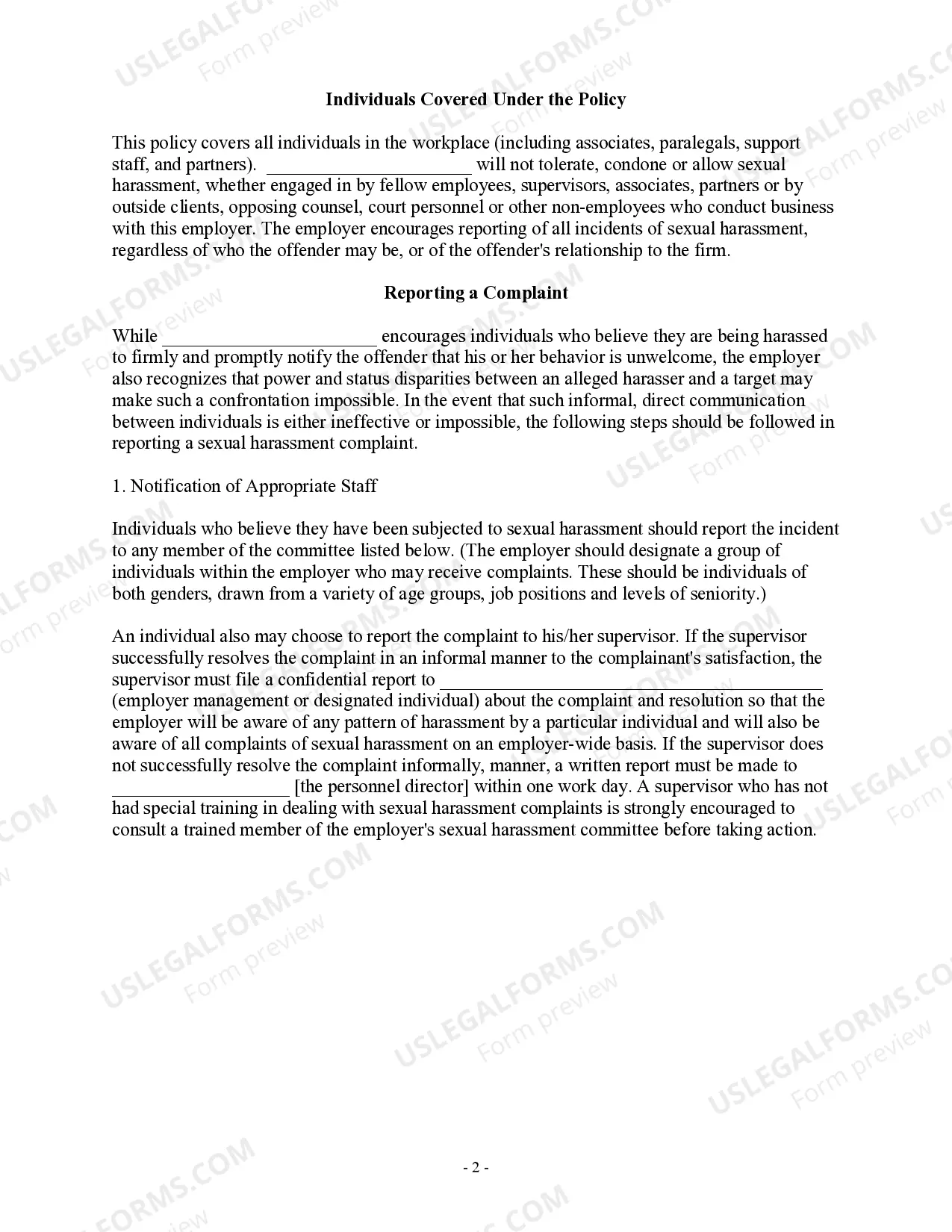
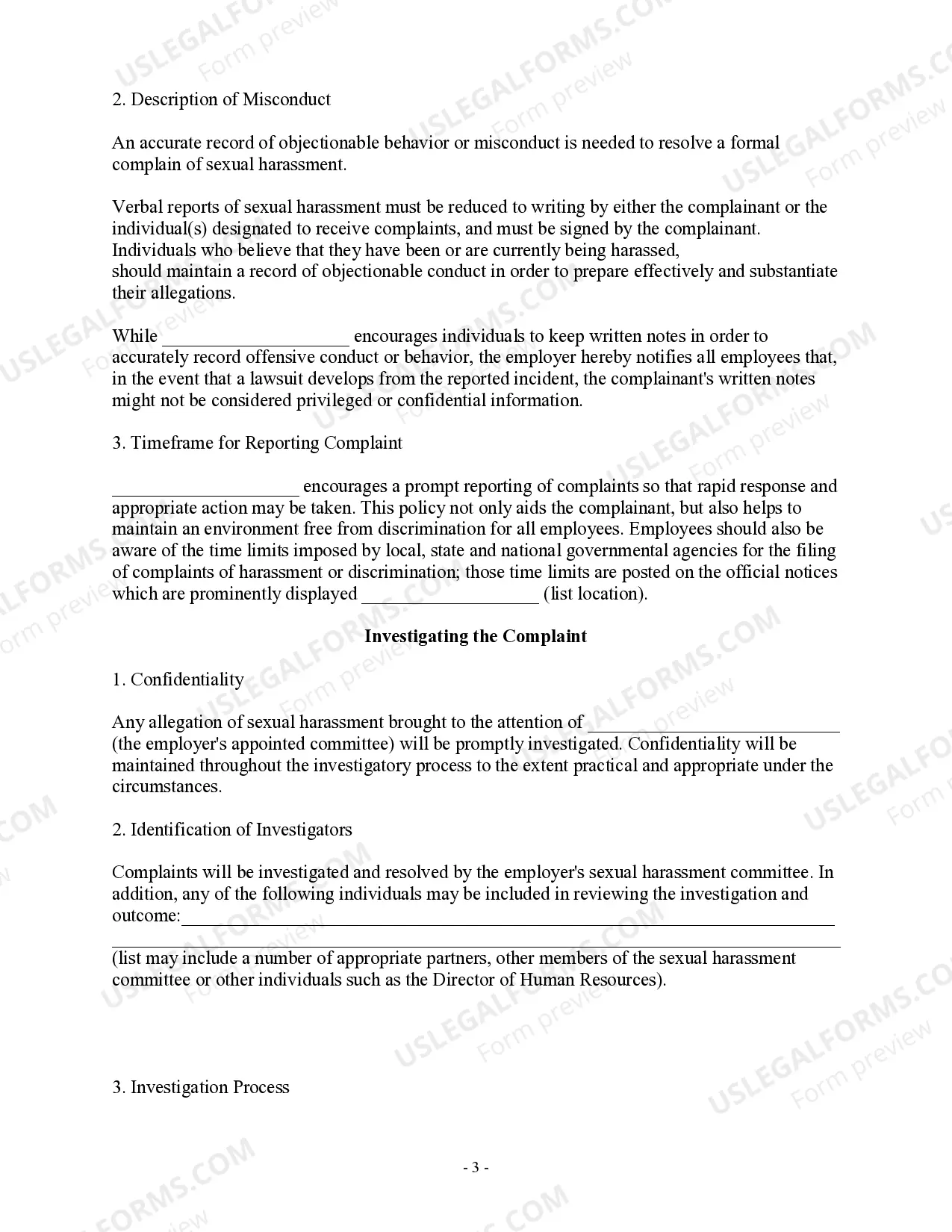
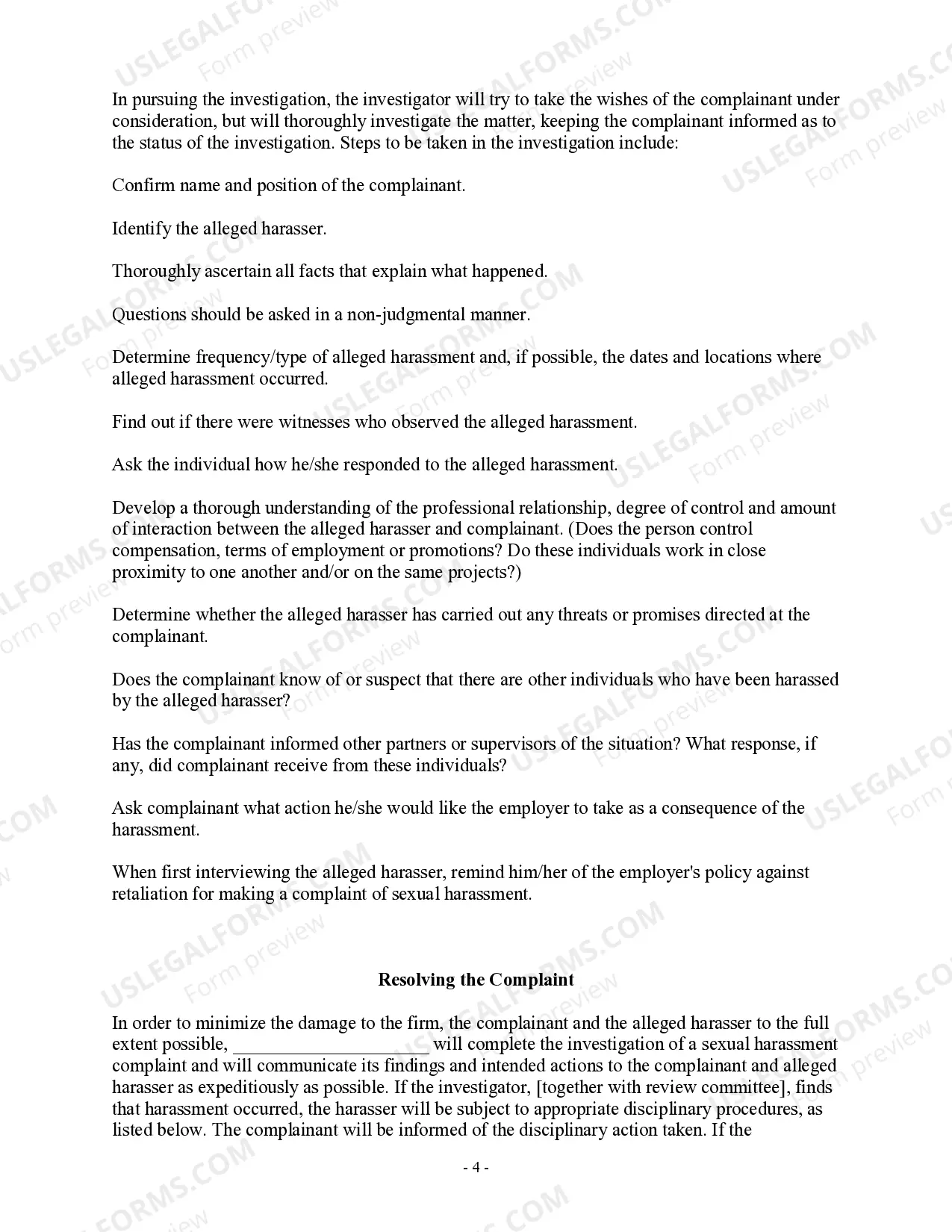
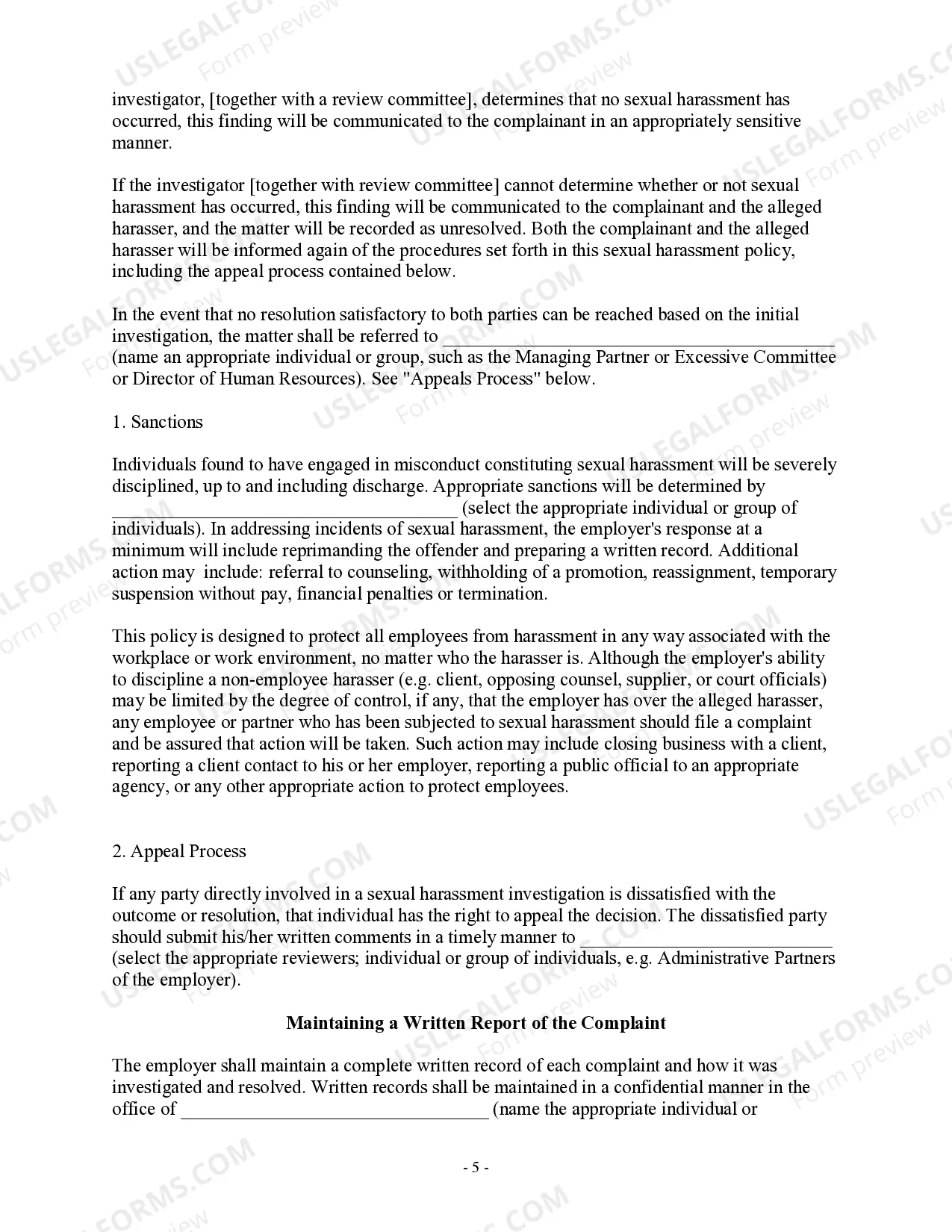
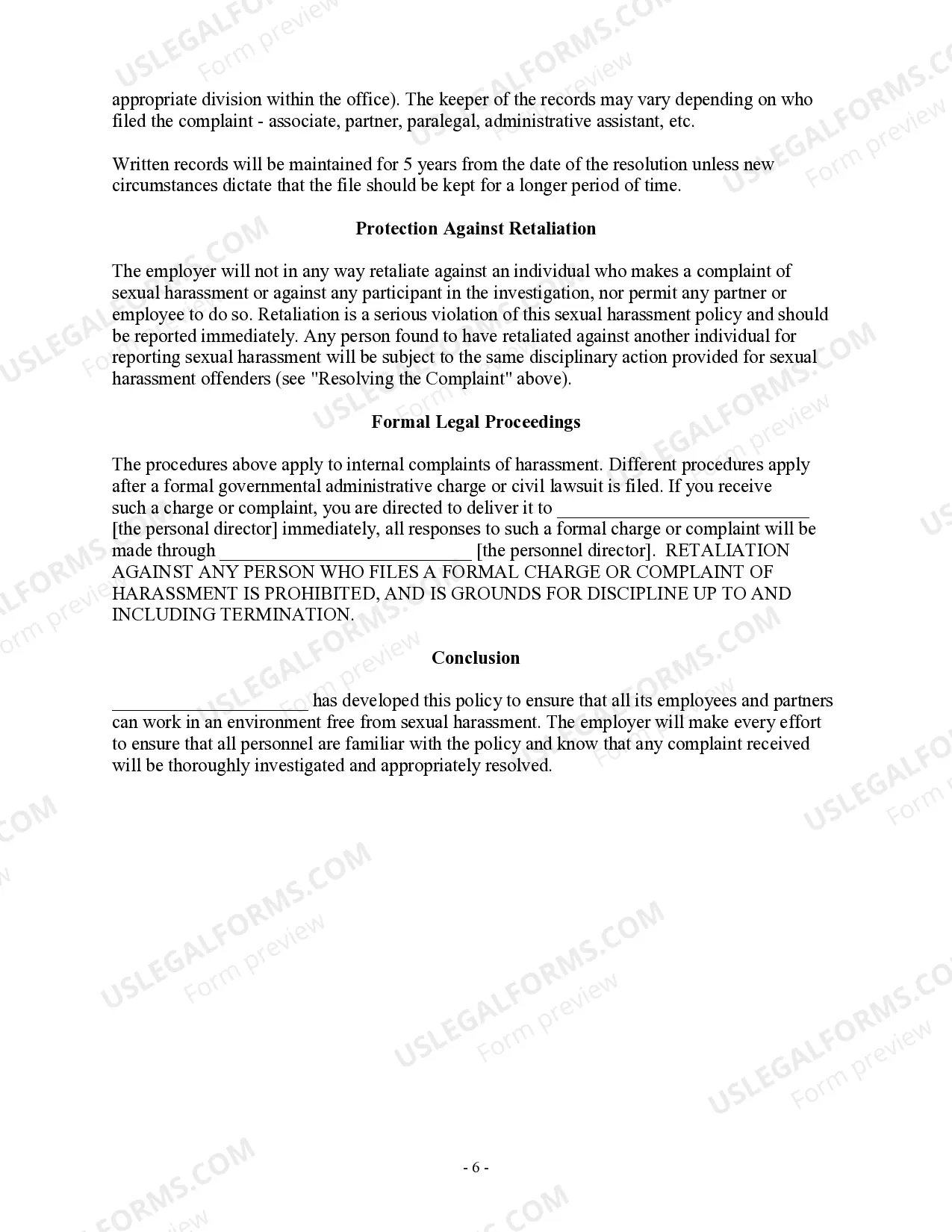
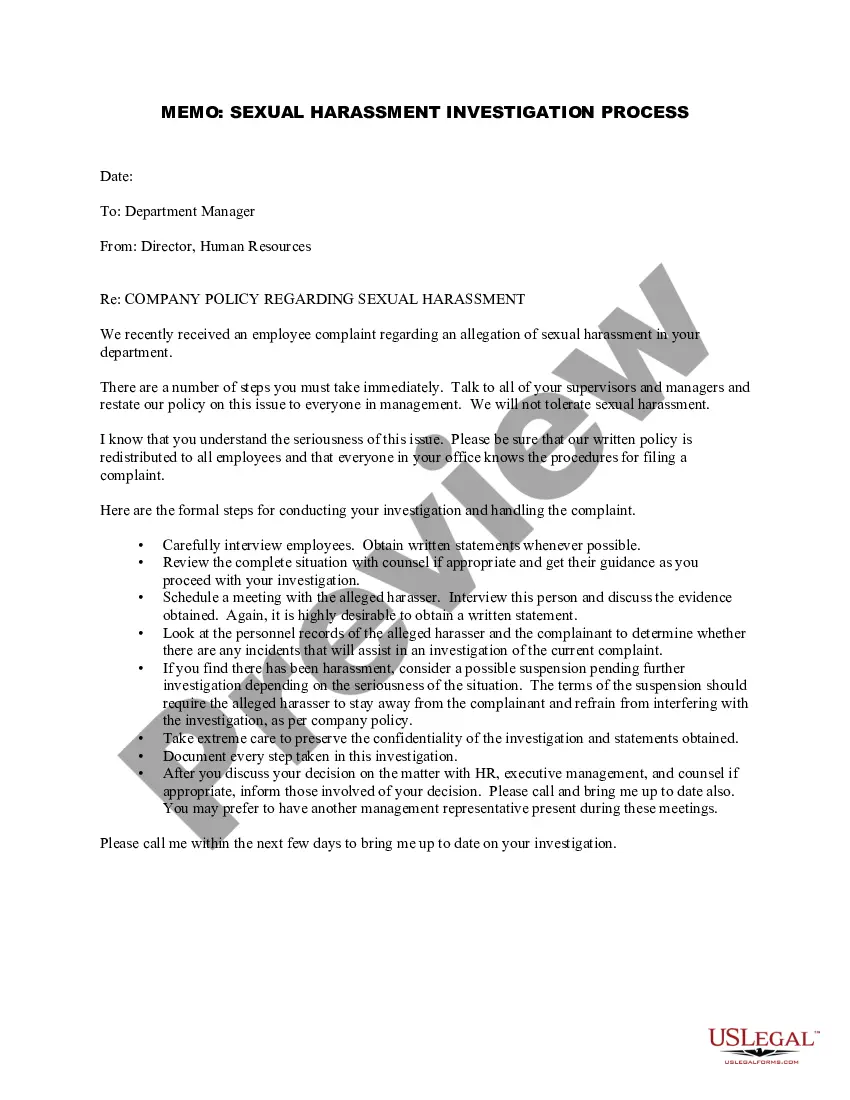
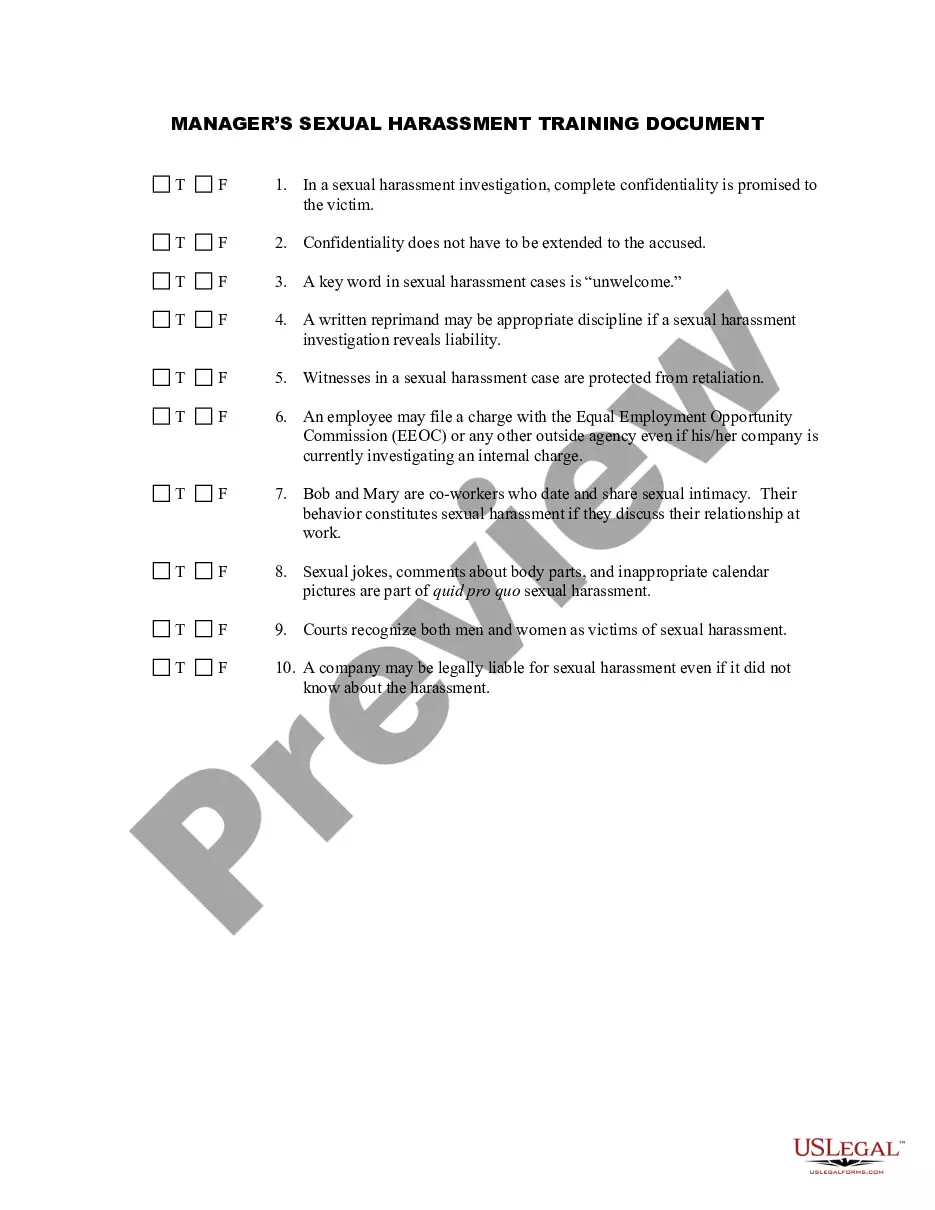
Get your form ready online
Our built-in tools help you complete, sign, share, and store your documents in one place.
Make edits, fill in missing information, and update formatting in US Legal Forms—just like you would in MS Word.
Download a copy, print it, send it by email, or mail it via USPS—whatever works best for your next step.
Sign and collect signatures with our SignNow integration. Send to multiple recipients, set reminders, and more. Go Premium to unlock E-Sign.
If this form requires notarization, complete it online through a secure video call—no need to meet a notary in person or wait for an appointment.
We protect your documents and personal data by following strict security and privacy standards.

Make edits, fill in missing information, and update formatting in US Legal Forms—just like you would in MS Word.

Download a copy, print it, send it by email, or mail it via USPS—whatever works best for your next step.

Sign and collect signatures with our SignNow integration. Send to multiple recipients, set reminders, and more. Go Premium to unlock E-Sign.

If this form requires notarization, complete it online through a secure video call—no need to meet a notary in person or wait for an appointment.

We protect your documents and personal data by following strict security and privacy standards.
Looking for another form?







Form popularity
FAQ
To create a harassment policy, start by researching legal requirements and best practices within your industry. Engage employees in developing the policy to ensure inclusivity and understanding. Clearly outline definitions, reporting procedures, and responses to incidents, linking them to a broader commitment to a respectful workplace. Utilizing a platform like uslegalforms can streamline the creation and implementation of an effective harassment policy for employees.
An effective harassment policy for employees should clearly define what constitutes harassment, outline reporting procedures, and specify actions the company will take in response to violations. This policy needs to promote a respectful and inclusive workplace, provide regular training, and establish confidentiality in reporting. Having a robust policy fosters accountability and supports a positive work environment.
When reporting harassment to HR, it’s important to express your feelings and the impact of the behavior on you. Clearly state the incidents, including dates, locations, and the individuals involved. Articulate how these actions violate the harassment policy for employees, and request support in resolving the issue. This structured approach helps HR address the situation effectively.
Avoid using accusatory or inflammatory language when speaking with HR, as this may create defensiveness. Refrain from making vague statements; instead, focus on specific incidents and factual information. Do not rush the conversation; take your time to present your case clearly. Maintaining a respectful tone will likely encourage HR to take your concerns seriously in line with the harassment policy for employees.
When approaching HR about harassment, it’s essential to organize your thoughts and gather evidence of the incidents. Choose a private setting to discuss your situation candidly. Share specific details about the harassment and how it affects you, linking it back to the company's harassment policy for employees. This approach enhances HR’s ability to take effective action.
Creating a write-up document starts by outlining the specific incidents of harassment, including dates, times, and witnesses. State how the behavior violates the harassment policy for employees and any previous warnings given. Ensure the document is objective, factual, and professional. Once completed, review it with HR to ensure it aligns with company policies before addressing the employee.
To effectively communicate your situation to HR, prepare a clear and concise account of the discrimination you are facing. Use specific examples and avoid emotional language to make your case more compelling. Request a private meeting to discuss your concerns, ensuring confidentiality. Remember, a well-documented report aids HR in understanding and addressing the harassment policy for employees.
The HR department has a crucial role in managing workplace behavior and ensuring a safe environment. They are responsible for developing, implementing, and enforcing a harassment policy for employees. This includes training staff, investigating complaints, and taking appropriate action to resolve issues. Proper HR practices promote accountability and support employees who report harassment.
Anti-harassment policies are formal guidelines that protect employees from harassment in the workplace. These policies define what constitutes harassment, clarifying unacceptable behaviors and the consequences for violating the rules. A comprehensive harassment policy for employees not only promotes a safe work environment but also outlines procedures for reporting and investigating claims. Companies can leverage resources like US Legal Forms to create and implement tailored anti-harassment policies.
To effectively prevent harassment, a company should establish a clear harassment policy for employees. This policy should outline acceptable behavior, provide channels for reporting incidents, and ensure that employees are trained regularly on these guidelines. Creating an open and respectful workplace culture encourages employees to speak up without fear of retaliation. Additionally, implementing regular assessments of the policy's effectiveness can help identify areas for improvement.
